
Affiliate disclosure: This post may contain affiliate links. Please see full disclosure.
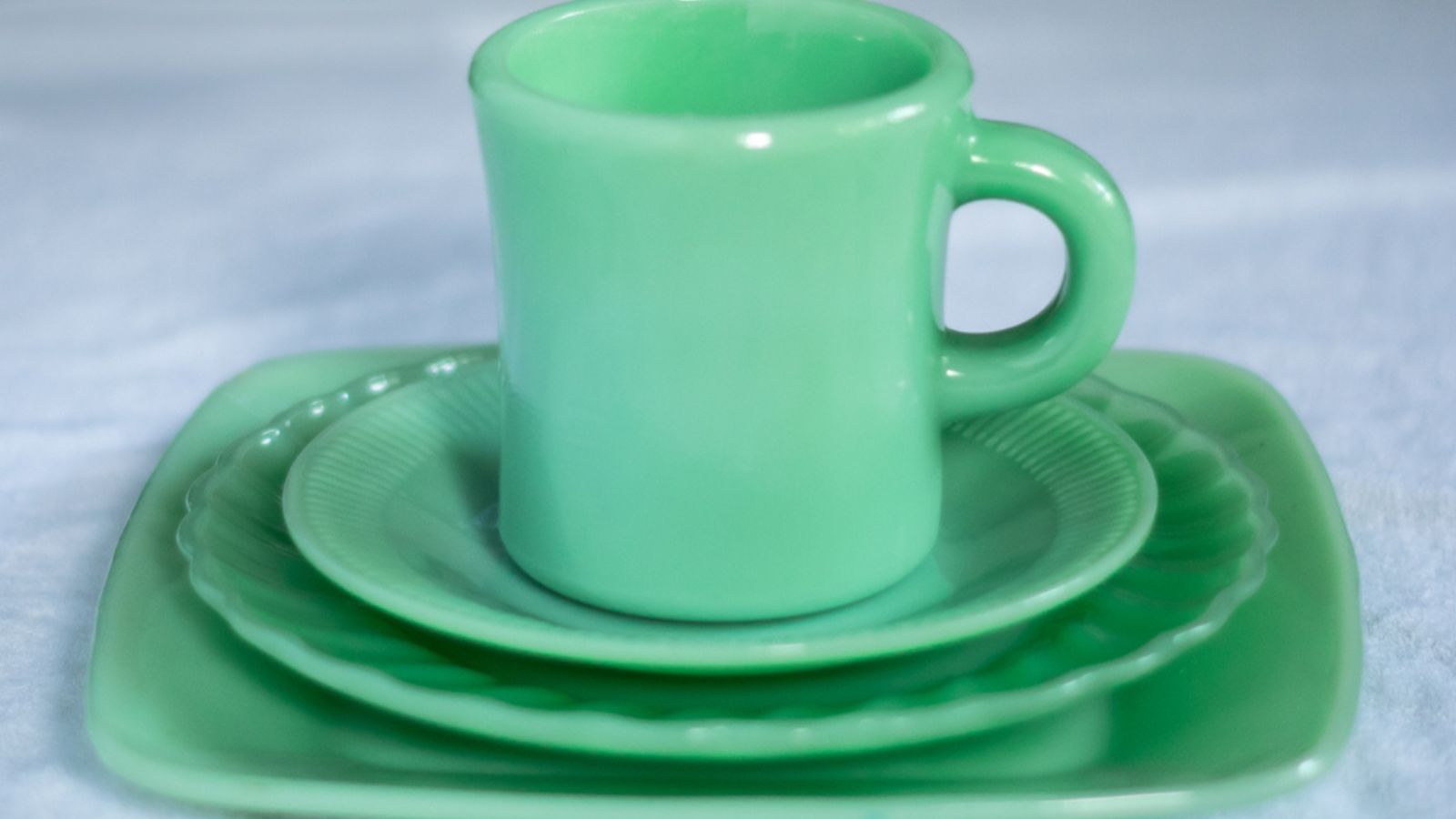
There are plenty of pale green dishes masquerading as vintage Jadeite these days, but original Fire-King has a look that is surprisingly difficult to forget once you’ve handled a few pieces. The glass is opaque rather than transparent, with a soft, milky green color that sits somewhere between mint, celadon, and actual jade. It is cheerful without being sugary, and a shelf full of it practically screams 1950s kitchen. Anchor Hocking introduced Jade-ite into its Fire-King range in the mid-1940s, and most of the company’s green glassware was produced between roughly 1945 and the mid-1970s.
Jadeite itself wasn’t an Anchor Hocking invention. Other American glassmakers, including McKee and Jeannette, had been making opaque green glass before Fire-King arrived. But Fire-King Jade-ite became particularly closely associated with everyday kitchens, diners, cafeterias, and lunch counters. Anchor Hocking made lighter household lines alongside its much chunkier Restaurant Ware, which was specifically built to survive commercial use. A 1950 advertisement pushed its heat resistance, durability, and stain resistance to restaurants, hotels, hospitals, and other institutions.
That diner connection is a big part of the charm. Pick up a thick Fire-King Restaurant Ware mug and it feels almost comically substantial compared with modern glassware. The color can vary slightly from piece to piece, too, so a collection doesn’t necessarily form one perfectly matched wall of mint green. Personally, I think the little variations make old Jade-ite look better, not worse.
Check the shape and the mark, not just the color
DomenicksAntiques via Etsy
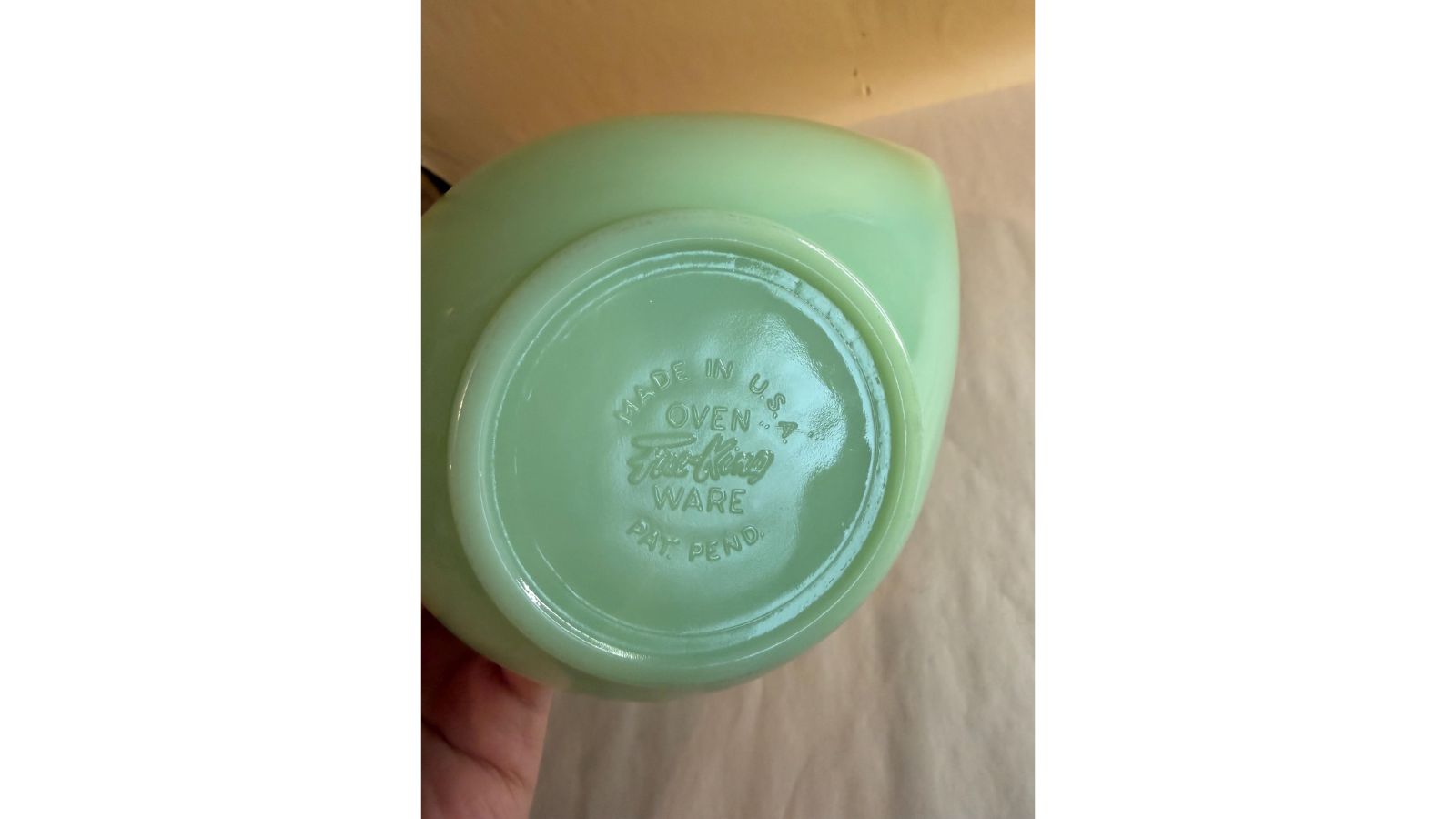
Seeing milky green glass across a thrift-store aisle is enough to justify a closer look, but color alone doesn’t make something vintage Fire-King. Jadeite has been reproduced for decades, including by Anchor Hocking itself. A commemorative Fire-King Jade-ite range appeared in 2000 and was made from new molds, with pieces marked “Fire-King 2000” to distinguish them from the originals. So turn the piece over before you get too excited.
Vintage markings changed over time, but you’ll commonly encounter some variation of Fire-King, OVEN WARE, MADE IN U.S.A., or the Anchor Hocking logo molded into the base. Some genuine pieces are unmarked, which makes things slightly less convenient. Shape and construction matter in those cases. Restaurant Ware is noticeably thick and heavy, while the household Jane Ray line is much lighter and has a distinctive rayed or ribbed border around plates, saucers, and serving pieces.
And don’t use a blacklight glow as proof that you’ve found Fire-King. Earlier green glass from other manufacturers can contain uranium and fluoresce brightly under UV light, but Fire-King Jade-ite does not. That’s an easy detail to get backwards if you’ve spent too long watching videos of people shining blacklights around antique malls.
Condition is worth checking carefully, particularly around cup rims, handles, pouring lips, and the edges of plates. These dishes were made to work, and many of them did exactly that for decades. A few utensil marks tell a story. A crack through the handle of a pitcher is another matter entirely.
Some Jade-ite pieces are much harder to stumble across
via Etsy
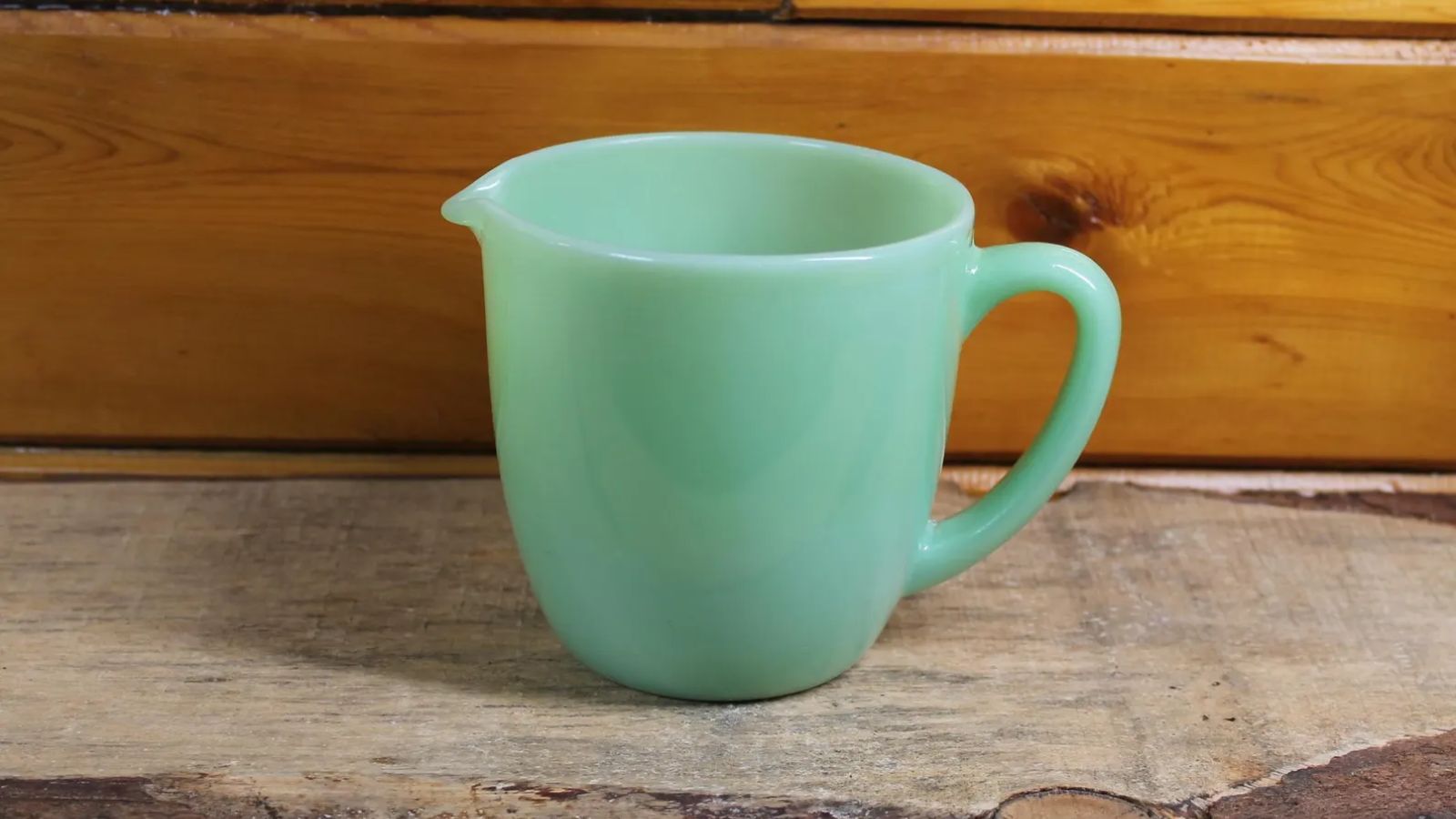
You don’t need an obscure piece to make Fire-King Jade-ite worth collecting. A stack of plain Restaurant Ware plates or a few Jane Ray cups already looks fantastic. But there are certain shapes that will make a seasoned collector stop dead in an aisle, and the famous ball jug is near the top of that list. This round-bellied Restaurant Ware pitcher has a wonderfully sculptural shape, a pronounced pouring lip, and a much thinner body than most of the commercial line. Genuine examples are notoriously difficult to find undamaged, and reproductions mean identification needs a little care.
Collectors also hunt for double egg cups, grease jars and range sets, uncommon Restaurant Ware serving pieces, and the straight-sided “splash-proof” nesting bowls. Even within relatively familiar lines, odd sizes can be the pieces that take years to find. Jane Ray’s flat-rimmed soup bowl and small bread-and-butter plate, for example, are considerably less common than its everyday dinner plates and cups.
Then there are patterns such as Alice, Swirl, and the square Charm line, which give collectors something beyond stacks of plain green dishes to chase. That’s one reason Jade-ite collecting gets out of hand so easily. You start with one mug because you like the color. Then you notice Restaurant Ware is different from Jane Ray, decide the ribbed bowls would look nice with it, and suddenly you know far too much about soup plates.
That is also what makes spotting Fire-King Jade-ite in a thrift store so satisfying. It is recognizable enough that a beginner can learn to see it, but varied enough that there is always another strange bowl, pitcher, or tiny green egg cup waiting to turn up.
You might also like…
The 1969 Pyrex Pattern Collectors Dream Of Finding At A Thrift Store
The Pyrex Pattern Made With Real 22-Karat Gold Collectors Dream Of Finding At A Thrift Store
The Blue-And-White Pyrex Pattern Collectors Dream Of Finding At A Thrift Store

