
Affiliate disclosure: This post may contain affiliate links. Please see full disclosure.
Brown recluse spiders get into homes through gaps as small as 1/16 of an inch, and once they’re inside, they head straight for dark, undisturbed clutter over almost anywhere else in the house. That combination of tight entry points and quiet, cluttered shelter is what natural repelling actually targets. This isn’t a guide to wiping out an established indoor population. That’s a job for a pest control professional. It’s about making your home unappealing enough that a recluse spider never decides to move in.
I hear about this spider from readers more than almost any other pest, usually right after they’ve found a photo online that scared them half to death. Most of the time, a few changes to storage and sealing do more good than any spray you could buy.
Confirm You Actually Have Brown Recluse Spiders
Brown recluse spiders are only established in a fairly narrow band of the country, running through the south central and lower Midwestern United States, with Missouri and Arkansas at the heart of their range. If you live well outside that region, what you’re looking at is almost certainly a different spider, no matter how much it looks like the photos you’ve seen online.
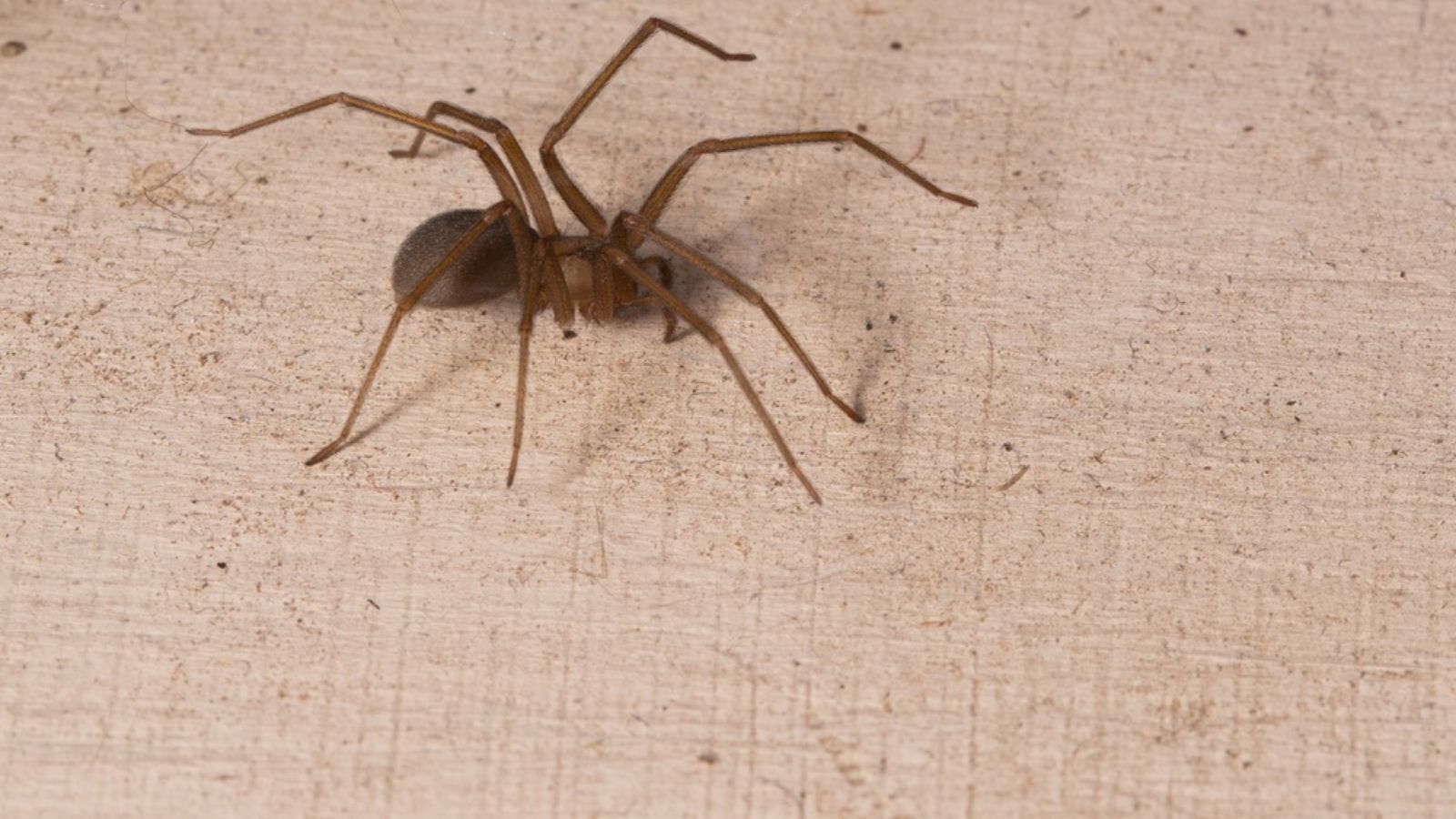
A brown recluse spider (Loxosceles reclusa) is a small, tan to dark brown spider with a violin shaped marking on its head and only six eyes instead of the usual eight. It’s the marking and the eyes that matter here, not general “brownness,” since plenty of harmless spiders share the same coloring.
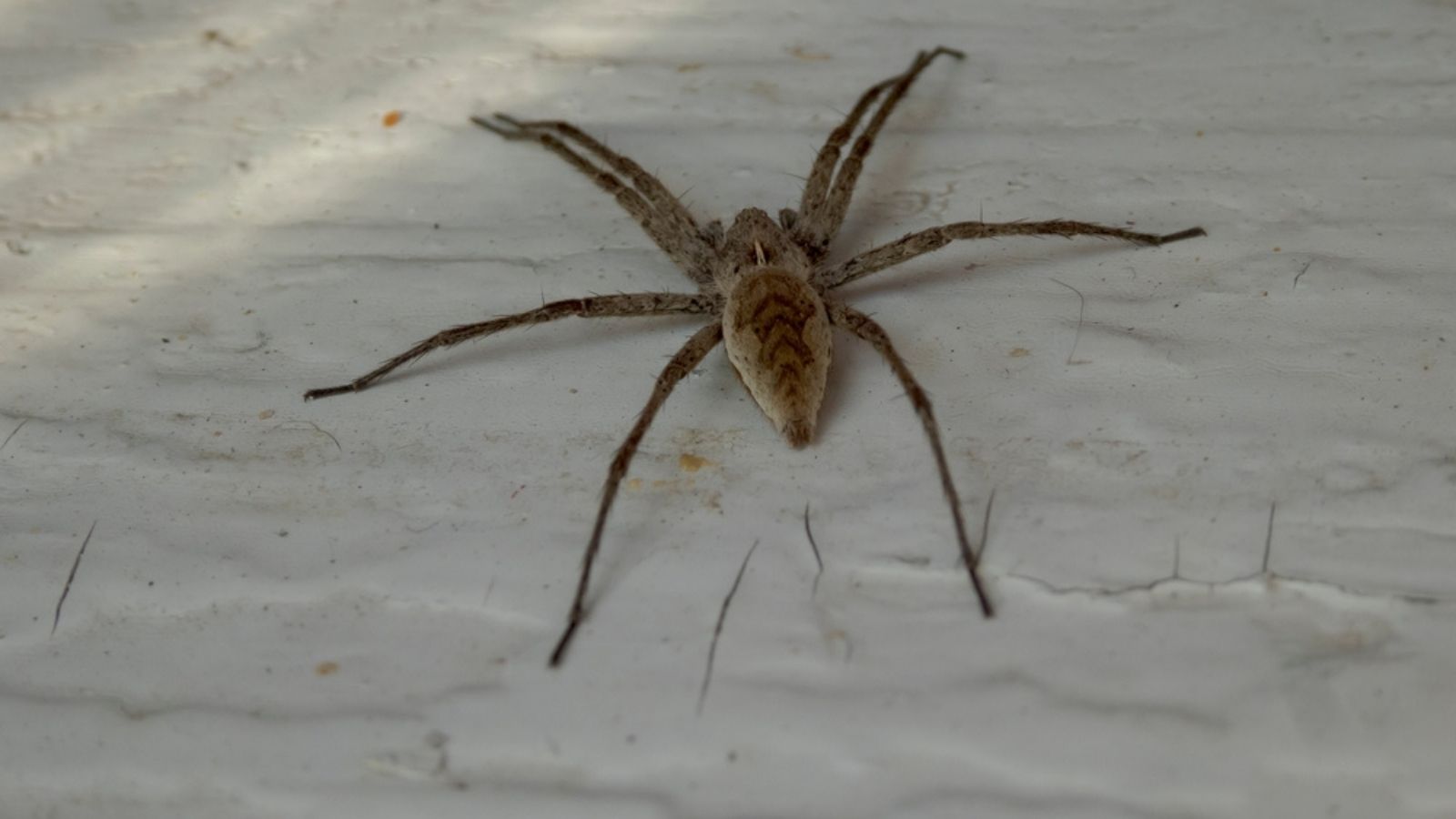
The myth of the brown recluse gets kept alive by physician misdiagnoses, media reports with no confirmed spider involved, and plain misidentification of harmless brown spiders by people who’ve never actually compared one to the real thing. I’ve seen messages from people who are certain they’ve found a nest of them, and more often than not it turns out to be a wolf spider or a common house spider.
How to Tell a Brown Recluse from a Look-Alike Spider
You can identify a brown recluse using three features together: a dark violin shaped mark on the head that points toward the abdomen, a uniform tan to dark brown body with no stripes or bands on the legs, and six eyes arranged in three pairs rather than the eight eyes most spiders have.
The body alone, legs excluded, runs about 3/8 inch long, roughly the size of a small coin. If you can get a good look without getting close, check the legs first. Brown recluse legs are a single solid shade the entire length, with no dark rings or light bands. That one detail rules out most of the common look-alikes, including wolf spiders and cellar spiders, before you even need to worry about counting eyes.
Remove the Clutter and Food Sources That Attract Them
Brown recluse spiders move in when two things are present, undisturbed clutter to hide in during the day and enough insects around to hunt at night. Take away either one and your house becomes a lot less appealing to them.
These spiders are hunters, not web builders. They don’t spin webs to catch prey the way most people picture. Instead they build a small silk retreat to rest in during daylight hours and go out hunting once it’s dark, which is exactly why cardboard boxes, stacked woodpiles, and cluttered closets do so much of the inviting.
Swap cardboard storage boxes for sealed plastic bins with locking lids in your attic, garage, and closets. Cardboard is soft, layered, and rarely disturbed, which makes it close to ideal shelter. Keep firewood stacked off the ground and away from the foundation rather than leaned against the house. Clear out crawl spaces and the dead zones under furniture where boxes tend to pile up and sit for years untouched.
The year I finally switched my seed starting supplies from cardboard to a stack of clear bins, I stopped finding recluse type spiders in my potting shed almost entirely. It’s not a guarantee, but it was the single change that made the biggest difference for me. Aim to go through storage areas at least once a season. That’s roughly how long an undisturbed corner needs to sit before it starts looking like safe, permanent shelter to a spider on the hunt for one.
Seal the Entry Points Spiders Use to Get Inside
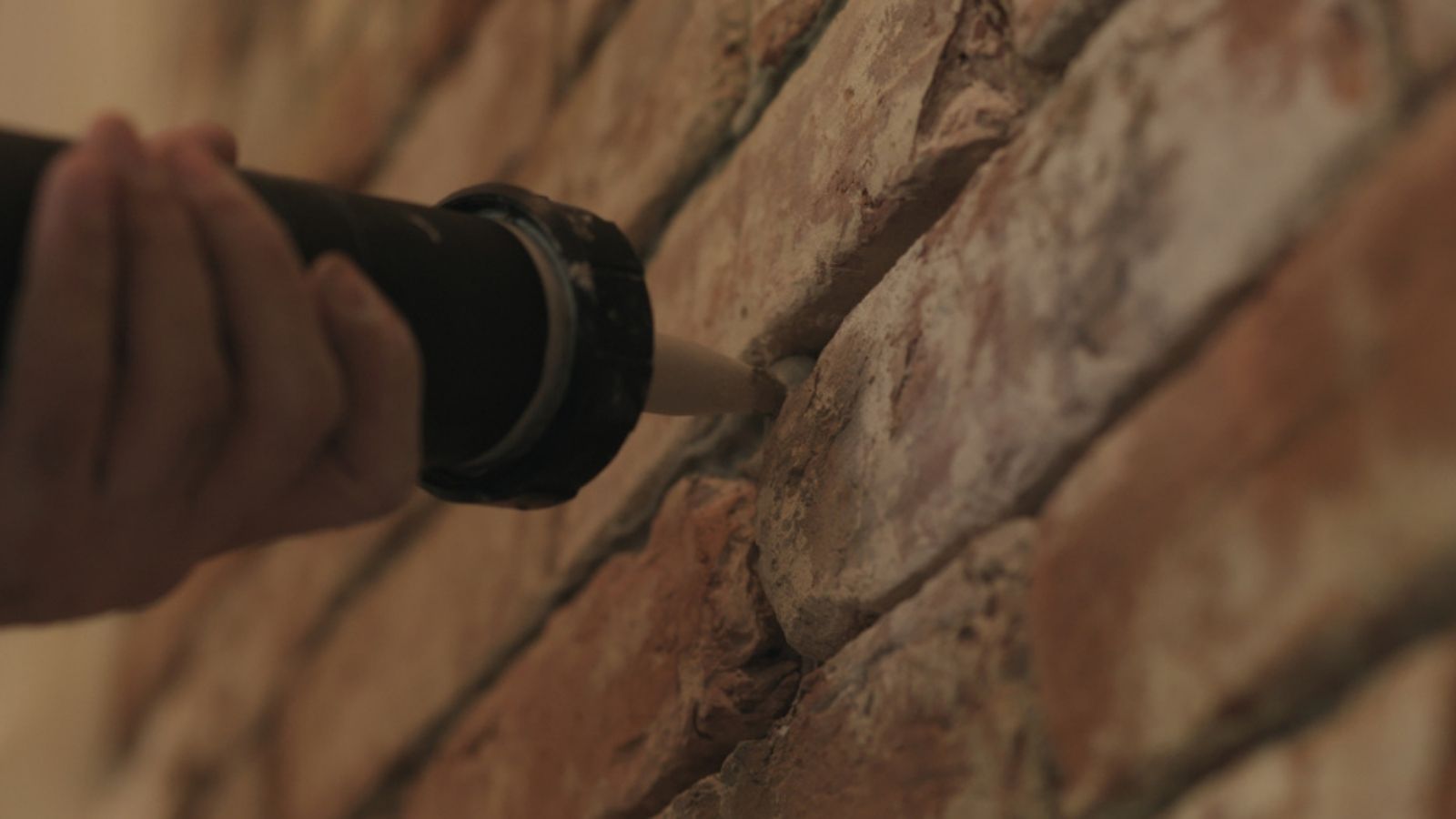
Brown recluse spiders can squeeze through gaps as small as 1/16 of an inch, so the fastest way to stop new ones from arriving is sealing the cracks around your foundation, windows, and doors.
Walk the outside of your house and check where utility lines and pipes pass through the wall, since these gaps are often bigger than they look from a distance. Fill masonry cracks with silicone caulk and use expanding foam for larger utility penetrations. Replace torn window screens and worn door sweeps, and add sweeps to any exterior door that doesn’t already have one, including the garage.
I run my hand along the base of every exterior door each fall, since that’s where I’ve found the worst gaps letting in cold air and spiders at the same time. A five minute check now saves you a much bigger cleanup later.
Use Natural Repellent Sprays to Make Your Home Less Inviting
Essential oil sprays and food-grade diatomaceous earth are the two natural products worth keeping around, and they work in completely different ways. One makes an area smell unpleasant enough that spiders steer clear. The other kills on contact. Neither one is a synthetic pesticide.
Do Essential Oils Actually Repel Brown Recluse Spiders?
Nobody has run a lab trial on essential oils against brown recluse spiders specifically, and it’s worth being upfront about that rather than pretending otherwise. Scent aversion is well documented in spiders more broadly, and peppermint, lavender, and tea tree oil all carry a strong smell that spiders generally avoid. That’s the honest basis for using them, a reasonable bet backed by related evidence, not a guaranteed fix.
Mix 15 to 20 drops of your chosen oil into a 16 ounce spray bottle of water and apply it along baseboards, window sills, closet corners, and any other spot where you’ve spotted spider activity. Reapply every 3 to 5 days, since the scent fades faster than most people expect, especially in a room with any airflow.
If you have cats, skip tea tree oil entirely. It’s genuinely toxic to them, even in diluted sprays, since cats groom it off their fur and ingest it that way. Peppermint is my go-to since it does double duty against mice, and I keep a bottle mixed and ready under the sink from spring through fall, but I still keep it off surfaces my own cat spends time on.
Does Diatomaceous Earth Work Against Brown Recluse Spiders?

Yes, but it’s worth knowing exactly how. Diatomaceous earth is a fine powder made from the fossilized remains of tiny aquatic organisms called diatoms, and its microscopically sharp edges scratch through a spider’s waxy outer coating and dry it out from the inside. That’s a kill, not a repellent, even though it’s a mechanical one rather than a chemical one.
Buy food-grade diatomaceous earth specifically, never the pool-grade version, which is processed differently and isn’t safe to have around pets or family. Dust a thin layer along baseboards, closet corners, and around the foundation outside, and keep it away from anywhere it might get wet, since dampness makes it clump and stop working. Because it kills on contact, keep it off any surface your pets walk, sleep, or eat on, and reapply after cleaning indoors or after rain if you’ve used it outside.
Cedar, Citrus, and Vinegar Add Another Layer of Defense
Cedar, citrus peels, and a simple vinegar spray round out the natural toolkit. None of them have been studied in a lab against this specific spider, but they’ve been part of home pest control for generations, long before spray pesticides existed, and plenty of gardeners and homesteaders still swear by them.
Cedar works through its natural oils, which many insects and spiders find repellent. Cedar blocks or chips tucked into closets, drawers, and storage bins offer a long lasting scent without needing to be refreshed as often as a spray.
Citrus peels rely on the same strong scent principle. Save your lemon, orange, and lime peels and tuck them into corners, along baseboards, and near windowsills, swapping in fresh ones every week or so once they dry out and lose their punch. I keep a jar of them drying on my own kitchen windowsill most of the year, more out of habit at this point than anything else, but it’s a nice trick when you’re already tossing the peels instead of composting them.
A vinegar spray, made from equal parts white vinegar and water, can be misted around entry points and windowsills where spiders travel. The acidity is unpleasant to them on contact, and it doubles as a solid all-purpose cleaner for the same surfaces.
FAQs
What does a brown recluse spider bite look like, and when should I see a doctor?
A brown recluse bite often starts as a mild sting, or goes unnoticed entirely, and any redness that develops is usually flat rather than raised. Doctors treating these bites use the mnemonic NOT RECLUSE for wounds commonly misdiagnosed as recluse bites, since a real bite is rarely red, elevated, or still present after three months. Around 90 percent of confirmed bites heal on their own, roughly 10 percent develop into a more serious skin lesion, and less than 1 percent trigger a broader reaction, so see a doctor promptly if a bite site blisters, spreads, feels warm, or is accompanied by fever or chills.
How long before natural repellents make a noticeable difference?
There’s no fixed timeline, since you’re changing habitat and food supply rather than delivering an instant kill. Stay consistent with decluttering, sealing gaps, and reapplying sprays or diatomaceous earth, and expect several weeks of steady effort before sightings noticeably drop off.
When should you call a pest control professional instead of relying on natural methods?
Even professional treatment for an established brown recluse population usually requires combining several methods rather than one single fix, so if you’re still seeing several spiders a week after a couple of months of consistent decluttering, sealing, and spraying, that’s the point to bring in someone who can judge how established the population has actually become.
Are brown recluse spiders dangerous to dogs and cats?
Brown recluse bites can affect pets too, though confirmed cases are uncommon since fur offers some natural protection. Watch for a wound that isn’t healing, swelling, lethargy, or a drop in appetite in the days after a suspected bite, and call your vet if you notice any of these, since your pet can’t tell you something’s wrong. This isn’t a substitute for professional veterinary advice, so always check with your vet directly if you’re concerned.
What time of year should you be most vigilant about entry points?
Brown recluse spiders are most active from spring through early fall, with mating season running from April through early July in their core range. That’s when males roam furthest looking for a mate, which makes it the best window to double check your sealing and refresh your sprays.
Consistency Matters More Than Any Single Step
None of this requires a single can of pesticide, just a bit of consistency. Confirm what you’re actually dealing with, take away the clutter and food source that drew it in, seal up the gaps, and keep your essential oil spray or diatomaceous earth topped up where it matters. Do all four together and you’ve taken away almost everything that makes your house worth moving into in the first place.

