
Affiliate disclosure: This post may contain affiliate links. Please see full disclosure.
Bleach is safe for a septic system in the amounts a normal household actually uses. It takes something in the neighborhood of 1.85 gallons of liquid bleach dumped straight into a 1,000-gallon tank to seriously knock out the bacteria down there, and nobody’s laundry routine gets anywhere close to that.
I’ve had a septic system on our place for years, and bleach lives under my sink right alongside the vinegar and the borax. The fear around it isn’t baseless. Chlorine really does kill bacteria, and your tank runs on bacteria. But the amount people worry about and the amount that actually causes a problem are two very different numbers, and most articles on this just wave at “a study” without ever putting a real figure on it. So here’s the actual number.
At a Glance: Bleach and Your Septic Tank
- Normal laundry and cleaning amounts of bleach do not harm a healthy septic tank.
- It takes roughly 1.85 gallons of bleach poured straight into a 1,000-gallon tank to seriously damage the bacteria.
- That’s the equivalent of about 30 loads of laundry landing in the tank in one shot, not a realistic accident.
- Bleach-suppressed bacteria recover in about 30 hours, faster than after Lysol or a crystal drain cleaner.
- Chemical drain cleaners take far less volume than bleach to cause the same amount of damage.
Bleach Is Safe for Septic Systems in Normal Household Amounts
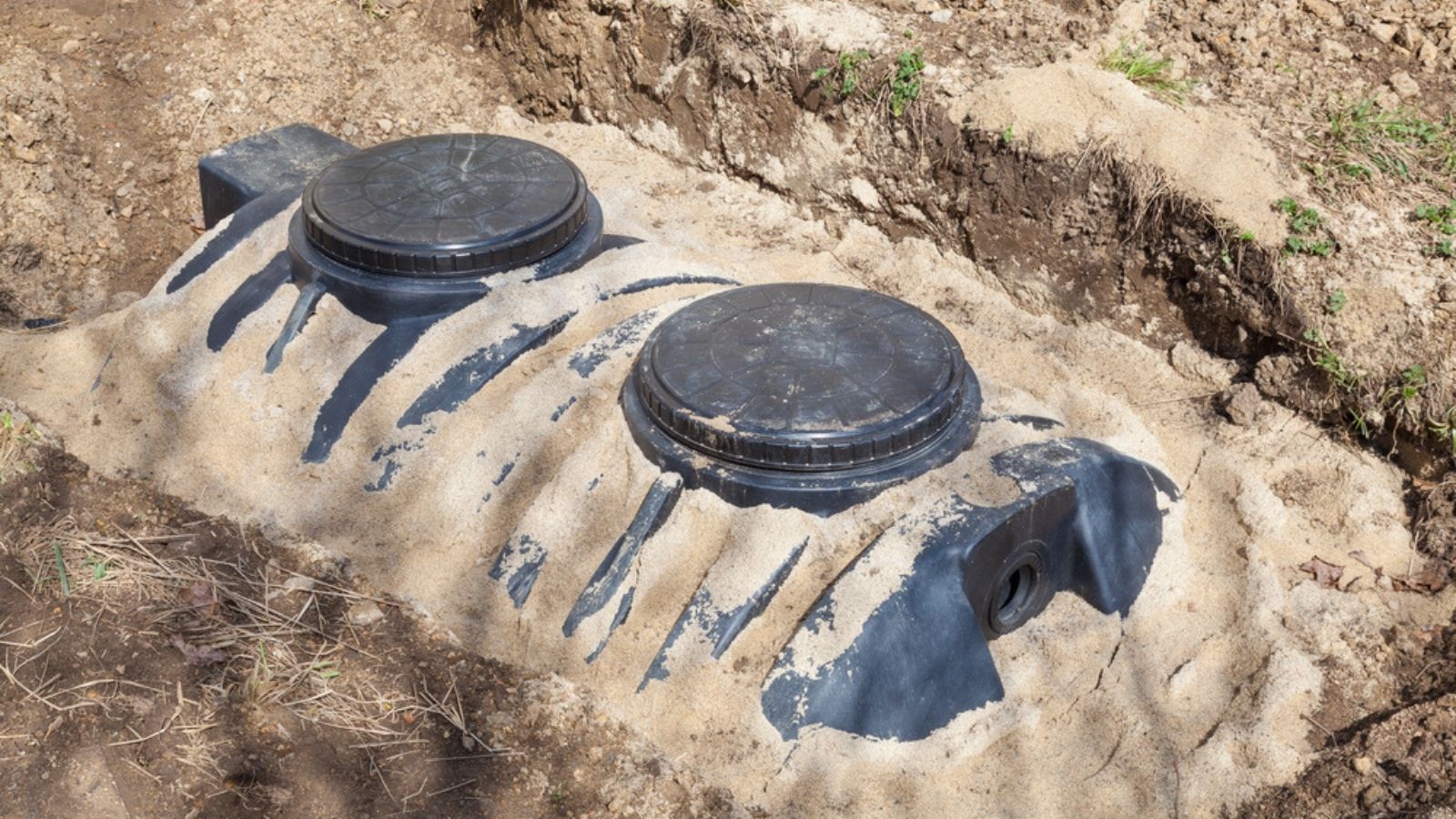
A regular laundry dose of bleach, 3/4 to 1 cup per load, poses no real threat to a healthy septic system. A septic tank is an underground container where solids settle out and anaerobic bacteria break waste down before the liquid effluent moves on to the drainfield. That bacterial population is large and constantly replenishing itself, so the small, diluted amount of bleach riding along with a normal wash load doesn’t come close to wiping it out.
Where people get into trouble is scale, not presence. A splash of diluted bleach water down the sink after mopping the kitchen floor is nothing. Dumping a full, unopened gallon jug straight down the drain because you’re trying to get rid of it is a different story entirely. Single-family septic tanks typically run 750 to 1,250 gallons, so the numbers below assume something in the middle of that range.
How Bleach Actually Affects the Bacteria in Your Tank
Bleach kills bacteria because of what’s in it, and most of that active ingredient never reaches your tank in a form that can still do damage. Sodium hypochlorite, the active ingredient in chlorine bleach, is an unstable compound that starts reacting with organic material the instant it touches it. Household bleach typically runs 5 to 8 percent sodium hypochlorite depending on whether you’re using a regular or concentrated formula, and that active chlorine gets used up the moment it hits anything organic, whether that’s the stain on your shirt, the soap scum on your shower tile, or the grime lining your pipes on the way to the tank.
By the time whatever bleach survives your laundry or cleaning routine reaches the tank, a good portion of it has already reacted its way down to plain salt and water. That’s the real reason a cup of bleach in the wash doesn’t register as a crisis for your tank’s bacteria, even though bleach and bacteria don’t mix at all in concentrated form. It’s also why pouring bleach straight down a drain in bulk is a different situation. Skip the fabric, the grime, and the long pipe run, and there’s a lot more active chlorine left intact by the time it reaches the tank.
How Much Bleach It Actually Takes to Harm Your Tank
It takes about 1.85 gallons of liquid bleach poured straight into a 1,000-gallon tank to destroy the bacteria running the show down there, a figure that comes from lab and field testing on real domestic septic systems rather than guesswork. In concentration terms, that works out to a bleach level of 1.85 milliliters per liter of tank volume, the threshold where the bacterial population actually collapses.
To put that in perspective, if you’re using the recommended 3/4 cup per load, 1.85 gallons is somewhere around 30 loads worth of bleach, all landing in the tank in one concentrated shot. That’s not a realistic accident from normal laundry. It’s the kind of number you’d only hit by deliberately pouring several full bottles straight down a drain, which nobody needs to do.
| Chemical | Amount to destroy bacteria in a 1,000-gallon tank | Recovery time |
| Liquid chlorine bleach | About 1.85 gallons | Roughly 30 hours |
| Lysol disinfectant | About 5 gallons | Roughly 60 hours (2.5 days) |
| Drano crystal drain cleaner | About 0.4 ounces (a few teaspoons) | Roughly 48 hours |
Your Tank’s Bacteria Bounce Back Fast After Bleach Exposure
If bleach does knock back the bacteria in your tank, that population recovers in about 30 hours under normal household use, faster than it takes to bounce back from either Lysol or a bleach-strength dose of a crystal drain cleaner. Lysol-suppressed bacteria take roughly two and a half days to recover, and Drano-suppressed bacteria take about two days.
What that means for you is simple. A one-off slip, someone in the house getting overzealous with a bottle of bleach on a bad mold day, isn’t going to cause lasting harm. Your tank’s bacterial population is resilient and self-renewing as long as it isn’t hit with damaging amounts on a repeated, ongoing basis. What actually causes long-term problems is habitual heavy use, not the occasional dose.
Toilet Tank Bleach Tablets Are a Different Problem

Drop-in bleach tablets for the toilet tank are marketed as septic safe, and for the bacteria in your tank, that’s largely true. The tablet dissolves slowly, so the concentration reaching your septic system at any given moment stays low. That’s not where the real risk with these tablets lies.
The more common complaint I’ve heard from plumbers has nothing to do with your septic tank at all. It’s about your toilet. A tablet sits in constant contact with the flapper, the fill valve, and other rubber and plastic components inside the tank, and continuous low-level chlorine exposure degrades those parts over months, leading to a flapper that won’t seal, a toilet that runs constantly, or water leaking into the bowl. Most tablets are rated to last three to four months per the package instructions, which means a rubber flapper can spend the better part of a year bathed in chlorine before anyone thinks to check it. So the tablets aren’t really a septic bacteria problem. They’re a “your toilet’s guts will wear out early” problem, and that’s worth knowing before you commit to using them long term.
What Actually Damages a Septic System More Than Bleach
Chemical drain cleaners are far more dangerous to your septic system than bleach, gram for gram. It takes only about 0.4 ounces, roughly a few teaspoons, of a crystal drain cleaner to destroy the bacterial population in that same 1,000-gallon tank, compared to nearly two gallons of bleach. If you’re going to worry about one product under your sink, make it the drain cleaner, not the bleach.
Septic tank additives deserve a similar side-eye. These bacteria and chemical products aren’t recommended for a properly functioning system, since your tank already has all the microorganisms it needs, and some additives interfere with waste breakdown or contribute to clogging outright. If your system is healthy, it doesn’t need help from a bottle. It needs you to leave it alone.
How to Use Bleach Without Stressing Your Septic System
Stick to the amount on the bottle, spread your laundry out instead of running ten loads back to back on pump-out day, and never pour leftover or expired bleach straight down the drain in bulk. A little bit, often, is no problem. A lot, all at once, is where the risk actually lives.
Keep bleach and ammonia, or any other cleaner, separate at all times. That’s a household safety issue on its own, since the combination produces toxic fumes, and it has nothing to do with your septic tank specifically. If you’d rather sidestep chlorine bleach altogether, white vinegar, baking soda, and borax handle most of the same jobs around the house, cutting grease, controlling odor, and disinfecting surfaces, without the chlorine. Oxygen-based bleach, built on sodium percarbonate instead of chlorine, is gentler on your tank’s bacteria and still does a solid job whitening laundry and lifting stains.
None of that replaces basic maintenance. Have your tank pumped on the usual 3 to 5 year schedule regardless of which cleaning products you use. Regular maintenance does more for your system’s long-term health than any product choice you make under the sink.
FAQs
Is it safe to pour bleach straight down the drain?
Pouring a small amount of diluted bleach water down the drain, like the leftover water from wiping down a countertop, is fine. Pouring a large quantity of full-strength bleach straight down the drain, especially to dispose of an old bottle, is not, since it skips the dilution that normally happens during laundry or cleaning and hits your tank at a much higher concentration.
Can I mix bleach with vinegar or ammonia?
No, and this has nothing to do with your septic system specifically. Mixing bleach with ammonia produces toxic chloramine gas, and mixing it with vinegar releases chlorine gas, both dangerous to breathe in an enclosed bathroom. Use one cleaner at a time and rinse surfaces between products.
How do I know if a chemical has damaged my septic system?
Slow-draining sinks and tubs, gurgling toilets, sewage odor near the tank or drainfield, and soggy patches of grass over the leach field are the classic warning signs. These point to a bacterial population that isn’t keeping up with the waste load, whatever the cause, and they’re worth calling a septic professional about rather than waiting to see if they resolve on their own.
Does using bleach every day eventually add up and cause a problem?
Routine daily use at recommended amounts is very different from the one-time concentrated dose it takes to actually harm the tank, since your tank’s bacteria are constantly replenishing between uses. That said, a household running several loads of bleach-heavy laundry every single day, on top of chlorine-based cleaners throughout the house, is putting more sustained pressure on that bacterial population than one using bleach occasionally. Moderation, not total avoidance, is the real takeaway.
Are septic-safe bleach alternatives actually as effective as bleach?
For general cleaning and odor control, vinegar, baking soda, and borax do a solid job. A cup of white vinegar in a spray bottle with a cup of water cuts through soap scum and mild odors about as well as a diluted bleach spray does. For heavy-duty disinfecting and stain removal on white fabrics, oxygen bleach comes close to chlorine bleach but isn’t quite as fast-acting or as effective against certain stains, particularly grass and blood. None of the natural alternatives disinfect quite as thoroughly as chlorine bleach does, so if you need true sanitizing power, say for cloth diapers or a sickroom cleanup, occasional chlorine bleach used at the recommended dose is still a reasonable choice for a septic system.
Bleach and a septic tank can coexist just fine. Use the amount on the label, don’t treat your drain as a disposal chute for old bottles, and your tank’s bacteria will keep doing their job without missing a beat. That’s exactly how I run my own place. If you want to cut back anyway, vinegar and borax will cover most of what you need under the sink.
You might also like…
17 Things You Should Deep-Clean Before Guests Arrive (But Probably Haven’t Thought About)
Skip the Dryer Sheets: The Laundry Trick That Gets Towels Soft for Pennies

