
Affiliate disclosure: This post may contain affiliate links. Please see full disclosure.
The biggest spider in the U.S. is the Johnny Cash tarantula, with females reaching a leg span of around six inches, and it’s just one of fifteen large species you’re likely to run into if you spend real time outdoors. Only two of them, the black widow and the brown recluse, are medically significant to a healthy adult. The rest look alarming and do essentially nothing.
I’ve spent years doing the kind of outdoor work that puts you face to face with big spiders more often than most: hauling firewood, turning over garden beds, clearing out a shed nobody’s touched since last fall, picking blackberries out of bramble that never gets pruned. In that time I’ve been startled more times than I can count and bitten exactly zero. I’m genuinely not afraid of spiders. Most of them want nothing to do with you, and if one makes its way indoors and isn’t causing a nuisance, mine get to stay. They earn their keep as free pest control, catching a lot of insects I don’t want in the house.
I’m not a doctor, though, so a word of caution up front: if you ever get what you think is a spider bite and then start feeling properly unwell, spreading pain, muscle cramps, trouble breathing, fever, or a wound that keeps getting worse, call a medical professional or poison control right away.
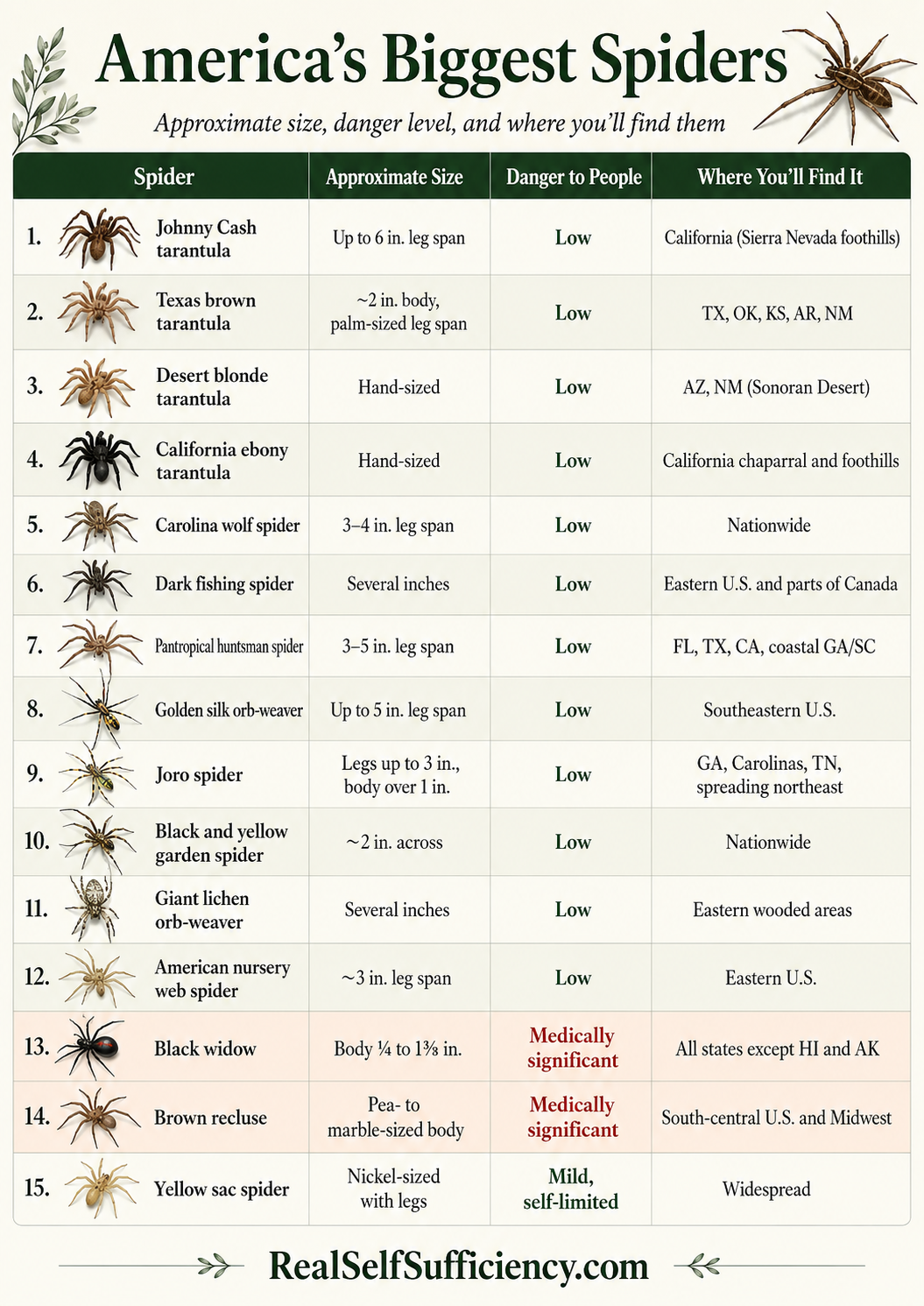
Here’s a quick reference for all fifteen, followed by the full rundown of what each one is actually like.
| Spider | Approximate Size | Danger to People | Where You’ll Find It |
| Johnny Cash tarantula | Up to 6 in. leg span | Low | California (Sierra Nevada foothills) |
| Texas brown tarantula | ~2 in. body, palm-sized leg span | Low | TX, OK, KS, AR, NM |
| Desert blonde tarantula | Hand-sized | Low | AZ, NM (Sonoran Desert) |
| California ebony tarantula | Hand-sized | Low | California chaparral and foothills |
| Carolina wolf spider | 3-4 in. leg span | Low | Nationwide |
| Dark fishing spider | Several inches | Low | Eastern U.S. and parts of Canada |
| Pantropical huntsman spider | 3-5 in. leg span | Low | FL, TX, CA, coastal GA/SC |
| Golden silk orb-weaver | Up to 5 in. leg span | Low | Southeastern U.S. |
| Joro spider | Legs up to 3 in., body over 1 in. | Low | GA, Carolinas, TN, spreading northeast |
| Black and yellow garden spider | ~2 in. across | Low | Nationwide |
| Giant lichen orb-weaver | Several inches | Low | Eastern wooded areas |
| American nursery web spider | ~3 in. leg span | Low | Eastern U.S. |
| Black widow | Body ¼ to 1⅜ in. | Medically significant | All states except HI and AK |
| Brown recluse | Pea to marble-sized body | Medically significant | South-central U.S. and Midwest |
| Yellow sac spider | Nickel-sized with legs | Mild, self-limited | Widespread |
1. Johnny Cash Tarantula (Aphonopelma johnnycashi): The Biggest Spider in the U.S.
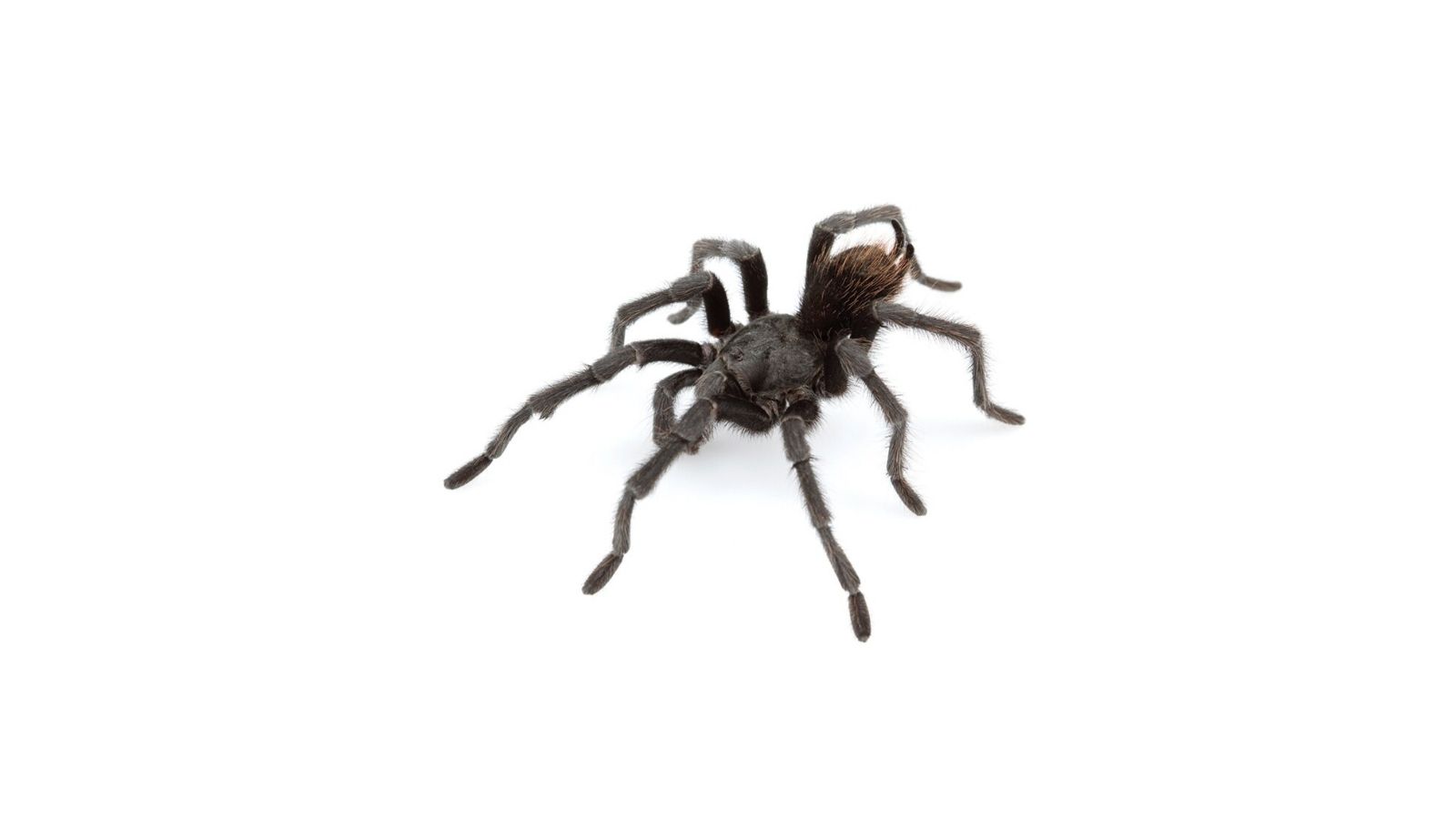
This is a newer name in the spider world, and it’s currently considered the largest spider in the U.S. by leg span.
It was only described in 2016, in a decade-long taxonomic study that examined nearly 3,000 tarantula specimens. It’s found near Folsom Prison in California, which is why it ended up named after Johnny Cash. Adult males are dark, almost black; females are dark brown. Big females can reach leg spans around six inches across.
You’re most likely to bump into this one in parts of California with dry, scrubby habitat. Like other tarantulas, it lives in burrows and only really gets noticed when males start roaming in late summer and fall looking for females.
Despite the size and the name, it’s not an attack spider. Tarantulas in this group are slow and cautious. If they feel threatened, they usually back off, and if that fails, they’ll kick hairs, using their back legs to flick hairs off their abdomen as a defense. Those hairs can get into skin, eyes, or airways and cause itching and irritation.
Biting is the last step. Their venom is meant for insects, not people. For a healthy adult, a bite would usually feel more like a wasp sting than anything life-threatening, unless there’s an allergy involved.
2. Texas Brown Tarantula (Aphonopelma hentzi): The Classic Roadside Tarantula
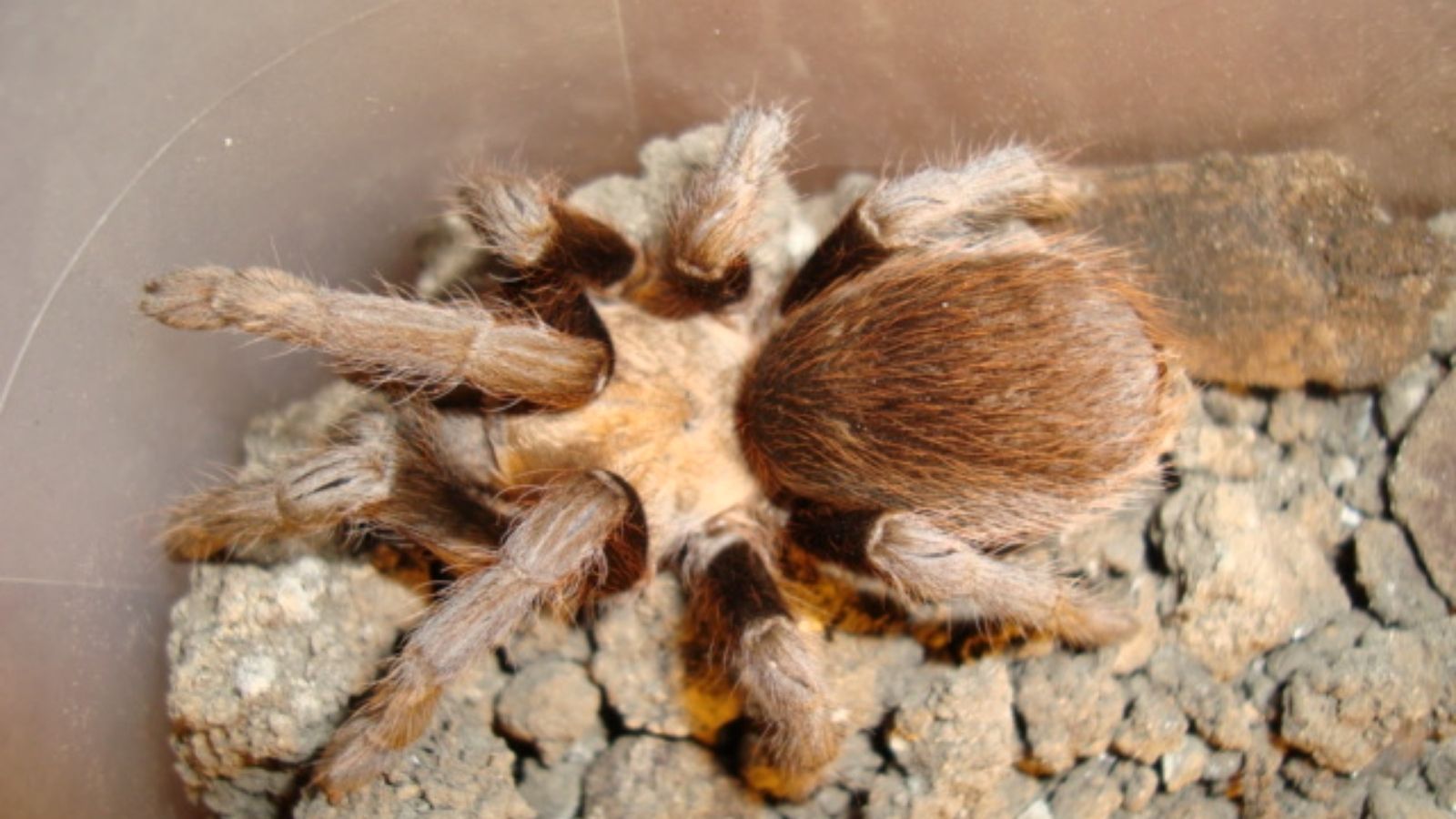
If you picture a tarantula crossing a dusty road in the southern U.S., this is probably the one in your head.
Texas browns are thick-bodied, hairy, and usually brownish-tan with darker legs. Adult females have chunky bodies that are around two inches long, with legs that reach out to roughly the size of your palm.
They live in the south-central states, Texas, Oklahoma, Kansas, Arkansas, New Mexico, and nearby, mostly in grassland, scrub, and desert edges. They spend days tucked away in burrows or cracks and come out to hunt at night.
They look like something that should be in a horror film, but behavior-wise, they’re closer to a nervous groundhog. If they feel threatened, they’ll usually try to retreat first, then rear up and kick irritating hairs off their abdomen, and only bite as a last resort.
Those hairs can make your skin itch and burn if they get stuck in it, but the venom itself isn’t considered medically important for most people.
3. Desert Blonde Tarantula (Aphonopelma chalcodes): Arizona’s Hand-Sized Spider
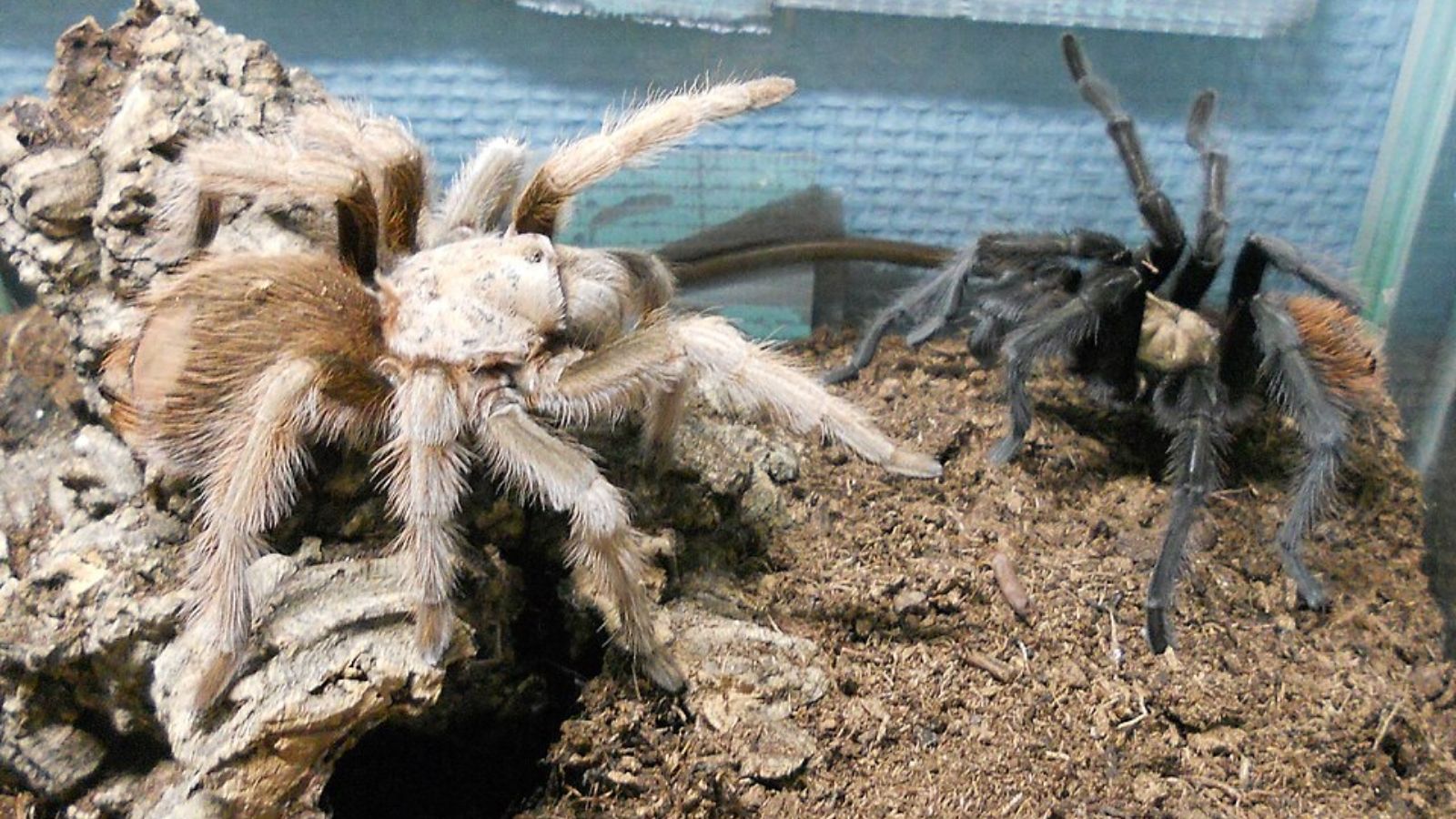
Same general build as the Texas brown, but in desert colors.
Desert blondes have pale, sandy carapaces and darker legs. Big females can easily span a grown person’s hand. They’re found mainly in the Sonoran Desert region, Arizona, parts of New Mexico, and into northern Mexico, in dry scrubby areas, foothills, and rangeland.
They live in burrows or in cracks under rocks. A lot of people only see them when males wander in late summer and early fall. On some warm evenings, it can look like the ground is moving if you shine a flashlight across it.
Again, the size is the scariest thing about them. They’re slow, they don’t go looking for trouble, and the venom isn’t usually a big medical issue in healthy adults.
If you’re shifting rocks or boards in desert country, gloves and a quick look before you pick something up are enough to avoid most surprises.
4. California Ebony Tarantulas (Aphonopelma species): Fall’s Wandering Males
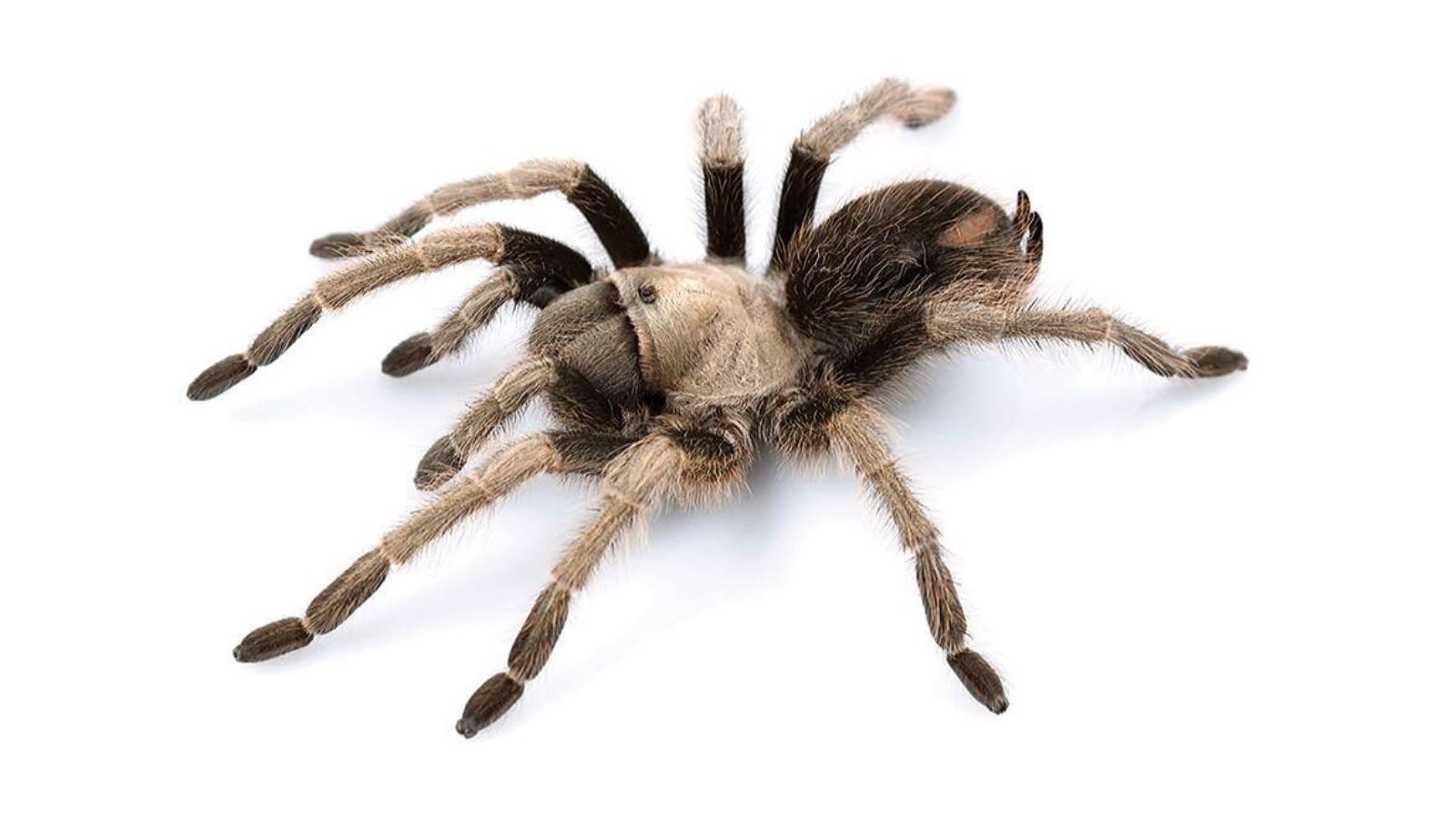
California has several similar tarantulas that get lumped together as “ebony” tarantulas. They’re dark, they’re solid, and they’re noticeable when they stroll across a trail.
They live in drier parts of California, chaparral, foothills, scrub. Most of the time they’re underground in burrows. In fall, mature males leave their burrows and start roaming for miles in search of females, which is when people suddenly think the hills are “full of tarantulas.”
These are not aggressive, jump-on-your-leg animals. They’re sit-and-wait ambush predators that eat beetles, crickets, and other invertebrates. If you see one crossing a path, it’s just trying to get from one hiding place to another before something eats it.
Same theme: big body, small actual danger for humans.
5. Carolina Wolf Spider (Hogna carolinensis): The Largest Wolf Spider in North America
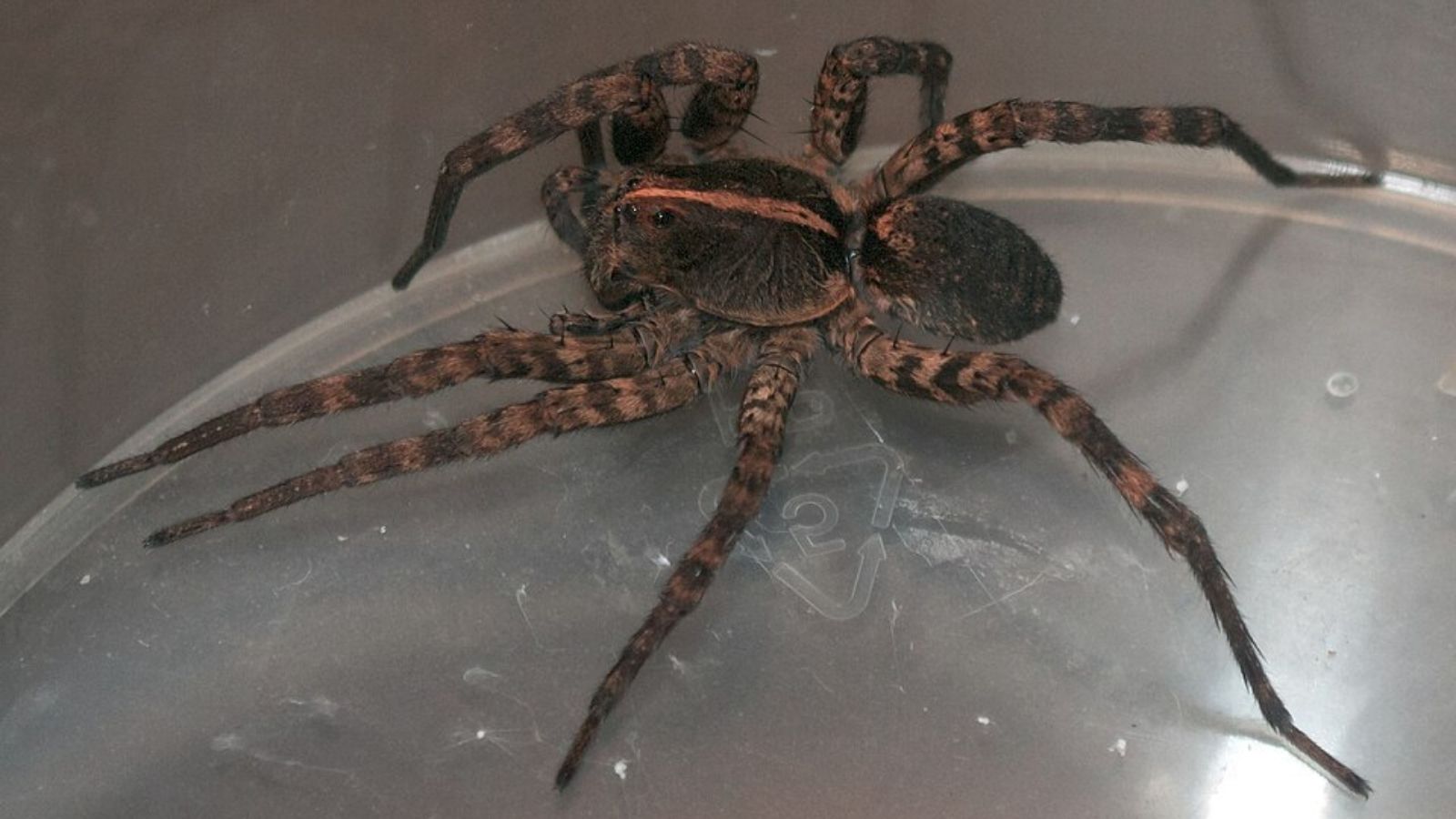
The Carolina wolf spider is the largest wolf spider in North America, and it moves like it means business.
Adult females have bodies close to an inch long and leg spans that can hit three to four inches. They’re chunky, hairy, and gray-brown with stripey markings that help them disappear against soil and rocks.
They’re found across much of the U.S., especially in open, dry areas such as sandy patches, fields, bare ground around foundations, and along roadsides. They don’t build classic webs. Instead, they hide in burrows or under objects and rush out after prey.
This is the one that makes people swear because it runs. If you flip a board and a big wolf spider bolts, it feels like it’s charging you. It’s almost always just sprinting for the nearest cover.
Bites do happen when one gets trapped against skin, but medical sources note that wolf spider venom is not considered dangerous to humans; pain and swelling usually settle down on their own.
One thing that really messes with people: females carry their babies. First they carry the egg sac on their spinnerets. After the eggs hatch, dozens of spiderlings ride on their back for a while. If you see a big spider with what looks like a textured or moving back, that’s what you’re looking at.
6. Dark Fishing Spider (Dolomedes tenebrosus): The One That Walks on Water
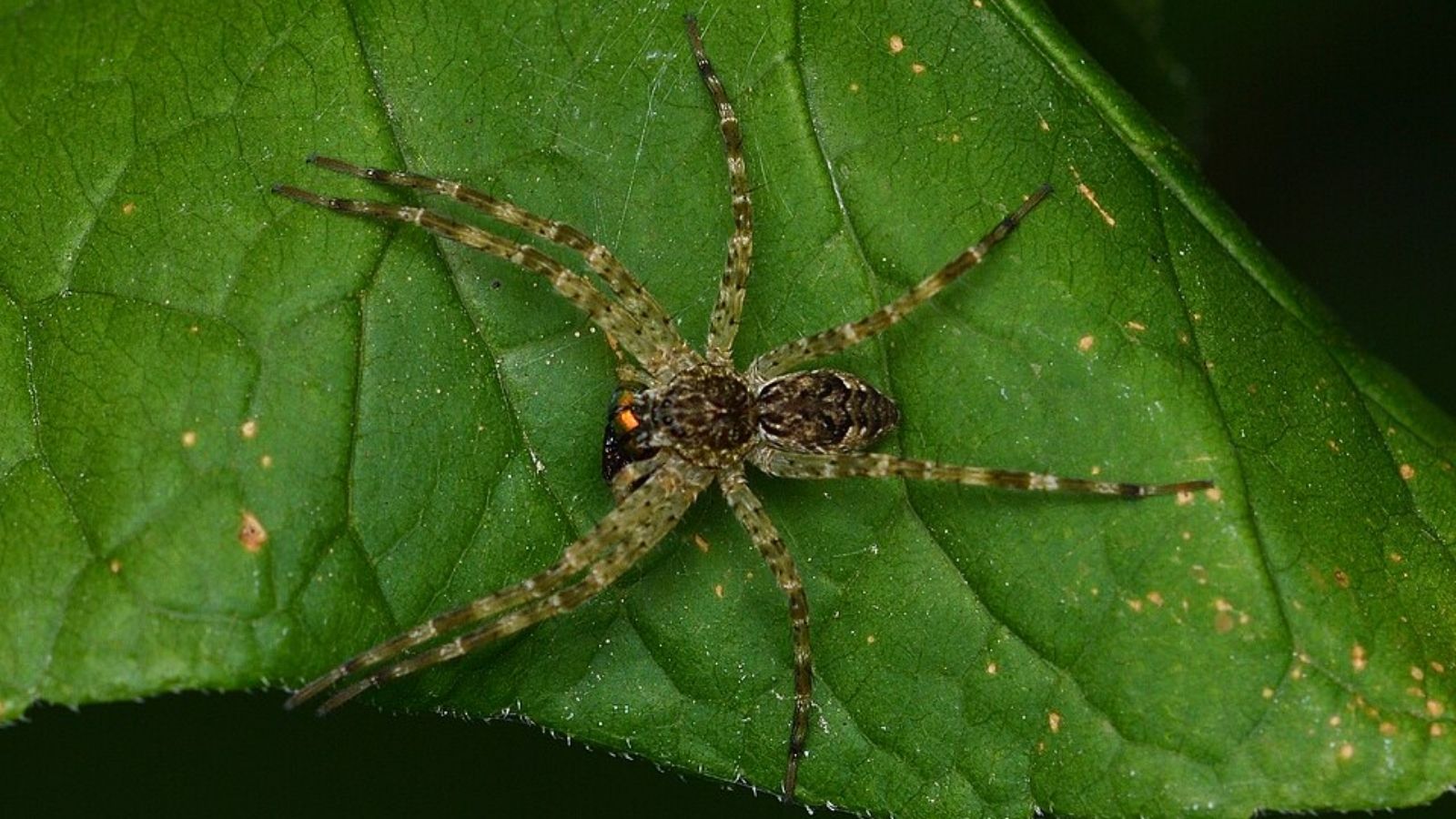
Fishing spiders are built like wolf spiders that took up water sports.
The dark fishing spider is a large species found across much of the eastern U.S. and parts of Canada, often in wooded areas near lakes and streams, but also on tree trunks and building walls.
Females can span several inches with legs extended. The body is slimmer than a tarantula’s but still hefty compared to your average house spider. Color is usually mottled brown and gray with subtle chevrons on the abdomen.
They’re fast, and they’re good climbers. You’ll see them on dock pilings, boathouses, tree trunks, and occasionally inside cabins and sheds.
They can walk on water by using the surface tension and the fine hairs on their legs. Some individuals will even snatch small fish or tadpoles near the surface, though most of their food is insects.
They’re shy, and the venom isn’t considered medically significant for people. Most bites happen when someone grabs one by accident.
7. Pantropical Huntsman Spider (Heteropoda venatoria): The Flat-Bodied Wall Climber
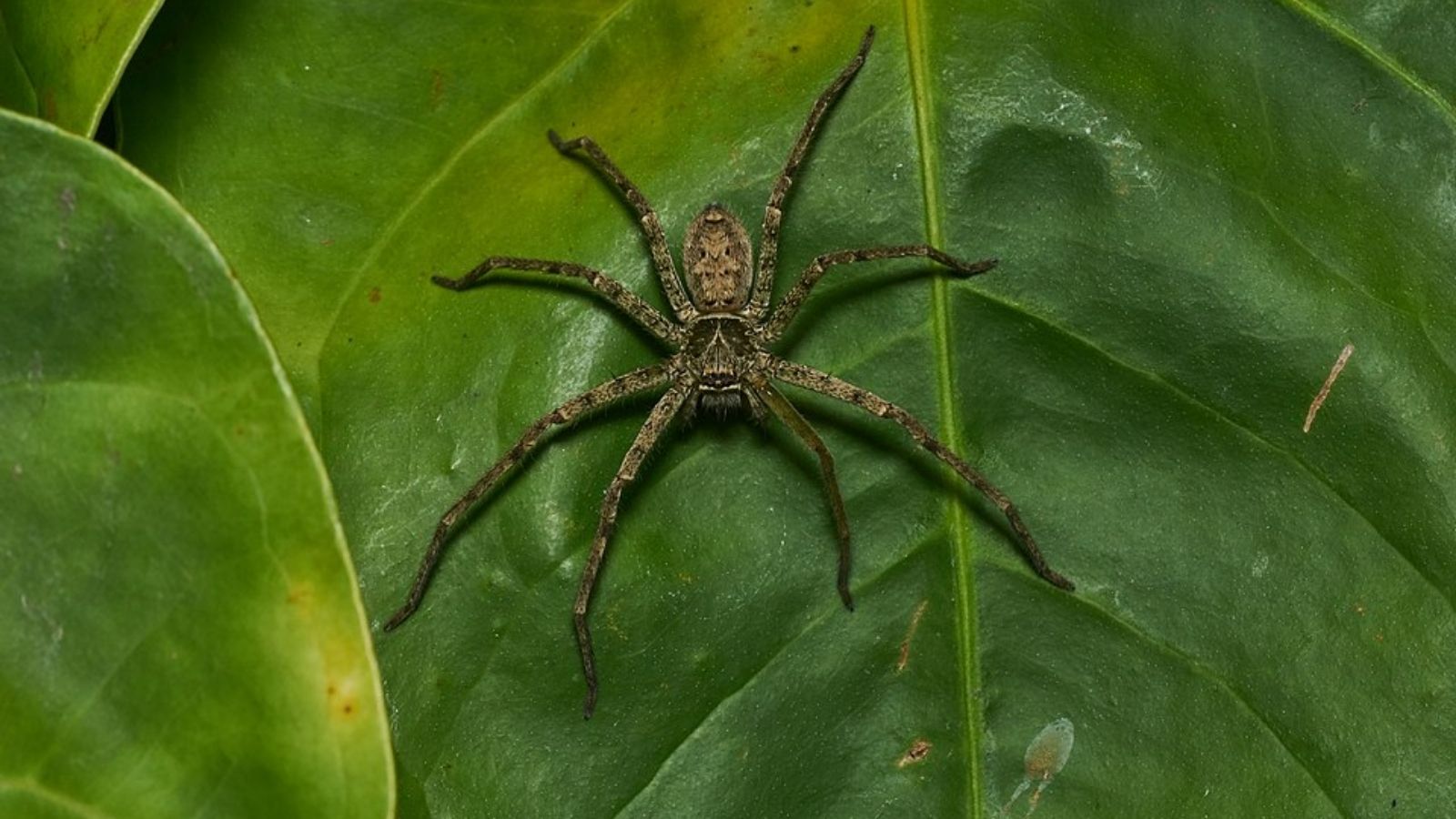
These are the flat, long-legged spiders that appear on walls in warm states and make everyone re-evaluate bare feet.
The pantropical huntsman is an introduced species in parts of the southern U.S., especially Florida and the Gulf Coast, and also turns up in coastal Georgia, South Carolina, Texas, and California. Adults have bodies around an inch long, with leg spans roughly three to five inches.
The body is flat and brown, with legs that spread sideways like a crab. That shape lets them squeeze into cracks in door frames, loose bark, and other tight spots.
They don’t build webs. They roam around at night hunting cockroaches, crickets, moths, and other insects. If they end up inside a house, that’s usually why, following the food.
They move fast, which is unsettling, but they’re not considered medically dangerous. University and extension write-ups describe their venom as not serious for healthy adults; a bite can hurt and swell but usually stops there.
If you share a house with one, it’s basically an eight-legged pest control tech.
8. Golden Silk Orb-Weaver (Trichonephila clavipes): The Banana Spider With a Five-Inch Span
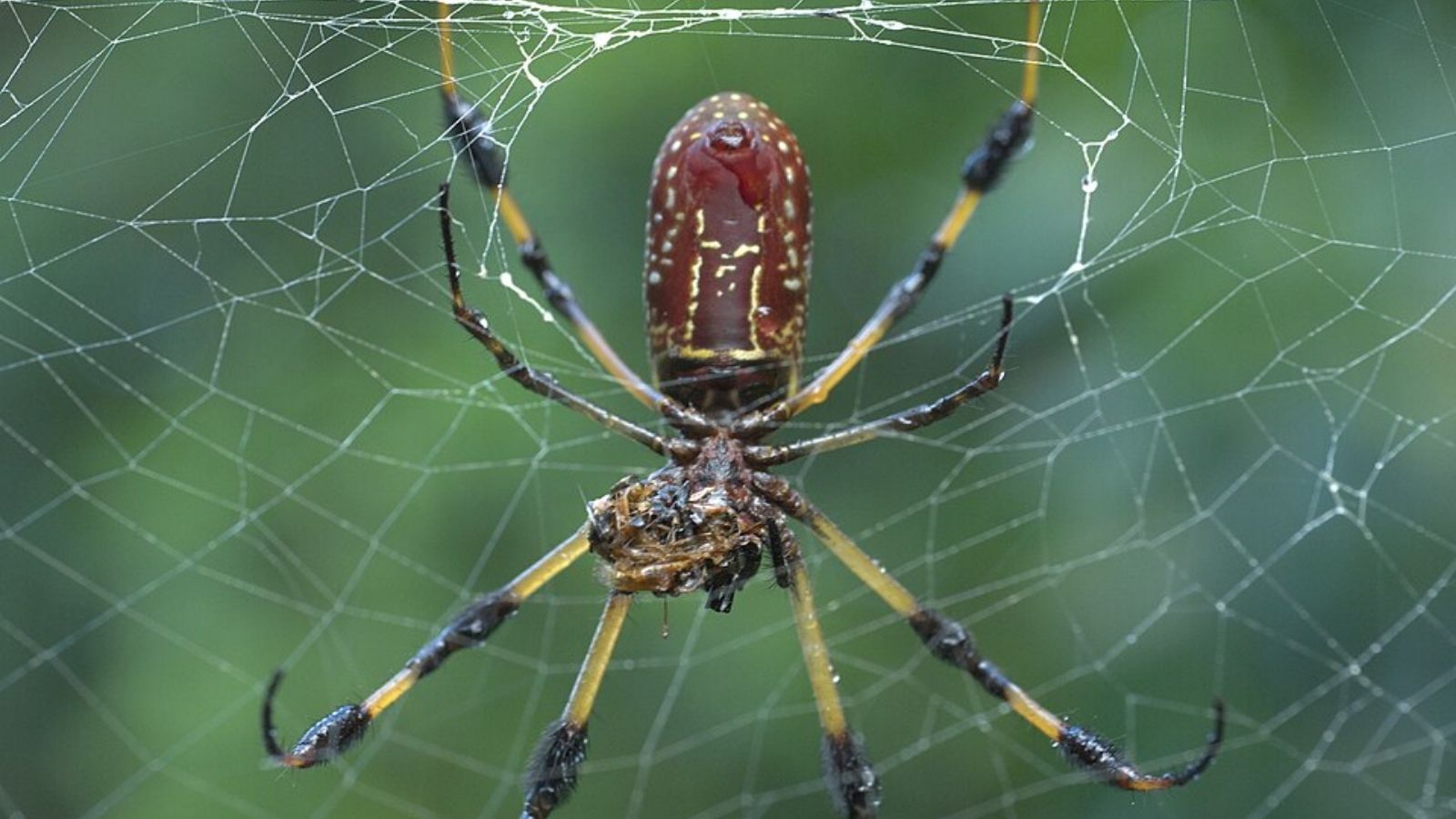
Walk through the woods in the Southeast and you eventually meet this spider face-first.
Golden silk orb-weavers build huge webs between shrubs, trees, and other supports. The silk has a yellowish tint in strong light. Adult females have long legs and slender bodies, with bodies over two inches long and leg spans that can reach five inches. They come in gold, yellow, and dark brown patterns.
They’re found in warm, humid states in the Southeast. Trails that cut through woods, edges of clearings, backyard trees, and spots near water are all fair game for a golden web.
They’re daytime spiders and usually sit right in the center of the web, waiting for large flying insects. Moths, grasshoppers, and even small wasps get wrapped up.
To humans, they’re mostly just jump scares. Their venom is mild; bites are rare and usually happen when someone grabs one by mistake. For most people, that’s more in the bee-sting category than anything serious.
9. Joro Spider (Trichonephila clavata): The Newest Arrival, Still Spreading
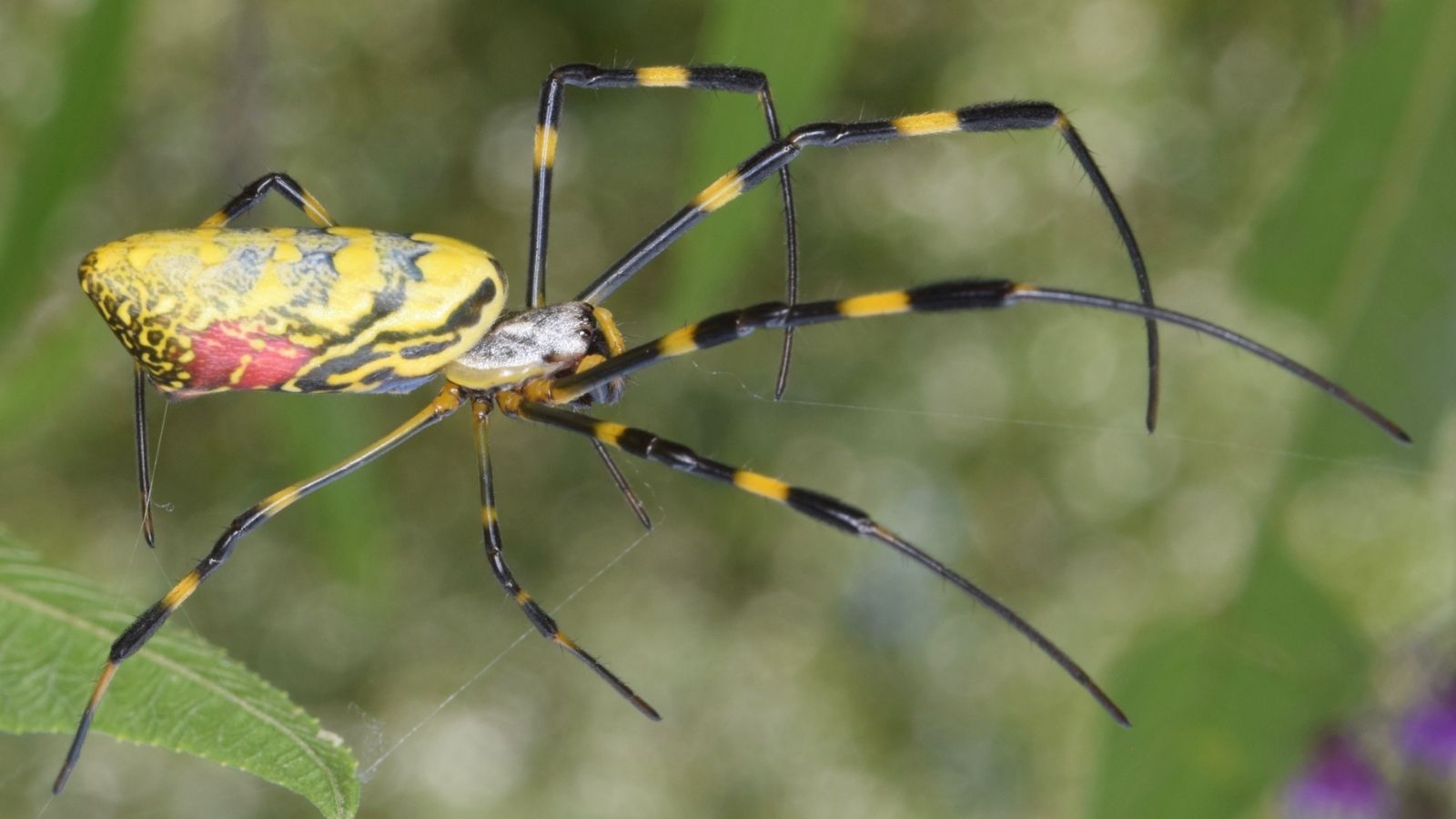
The Joro spider is another big orb-weaver, but it’s not originally from here.
It’s native to East Asia and was first documented in the U.S. in 2014 in northeast Georgia. Since then, it has spread through Georgia, the Carolinas, and Tennessee, with researchers noting there’s little to stop it eventually expanding through most of the eastern U.S.
Females are bright yellow with dark bands and red markings, with black-and-yellow banded legs that run up to three inches long and a body that can exceed an inch. Their webs are large and often strung high between trees, power lines, and porch railings.
They’ve been called flying spiders, which sounds dramatic. What actually happens is that tiny juveniles release silk and drift on air currents, a behavior called ballooning. A lot of spider species do this when they’re small.
So far, there’s no evidence that Joro spiders are dangerous to humans. Their venom appears comparable to other orb-weavers. They’d rather drop out of the web or scuttle away than stand and fight.
Annoying when you walk through a web, yes. Problem for your health, no.
10. Black and Yellow Garden Spider (Argiope aurantia): The Zigzag-Web Spider
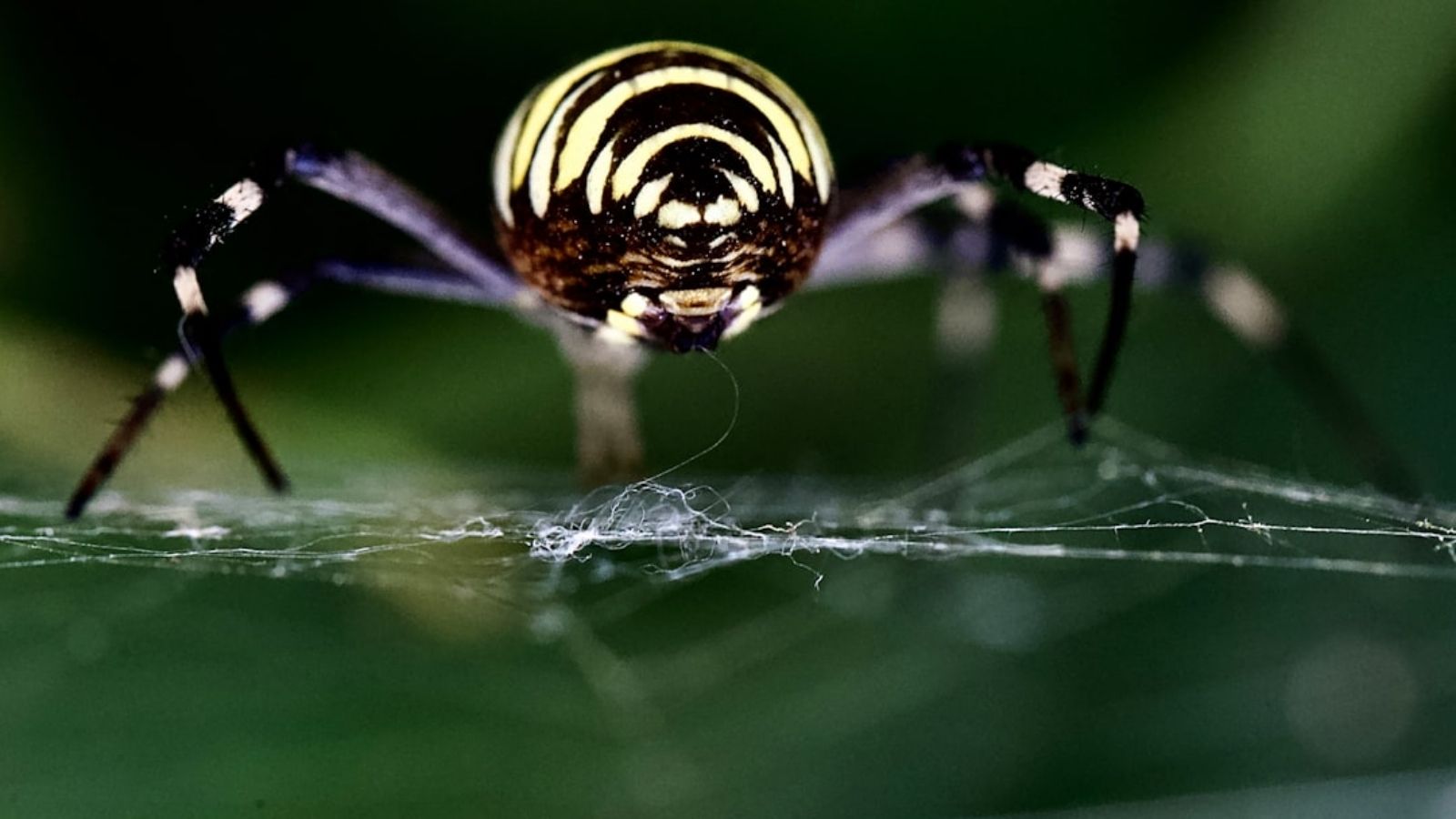
If you’ve ever seen a big striped spider sitting right in the middle of a web by the tomatoes or along a fence, you’ve probably met this one.
Female garden spiders are bold yellow and black with long legs. Overall size is a couple of inches across when you include the legs, and their webs can easily be two feet wide. The webs usually have a thick zigzag of silk through the center.
They’re common across much of North America in sunny, open spots, garden edges, tall weeds, fence lines, and around sheds.
They’re sit-and-wait hunters. They hang in the center of the web or off to the side with a foot on the silk, feeling for vibrations from trapped insects. Grasshoppers, flies, bees, and wasps end up on the menu.
As far as humans go, they’re not a problem. They don’t leave the web to chase you, and bites are rare. Venom is considered mild for people; again, think bee-sting range unless there’s an allergy.
If you can bring yourself to leave their webs alone, they’ll quietly work on your grasshopper population all summer.
RELATED: 7 Natural Ways to Keep Spiders Out of Your Home
11. Giant Lichen Orb-Weaver (Araneus bicentenarius): The Camouflaged Heavyweight
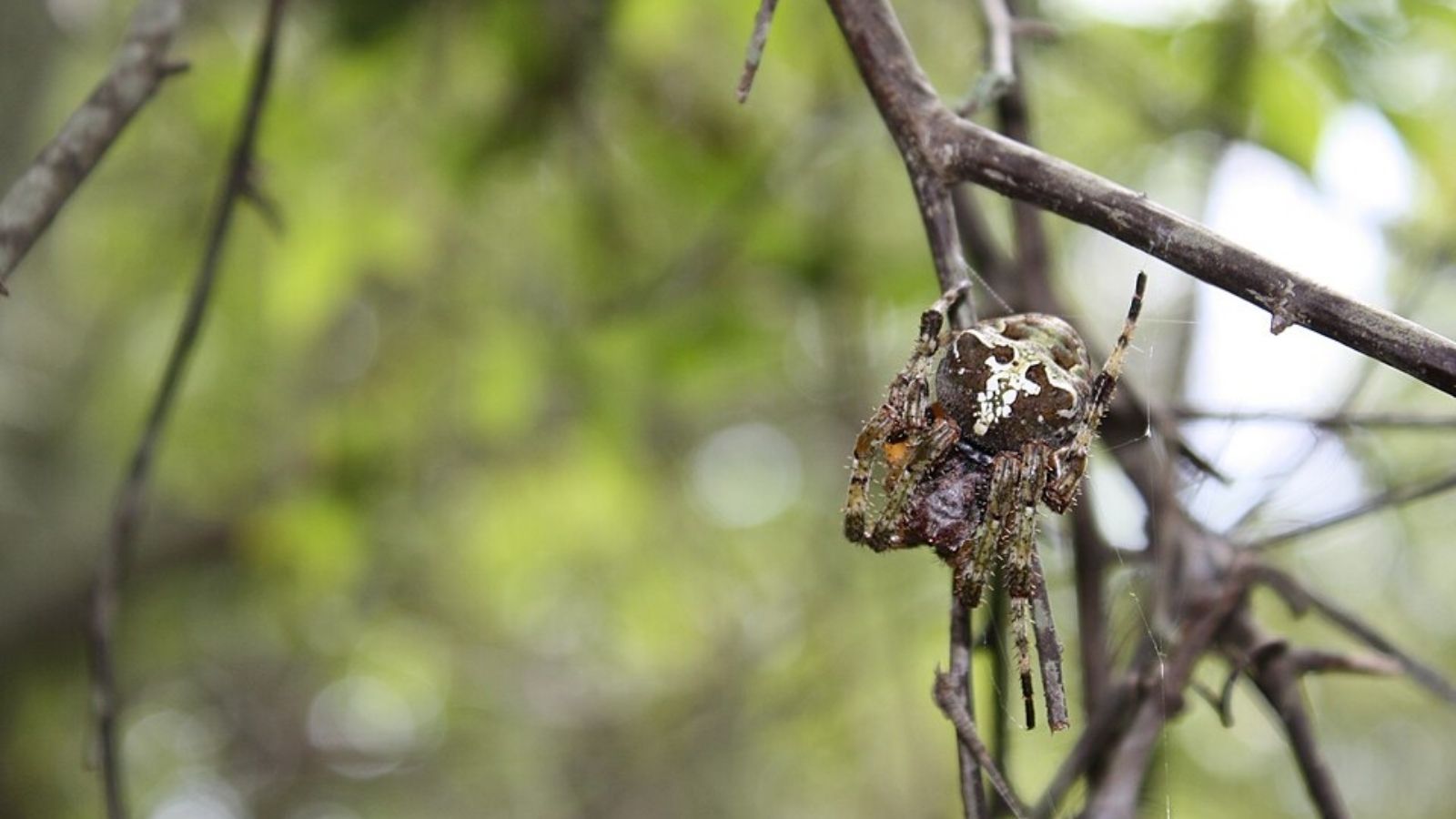
This one doesn’t get as much attention as the bright yellow garden spiders, but it’s one of the heftier orb-weavers in North America.
Giant lichen orb-weavers have big round abdomens patterned in greens, grays, and browns that blend in with moss and lichen. With legs extended, a mature female can easily span several inches.
They like wooded areas with lots of trees and shrubs. Their webs can get large, but they often sit off to the side in a retreat of leaves or bark during the day and move into the web at night.
They’re not aggressive and don’t like light, which is why you usually see them after dark in the beam of a flashlight. Like the other orb-weavers here, they’re interested in moths and beetles, not people.
Bites are very uncommon and not considered medically important.
12. American Nursery Web Spider (Pisaurina mira): The One That Carries Her Eggs in Her Jaws
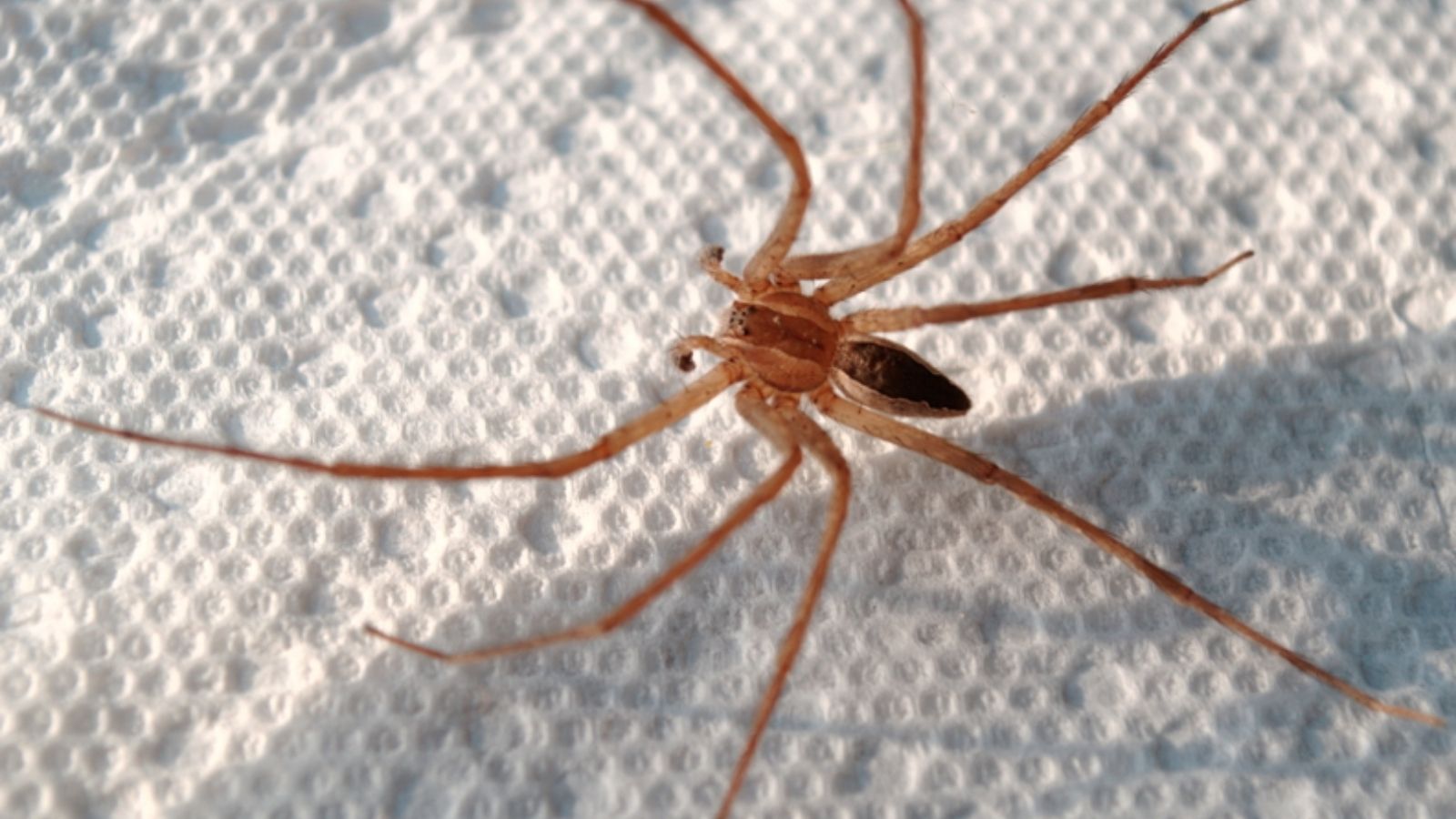
From a distance, nursery web spiders look a lot like wolf spiders: long legs, earthy colors, and good at sudden sprints.
The American nursery web spider is fairly large for a non-tarantula spider. Females can span close to three inches with legs extended. They’re usually brown or tan with a darker stripe down the body.
They’re common in the eastern U.S. in tall grass, shrubs, and along edges of fields and woods. Instead of building orb webs to catch food, they hunt on vegetation, grabbing insects that come within range.
The name comes from their parenting style. Females carry an egg sac in their jaws, then spin a loose nursery web in vegetation and stand guard while the spiderlings are small.
They’re not seeking human contact and aren’t known as medically significant biters. If you see one holding an egg sac or hanging near a clump of web full of tiny spiders, that’s a mother trying to keep her brood safe.
13. Black Widows (Latrodectus species): One of Two Medically Significant U.S. Spiders
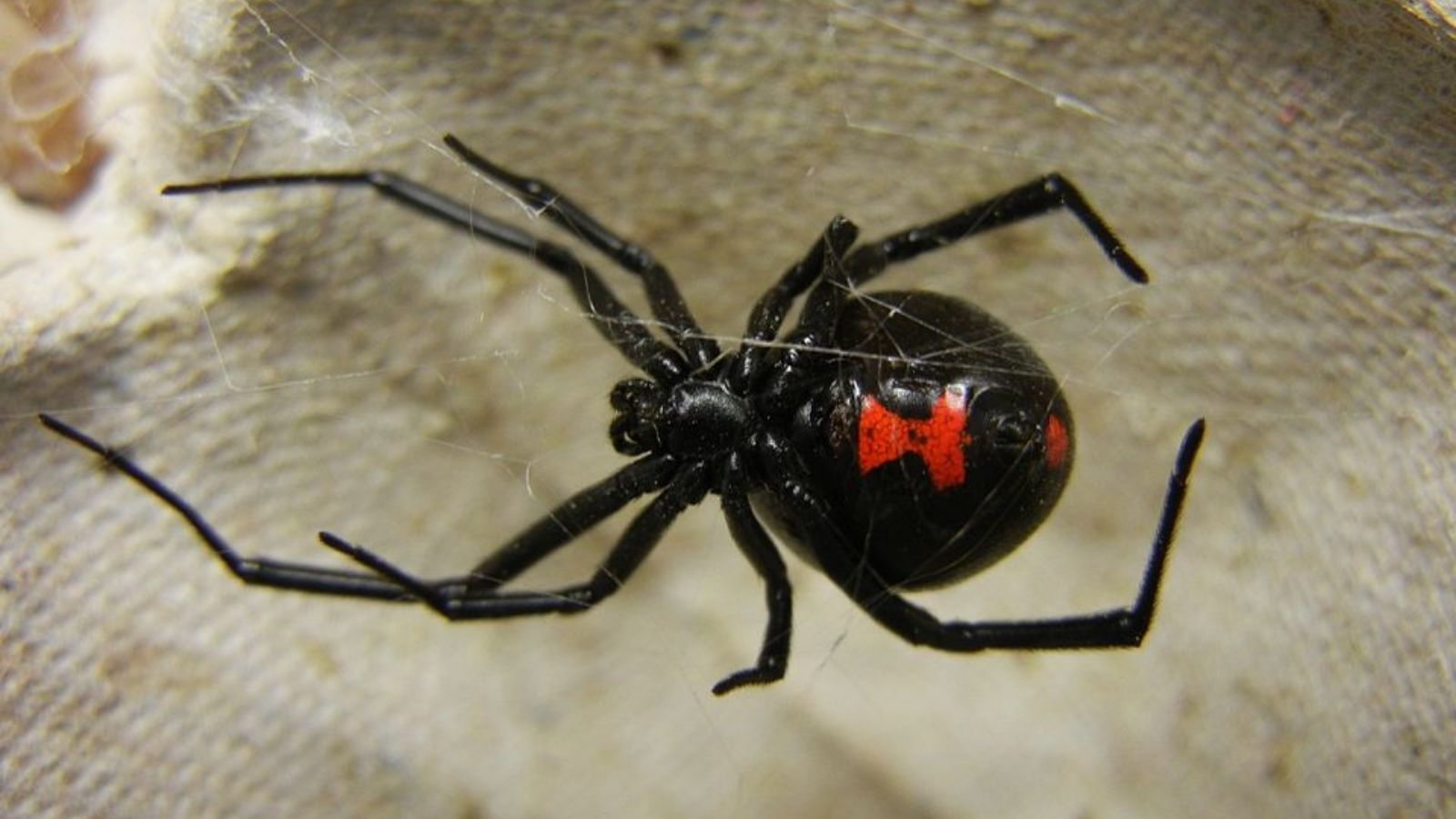
Now we’re into the spiders that aren’t very big but deserve real respect.
In North America, there are a few species of black widow: southern, western, and northern, plus some close relatives. Females are shiny black with a red marking under the abdomen, often shaped like an hourglass.
They’re usually about half an inch long in the body, with legs that make them look larger. They build messy, tangled webs in dark, sheltered spots: under steps, in woodpiles, behind junk in sheds and garages, around outdoor equipment, and in meter boxes.
Their venom is neurotoxic. Medical references describe a pattern called latrodectism: after a bite, some people develop widespread muscle pain and cramps, abdominal pain, sweating, nausea, and restlessness, as the venom affects nerve signaling.
Not every bite injects venom, and many wet bites still only cause local pain. But severe cases do happen, and they are serious.
Thankfully, bites are rare, and the outcomes are better than the reputation suggests. A five-year study found an average of about 2,663 black widow bites reported to U.S. poison control centers each year, with only 830 needing treatment at a health care facility, and none fatal.
It’s a different story for dogs. A black widow’s venom is more concentrated relative to a dog’s size, and a single bite can be lethal to a dog without prompt treatment. If you’re in widow country, it’s worth keeping dogs leashed away from woodpiles and undisturbed junk, and treating any suspected bite on a pet as an emergency vet visit, not a wait-and-see.
Widows don’t go roaming around looking for ankles. Most bites happen when someone grabs or presses against the spider without realizing it, reaching into a woodpile, putting on gloves or boots that were stored in a shed, or moving junk that’s been sitting for a long time.
If you’re in widow country and you get a bite followed by spreading pain, muscle cramps, or feeling really off, that’s a clear get-checked-by-a-doctor moment.
14. Brown Recluse (Loxosceles reclusa): The Other Medically Significant Spider
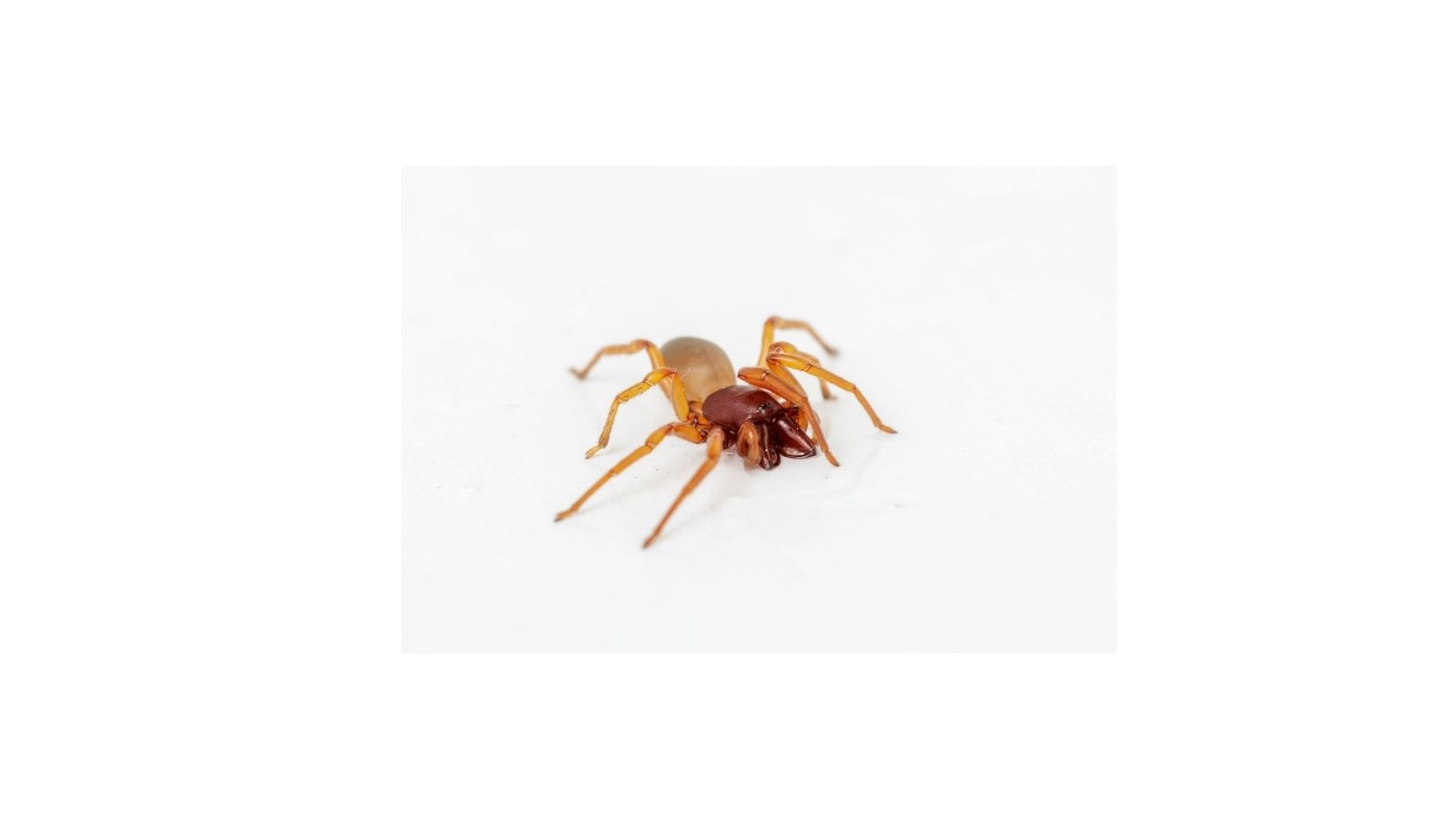
Brown recluses are modest in size but have an outsized reputation.
The body is about the size of a pea to a small marble, with long, thin legs. Color is usually plain brown, with a darker violin-shaped marking on the front part of the body. They also have six eyes arranged in pairs, while most spiders have eight.
They’re native to the central and south-central U.S. in places like Missouri, Kansas, Arkansas, Oklahoma, and neighboring states. They like dry, undisturbed indoor spaces: basements, closets, cardboard boxes, stored shoes, and behind furniture.
Their venom can, in some cases, damage tissue and cause necrotic lesions, wounds where the skin and underlying tissue break down, and occasionally more widespread illness. That’s why they get so much attention.
It’s important context, though. Most bites do not cause large, dramatic wounds. Confirmed recluse bites are also rarer than the internet makes it sound. Brown recluse bites are greatly over-diagnosed, and many suspected cases turn out to be something else entirely, from other spider look-alikes to bacterial infections. There are even long-term observations of homes where many recluses lived and no one was ever bitten.
Still, if you’re in recluse territory and you get a bite that becomes more painful over 24 to 48 hours, turns purple or gray in the center, or keeps getting worse instead of better, you want a doctor to look at it.
The same caution applies to dogs. A brown recluse bite is considered a medical emergency for any species, including dogs and cats, and the same slow-developing, bull’s-eye-shaped wound shows up on pets. If your dog suddenly starts limping or shaking for no obvious reason and you’re in recluse country, it’s worth a vet visit even before any wound is visible.
Practical prevention is simple. Shake out stored clothes and shoes, don’t leave piles of cardboard and junk untouched for years, and use sealed plastic bins for long-term storage if you can.
15. Yellow Sac Spiders (Cheiracanthium species): Small but Quick to Bite
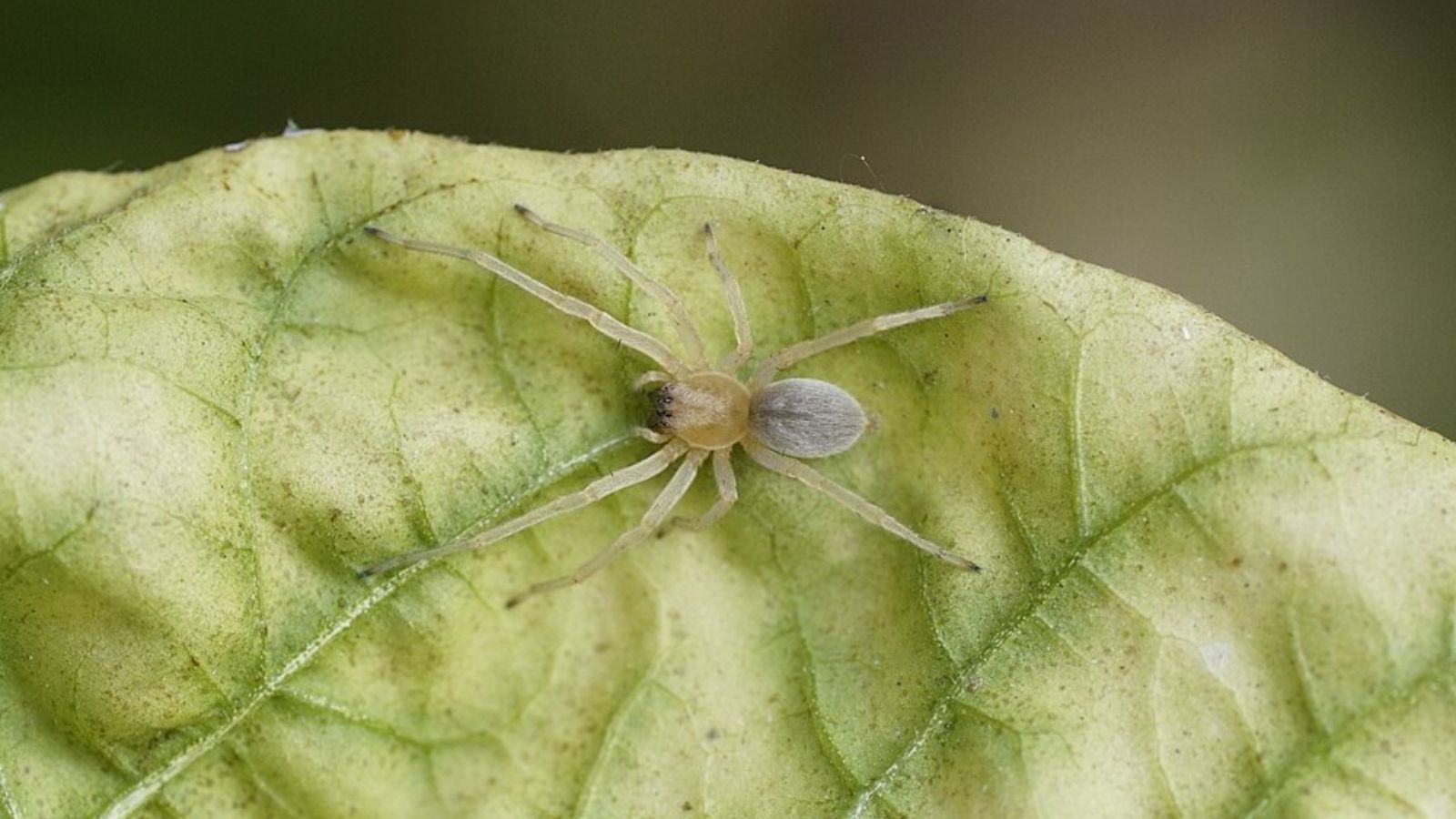
Yellow sac spiders aren’t as large as the tarantulas or huntsman spiders, but they’re bigger than your average corner spider and more willing to bite when trapped.
In North America, two species show up a lot: Cheiracanthium inclusum (native) and C. mildei (introduced). They’re pale yellow to light tan, with long, thin legs. The body is under half an inch long, but the overall leg span makes them look about the size of a nickel.
They don’t spin big webs. Instead, they make little silken sacs in corners, rolled-up leaves, curtain folds, the edges of ceilings, and tucked-away spots inside and outside houses. During the day, they hide in the sac. At night, they go hunting.
Because they like tight spaces, people often find them in bedding, clothing, stored items, and work gloves. That’s where most bites happen, when the spider is pressed against skin and has no way out.
Bites can be painful and cause redness, swelling, and a burning or stinging feeling. Some people develop small blisters or lesions. Medical write-ups classify them as generally self-limited in healthy adults, though they can sometimes be confused with more serious bites.
If a bite looks infected, keeps spreading, or makes you feel sick, it’s worth getting medical advice, even if you’re not sure what actually bit you.
Living With Big Spiders Without Losing Your Mind
Spending a lot of time outside means you’ll see more of these animals. That’s just how it works.
A few habits make it much less likely that a big spider will ever cause real trouble. Gloves are your friend, so put them on when you move firewood, rocks, old boards, or anything that’s been sitting undisturbed for a while. Check shoes and clothes that have been stored, shaking out boots, gardening gloves, and jackets that live in sheds or garages, along with sleeping bags and tents that sat in a bin for months. Don’t blindly reach into holes or dark gaps; look first, and use a stick if you really need to pull something out. Tidy the worst clutter zones, since piles of scrap wood, cardboard, and junk in dry corners are perfect black widow and recluse housing. And remember what most of them are actually doing out there: the big, scary ones you see in the yard are usually eating insects that bite you, chew your plants, or bother your animals.
The same clutter habits protect your dogs, and the same urgency applies if one of them gets bitten. A suspected black widow or brown recluse bite on a pet is a same-day vet visit, not a watch-and-wait.
You don’t have to love spiders. You don’t even have to like them. But once you know who these larger species are, and which ones can genuinely hurt you versus which ones are just big shadows on the wall, it gets a lot easier to walk through the yard, the trail, or the dock at night without that constant what-if running in the back of your head.
FAQs
What is the biggest spider in the United States?
The Johnny Cash tarantula (Aphonopelma johnnycashi) is currently considered the biggest U.S. spider by leg span, with females reaching around six inches across. It’s found only in a limited range of dry, scrubby habitat in California, near Folsom Prison.
How many dangerous spiders are there in the U.S.?
Two U.S. spiders are considered medically significant to healthy adults: the black widow and the brown recluse. Every other large spider covered here, including tarantulas, wolf spiders, and huntsman spiders, has venom that’s either mild for people or simply not medically important.
Are wolf spiders or huntsman spiders dangerous to dogs?
No. Their bites cause the same kind of mild, local reaction in dogs that they cause in people. Black widow and brown recluse bites are the ones that need real urgency in pets, since both are treated as medical emergencies for dogs and cats, not just humans.
What should I do if I’m bitten by a spider I can’t identify?
Clean the bite with soap and water and keep an eye on it. If you develop spreading pain, muscle cramps, trouble breathing, fever, or a wound that keeps getting worse instead of better, call a doctor or poison control right away rather than waiting to see what it turns into.
Do huntsman spiders bite?
Yes, but rarely, and usually only when one is trapped against skin or handled carelessly. The bite can hurt and cause local swelling, but it isn’t considered medically dangerous.
You might also like…
11 Ways to Get Rid of Ants Naturally That Really Work!
15 Insects With the Most Painful Stings
16 common backyard insects that are actually helpful to have around

