
Affiliate disclosure: This post may contain affiliate links. Please see full disclosure.
A striker, a piece of flint, and a tin of char cloth started nearly every fire lit in North America and Europe from roughly 1500 until the 1850s, when matches finally became cheap enough to carry in every pocket. For 350 years, that was the whole system. No fuel, no batteries, no moving parts to snap in the cold.
Daniel Boone carried it, and so did Simon Kenton, Jim Bridger, and the rest of the men who pushed west with no supply chain behind them. They weren’t choosing it for novelty. They chose it because it worked in the one condition that kills most modern fire starters: wet, windy, and far from a store.
It’s a handy skill to learn, because who knows what the future holds? You could just be taking the kids on a camping trip and the matches or the lighter got wet, and you still need to light a fire. Or what if there’s a power outage and you want to cook outdoors but you’re out of matches? Fire starting is a key emergency skill, and this method served people all over the world for centuries.
What the kit actually is
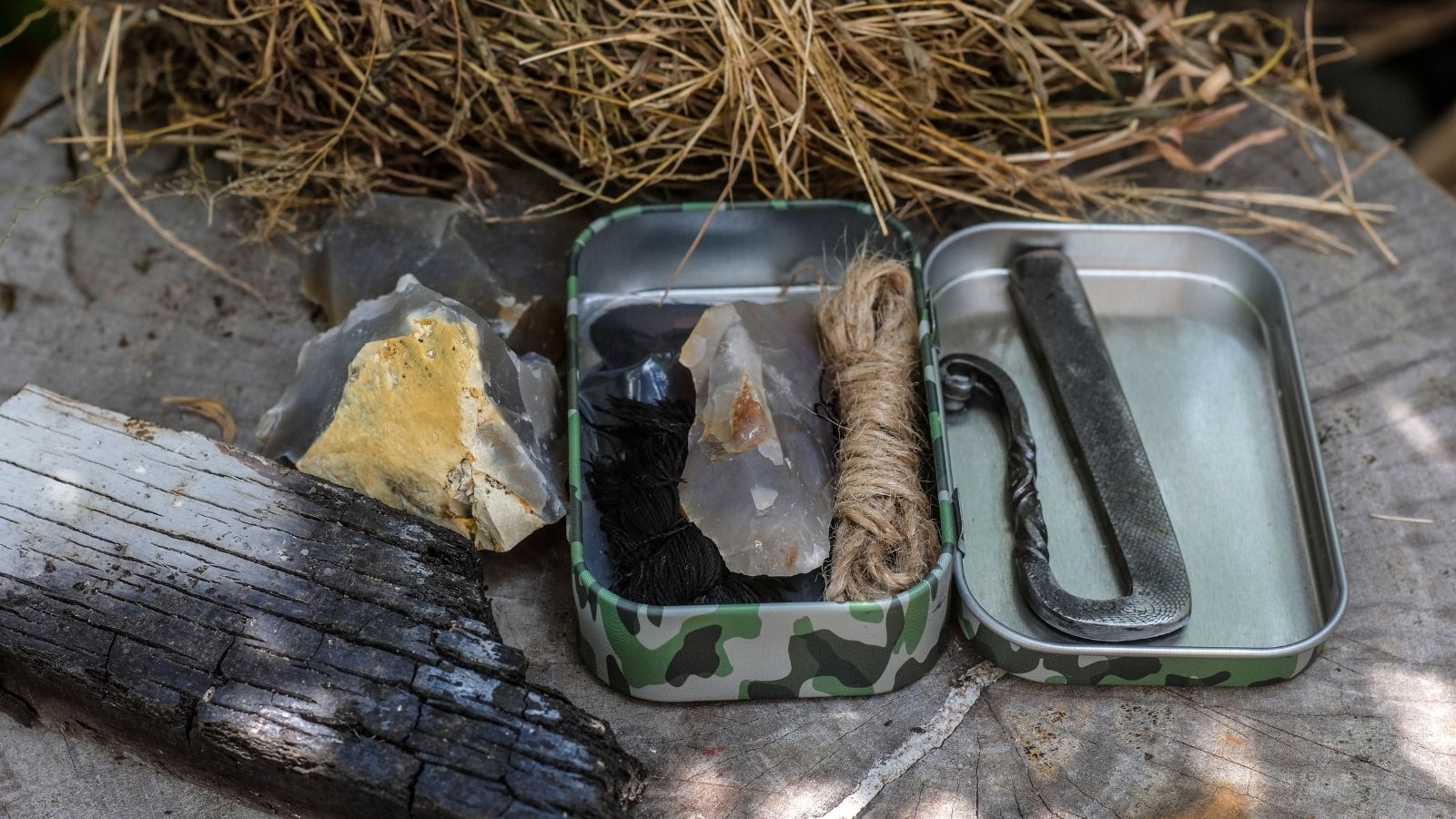
A flint and steel kit has four parts. A curved piece of high-carbon steel, held in your palm with the arc facing out. A sharp-edged piece of flint or similar hard stone. A supply of char cloth. And a tinder bundle made from whatever dry, fibrous material grows near you, cedar bark, dried grass, or shredded cottonwood.
The steel throws the spark. The char cloth catches it and turns it into a glowing coal. The tinder bundle takes that coal and turns it into flame. Skip any one part and the system stalls.
How to make char cloth
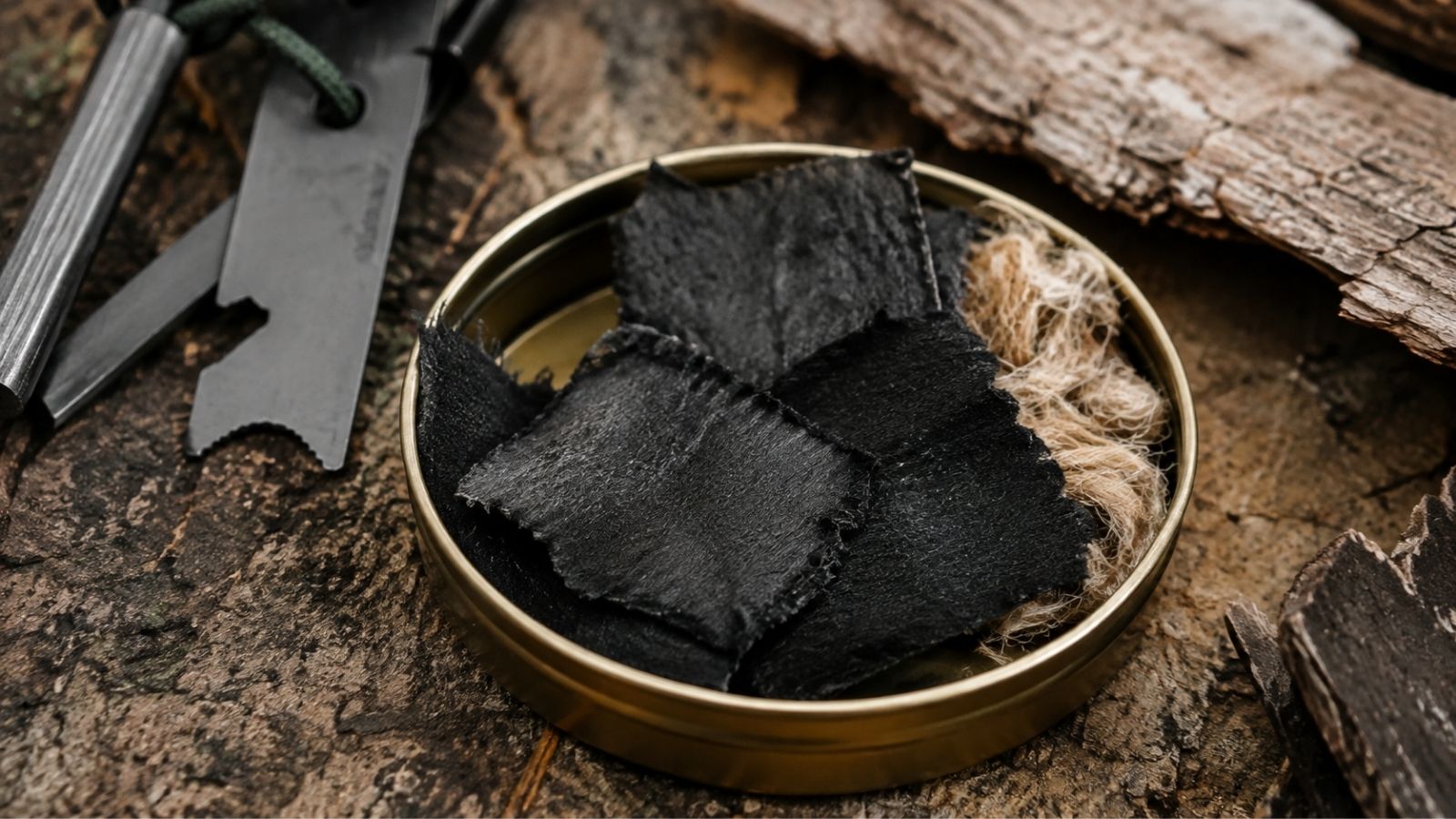
Char cloth is just cotton fabric burned without enough oxygen to fully combust. Cut a few squares of 100% cotton (denim or an old t-shirt works) into pieces about an inch across. Pack them loosely into a small metal tin with one small hole punched in the lid.
Set the tin on hot coals for a few minutes. Smoke will pour out of the hole. Once the smoke stops, pull the tin off and let it cool sealed. Open it once it’s cold. What’s left should be jet black, still holding its cloth shape, and it should catch a spark instantly.
Skip synthetic fabric. It melts instead of charring, and it won’t hold a spark.
Making the strike
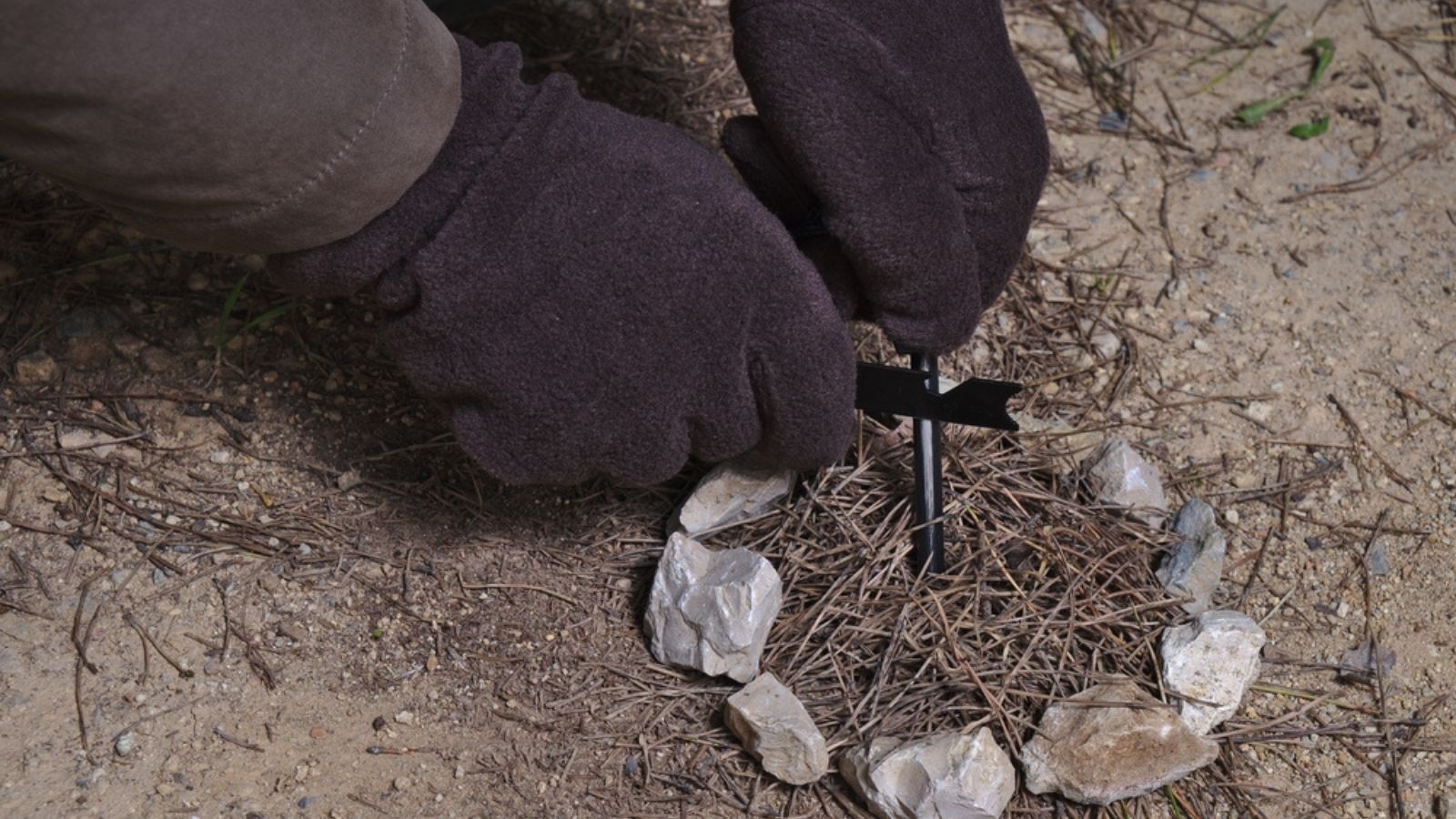
Hold the flint between your thumb and forefinger with the sharp edge exposed. Hold a piece of char cloth against the flint with your thumb. Strike down and across the flint’s edge with the steel at roughly a 30-degree angle, more of a scraping motion than a direct hit.
Sparks are hot shavings of steel, not the flint itself. A shallow, fast strike throws more of them than a hard, slow one. When a spark lands on the char cloth, it should start a small orange glow. Fold the cloth gently around that glow, blow on it softly, and move it into your tinder bundle.
Why this still belongs in your kit
A lighter can run out of fuel or get wet and stop working. A ferro rod eventually wears down. Flint and steel doesn’t have a failure point like that. A quality steel striker lasts for thousands of strikes, and char cloth can be remade anywhere you have a fire and a scrap of cotton, which makes the whole system self-renewing in a way nothing battery-powered can match.
It also weighs almost nothing. A full kit, striker, flint, a few squares of char cloth, and a tin, fits in a space smaller than a pack of cards. That’s a lot of redundancy for very little pack weight.
Practice before you need it
This is not a skill to learn for the first time in an actual emergency. The strike angle takes a few dozen tries to get consistent, and char cloth quality varies until you’ve made it a few times. Practice in your backyard on a calm afternoon, then again in wind, then again with cold hands, since those are the conditions you’ll actually be relying on it in.
Once it clicks, it stays clicked. It’s the same trick that got a continent’s worth of pioneers through 350 years without a single match.

