
Affiliate disclosure: This post may contain affiliate links. Please see full disclosure.
Plant asparagus crowns in fall instead of spring and you can cut your wait for a harvest from three years down to one, provided you start with two-year-old crowns rather than the one-year bare-root stock most garden centers sell.
Asparagus has a reputation as the vegetable for patient people. Plant it, wait three years, then harvest for the next two decades. That timeline is built around spring planting with standard one-year crowns. Change either variable and the wait shrinks.
Why fall beats spring for planting asparagus
Garden centers push asparagus crowns in spring because that’s when bare-root stock ships. It isn’t necessarily the better time to plant it.
Soil temperature and root growth
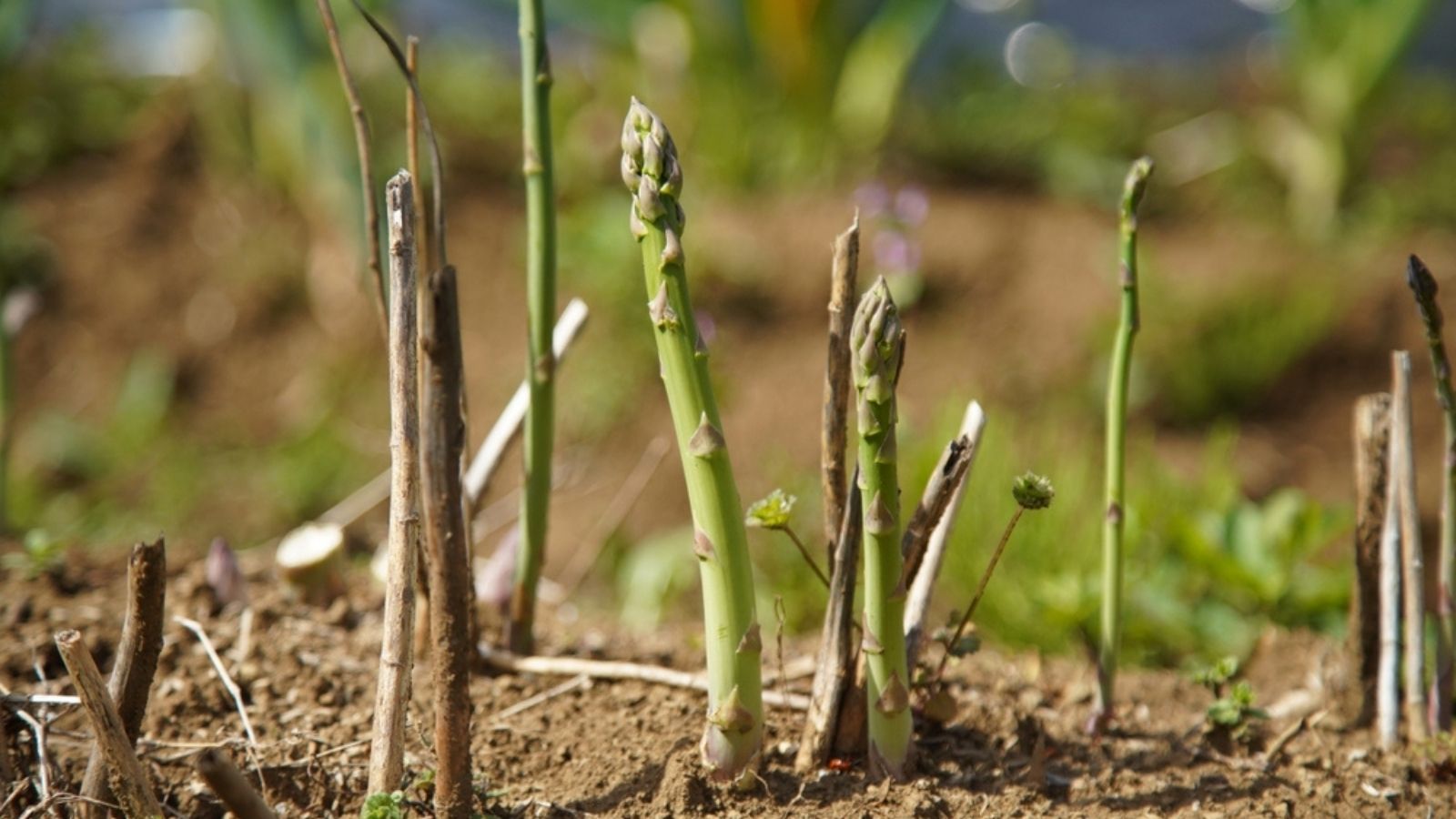
Spring soil swings between too cold and too hot within a few weeks in most regions, and that instability slows root establishment. Fall soil holds a steadier, cooler temperature that lets crowns focus entirely on root growth instead of being pushed into top growth by early heat. Roots keep extending underground right up until the ground freezes, and resume again as soon as it thaws in spring, well ahead of anything you’d get from a spring-planted crown.
Moisture
Most regions get steadier rainfall in fall than in the unpredictable stretch of late spring, when a hot spell can dry out a new bed in days or a downpour can leave crowns sitting in waterlogged soil. Consistent moisture without you standing over it with a hose is one less thing to manage while young crowns are trying to establish.
Availability
Popular asparagus varieties sell out from mail-order nurseries early in spring. Order in fall and you get first pick instead of whatever’s left over.
One caveat on climate
Fall planting works well in USDA zones 6 through 9, where the ground doesn’t freeze rock solid before the crowns get a few weeks to settle. In zone 5 and colder, an early hard freeze can catch crowns before their roots take hold, so spring planting is the safer bet there. Well-drained soil matters more than usual in fall, too, since crowns sitting in cold, wet ground over winter are more prone to rot than they would be heading into a summer.
The extra short shortcut
Here’s the part that saves you a whole year, and it has nothing to do with the season you plant in. In fact, it’s glaringly obvious, and it’s so surprising that so few people, myself included, never even think about it.
Almost every bare-root crown sold at garden centers and big mail-order nurseries is one year old. Plant a one-year crown and you’re waiting the full two to three years before a real harvest, regardless of whether you plant it in spring or fall.
Specialty growers and smaller online sellers occasionally offer two-year crowns instead, meaning the plant has already had a full season to establish before it ever reaches your garden. That’s the head start that turns “harvest in three years” into “a light harvest next spring.” You won’t find two-year crowns at every retailer, so search specifically for “2-year asparagus crowns” through specialty nurseries or online marketplaces rather than assuming your local garden center stocks them.
Combine that with fall planting, and by the time spring arrives, you’re looking at crowns that have had both an extra year of prior growth and a full fall season of root establishment in your own soil. That’s the actual compounding effect, not fall planting on its own.
Order more than you think you need. Crowns are inexpensive relative to what a bed will produce over 15 to 20 years, and a few losses to rot or poor establishment are normal even with careful planting.
How to plant asparagus crowns in fall
Choose a permanent spot
Asparagus is a perennial that will occupy the same ground for 15 to 20 years or more, so treat the site decision as close to permanent. Pick full sun, at least six to eight hours a day, with soil that drains well and never pools water after heavy rain. A dedicated bed or border works better than tucking asparagus into a rotating vegetable plot, since you’ll never be able to till or rotate that ground again once it’s planted.
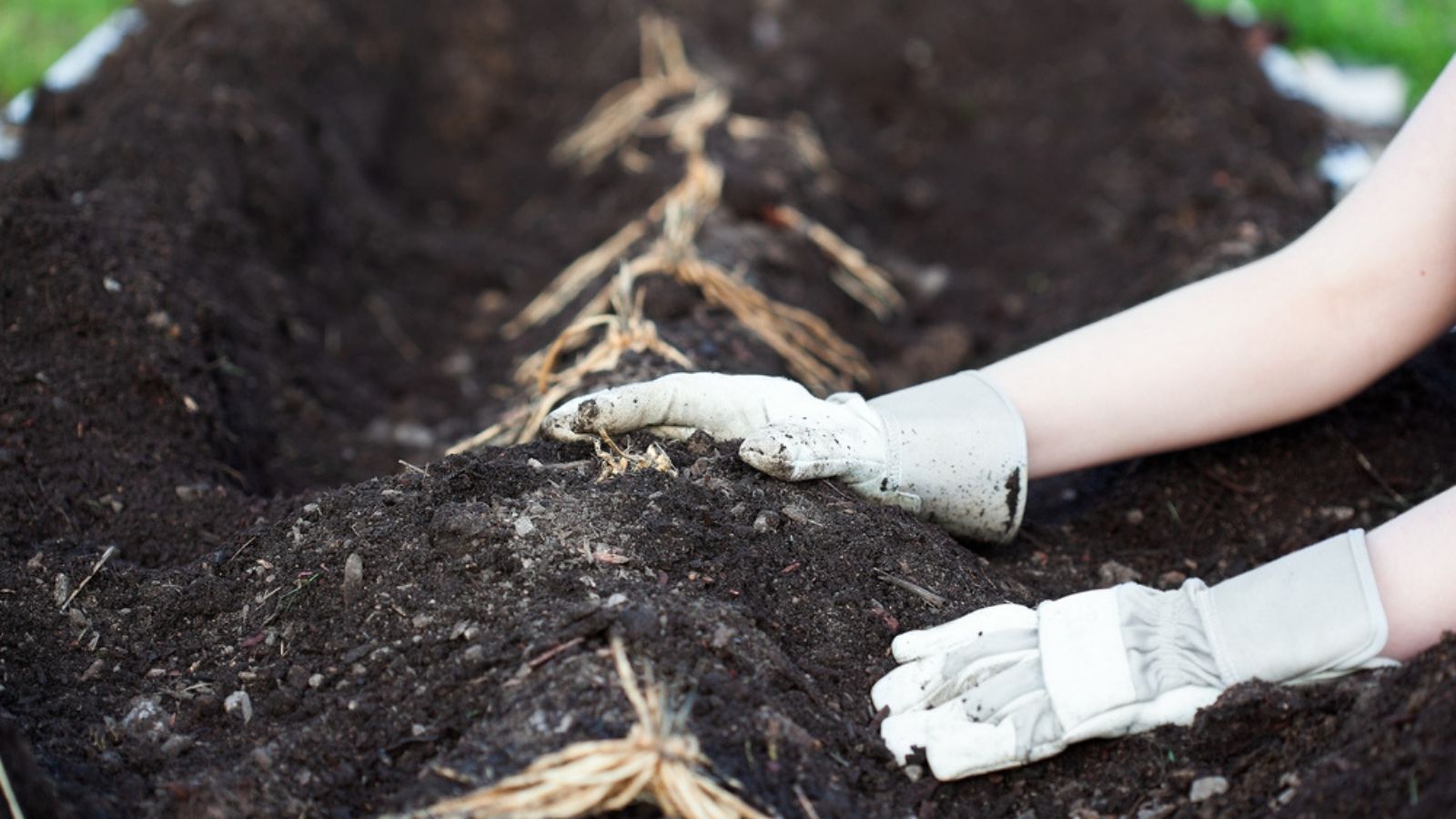
Prepare the trench
Dig a trench 12 inches wide and 8 to 10 inches deep. Space multiple rows at least 3 feet apart so the mature ferns, which can reach 5 to 6 feet tall, have room to spread without shading each other out.
Work several inches of compost or well-rotted manure into the bottom of the trench. Asparagus is a heavy feeder for the two decades it’ll be in that ground, so don’t underdo the organic matter at this stage since you won’t get another chance to work it in this deep. A phosphorus-rich amendment such as bone meal mixed into the trench bottom also helps root development at this critical stage.
Position the crowns
Asparagus crowns look unusual: a central bud cluster with thin roots radiating outward in every direction. Build a small mound of soil in the trench every 12 to 18 inches, then set each crown on top with its roots draped down and outward over the mound and the buds facing up.
Backfill in stages, not all at once
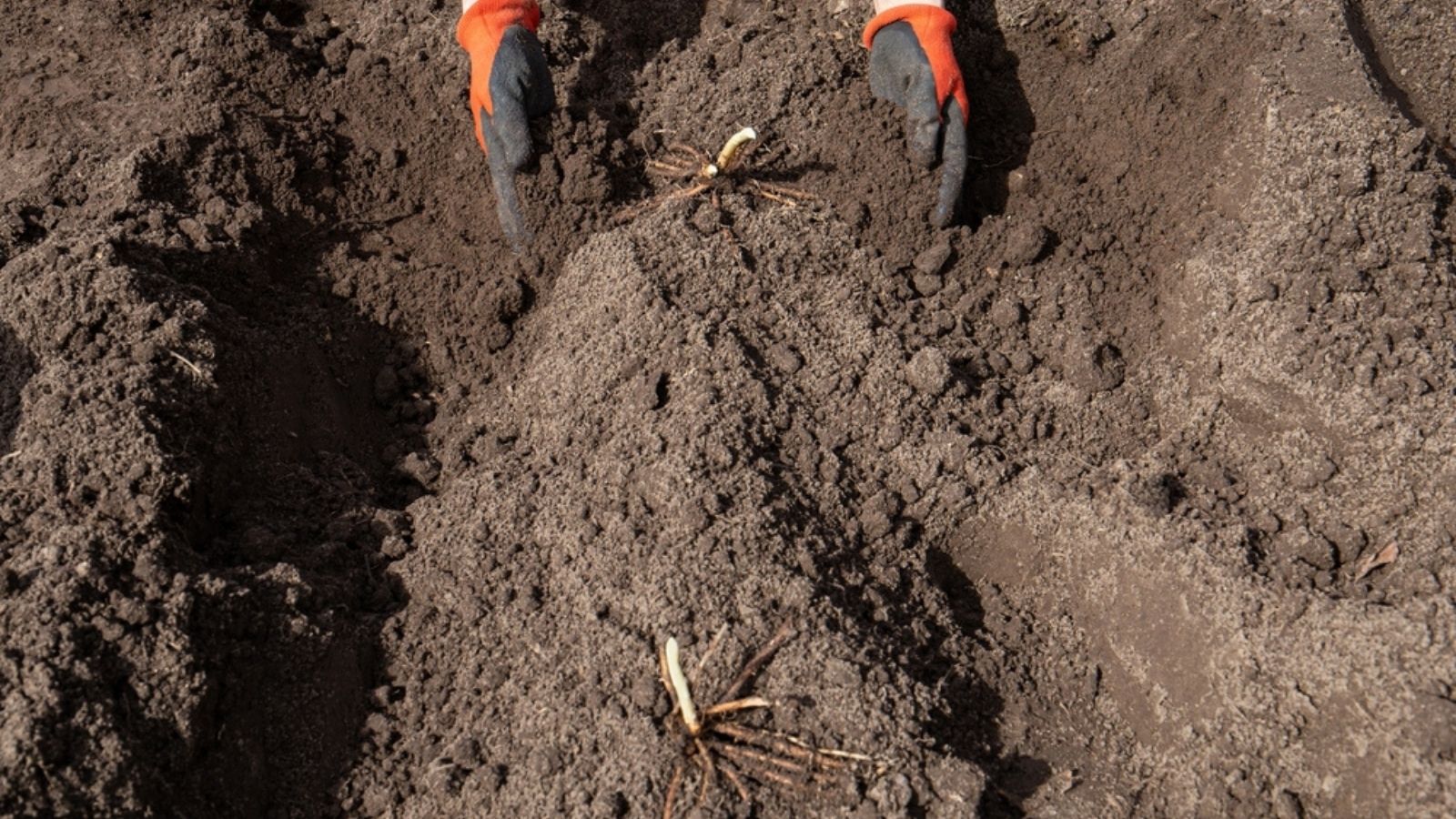
Cover the crowns with 2 to 3 inches of soil and water thoroughly. The central bud should end up roughly 2 inches below the surface once covered. Rather than filling the trench completely on planting day, add more soil gradually over the following weeks as the crowns settle, bringing the trench level with the surrounding bed by the time growth slows for winter.
Mulch heavily
Finish with a thick layer of straw, shredded leaves, or wood shavings over the bed. This insulates the crowns through winter, holds moisture, and suppresses weeds, which matters because asparagus competes poorly with weeds while it’s establishing. Add a second layer in late fall if you’re in a colder part of the fall-planting range.
What to expect in year one
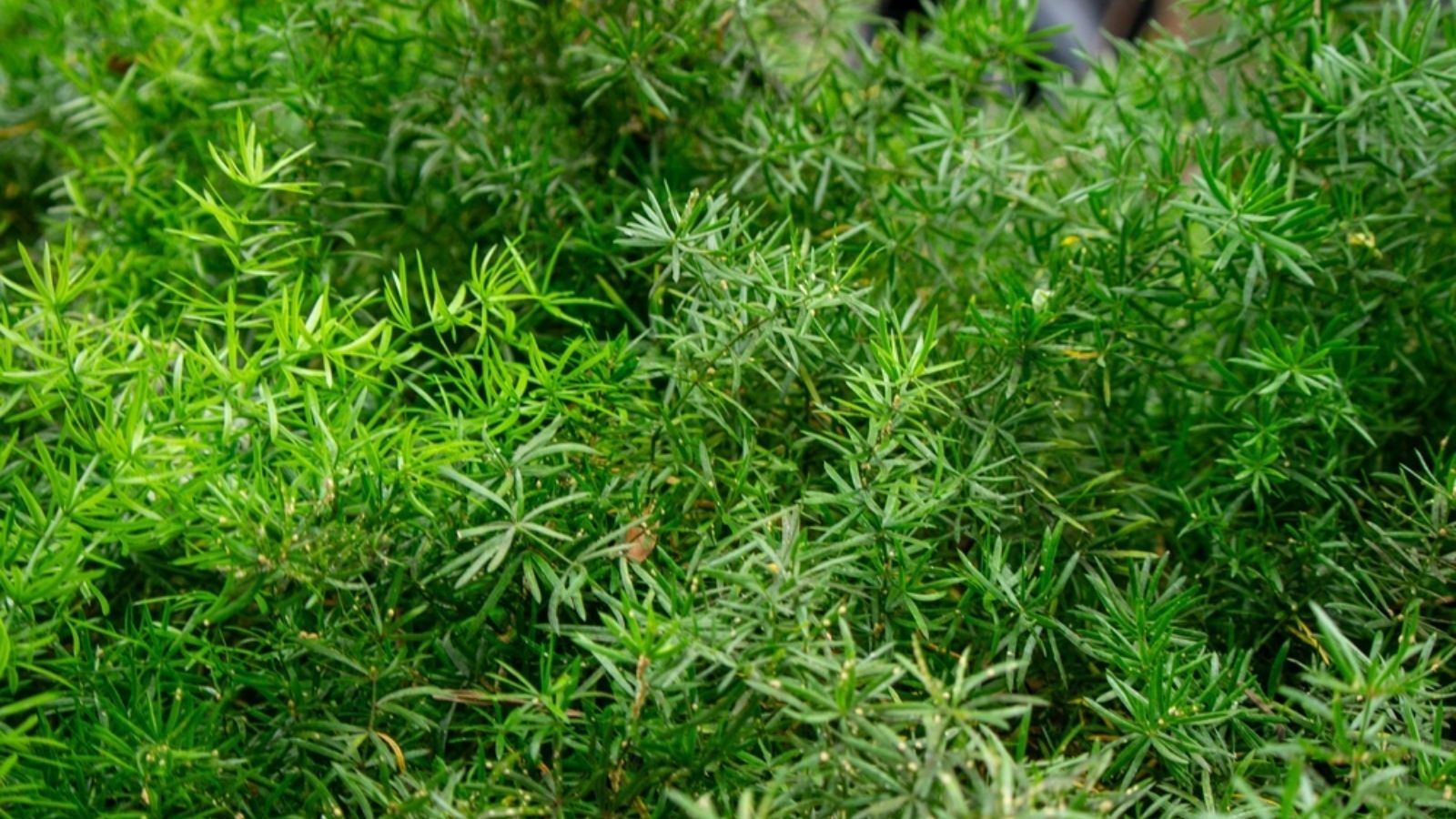
If you planted standard one-year crowns, resist harvesting entirely for the first two growing seasons. Unless you planted in fall, then you can get away with waiting just for one full growing season and can take a very light harvest in the second spring. Let every spear grow into fern rather than cutting it, since the ferns are what feed the roots and build up the reserves the plant needs for a real harvest later. A light harvest becomes possible in year two, with a full harvest from year three onward.
If you planted two-year crowns, you can take a very small harvest the following spring: just a few spears per crown, no more. That’s the entire point of paying extra for older crowns, but overharvesting even slightly beyond that will set the plant back and cost you productivity in later years, so treat that first harvest as a taste rather than a meal.
Keeping the bed productive for decades
Once established, an asparagus bed needs comparatively little from you each year. Keep it mulched and weeded, and feed it with compost or a balanced organic fertilizer in early spring before spears emerge. Leave the ferns standing through fall, since they’re still feeding the roots even after they stop looking productive, then cut them back to ground level once they’ve browned off after the first hard frost.
Get the bed established properly this fall and you’re looking at spears every spring for the next 20 years, for a few hours of work now.
You might also like…
Foraging For Beginners: Wild Asparagus