
Affiliate disclosure: This post may contain affiliate links. Please see full disclosure.
Pyrex Town and Country wasn’t designed to look perfectly matching. That’s what makes it such an interesting thrift-store find. One bowl might be chocolate brown, another orange or yellow, and the largest could be white with a cheerful geometric design. Put them together, though, and you’ve got a set that looks exactly as its original makers intended.
Produced from 1963 to 1967, Town and Country was part of the early-1960s enthusiasm for coordinating kitchenware in different colors. Rather than expecting shoppers to buy identical pieces, Corning offered dishes that worked together across a palette of brown, orange, yellow, and white. For collectors today, the fun is working out which pieces belong together and which variation they’ve found.
What Town and Country Pyrex looks like
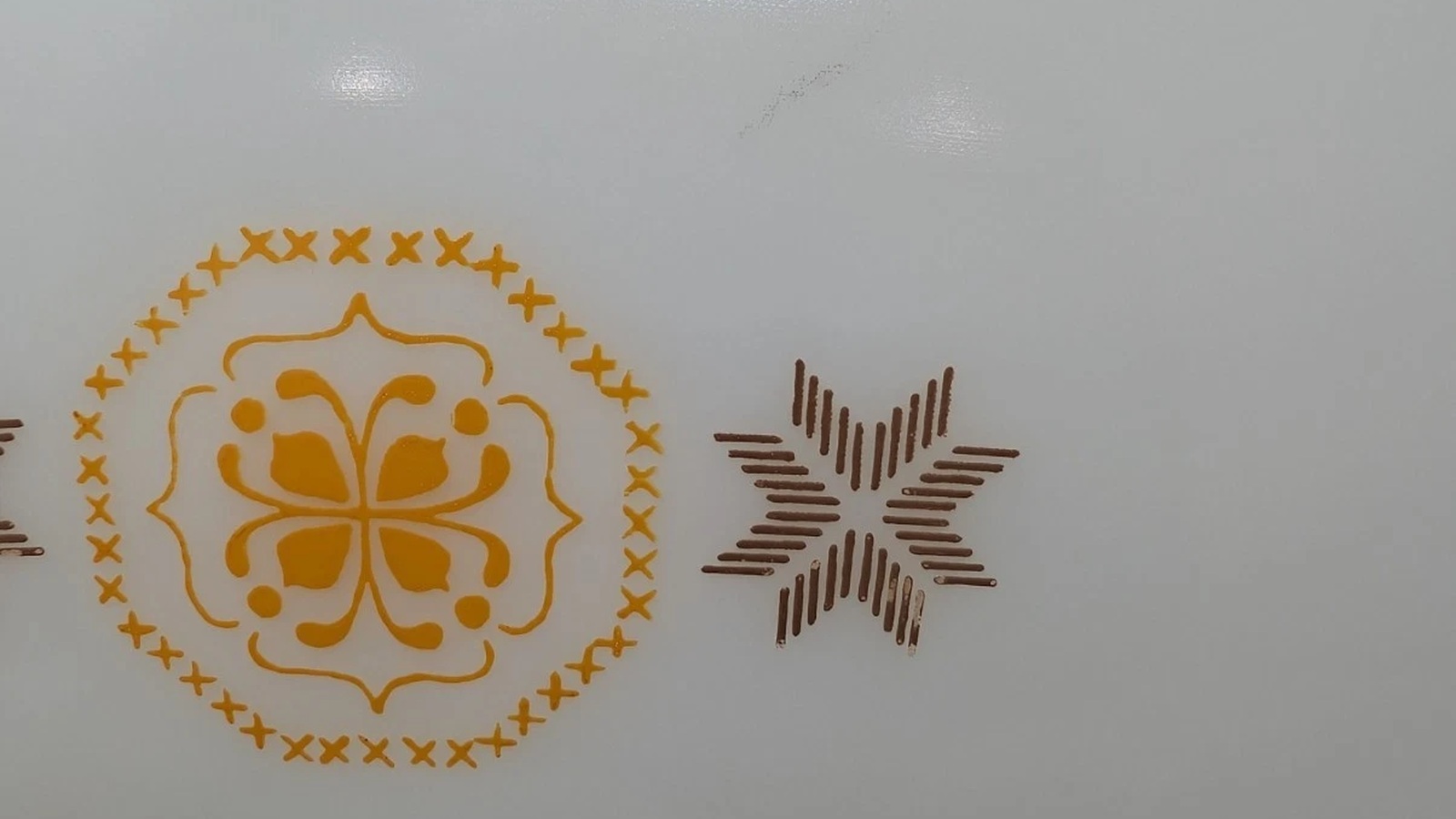
The best-known decoration is a repeating, cross-stitch-like geometric pattern. Look for eight-pointed stars, circles of little X-shaped marks, and smaller star shapes between them. It’s sometimes described as a Pennsylvania Dutch-inspired design, which makes sense when you see its embroidered, folk-art appearance. The larger design appears in orange and brown on white, while other versions use brown or orange alone. Some casserole dishes have a much simpler band of small stars instead.
And then there are all the solid-color pieces. These can be the hardest to spot in a thrift store because there’s no print to identify them at a glance. A yellow bowl or brown refrigerator dish might look completely ordinary until you check its shape and model number and compare it with the Town and Country sets.
Why complete sets can be tricky to put together
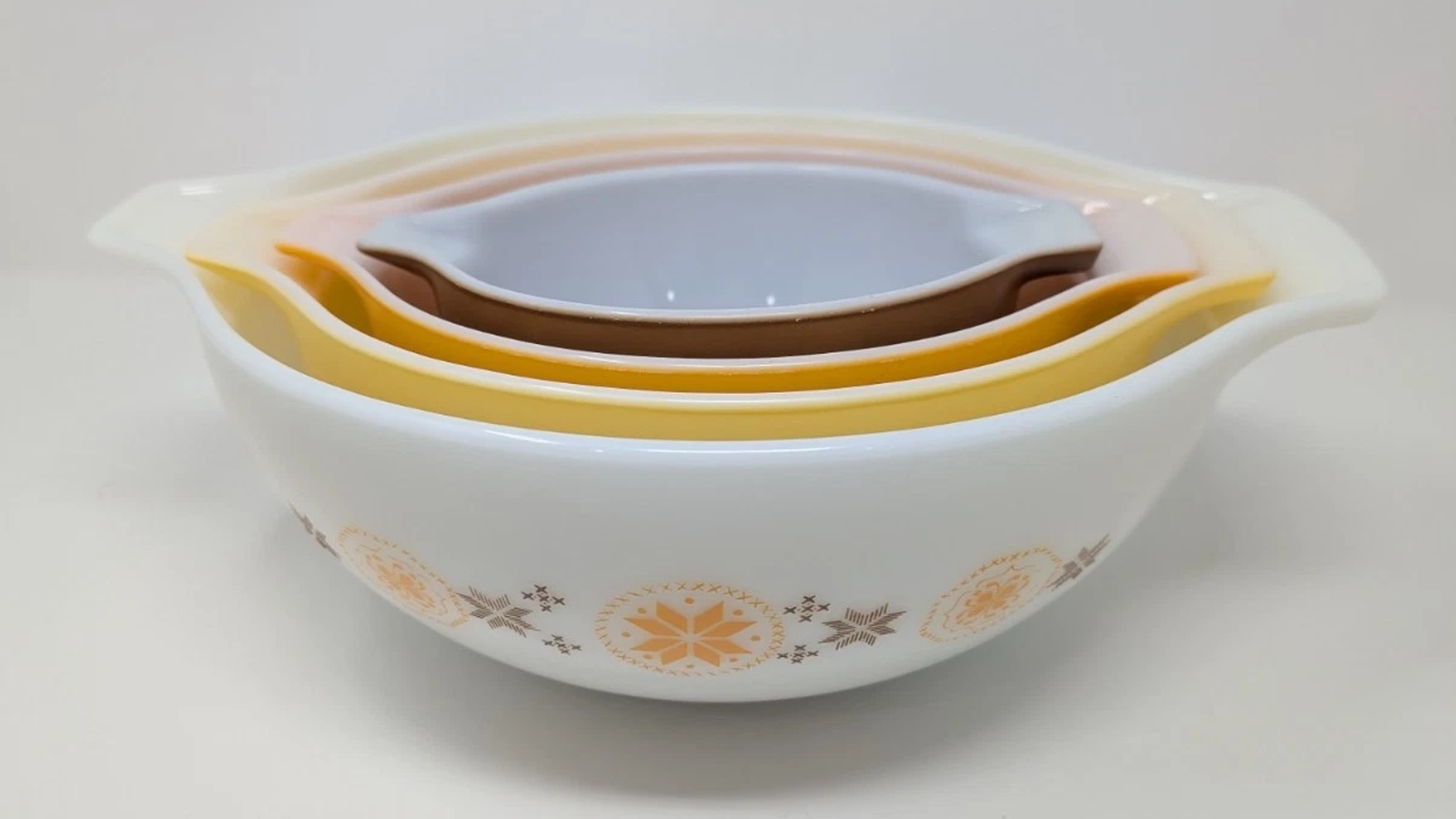
The early 400-series nesting mixing bowl set was made in solid brown, orange, and yellow. The four-piece 440-series Cinderella set, with its distinctive pouring spouts, combined three solid-colored bowls with a white patterned one. In that set, the patterned bowl was the large four-quart 444. It’s a particularly nice example of the deliberate mix-and-match look.
Things became more complicated when Corning introduced versions with additional patterned pieces. Some bowls have the geometric print in a single color on white, while others have different color combinations. These later variations weren’t shown in the regular catalogs, which makes identifying a supposedly complete set a little more interesting.
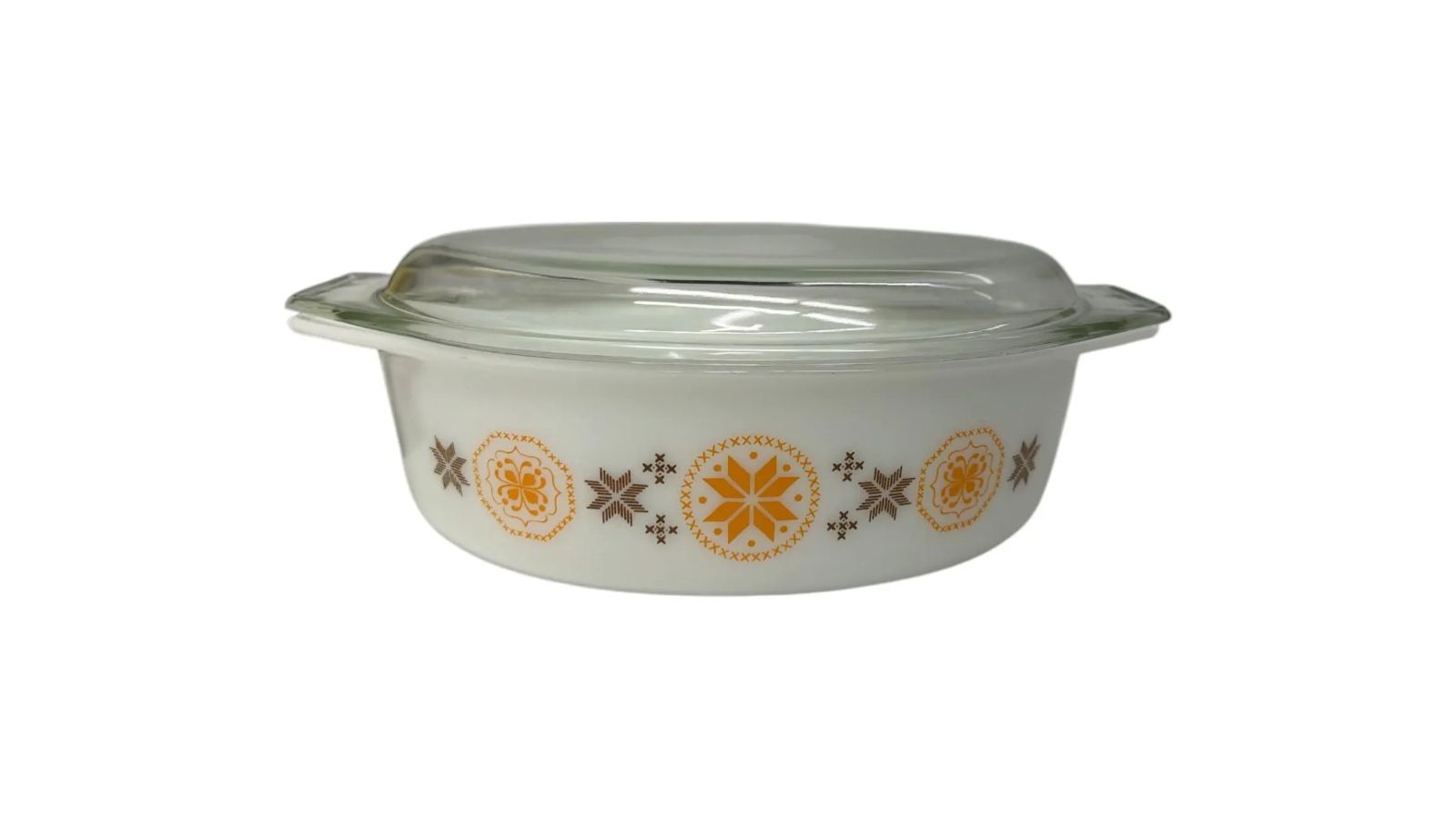
Town and Country wasn’t limited to mixing bowls, either. The range included round Cinderella casseroles in the 470 and 480 series, 500-series refrigerator dishes, oval casseroles and baking dishes, and even a chip-and-dip set in a later release. A separate stamp-program version, offered in 1966 and 1967, used single-color brown or orange motifs on white glass. That’s another reason two pieces carrying the Town and Country name might look surprisingly different.
What I’d look for at a thrift store
I’d start with the pattern and the model number rather than the color alone. On Cinderella bowls, look underneath for numbers from 441 through 444. Then compare the color and decoration with a documented set before deciding you’ve found a missing piece. Two bowls can both be genuine Town and Country without originally belonging to the same boxed set.
Condition matters, too. Inspect the rims and handles for chips, look for scratches and dishwasher-related fading on the painted finish, and check that the decoration is still sharp. A good example of the large patterned white bowl would certainly make me stop and look, but so would a little solid-colored bowl at the right price. Sometimes it’s the less obvious pieces that make a collection come together.
The nice thing about Town and Country is that you don’t have to pretend every bowl is a rare treasure. It’s a genuinely interesting bit of kitchen design history, and the different combinations give collectors plenty to hunt for without losing sight of what made the sets appealing in the first place.
You might also like…
The CorningWare Pattern Collectors Dream Of Finding At A Thrift Store
The Blue-And-White Pyrex Pattern Collectors Dream Of Finding At A Thrift Store
The Pink Pyrex Pattern Collectors Dream of Finding at a Thrift Store

