
Affiliate disclosure: This post may contain affiliate links. Please see full disclosure.
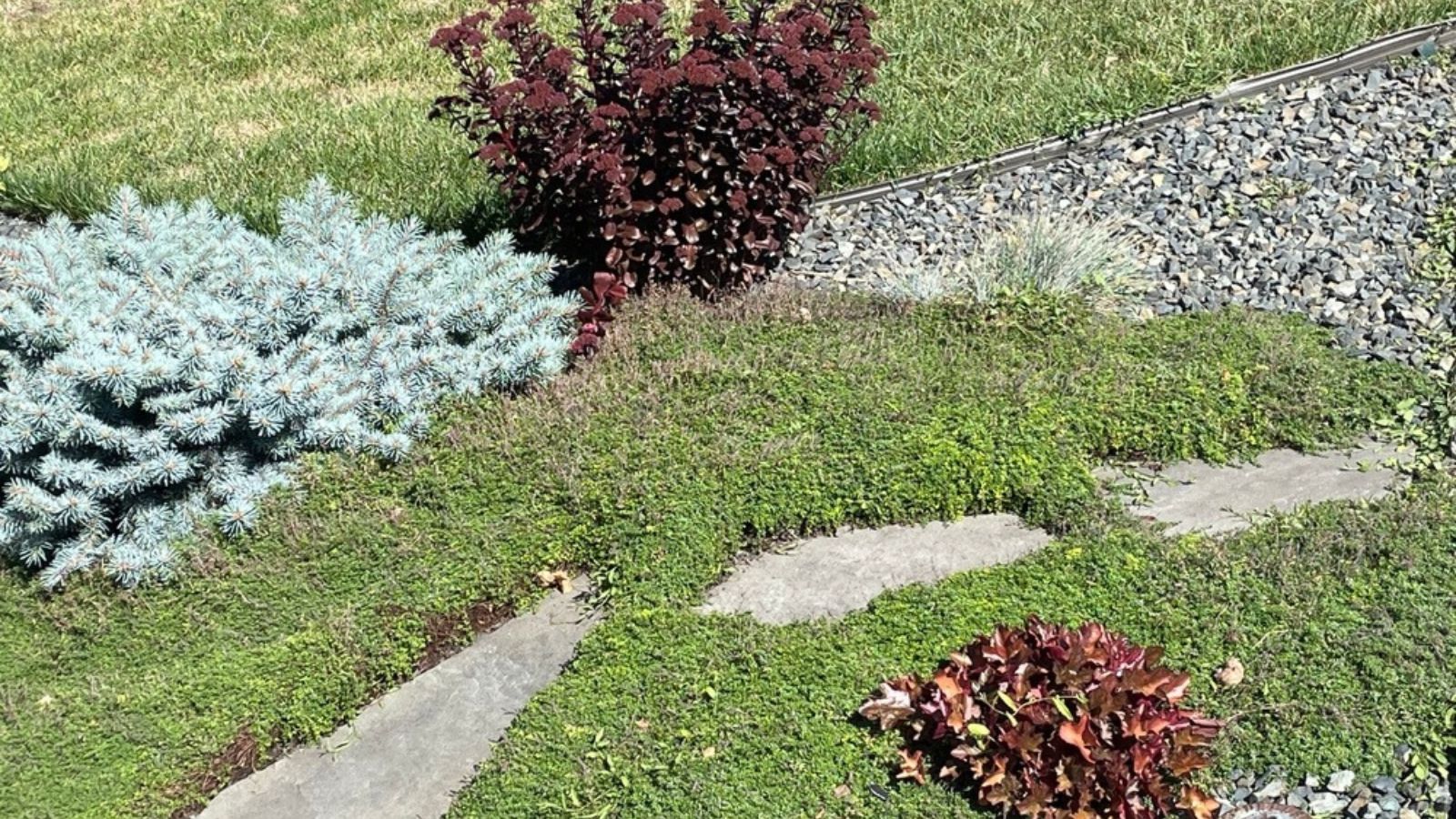
Yes, creeping thyme can help keep weeds out of a paved path, but only if the gaps have enough soil for it to grow, get plenty of sunshine, and aren’t constantly being trampled. Once it spreads into a thick mat, there’s less bare ground for weed seeds to establish in. It’s a useful organic option for the right path, not a permanent cure for every weed growing between paving stones.
I’d be tempted by the idea of replacing a tedious weeding job with little cushions of thyme and summer flowers. But before spending money on plants, I’d check the paving itself. A loose-laid flagstone path with wide, soil-filled joints is a very different growing space from a driveway made of tightly fitted blocks. The first could work beautifully. The second might barely have enough room for the roots.
Creeping thyme competes with weeds, but doesn’t make them disappear

Low-growing thymes spread outward to form mats of small leaves and woody stems. In the right spot, that growth covers soil that would otherwise be open to weed seedlings. The roots also take up space and moisture that an unwanted plant might use. Dense ground-cover plants can suppress weeds once they’ve established, but you still need to control the weeds while they’re filling in.
That’s the catch. Thyme isn’t going to kill a mature dandelion, couch grass, or a well-rooted weed growing between two slabs. If you plant a tiny thyme plug next to a tuft of grass and leave them to battle it out, the grass is likely to win. Start with clean joints, keep pulling new weeds, and give the thyme time to spread.
Even when you’ve got a lovely green carpet, windblown seeds can still land in bits of accumulated soil or in a gap that opens up after a hard winter. Weeds commonly colonize the debris that collects in paving cracks. The aim is fewer weeds and a nicer-looking path, not a magic weed-proof seal.
Check that your paving is somewhere thyme can actually grow
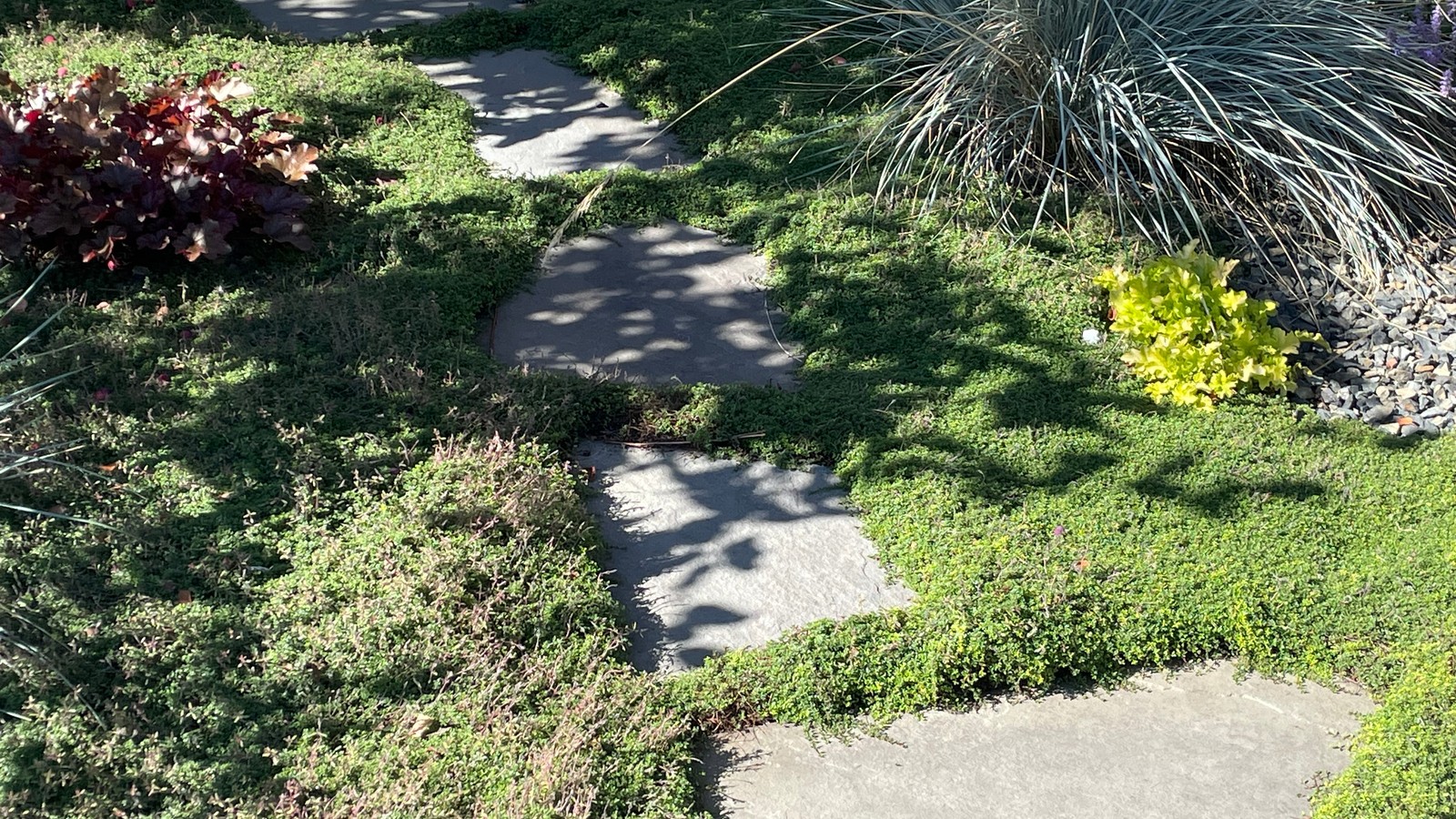
Creeping thyme doesn’t need rich, deep garden soil, but it does need a real place to put down roots. Four things matter: sun, drainage, the material between the stones, and how much the path gets walked on.
It needs a sunny position
Look for a spot that gets around six hours of direct sun in the growing season, preferably more. Thyme grows best in warm, sunny conditions, and it tends to become thin and straggly in too much shade. A few hours of light filtered through a tree might be enough for some other low-growing plants, but I wouldn’t choose creeping thyme for a dark passage beside a north-facing wall.
Don’t just check where the sun falls in midsummer. A tall hedge, fence, or nearby building may keep the paving shaded for a substantial part of the growing season. A shady joint stays damper, too, which adds another problem for thyme.
Drainage matters more than fertile soil
A lean, gritty root run can suit thyme quite well. What it dislikes is sitting wet, especially through winter. Creeping thymes prefer free-draining soil and can suffer in waterlogged conditions. If rain leaves puddles along your path for days, the plant is unlikely to be happy there.
Heavy clay in the joints or a low spot that collects water can be just as troublesome as a lack of soil. Adding a spoonful of sand to the top won’t fix a saturated base underneath. I’d address the drainage or choose a different planting location rather than keep replacing dead thyme.
The joints need enough space for roots
The best candidates are stepping-stone paths or loose-laid flagstones with actual soil between them. Wider gaps are easier to plant with small nursery plugs, and the roots can spread into the ground below. Joints about 1 to 2 inches (2.5 to 5 cm) across are more promising for small divisions or plugs than a hairline crack, provided there’s usable soil beneath. That’s a practical guide for choosing a site, not a universal minimum width.
A gap that looks wide from the surface may be little more than loose sand on top of compacted aggregate, mortar, or concrete. Scrape into an inconspicuous joint with a hand tool. Can you find a few inches of soil beneath the surface without digging into the structure that holds the paving together? Does water drain away? If you can’t, there’s not much point trying to squeeze a plant into it.
Be especially careful with block paving and other paved surfaces that rely on compacted jointing sand for stability. Don’t dig out sound structural joint material just to plant thyme. Similarly, don’t break up properly mortared joints or lift secure paving slabs unless you’re deliberately redesigning the path. If you want a living path, it’s easier to plan soil-filled gaps when laying the stones than to retrofit them into every patio.
It tolerates light footsteps, not constant punishment
Creeping thyme can cope with occasional feet brushing or pressing over it once established, which is why it works beside and between stepping stones. Low-growing thyme is suitable for some paving crevices and releases scent when trodden on. But that doesn’t make it a substitute for a hard-wearing lawn or an everyday driveway surface.
The distinction is whether people mostly step on the stones or directly on the plants. A garden path used for a slow wander or an occasional trip to the compost bin might suit thyme. A busy entrance, narrow gate, route for wheelbarrows, or driveway where car tires cross the joints is a different proposition. Repeated crushing can leave bare patches, and those patches give weeds another opening.
As an organic grower and master gardener, I’d rather use thyme along the edges of a hard-working path, where it can spread into the gaps without becoming the main walking surface. It’s less effort and much more likely to produce the effect you’re after.
Choose a low, spreading thyme rather than the kitchen herb
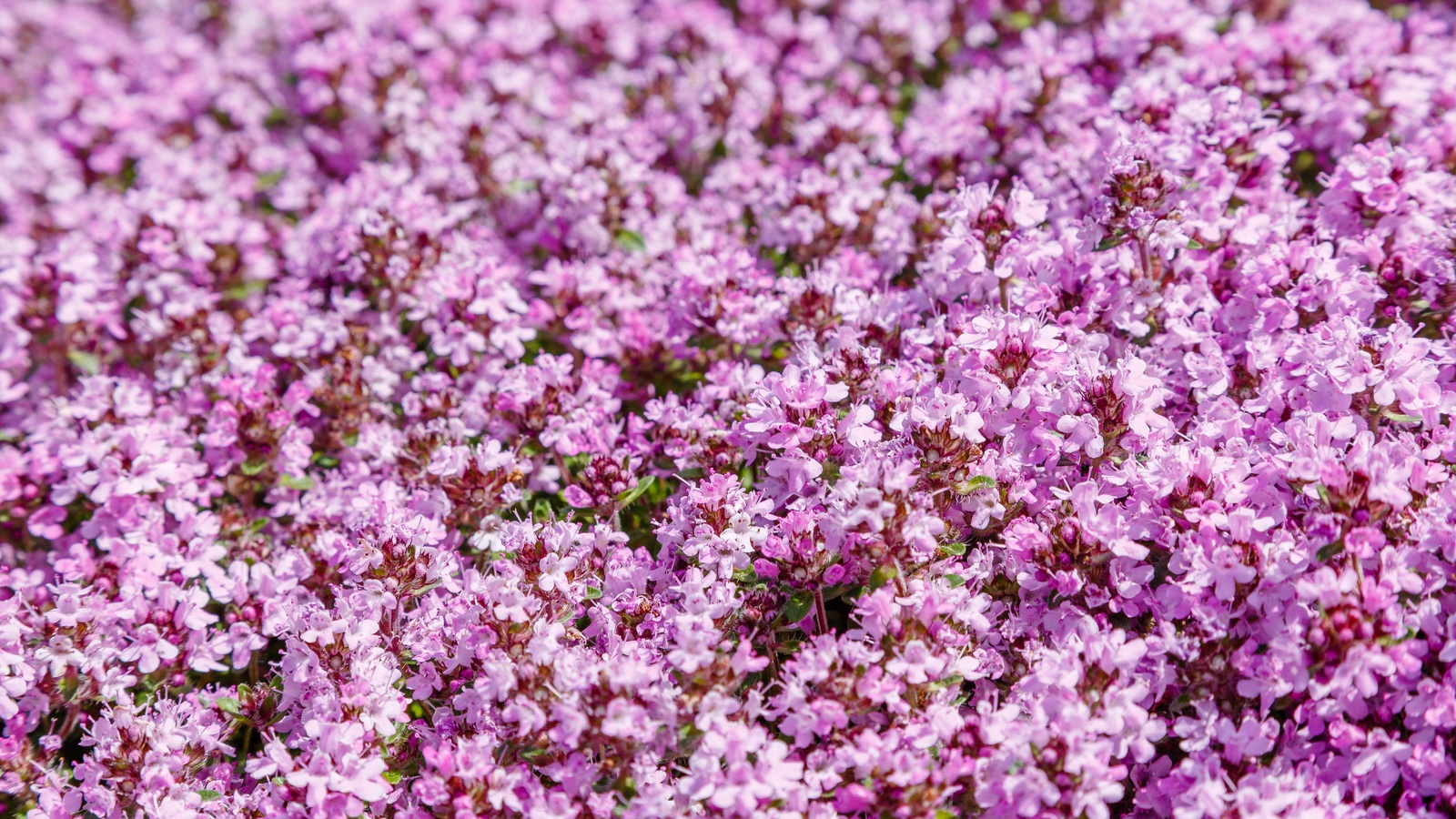
The name ‘creeping thyme’ covers several low-growing thymes and cultivars. Thymus serpyllum is commonly sold as wild or creeping thyme. Low-growing Thymus praecox varieties are another option for a flat, flowering mat. They usually carry clusters of pink, purple, or occasionally white flowers above their foliage.
Look at the plant’s mature height and spread before you buy. A compact, mat-forming selection makes more sense between stepping stones than a taller, bushy culinary thyme such as Thymus vulgaris. A little foliage spilling over the stones is attractive; tall, loose growth that hides edges and catches shoes isn’t.
Creeping Thymus serpyllum cultivars are used in rock gardens and paving crevices. They can also offer flowers to bees and other pollinating insects. That’s a lovely bonus beside a relaxed garden path, but something to consider if children regularly run barefoot through the planting or someone is concerned about bee stings. The bees are there for the flowers, not to patrol the paving, but frequent disturbance isn’t ideal for either.
I would buy a few small plants first and test the site rather than order a huge tray for an entire patio. A thriving trial patch tells you far more than an attractive photograph on a nursery label.
Clear out the existing weeds before planting
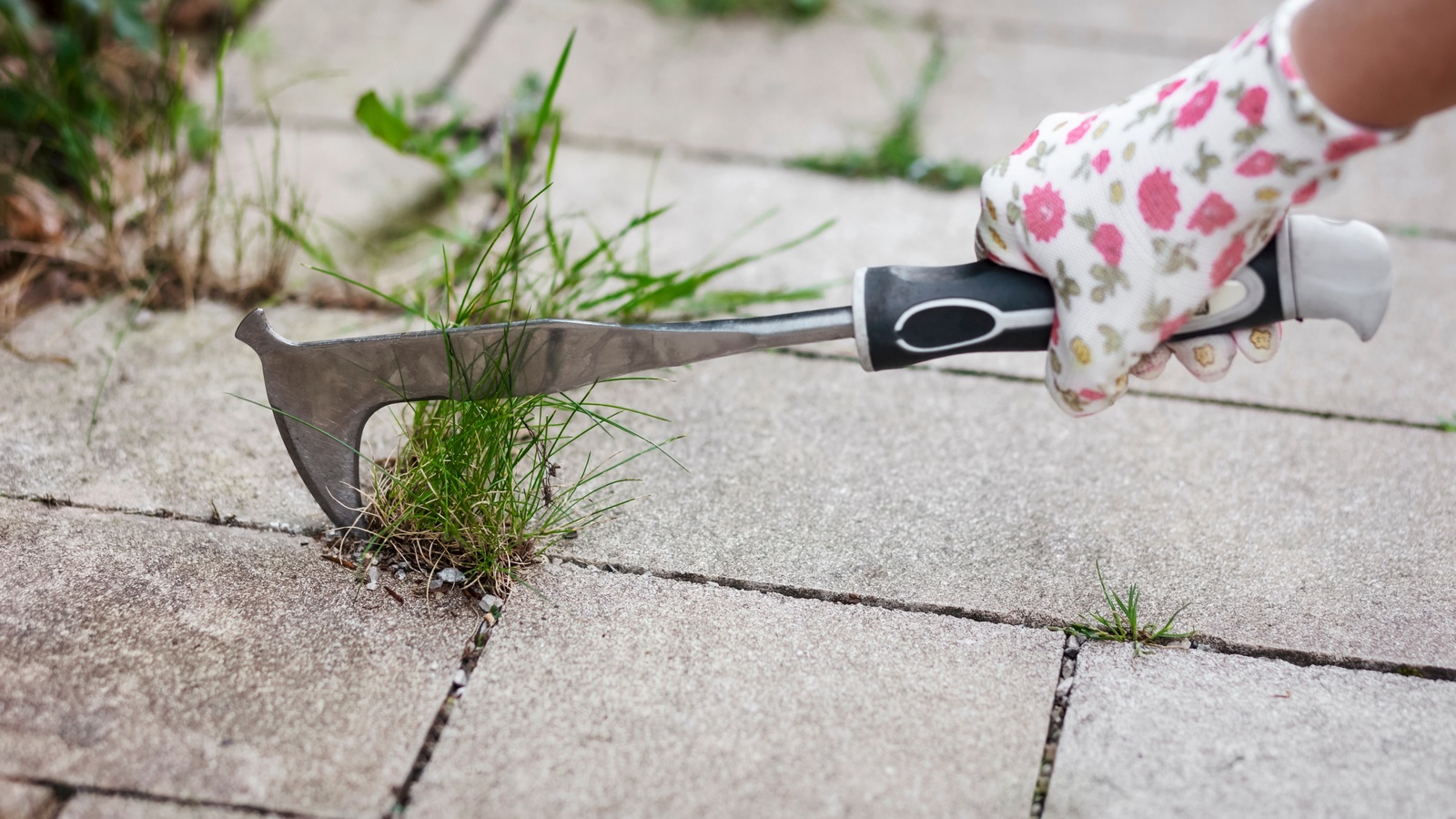
The most useful preparation is also the least glamorous part. You need to remove the weeds that are already established in the joints. Otherwise the thyme starts out competing with bigger, tougher plants for what little space and moisture is available.
Use a narrow hand weeder or a purpose-made paving knife to lift out grass and weed roots where accessible. A stiff brush can clear loose seedlings, dust, and dead leaves. A paving knife and stiff brush are effective non-chemical tools for weeds growing between stones. Work carefully so you don’t gouge the stones or loosen essential jointing material.
If you have persistent perennial weeds with deep or spreading roots, expect more than one pass. Simply cutting off the tops may make the paving look clean for a week, but the roots can push through again. Where complete root removal isn’t possible without damaging the path, repeated removal of new growth can weaken the weed over time.
Don’t spray a general weedkiller into the same gaps you’re planning to fill with thyme. There’s little point exposing a plant you want to establish to a treatment intended to kill plants. I’d get the existing weeds under control first, then start planting when the site is ready.
Plant plugs in wider joints, or try seed in suitable narrow gaps
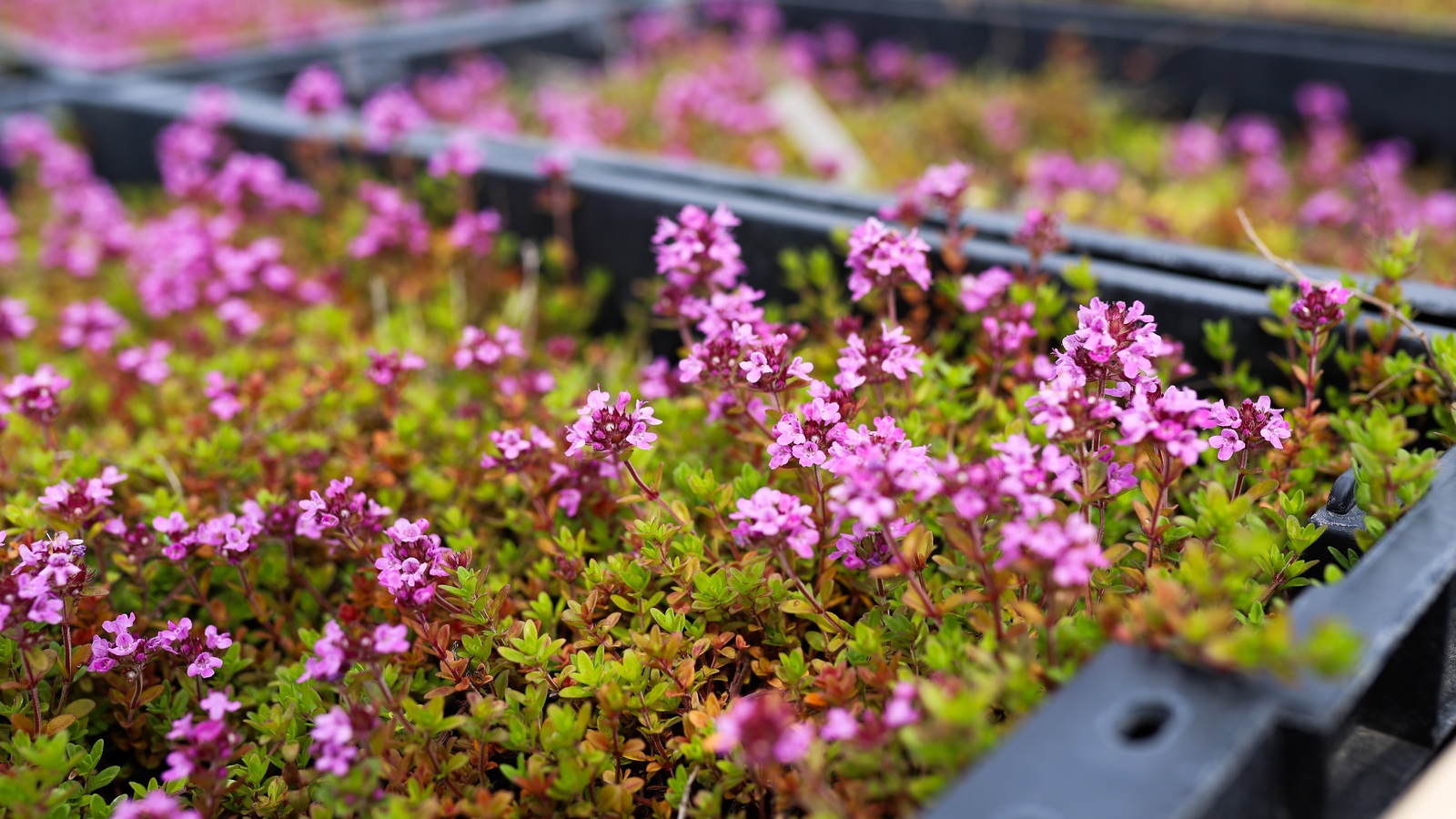
Small nursery plugs and rooted divisions are the easiest way to establish thyme in a path. They already have roots and leaves, so you can see where each plant is and weed around it. Seed is cheaper for a big area, but tiny seedlings are harder to keep alive in a paving joint that dries out quickly or gets stepped on.
Planting small plugs
Choose a period of mild, active growing weather. Mid-spring to early summer is a good planting window in many temperate climates, once hard frosts have passed. In warmer regions with mild winters, an early fall planting may also work if the plants have time to root before difficult weather. Thyme plants generally establish best when planted out from mid-spring to early summer.
Start in a few suitable gaps. Remove remaining weed roots, gently loosen the usable soil, and add a little free-draining planting mix if the joint is depleted. Set each plug at the same depth it was growing in its nursery pot, firm the soil around it, and water it in. Keep the crowns near the surface rather than burying the stems beneath wet soil.
As a broad guide, thyme plants in open ground are often spaced around 8 to 12 inches (20 to 30 cm) apart, depending on the variety. On paving, the existing gap pattern and available root space determine where you can plant. You don’t have to fill every single joint with a plant. A few properly rooted plants in suitable pockets are better than dozens squeezed into unsuitable cracks.
If the joint is only wide enough for a thin line of sand, resist the temptation to force a whole rootball into it. You may be better off planting thyme in a proper bed at the edge, where it can spill towards the stones, or using a suitable jointing material to keep that part of the path tidy.
Starting from seed
Thyme seed can work in narrow soil-filled crevices, but it isn’t the quick option. Clean the joint, make sure there’s fine, free-draining soil at the surface, scatter the tiny seed sparingly, and press it gently into contact with the soil. Don’t bury it deeply. Thyme seeds can be surface-sown because they’re very small and don’t need covering.
Keep the area lightly moist during germination, using a gentle watering can or mist so the seeds aren’t washed away. Protect it from footsteps while seedlings establish. Don’t be surprised if some gaps fail to germinate or the first seedlings disappear during a hot, dry spell. For a more dependable result, I’d sow seed in trays and transplant the strongest little plants once they’re rooted.
Water the new plants, even though mature thyme tolerates drought

One of the biggest mistakes is assuming that because established thyme can survive dry conditions, a newly planted plug can do the same. Its small rootball can’t yet draw moisture from much beyond the planting pocket, and paving warms and dries quickly in the sun.
Check the soil around new plants regularly and water when it’s beginning to dry rather than following a fixed daily schedule. Water gently enough that the soil isn’t washed out from between the stones. Keep this up during establishment, especially in hot weather, then gradually water less often as the plants root and spread.
Once it’s established in suitable soil, thyme is fairly drought tolerant and often needs little extra watering. More water is not necessarily kinder. Wet conditions can rot thyme roots, particularly in winter, so don’t keep the joints permanently soggy or pile rich, water-holding compost around the stems.
Expect to keep weeding while the thyme fills in
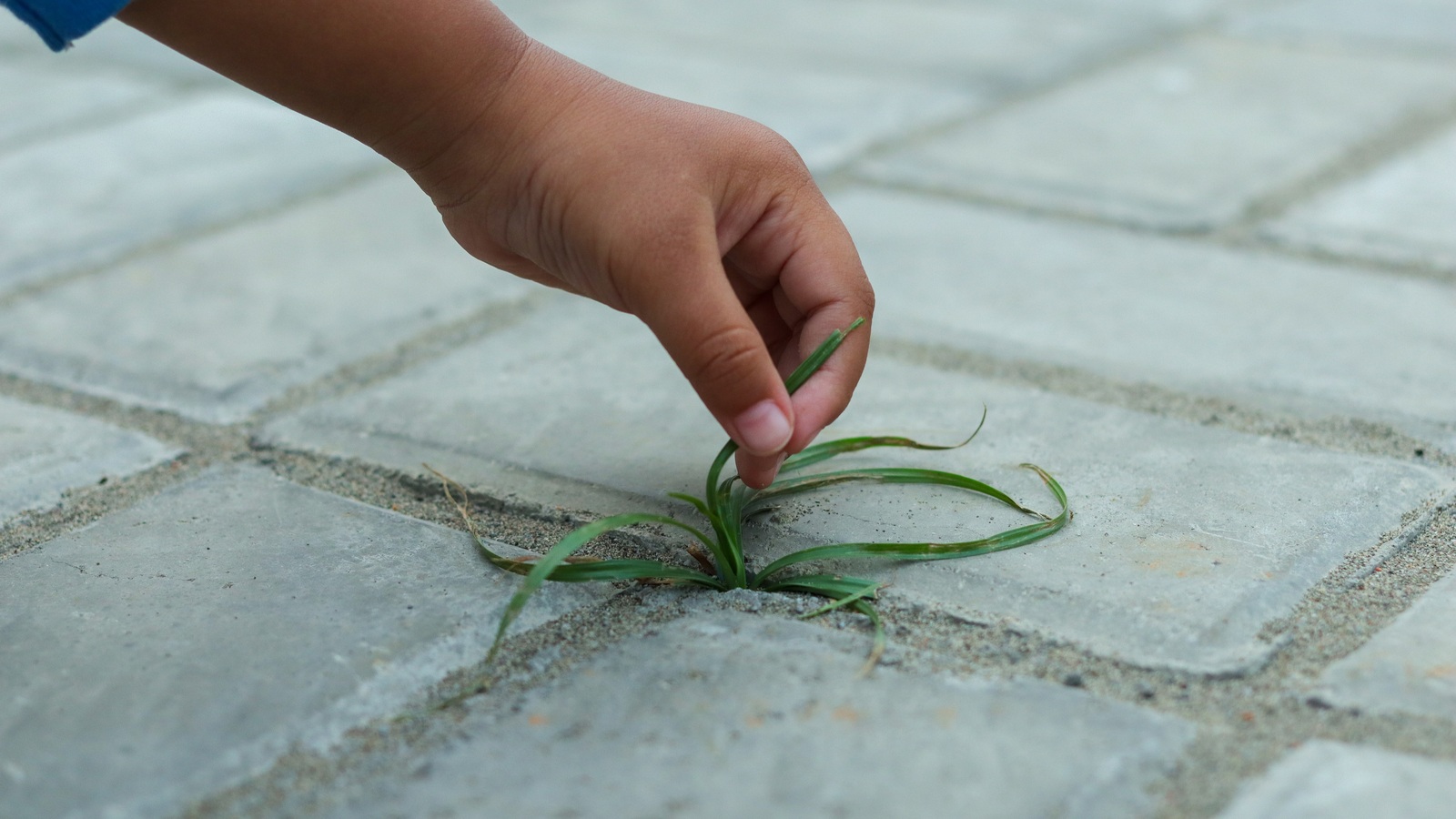
For the first growing season, the path may actually need more attention than it did before. You’ve cleared the joints, created little pockets of usable soil, and planted something that takes time to cover them. That’s an invitation for windblown weed seeds as well as your thyme.
Check the gaps every week or two while the weather is warm and remove new weeds when they’re small. At that stage you can often pull a seedling with your fingertips without disturbing the thyme roots. Leave weeds until they’re tall and tangled through the mat and you’re much more likely to damage the plant you’re trying to keep.
How quickly the gaps close depends on the variety, the size of the plants, growing conditions, and how much root space they have. Some may spread noticeably during the first summer. Others take more than one growing season to form a continuous mat. I wouldn’t promise a weed-suppressing carpet by the end of the year, particularly if you’ve started from seed.
Once there’s a dense cover, inspect it occasionally rather than assuming the job is finished. Remove grass that creeps in from lawn edges, pull out any weeds that germinate in bare spots, and watch for sections that get worn down. It’s less frequent weeding if things go well, not the complete end of weeding.
A little maintenance keeps the thyme mat healthier
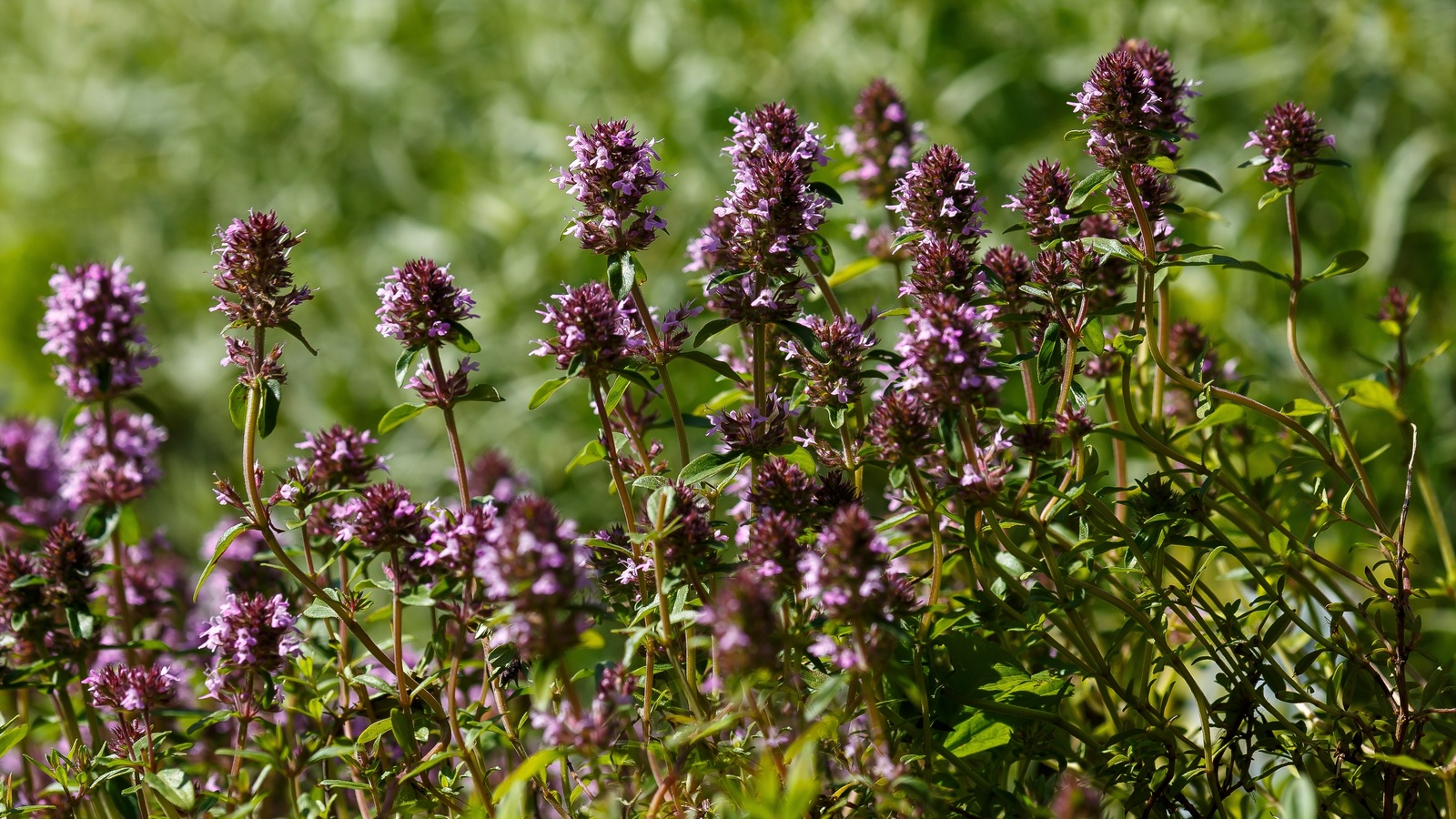
After the main flowering period, you can give creeping thyme a very light trim to remove faded flowers and untidy tips. The aim is to keep the mat compact, not scalp it down to old brown wood. Low-growing creeping thymes usually need only a light trim after flowering. If you don’t mind the spent flowers, you may barely need to trim at all.
Sweep or gently lift away fallen leaves from trees and shrubs in autumn. A thick wet layer sitting on top of the thyme blocks light and traps moisture. Try not to disturb the rooting stems with a stiff metal brush once the thyme is established. A soft brush or careful hand removal is kinder around the plants.
Older clumps sometimes develop woody, thin, or bare centers. Take cuttings or lift and divide healthy rooted edges where possible, then replant to fill the gaps. That can be cheaper than buying replacements. If a patch repeatedly dies in the same wet corner, though, take the hint and improve the conditions or stop planting thyme there.
The foliage may also lose its bright green appearance during cold winters, depending on the type of thyme and local conditions. Don’t assume a browned patch is dead before spring growth has had a chance to return. Equally, a patch that has rotted to the roots isn’t going to be rescued by fertilizer.
Some paving is better off without creeping thyme
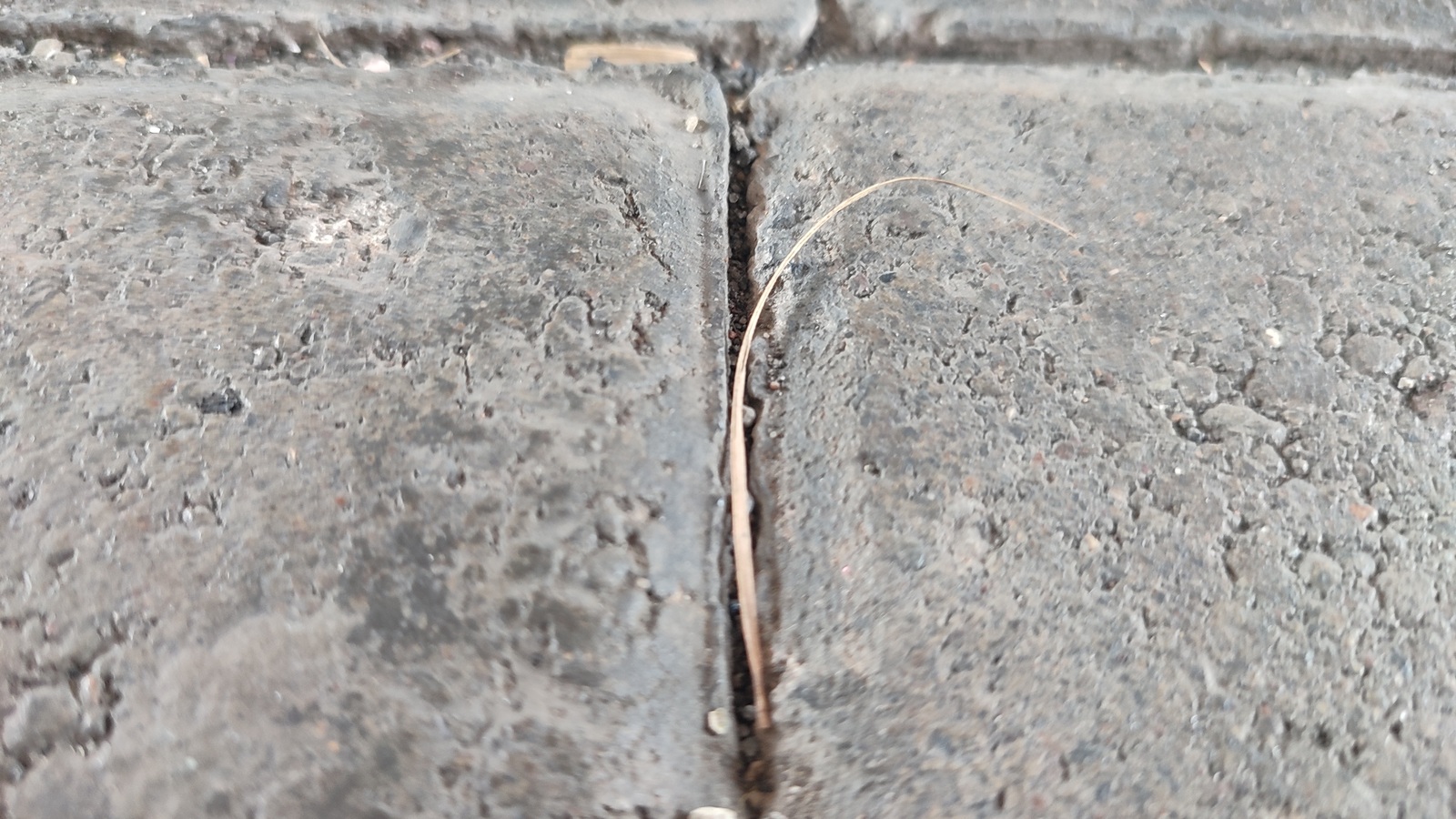
I’d skip thyme on a heavily shaded path, a surface that stays wet, a busy entrance route, or paving with no real soil beneath the joints. It also isn’t a sensible way to deal with weeds growing through sound mortar or tightly fitted blocks that need their jointing material to stay structurally intact.
If you’re mainly trying to stop weeds on a formal patio, clearing the debris and renewing the appropriate jointing material may be more reliable than turning it into a tiny planting project. Repointing or restoring paving joints is another non-chemical way to reduce weed growth. For a shady, damp path, choose plants suited to those conditions instead of hoping a sun-loving herb will adapt.
And you don’t have to plant the whole area. A short run of flagstones beside a sunny herb bed can be enough to find out whether this suits your garden. If it thrives, you can divide the plants and extend the planting later. If it fails, you’ve learned that without spending a fortune.
Creeping thyme earns its place when it has sun, drainage, enough soil to root into, and protection from the busiest footsteps. Clear the existing weeds first, keep on top of seedlings while it spreads, and you’ll have a better chance of replacing some of that repeated path-weeding with a living, flowering mat. Just keep your weeding knife handy. You probably won’t need it quite so often, but you won’t be retiring it forever.
You might also like…
What Should You Do With Your Garden In the Fall?
18 winter gardening tips you should know for healthier plants in spring