
Affiliate disclosure: This post may contain affiliate links. Please see full disclosure.
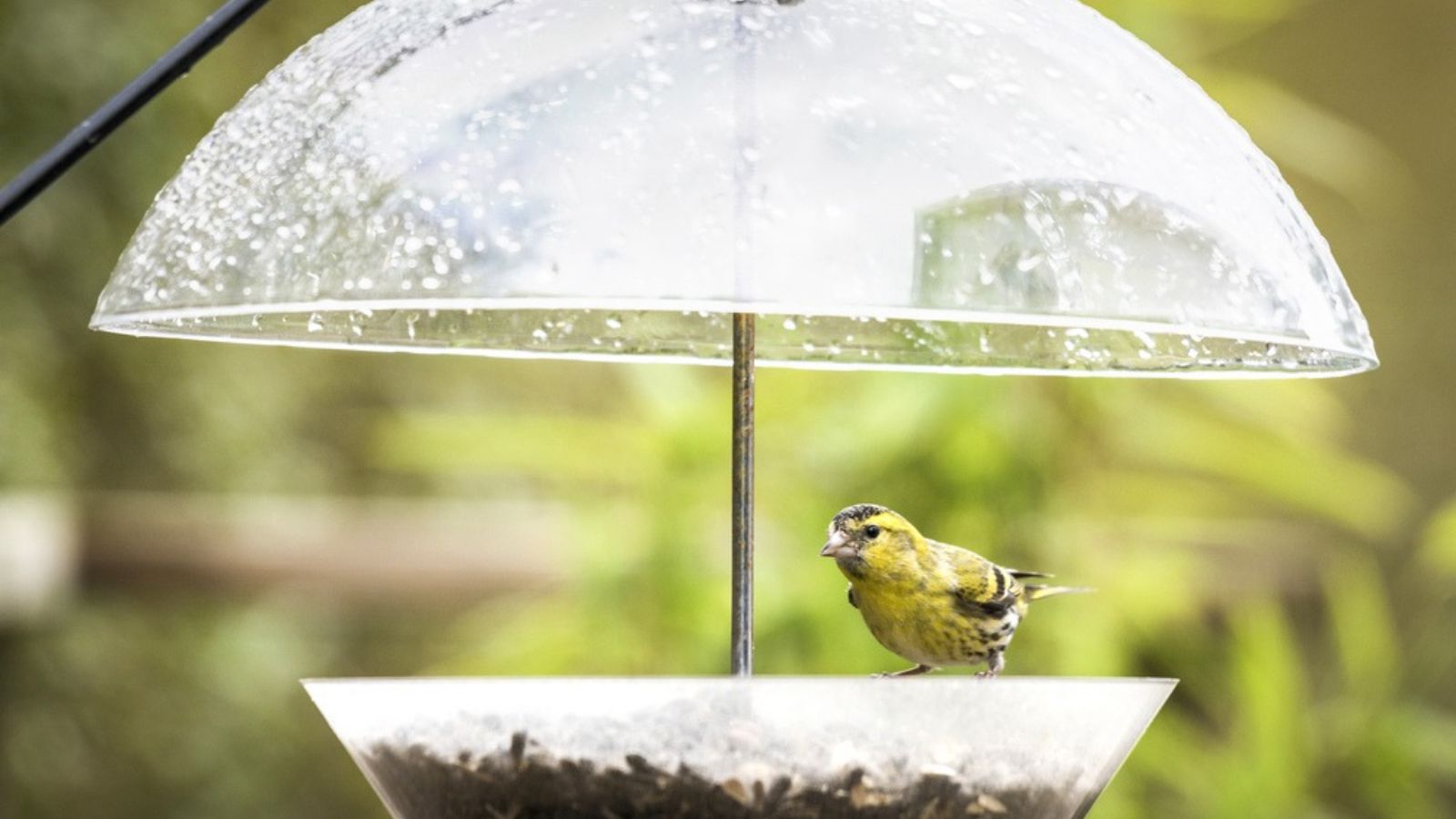
Move your bird feeder out of the wind and rain, clear the drains at the bottom, and put out only as much seed as the birds usually eat in a day. Keep the rest of the week’s supply dry indoors. When rain is coming in sideways, even a feeder with a good roof can end up with a wet plug of seed below the lowest perch.
Keeping poultry has made me fussy about two things that apply just as well to a backyard bird feeder. I want to see what’s left at the bottom, and I want to be able to get it all out. Before spending money on a new feeder, I’d find out where the old one gets wet. Moving the hook or clearing a blocked drain may save you the purchase and a fair bit of seed.
Find the wet spot before you move the feeder
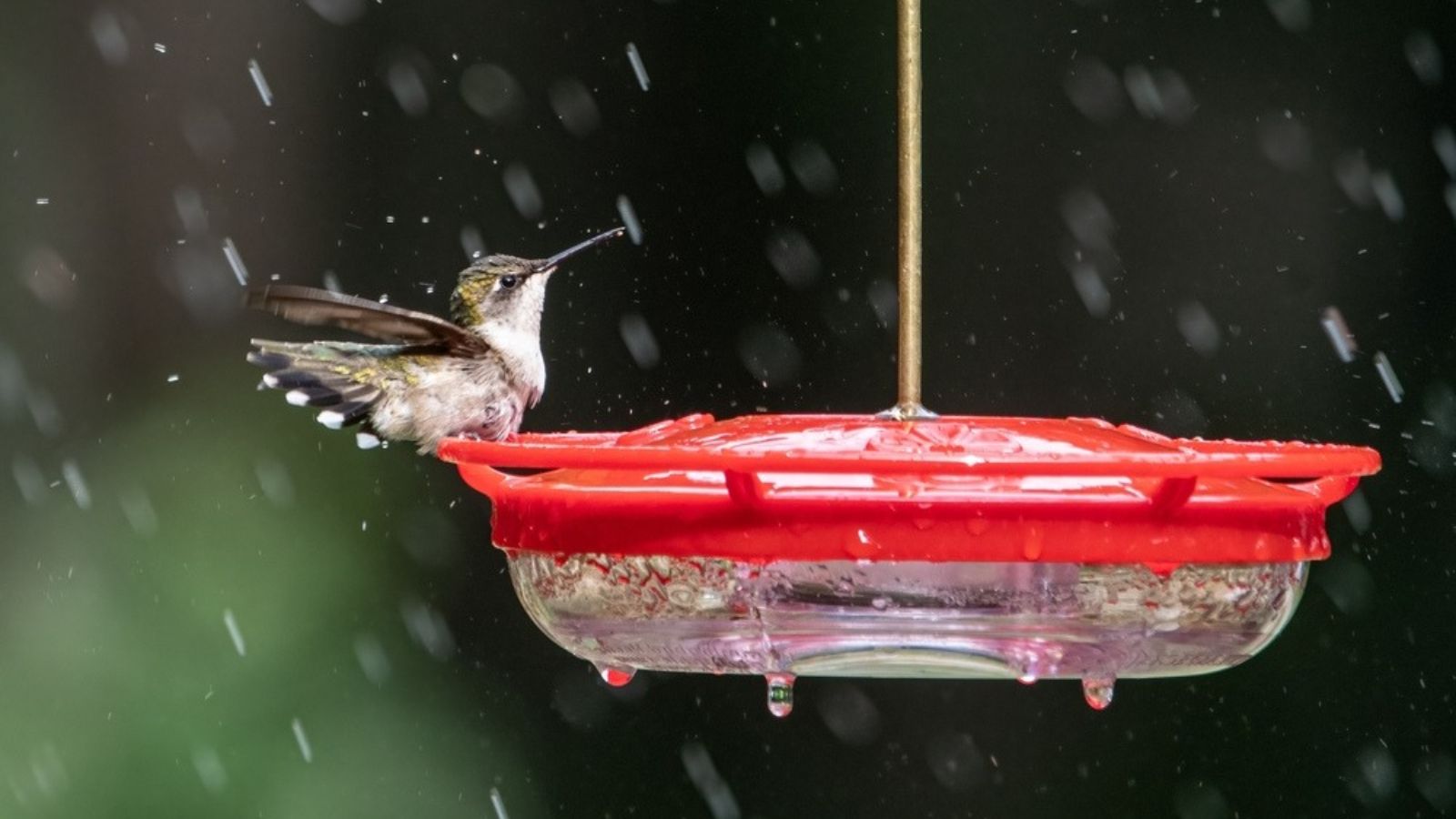
Take the feeder down after the next shower and look at the lid, the feeding holes, and the base. A wet streak running from the top seam gives you a different job from a wet patch around a perch. If you’ve already emptied the feeder for cleaning, hang it back up empty for a shower and see where the first drops collect. There’s no point sacrificing another scoop to find a leak.
Wet just under the lid. Check that the lid sits flat and that a trapped hull hasn’t wedged it open. Look up, too. A porch roof can keep the feeder dry, but hanging it directly under the drip edge puts it in the runoff. Move it farther back under the roof or out of the path of a leaking gutter.
Wet on one side around the ports. That’s a good clue that wind is pushing rain in sideways. Try the sheltered end of a porch or the side of a shed that stays drier during a storm. You want enough open space for the birds to spot a cat and somewhere nearby they can fly to for cover. If that puts the feeder near a window, hang it within 3 feet of the glass to reduce the risk of a serious collision.
Wet at the bottom, with dry seed above. Check for standing water and blocked drains. Open drains let stray water escape. Once wet hulls and seed fragments plug the holes, water sits against the seed. Also look for beads of moisture on the inside of a clear tube. If the wall is wet in several places without an obvious entry point, condensation may be part of the problem. Make sure the feeder is completely dry before you fill it and leave any vents open.
Give rain somewhere to go
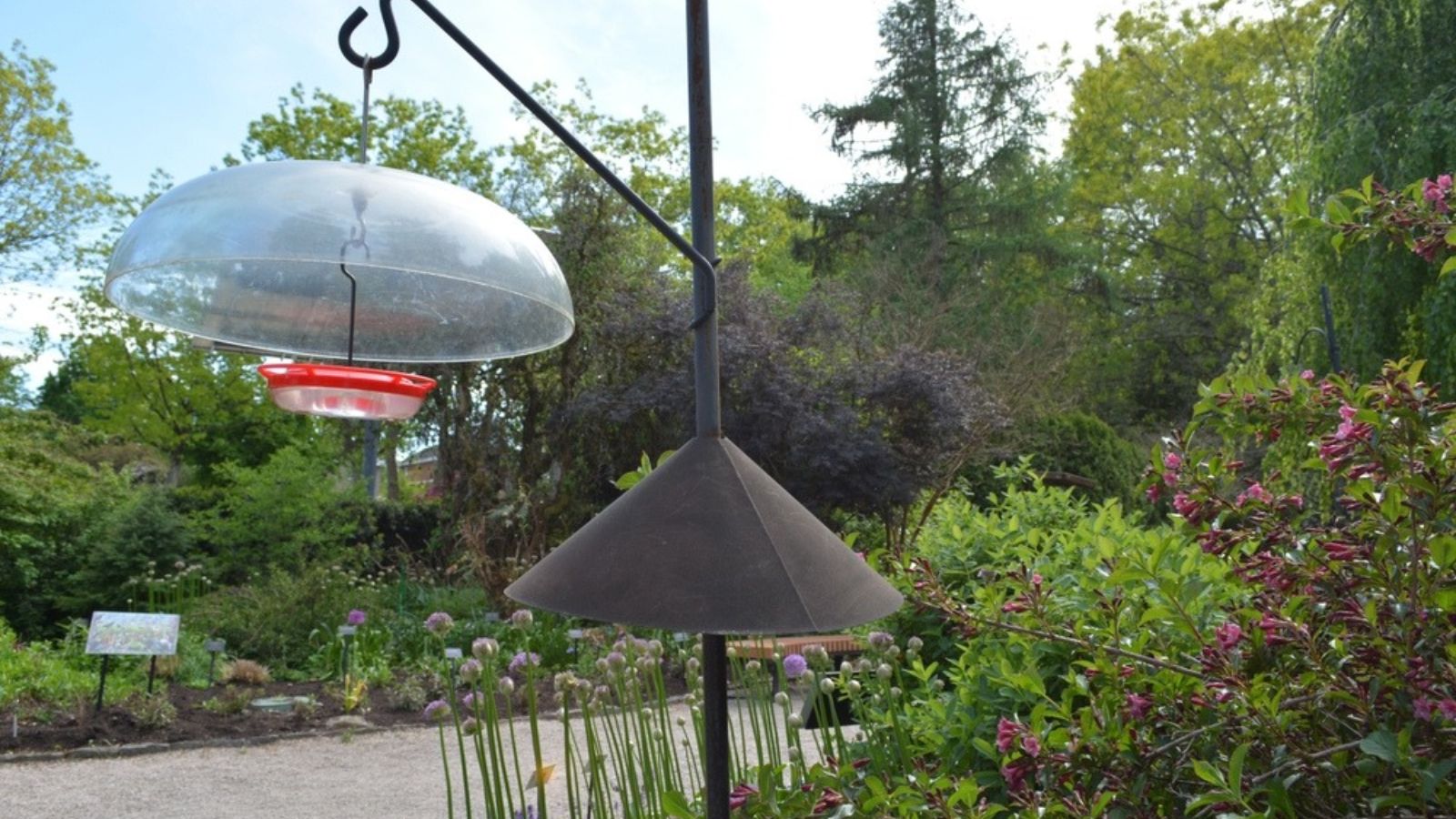
A rain dome earns its keep on an exposed pole if the rim extends past the feeding ports and any tray underneath. Look straight down at the feeder from above. If you can still see the tray sticking out beyond the edge, that part is going to catch rain. A dome sheds rain falling from above, but a sheltered position will do more for a feeder that keeps getting soaked from the side.
On a tube feeder, take off the base if the design allows and brush out the space below the lowest port. On a hopper, check the troughs where seed comes out and the corners where wet hulls collect. Hold a tray up to the light so you can see whether its holes or mesh are clear. Once the feeder is empty, pour a little clean water into the trough or onto the tray and watch where it runs. If it stays in one corner, check that the feeder is hanging level as well as checking the holes. Do this before the final drying step.
If the same feeder keeps soaking its contents, I’d choose a small covered tube or hopper with a base you can remove and drains you can reach with a brush. A feeder that holds a lot of seed is only convenient if the birds get through it. If you use an open tray for birds that prefer a flat perch, I’d take it in during the wettest stretch unless there’s a genuinely dry spot for it.
Measure what the birds get through in a day
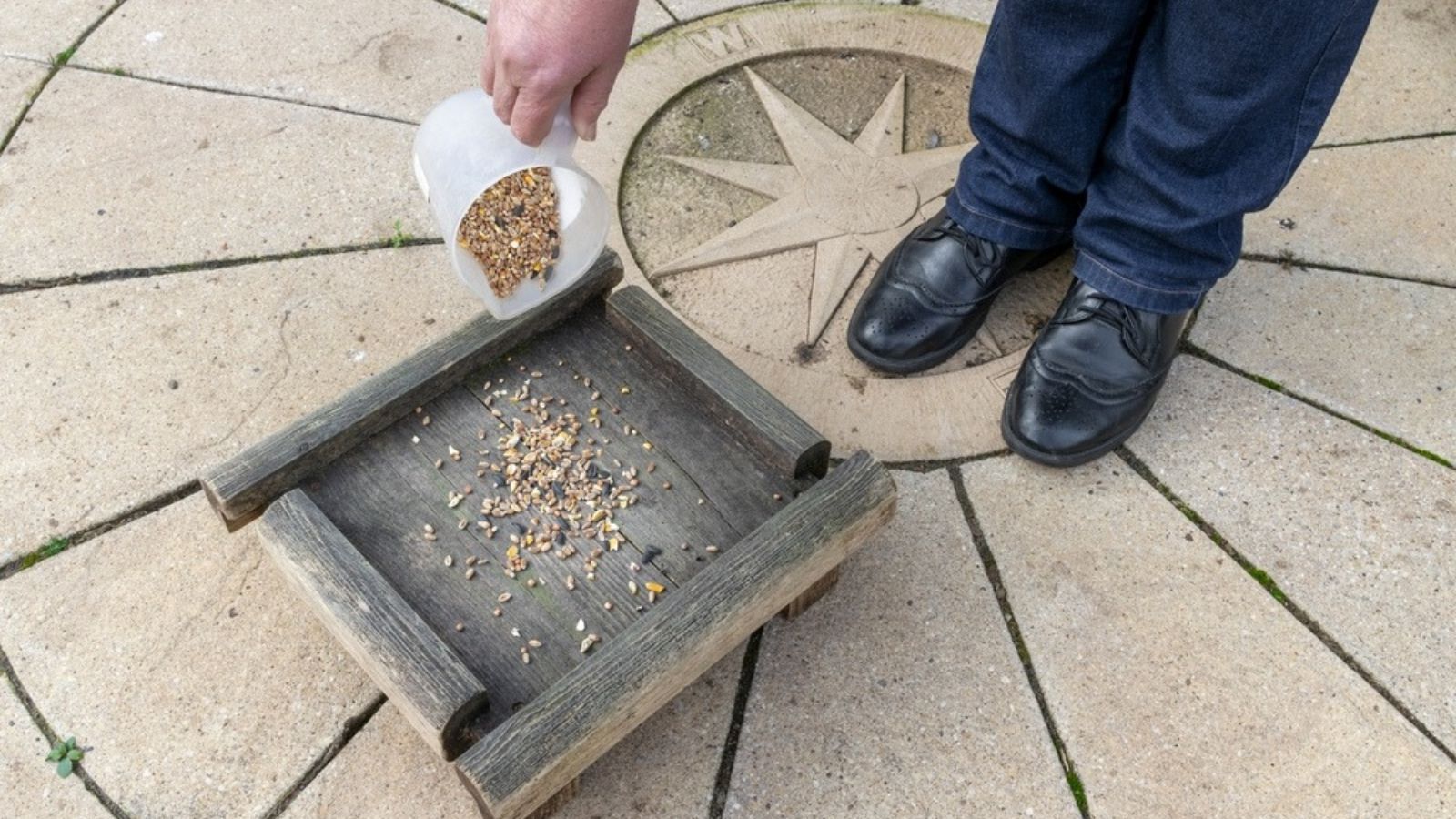
Use a scoop so you can adjust the amount instead of guessing from the height of the seed in the tube. If you’re unsure how much to start with, put in enough to reach the lowest feeding port, or just a thin layer in a sheltered tray. Check it the next morning and look under the feeder. An empty tube and a carpet of seed tell you a different story from an empty tube and a scattering of hulls.
If you put out half a cup and find a quarter cup still in the feeder, start with a quarter cup next time. If it’s dry, the birds are clearing it, and very little is going on the ground, increase the next scoop a little. Give the birds time to find a feeder you’ve just moved before you judge how much they’ll eat there. A smaller fill can still get wet in the first shower. The point is to shorten the time seed spends outdoors and cut the amount you have to throw away if rain gets in.
I’d check the bottom and ports each morning through the wet spell, and again after a hard, windy shower once it’s safe to go out. Keep the bag in a sealed container in a cool, dry place. If you’ll be away for the week or there’s nowhere the feeder stays dry, bring it in empty until you can check it again.
Empty, wash, dry, and refill

- Throw out the wet seed. Tip the whole fill into the trash if you find damp clumps, a musty smell, visible mold, or seed starting to sprout. The loose seed at the top can look fine while the bottom has turned to paste. Keep feeder leftovers out of the storage bin. Sweep or rake up soggy seed and old hulls beneath the feeder, too.
- Scrub the feeder. Take it apart and work outdoors if possible, away from food-prep areas. With gloves on, use warm soapy water and a dedicated brush to remove seed and debris. A bottle brush reaches inside a tube, and an old toothbrush works around the ports. Rinse off the soap. If the feeder material can take bleach, soak the parts for at least 10 minutes in a solution of one part household bleach to nine parts water, then rinse thoroughly with clean water. Wash your hands with soap and water afterward.
- Let the parts dry separately. Set them on a rack in a dry, sheltered spot and tip out any water held in the base or lid rim. Check the seams and ports before putting everything back together. If the feeder needs longer to dry, leave it empty. Fresh seed will pick up moisture from a wet base before the next shower even starts.
- Refill with a small scoop of dry seed. If you found a wet clump, fix the leak or the blocked drain before you put the feeder back. If it gets soaked again despite the move, take it in during the worst weather and put it back out in a dry break.
Even if the seed stays dry, give the feeder a thorough clean about every two weeks, sooner if wet seed or droppings build up. If you find a sick or dead bird, take down the feeder and birdbath for two weeks and contact your state wildlife agency or a wildlife rehabilitator. Leave the bird alone.
One winter job I’m happy to skip is cutting back every healthy flower stalk in fall. Standing coneflowers and black-eyed Susans give birds seed they can pick straight from the plant. If you do have to take the feeder down for a few wet days, there’s something left for them to forage.
You might also like…
How To Stop Squirrels Raiding Your Bird Feeder (It’s Not A Baffle)

