
Affiliate disclosure: This post may contain affiliate links. Please see full disclosure.
You don’t need a bunker or a four-figure bug-out bag to be meaningfully more prepared than you are right now. These 20 items all cost under $20 each, and every single one of them solves a real problem that shows up in real emergencies: no power, no clean water, no cell signal, no way to see what you’re doing or keep warm while you do it.
You don’t have to go full bunker survivalist uber prepper, but it is smart to start thinking ahead. Storms, supply chain break downs, shortages, job losses, natural disasters are all very real threats, and if you have the basics covered, you don’t have to worry so much about one of those occurring. But you also don’t need all the high-end tactical gear and (disgusting and expensive) MREs, and you don’t need to spend thousands of dollars. The basics are what’s really important. The stuff you’re likely to need in a real potential scenario. Like a power outage. Not the zombie apocalypse.
I’ve built out emergency kits for my own family over the years, added to them after storms that knocked our power out for the better part of a week, and cut plenty of stuff that sounded useful but never actually got used. What’s left is this list. None of it is exciting. All of it works.
Water purification tablets (makes questionable water safe to drink)
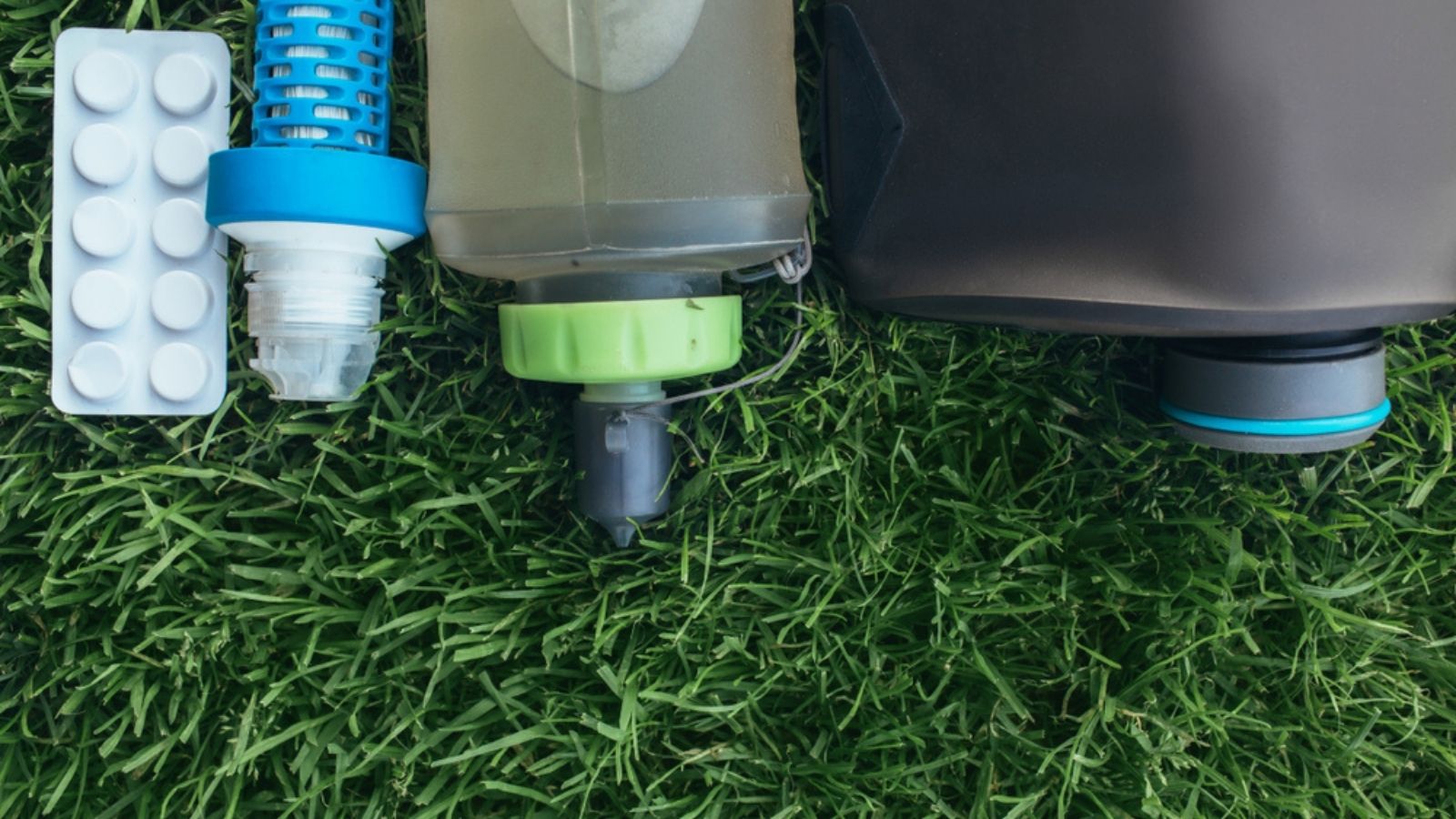
Water purification tablets kill bacteria, viruses, and parasites in water you’re not sure about, and a bottle of 30-50 tablets runs under $15. This matters because your stored water will run out before the emergency does, more often than people expect. Once it’s gone, you’re looking at tap water that might not be safe, a stream, a pond, or whatever you can find.
Most tablets use chlorine dioxide or iodine and need 30 minutes to 4 hours to fully work, depending on the water temperature and how cloudy it is. Cold, murky water takes longer, so check the instructions on the specific brand you buy rather than guessing. I keep a bottle in every kit I’ve built, including the car kit, because they weigh nothing and don’t expire for years if stored somewhere cool and dry.
They won’t remove heavy metals or chemical contamination, only biological threats, so if you know your water source is chemically contaminated, tablets alone won’t fix that. For everyday storm and outage scenarios where the concern is bacteria and parasites, they’re one of the cheapest peace-of-mind items you can own.
Collapsible water container (lets you fill up fast and store it flat)
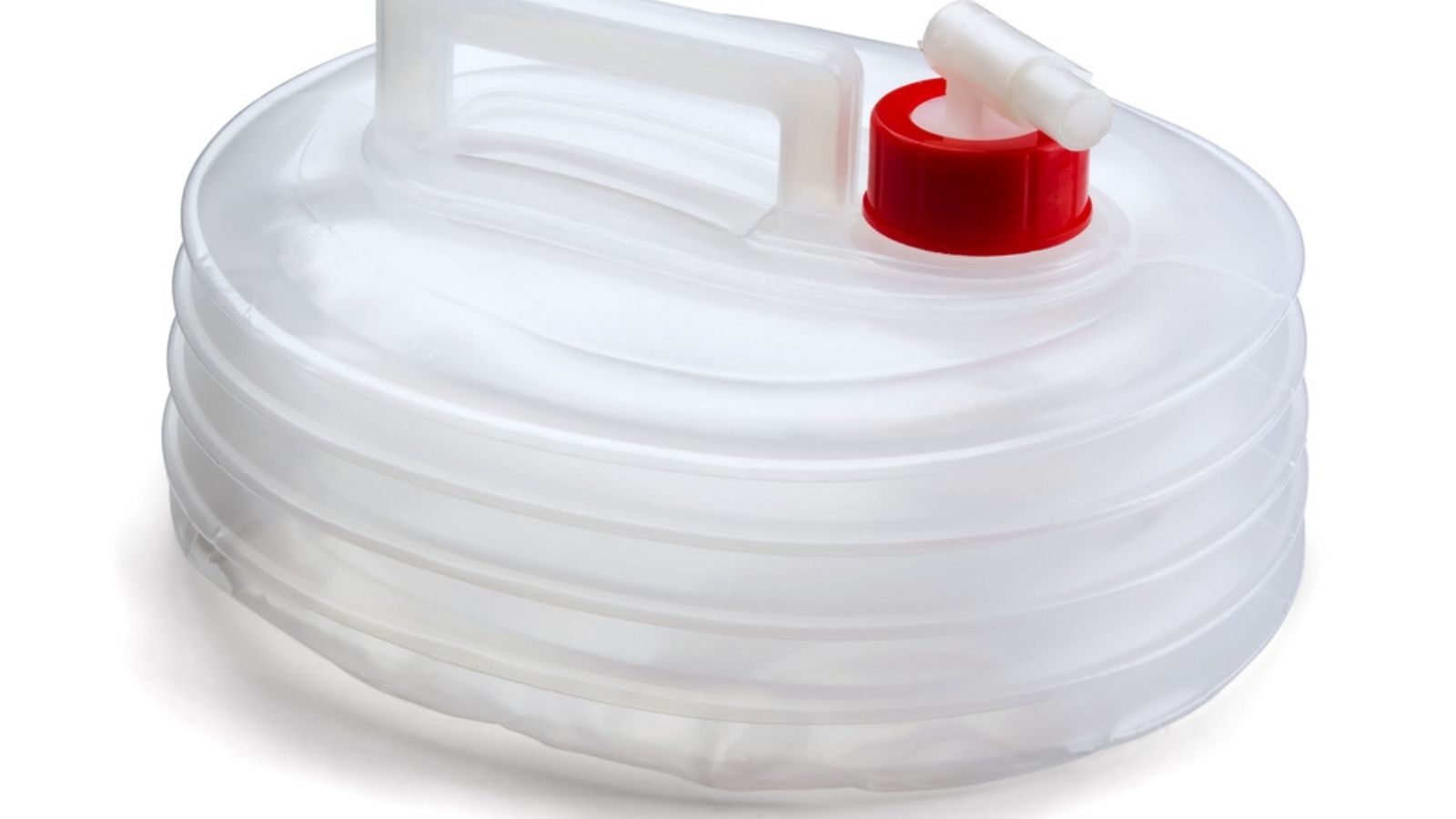
A collapsible water container holds anywhere from 2.5 to 7 gallons, folds down to almost nothing when empty, and costs $10-18 depending on size. The point of this one isn’t purifying water, it’s having something to actually put it in. When a storm warning goes out, tap water pressure can drop or utilities can ask you to conserve, and that’s your window to fill every container you own before it’s too late.
I keep two of these, a smaller one for the car and a bigger one at home, both stored flat in a drawer where a hard plastic jug would take up real shelf space. Look for one with a spigot built in, not just a screw cap, because pouring water out of a full 5-gallon bag without one is a two-person job and a guaranteed spill.
Fill them right before an expected event rather than leaving them full for months. Stored water should get rotated every six months anyway, and an empty collapsible container isn’t degrading the way water sitting in sunlight can.
Headlamp (keeps both hands free while you work in the dark)

A headlamp puts light exactly where you’re looking, and unlike a flashlight, it leaves both your hands free to actually do something. Decent ones run $10-18 and give you 100-300 lumens, which is plenty for reading, cooking, first aid, or fixing whatever broke. The difference between a headlamp and a flashlight sounds small until you’re trying to change a fuse or bandage a cut one-handed while holding a light with the other. I have a few different ones, as I also use them in everyday life, like when I’m walking the dog after dark.
Look for one with a red-light mode. It preserves your night vision and burns through batteries much slower than the white beam, which matters a lot if the power’s going to be out for days rather than hours. I go through headlamp batteries faster than I’d like to admit, so I keep a dedicated stash of the exact size mine takes rather than assuming I’ll have the right ones on hand.
Test the batteries every few months. A headlamp that’s been sitting in a drawer for two years with the same batteries in it is a headlamp that doesn’t turn on when you actually need it.
LED lantern (lights the whole room, not just where you point it)
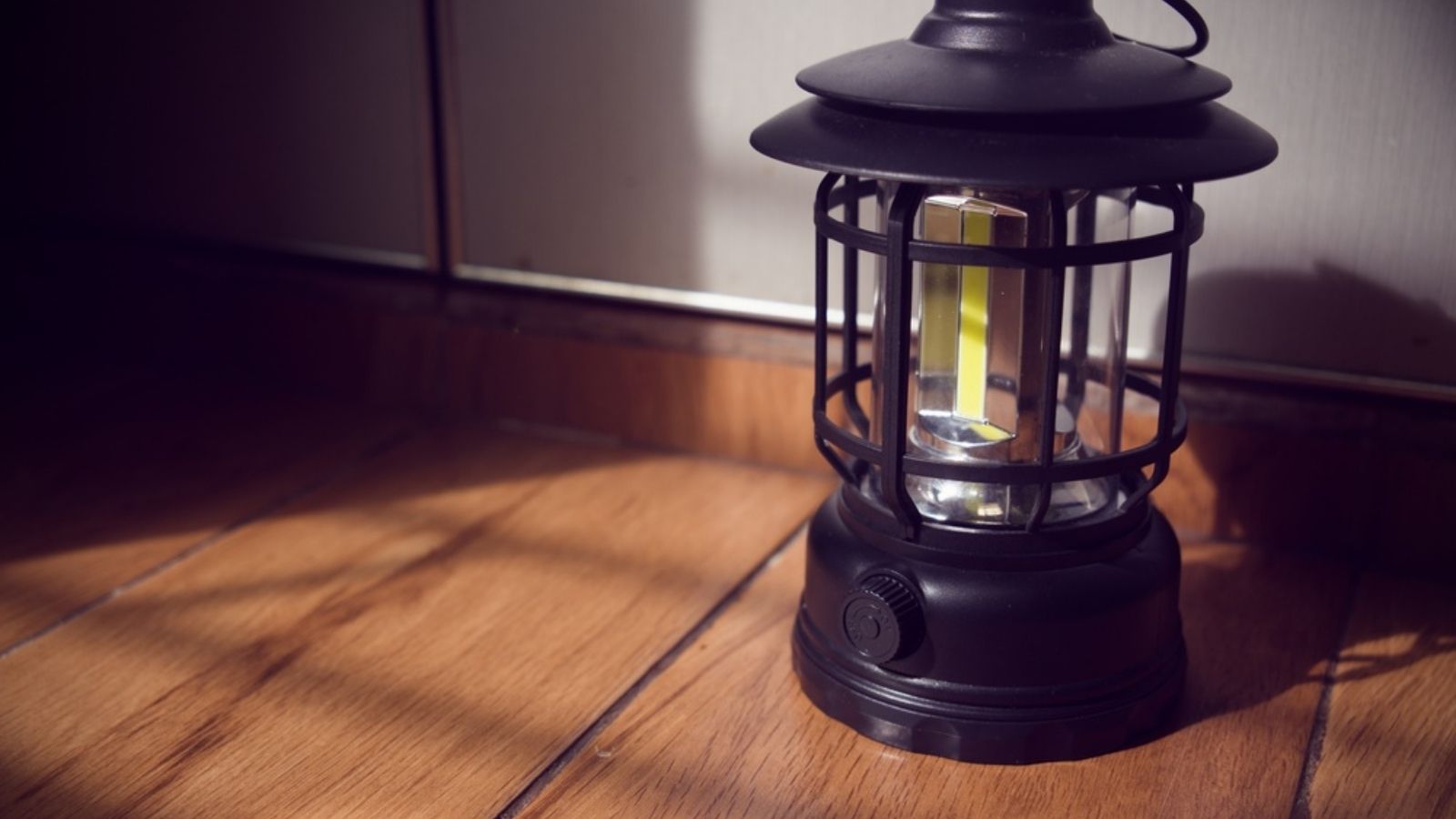
An LED lantern lights an entire room from one spot, which is what you actually want once you’re not moving around and just need to see, cook, and function like a normal household for a few hours. A good battery-powered lantern costs $12-20, throws light in every direction, and can usually run 12-20 hours on a set of D batteries or one charge.
This is the item that goes in the middle of the kitchen table during an outage, not in someone’s hand. Everyone in the house can see without four separate flashlights pointed at four separate things, which matters more than people expect once you’re a few hours into a blackout with kids or older relatives in the house. Some models fold flat for storage and pop open into a cube shape, which is handy if you’re tight on space.
Get one with a hand crank or solar backup if you can, since a lantern that only runs on disposable batteries is one dead battery away from being useless right when you need it most.
Battery-powered emergency weather radio (the way you get official alerts when the internet’s down)
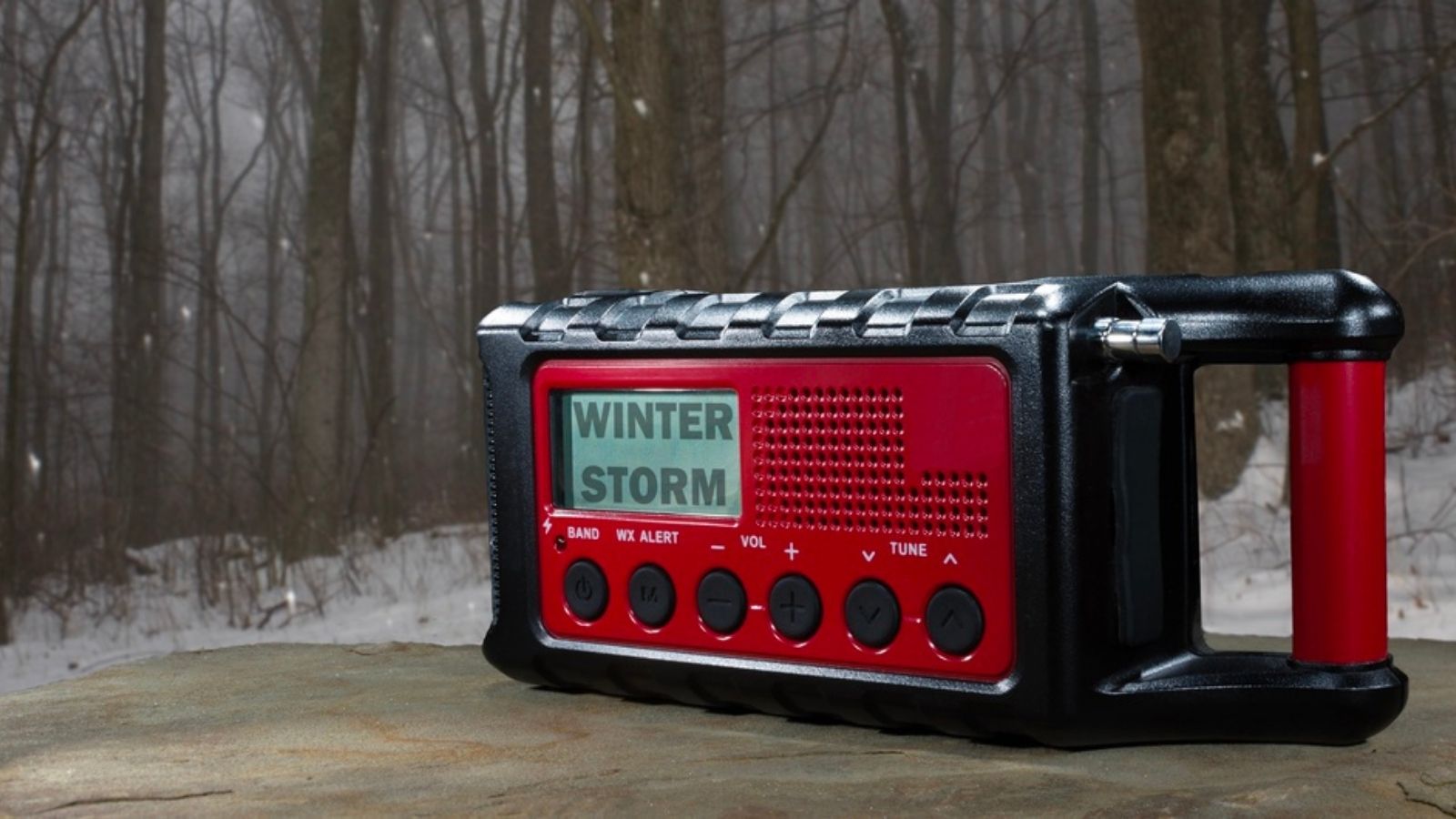
A battery or hand-crank weather radio picks up NOAA weather alerts and local emergency broadcasts even when cell towers are overloaded or down entirely, and models with all the basics cost $15-20. This is genuinely one of the most overlooked items on this list. Everyone assumes their phone will keep working, and during a lot of real emergencies, it doesn’t, either because towers go down or because the network gets so overloaded nobody can get a signal through.
Look for one with a NOAA weather band specifically, not just AM/FM, because that’s the channel carrying official watches, warnings, and evacuation instructions. Hand-crank models solve the battery problem entirely since you generate your own power, which I’d genuinely recommend over a battery-only unit if you’re only buying one.
I keep mine in the same drawer as the flashlight and check the crank function every few months, because a radio that’s never been used is one you don’t actually know works.
Whistle (signals for help using almost no energy)
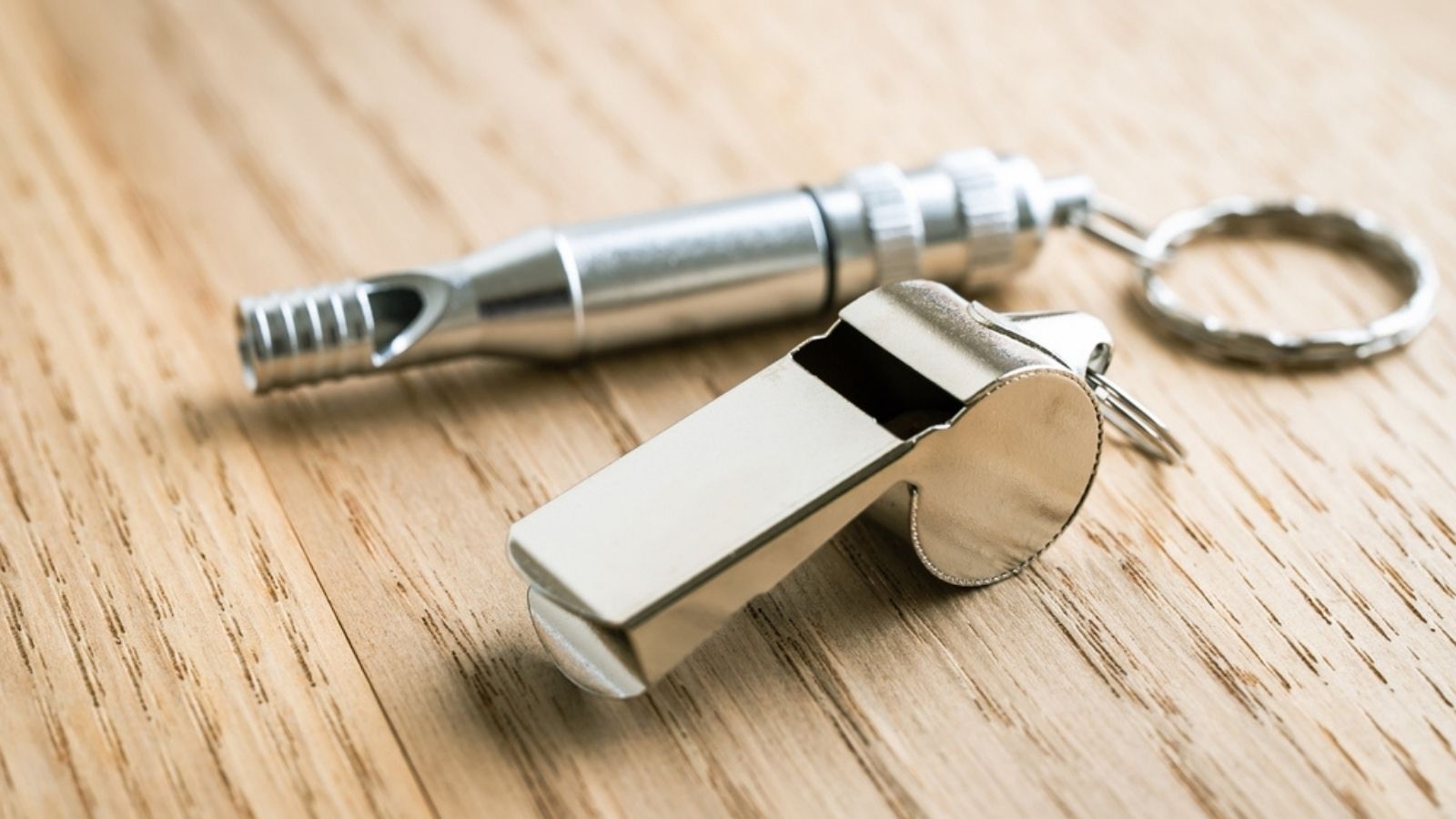
A whistle carries sound up to a mile in open conditions, and a decent one costs under $5. Three sharp blasts is the universal distress signal, and it takes almost no effort to produce compared to shouting, which matters if you’re injured, exhausted, or need to keep signaling for a long stretch of time. This is one of the cheapest, lightest items on the entire list, and it’s the one people skip most often because it doesn’t feel like “real” preparedness gear.
Clip one to every backpack, every kit, and every kid’s jacket zipper if you’ve got children. A pealess whistle, the kind without a little ball inside, is the better choice because it still works when it’s wet or cold, unlike traditional whistles that can freeze or jam.
I keep one on my keychain year-round, not just in an emergency kit, because the moments you actually need a whistle tend to be the moments you didn’t plan for.
Emergency mylar blankets, multi-pack (reflects back up to 90% of your body heat)
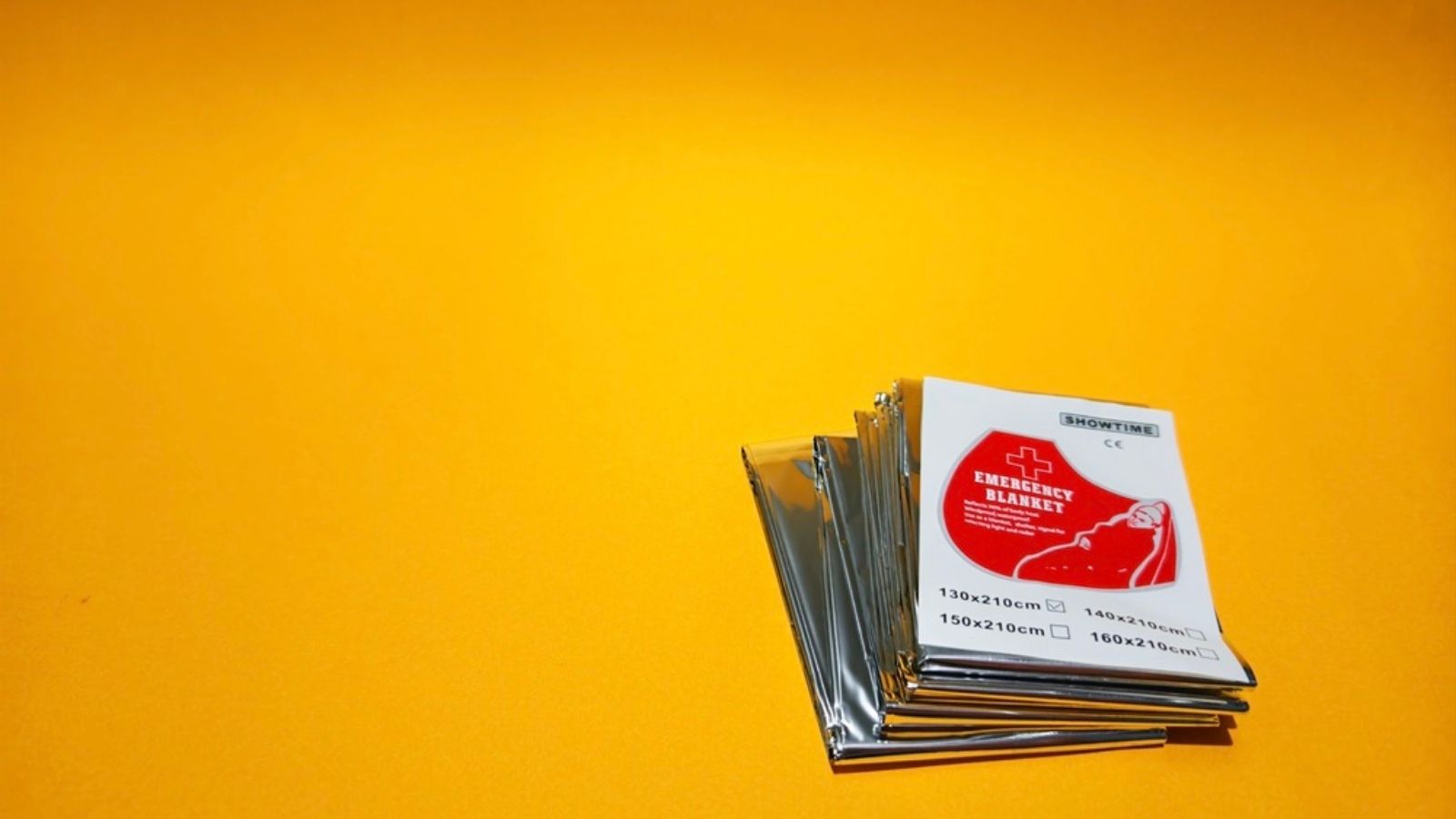
Mylar emergency blankets reflect back roughly 90% of the body heat you’d otherwise lose, and a pack of 4-10 costs under $15. Hypothermia doesn’t need freezing temperatures to set in, it can start at temperatures as mild as 50°F (10°C) if you’re wet, exposed to wind, or immobile for a while. These blankets are absurdly light, about the size of a folded napkin, and take up almost no space in a bag.
They’re not comfortable and they’re not warm on their own, they work by trapping the heat your body is already producing, so they’re most effective wrapped snugly rather than draped loosely. Keep one per person in every kit and every vehicle, since they weigh next to nothing and cost about $2 each in a multi-pack.
I toss a couple in every car in the family, glovebox and trunk both, because a stranded car in cold weather is exactly the scenario these were designed for.
Rain poncho (keeps you dry and functional, not just covered)

A basic rain poncho costs $5-10 and does the one job a mylar blanket can’t, which is keeping you dry while you’re actually moving around and doing tasks outside. Staying dry matters as much as staying warm, arguably more, because wet clothing pulls heat away from your body far faster than dry clothing in the cold. If you’re clearing debris, walking to a shelter, or checking on a neighbor in bad weather, a poncho is the difference between staying functional and getting soaked through in the first ten minutes.
Get one with sleeves and a hood rather than the flat tarp style, and size up if you’ll ever be wearing it over a jacket. Disposable ponchos work fine for emergency kits since they pack down to almost nothing, though a reusable one is worth the extra couple dollars if you’ll actually use it outside of emergencies too.
Keep one in every backpack and vehicle. They’re cheap enough that there’s no excuse not to.
Hand sanitizer or sanitation wipes (cuts illness risk when there’s no running water)

Hand sanitizer with at least 60% alcohol content, or a pack of sanitizing wipes, keeps your hands clean when running water isn’t an option, and either one costs $3-10. This sounds minor until you realize illness is one of the most common secondary problems in an extended emergency, not the disaster itself. Dirty hands around food, wounds, or a baby’s bottle is how a bad week turns into a bad month.
Wipes have the advantage of also cleaning surfaces, hands, and small wounds, where sanitizer only does hands. I keep both in my kit, a small bottle of sanitizer for quick use and a pack of wipes for anything that needs an actual wipe-down.
Check the expiration date every year or two, since alcohol-based sanitizer does lose effectiveness over time, especially if it’s been sitting somewhere hot.
Contractor-grade trash bags (rain gear, ground cover, waste bags, and water carrier in one)
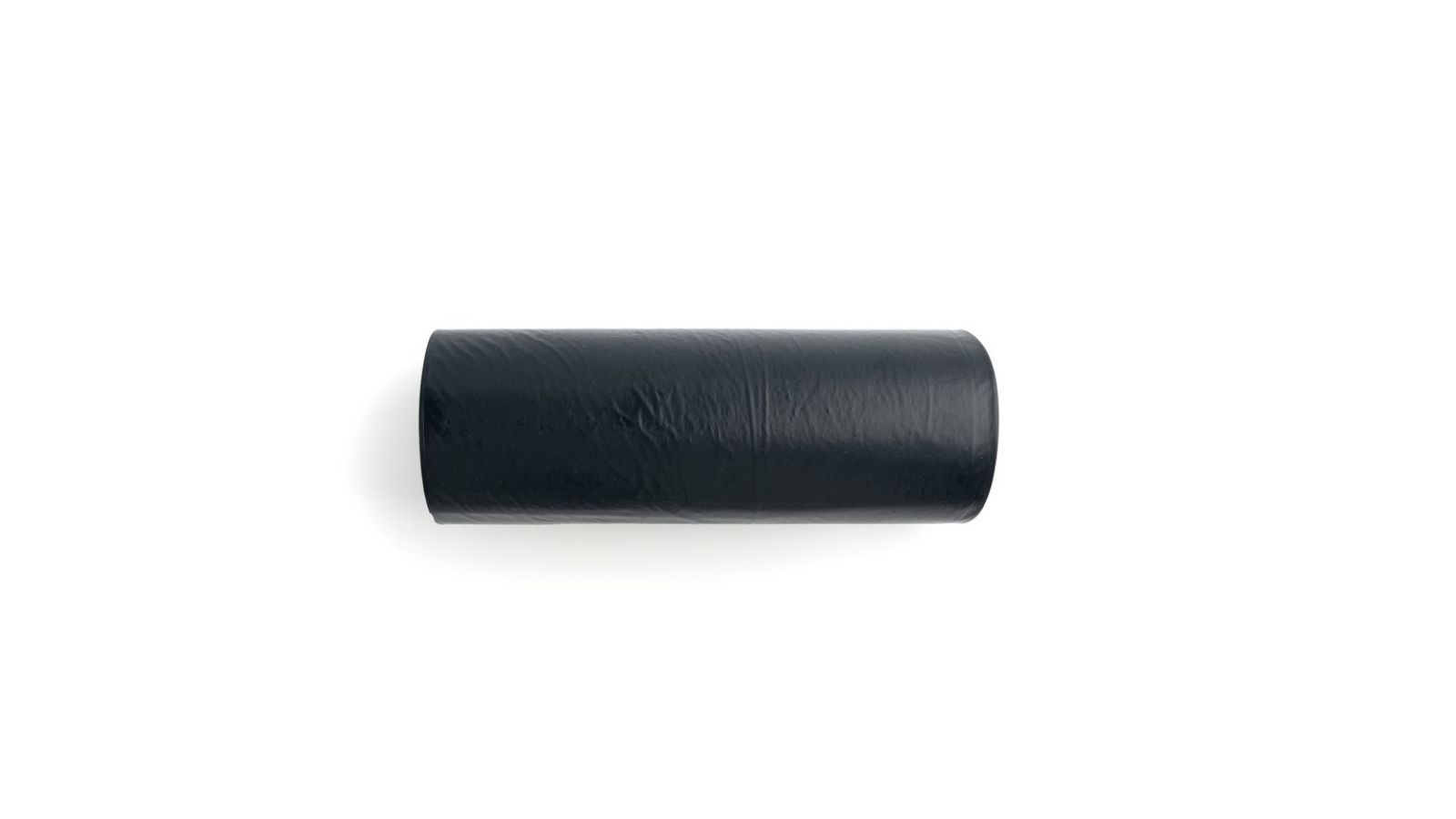
Heavy-duty contractor trash bags, the 3-mil kind rated for construction debris, cost $10-15 for a roll of 20-30 and do more different jobs than almost anything else on this list. Cut arm and head holes and it’s an emergency poncho. Spread flat and it’s a dry place to sit or sleep. Lined inside a bucket, it’s an improvised water carrier. On top of all that, it’s still just a trash bag for the job trash bags were built for, which becomes its own problem fast if regular waste collection stops.
Get the contractor grade, not the kitchen kind, because thin bags tear the moment you try to use them for anything beyond garbage. I keep a full roll in my kit specifically because it does so many different jobs, it’s basically several items in one.
Ten bags weighs almost nothing and takes up barely any space, so there’s no real reason to skimp on the quantity you pack.
Fire starter, ferro rod or stormproof matches (still works when everything’s wet)

A ferro rod or a box of stormproof matches gives you a reliable way to start a fire for warmth or cooking even when conditions are damp, and either one costs $8-15. Regular matches and lighters fail constantly in wind, rain, or high humidity, which is exactly when you’re most likely to need fire in the first place. A ferro rod throws sparks at over 3000°F (1650°C) and works even when it’s wet, since you just wipe it dry and strike it.
Stormproof matches are the easier option for beginners since they light like a normal match, they’re just windproof and waterproof once lit, staying burning even underwater for a few seconds. A ferro rod takes a bit of practice to use well, so don’t wait until you actually need it to try it out for the first time.
I keep both in my kit, matches for quick and easy, the ferro rod as backup because it doesn’t run out the way a box of matches eventually does.
Duct tape (patches, seals, and repairs almost anything)

A roll of duct tape costs $5-10 and repairs torn tarps, cracked hoses, split boot soles, broken glasses, and dozens of things you can’t predict you’ll need to fix until you’re standing there holding the broken half. It’s not a specialty item, which is exactly the point. Duct tape works because it’s genuinely versatile, sealing gaps, holding things together under real stress, and patching gear that would otherwise be useless for the rest of the emergency.
Get a full-size roll rather than the tiny flat-packed versions marketed for kits, since those run out fast and the adhesive on cheaper minis is often weaker. Wrap a length around a pencil or lighter if space is genuinely tight, that gets you a usable amount without carrying a full roll.
I’ve used mine for everything from a split boot to holding a car’s side mirror on until I could get it properly fixed, and neither of those was an emergency I saw coming.
RELATED POST: 55 Everyday Items That Vanish First When Disaster Hits
Paracord (rigging, securing, and repairs that need real strength)

A 100-foot hank of paracord costs $8-15 and gives you cordage rated to hold 550 pounds, strong enough for rigging a shelter, securing gear to a pack, or hanging food out of reach of animals. Duct tape handles patching and sealing, but it can’t replace actual rope for anything that needs real tensile strength. This is the item that shows up when you need to lash something down in wind, build an improvised shelter, or replace a broken strap that’s carrying real weight.
Get genuine 550 paracord rather than cheap decorative cord, since the difference in strength is significant and the cheap stuff can fail exactly when you’re depending on it. Most paracord also has an inner core of several smaller strands you can pull out and use separately for finer jobs like sewing or fishing line, which effectively multiplies what one hank can do.
I keep a coiled length in every kit, and I’ve used it more often for mundane things, like hanging a tarp for shade, than for anything dramatic.
Multi-tool (pliers, blade, and screwdrivers in one pocket-sized tool)

A basic multi-tool combines pliers, a knife blade, screwdrivers, and usually a few other functions into one compact tool, and a solid entry-level model costs $12-20. This is the tool that handles the dozens of small jobs an emergency throws at you that don’t justify carrying a whole toolbox, tightening a loose screw, cutting cordage, opening a stuck package, or gripping something too hot or too small to handle bare-handed.
You don’t need a premium brand to get real value here, a mid-range multi-tool with pliers and a locking blade covers almost everything you’ll actually use it for. Check that the blade locks open before you buy, since an unlocked blade folding back on your fingers mid-task is a genuinely common and avoidable injury.
Mine lives in my emergency bag permanently, not because I use it constantly, but because when I do need it, nothing else does the job.
Superglue (closes small wounds and fixes small gear breaks fast)

A small tube of medical-grade superglue costs under $5 and does two very different jobs well, closing small clean cuts and repairing gear that’s cracked or split. Medical superglue, specifically the kind labeled for skin use, is used by emergency rooms for minor lacerations because it seals the wound edges and lets skin heal underneath, which is a genuinely useful thing to know when you’re days from a doctor.
It only works on clean, shallow cuts with edges that pull together easily, not deep wounds, punctures, or anything showing muscle or fat, those need real medical attention, not glue. On the gear side, it’s fast, strong, and small enough to throw in any kit for fixing cracked plastic, split soles, or broken buckles.
Keep it separate from your regular craft superglue if you have both, since the medical formula is specifically designed to be safer on skin.
Work gloves (protects your hands from debris, glass, and sharp material)

A pair of sturdy leather or heavy synthetic work gloves costs $8-15 and protects your hands during exactly the kind of cleanup that follows most disasters, storm debris, broken glass, splintered wood, and sharp metal edges. Hand injuries during disaster cleanup are common enough that they’re one of the most predictable ways people get hurt after the actual event is over, not during it.
Get a pair with reinforced palms and a snug enough fit that you can still grip tools and small items, since bulky gloves that don’t fit well tend to just get taken off and left in a bag. Leather offers better puncture and heat resistance, while synthetic gloves are cheaper and dry faster if they get wet.
I keep a pair in the car as well as at home, because storm debris on a road doesn’t wait for you to get back to the house first.
N95 or KN95 masks (filters smoke, dust, and airborne particles)

A pack of N95 or KN95 masks costs $10-20 for 10-20 masks and filters out at least 95% of airborne particles, which matters directly during wildfire smoke, dust storms, or the debris and mold exposure that follows flooding or structural damage. Regular cloth masks don’t filter fine particulates the way N95s do, so if smoke or heavy dust is the actual hazard, they’re not doing the job.
Check the fit against your face when you buy, since an N95 that doesn’t seal properly around the nose and chin loses most of its filtering benefit no matter how good the mask itself is. Keep a few in every kit, including the car, since wildfire smoke in particular can roll into an area with very little warning.
I keep a small stash at home specifically for smoke season, since it’s become a predictable enough event where I live that I’d rather have them ready than scrambling to find any in stock once the smoke actually shows up.
Manual can opener (gets you into food when the power’s out)
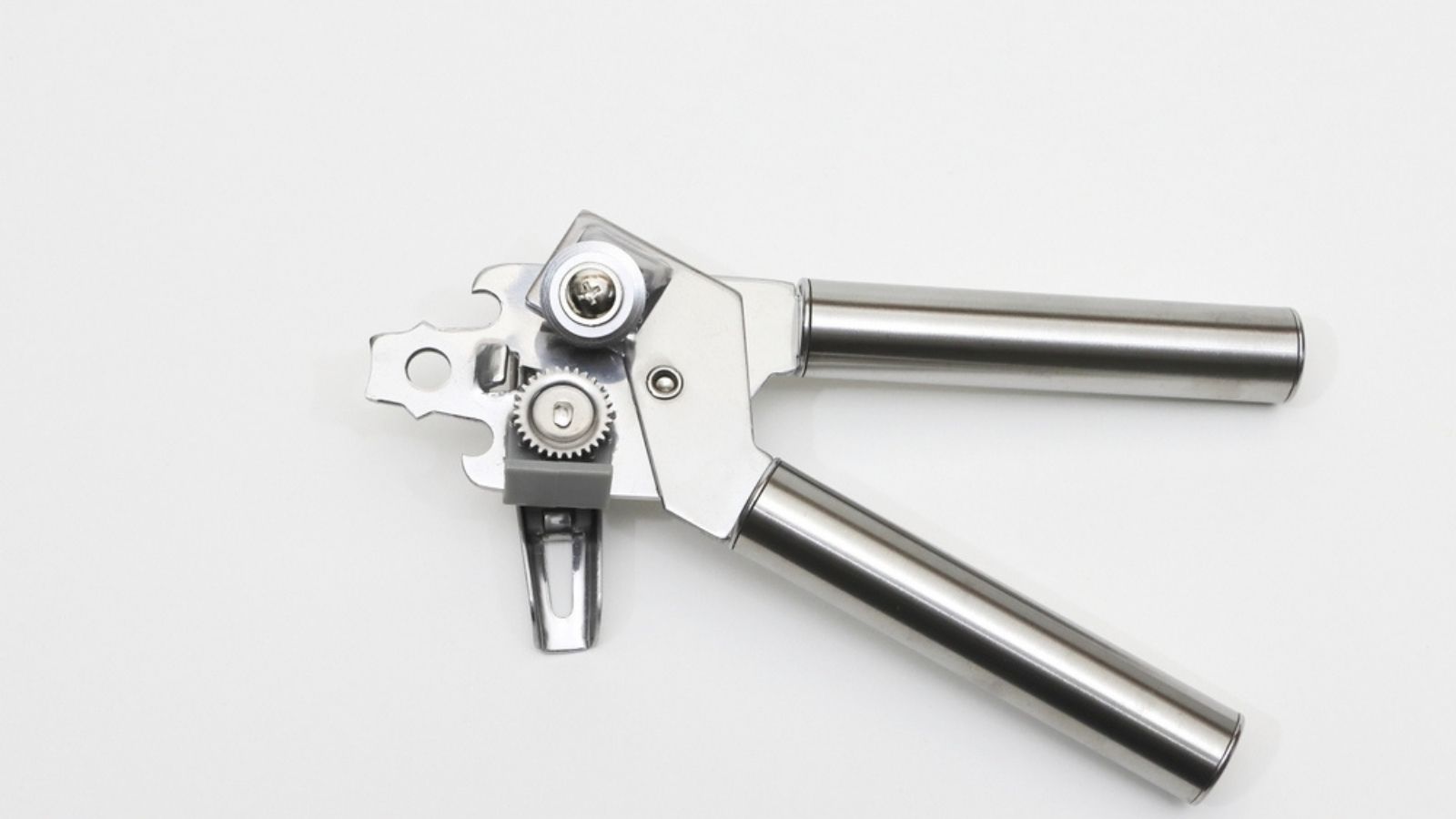
A manual can opener costs $5-10 and solves a problem people don’t think about until they’re standing in front of a stack of canned food with a dead electric opener and no way in. It sounds almost too obvious to include, and that’s exactly why it gets forgotten, most households haven’t owned a manual one in years because the electric version handles it fine, right up until there’s no power.
Get a sturdy metal one, not a flimsy plastic version, since a can opener that struggles or breaks partway through a can is worse than not having one at all. A small folding version, sometimes called a P-38 or P-51, is compact enough to keep on a keychain or in a jacket pocket if you want a backup beyond the one in your kit.
This is one of the cheapest items on the entire list and one of the easiest to overlook, right up until it’s the only thing standing between you and dinner.
Portable battery power bank (keeps your phone alive for calls and alerts)

A basic portable power bank costs $12-20 and holds enough charge to fully recharge a phone two to four times, which matters because your phone is still your fastest way to call for help, receive alerts, and stay in contact with family once you’re back in range of a signal. Even during outages where cell towers are struggling, a phone with battery left can often still send a text when it can’t complete a call, so keeping it charged is worth the effort even if service is spotty.
Look for one rated at 10,000mAh or higher for a genuinely useful amount of charge, and keep it topped off rather than assuming it’ll be full when you grab it, a dead power bank in a drawer is no better than no power bank at all. Solar-charging models exist and are worth considering if you expect extended outages, though they charge slowly and shouldn’t be your only option.
I keep mine charged year-round and check it every couple of months, since these do slowly lose charge sitting unused.
RELATED POST: The Winter Blackout Kit Every Household Needs
Waterproof notepad and pencil (lets you write down what matters when phones die)

A waterproof notepad with a pencil costs under $10 and gives you a way to record phone numbers, medication doses, instructions, or notes when your phone is dead, wet, or out of signal. This is one people genuinely don’t think about until they need it, a phone with a dead battery takes every contact number and every note with it, and paper doesn’t have that problem.
Write down key phone numbers, meeting points, and any medical information for family members before you need it, not during the emergency when you’re stressed and trying to remember things from memory. A pencil is the better choice over a pen here since it still writes on wet paper and won’t dry out or leak in a bag.
I keep a small one in my kit with a few key numbers already written in, family, doctor, insurance, so it’s useful the moment I open the bag rather than something I have to fill out under pressure.
The bottom line
None of these 20 items are exciting, and that’s sort of the point. Real emergency preparedness is mostly boring, cheap, and unglamorous, and the households that actually cope well with a bad week are usually the ones who spent under $200 total getting the basics sorted long before they needed them. Start with water, light, and information, since those three cover the biggest gaps for most people, then build out from there as your budget allows.
You might also like…
50 Everyday Items Worth More Than Gold in a Crisis
20 Small Winter Jobs People Forget… Until Something Breaks

