Affiliate disclosure: This post may contain affiliate links. Please see full disclosure.
Dandelion, purslane, stinging nettle, and lots of other weeds most gardeners spend hours pulling out of their beds every year are not just harmless. They’re free food, and several of them are more nutritious than the vegetables planted around them.
I forage every one of these. But I admit, it took a while to convince myself the plant I’d been taught to hate was actually dinner. Before you eat anything on this list, get a positive identification you’re confident in, ideally cross-checked with a local foraging guide or an experienced forager, since a few of these have look-alikes worth knowing about. Once you’ve got a confirmed ID, though, you’re sitting on free salad greens, wild grains, and a genuine dent in your grocery bill.
Dandelion (root, leaf, and flower are all edible)
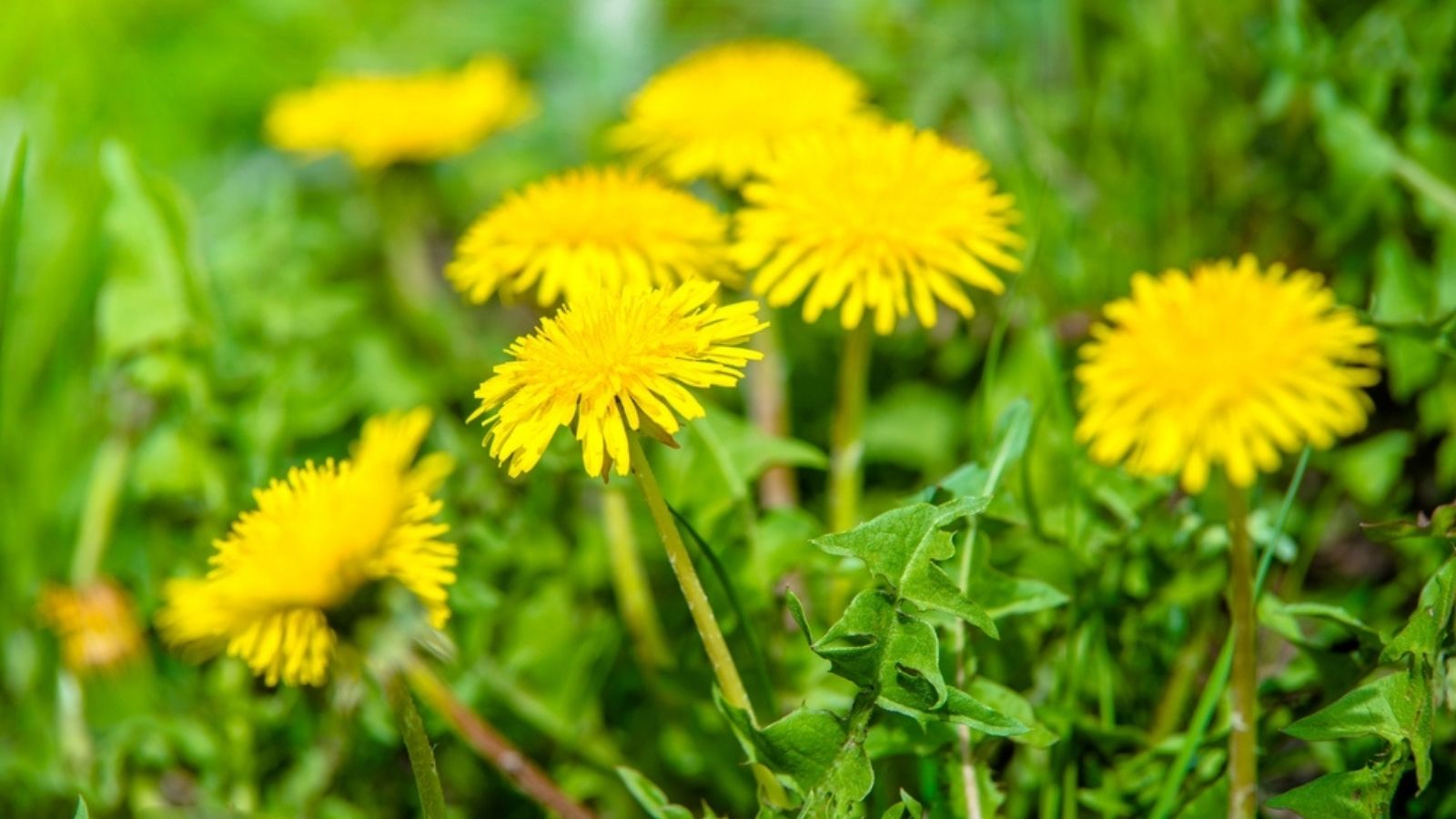
Dandelion is the one weed almost everyone already knows is edible, and it’s the best place to start because every part of the plant is usable. The young leaves, picked before the plant flowers, taste like a sharper, more bitter arugula and are best raw in salads or wilted into a saute with garlic and bacon fat. Older leaves turn bitter fast, so once the flower stalk shoots up, I switch to using just the flowers and root.
The flowers can be dipped in batter and fried, or steeped into dandelion flower jelly, which tastes a bit like honey with a floral edge. The taproot is the real prize for a self-sufficiency pantry. Roast it low and slow until it’s dark brown and brittle, grind it, and you’ve got a caffeine-free coffee substitute that’s genuinely good, not just a consolation prize. I dig mine in early spring or fall, when the roots are storing the most energy and taste noticeably less bitter.
Purslane (succulent texture, unusually rich in plant-based omega-3s)
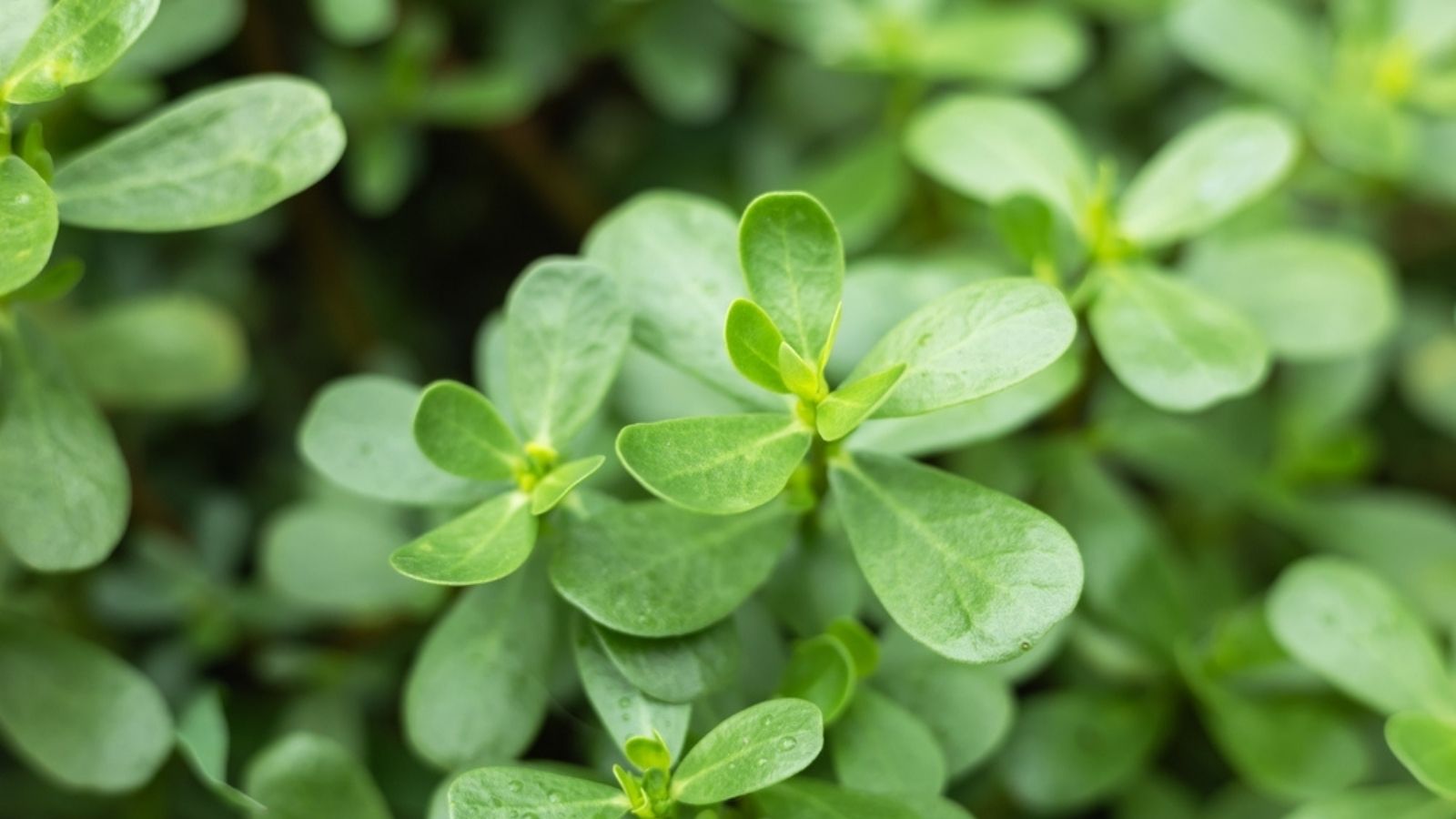
Purslane is one of very few plants that offers meaningful amounts of omega-3 fatty acids, and it grows in patio cracks and driveway edges for free. It has thick, glossy, paddle-shaped leaves on reddish stems that sprawl low across the ground, and it’s mild, faintly lemony, and pleasantly crunchy raw. I toss it into salads whole or chop it into salsa, where the succulence works almost like a vegetable version of capers.
It holds up well cooked too. Saute it briefly with garlic and it releases a light mucilage that thickens soups and stews a little, similar to okra. There’s one lookalike worth knowing. Purslane has a toxic doppelganger called spurge that grows in a similar sprawling habit, but spurge has thin, non-succulent leaves and a milky sap when you snap the stem. Purslane’s sap runs clear, so that snap test is a quick, reliable check.
Chickweed (mild, spinach-like, and at its best in cool weather)
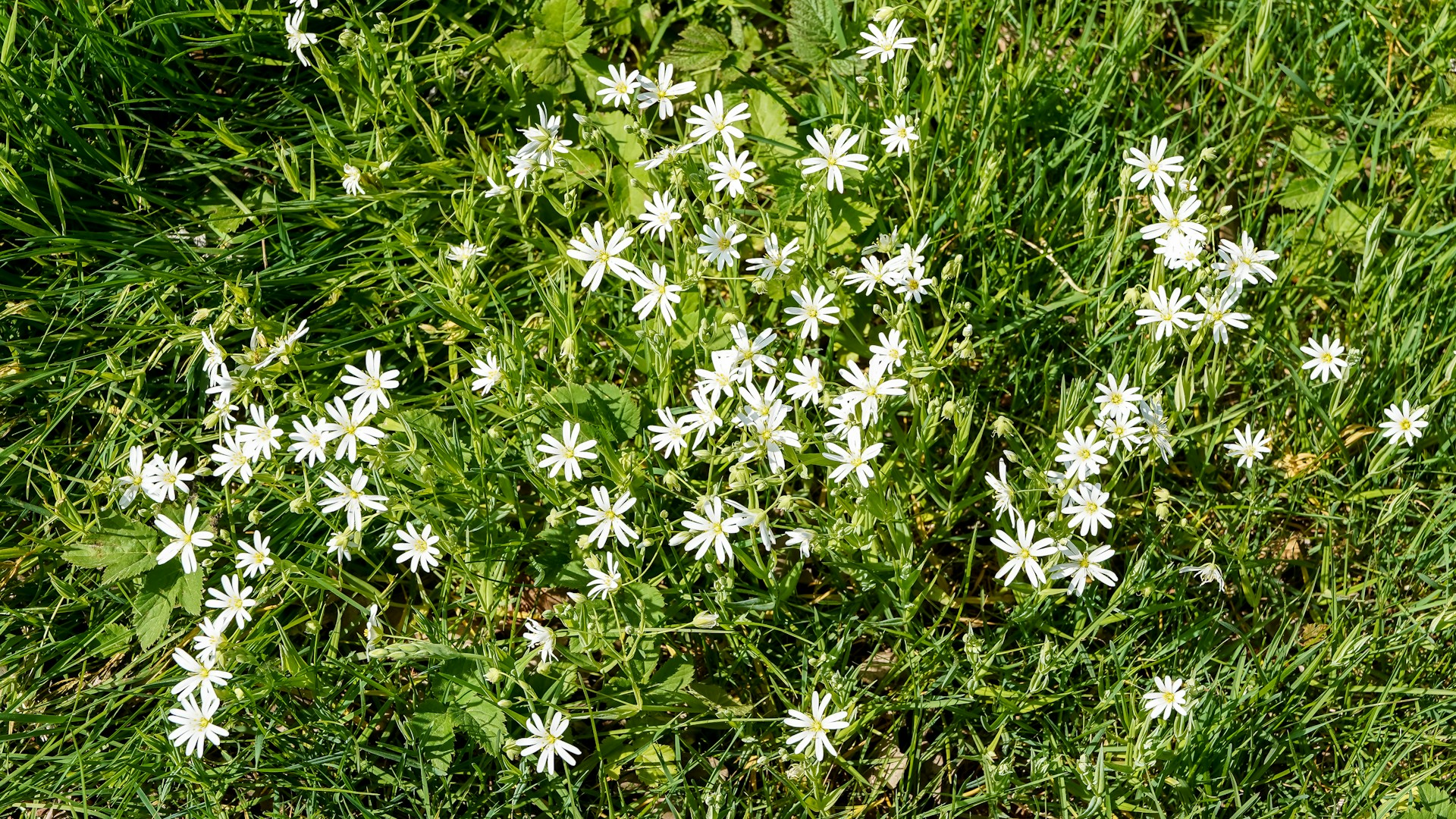
Chickweed shows up as a low, sprawling mat in beds and lawns during cool spring and fall weather, and the whole above-ground plant is edible, tasting close to mild spinach or corn silk. It has small, oval, opposite leaves on thin stems, and a single line of fine hairs running down one side of the stem, which is the easiest feature to check when confirming an ID. I add it raw to salads or blend it into pesto, since cooking mutes what little flavor it has.
It’s one of the first edible weeds to show up after winter, often weeks before anything I’ve planted is ready to harvest. Chickweed goes dormant or dies back once summer heat sets in, so treat it as a spring and fall crop rather than something you’ll be harvesting in July.
Broadleaf & Narrowleaf Plantain (the “band-aid plant” with edible seeds)
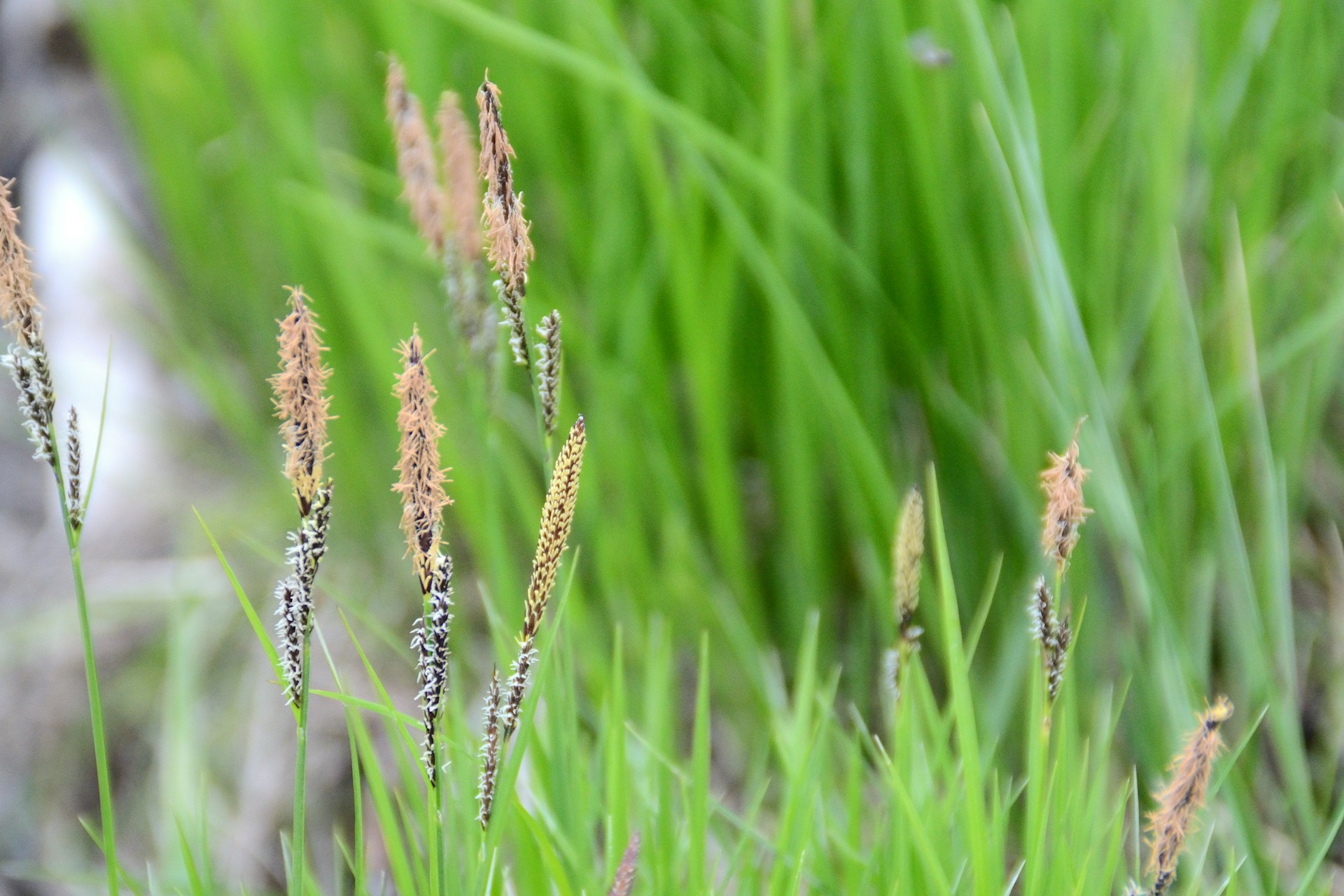
Plantain, the low rosette weed with ribbed oval or narrow lance-shaped leaves that pops up in lawns and compacted soil, has young leaves that are edible raw or cooked and taste like a tougher, more fibrous spinach. The leaves get stringy fast as they mature, so I only eat the small, tender new growth and cook the older leaves down like collards, low and slow, to break down the fiber.
Its seed spikes are the more interesting harvest for a self-sufficiency pantry. Plantain seeds carry a soluble fiber very similar to the psyllium sold in supplements, and you can strip the ripe seed heads by running your fingers up the stalk. On the herbal side, a crushed plantain leaf is the classic backyard poultice for bug bites and stings, which is where the “band-aid plant” nickname comes from.
Lamb’s Quarters (a wild cousin of quinoa and spinach, and arguably better than both)
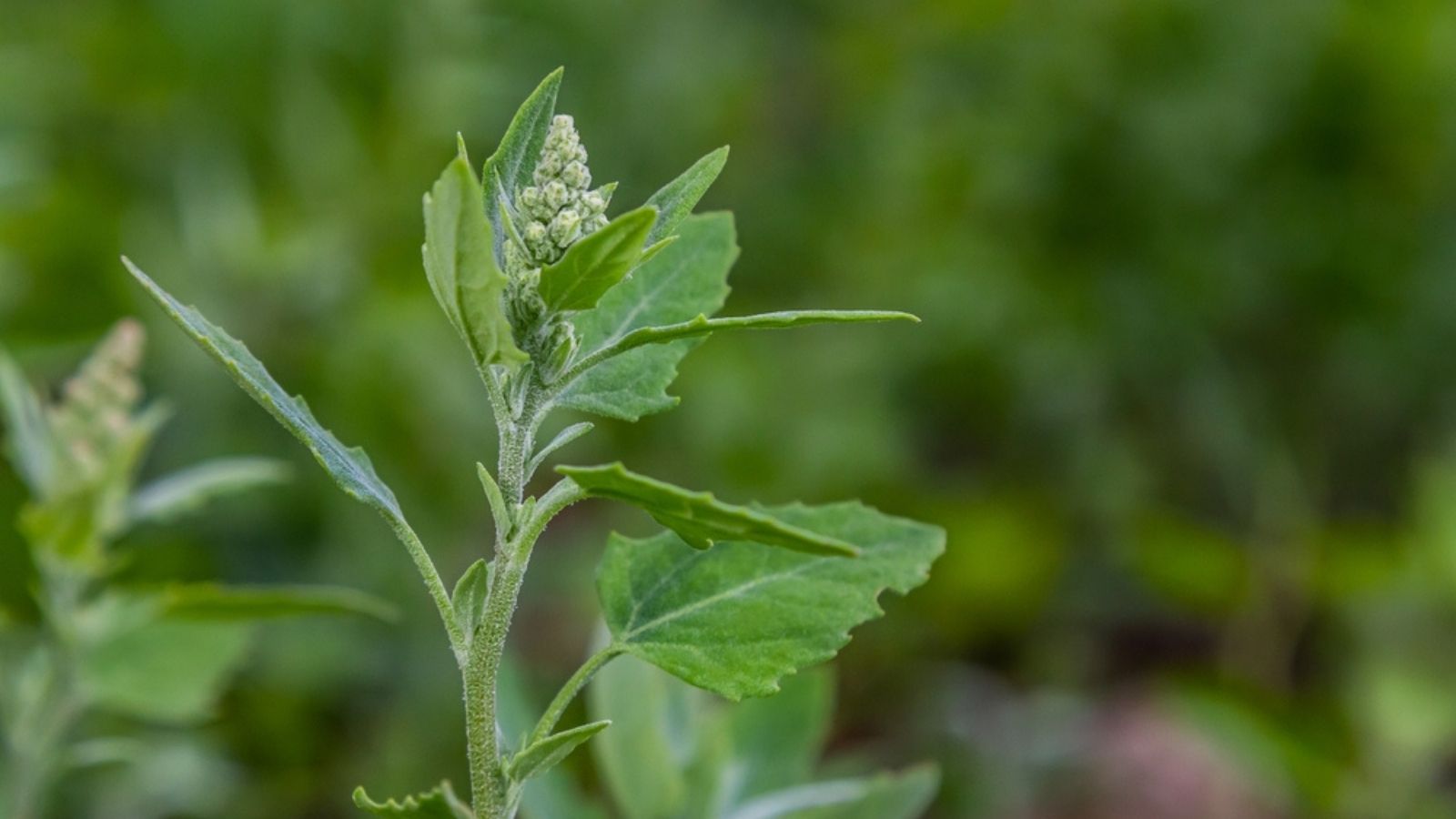
Lamb’s quarters is in the same plant family as quinoa and related to spinach, and in my opinion it beats both on flavor, with a mild, slightly mineral taste and none of spinach’s oxalate bite. The leaves have a distinctive dusty, silvery coating on the underside that wipes off if you rub it, which is the easiest way to confirm you’ve got the right plant. I use the young leaves exactly like spinach, raw in salads or wilted into eggs and soups.
Left to mature, it produces huge quantities of tiny black seeds that are edible and can be ground into flour or cooked like a grain. A single healthy plant can produce thousands of seeds, so if you let a patch go to seed on purpose, you’ll have a genuine grain harvest by late summer.
Purple Deadnettle & Henbit (mild, minty spring weeds good in pesto)
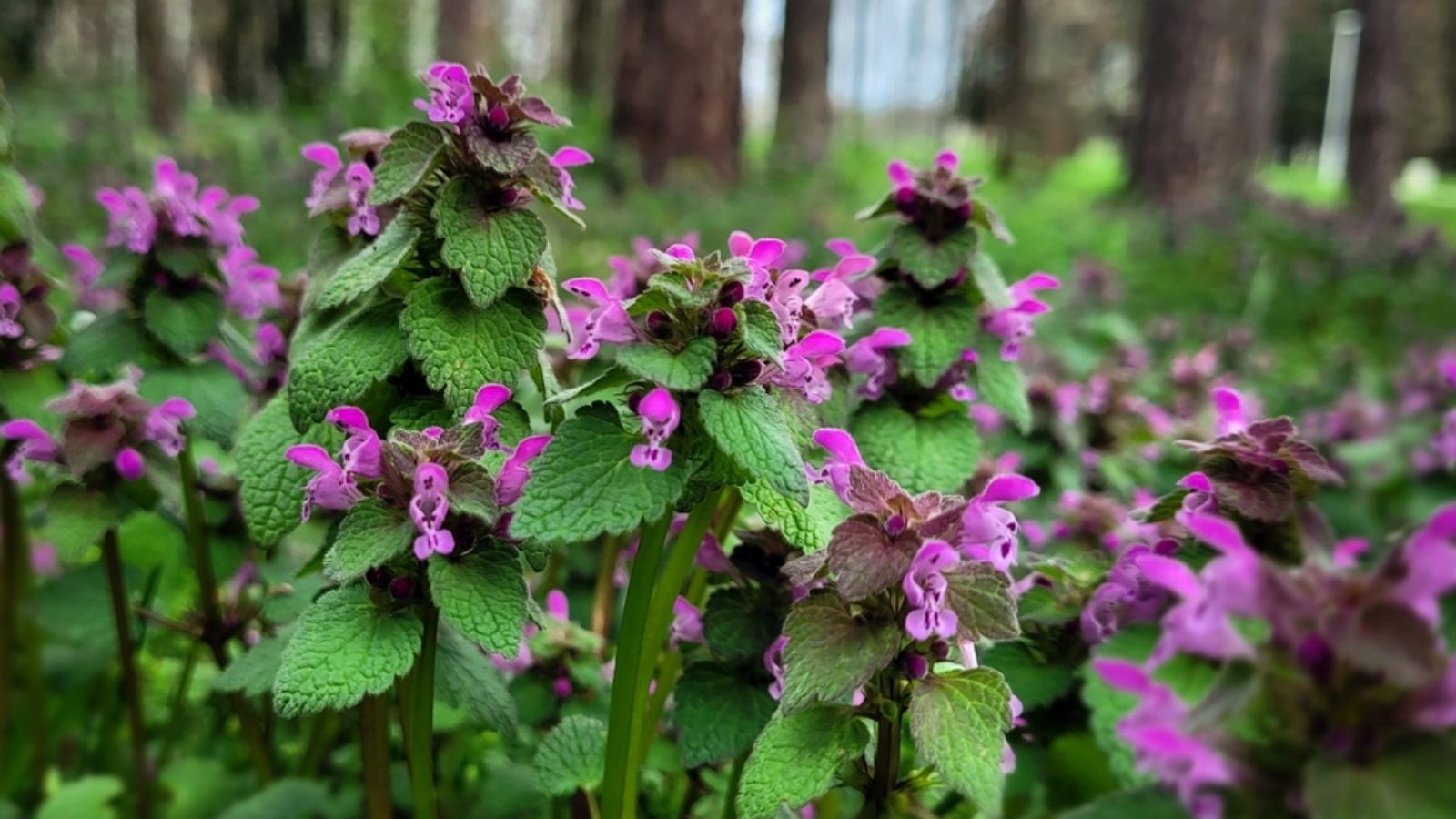
Purple deadnettle and henbit are two closely related mint-family weeds that carpet lawns and garden edges with small purple flowers in early spring, and both are edible with a mild, slightly sweet, faintly earthy flavor. You can confirm the mint-family ID by the square stems, easiest to feel by rolling a stem between your fingers. Deadnettle has a fuzzy, triangular, more crinkled leaf, while henbit’s leaves are rounder and more scalloped, but the two can be used interchangeably in the kitchen.
I blitz both into a wild green pesto with olive oil, garlic, and whatever nuts I’ve got on hand, since raw they’re a little too fuzzy in texture to enjoy plain. They’re strictly a cool-season, early-spring plant in most climates and disappear once the heat arrives, so this is a short window worth taking advantage of.
Stinging Nettle (nutrient-dense, but only after you neutralize the sting)
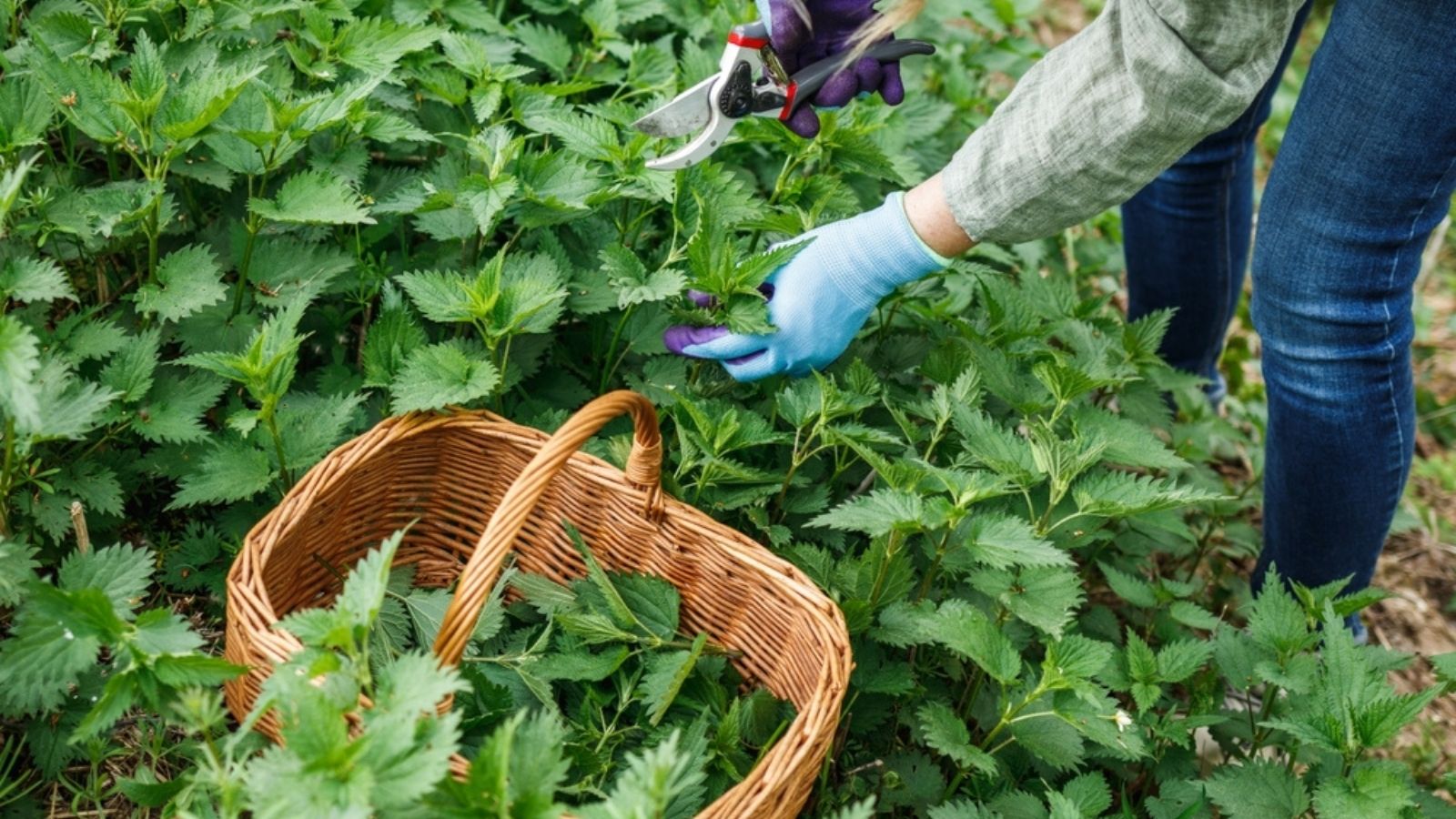
Stinging nettle is one of the most nutrient-dense wild greens you can eat, packed with iron, calcium, and protein well beyond what most cultivated greens offer, but it has to be handled correctly. The tiny hairs on the stems and leaf undersides inject formic acid on contact, which is what causes the sting, so always wear gloves when harvesting. Once cooked or dried, the sting is completely neutralized and the plant is entirely safe to eat.
I harvest only the top few sets of leaves in spring, before the plant flowers, since older nettle develops gritty compounds that irritate the kidneys. Steam or saute it like spinach for a couple of minutes, or dry the leaves for tea, both of which destroy the stinging hairs completely.
Related Post: The Plentiful Weed You Can Use to Fertilize Your Tomatoes for Free
Wood Sorrel (a sharp, lemony leaf that’s a favorite with kids)
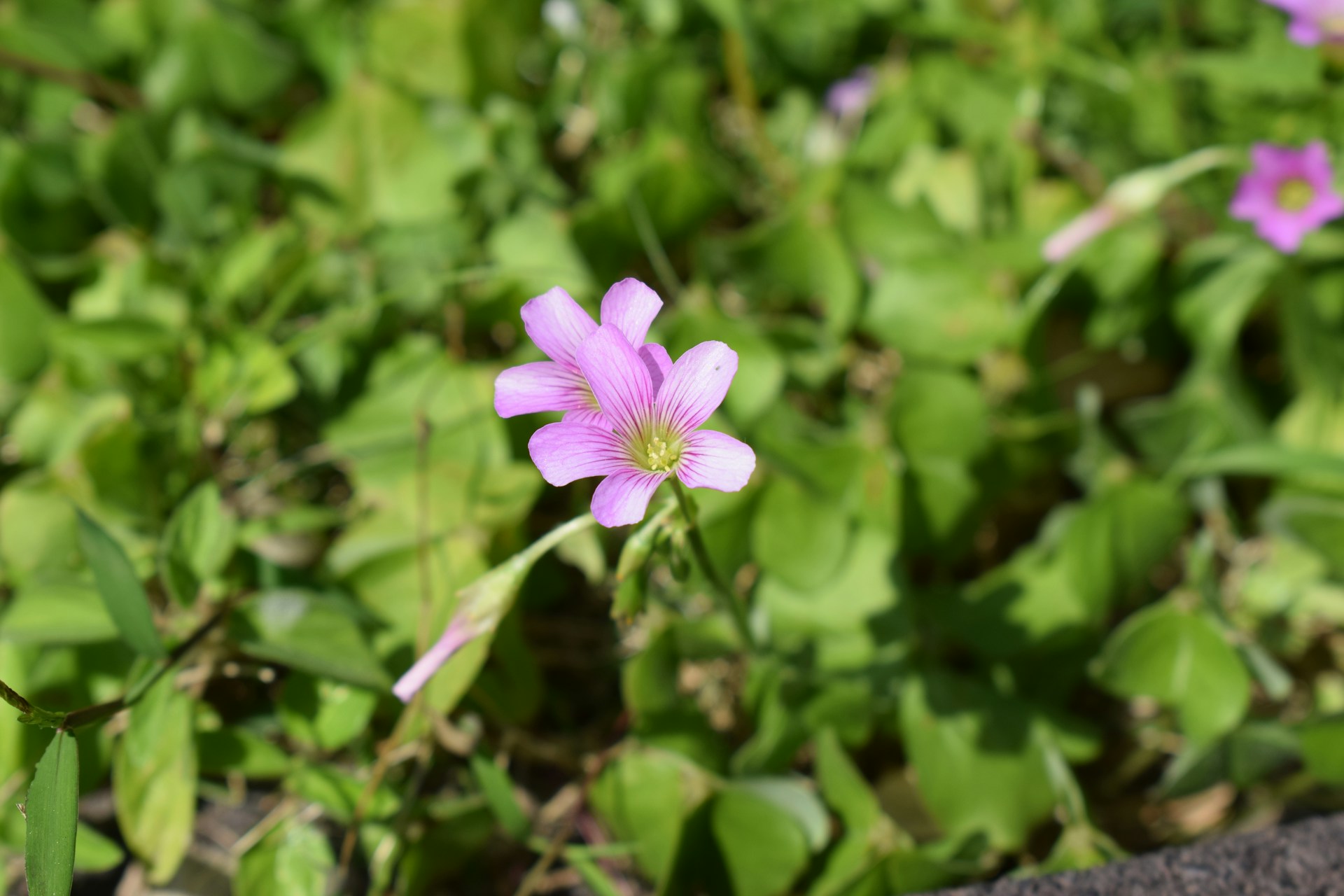
Wood sorrel is easy to spot by its clover-like, heart-shaped leaflets in groups of three, and it tastes bright and sour, almost exactly like a lemon drop, thanks to the oxalic acid in the leaves. It’s a good one to hand to kids while foraging, since the flavor is immediate and there’s no cooking or prep needed to enjoy it.
That sourness comes from oxalic acid, the same compound found in spinach and rhubarb, so it’s fine in normal foraging amounts but shouldn’t be eaten in large quantities, especially if you have a history of kidney stones or gout. I use it as a garnish and a bright note in salads rather than a bulk green, a small handful rather than a whole bowl.
Common Violets (edible leaves and flowers, and a natural source of vitamin C)
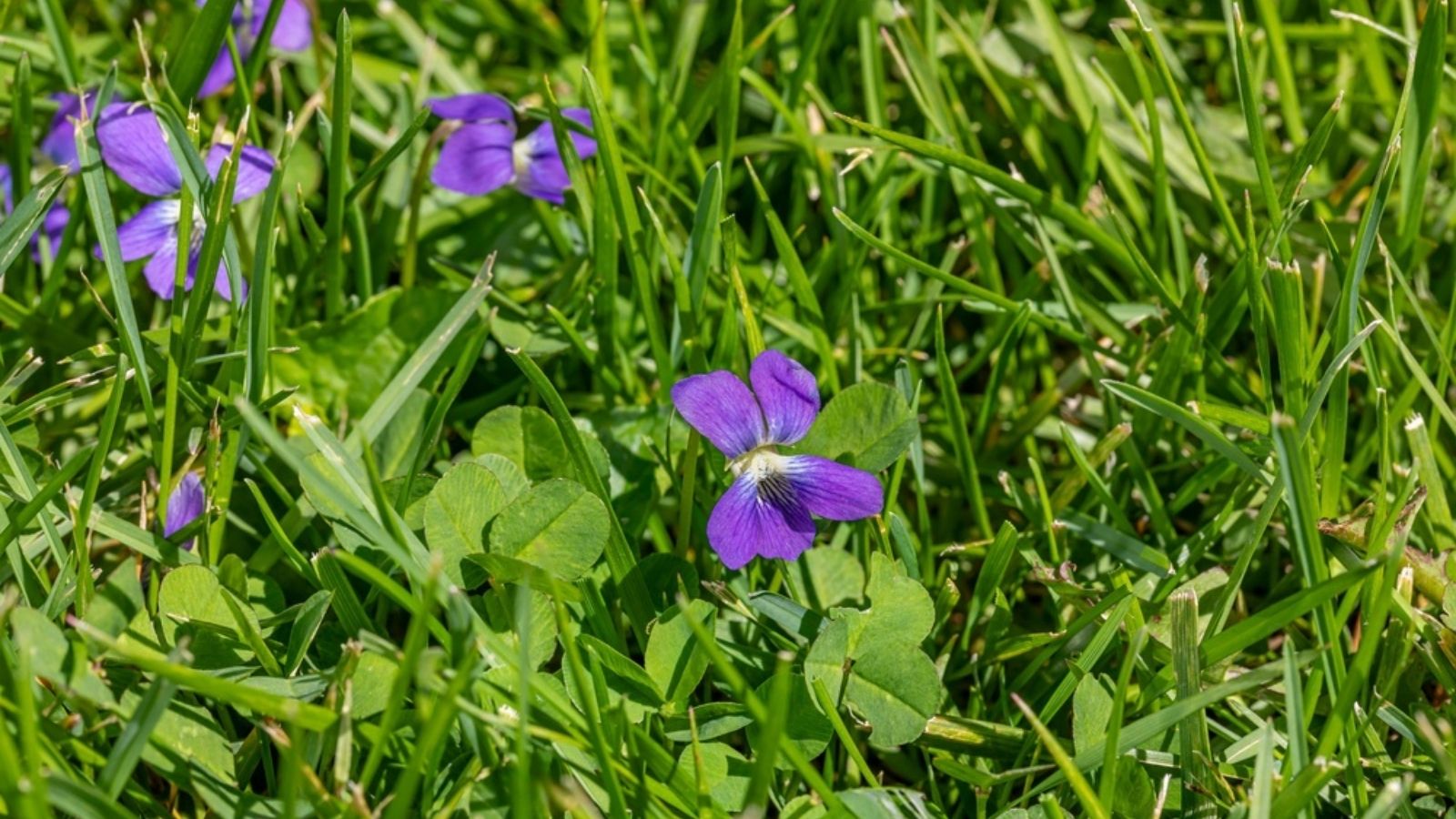
Common violets have heart-shaped leaves and small purple, white, or blue flowers, and both parts are edible, with a mild, slightly grassy flavor in the leaves and a faint sweetness in the flowers. The leaves are genuinely high in vitamin C, more than most people expect from a lawn weed, and I chop them into salads the same way I’d use baby spinach.
The flowers are worth the extra step, though. I candy them with a superfine sugar glaze and letting them dry, which makes a genuinely good cake decoration. Violet syrup, made by steeping the flowers in hot water and straining, turns a striking blue-purple that shifts pink with a squeeze of lemon juice.
Curly Dock (sour young leaves and a seed head you can grind into flour)
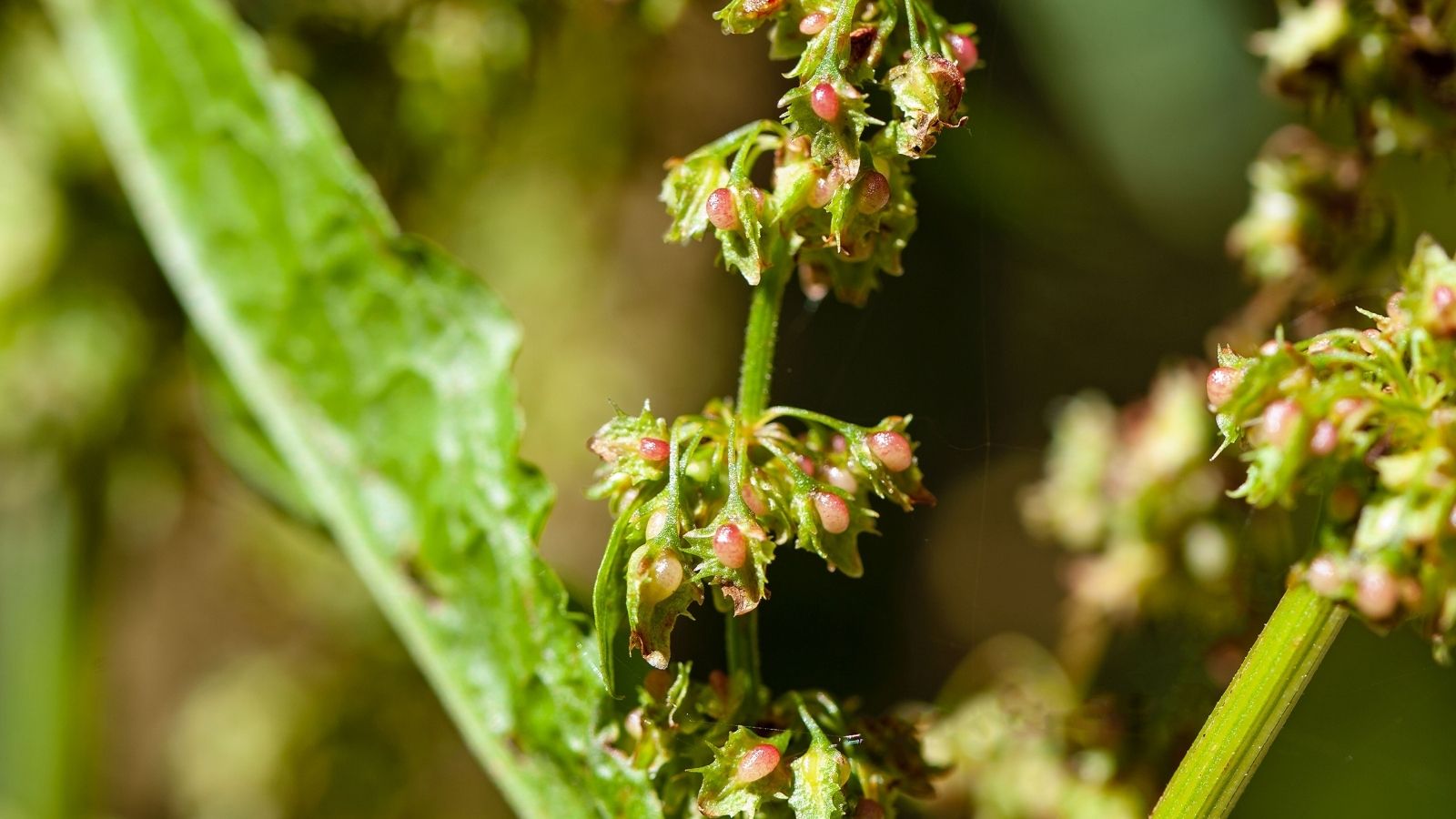
Curly dock has long, wavy-edged leaves and a tall seed stalk that turns rust brown in late summer, and the young leaves have a sharp, lemony sourness from the same oxalic acid found in wood sorrel and spinach. I use young dock leaves the way I’d use sorrel, chopped into soups or wilted with butter, since cooking tames the sourness considerably.
The real find is the seed head. Once the seeds turn brown and papery, you can strip them off by hand and grind them into a nutty, slightly bitter flour that’s traditionally been used as a wild grain substitute. It takes a fair amount of stripping to get a useful quantity, so treat it as a small-batch project rather than something that’ll replace your flour bin.
Garlic Mustard (an invasive weed that’s genuinely worth eating your way through)
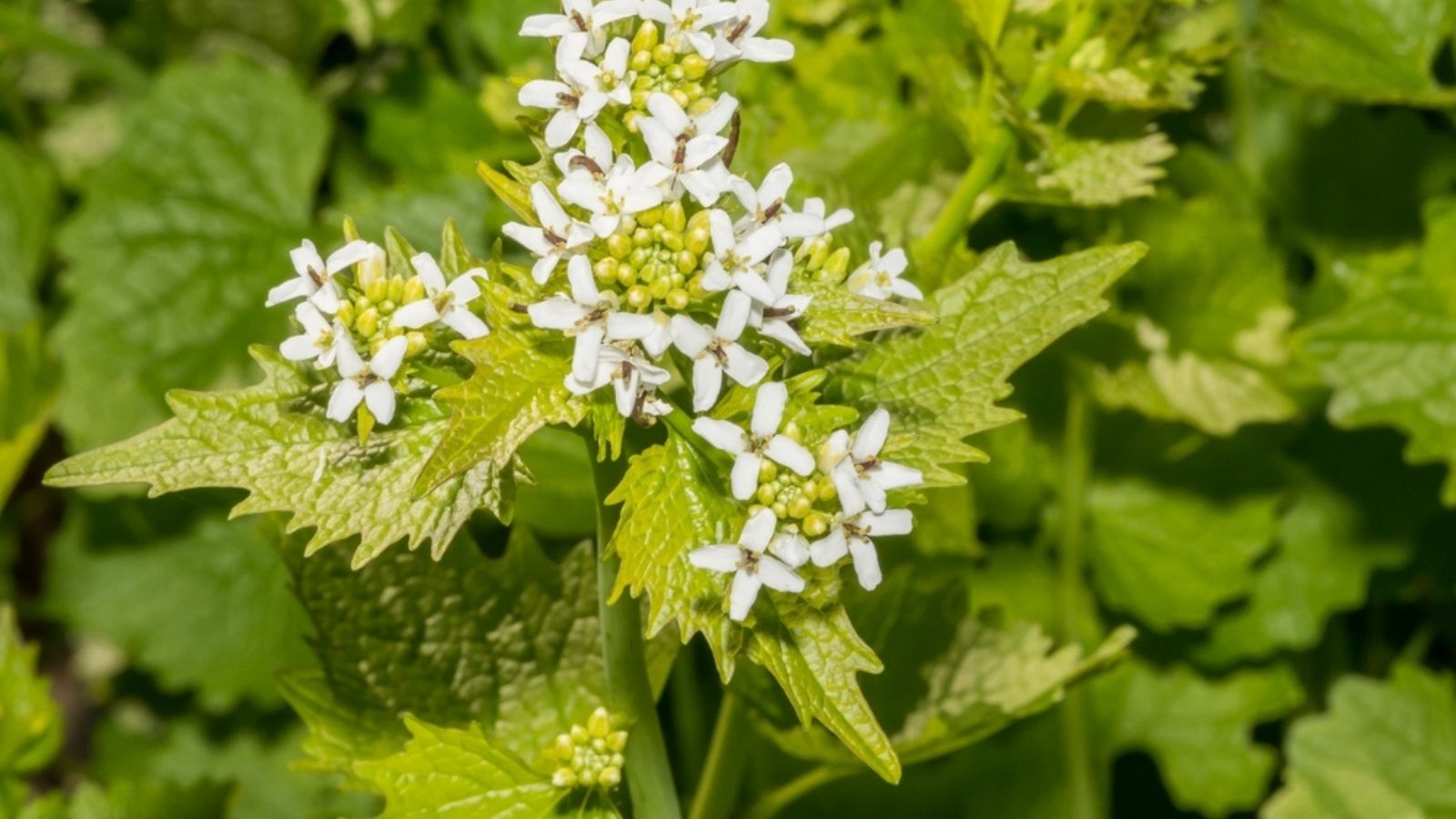
Garlic mustard is a biennial that smells distinctly of garlic when you crush the leaves, with heart-shaped, scalloped leaves in its first year and tall flower stalks in its second, and the whole plant is edible with a flavor that’s exactly what the name promises, garlicky with a mustard bite. It’s also aggressively invasive across much of North America, so eating it does genuine ecological good, which isn’t something you can say about most items on this list.
First-year leaves are the mildest and best for salads. Once the plant bolts and flowers in year two, the leaves get more bitter, so that’s when I shift to using it in pesto, where garlic, olive oil, and parmesan balance the sharpness out nicely. If you find a patch, pull it by the root when you harvest, since that also helps control the spread.
Wild Mustard (peppery greens with edible flowers and seeds)
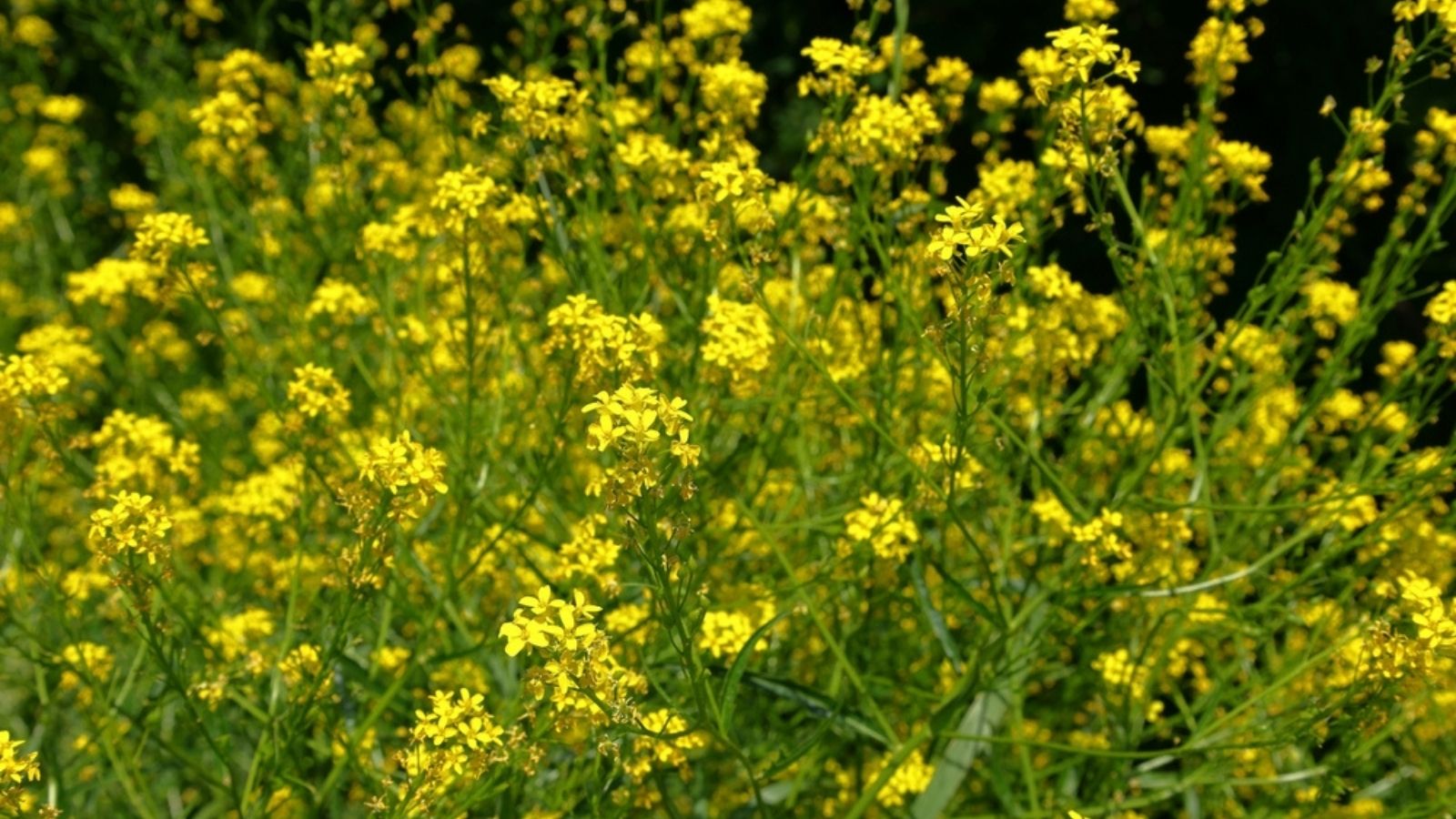
Wild mustard has bright yellow, four-petaled flowers and lobed, slightly fuzzy leaves, and it’s a direct wild relative of the mustard greens sold in grocery stores, with the same sharp, peppery bite. I use the young leaves cooked, since raw they can be a bit much, sauteed with a splash of vinegar to round out the heat.
The flowers are edible too and make a peppery, colorful addition to salads, and the seeds, once dried, can be ground into a homemade mustard with vinegar and a pinch of salt. It’s one of the few weeds on this list where every stage of the plant, leaf, flower, and seed, has a genuinely different use in the kitchen.
Common Mallow (a wild okra substitute hiding in the driveway cracks)
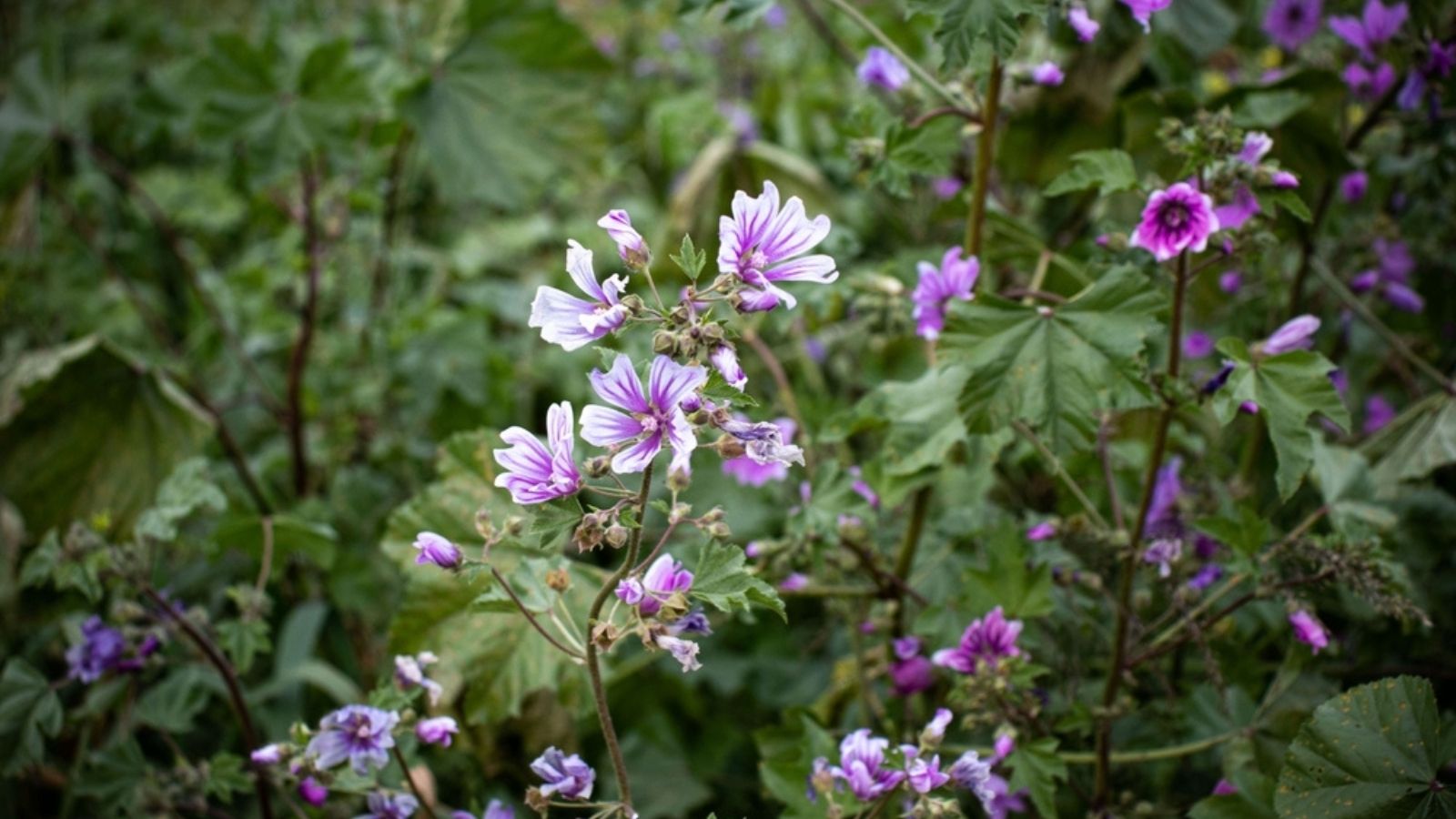
Common mallow, sometimes called cheeseweed for the round, cheese-wheel-shaped seed pods it produces, has soft, rounded, slightly fuzzy leaves and a mild, mucilaginous texture once cooked. The young leaves work as a cooked green, similar to a milder collard, and I’ve used them to thicken soups the same way you’d use okra, since the mucilage does the same job.
The seed pods, picked while still green and tender, are the real okra substitute, and kids tend to like snacking on them raw since they’re mild and slightly nutty. Mallow is tough and drought-resistant, so once you’ve got a patch, it takes almost no effort to keep it going.
Redroot Pigweed (a wild amaranth with edible leaves and a genuine grain harvest)
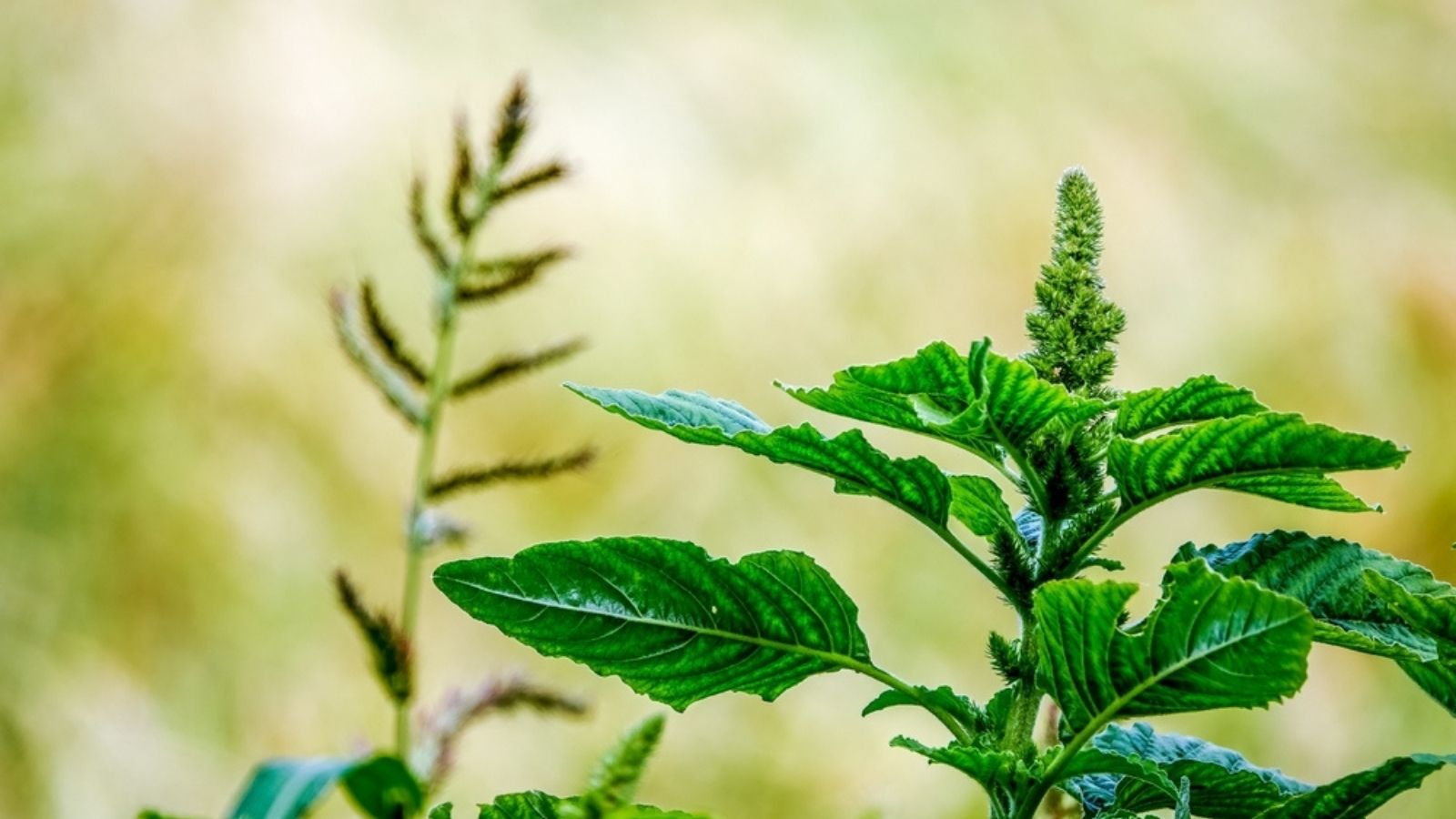
Redroot pigweed is a wild amaranth, closely related to the amaranth grown commercially as a grain crop, and you can identify it by its reddish taproot and the rough, slightly hairy texture of its oval leaves. The young leaves make a solid cooked green, similar in flavor and texture to spinach, and I usually saute them with garlic.
Left to mature, it produces a dense seed head that yields genuine amaranth grain, tiny and protein-rich, that can be cooked like quinoa or popped in a dry pan like popcorn. One plant can produce tens of thousands of seeds, so if you want a real grain harvest, letting even a few plants go to seed at the back of the garden is worth it.
Sow Thistle (a mild, lettuce-like green with a harmless bad reputation)
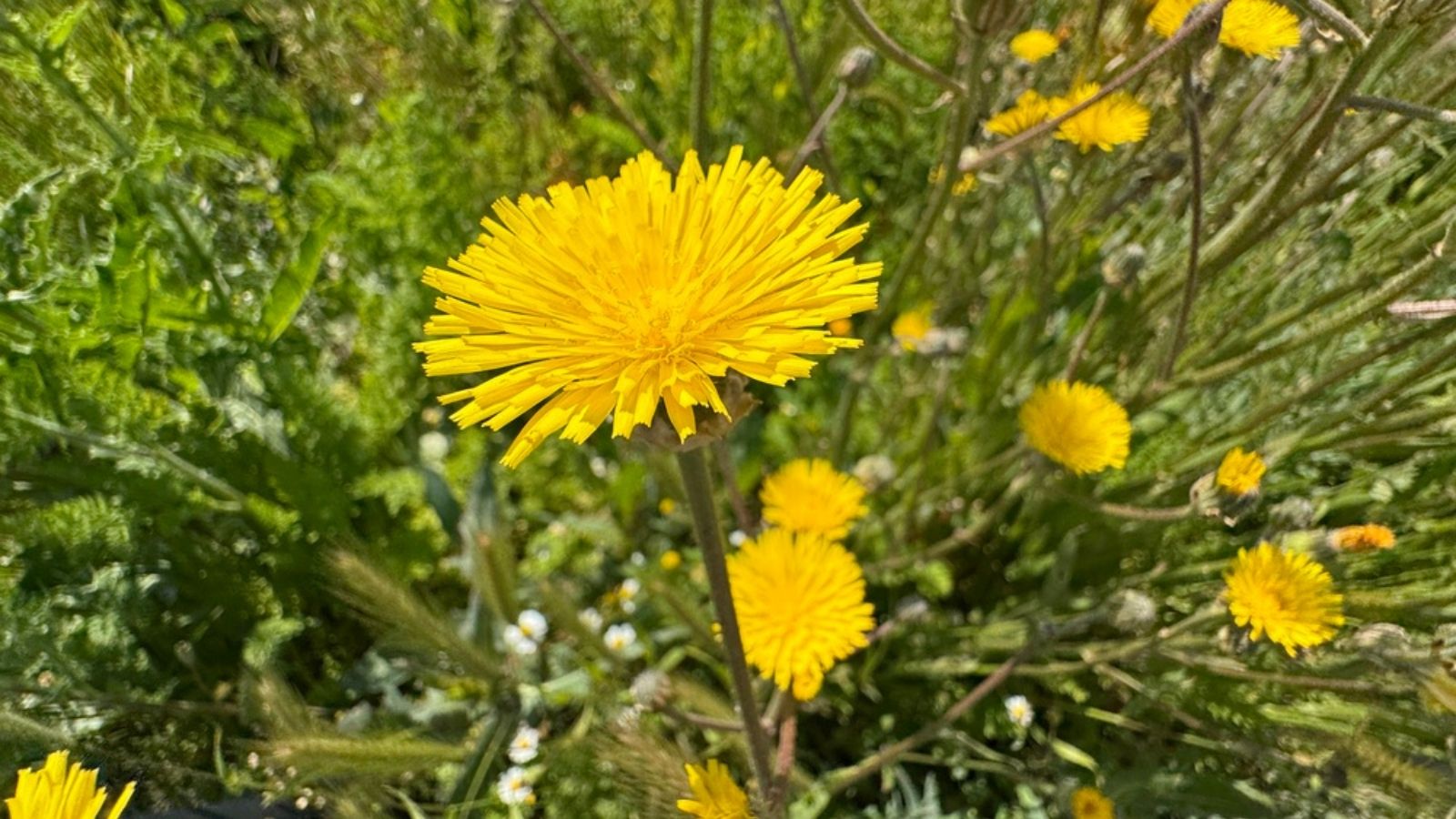
Sow thistle looks intimidating, with jagged, prickly-edged leaves and a milky sap that oozes when you snap the stem, but the sap is completely harmless and the plant is mild enough to taste like a slightly bitter lettuce. The prickles soften considerably once you cook the leaves, or you can strip the toughest edges off with a knife if you’d rather eat it raw.
Young leaves, picked before the plant flowers, are the best eating, since older leaves get tougher and more bitter as the plant matures. I find it growing in nearly every disturbed patch of soil I’ve got, driveway cracks, garden edges, compost piles. It’s one of the most reliable, low-effort greens on this list.
Wild Garlic & Wild Onion (use the smell test, then treat it exactly like chives)
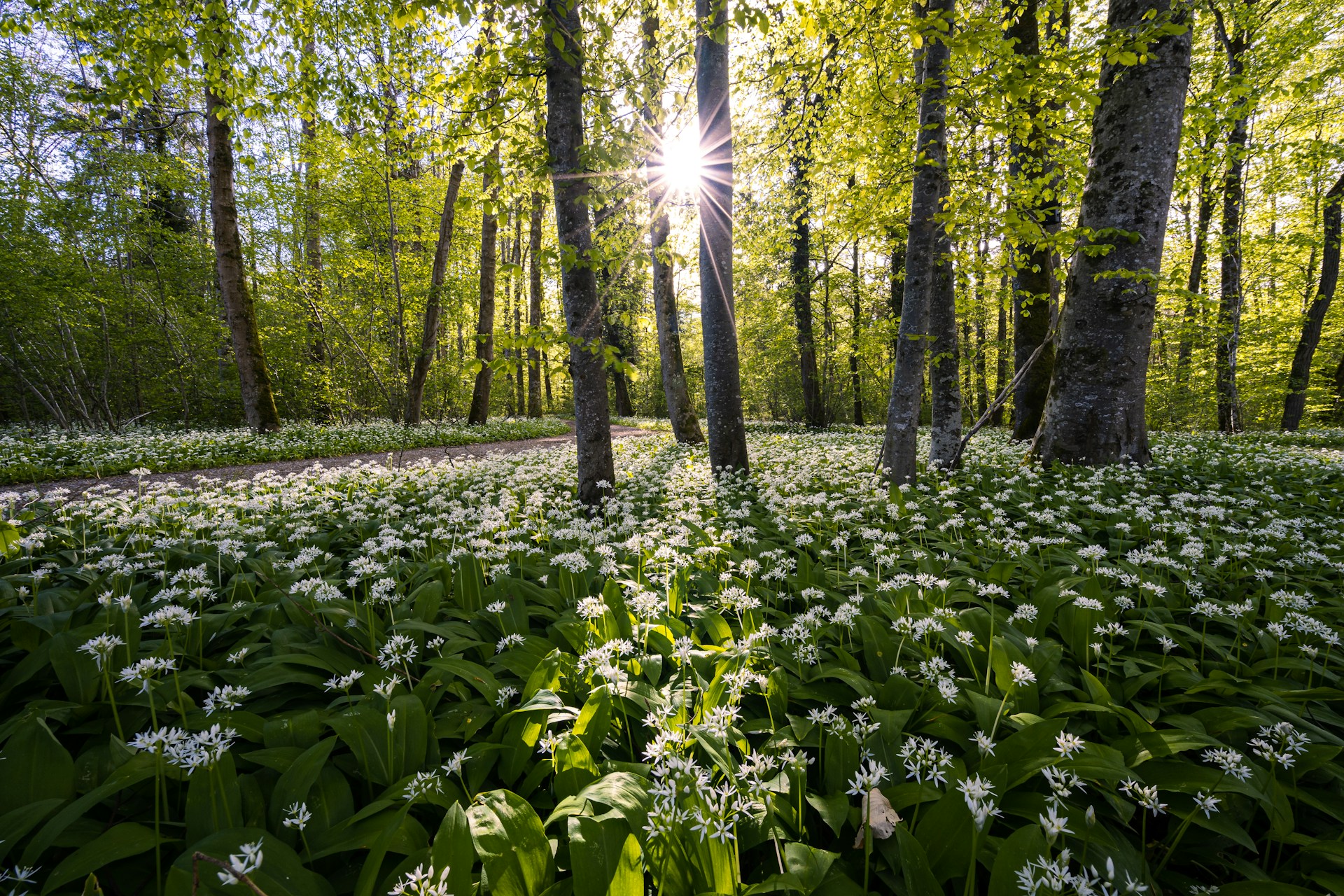
Wild garlic and wild onion are thin, grass-like alliums that smell unmistakably of garlic or onion the moment you crush a leaf, and that smell is the single most important identification check on this entire list. A few toxic lookalikes, including death camas and star-of-Bethlehem, share the same grass-like look but have zero onion smell, so if it doesn’t smell like onion or garlic, don’t eat it.
Once you’ve confirmed the smell, the leaves, bulbs, and flowers are all edible and can be used exactly like chives or scallions, chopped into eggs, soups, or compound butter. I harvest mine in spring when the leaves are tender, and the bulbs, though small, add a real punch to a dish if you’re patient enough to dig a few up.
You might also like…
25 Winter Foraging Foods to Save Money on Your Grocery Bill