
Affiliate disclosure: This post may contain affiliate links. Please see full disclosure.
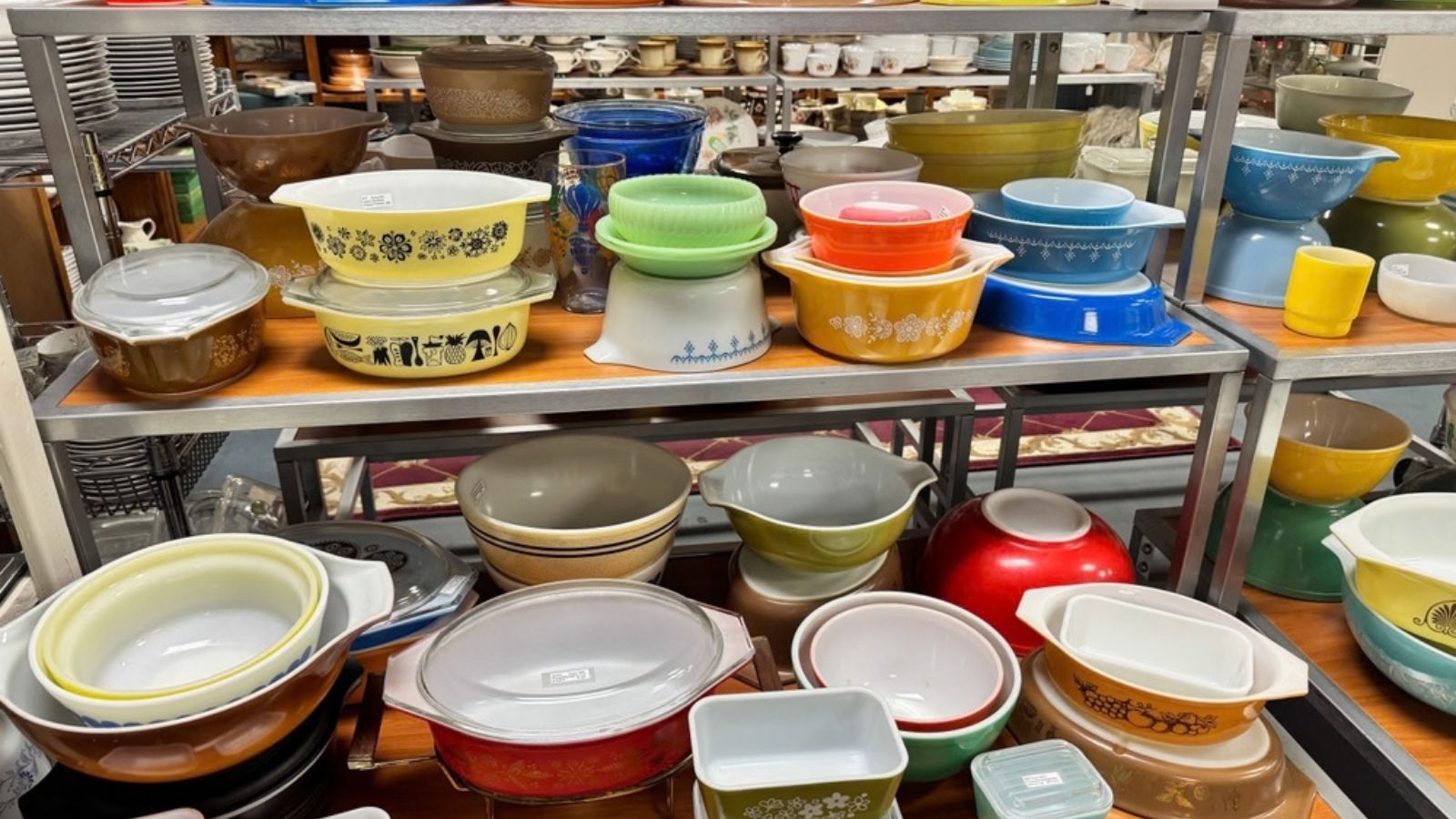
Pyrex Homestead is one of those vintage patterns that can be easy to walk past if you’re looking for the bright pinks and cheerful greens that usually get collectors excited. Its speckled beige finish and curling blue flowers are much quieter. But for anyone who likes old-fashioned country kitchens, it’s a lovely find, particularly when a mixing bowl or casserole still has its original finish.
Introduced in 1976 and made until 1980, Homestead was designed by Estelle Rothstein when country-style decorating was having a moment. Corning took inspiration from the success of traditional folk-art dinnerware, including Pfaltzgraff, and created a Pyrex pattern that looked at home alongside crockery, wood furniture, and blue-and-white dishes. It was even promoted as a good companion for Old Town Blue dinnerware.
How to recognize Homestead Pyrex
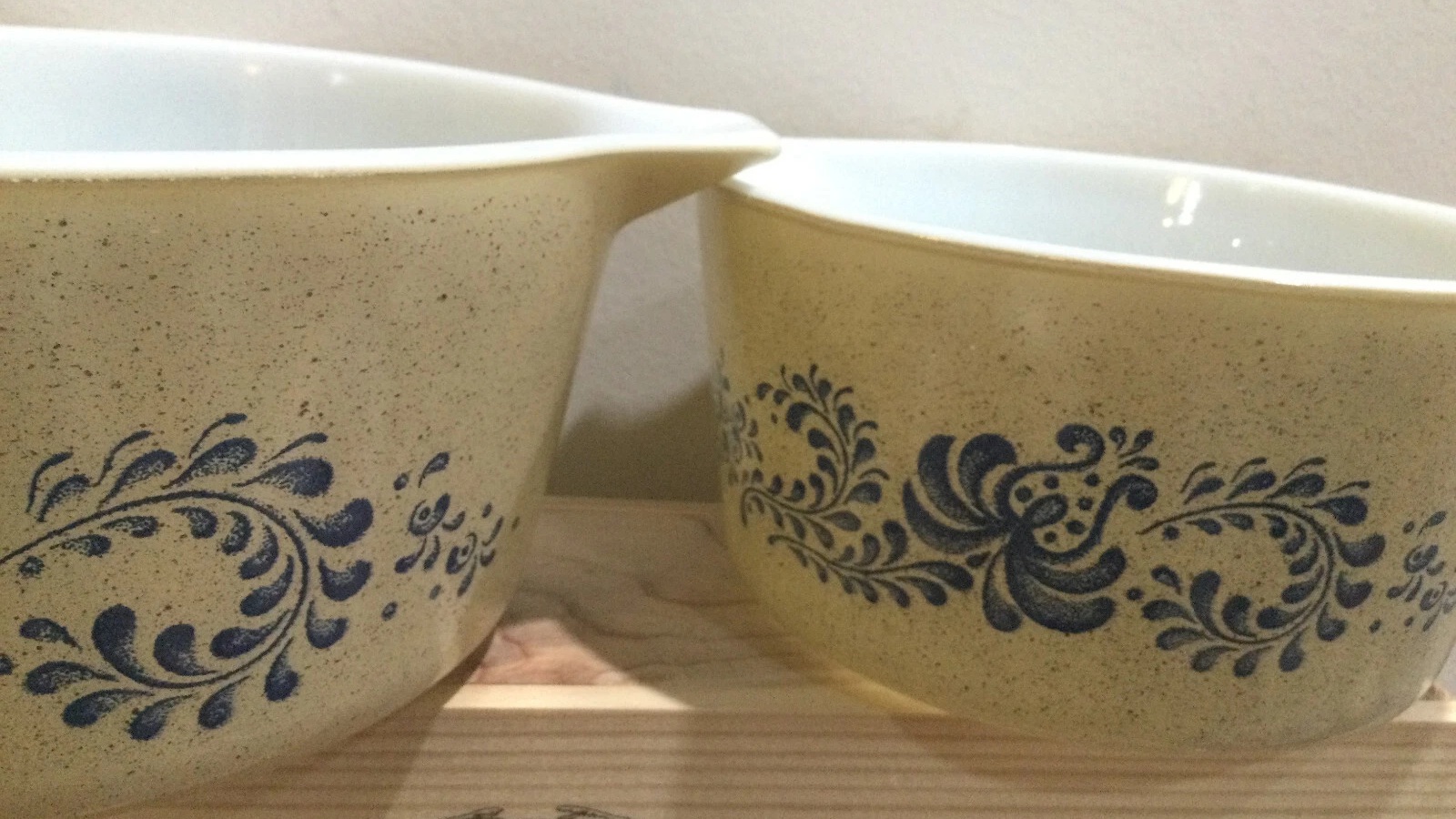
The original Homestead design has a warm, speckled tan background with a dark blue decoration made up of flowers, leaves, and scrolling stems. The pattern has a hand-painted, slightly old-fashioned look, although the decoration was applied during manufacture. The little blue flecks in the background are part of the finish, not stains or damage.
There’s a second version to look out for, too. Homestead also appeared with a brown design on a plain beige background. So don’t automatically dismiss a brown-and-beige bowl just because it doesn’t match the familiar blue, speckled pieces. Look at the design and shape, and check the underside for the Pyrex name and any model number.
I like that Homestead doesn’t rely on a flashy color to make itself recognizable. Once you’ve spotted those curving flowers on the speckled background, it’s quite distinctive. But it’s still worth checking carefully, especially if a thrift-store price tag is covering most of the decoration.
The Homestead pieces worth looking for
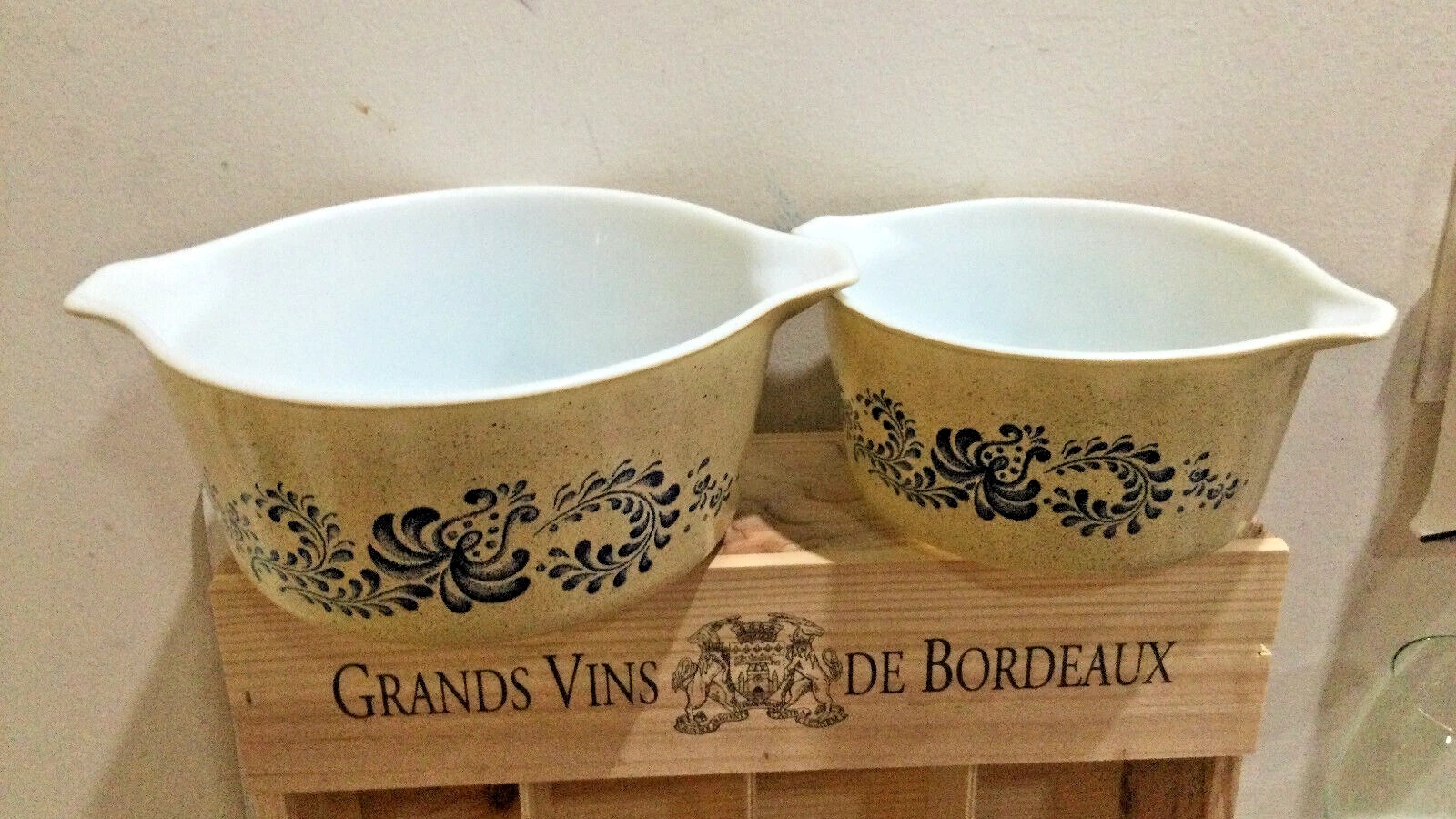
This wasn’t a pattern confined to one or two baking dishes. The Homestead range included regular nesting mixing bowls, Cinderella mixing bowls with pouring lips and handles, and refrigerator dishes. The refrigerator set had four pieces, with glass lids, and the nesting bowls came in several sizes. If you find one bowl, it’s worth looking around the shelf for the others, because sets are often split up in secondhand stores.
There were also round casserole sets in the 470 and 480 series, individual baking dishes, and a mug. Some coordinating pieces carried the speckled beige finish without the floral decoration. That can make a plain-looking dish more interesting than you’d expect, but I wouldn’t assume every beige Pyrex piece is Homestead without checking its details.
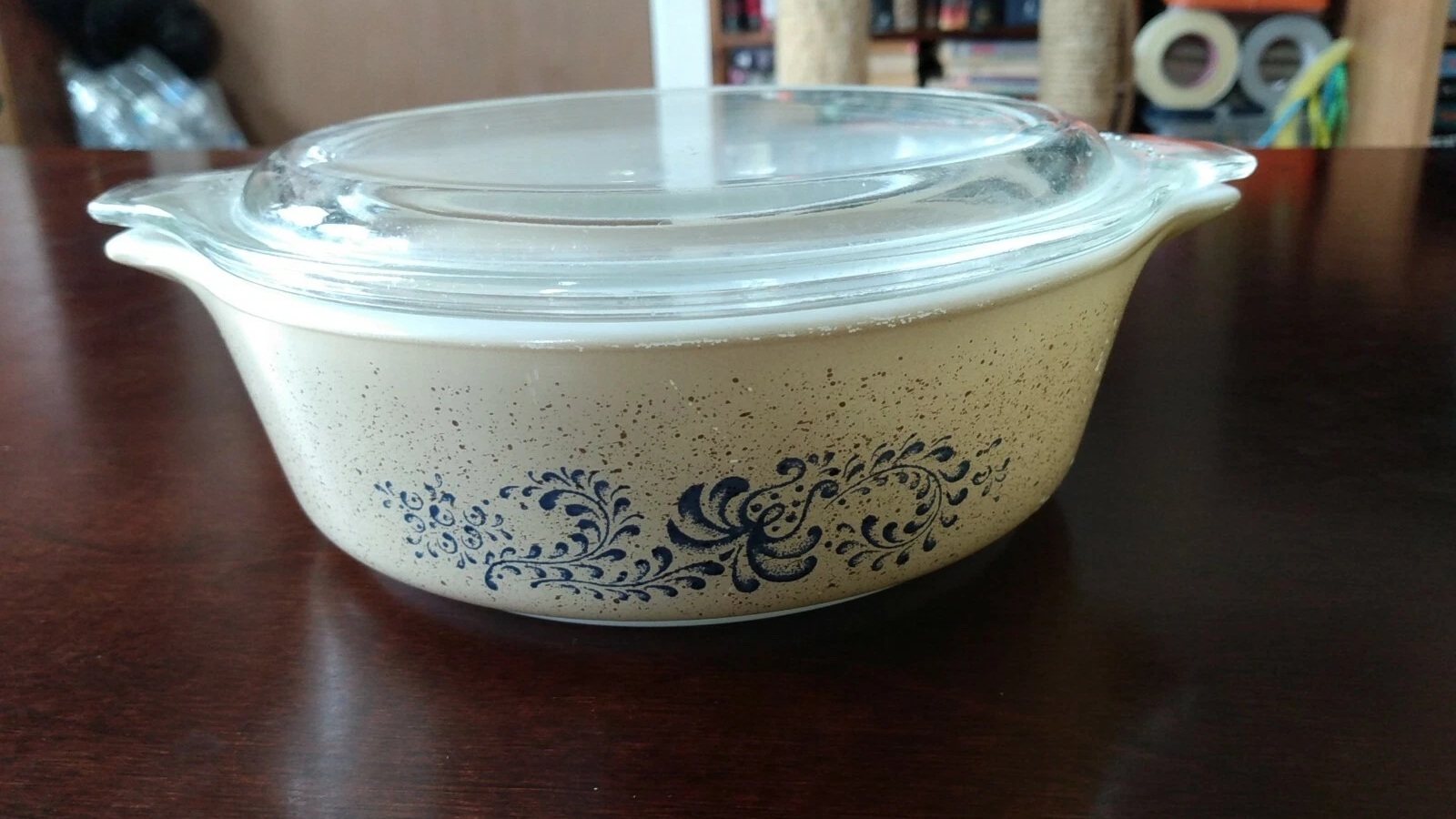
A casserole with its correct glass lid would catch my eye. Vintage lids have an annoying habit of ending up three shelves away from the dish they belong to, so I always think it’s worth having a quick look around before giving up on a promising find.
What to check before you buy
First, hold the piece up to good light and look for chips along the rim, handles, and base. Check for fine cracks, particularly around the edges of casserole dishes. Then inspect the colored finish. The speckles should be there, but a chalky, faded surface or patchy flower design may be a sign of wear rather than an unusual variation. Repeated dishwasher washing can leave vintage colored Pyrex hazy or faded, and that damage can’t simply be polished away.
I’d choose a clean, brightly decorated single bowl over a badly worn set any day. Homestead’s appeal is in that soft country-style design, and a well-kept piece can still look wonderful on an open kitchen shelf. Better yet, it’s the sort of vintage kitchenware that can be appreciated without treating every thrift-store find as a potential lottery win.
You might also like…
The CorningWare Pattern Collectors Dream Of Finding At A Thrift Store
The Blue-And-White Pyrex Pattern Collectors Dream Of Finding At A Thrift Store
The Pink Pyrex Pattern Collectors Dream of Finding at a Thrift Store

