
Affiliate disclosure: This post may contain affiliate links. Please see full disclosure.
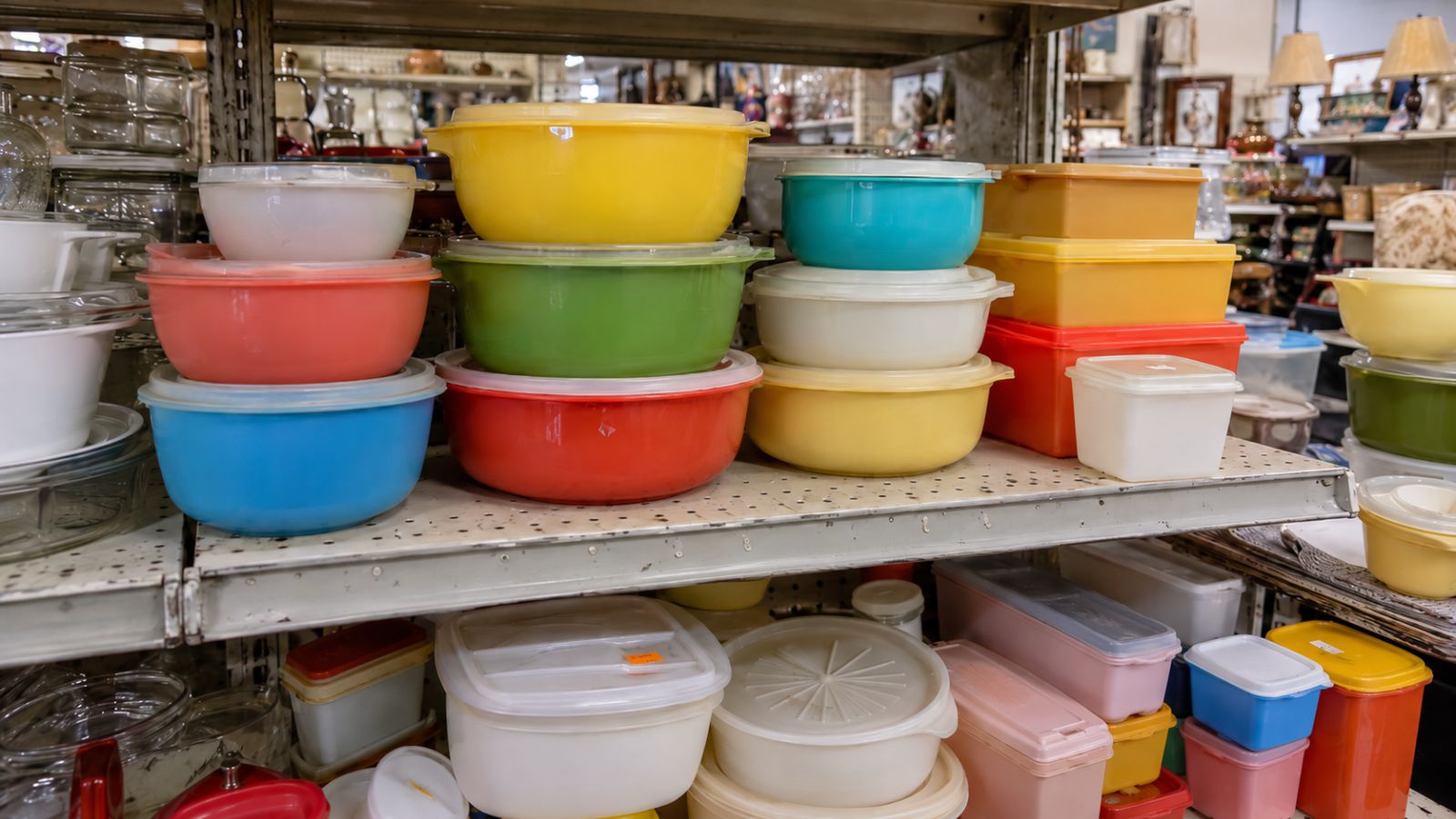
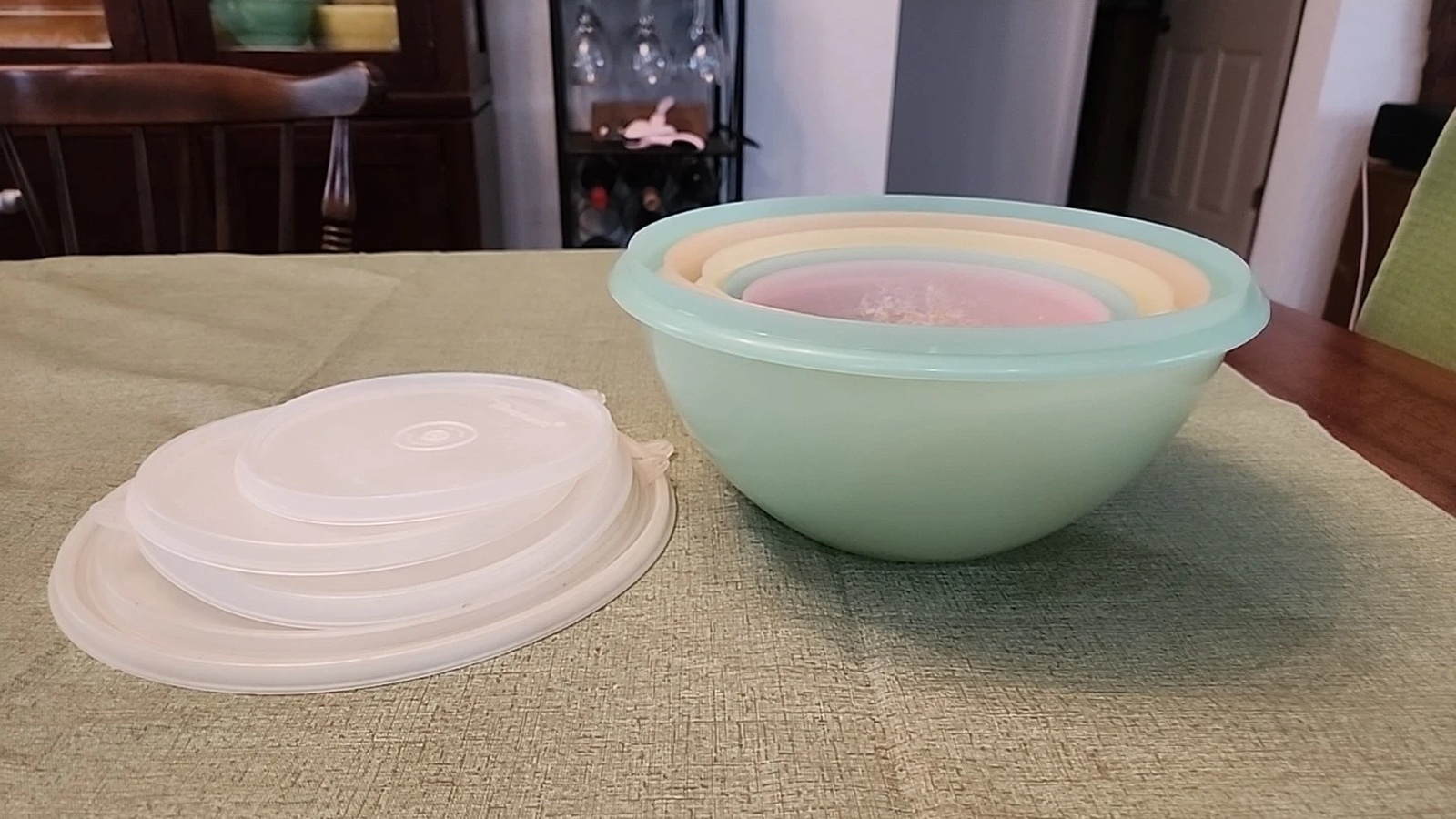
The 1950s pastel Tupperware Wonderlier nesting bowl set is one of those thrift store finds that would have me heading straight for the checkout. Five beautiful bowls in soft pink, pale yellow, mint green, peach, and other lovely pastel shades, each with its own lid, all fitting neatly inside one another. It’s the sort of vintage kitchenware that’s genuinely useful but also far too pretty to hide in a cupboard.
As an avid thrifter and collector, I have a particular weakness for vintage household items that combine good design with everyday practicality. And these bowls are a wonderful example. They’re colorful without being garish, they take up surprisingly little space, and they have that unmistakable mid-century look that modern kitchenware often tries to recreate.
Finding an entire original set, especially with all five matching lids and the colors still looking fresh, is a particularly lovely discovery.
The pastel Wonderlier bowls that started a kitchen revolution
The original Tupperware Wonderlier bowls date back to the 1940s and 1950s, when plastic food storage was still a relatively new idea. Before then, households relied heavily on glass, ceramic, and metal containers, along with whatever could be reused from the grocery store.
Wonderlier bowls offered something different. They were lightweight, flexible, difficult to break, and fitted with airtight seals. You could mix ingredients, cover the bowl, store your food, and use the same container again the next day.
The nesting design was another clever feature. Instead of having five separate bowls taking up valuable cupboard space, the entire set could fit inside the largest one.
And then there were those colors.
The pastel shades of the 1950s are a big part of their appeal. Soft greens, buttery yellows, peach, pale pink, and delicate blue made otherwise ordinary kitchen equipment feel rather special. They looked lovely lined up on a shelf, particularly against the painted cabinets and cheerful kitchen textiles popular at the time.
These were also the days of the famous Tupperware parties, when women gathered in their homes to watch product demonstrations and buy the latest kitchen gadgets. The Wonderlier bowls were particularly well suited to those demonstrations because their flexible lids and clever seals were such a departure from traditional storage containers.
How to recognize the original vintage Wonderlier set
The classic pastel Wonderlier bowls have smooth, rounded sides and a relatively simple shape. Unlike many later Tupperware designs, they don’t have elaborate handles, decorative ridges, or complicated closures.
Look for graduated sizes that nest comfortably together, with a flexible seal for each bowl. The original lids are generally translucent or pale-colored plastic, with a small tab that helps you lift them off.
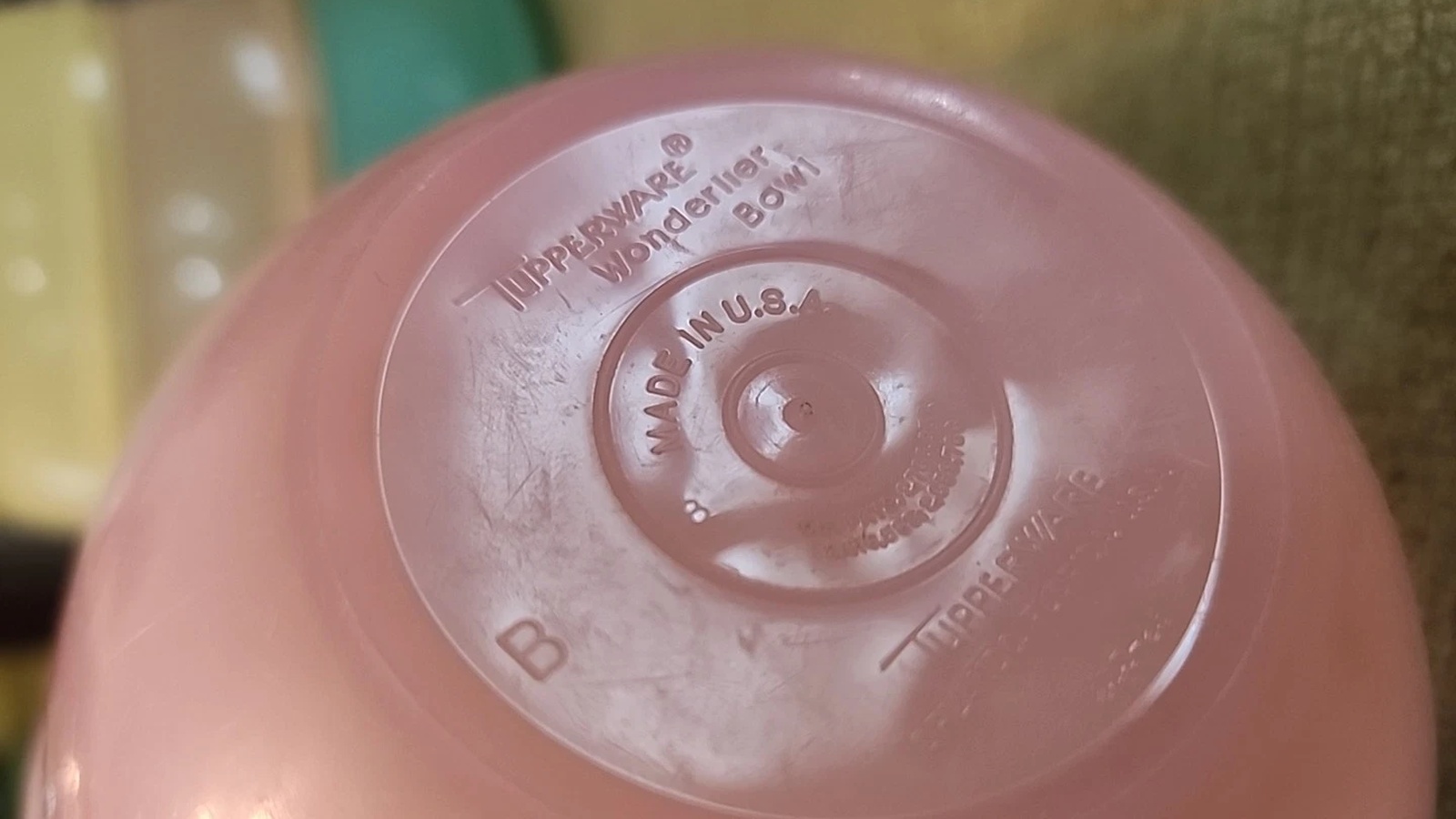
The old bowl numbers are particularly useful when you’re trying to identify a find. Classic Wonderlier bowls include numbers 233, 234, 235, 236, and 237, representing different sizes. Check the underside for molded markings, which may include the Tupperware name, a product number, and manufacturing information.
Don’t assume every pastel Wonderlier bowl is necessarily from the 1950s, though. Tupperware kept producing variations of the design, and more recent Vintage Classic Wonderlier sets have also been released.
Colors and molded numbers can help narrow things down, but they’re not always enough to establish an exact manufacturing date.
For a lovely example of the early design, the Smithsonian collection includes a Wonderlier bowl from approximately 1954, part of Tupperware’s original Millionaire Line.
What I check before bringing vintage Tupperware home

Vintage plastic needs a slightly different inspection from the old stoneware, glass, and metal kitchen equipment I also enjoy finding in thrift stores.
The first thing I look at is the condition of the plastic itself. A few superficial scratches aren’t necessarily a problem, particularly if I want something mainly for display. But cracks, deep gouges, warped edges, and plastic that’s becoming sticky or brittle are reasons to leave a piece behind.
Pay particular attention to the lids. These are often the first things to become damaged or go missing, and a bowl with its original seal is much more satisfying than one without.
Try fitting each lid if the shop allows it. It should sit evenly around the rim without obvious gaps, splits, or distortion. Don’t force an old lid into place if the plastic feels stiff.
Then give the bowls a good sniff. Yes, really.
Old plastic can retain odors from food, storage conditions, or years spent in a cupboard. Strong smells that have penetrated the material aren’t always easy to remove, and I wouldn’t bother with heavily stained or unpleasant-smelling examples when there are better pieces to find.
Finally, check that the bowls fit inside one another properly. A complete nesting set is lovely, but mismatched sizes and colors can still make a cheerful collection if you’re building it gradually.
These bowls deserve to be seen, not hidden away
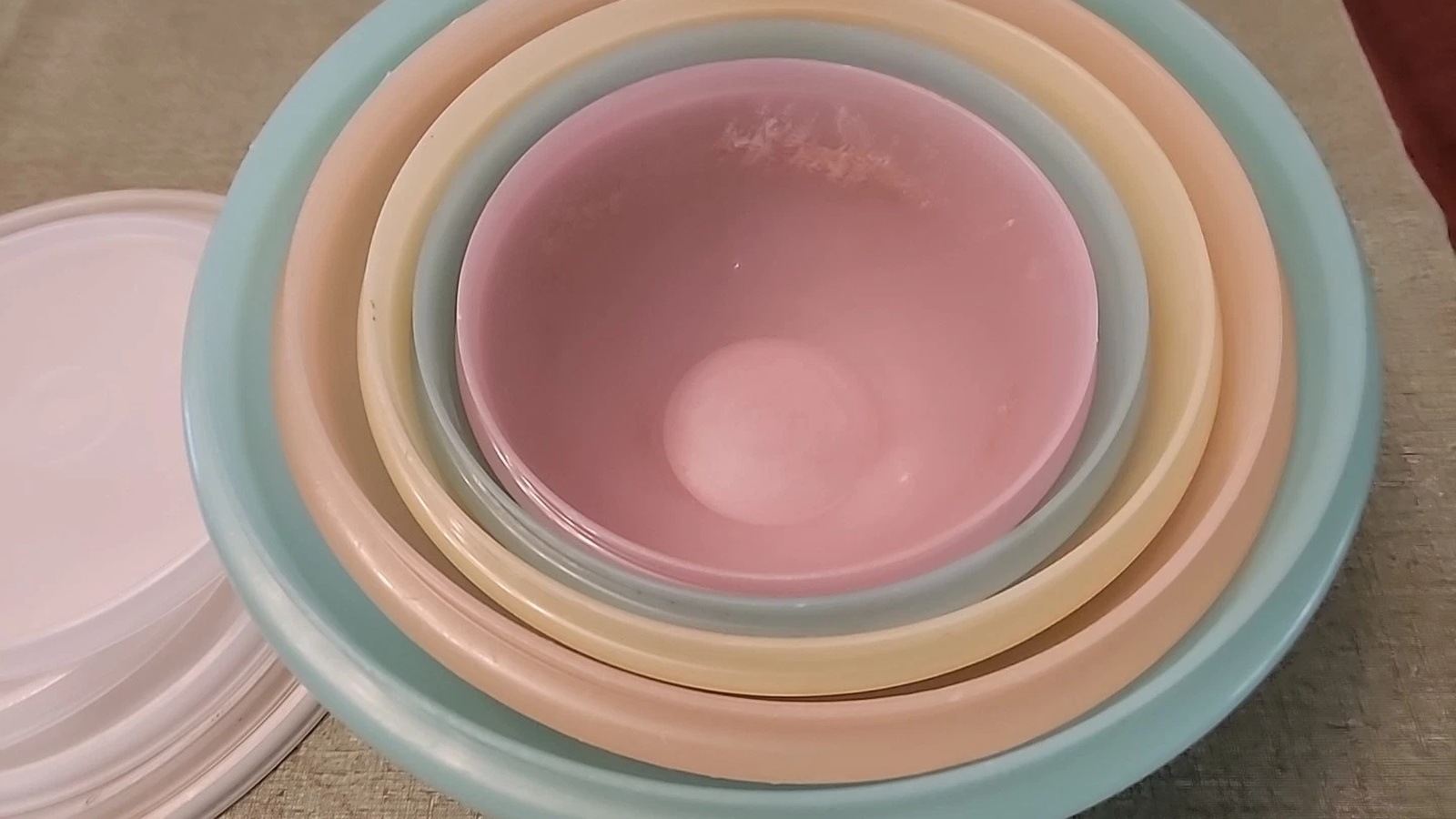
One of the things I particularly like about vintage Wonderlier bowls is that they work beautifully as part of a colorful, practical kitchen collection.
A stack of pastel bowls on an open shelf looks wonderful alongside vintage Pyrex, enamelware, old-fashioned mixing jugs, and other cheerful mid-century kitchen finds.
They’re also useful for organizing lightweight household bits and pieces, from sewing supplies and craft materials to odds and ends that otherwise collect in drawers.
If you intend to use original vintage bowls for food, be sensible about their age and condition. I wouldn’t put them in the microwave, subject them to very hot temperatures, or use badly scratched or deteriorating plastic for food storage. Older, damaged plastic containers deserve particular caution when heated.
I recommend gently hand-washing vintage bowls in warm, soapy water with a soft cloth, then drying them thoroughly before storing. Avoid abrasive scrubbers and harsh cleaners that could damage the finish.
If you’re uncertain about an old bowl’s suitability for food contact, keeping it for display or nonfood storage is a perfectly good alternative.
Would I buy an incomplete set?
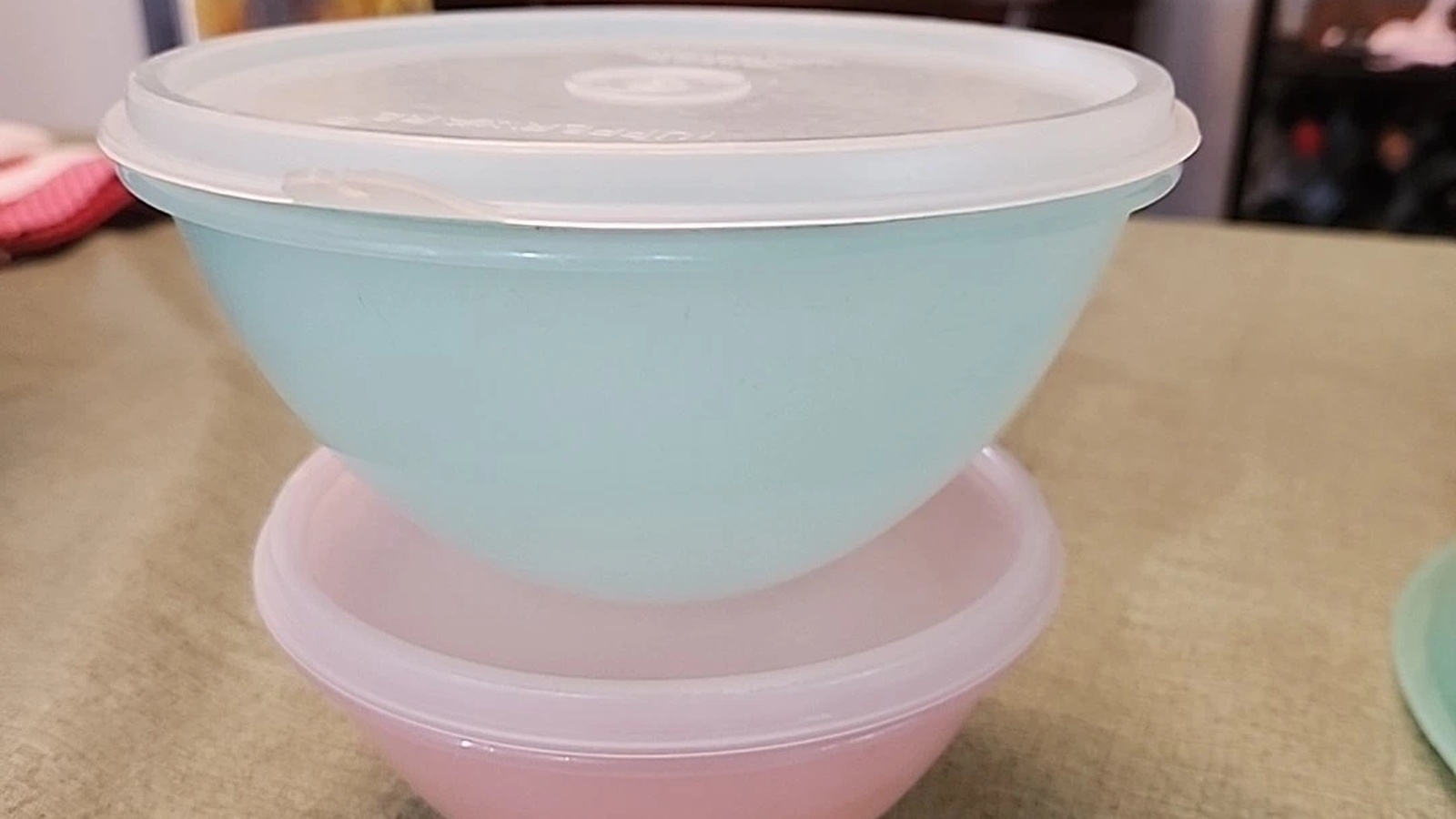
Absolutely, particularly if the colors were beautiful and the bowls were in good condition.
There’s something rather enjoyable about collecting vintage kitchenware one piece at a time. Perhaps you find a pale pink bowl on one visit, a yellow one at an estate sale a few weeks later, and eventually a lovely mint green bowl that completes your little collection.
I wouldn’t pass up a beautiful original Wonderlier bowl just because the rest of its set was missing. But finding all five pastel bowls together, complete with their original lids, would be a particularly special thrift store discovery.
And that’s what makes thrifting so enjoyable. Sometimes the best things waiting on those crowded shelves aren’t expensive antiques or elaborate decorative pieces. They’re beautifully designed, everyday household objects that have survived for decades and still have plenty of charm left to offer.

