Affiliate disclosure: This post may contain affiliate links. Please see full disclosure.
In the U.S., there are roughly thirty species of venomous snakes, most of them rattlesnakes. Most people will never have a serious problem with any of them, but some species have a mix of strong venom, long fangs, and big overlap with where humans actually live. Those are the ones it’s worth knowing by name.
“Most dangerous” here is about practical risk: how potent the venom is, how much the snake can deliver in one go, and how often people run into them. It’s not about making snakes into monsters. Every one of these species is also an important predator on rodents and other small animals, and most will take any chance to avoid a fight.
1. Western diamondback rattlesnake
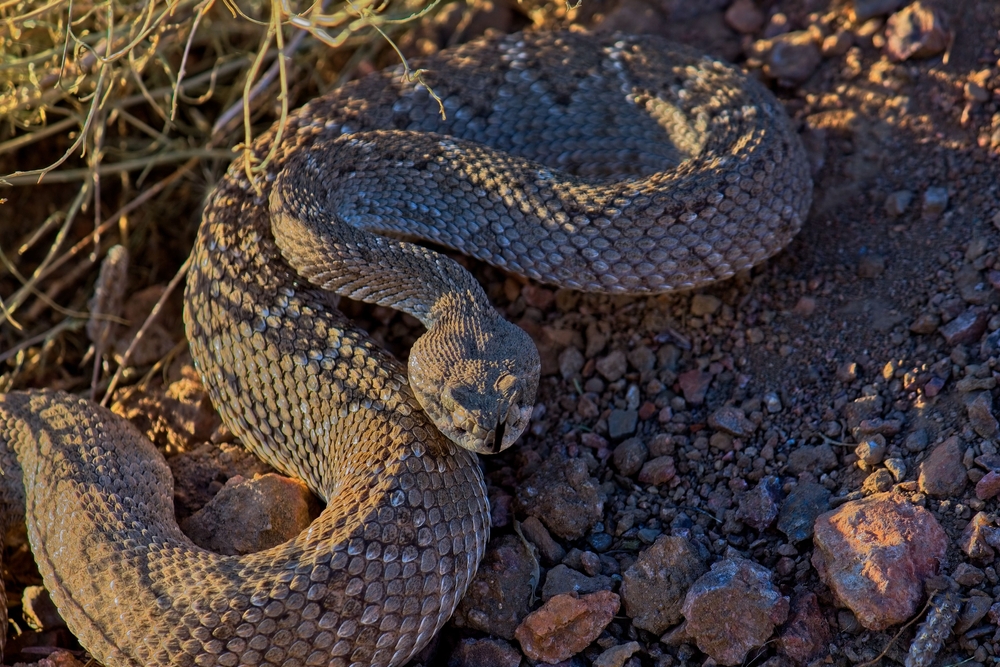
If you picture a rattlesnake in desert scrub or on a Texas ranch, there’s a good chance you’re picturing a western diamondback. It’s chunky, often three to five feet long, with dark diamond shapes down the back and a clear black-and-white banded tail just before the rattle.
This snake is widespread across the Southwest and into the plains, turning up in rocky canyons, scrubby pasture, and abandoned buildings. Its range overlaps heavily with people, livestock, and working dogs, which is one reason bites from this species are such a worry. When it feels cornered it usually coils up and rattles, but a distracted hiker or farm worker can still step close enough to get tagged.
The venom is a very efficient haemotoxic mix. It attacks blood vessels and soft tissue, causing severe swelling, bruising, and pain, and it can interfere with clotting. Medical case series put western diamondbacks near the top for severe crotalid bites in the U.S., simply because of how much venom they can inject and how often people meet them.
2. Eastern diamondback rattlesnake
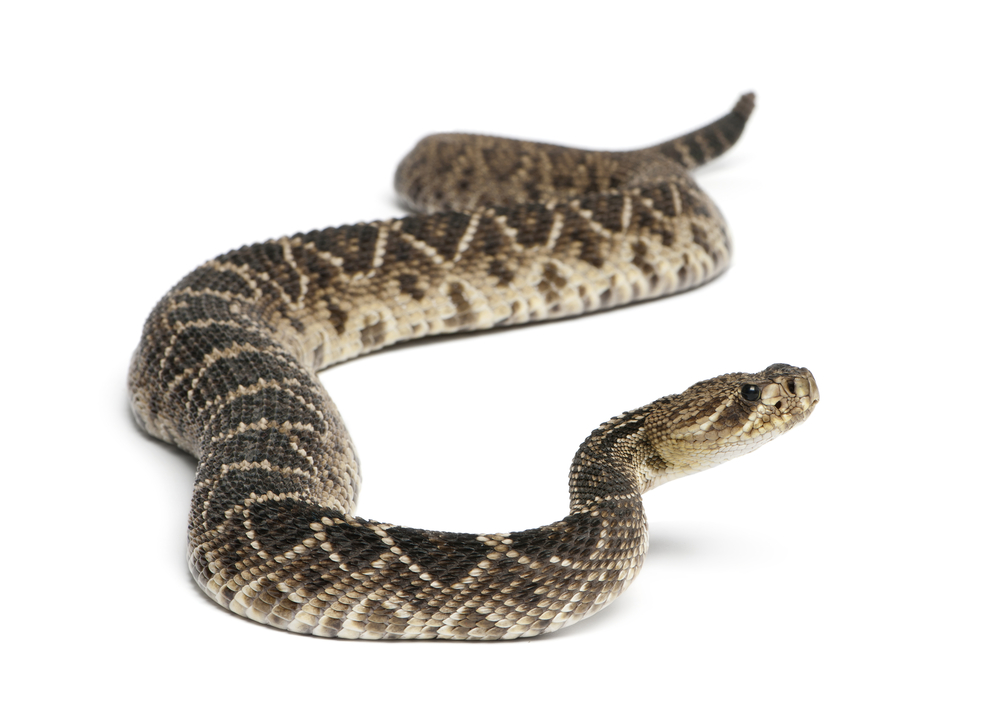
The eastern diamondback is the heavyweight of North American venomous snakes. Adults can easily reach five or six feet, and a big one is thick as a strong man’s forearm. It carries huge venom glands and impressively long fangs, and it knows how to use them if pushed.
You’ll find this species across the coastal Southeast, from North Carolina down through Florida and west to Louisiana, most often in dry pine woods and sandy scrub, but also in rough pasture and even on barrier islands.(FWC) Historically it was common; now habitat loss and direct persecution are shrinking its range. It’s still out there, though, especially where old longleaf pine habitat hangs on.
The venom is strongly haemotoxic and myotoxic. Untreated bites can cause heavy internal bleeding, muscle breakdown, and shock. Modern antivenom means deaths are rare, but this is still a snake that can put a healthy adult in intensive care. The flip side is that it’s generally not keen on wasting energy. Most would rather sit tight and rely on camouflage, rattle a warning, and slip away if given half a chance.
3. Mojave rattlesnake
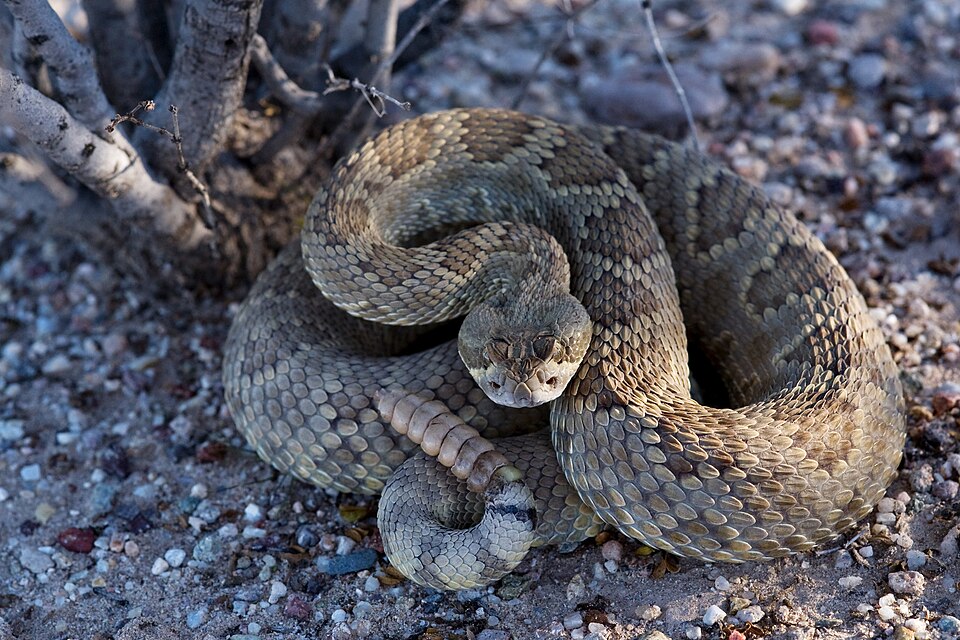
At a glance, the Mojave rattlesnake looks a bit like a slimmer, greener western diamondback. The tail bands tend to be more narrow and even, and the background colour often has a dusty olive tinge. It lives in open desert and dry grasslands in parts of California, Nevada, Arizona, New Mexico, Utah, and Texas.
What makes herpetologists twitchy about this species is the venom. Some Mojave populations produce what’s known as “Type A” venom, which contains Mojave toxin, a potent neurotoxin that attacks the nervous system. Others have more traditional pit viper haemotoxins, or a blend of the two. Clinically, that means bites can sometimes look deceptively mild at first, with less swelling and pain than a big diamondback, then progress to breathing problems, weakness, and other neurological signs if treatment is delayed.
Mojaves often favour low scrub with scattered bushes and rocks, exactly the sort of place people may wander off-trail. They’re not huge snakes, but they’re coiled and ready under cover more often than people realise, which is why careful foot placement matters in their country.
4. Timber rattlesnake
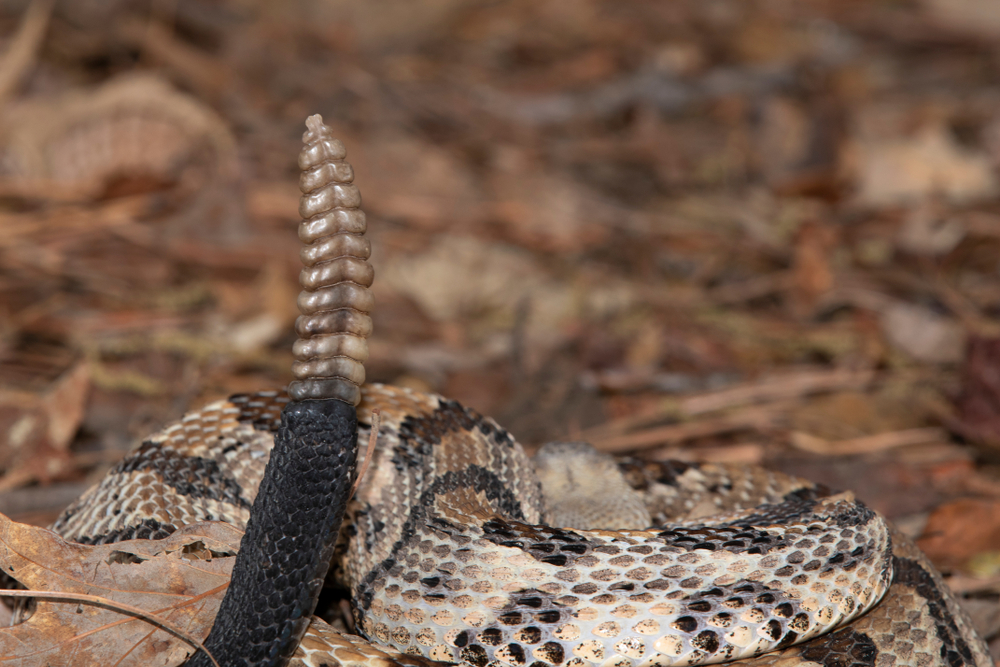
The timber rattlesnake is a big, heavy-bodied snake of forests and rocky slopes across much of the eastern U.S., from parts of the Deep South up into New England and across into the Midwest. Colours vary a lot: some are more yellow with dark bands, others almost black. Most have a subtle reddish-brown stripe running down the back.
This species spends a lot of time motionless, waiting for mice, chipmunks, and other small mammals to wander within strike range. It often chooses ledges, log piles, or sunny edges of old logging roads, which are also places hikers like to pause. That mix of patience and camouflage is what leads to many close calls.
Venom composition varies by region. Some populations have mainly haemotoxic venom with strong effects on blood and tissue; others also carry more notable neurotoxic components. Either way, serious envenomations are entirely possible, and this species is responsible for a good share of dangerous bites in its range, even though it is now gone from some states where it used to be common.
RELATED POST: 15 Insects With the Most Painful Stings
5. Prairie rattlesnake
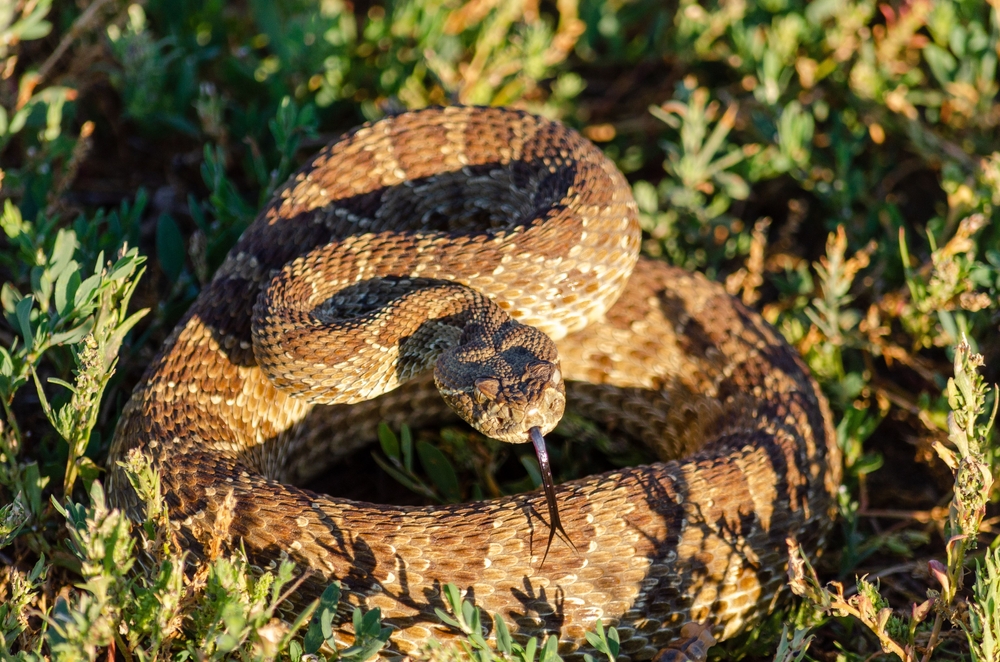
The prairie rattlesnake is the standard rattler of the Great Plains and parts of the interior West. It turns up in dry grassland, badlands, sagebrush flats, and rocky breaks, and it adapts well to ranch country, irrigation ditches, and disused farm buildings.
It’s not as massive as the big diamondbacks, but it’s still a substantial snake, usually with a pattern of rounded blotches down the back and a tail ending in the familiar segmented rattle. Bites tend to happen when someone reaches under a rock, puts a hand into a rodent burrow, or steps over a log without looking on the far side.
Like its cousins, the prairie rattlesnake delivers a haemotoxic venom that hits soft tissue and blood. Ranch workers and field biologists sometimes describe “dry” warning strikes, but when venom is injected, the swelling, bruising, and pain can be dramatic. Modern bite registries show prairie rattlesnakes featuring regularly in serious envenomations across the central states, simply because they’re the local default rattler in many areas.
6. Southern Pacific rattlesnake
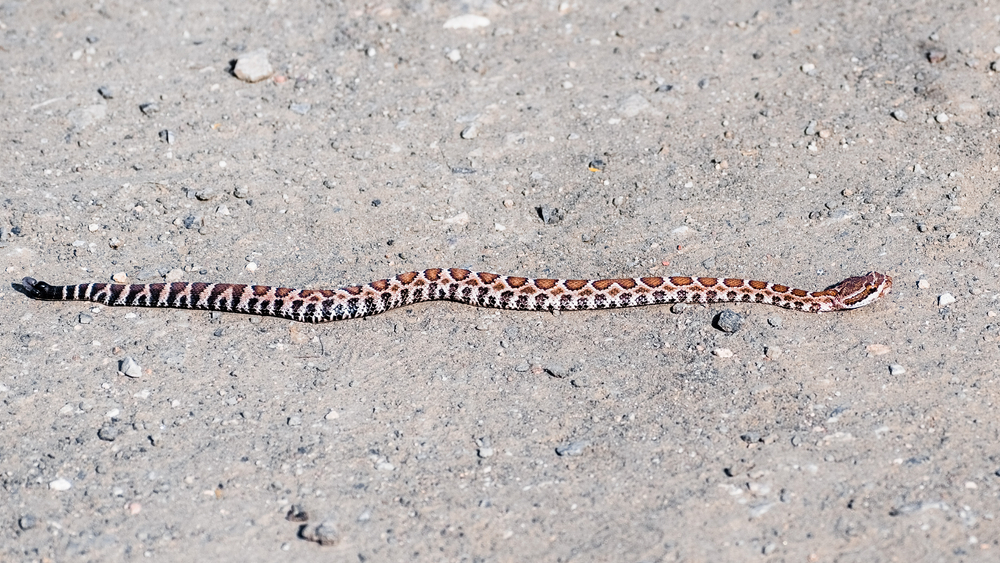
In coastal and inland southern California, the Southern Pacific rattlesnake is the one people step on when they’re mowing steep banks or walking scrubby trails at the edge of town. It’s a form of western rattlesnake with a patchy range, many colour forms, and a nasty habit of evolving unusual venom.
In some parts of its range, the venom is mainly haemotoxic, like a typical pit viper. In other populations, it also contains potent neurotoxic components similar to Mojave toxin. Doctors in that area have reported patients with slurred speech, muscle twitching, and other neurological signs on top of the usual swelling and pain.
Habitat-wise, this snake is a generalist. It turns up in chaparral, oak woodland, rocky outcrops, and increasingly on the fringes of suburbia where these habitats meet gardens and horse paddocks. That blend of tricky venom and regular overlap with people is what earns it a place on any “ones to respect” list.
7. Sidewinder rattlesnake

Sidewinders are classic little desert snakes of the Mojave and Sonoran regions. They’re sandy-coloured with horn-like scales over the eyes and have that odd sideways looping way of moving that gives them their name.
Compared to the big rattlers, sidewinders are small. Many adults are only one and a half to two feet long. The venom yield is smaller too, which helps explain why bites to healthy adults are less often life-threatening with treatment, but that doesn’t make them harmless. Their venom still causes intense local pain and swelling, and children, pets, and anyone far from help are at much more risk.
Sidewinders spend a lot of time partly buried in sand with just the eyes and top of the head exposed, waiting for lizards or rodents. That habit means it’s easy to walk very close without noticing them. In off-road areas where people camp, run dogs, or ride, this species is part of the background reality.
8. Pygmy rattlesnake
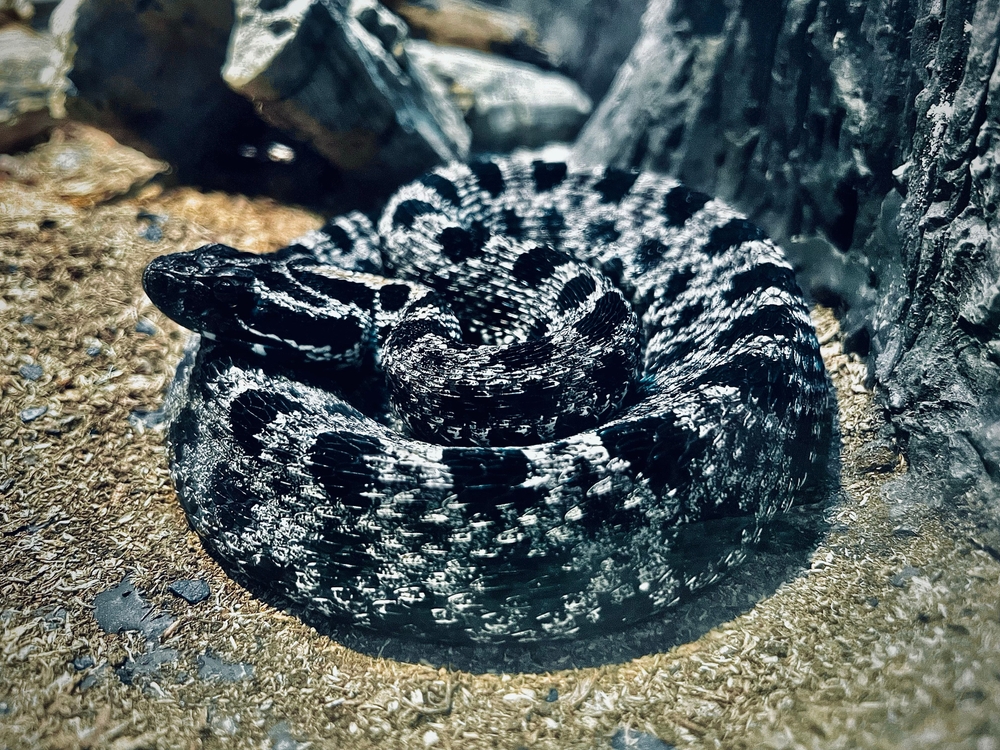
The pygmy rattlesnake is proof that “small” doesn’t equal “safe.” Adults are often under two feet long and quite slender, with a pattern of dark blotches along a grey, brown, or reddish body and a tiny rattle that sounds more like an insect buzz.(PMC)
They live in the Southeast, around pine flatwoods, sandhills, and wetland edges. Because they’re small and often sit right beside paths or in leaf litter, they’re easy to miss. People frequently only notice them when the dog suddenly jumps back or when the snake moves.
Their venom is potent for their size. There’s less of it than a diamondback can deliver, but the haemotoxic effects are very real, especially in children or small pets. Serious tissue damage and long recovery times are entirely possible. From a practical standpoint, they’re dangerous partly because many people don’t take a “little rattler” as seriously as they should until after the bite.
9. Eastern massasauga
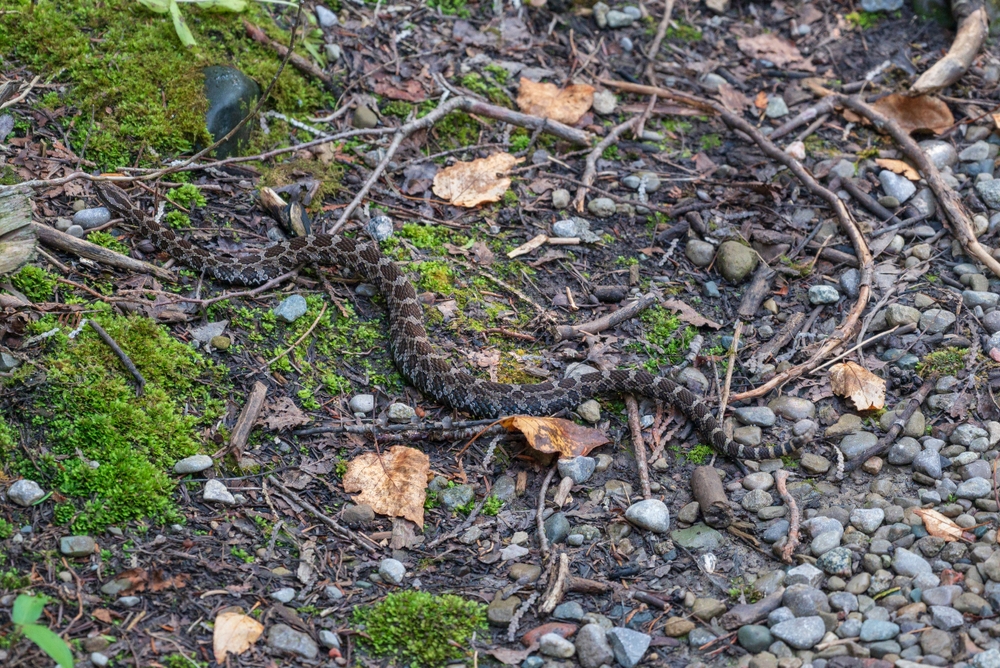
The eastern massasauga is a stocky, medium-small rattlesnake of marshes, wet meadows, and damp grasslands in parts of the Great Lakes region and Midwest. It has a row of rounded dark blotches down the back, a heart-shaped head, and a short, light-coloured rattle.
In many places it’s now rare enough to be protected, and it spends much of its time hiding in thick cover and rodent burrows. People most often encounter it when mowing rough grass near wetlands, walking dogs on overgrown dykes, or doing conservation work in its habitat.
Its venom is quite potent haemotoxin, and while the volume is less than a huge diamondback, bites can still cause marked swelling, pain, and clotting problems. Because the species is threatened in parts of its range, there’s an awkward balance between respecting its protected status and taking bites seriously when they happen.
RELATED ARTICLE 15 biggest spiders in America
10. Copperhead

Copperheads are the venomous snake most people in the eastern and central U.S. are likely to actually bump into. They’re medium-sized pit vipers with a distinctive hourglass banding pattern of rich coppery brown over a lighter background. They blend almost perfectly into dead leaves and woodland edges.
They favour forest edges, rocky slopes, abandoned farm buildings, and overgrown lots. They also move through suburban gardens, woodpiles, and compost heaps more often than many people realise. Because they’re so well camouflaged and don’t always rattle or dash away, a lot of bites happen when someone simply sets a hand or foot down in the wrong place.
Their venom is on the milder end compared with big rattlesnakes, but that’s a low bar. Copperheads are responsible for more venomous snakebites in the U.S. than any other species, just because they’re common and often tolerated around homes until something goes wrong.(Wikipedia) Pain and swelling can be significant, and complications aren’t rare, especially without prompt care.
11. Cottonmouth / water moccasin

Cottonmouths are semi-aquatic pit vipers of the Southeast, stocky and often dark, with a distinctly thick head and body. The name comes from the bright white interior of the mouth, which they display in a wide gaping threat posture if they feel cornered.
You’ll find them around slow rivers, swamps, bayous, ponds, and flooded ditches. They bask on logs and banks, swim confidently, and often use man-made drainage and fishing spots. Many supposed “aggressive cottonmouth” stories come from snakes trying to escape to the water or away from a path while people misread the movement.
Their venom is cytotoxic and haemotoxic, hitting muscle and tissue hard and sometimes causing significant necrosis around the bite, along with clotting problems. Limbs can be saved, but they may need a lot of treatment and time. In real terms, this is a dangerously venomous animal that just happens to prefer fish and frogs over humans, until a foot lands too close.
12. Eastern coral snake
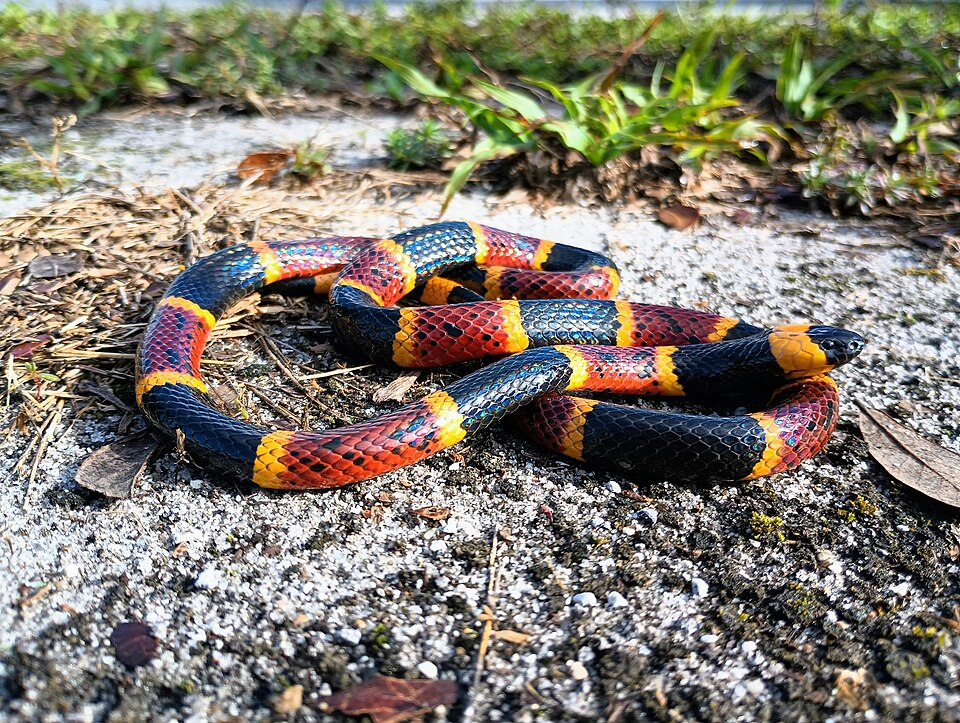
The eastern coral snake is a slim, secretive elapid from the southeastern U.S., famous for its red, yellow, and black rings. It’s often summed up with rhymes that try to distinguish it from harmless mimics, though relying on memory tricks is a poor substitute for general caution.
It spends much of its life hidden in leaf litter, under logs, or in sandy burrows, hunting small snakes and lizards. People rarely see it compared with the more obvious rattlers and pit vipers. When bites do happen, it’s often because someone has picked one up, tried to “relocate” it, or stepped right on it while gardening in the deep South.
Coral snake venom is strongly neurotoxic and can also damage muscle. Bites sometimes show little local reaction at first, then progress to weakness, trouble speaking, and breathing issues if left untreated. Actual deaths are rare with modern care, but this is one of the snakes doctors treat with particular respect when it does show up.
13. Texas coral snake
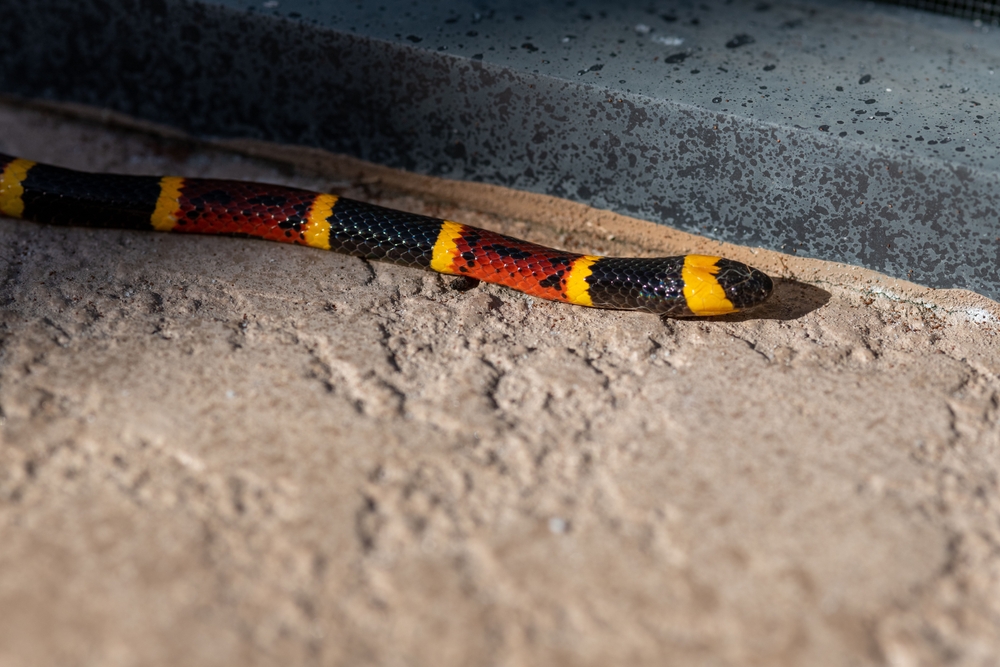
The Texas coral snake is the western cousin to the eastern coral snake, with the same general ringed pattern and the same family background: it’s an elapid, related more closely to cobras than to rattlesnakes. It ranges across much of Texas into Louisiana and Arkansas and down into Mexico.
Like the eastern species, it’s shy and fossorial, spending a lot of time under debris, in burrows, or moving through leaf litter. Most Texans never see one in the wild unless they’re actively looking for snakes. When bites do occur, they often involve people handling the animal or keeping it in captivity.
Venom-wise, it’s another neurotoxic mix, with the potential for respiratory paralysis if a significant dose is delivered and treatment is delayed. The overall number of bites per year is low, but medically these snakes sit very high on the “do not underestimate” list because of how their venom works.
14. Black-tailed rattlesnake
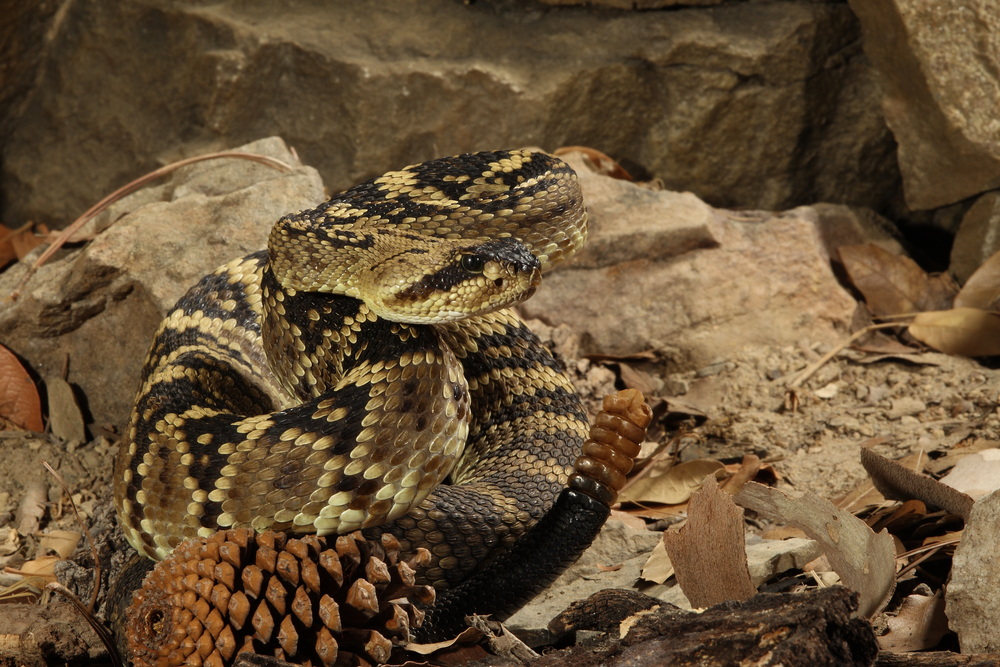
Black-tailed rattlesnakes live in the uplands of Arizona, New Mexico, and parts of Texas and Mexico. As the name suggests, the tail is usually solid dark near the rattle, while the body can be olive, yellowish, or grey with darker blotches.
They favour rocky slopes, canyons, and arid woodlands, often at higher elevations than some of the desert species. Hikers and hunters sometimes encounter them on trails, basking on roads, or tucked into rock piles and old walls. They’re often described as relatively calm compared with some rattlers, but that doesn’t change what they carry in those venom glands.
Their venom is mainly haemotoxic, causing local tissue damage, pain, and clotting disturbances. Because they don’t crop up as often around suburbia as, say, western diamondbacks, they don’t feature in headlines as much. In their own rocky hill country, though, a bite is every bit as serious.
15. Arizona black rattlesnake
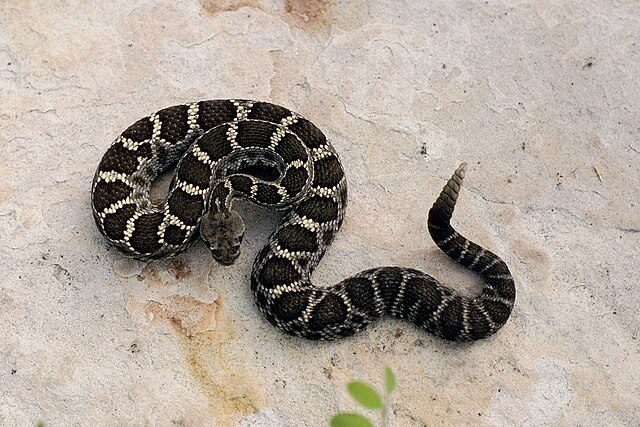
The Arizona black rattlesnake is a dark, often chocolate-brown or almost black rattler of central Arizona and parts of western New Mexico. Some individuals can change shade slightly over time, and juveniles often have more obvious banding.(Animal-Care)
It lives in mixed conifer and oak woodland, rocky drainages, and canyon country, usually at mid to higher elevations. Herpetologists have documented surprisingly complex social behaviour in this species, including mothers staying with their young for a while after birth, which is unusual in snakes.
From a practical point of view, it’s another dangerously venomous pit viper. Its bites are less frequent than those of more widespread species simply because its range is smaller, but when they do occur, doctors treat them with the same level of concern and antivenom as other serious rattlesnake envenomations.(PMC)