Affiliate disclosure: This post may contain affiliate links. Please see full disclosure.
Some nights, when I should be doing something sensible or useful, I end up looking at pictures of blue whales and feeling very, very tiny.
We talk a lot about the megafauna that are gone – mammoths, giant sloths, all the Ice Age weirdos – but we’re still sharing the planet with some absolute units right now.
Biologists usually call an animal “megafauna” once the adults weigh more than about 100 pounds or so, though the exact cutoff wiggles a bit. That means elephants, rhinos, whales, hippos, big sharks, and even some jellyfish count as modern megafauna. They shape whole ecosystems just by existing, eating, trampling, and pooping where they do.
1. Blue whale – the heavyweight champion of Earth

Blue whales aren’t just the biggest animals alive. They’re the biggest animals that have ever lived, bigger than any dinosaur we’ve found so far. Adults can stretch close to 100–110 feet long and weigh up to around 330,000 pounds, which is about 165 tons.
To picture that, think of a school bus. Now line up three of them. That’s one whale, give or take a tail. Its heart alone can weigh as much as a small car, and a kid could literally crawl through its aorta if it were, you know, not inside a whale.
Despite all that size, blue whales mostly eat tiny krill. On a good day, one whale can gulp several tons of krill-rich water, then push it out through its baleen “comb” and swallow what’s left. That efficiency is part of what lets them reach such ridiculous sizes in the open ocean.
2. Fin whale – the “greyhound of the sea”
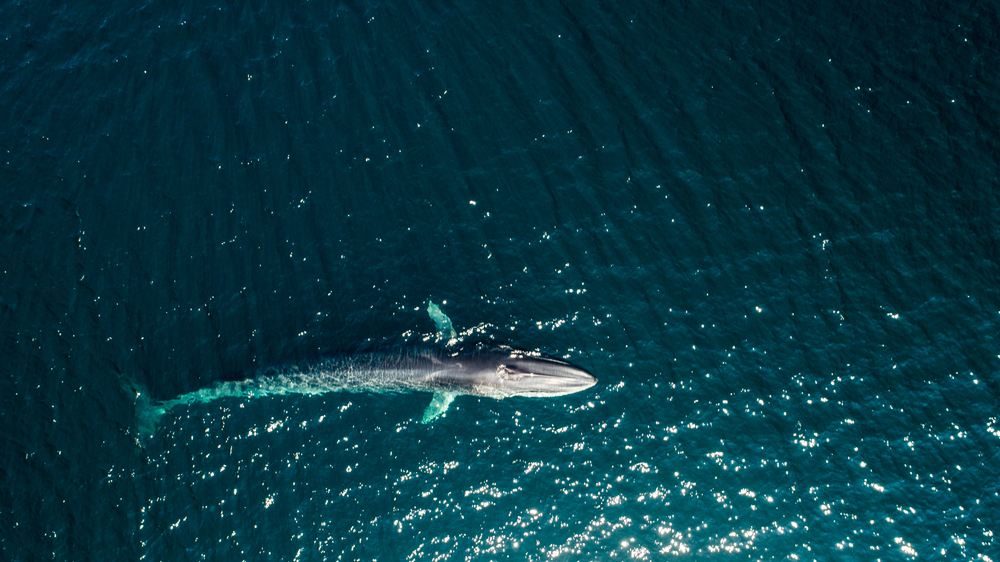
If blue whales are the ocean’s freight trains, fin whales are the sleek passenger express. They’re the second-largest animal on Earth, often around 70–85 feet long, with big individuals pushing 80 tons.
Fin whales have long, streamlined bodies and can swim at highway speeds over short bursts. That combination of size and speed is wild: imagine a 70-foot animal cruising through the water faster than most of us drive to the grocery store.
They’re also another baleen whale, filtering tiny fish and krill out of the water. Their size makes them important movers of nutrients, because every dive and surface cycle helps mix deep-ocean nutrients toward the top where other life can use them.
3. Bowhead whale – Arctic heavyweight and super-centenarian

Bowhead whales are chunky cold-water specialists, living their whole lives in Arctic and sub-Arctic seas. Adults commonly reach about 50–60 feet long and weigh roughly 75–100 tons.
A huge share of that bulk is blubber. Some bowheads carry a fat layer nearly two feet thick, which is what lets them survive and dive in water that would kill us in minutes. They also have massive skulls built to smash through sea ice to breathe.
On top of their size, bowheads are record-setting elders. Studies of eye tissue and old embedded harpoon points suggest some individuals may live over 200 years. That means there are bowhead whales out there that were already middle-aged before the American Civil War.
4. Sperm whale – giant of the deep

Sperm whales are the biggest toothed predators alive. Adult males average around 50–52 feet long and weigh about 35–45 tons, with especially large individuals estimated up to 57 tons.
Their heads are absurdly large, making up about a third of their total length. Inside is the enormous spermaceti organ, a waxy structure that helps with buoyancy and sound focusing. That, plus their powerful tails, lets them dive well over a mile down to hunt giant squid in near darkness.
They also have the biggest brains of any animal on Earth by weight. Nobody fully understands what that means for their inner lives, but the idea of a 50-foot deep-diving predator with a bus-sized head and the world’s biggest brain is something to sit with for a second.
5. Whale shark – the biggest fish

Despite the name, whale sharks are sharks, not whales. They’re the largest fish alive today. Many are around 30–40 feet long, and big ones can reach close to 60 feet and weigh 20–30 tons.
They look like slow-motion polka-dotted buses cruising through tropical seas with their mouths wide open. But they’re filter feeders, scooping up plankton, tiny fish, and eggs rather than tearing into seals or surfers.
Whale sharks grow slowly and take years to reach maturity, which makes them extra vulnerable to overfishing and ship strikes. Many populations are now listed as endangered, even though they’re gentle giants that mostly just want to drift through warm, food-rich currents.
6. Basking shark – the second-largest fish
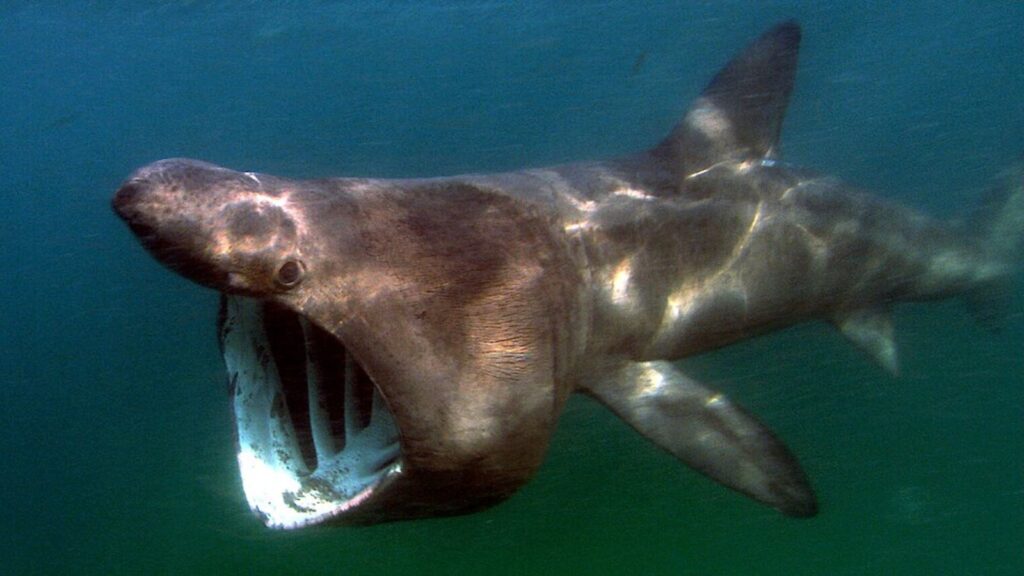
If you’ve ever seen a huge shark near the surface with its mouth gaping like a broken garage door, it was probably a basking shark. They’re the second-largest fish after whale sharks and regularly reach 25–35 feet long. Average adults weigh around 4.5 tons, and the biggest estimates go up to about 7 tons.
Basking sharks cruise through chilly coastal waters, filtering plankton with giant gill rakers. They look intimidating, but they’re harmless to people and other large animals.
Their slow, surface-loving habits made them easy targets when we used to hunt them heavily for oil and meat. Even today, collisions with boats and getting snagged in fishing gear are big risks for these sea-giant introverts.
7. Ocean sunfish – the world’s heaviest bony fish
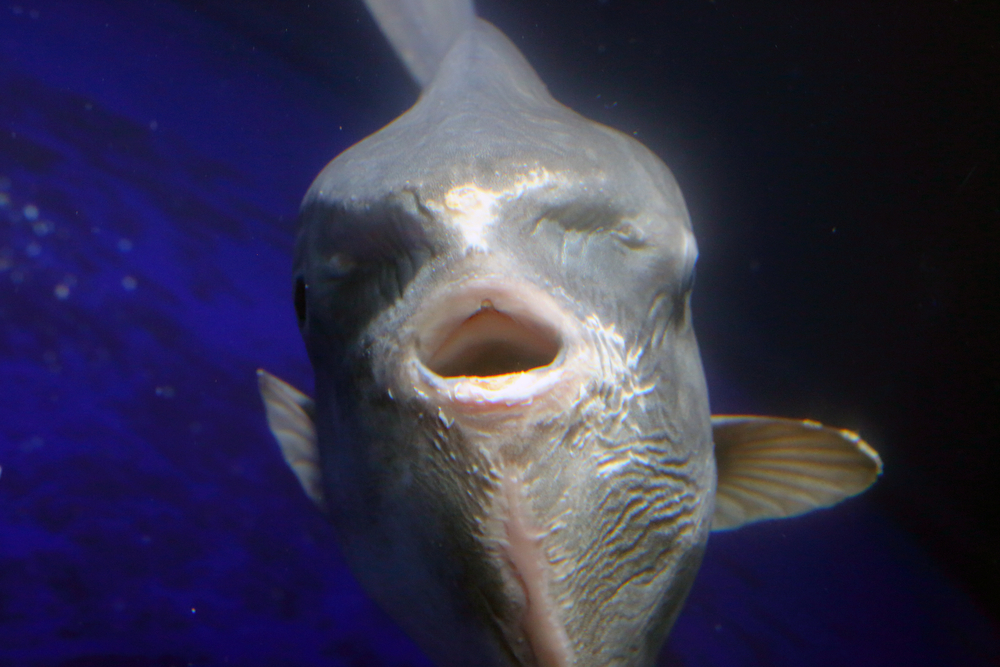
Ocean sunfish, or molas, look like someone drew a fish from memory and forgot the back half. They’re basically a giant swimming head with fins.
Among bony fish, the biggest species can weigh over 5,000 pounds and reach around 10–14 feet across fin-to-fin. Typical adults still weigh close to a ton.
They spend a lot of time basking sideways at the surface, soaking up sun and confusing boaters. Their favorite food is jellyfish, which means these oddballs help keep jelly blooms in check. For something shaped like a floating manhole cover, they’re surprisingly important.
RELATED POST: 15 biggest spiders in America
8. Southern elephant seal – the biggest seal
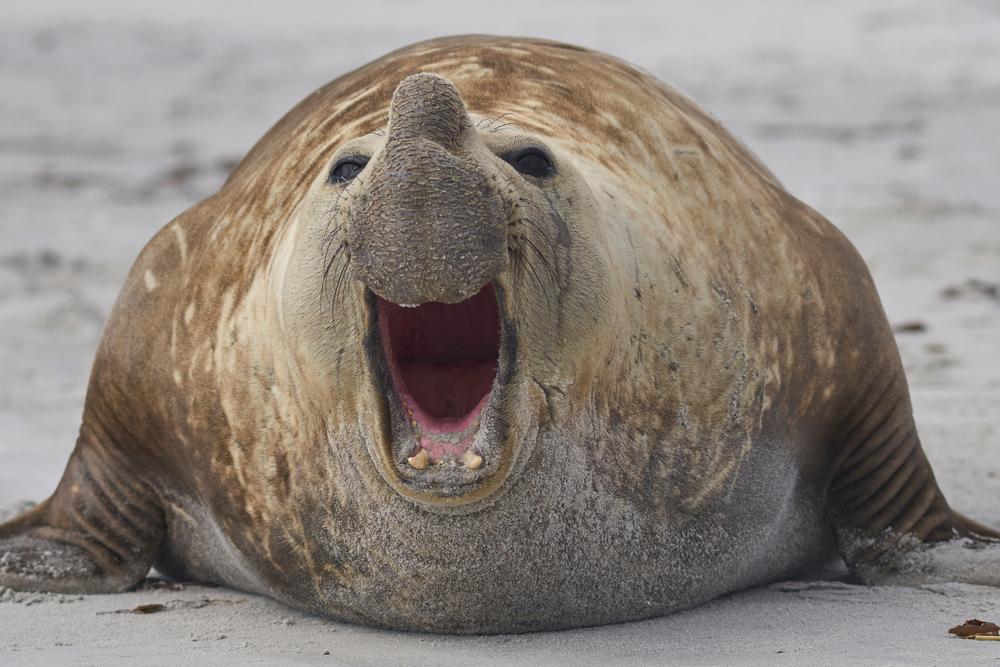
Southern elephant seals are what you get if you cross an overinflated sausage with a small truck. They’re the largest seals and the heaviest carnivores that still spend most of their time in the water.
Big adult males can be 15–19 feet long and commonly weigh 4,900–8,800 pounds, with some estimates of rare giants up around 8,000–11,000 pounds. Females are much smaller, which makes these seals one of the most size-unequal mammals on Earth.
Males haul out on sub-Antarctic beaches to fight for harems, slamming their necks and chests together like living battering rams. The rest of the year, they dive deep and long, chasing squid and fish in cold, dark southern oceans.
9. African bush elephant – biggest land animal

When it comes to animals that actually stand on dirt, African bush elephants win. Adult males often weigh between about 9,900 and 13,500 pounds, with shoulder heights up to around 13 feet. Rare giants have been estimated at close to 24,000 pounds.
Their size does a few cool things. It lets them reach high branches, push over trees, and dig for water, which reshapes entire landscapes for other species. It also means they don’t have many natural predators once they’re grown – mostly just humans with machines.
Elephants need a lot of food and space, so when we carve up savannas with farms and roads, they feel it fast. That huge body comes with a huge daily calorie bill.
10. Hippopotamus – river tank

Hippos are sort of the chaotic neutral of modern megafauna. The common hippo is usually considered the third-largest land mammal after elephants and some rhinos. Average males weigh between about 3,000 and 4,000 pounds, and big ones can top 9,000 pounds.
They spend most of the day half-submerged, staying cool in rivers and lakes, then lumber out at night to graze on grass. Despite the bulk, they can move at scary speeds over short distances, both in water and on land.
Those massive jaws open to about 150 degrees, and the canine teeth can be more than a foot long. That, plus their weight, is why hippos have such a fearsome reputation in their home range.
11. White rhinoceros – lawnmower tank

White rhinos are the larger of the two African rhino species and the biggest living rhinos. Adult males usually weigh between 4,000 and 6,000 pounds and stand about 5–6 feet at the shoulder.
They’re wide-mouthed grazers built for eating grass with their heads down most of the day. That’s why their neck and shoulder muscles are so massive: holding up a giant head with two horns and all that jaw power is real work.
Even though they look like armored tanks, they’re still very much at risk from poaching and habitat loss. A big rhino is hard to hide, and their size sadly doesn’t protect them from rifles.
12. Giraffe – tallest land animal

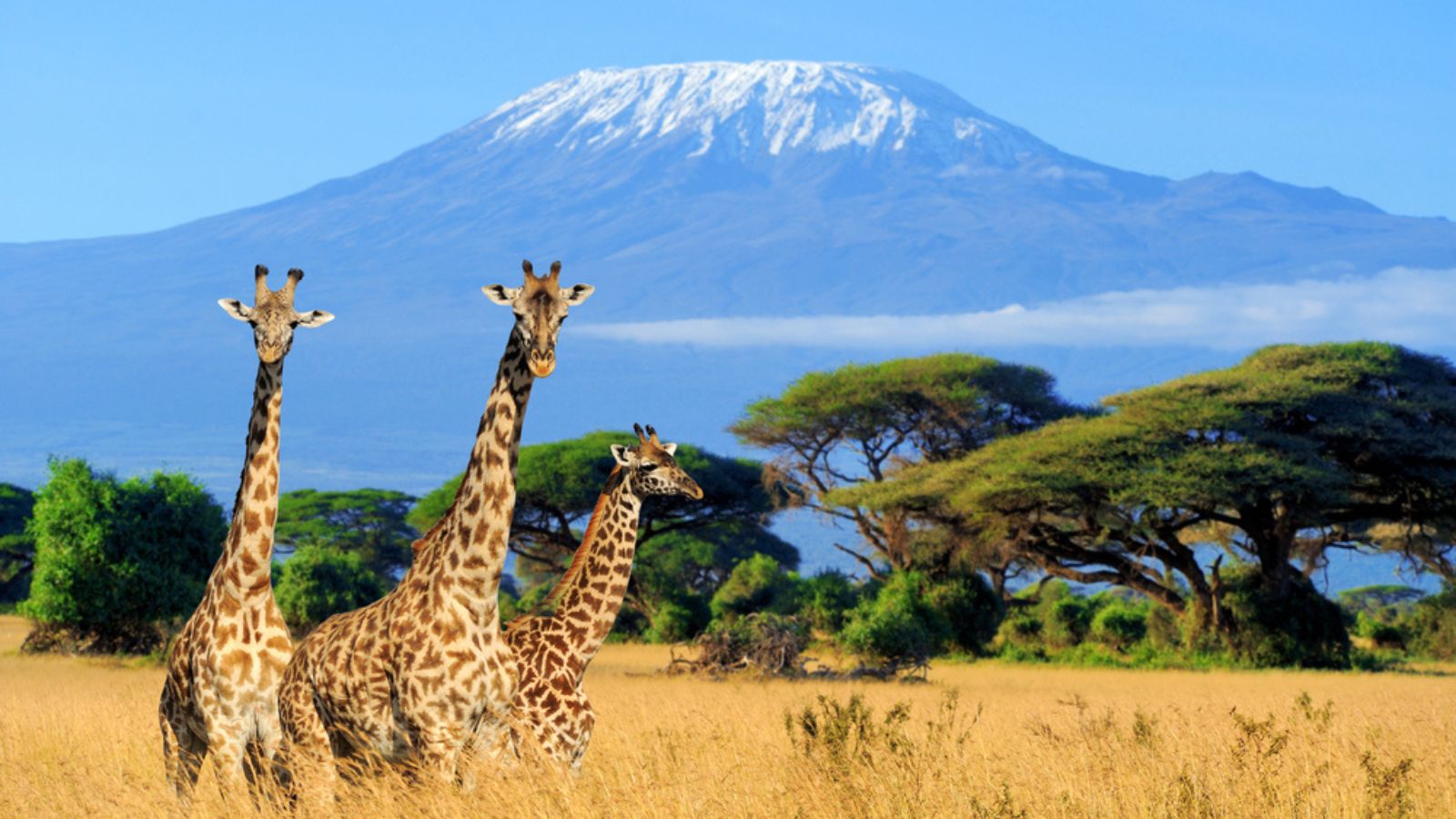
If elephants win on weight, giraffes win on height. Adult males can reach 16–18 feet tall and weigh up to around 3,000–3,500 pounds, while females are usually a bit shorter and lighter.
That long neck isn’t about seeing predators so much as reaching food, especially acacia leaves that shorter herbivores can’t touch. Inside that neck is a crazy-strong heart and high-pressure blood system to keep the brain supplied when the head is way up or drinking from the ground.
Giraffes are technically megafauna, but they’re more like living periscopes than tanks. Their height changes which trees get trimmed and how seeds get spread in African savannas.
13. Polar bear – largest land carnivore

Polar bears are the heavyweight champions of land-based meat-eaters. Adult males commonly weigh 400–600 kilograms, which is roughly 880–1,320 pounds, and big individuals can approach 800 kilograms, around 1,760 pounds. A record male hit about 2,200 pounds.
All that mass is wrapped in thick fur and a serious fat layer to handle Arctic winters and long swims between ice floes. They mostly hunt seals at breathing holes or ice edges, using patience more than speed.
Because they rely so much on sea ice as their hunting platform, shrinking ice seasons hit them hard. A giant carnivore that depends on ice can’t just decide to become a forest bear overnight.
14. Saltwater crocodile – biggest living reptile

Saltwater crocodiles, or “salties,” are the largest living reptiles. Adult males usually reach around 16–17 feet long and weigh roughly 1,000 pounds or more, with exceptional individuals getting close to 20 feet and well over 1,000 pounds.
They’re ambush hunters, lurking in estuaries, rivers, and coastal waters from India through Southeast Asia to northern Australia. When something tasty gets too close – fish, birds, pigs, sometimes even cattle – they launch with frightening speed and drag it under.
Their size and tolerance for salt water let them wander long distances at sea, which is why big crocs sometimes show up in places people don’t expect them. Think of them as armored canoes with teeth.
RELATED POST: 15 wholesome animals facts to instantly improve your day
15. Lion’s mane jellyfish – extreme tentacle length
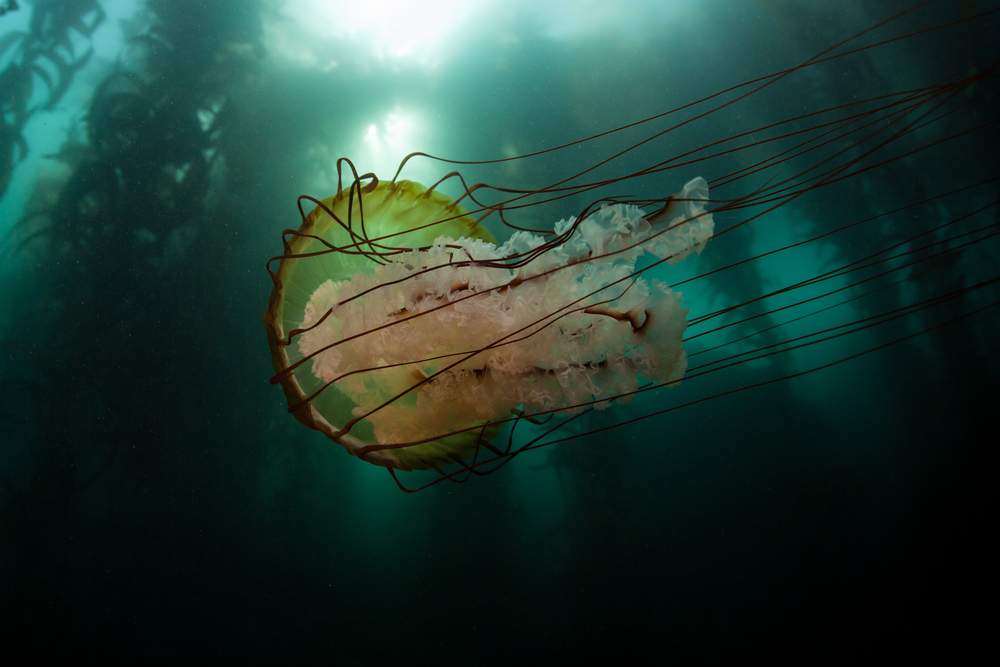
Here’s our curveball. The lion’s mane jellyfish isn’t especially massive compared to whales or elephants, but it wins on length. The largest recorded specimen had a bell about 7 feet across and tentacles around 120 feet long, longer than a blue whale.
Those tentacles hang in thick clusters under the bell and can be packed with stinging cells. They use them like drifting nets to snag fish, plankton, and even other jellyfish in cold northern waters.
Most lion’s manes you’d actually encounter are much smaller, but even a moderate-sized one reminds you that “big” in the ocean can mean “long and weird” just as much as “heavy.”