
Affiliate disclosure: This post may contain affiliate links. Please see full disclosure.
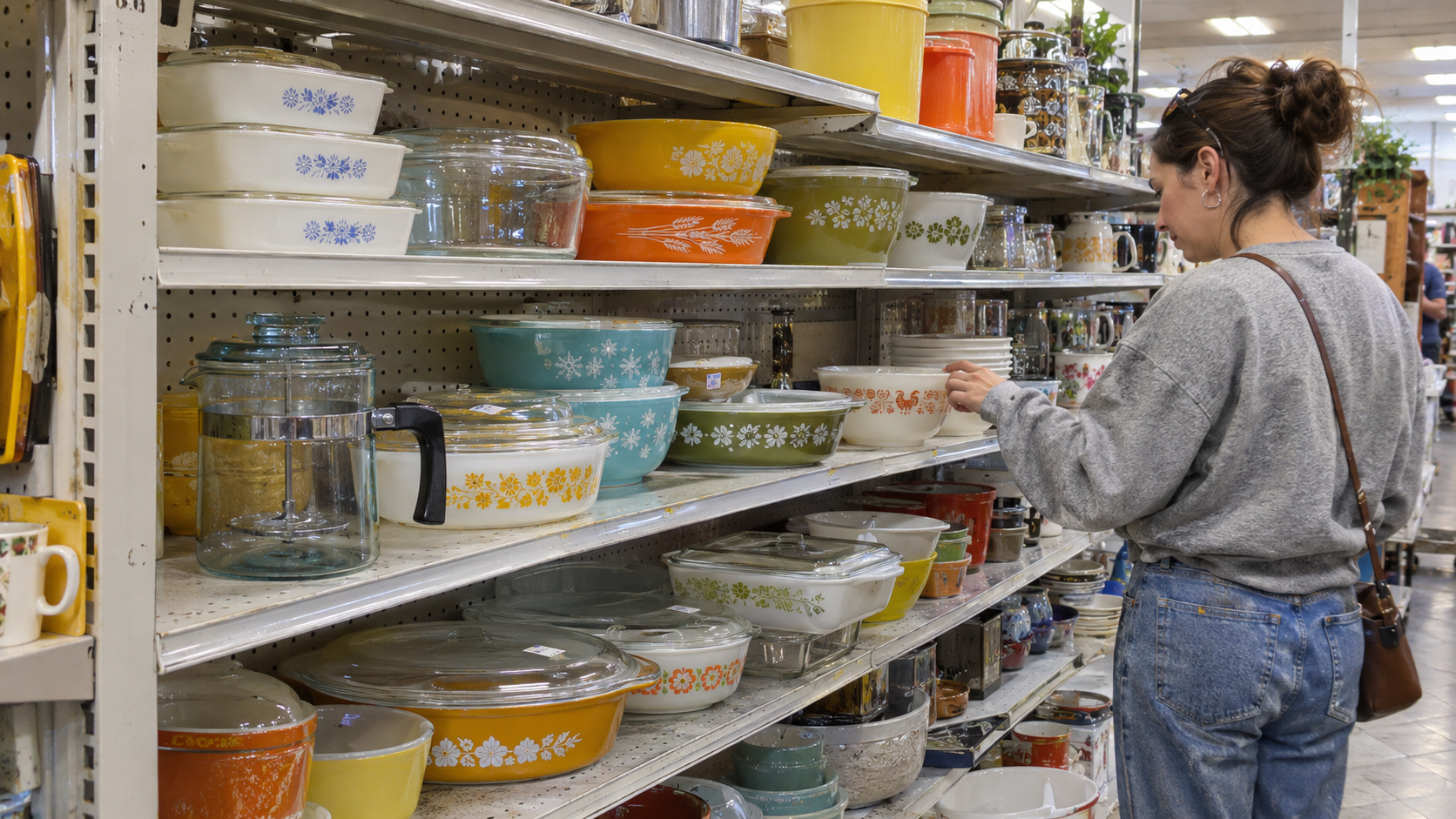
The Pyrex Grand Delux Flameware percolator is the sort of thrift-store find that deserves a second look, even if you don’t drink coffee. Made from 1938 to 1947, this beautiful old coffee maker pairs faintly blue-tinted glass with a metal band and an ingenious collection of removable brewing parts. Find one with all its original pieces and you’ve got something far more interesting than an attractive glass pot.
The catch is that the parts matter. A lid and a shiny handle can make an incomplete percolator look perfectly finished on the shelf. It’s what you find when you lift that lid that tells you whether you’ve uncovered the real treat.
A glass coffee pot made to sit over a flame
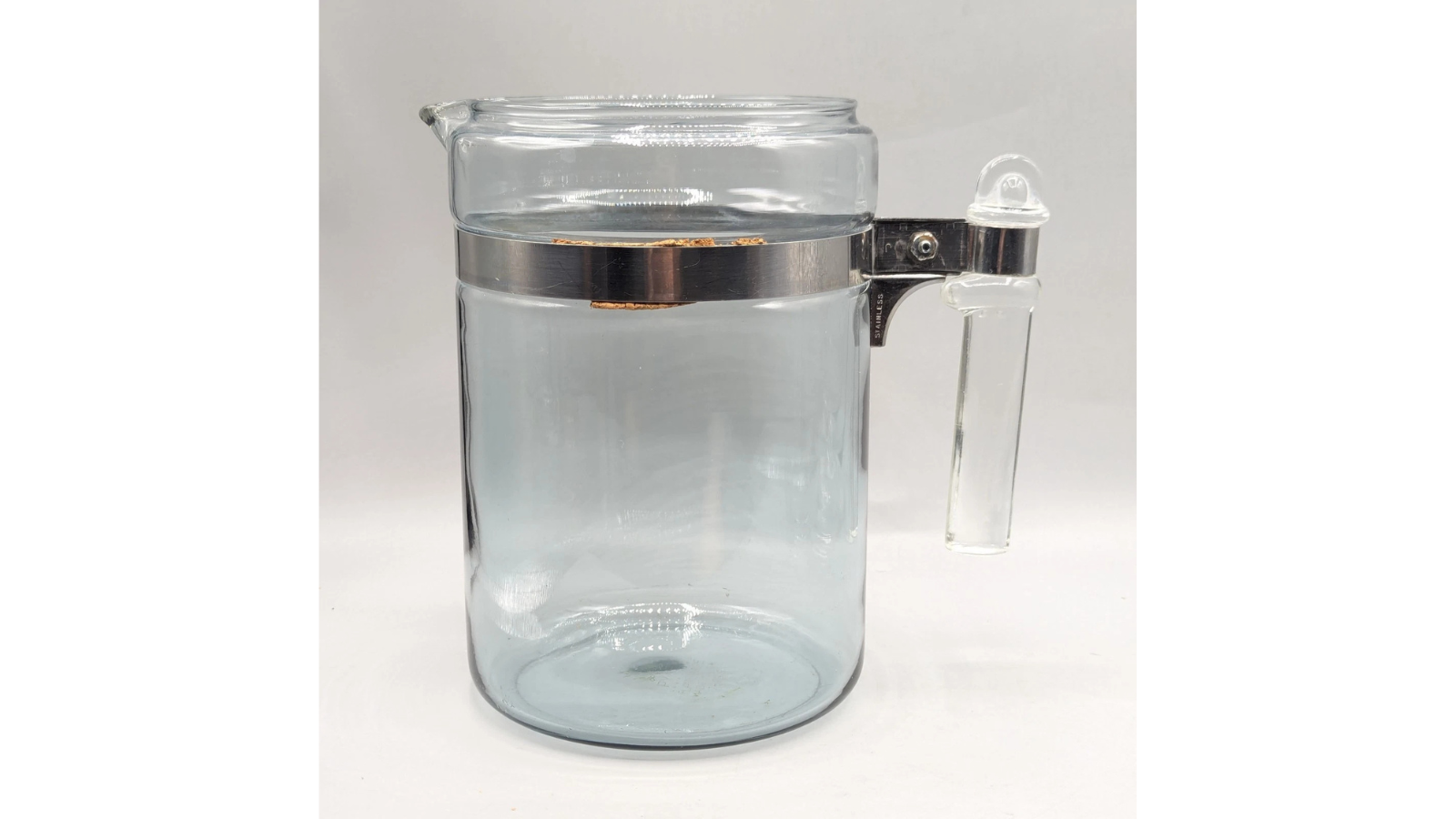
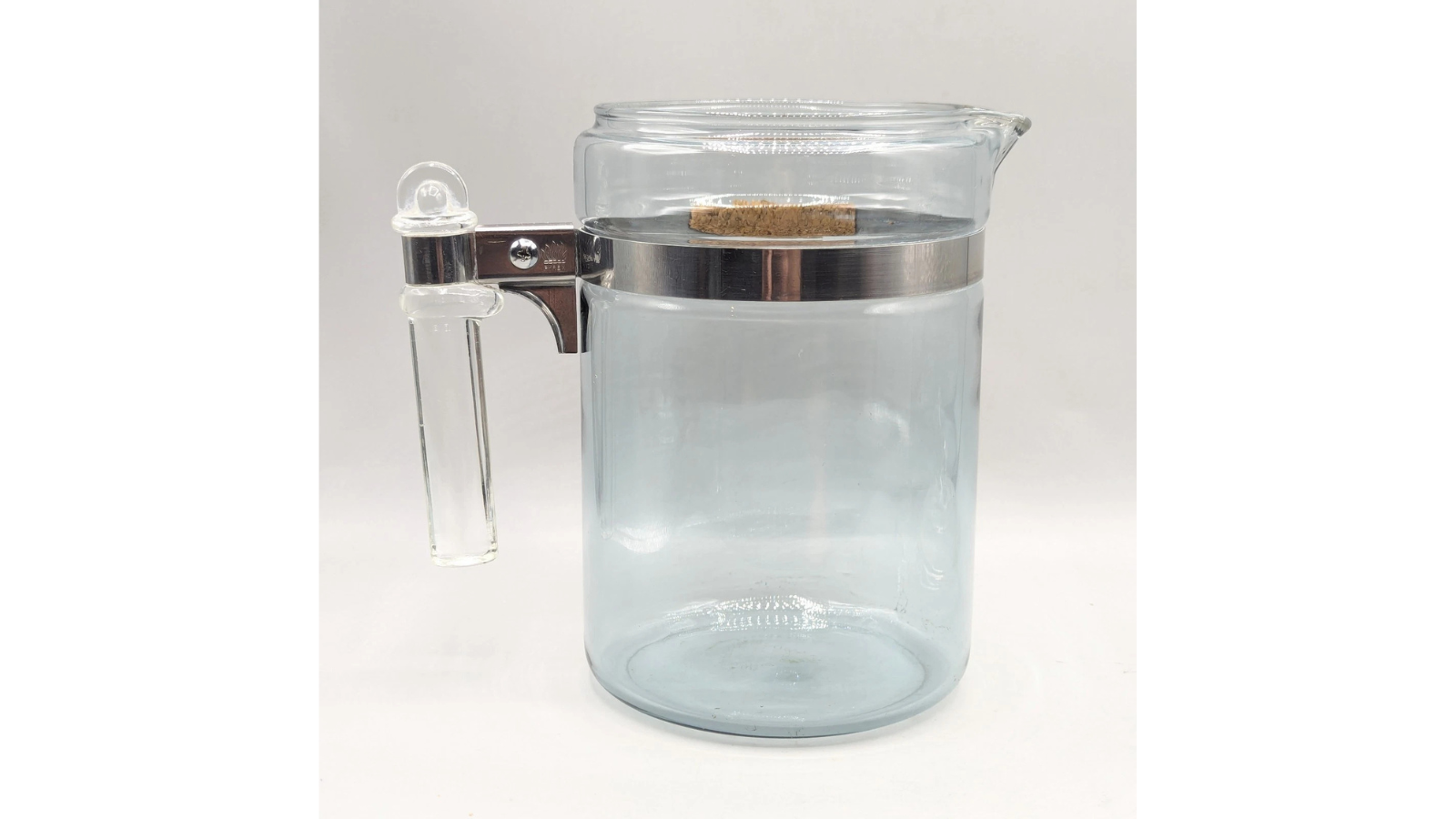
Corning’s Grand Delux was part of its Flameware range, made for stovetop cooking rather than just oven use. The transparent body let you watch the coffee brew, while a narrow steel band held the handle against a groove in the glass. There’s a pouring lip, a fitted glass lid, and, in a complete example, a delicate-looking brewing assembly visible inside.
The pale blue cast is another clue. Early Flameware was deliberately tinted to distinguish it from regular clear Pyrex. It isn’t the opaque, patterned Pyrex that dominates so many vintage kitchenware collections, and that’s part of its charm. It looks almost like a piece of laboratory glass dressed up for breakfast.
I particularly like the mix of materials. The clear body makes the mechanism the star, while the metal collar and handle give the whole thing a practical, slightly industrial feel. Nothing about it needs a bold floral print or a fashionable color to get your attention.
The original pieces make all the difference
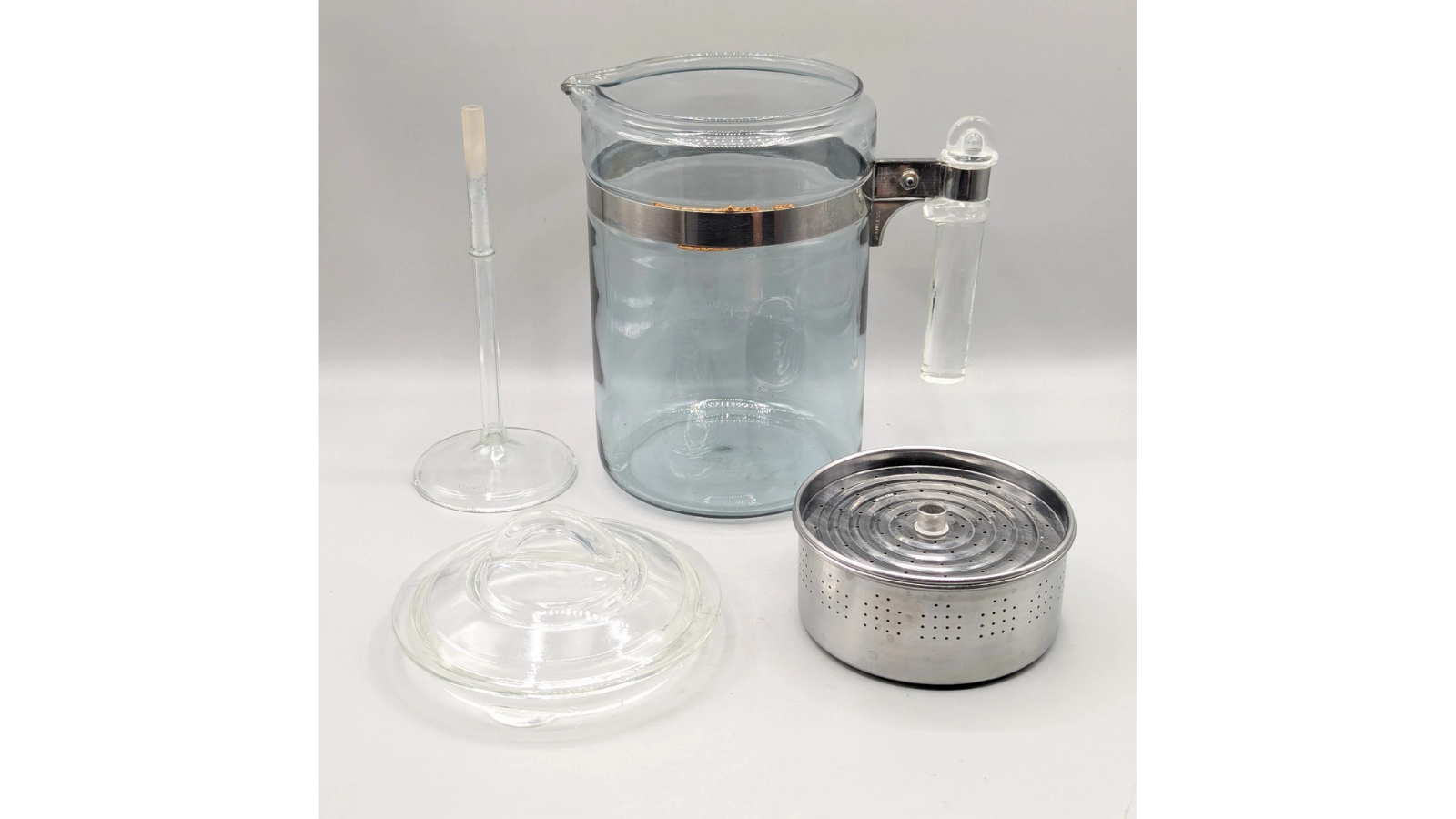
Start with the outer pot, its attached handle and metal band, and the matching glass lid. Then look for a long, narrow pump stem with a wide glass foot, plus the basket that holds the coffee grounds. In some versions, the basket has a glass sleeve and a separate perforated metal filter component. Together, the pieces allow heated water to rise through the stem and pass through the grounds.
Here’s the important wrinkle: the museum’s five-piece Grand Delux includes a separate metal filter piece, while its four-piece Grand Delux has a basket with a perforated bottom built into it. Both are cataloged as 1938–1947 examples. So I wouldn’t use a blanket rule that every correct Grand Delux must contain five loose pieces. Check the actual basket design before deciding something is missing.
What I would insist on is that the mechanism makes sense as a matched assembly. A bare glass pot with a lid is lovely, but it can’t percolate on its own. A basket without the stem, or a stem that sits awkwardly in the pot, is a different proposition from a complete, properly fitted set.
Check the Pyrex markings, not just the shape
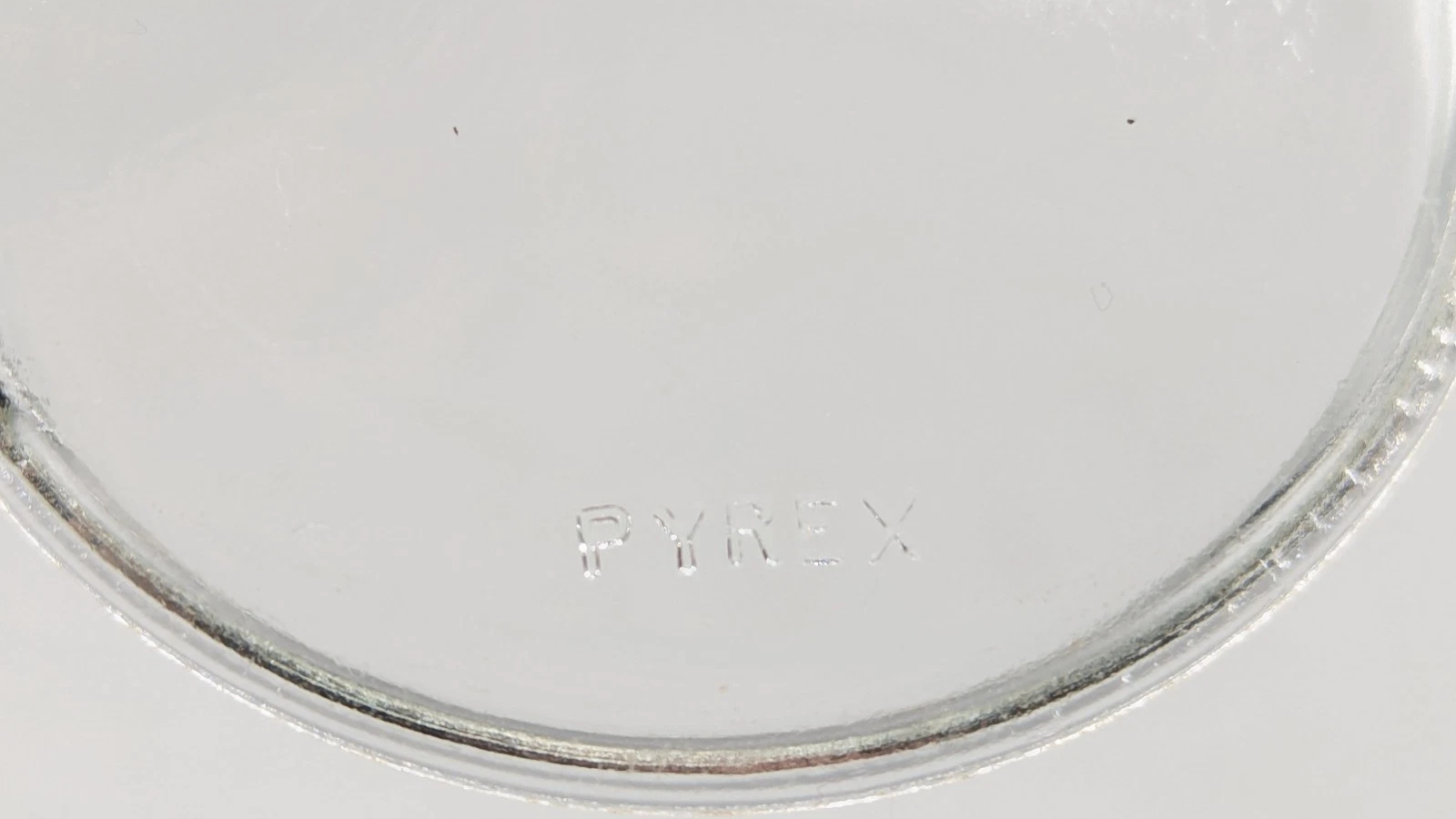
Turn the pot over carefully and look for the PYREX FLAMEWARE mark on its base. The metal band may also carry the Flameware trademark and the word STAINLESS. These details help separate an authentic Flameware piece from a generic old glass coffeepot, although a mark alone won’t tell you the exact year it was made.
For a particularly useful example, the nine-cup Grand Delux held by the museum has 7829B on its pot and 7829C on the underside of its lid. Its handle is marked 7829H. The six-cup Grand Flameware model is documented with 7826-B on the base. Those numbers identify components or models, not a date stamp.
A Corning dealer catalog also distinguishes four-, six-, and nine-cup Flameware percolators under numbers 7824, 7826, and 7829. That’s helpful when you’re matching parts, but it doesn’t mean every part that looks approximately the right size actually fits. The later 7759-series Flameware percolator, for instance, has different documented markings and belongs to a later production period.
My rule with vintage glass is to match the marks and physical fittings together. Don’t buy a replacement lid simply because someone calls it a ‘Pyrex percolator lid.’ The right nine-cup lid is specifically identified as 7829C, and the basket and stem deserve the same care.
What to inspect before taking one home
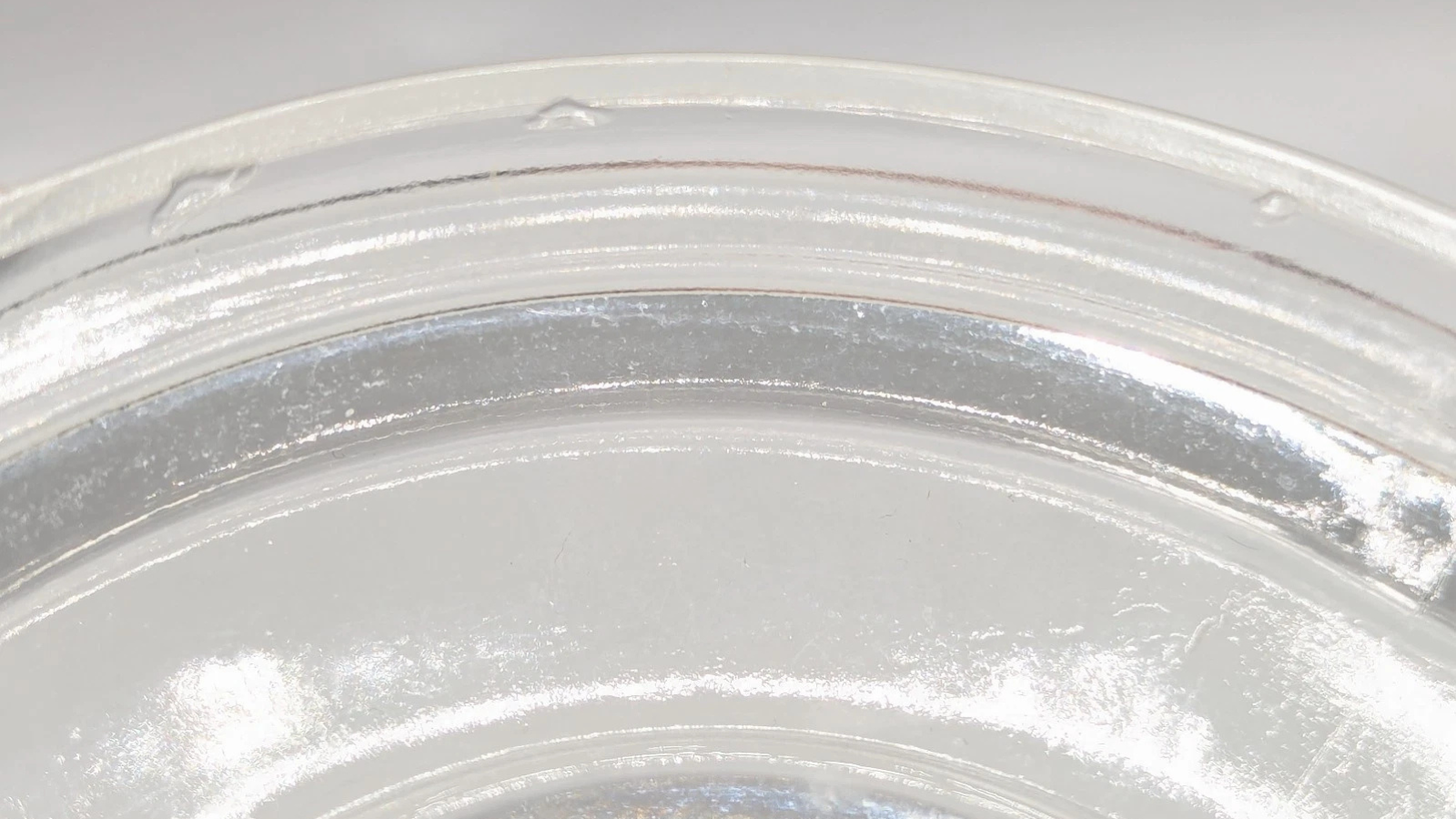
If I spotted one while thrifting, I’d ask to look at the pieces separately, on a stable surface, before getting too excited about how good it looks assembled. First, check the rim, spout and base for chips and hairline cracks. Then inspect the narrow glass stem, especially its foot and opening, and the thinner edges of the basket and lid. Small chips here are easy to miss when everything is nested together.
Next, check the metal band and handle. They should feel secure, with no obvious loose screws or damage where the attachment meets the glass. Look for corrosion, bent filter components, or an improvised repair. A glass body in beautiful condition doesn’t compensate for a badly damaged brewing assembly if completeness is what you want.
Don’t force a lid or basket that seems almost right. Photograph the marks and lay out the components to compare with a documented example. And if the shop has a shelf of loose utensils or spare kitchen parts, it’s worth checking there before assuming an interior piece is gone.
A missing part isn’t necessarily a reason to walk away. If you love the shape and want a display piece, an incomplete one may suit you perfectly. Just know what you’re taking home. Tracking down the correct glass pump and basket later is a much more specific job than finding any old Pyrex lid.
Keep the history, but be sensible about using it
These percolators were genuinely made for stovetop use. The old Flameware instructions called for moderate heat, contents in the vessel before heating, and keeping hot glass away from wet or cold surfaces. That is quite different from assuming every piece of vintage Pyrex belongs directly on a burner.
But a pot that has survived eight decades doesn’t come with a guarantee about the bumps, knocks or heat stress it may have suffered along the way. I wouldn’t put a chipped, cracked, repaired or questionably assembled example over heat. Even with an apparently sound one, I’d be cautious about using a collectible every morning, and I wouldn’t assume it suits a modern cooktop without checking compatibility.
Frankly, I’d be happy to give a beautiful complete Grand Delux pride of place on a kitchen shelf. With the lid off and the glass stem and basket visible, you can appreciate exactly how it worked. And if you find that full little collection of original components tucked inside at a thrift store, that’s a far more satisfying discovery than another ordinary coffee pot.
You might also like…
The CorningWare Pattern Collectors Dream Of Finding At A Thrift Store
The Blue-And-White Pyrex Pattern Collectors Dream Of Finding At A Thrift Store
The Pink Pyrex Pattern Collectors Dream of Finding at a Thrift Store

