

Affiliate disclosure: This post may contain affiliate links. Please see full disclosure.
Some of the most interesting vintage glassware is hiding in plain sight at thrift stores, particularly those simple white bowls, pastel creamers, and little serving dishes that don’t look especially remarkable at first glance. But some of those pieces could be Hazel-Atlas Platonite, a distinctive type of glassware that’s well worth getting to know if you enjoy collecting vintage kitchenware.
And if you love the soft colors and practical designs of midcentury kitchens, keep an eye out for the company’s Ovide pattern. It’s wonderfully understated, without the elaborate decoration you might associate with collectible Depression glass. In fact, that’s a big part of its appeal.
I’m an avid thrifter and collector, and I think pieces like these are particularly satisfying finds. They’re a reminder that everyday household items don’t need to be fancy or expensive to be beautifully designed, useful, and worth preserving.
What makes Hazel-Atlas Platonite different from ordinary milk glass?
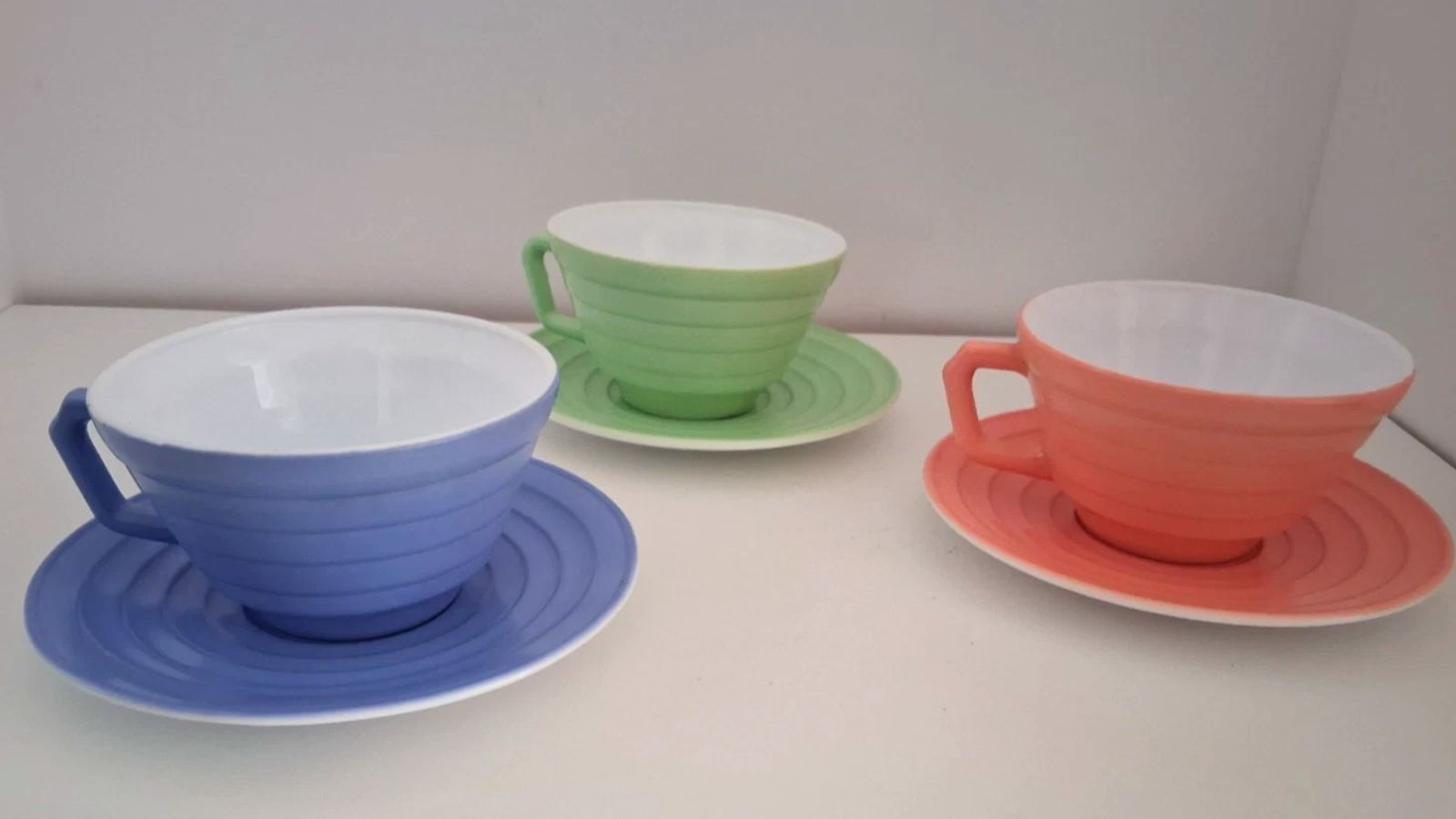
Platonite looks like milk glass, and you’ll often see it described that way in thrift stores and antique shops. However, it’s a particular type of opaque white glass developed by the Hazel-Atlas Glass Company during the 1930s.
Introduced in 1936, Platonite had a milky white appearance, sometimes with a degree of translucency, particularly in earlier examples. It was made for practical household use, including kitchenware, dinnerware, and serving pieces.
What makes it especially interesting is the color. Rather than producing every piece from glass colored all the way through, Hazel-Atlas could apply colored finishes over its white Platonite base and fire them on.
That gave the company an enormous variety of decorative possibilities, from cheerful yellow and soft pink to pale green, blue, and more saturated shades of turquoise and other colors.
This is also why an apparently ordinary pastel bowl might have a white interior, white underside, or patches of exposed white glass where the colored finish has worn away. The color is part of the surface decoration rather than necessarily being the color of the glass itself.
And that’s an important distinction when you’re examining a potential find. A pale green Platonite bowl isn’t necessarily made from green glass, even though it might look that way sitting on a thrift store shelf.
The understated charm of Hazel-Atlas Ovide
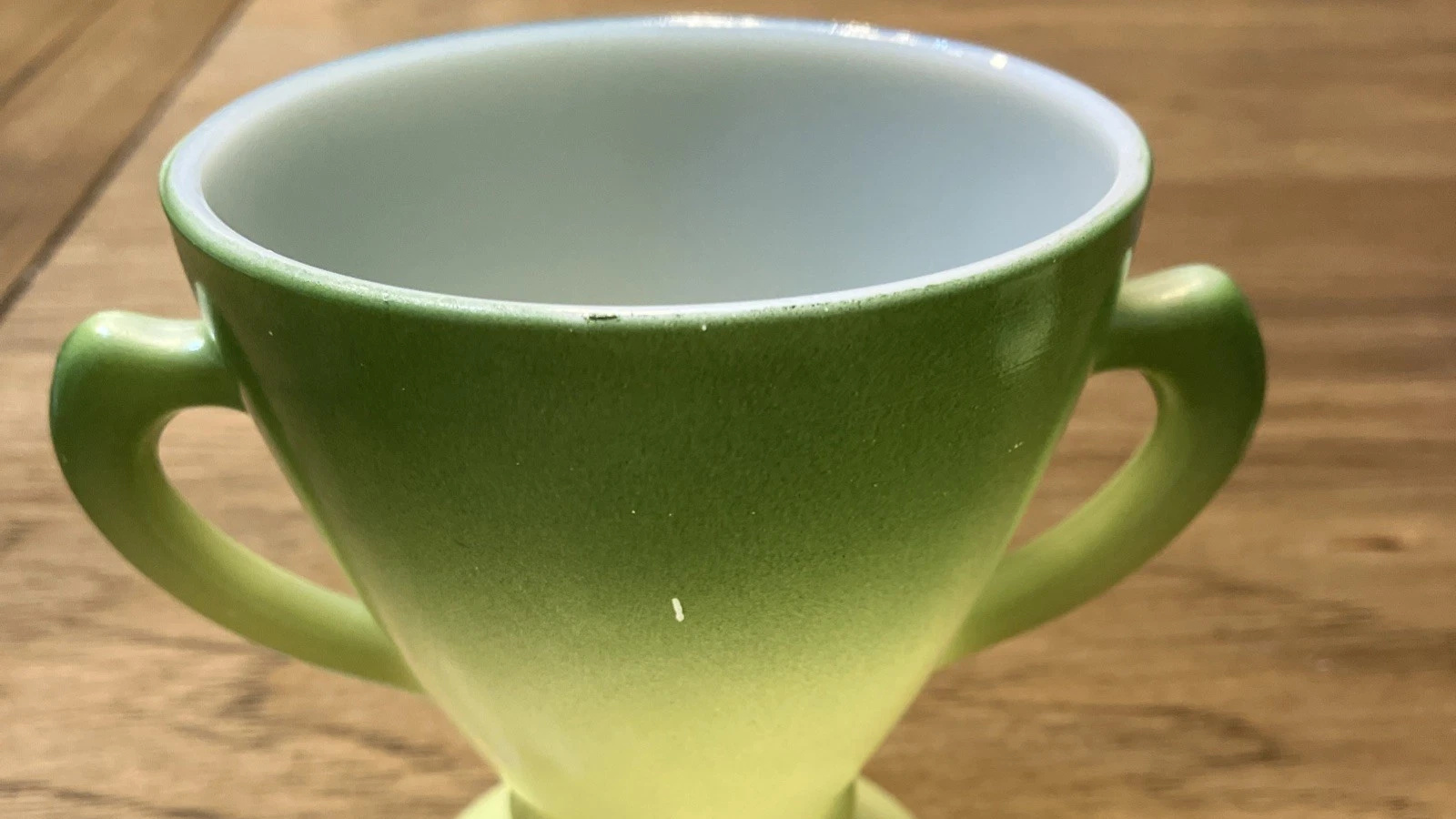
Hazel-Atlas produced several recognizable glassware patterns, but Ovide is one of my favorites for its sheer simplicity.
The Ovide pattern features smooth, rounded shapes with very little ornamentation. Unlike more decorative Depression glass patterns, you won’t find elaborate flowers or geometric designs molded across every surface.
Instead, the design relies on its proportions, gentle curves, and attractive colors.
Ovide actually predates the colorful Platonite pieces most people associate with the pattern. Hazel-Atlas originally made it in transparent glass, including green, before producing white Platonite and decorated versions. The company continued using Ovide shapes for colored Platonite dinnerware during the 1940s and 1950s.
That makes Ovide particularly interesting to collect. You can find pieces from different periods that share essentially the same simple design but look quite different because of the glass and finishes used.
And you don’t need to assemble an entire matching dinner service to appreciate them. A few bowls in complementary colors or a little creamer sitting alongside your other vintage kitchenware can look lovely.
Which Ovide pieces should you look for?

I’d start with the smaller, practical pieces. Creamers, sugar bowls, and individual serving bowls are excellent finds, particularly if you want vintage kitchenware that doesn’t require an entire cupboard of storage space.
Ovide creamers are especially recognizable once you know what you’re looking for. They have rounded bodies, a pouring spout, a handle, and a short stemmed foot. The shape is simple but surprisingly elegant for something originally intended for everyday use.
Bowls are another good choice. The Ovide range included berry bowls, cereal bowls, serving bowls, and other tableware, although the available shapes and colors varied between production periods.
Look for their smooth sides and straightforward, gently shaped rims. A collection of small bowls in different pastel shades makes a particularly attractive display, and they can still be useful around the house.
You’ll also encounter plates, cups, saucers, and other everyday food-service pieces. Some collectors prefer building matching sets, but I rather like the idea of collecting a handful of different colors and shapes that work together.
After all, these weren’t precious ornaments that needed to live permanently behind glass. They were made for ordinary kitchens and dining tables.
How to recognize genuine Hazel-Atlas glassware

The first thing I recommend is turning the piece over and inspecting the base.
Hazel-Atlas used a distinctive maker’s mark featuring a large letter H with a smaller A positioned inside it. This is a useful identification clue, and you can find it on some Ovide pieces.
However, not every piece was marked, so don’t dismiss an otherwise promising find simply because you can’t see the logo.
Pay attention to the shape, too. Ovide is relatively plain, with smooth surfaces rather than heavily embossed decoration. Creamers and sugar bowls have characteristic footed shapes, while plates and bowls have simple, well-defined rims.
If you’re examining a colored piece, check the underside and any worn areas for the opaque white Platonite beneath the finish. It’s a useful clue, although it isn’t enough on its own to prove the manufacturer or pattern.
It’s also worth remembering that Hazel-Atlas made several different Platonite patterns. Moderntone, for example, has distinctive molded horizontal bands, unlike the plainer Ovide shapes. Not every pastel Hazel-Atlas bowl is Ovide.
What to check before bringing a piece home

I always recommend giving vintage glassware a thorough inspection before buying it, however inexpensive or attractive it might be.
Run your fingers carefully around the rim and foot, checking for chips or rough edges. Examine handles and pouring spouts particularly closely, as they’re vulnerable to knocks.
Next, hold the piece under good light and look for cracks, deep scratches, and wear to the colored finish. Some surface wear is entirely understandable on glassware that’s been around for decades, and a little honest wear doesn’t necessarily spoil a collectible piece.
However, extensive paint loss can noticeably affect its appearance, especially on plain patterns where there’s nowhere for scratches to hide.
Personally, I’d rather have an intact bowl with some gentle wear than an otherwise pristine-looking one with a chipped rim. But that’s a matter of how you intend to enjoy your collection.
If you want to use your finds, wash them gently by hand rather than putting them in the dishwasher. Avoid abrasive scrubbers, sudden temperature changes, and using vintage serving glass as ovenware. For older decorated pieces with uncertain surface materials, decorative or non-food use is the more cautious option.
What I particularly like about Hazel-Atlas Ovide is that it doesn’t demand attention. It’s simple, practical, and quietly attractive, whether you collect one white Platonite creamer or a shelf full of pastel bowls.
And the next time you spot a little pale green dish or an unassuming white bowl among the mismatched kitchenware at a thrift store, turn it over and take a closer look. It might have considerably more history than its appearance suggests.
You might also like…
The CorningWare Pattern Collectors Dream Of Finding At A Thrift Store
The Blue-And-White Pyrex Pattern Collectors Dream Of Finding At A Thrift Store
The Pink Pyrex Pattern Collectors Dream of Finding at a Thrift Store
.

