
Affiliate disclosure: This post may contain affiliate links. Please see full disclosure.
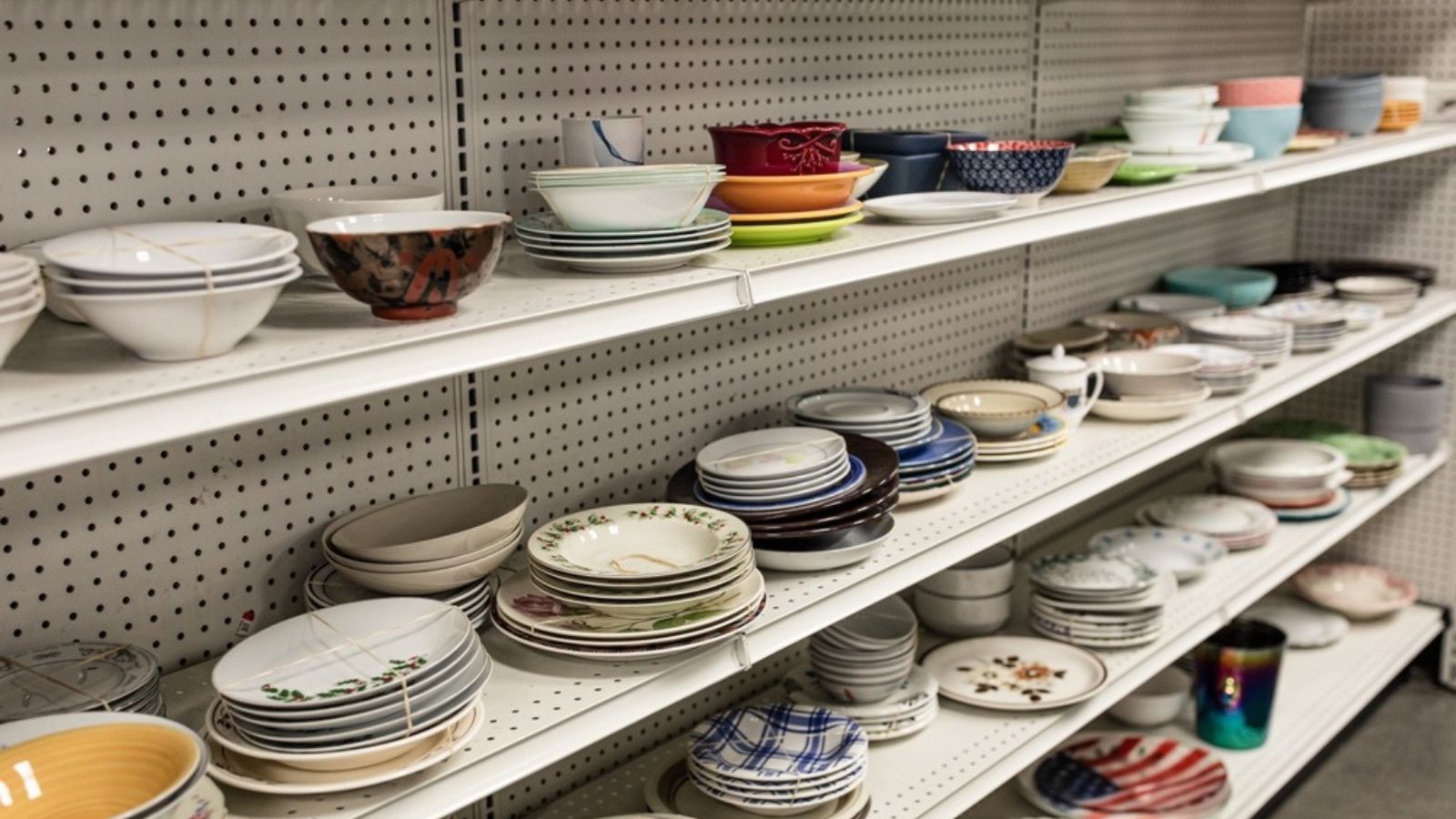
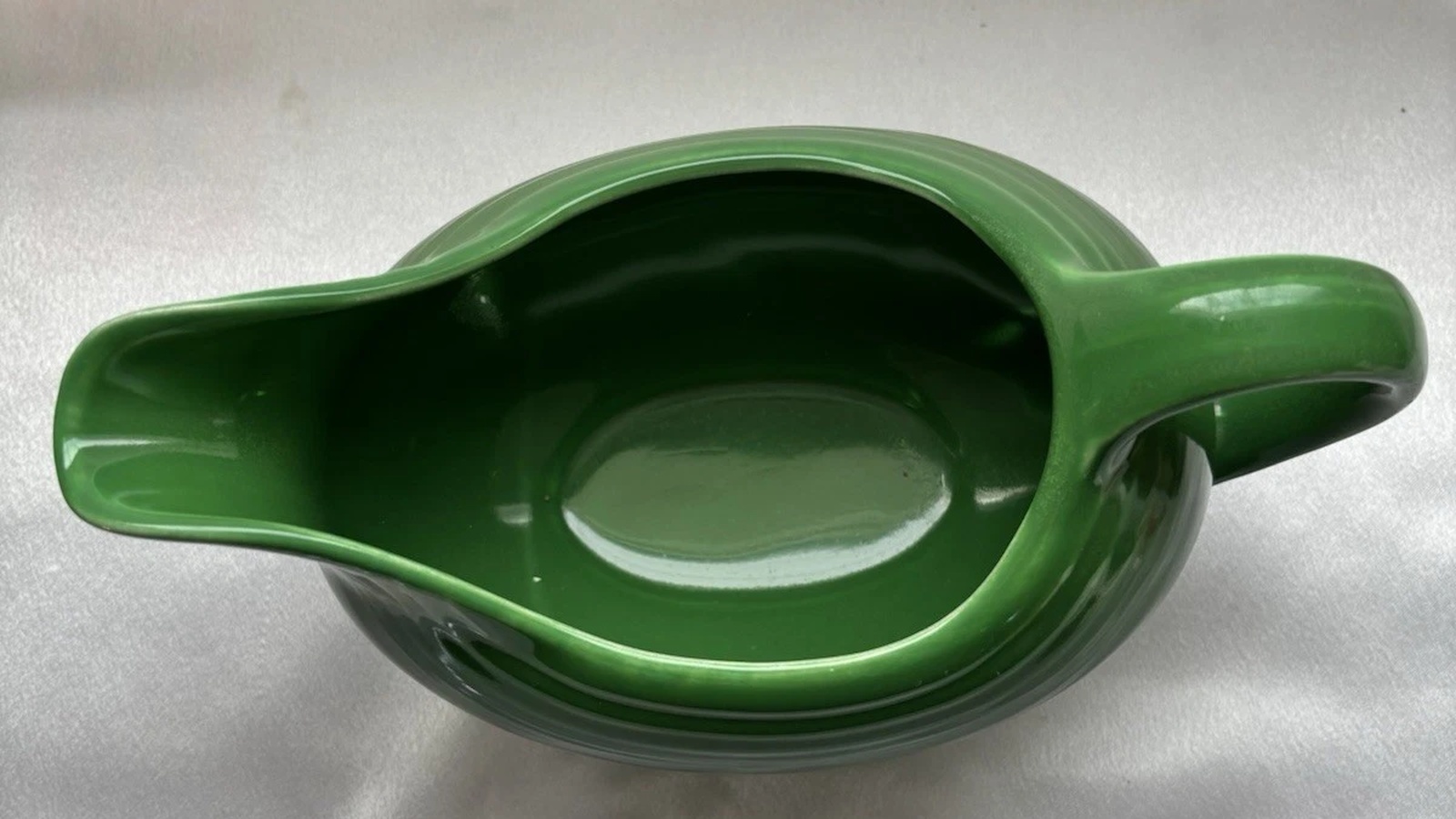
Medium Green is the vintage Fiesta color I’d be particularly pleased to find on a thrift-store shelf. It’s a bright, rich green, somewhere between the softer original green and the deep Forest Green of the 1950s. At a glance, it might look like an ordinary solid-colored plate or bowl. But if you enjoy collecting old kitchenware, it’s a shade worth learning to recognize.
I’ve been thrifting and collecting for years, and there’s something satisfying about spotting a detail that other people might pass over. With Fiesta, that detail is often the glaze. The shapes are familiar, but the color can tell you a great deal about when a piece was made.
Medium Green arrived late to the Fiesta range
Fiesta first appeared in 1936 with five colors, including a much lighter green. The appeal was wonderfully simple. Rather than buying a matching dinner service in one color, you could choose different plates, cups, and bowls and mix them together.
Medium Green didn’t arrive until 1959, and it was discontinued in 1969. It was the eleventh and final color added to the original Fiesta palette. By then, the range had changed considerably from those early years. Several of the original shades had disappeared, fashions had moved on, and fewer shapes were still being produced.
That’s a big part of why collectors take such an interest in it. Yellow and turquoise had been around for years, but Medium Green arrived quite late in the original run. Some pieces were only available in the glaze for a very short time. I find the history of that changing range almost as interesting as the pottery itself.
It isn’t the only green Fiesta made
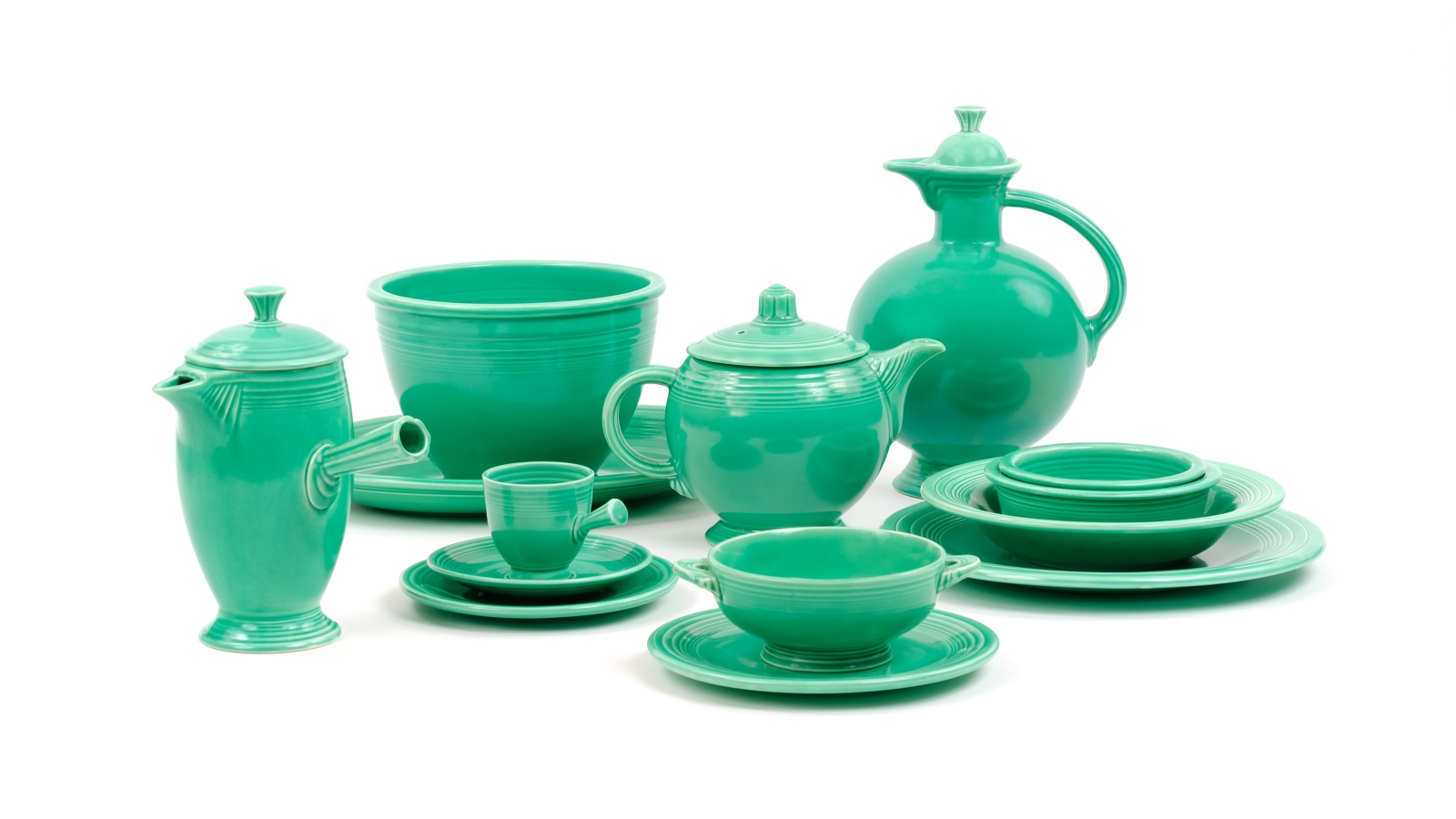
This is where identifying a possible find gets a little tricky. The original Light Green ran from 1936 to 1951, while Forest Green was made from 1951 to 1959. Light Green has a softer, slightly blue-green look. Forest Green is much darker. Medium Green is more of a strong, grassy green, sometimes compared with John Deere tractor green.
Then there’s Chartreuse, a yellowish green from the 1950s, and Turf Green, the olive-toned shade introduced in 1969. Modern Fiesta has plenty of greens, too. One glance at a green dinner plate isn’t enough to settle which one you’ve found.
I wouldn’t rely on a photograph on my phone, either. Shop lighting can make green pottery look surprisingly different, and glaze thickness changes how the color appears around rims and curved sides. If possible, move the piece into natural light and compare it with several examples of the same shape. A genuine Medium Green plate is easier to recognize once you’ve seen it alongside the other shades.
Turn it over and check the markings
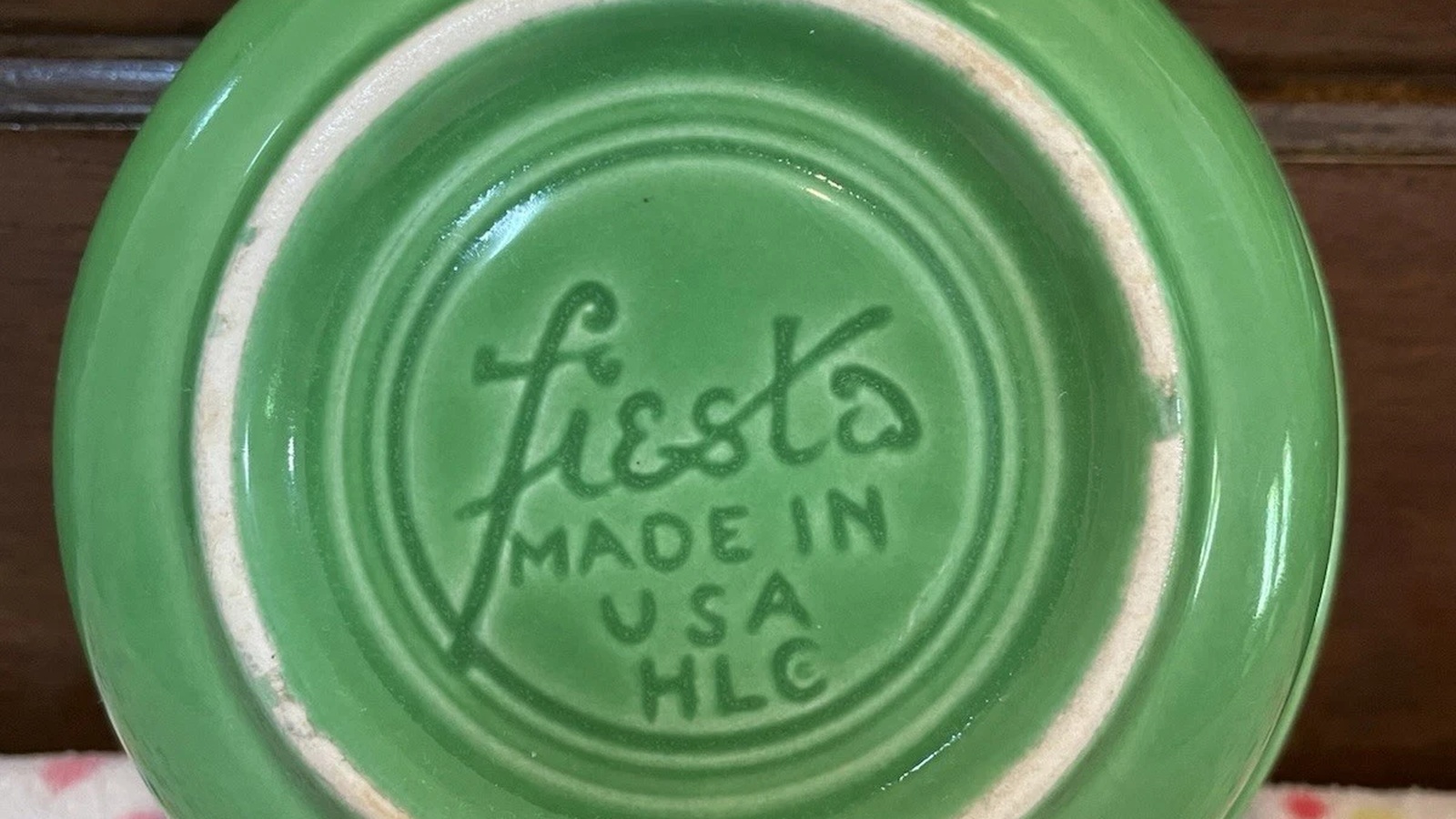
Fiesta’s concentric rings are one of its most recognizable details, but plenty of Fiesta pieces share them. The underside gives you another clue. You might find the words “GENUINE fiesta HLCo USA” stamped in ink, or a maker’s mark molded into the pottery itself.
The manufacturer used different marking methods for flat pieces and molded hollowware. Plates were generally ink-stamped, while shapes such as pitchers and some bowls could have impressed lettering. Don’t reject a piece because its base looks different from a photograph of another shape.
You’ll often hear that a lowercase “f” means vintage Fiesta. It’s a useful clue on some ink stamps, but not a foolproof test. Older molds were reused after the range returned in 1986, so impressed lowercase lettering can appear on newer pieces as well. I would check the shape, color, and complete marking together.
It’s also worth remembering that some genuine Fiesta has faint or missing marks. I wouldn’t automatically dismiss an otherwise convincing find just because the lettering is difficult to read.
Small pieces can have surprisingly interesting histories
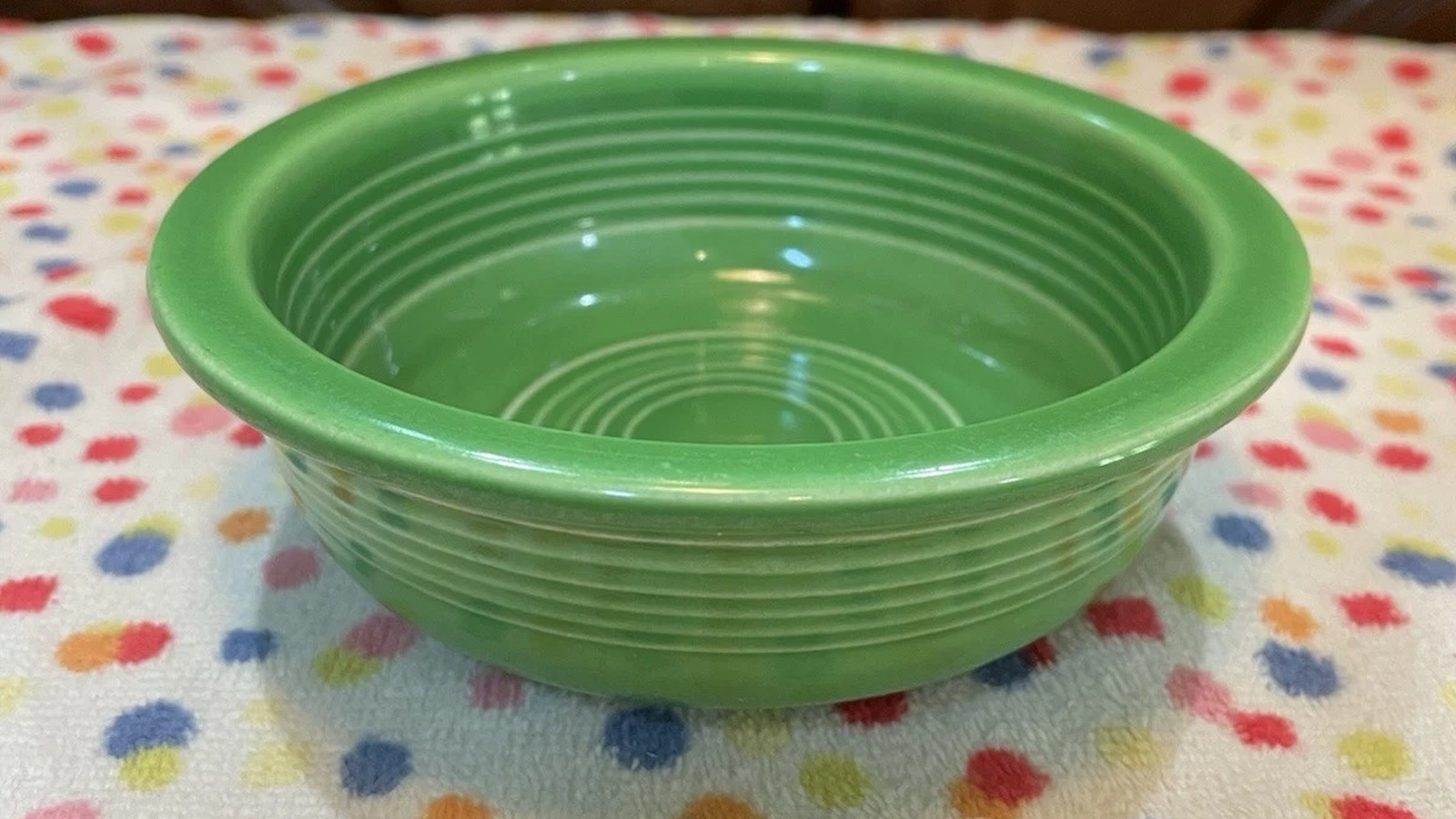
One shape I’d stop to examine is the little 4¾-inch fruit bowl. It was discontinued around 1959, just as Medium Green was being introduced. That brief overlap means examples in the color are far less familiar than the same bowl in older glazes.
The 5½-inch fruit bowl looks similar, but it’s a different piece. This is where a small tape measure earns its place in a thrifting bag. Measure across the rim, check the shape of the sides, and turn the bowl over. A difference of less than an inch can help identify what you’re actually holding.
I also enjoy the pitchers, covered dishes, and other wonderfully practical Fiesta shapes. If you come across a piece with a lid, make sure it fits properly and check it separately for damage. An appealing color won’t make a cracked lid any more useful.
Look closely at the glaze before bringing it home
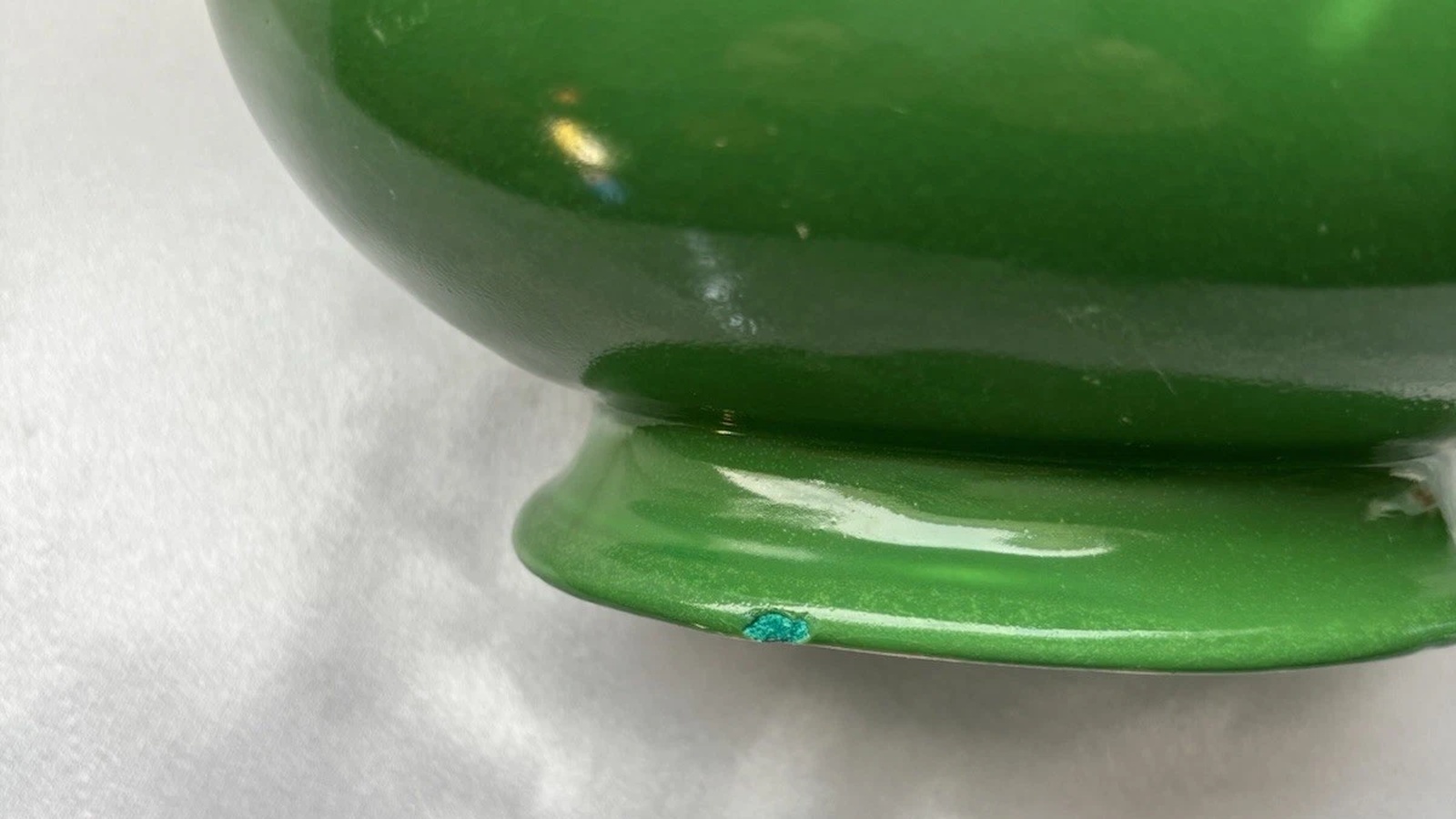
Run your eyes around the rim and foot for chips, then look for hairline cracks, stains, and repairs. On a glossy solid-colored piece, surface scratches can be easy to overlook until you tilt it under a light. A small manufacturing variation isn’t the same as a damaged or heavily worn glaze.
I’d be especially cautious about using vintage Fiesta for meals. Older pottery can have lead-containing glazes, and lead may leach into food. The safety claims for today’s Fiesta don’t establish that a dish from the 1960s is suitable for everyday food use. Unless its food safety is reliably established, I’d keep an older piece for display rather than serving or storing food.
A well-kept Medium Green bowl or plate would still be a lovely addition to a vintage kitchenware collection. I don’t need every color or every shape, and I certainly don’t need a cupboard full of pieces I don’t enjoy. But I’d happily make space for a sound example of this particular green.
You might also like…
The CorningWare Pattern Collectors Dream Of Finding At A Thrift Store
The Blue-And-White Pyrex Pattern Collectors Dream Of Finding At A Thrift Store
The Pink Pyrex Pattern Collectors Dream of Finding at a Thrift Store

