
Affiliate disclosure: This post may contain affiliate links. Please see full disclosure.
I’ve built most of my kitchen from other people’s castoffs. Secondhand china and glass is sturdier than anything you’ll buy new, it’s a fraction of the price, and there’s something satisfying about eating off a dish that’s already survived eighty years of Sunday dinners before it landed in your cupboard.
Most of what’s actually worth grabbing is still sitting on thrift store shelves for a few dollars, because almost nobody clocks what they’re looking at. A plain white casserole dish with pink hearts and green clovers, the kind you’d walk straight past without a second look, sold at auction for close to $6,000 a few years back, so there’s really no telling what you’ll find at an estate sale or the thrift store. It’s one of the reasons I love thrifting so much: the treasure hunt!
Pyrex butterprint
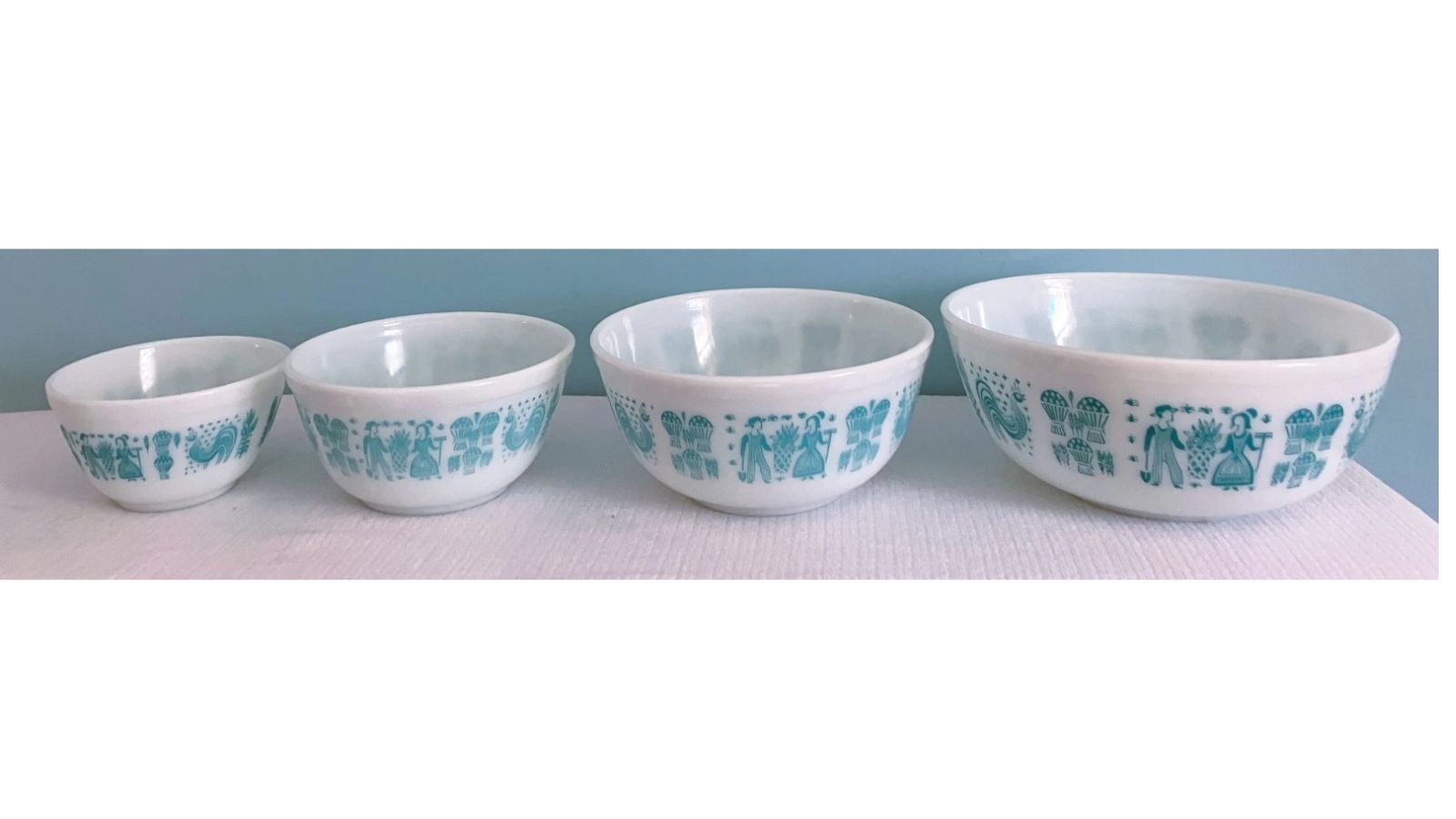
Corning introduced Butterprint in 1957 as one of the first printed patterns on its new opalware Pyrex line, made it in turquoise on white and white on turquoise, and kept it in production until 1968. It’s still the single most recognizable vintage Pyrex design out there, so it’s the right place to start. The design shows a farmer and his wife flanked by roosters and corn.
I picked up my first piece for a few dollars at a yard sale years ago and genuinely thought it had to be a modern reproduction because it looked too crisp to be real. A complete set with lids can fetch a few hundred dollars, but single bowls and casseroles are still common and cheap, so this is the easiest pattern on the list to actually build a collection from. Flip it over first. An oval or circular Pyrex logo on the base points to production before the 1970s, which is what you want.
Fire-King jadeite restaurant ware
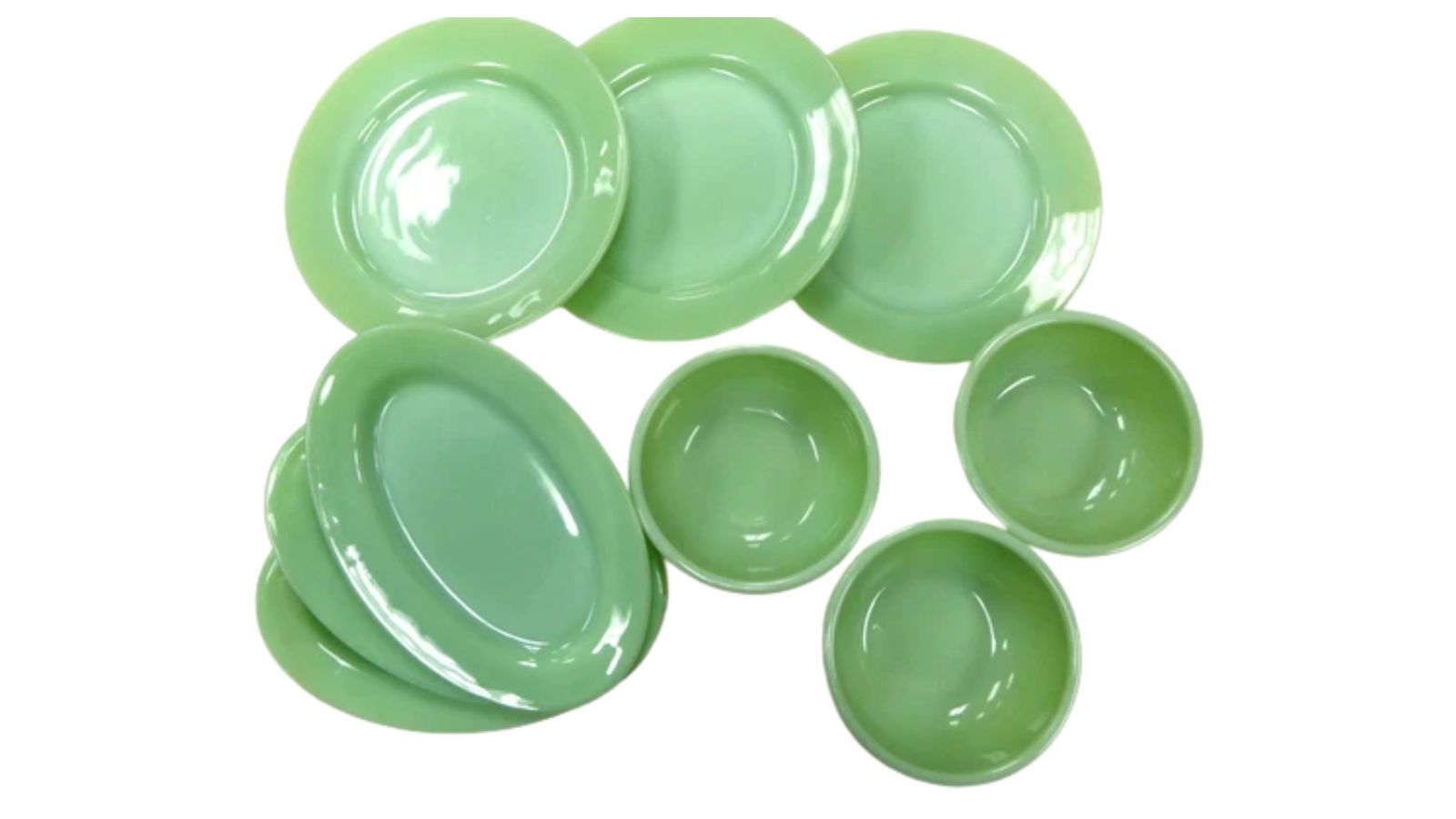
Anchor Hocking introduced the Fire-King brand in 1942 and kept the original line running into the 1970s. Its milky jade green glass is what makes it instantly identifiable on a thrift store shelf from ten feet away. It’s glass, not painted china, which is part of why it’s held up so well. The heavy, ribbed Jane Ray shape is the one you’ll see most often in mugs, plates, and cereal bowls.
It was ordinary diner and restaurant crockery for decades before Martha Stewart publicly showcased her own Jade-ite collection on television and in her magazine, starting in the 1990s, and prices climbed accordingly. A set of four mugs alone can be worth around $100 now, more with matching saucers. One quick reassurance if you’re checking with a blacklight out of habit from other vintage glass. Jadeite isn’t uranium glass, so don’t expect it to glow.
Fiestaware original glazes
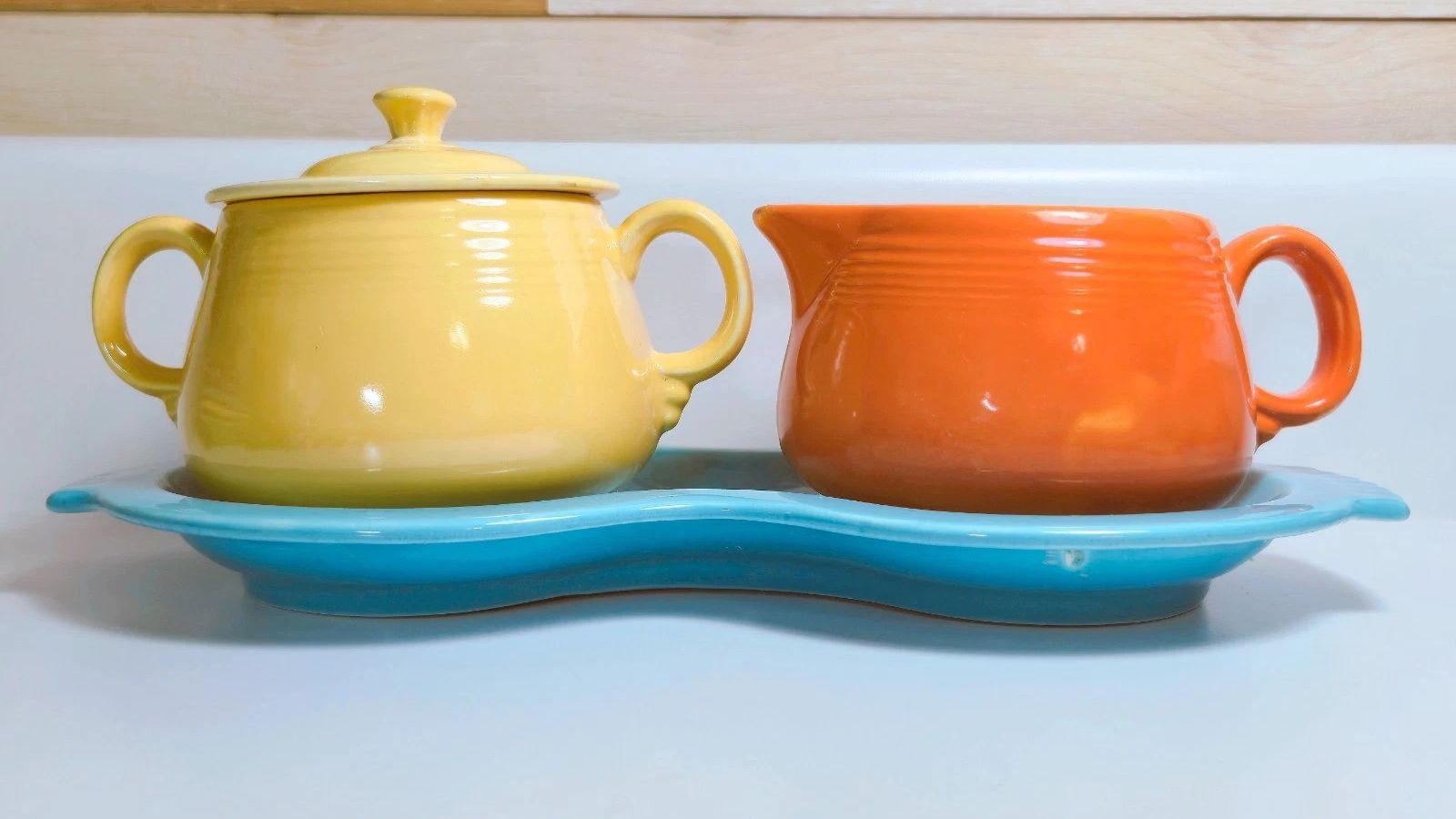
Homer Laughlin launched Fiesta in January 1936 in five original colors, red, cobalt blue, yellow, light green, and ivory, with turquoise added the following year. The band of concentric rings near the rim is the giveaway, whatever color you find it in.
The original red is a genuine piece of history. It used uranium oxide in the glaze, and production was halted in 1943 when the government requisitioned the material for the war effort. Of all the vintage colors, Medium Green, made only from 1959 to 1969, is the one serious collectors specifically hunt for, so if you spot a deep forest green Fiesta piece, look twice before you walk past it. Because the line was sold as open stock, mixing colors was the whole point, and you can build a genuinely striking rainbow set one piece at a time from thrift store shelves.
Blue willow
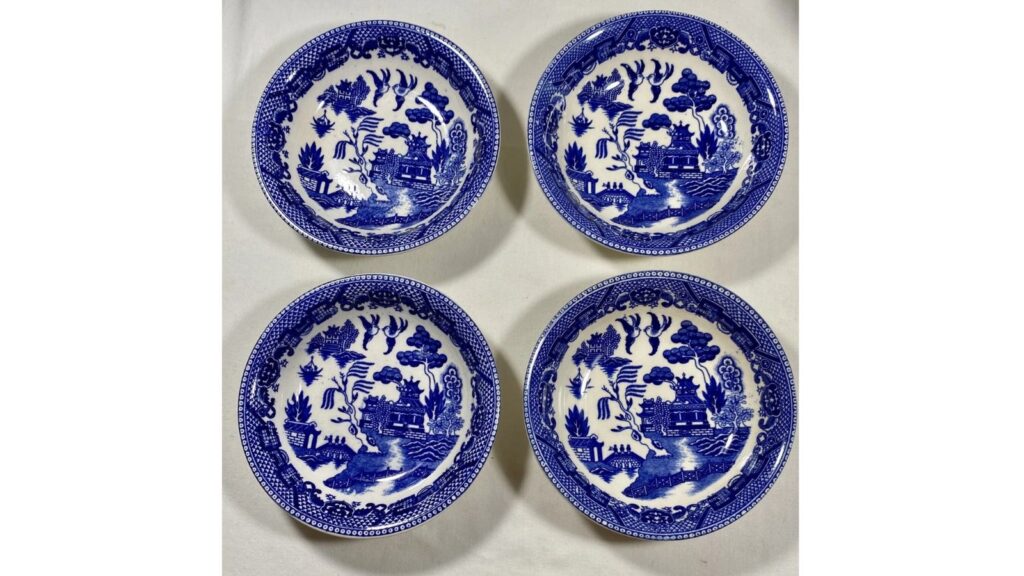
Blue Willow dates back to England around 1780, created for Thomas Turner’s Caughley factory in Shropshire with the design credited to the engraver Thomas Minton. It’s been copied by more manufacturers than almost any other tableware design ever made, which is exactly why you’ll find it in nearly every thrift store you walk into. The scene never changes. It’s always a pagoda, a willow tree, a bridge with three tiny figures crossing it, a boat, and two birds flying above.
Most of what you’ll find is the classic cobalt blue on white, made by companies from Johnson Brothers and Myott in England to Buffalo China and Royal China here in the US. Because it’s so widely produced, ordinary pieces stay affordable, which makes this a forgiving pattern to collect. The versions worth genuinely stopping for are the rarer colorways, pink, green, brown, or black instead of blue, which turn up far less often.
Franciscan desert rose
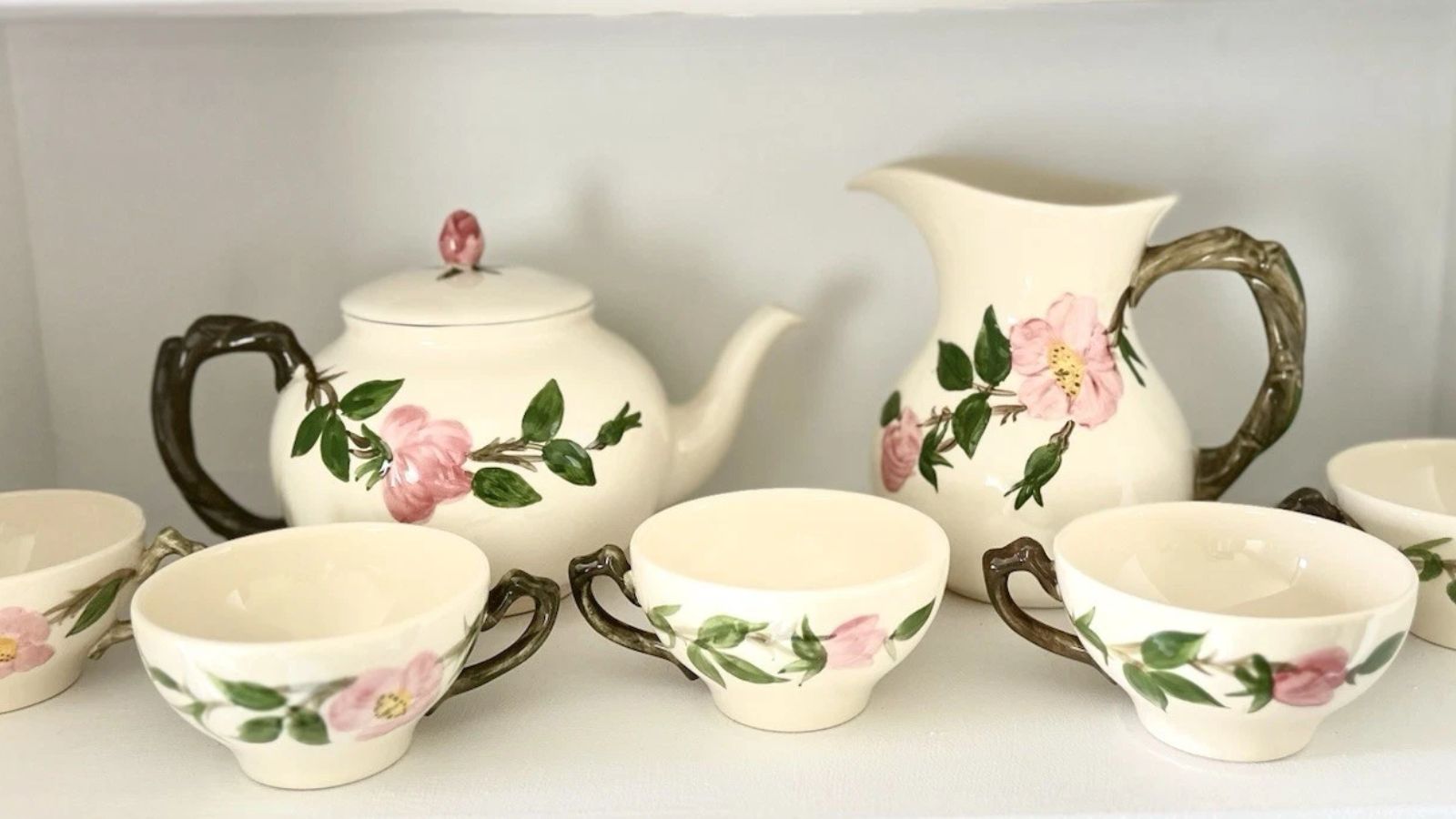
Franciscan’s Desert Rose debuted in late 1941, and it’s widely considered the best-selling dinnerware pattern in American history, by a wide margin over anything else made by a single company. It’s hand-painted, not transferware, with a pink rose and golden center on a cream background, framed by a scalloped edge meant to look like thorny vines.
Jacqueline Kennedy chose it for the White House, and a piece is on display at the Smithsonian Institution, which tells you how deep the nostalgia runs for this one. If you want the good stuff, check the backstamp. Pieces made in California under the original Gladding McBean mark are the ones collectors want most, since quality dropped noticeably once production moved overseas in later decades.
Corelle butterfly gold
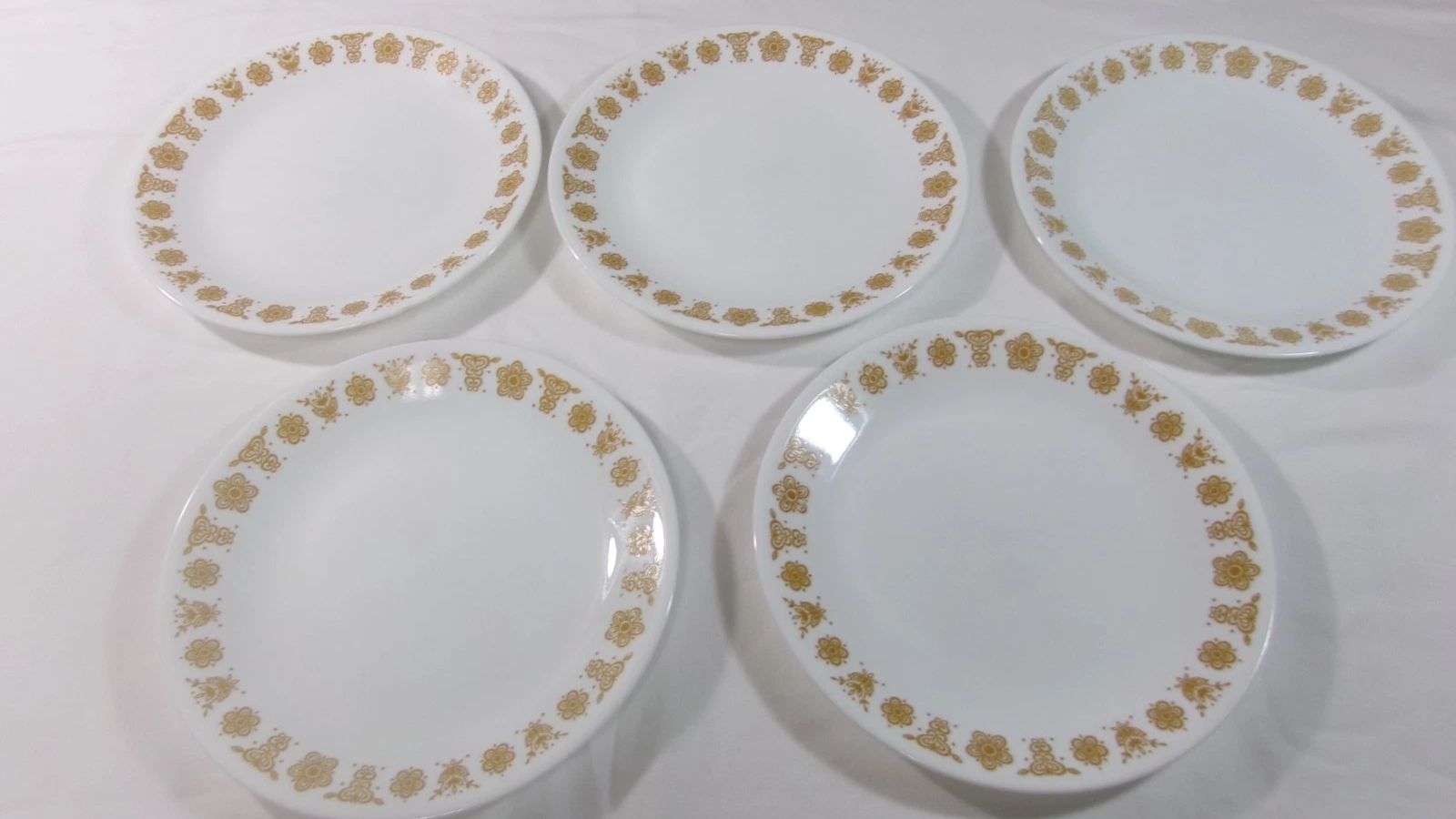
Corning introduced Corelle’s Livingware line in 1970 with four patterns, including Butterfly Gold, then followed in 1972 with a matching Pyrex ovenware set, so you’ll find the pattern on both glass casseroles and the lightweight Vitrelle dinner plates. The look is unmistakable once you know it. Harvest gold and orange butterflies and florals cover bright white glass.
It’s nearly indestructible and genuinely still usable, which is why it’s one of the easiest patterns on this list to actually put back into daily rotation rather than just display. One safety note worth knowing before you do. Corelle issued a statement in 2022 confirming that testing found lead in the decoration of some patterns made before 2005 and recommending those pieces be used decoratively rather than for food. If you plan to actually eat off vintage Butterfly Gold rather than just display it, that’s worth knowing first.
CorningWare blue cornflower
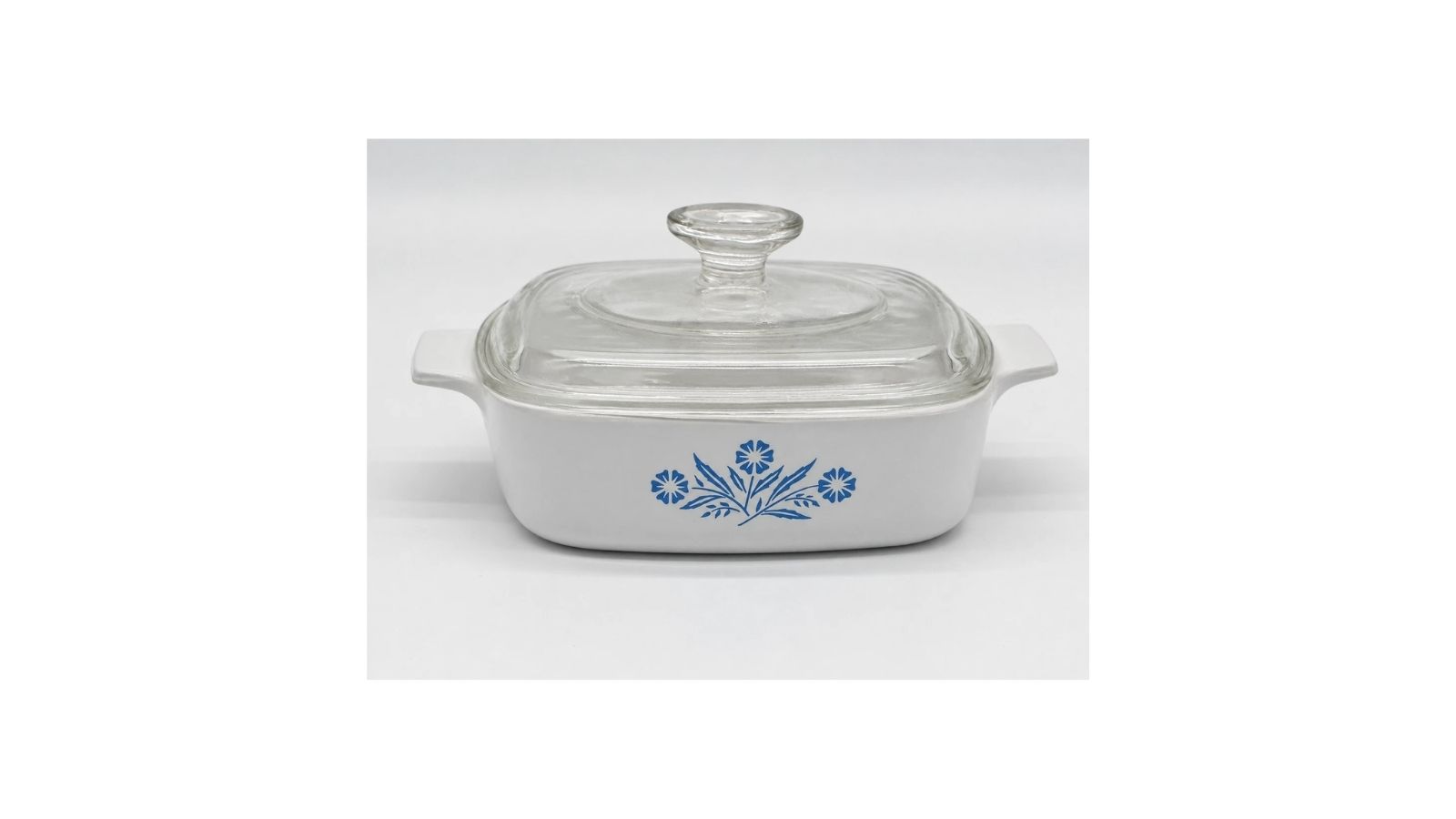
Corning Glass Works introduced CorningWare, along with its Blue Cornflower pattern, in 1958, and it’s the design most people picture the instant you say the brand name. The pieces are made from Pyroceram, a glass ceramic tough enough to go from the freezer straight into the oven and then to the table without cracking.
The pattern itself is simple, small blue cornflowers connected by green vines on white, but the appeal is really the durability. I still cook in mine regularly, and a well-kept piece from the 1960s looks almost exactly as it did the day it left the factory, which is more than you can say for most kitchenware from that era.
Hall china autumn leaf
Hall China first made this pattern in 1933 as a premium for the Jewel Tea Company, introduced with a nine inch mixing bowl, not for retail sale, but distributed by the door to door salesman customers nicknamed the Jewel Tea Man. That’s why collectors still often call it Jewel Tea rather than by its official name. Look for cream colored pieces with orange, rust, and tan leaves, and check underneath for the Hall stamp, sometimes alongside a Mary Dunbar approval seal.
Production ran until the late 1970s, and there’s a dedicated National Autumn Leaf Collectors Club still active today, which tells you how devoted this fanbase is. Mixing bowls and rarer serving pieces climb in value quickly, so a full nesting bowl set is worth grabbing on sight.
Royal china currier and ives
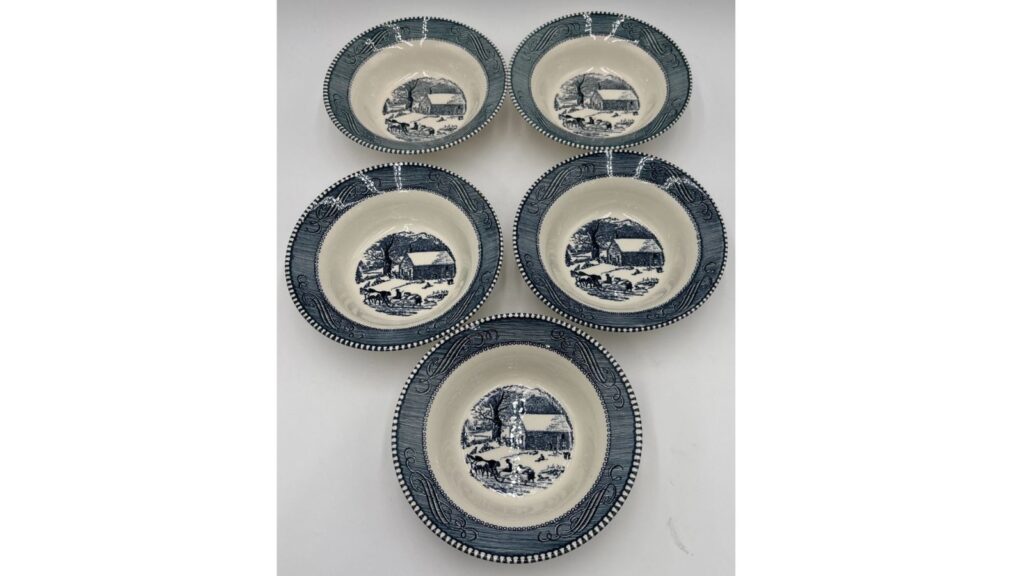
Royal China of Sebring, Ohio began producing this pattern in 1950, based on the nineteenth century American lithographs of Nathaniel Currier and James Merritt Ives. Each piece depicts a different pastoral scene, farm life, steamboats, locomotives, all rendered in blue transferware with a scrollwork border.
It was sold through department stores and also given away as a premium by the A&P grocery chain, which is exactly why so much of it survived into thrift stores and estate sales today. Blue is by far the most common colorway, though you’ll occasionally find it in brown, red, pink, or green. Because every piece shows a different scene, a mismatched set actually looks better displayed together than a single repeated pattern would.
Blue onion
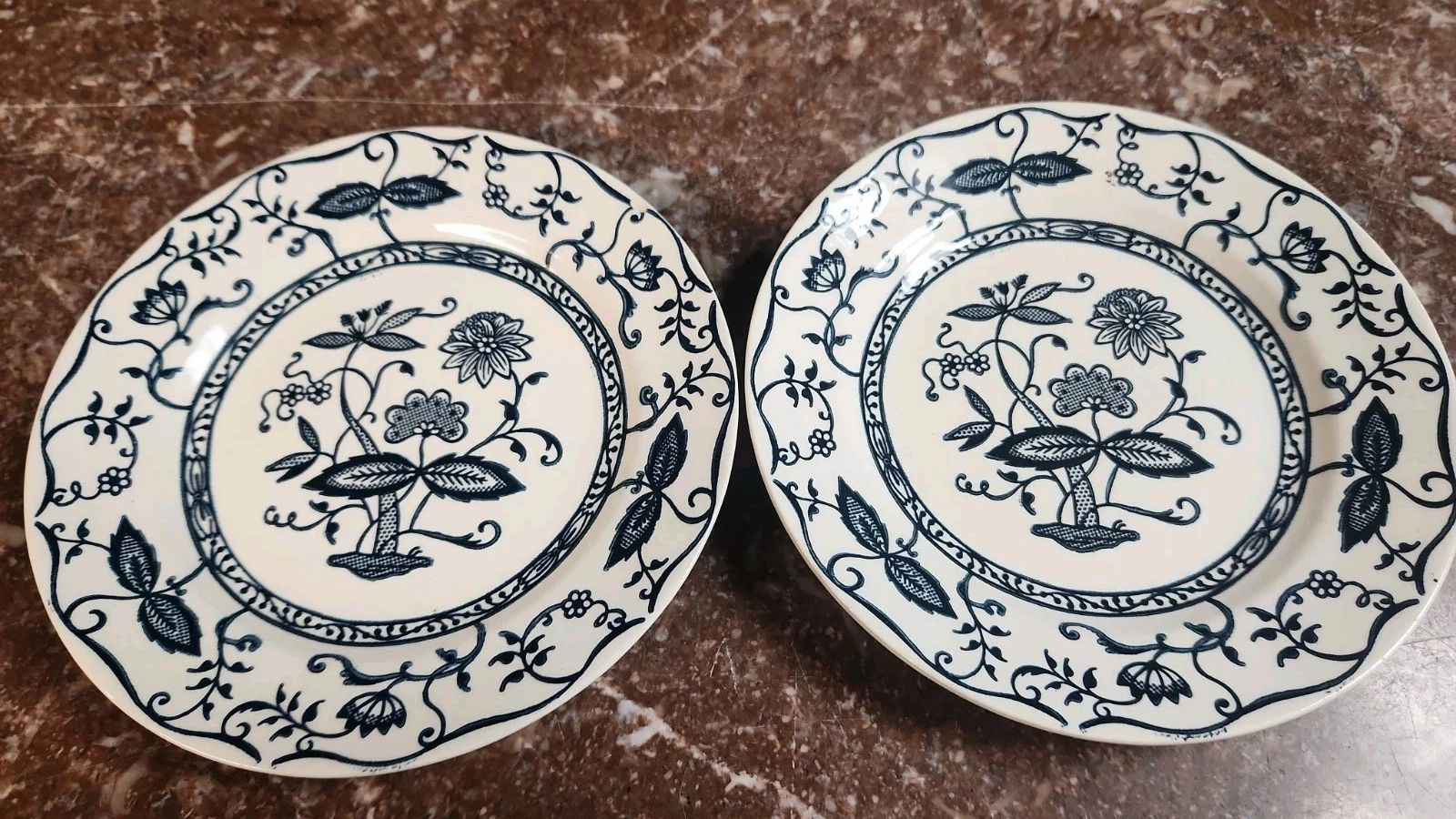
This one goes back further than anything else on the list. Meissen designed the Blue Onion pattern in Germany in 1739, basing it on a Chinese bowl from the Kangxi era. The onion name is actually a mistranslation. The original motif was peaches and pomegranates, which European eyes at the time mistook for bulbs.
Since Meissen’s original design, hundreds of manufacturers, including Villeroy and Boch and Hutschenreuther, have produced their own versions, which is why you’ll spot it fairly often, especially at estate sales in areas with German heritage. Most of what you’ll find is the standard cobalt blue on white. Genuinely rare colorways exist in green, red, pink, and even black, and those are worth setting aside if you ever come across one.
Pyrex pink gooseberry

Pyrex released Gooseberry in 1957 alongside Butterprint, featuring stylized pink leaves and berries, usually pink on white, though a rarer reversed white on pink version exists too. The Gooseberry line ran until 1966, a couple of years longer than Butterprint stayed in production, and it’s a step harder to find, which shows in what it commands from collectors today.
This was the pattern that got me actually flipping over every Pyrex bowl at estate sales instead of just glancing at the pattern. A full casserole set with its original lid can be worth real money, while the smaller individual Cinderella bowls are more affordable and a good place to start if you’re new to Pyrex collecting specifically.
Blue ridge hand painted dinnerware
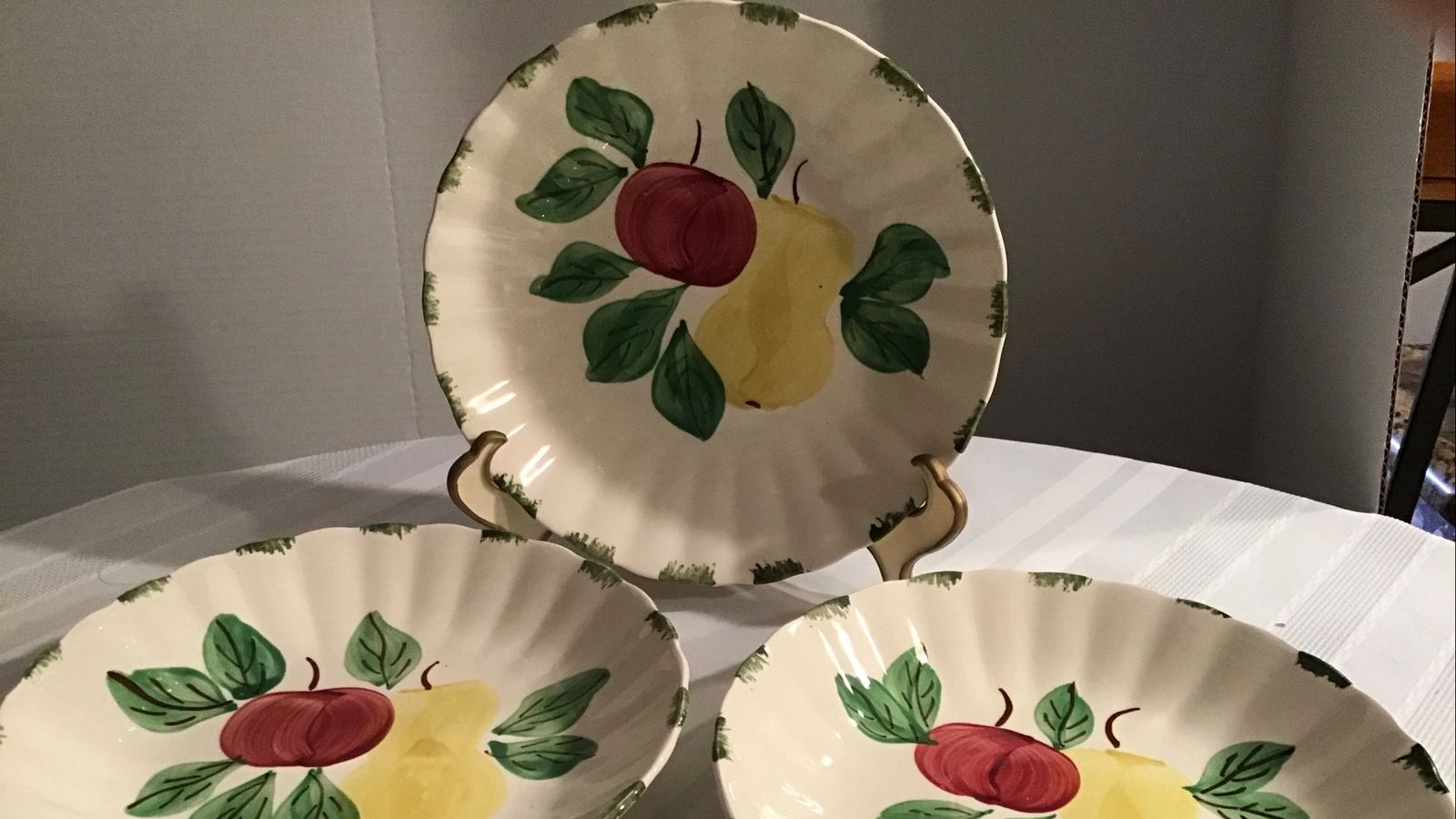
Southern Potteries in Erwin, Tennessee began hand painting its dinnerware under the Blue Ridge name around 1938, and the entire appeal is that it’s genuinely hand-painted freehand, not stamped or transferred. That means no two pieces are ever perfectly identical, brushstroke variation and all. The company made hundreds of different patterns before it closed in 1957, with names like Crab Apple, Fantasia, and Skyland turning up most often.
Check for the Blue Ridge Hand Painted Underglaze backstamp to confirm you’ve got the real thing rather than a decal decorated imitation. Because the closure date is fixed, anything you find is guaranteed to be at least that old, and the slight imperfections in the brushwork are exactly what collectors are looking for rather than something to avoid.
Noritake azalea
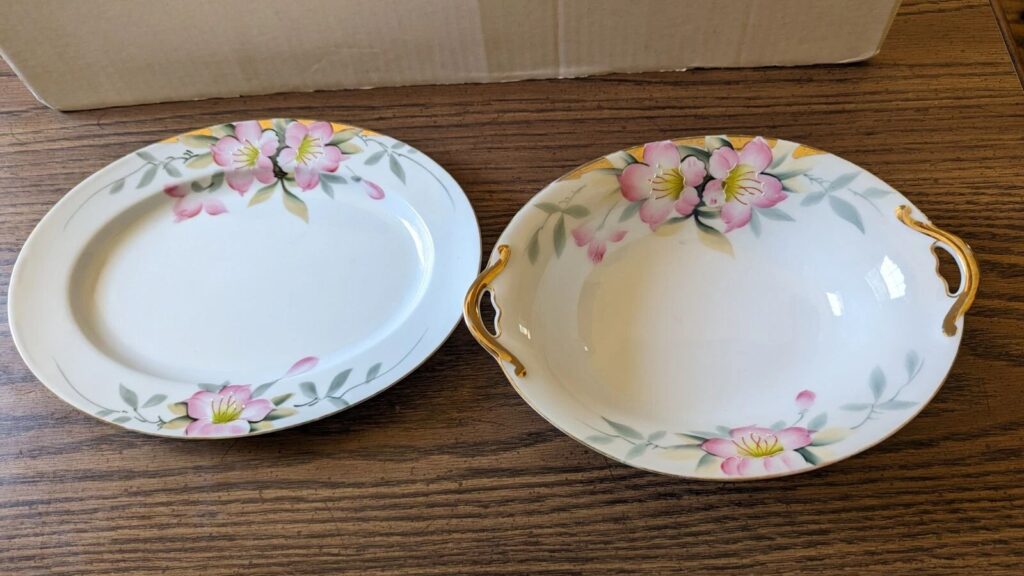
This is the strangest origin story on the list. Starting in 1917, the Larkin Soap Company of Buffalo, New York distributed this pattern exclusively as a mail order premium, meaning the only way to originally acquire it was by buying household soap and goods through their catalog. Production continued until 1940, when the Second World War cut off imports from Japan.
The pattern itself is hand-painted pink azalea flowers with gold trim on white porcelain, delicate enough that it’s easy to mistake for a much older or more expensive line. Ordinary cups and saucers are common and affordable, while the rarer forms, a bulbous vase, a pancake jug, an ashtray, or the fifteen piece child’s set, command serious money if you ever spot one.
14. Depression glass cameo
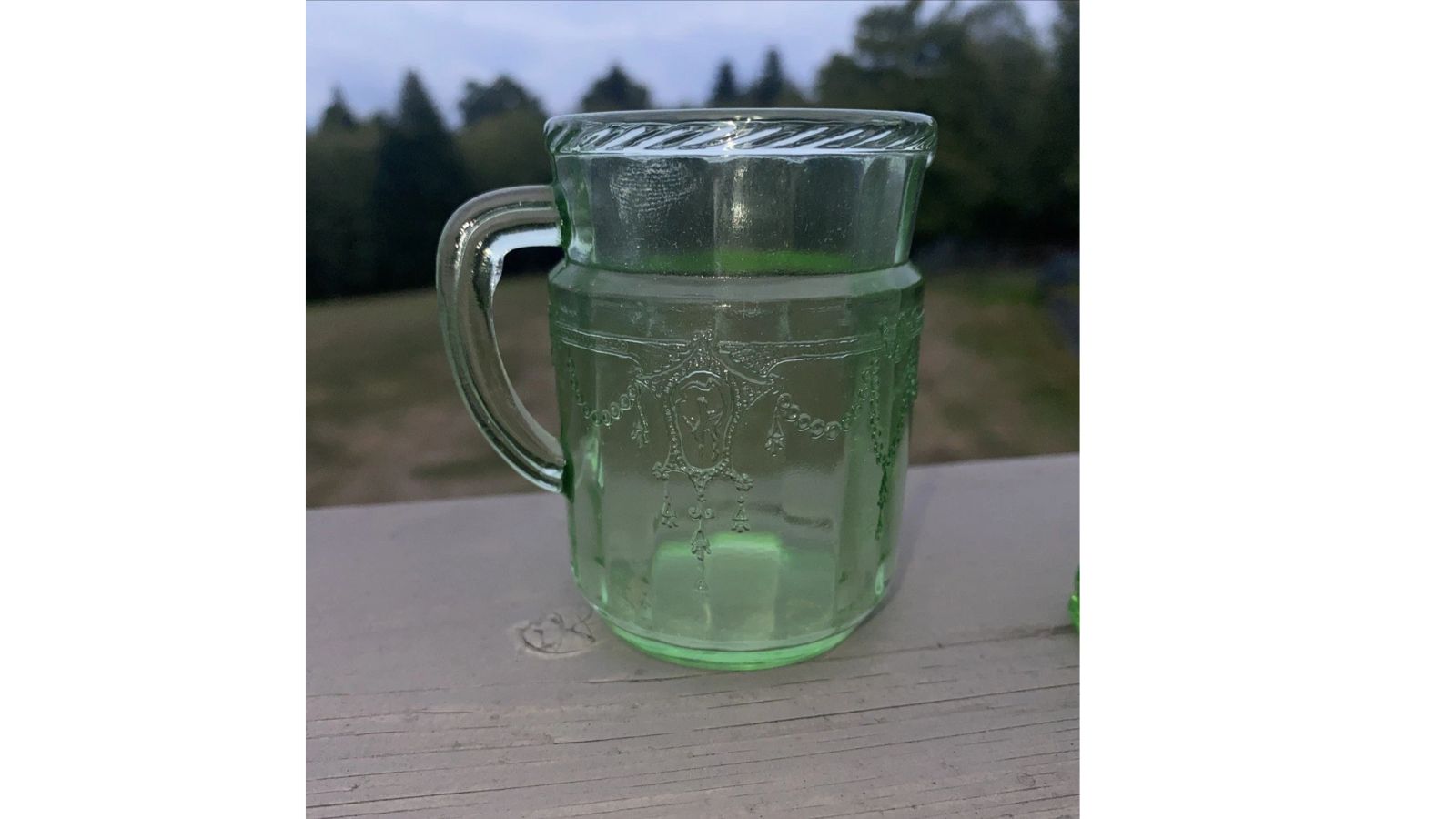
Hocking Glass Company produced Cameo from 1930 to 1934, and collectors often call it Ballerina or Dancing Girl for the etched dancing figure worked into the design. Green is by far the easiest color to find. Yellow was only made from 1932 to 1934 in a limited number of shapes, and pink production was so small that finding a piece today is genuinely rare.
If you want a quick way to confirm you’ve actually found Depression era glass rather than a later reproduction, a blacklight is a fun trick. Genuine green Depression glass from this era often glows under UV light because of the uranium oxide used in the original formula.
15. Pyrex lucky in love
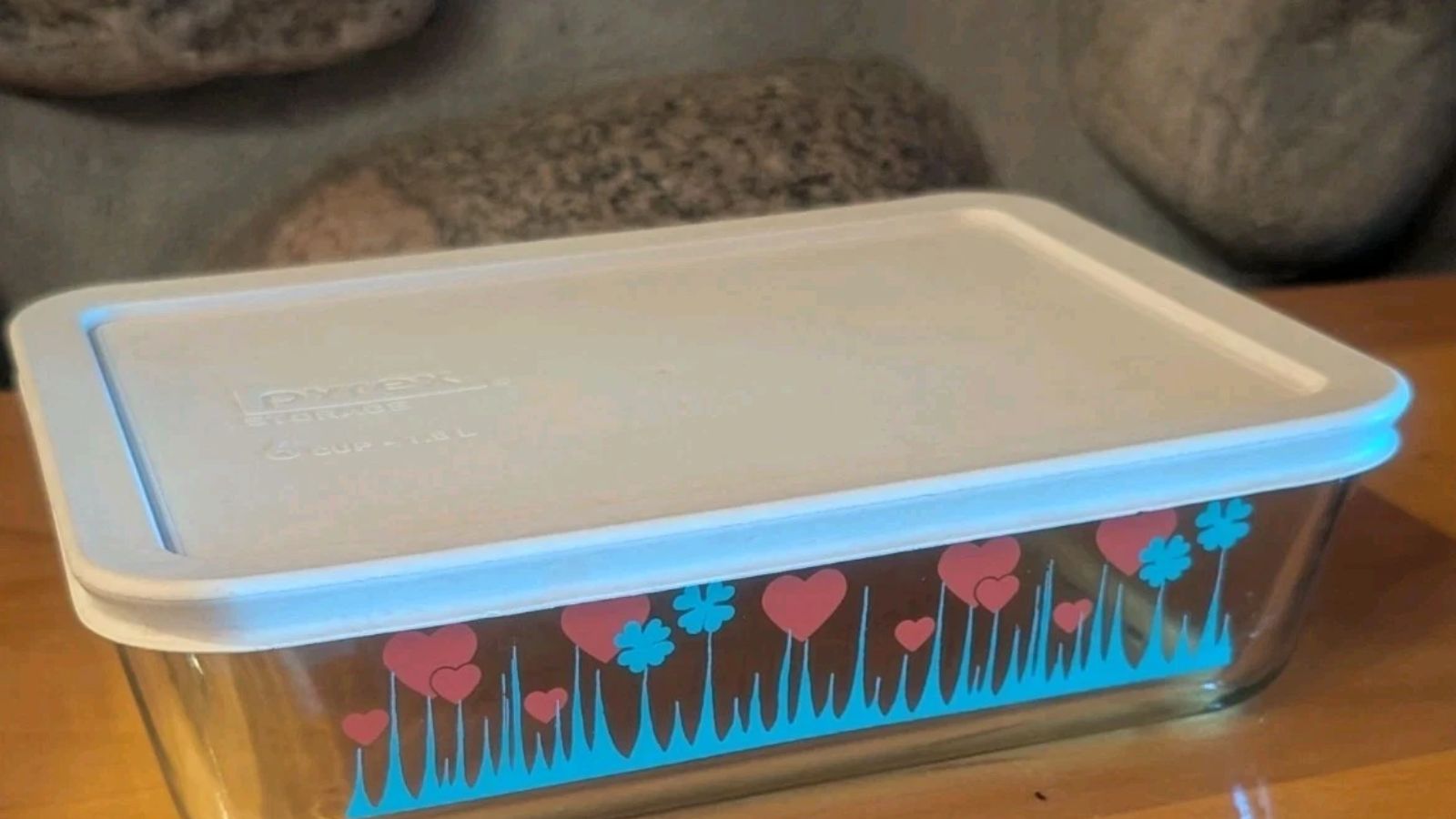
Pyrex made this pattern for exactly one year, and the Corning Museum of Glass calls it one of the most elusive Pyrex designs the company ever created. The look is green shamrocks and grass paired with pink hearts on a plain white background, and the company kept no record of how many pieces were ever produced.
I’m including this one knowing full well most readers will never actually see it in the wild, and that’s precisely the point. A Lucky in Love dish donated to a Goodwill in western New York sold at auction for $5,994 in 2017, and other private sales are rumored to have gone considerably higher, though figures like that shift with the market and are worth taking as a rough indication rather than gospel. Knowing this pattern exists is what makes you stop and actually check the underside of every plain white casserole dish with a lid, and that habit alone is worth more than the odds of ever finding one.
You might also like…
The CorningWare Pattern Collectors Dream Of Finding At A Thrift Store
The Pink Pyrex Pattern Collectors Dream of Finding at a Thrift Store
The Blue-And-White Pyrex Pattern Collectors Dream Of Finding At A Thrift Store

