
Affiliate disclosure: This post may contain affiliate links. Please see full disclosure.

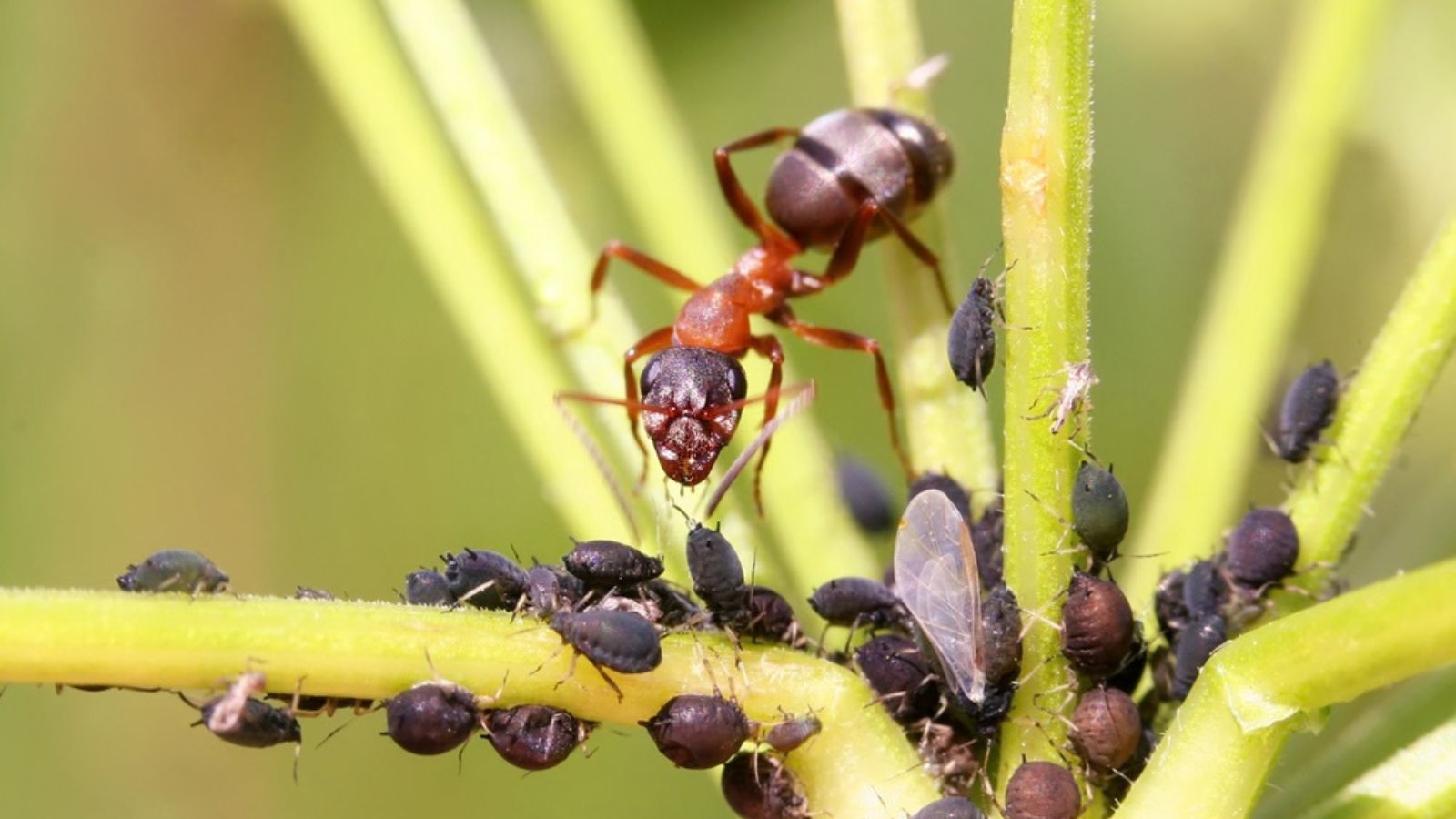
Ants farm aphids. They care for them, offer protection, and literally “farm” them – much like humans farm their livestock. Picture ants wearing the frayed straw hat, dirty blue dungarees or coveralls, and the good ol’ fashioned wellies.
This prime example of mutualism is fascinating, annoying, and often brutal. And it can be exceptionally troublesome if you grow your own food.
Aphids can devastate whole swathes of your crops, encourage disease, other pests, and spread infection. Ants do their own fair share of damage to your crops, too.
These two pests working in mutualistic harmony can be a complete nightmare. Let’s take a closer look at this weird relationship, then find out what to do about it. After all, the first step to finding a solution is to understand the problem, right?

What Ants Get Out of Farming Aphids
In a nutshell – food. In fact, ants farm aphids because, in return, they get a huge supply of their favorite sticky sweet treat. As aphids feed, they produce a sticky substance called honeydew, and ants simply cannot resist it.
Honeydew quickly grows a type of black mold that ants also devour. So these frighteningly clever little insects farm the aphid colonies, so they have an inexhaustible supply of tasty, nutritious honeydew.
RELATED: How to Control Aphids Naturally
What Aphids Get Out of Being Farmed by Ants
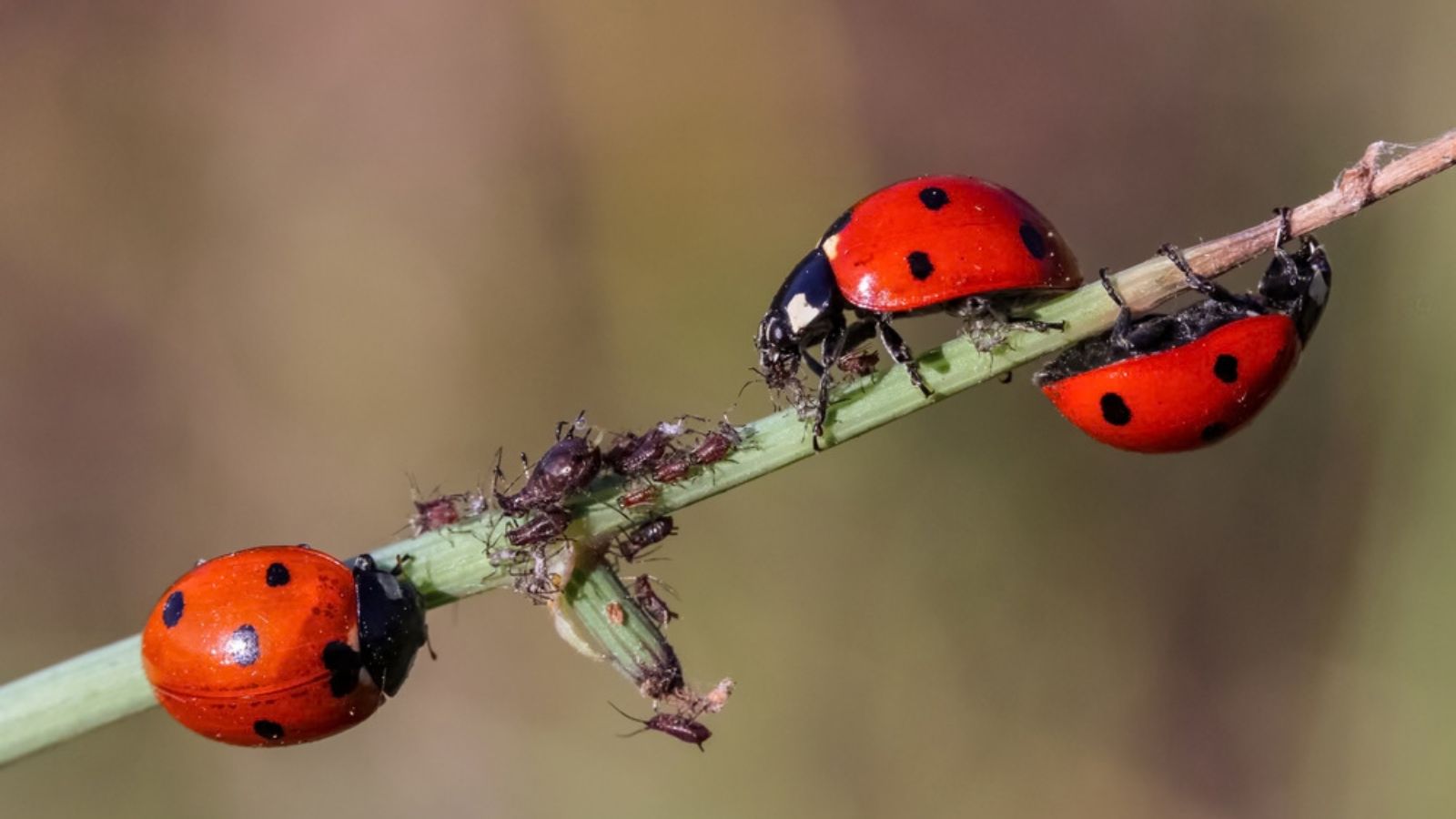
Protection. The ants take very good care of their livestock. The ants will protect the aphids from predators like ladybirds, defending them fiercely.
And, if an aphid shows signs of ill health or dies, the ants see them as potential threats to their aphid colonies, and they whisk these ill, dead, or dying aphids away, removing them to a safe distance from the aphid colony before mercilessly disposing of them.
Some people think that the aphids get the worse end of this mutualistic bargain – they are pretty much captives of their ant masters, and the ants do sometimes eat at least a portion of the aphid colony. But, depending on the species of ants and aphids involved, the aphids get protection, they are carried around if they need to move to a new location, and essentially get their every need taken care of.
How Ants Farm Aphids
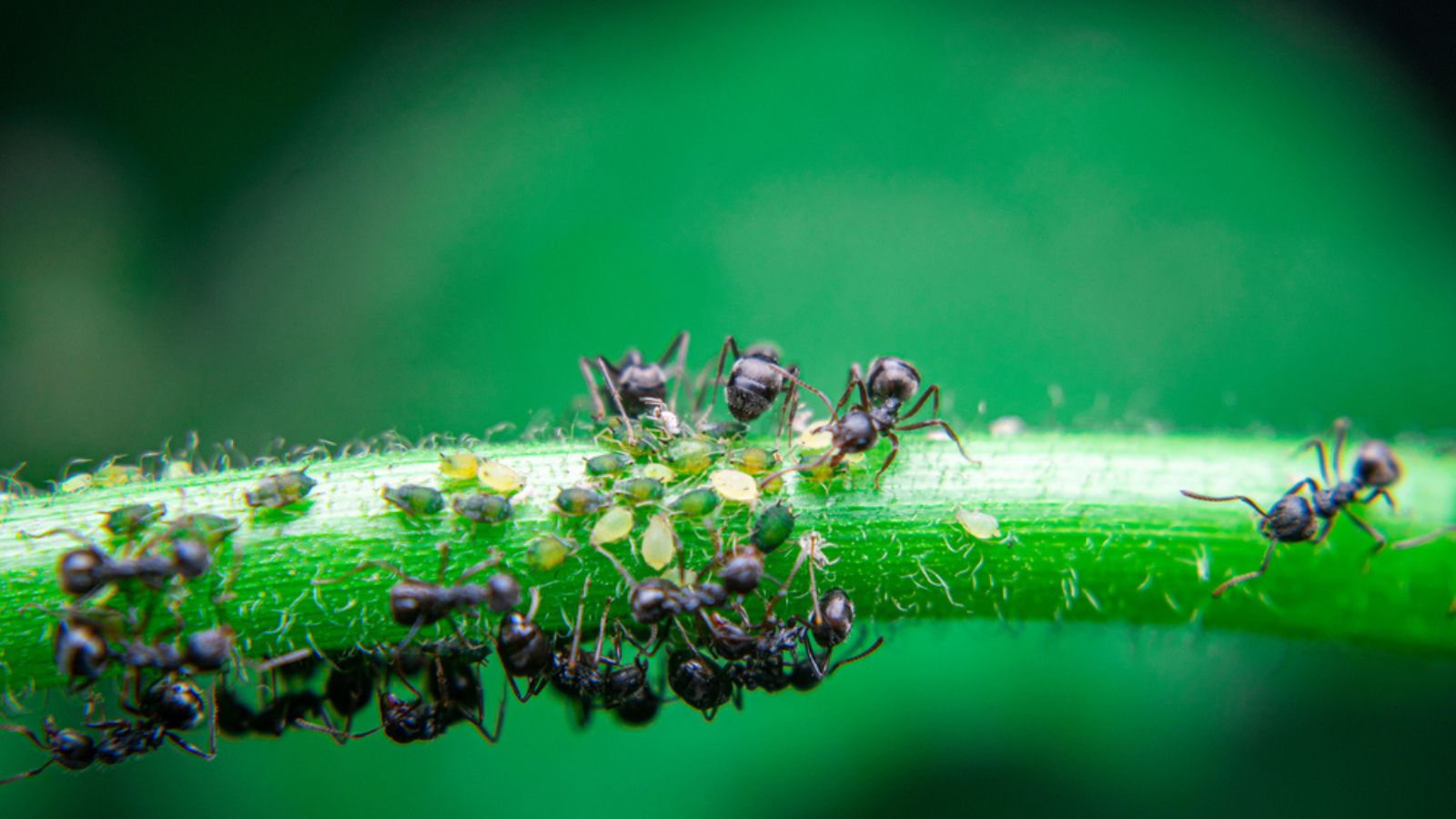
Well, these teeny tiny farmers use multiple methods to nurture and sustain their aphid colonies. Different species of ants farm different kinds of aphids. For example, the yellow meadow ant farms root aphids deep in underground burrows, while the herder ant farms the more terrestrial aphid species right on the plants.
A study by the Royal College of London found that, while we already knew that the chemicals ants release through their feet act as pheromone trails for all kinds of things like laying “paths” and establishing territory, some of the chemicals are used specifically to control aphids.
These invisible substances subdue or mildly tranquilize the aphids, ensuring they remain under the total control of the ants. It’s a little bit like a horror story. And, if this doesn’t keep them subdued enough, the ants bite off the wings of the mature aphids so they cannot escape.
Maintaining total control in this way means the ants are required to move the aphids one by one to a new plant to feast upon, but given that ants can carry up to 5,000 times their own body weight, it’s not too problematic for them.
Another study, this time published in the open access BMC Evolutionary Biology Journal and focussing on the yellow meadow ant and its subterranean arming of root aphids found that these ants actively practice husbandry of their livestock, selecting only the strongest/best/most resilient/most productive aphids for use in their farms. Again, much like human farmers specifically selecting livestock to breed the best possible traits.
The study also found that these domesticated aphids develop an entirely new and unique organ – the trophobiotic organ – which holds honeydew for the ants, and it’s something that’s never seen in wild aphids.
When there are too many young, the immature aphids aren’t displaying prized qualities, the older aphids start to produce less honeydew, or appear to be suffering from ill health, the ants simply eat them.
While perhaps a little brutal, it’s no different than humans eating their laying hens when the chicken doesn’t produce enough eggs. And it makes sense – this routine ensures optimal health and honeydew production, controls the aphid population, and gives the ants an easily accessible source of protein.
RELATED: Why Are There Ants on my Pepper Plants?
How Can You Control the Problem Naturally?
Well, you need a multi-pronged approach. You can learn all about controlling aphids naturally here. If you’re faced with the dilemma of ants farming aphids, you need to combat both pests.
Washing aphids off plants with a strong spray of the hose is one of the most effective natural methods of control, and it’s super easy. However, if you’ve got ants providing care, any aphids that the water doesn’t kill will be tended to and moved to new feeding grounds by the ants.
So, find and get rid of the ant nest. Use ant-eating nematodes, plant bright flowers to attract parasitic wasps and predatory insects, or find the nest and burn it or pour boiling water into it. Once you manage to control the ants, you can more easily get rid of the aphids.
As well as washing aphids off your plants, you can attract or purchase ladybugs and lacewings which will happily devour masses of aphids in a very short time.
Remember, pesticides aren’t really of much use. They’ll kill most insects, and a variety of birds and mammals, but they aren’t much use against aphids and some ant species.
The little critters are hardy and resilient to many common pesticides, so you’ll just be poisoning your crops and your ground for no good reason.
You can dry out chrysanthemum leaves and crush them up as a natural pesticide, but it doesn’t discriminate, and it’ll kill good insects as well as pests.
Similarly, you can make your own garlic fire spray, which is awesomely effective, but it will kill bees, ladybugs, and all of your other insect friends, too.
FAQs
Do ants attract aphids?
No, ants don’t really attract aphids. It’s more likely that the ants will seek out the aphids and begin to herd and farm them. However, they will exert control over the aphids by sedating them with the pheromones they release from their feet. And, if drugging an adult aphid isn’t quite enough to keep it subdued, the ant will bite off the wings of the rebellious aphid so that it can’t escape.
Do banana peels keep aphids away?
Yes, aphids hate banana peels, so you can use them as a form of natural aphid control. Just chop up the banana peel and bury it around your plants around two inches deep. Remember, though, that aphids are persistent, particularly with ants helping them, so you’ll likely need to employ a combination of several natural remedies for effective control. My biggest tip: Keep going after them. Controlling aphids isn’t a one-and-done type of deal. It’s a constant battle. Even if you think you got ’em all – stay vigilant!
What type of ants farm aphids?
There are several types of ants that farm aphids. The yellow meadow ant, for example, farms root aphids underground. While above ground, there are a variety of herder ant species that tend to the stem-and-leaf aphids.
Does vinegar kill aphids?
Yes, 5% vinegar, when diluted with water at a ratio of 1 part vinegar to 2 parts water will kill aphids on contact. However, it’s important to note that not all plants can tolerate the acidity of vinegar, even diluted by two-thirds. So do your research before you spray vinegar on plants.
How to spot aphids on plants
Mature aphids and their nymphs feed on the nutritious liquids in your plants and so, depending on the species, attack the leaves, stems, buds, flowers, fruits, or roots of the plants. Most of us more commonly see regular aphids, rather than the underground root aphids, and you can spot the damage easily. You may see what look like blisters on the leaves of plants, or you’ll notice that the shoots and unfurling leaves are twisted and stunted. And, of course, if you look at the underside of leaves, you’ll see aphid colonies attached and feeding on your plants.
Why do ants protect aphids?
Ants protecting aphids is a prime example of mutualism. The ants protect the aphids from predators and generally keep them safe and healthy, and in return, they get to feast on the honeydew secreted by the aphids. And, when the aphids are no longer productive, the ants eat them, as they’re also a nutritious protein source.

Thanks for the very informative article. I have a powdery mildew problem on my Crepe Myrtle trees around my garden and I’m pretty sure the black ants are farming the powdery mildew and then feeding the spores to the aphids lower down the tree. The ants are building protective structures around the aphids and of course are collecting the honey dew to feed their nest.
Hi Robert, are you sure you’re looking at powdery mildew and not black sooty mold? If you’ve got an ant and aphid problem, it’s much more likely to be the latter. The mold forms on the honeydew produced by the aphids, both of which are sustenance for the ants. Unfortunately, the only way to control the mold is to get rid of the aphids, which I know is easier said than done. There isn’t an effective fungicide or natural rememdy for the black sooty mold, because it’s a result of the overabundance of honeydew.
I have just come accroas this as my rhododendron, rose Bush and apple tree are covered in aphids and I’ve lots of ants!
Bit worried as they are just container plants and it’s the 1st time my apple tree has grown apples.
I don’t want to kill any bugs either though.
Also worried spending £20 on live ladybugs, what I’d they just fly away…..
Hi Kayleigh. Yay for your apple tree producing its first apples! I’d say, start by making sure the soil in your containers is healthy and full of nutrients so that your plants are strong and healthy and can withstand an aphid attack. You can use a hose spray (not too strong) to wash the aphids and ants off your plants, too. That’s the easiest, fastest way to get rid of them. Then, I’d sprinkle cinnamon or DE (or both) around the base of my pots to help stop the ants crawling back up. And then watch for aphids and just wash them off when you see them start to reappear. Then there’s no need to buy ladybugs or spray anything nasty. 🙂
I grow broad beans (fava) every year which attract an army of black fly aphids thanks to the black ants but i always find the ladybirds and their larvae slaughter them completely a week or two later dispite the ants protecting them
Agreed. Ladybirds are so useful. I’ve never managed to grow broad beans without aphids descending on them in droves!
Absolutely love the information! Thanks you. What a wonderful eco system…but not a fan in my veggies and flower gardens. I have Rolly pillows, and now ants and apparently aphids…also it looks like teeny tiny green wormy type things. It’s a race to see who gets to eat the vegetables first, them or me.
Thank you for the information. It’s fascinating.
It is definitely fascinating, but I agree with you – it’s very unwanted in my vegetable garden! Good luck defeating them – I’ll be doing the same myself this year again, too. It’s a constant battle. But hey – I like a challenge!
I’m not sure what those little green worm things are – but if you send me a photo, I’ll identify them for you and recommend a few ways you can get rid of them naturally. 🙂
i just read a study how ants are excellent for carbon sequestration, affixing the carbon into magnesium and calcium silicates. they can be responsible for up to 300x more carbon being sequestered. It would be good to lose the aphids without damaging the ants if possible as they do such important work. Thanks for the interesting article.
Yes, the data I read said it was in part due to their ability to speed up mineral reactions – which is fascinating. It seems every creature has its uses – even ants. Although when they are busy farming aphids and reeking havoc around my food growing space, knowing they are doing their bit to slow global warming doesn’t make me feel that much better! Haha. Although it does make me extra glad that we don’t use chemicals to irradicate these little beasties. We try to live in harmony with everything, using natural methods to create a balanced eco system where everything has its place, but not in such huge numbers that we end up overrun with critters and losing our harvest. It’s a constant balancing act!
I’m thrilled you found the article interesting. Thank you for taking the time to comment.