
Affiliate disclosure: This post may contain affiliate links. Please see full disclosure.

April is one of my favorite months in the garden because so much suddenly becomes possible. The soil is warming up, the days are noticeably longer, and the list of what you can actually get in the ground is genuinely exciting. Some of these go straight outside. Some start indoors this month and head out in a few weeks. Choose from quick crops, slow crops, things to direct sow, things to start under cover, fruit you’ll be eating this year, and fruit you’re planting for the long haul. There’s something here whatever size garden you’ve got.
1. Peas

If you only do one thing in April, sow peas. They’re one of the great pleasures of early season gardening, and they genuinely want to be in the ground right now. Peas germinate best in cool soil, between 40 and 75°F (4 to 24°C), and they’ll handle a light frost without drama once they’re established. Get them in in early April and you’ll be harvesting by late June.
Sow 1 to 2 inches deep, 2 to 3 inches apart, and get your support in place before you sow or immediately after. It always seems like the support can wait. It can’t. Peas grow faster than you expect and trying to untangle a sprawling mass from the ground later is miserable.
Mice are the enemy here. They will find and eat every single seed with what feels like targeted malice. I lay twigs with sharp points over the row, spread a layer of wood ash, or pin fine mesh over the bed, until the seedlings are up and rooted. Once they’re established they’re fine. Although pigeons and deer do love them, so I usually add some form of protection.
My favorite varieties include Alderman (also sold as Tall Telephone), which is a vigorous climber that reaches 6 feet and produces big, fat pods over a long season. Thomas Laxton is exceptionally sweet. Oregon Sugar Pod is a flat-podded mangetout type with better heat tolerance than most peas, which extends the picking season. For shelling peas, Lincoln is reliable and delicious.
Once they start producing, pick daily. I cannot stress this enough. Pods left on the vine signal the plant to stop producing. The more you pick, the more you get. Expect your first harvest 60 to 70 days from sowing.
2. Lettuce

Lettuce is the fastest path from seed to plate in a spring garden. You can be harvesting baby leaves in 30 days, full heads in 45 to 70 days, and since it needs barely a sixteenth of an inch of soil over the seeds (it actually needs light to germinate), there’s no technical barrier to just doing it right now.
The key to keeping lettuce producing through spring and into early summer is succession sowing: a small batch every 2 to 3 weeks rather than everything at once. A single flush of thirty heads is a waste because lettuce bolts fast in heat and you can’t eat that much at once. Little and often is the whole game.
Bolt resistance is worth paying attention to when choosing varieties. Rouge d’Hiver is a beautiful red romaine with good staying power in warm spells. Forellenschluss (Flashy Trout’s Back) is one of my all-time favorites: speckled green and red, slow to bolt, stunning in the garden. Yugoslavian Red Butterhead has incredibly tender leaves and gorgeous deep red edges. Black Seeded Simpson is early, reliable, and mild.
3. Radishes
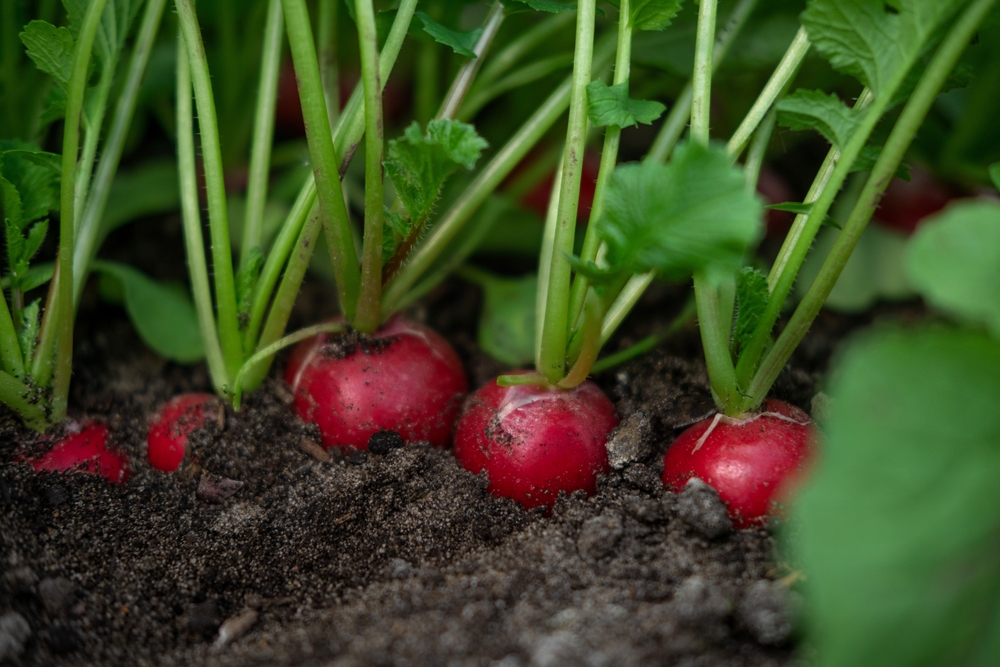
Radishes are ready in 22 to 30 days, which makes them almost uniquely satisfying in a garden full of crops that take months. Direct sow them now, half an inch deep, 1 inch apart in full sun or light shade, and thin to 2 inches once they’re up.
Two things trip people up with radishes. First, crowding. If the seeds are too close, the plants put their energy into leaves, not roots, and you get nothing worth eating. Thin them ruthlessly. Second, uneven watering. Soil that goes from dry to soaking and back again produces hollow, pithy, or cracked roots. Keep moisture consistent and they’ll be crisp and sharp.
French Breakfast is elongated, mild, and one of the better choices for spring because it tolerates warming weather reasonably well. Cherry Belle is the classic round red radish: reliable and crisp. For something more interesting, Watermelon Radish is a daikon type that’s white and unassuming on the outside and startlingly bright pink in the center. Worth growing for the wow factor alone, though it takes 50 to 70 days rather than 3 to 4 weeks.
4. Spinach

April is prime spinach time. It germinates readily in cool soil (35 to 75°F / 1 to 24°C) and genuinely thrives before the heat arrives. Sow half an inch deep, 2 to 3 inches apart, and thin to 6 inches when the seedlings are big enough to handle. The thinnings are delicious, so eat them.
Spinach bolts faster than lettuce once temperatures climb, so make the most of it now. A spot with afternoon shade will buy you an extra few weeks of harvest before the plants run to seed. Bloomsdale Long Standing is the classic for good reason: savoy-type leaves, rich flavor, and the slowest to bolt of the common varieties. Merlo Nero is an Italian heirloom with dark, glossy leaves and excellent flavor. Ready in 40 to 50 days.
5. Arugula
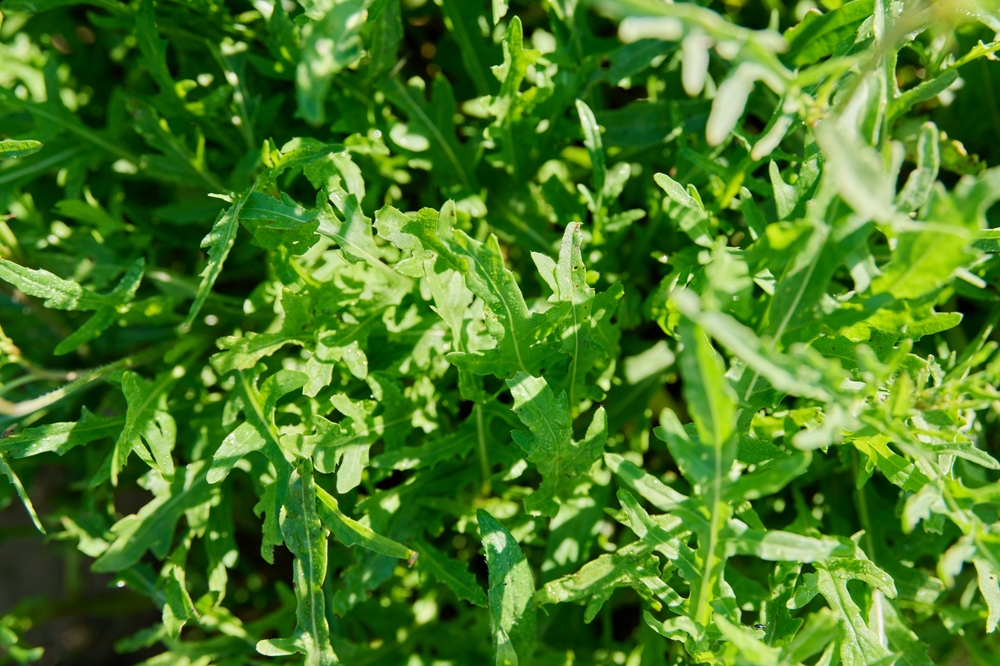
Arugula might be the most low-maintenance crop on this list. Scatter the seeds thinly on the surface, rake them in barely, water once, and you’ll have something to cut in 30 to 40 days. It germinates at 40 to 55°F (4 to 12°C), tolerates light frosts, and works as a cut-and-come-again crop if you harvest the leaves young and leave the base to regrow.
It gets spicier and more peppery as it matures and as the weather warms, which some people love and some don’t. Harvesting young keeps the flavor milder. If you want arugula all season rather than just in spring, grow wild arugula (Diplotaxis tenuifolia) alongside your annual type. It’s a perennial, far more bolt-resistant, and has a deeper, more complex flavor. Once it’s established it self-sows reliably and basically takes care of itself.
6. Beets
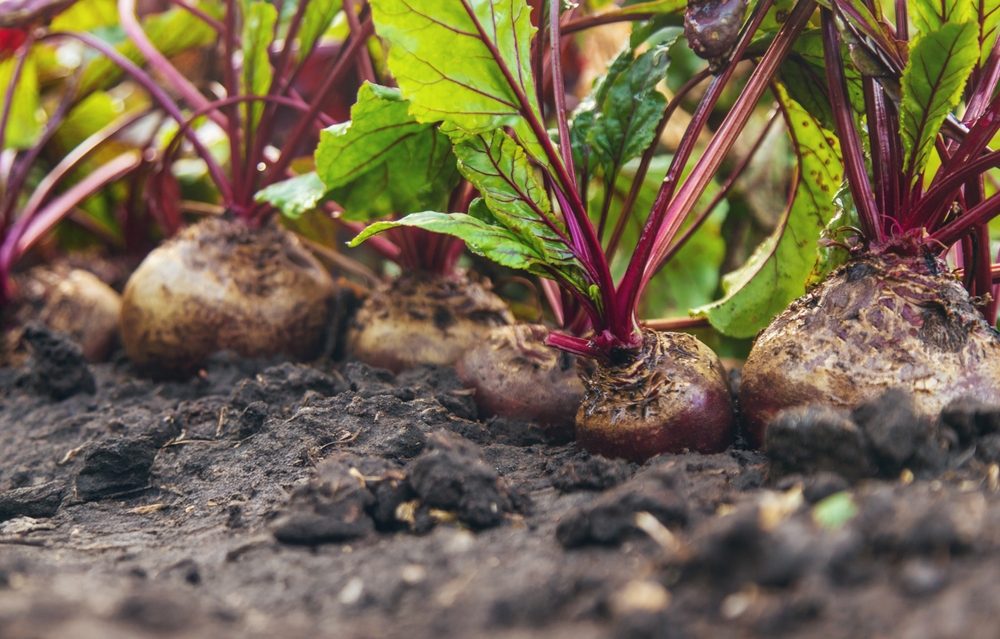
Beets are a two-for-one crop and one of the most productive things you can grow in terms of what you get per square foot. The roots are obvious, but the greens are just as valuable: tender, earthy, and good in salads or wilted like chard. Start eating the thinnings as soon as the seedlings are big enough to pull, and you’re harvesting something useful from week three onward.
Sow an inch deep once soil reaches 50°F (10°C). Each beet “seed” is actually a cluster of 2 to 4 seeds, so don’t expect to sow once and skip thinning. Thin to 3 to 4 inches apart once the seedlings are established, and do it early. Crowded beets produce scrawny, forked roots that aren’t worth eating. Soaking the seeds in water for 30 minutes before sowing speeds germination, which otherwise takes 7 to 14 days.
Chioggia is the Italian candy-stripe heirloom with pink and white concentric rings inside, mild and sweet. Golden Beet doesn’t bleed and has a milder, sweeter flavor than red varieties, which makes it popular with people who think they don’t like beets. Bull’s Blood has dramatic deep red foliage that’s almost ornamental and makes the best beet greens of any variety I’ve grown. Detroit Dark Red is the reliable standard if you just want a solid, productive classic. Roots ready in 55 to 70 days.
7. Carrots
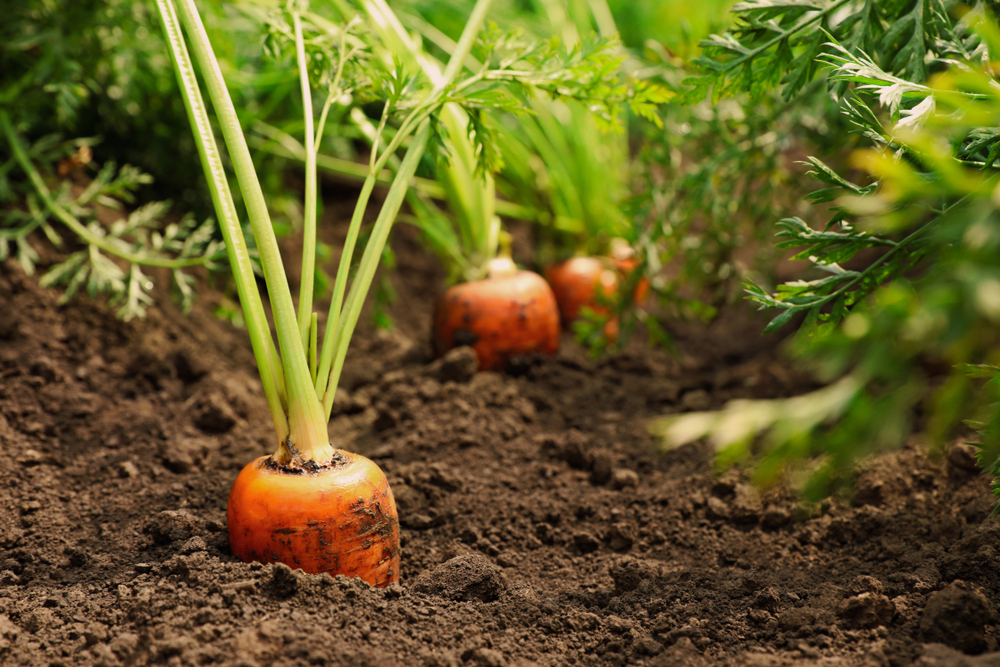
Carrots are one of the most rewarding crops when they go right and one of the most frustrating when they don’t, and the difference usually comes down to a few specific things. They must be direct sown because they won’t tolerate transplanting. They need light to germinate, so cover them with no more than a quarter inch of fine compost or sifted soil. And they are slow, taking 10 to 21 days to show at 55 to 75°F (12 to 24°C), so don’t give up on a bare-looking row too early.
The soil needs to be raked fine and free of stones, otherwise you get forked, stunted roots. Once the seedlings are up, thin to 3 inches apart. Cover with fine mesh immediately and keep it on throughout the growing season, because carrot root fly is relentless and the damage is devastating. The flies are attracted by the smell of the foliage when you brush against it, so handle plants gently and remove all thinnings from the area quickly.
For flavor, Scarlet Nantes is hard to beat: crisp, sweet, and cylindrical. Danvers 126 is more forgiving in heavier soils. Chantenay Red Core is shorter and broader, good for shallow or stony ground. If you want something striking, Purple Dragon has a vivid purple skin with an orange core and looks spectacular on a plate. Ready in 70 to 80 days.
8. Kale
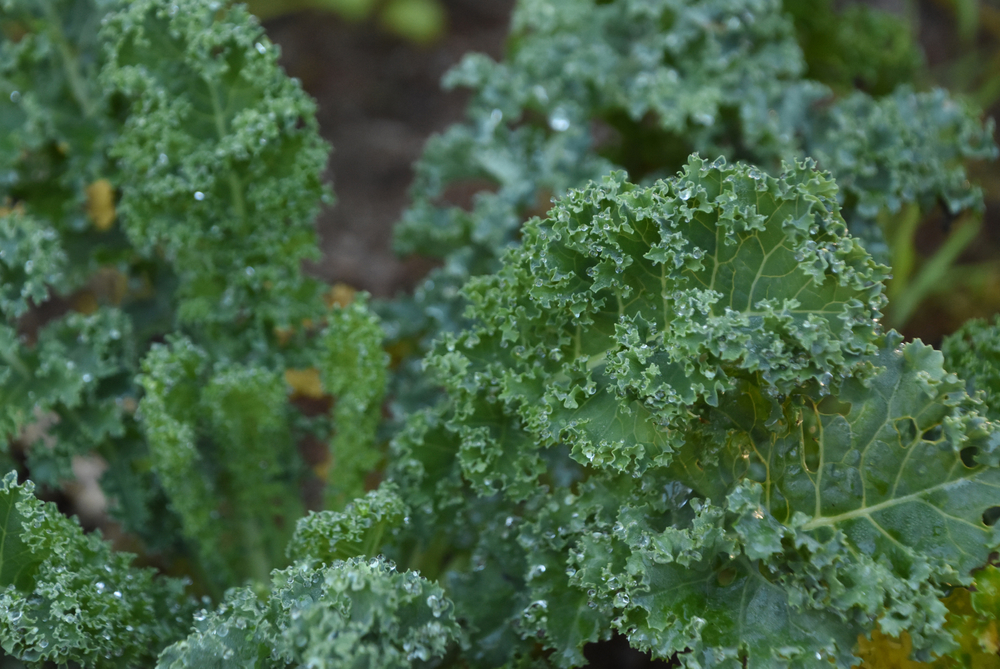
April-sown kale is an investment that pays dividends for a long time. Start it now, either direct in the ground or indoors 4 to 6 weeks before transplanting, and you’ll have productive plants by midsummer that keep going right through fall and into winter. It’s one of the few vegetables that genuinely improves in flavor after frost, so a single April sowing can feed you for eight months or more.
Sow half an inch deep. Germination takes 5 to 10 days at 45 to 85°F (7 to 29°C). Transplant or thin to 18 inches apart, because kale needs space to build the kind of root system that makes it productive over such a long season. Net immediately and keep netting on. Cabbage white butterflies will find it, and their caterpillars will reduce a healthy plant to lace in a week.
Lacinato (Dinosaur Kale) is my personal favorite: dark, bumpy, fleshy leaves with a sweetness and depth of flavor that the curly types don’t quite match. Red Russian has beautiful frilled, blue-green leaves with purple stems and is the mildest of the bunch. Dwarf Blue Curled Scotch is compact and brutally cold-hardy. Baby leaves in 55 to 70 days, mature plants in 70 to 100 days.
9. Swiss chard
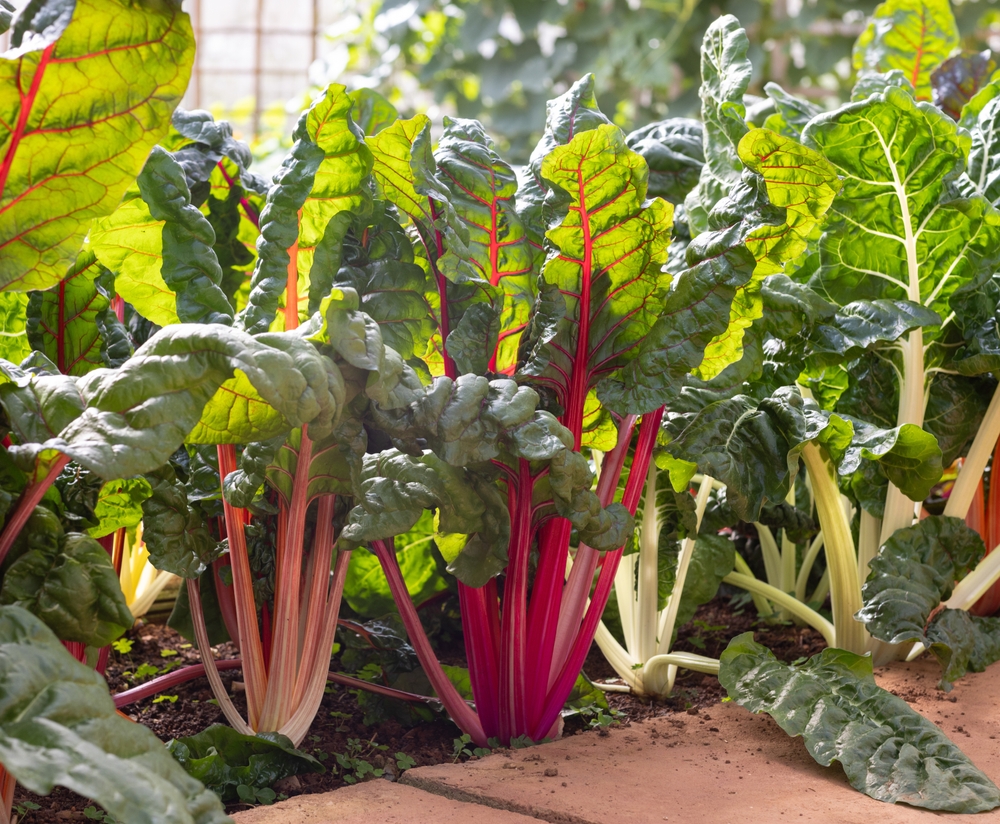
Chard is the workhorse. It tolerates heat better than spinach, handles light frosts, and will produce from midsummer right through fall and into winter if you’re in a mild enough zone, all from a single April sowing. Direct sow half an inch deep in April, in rows about 18 inches apart, and thin to 6 inches once established.
Like beet seeds (they’re closely related), chard seeds are clusters that produce multiple seedlings per sowing point. Thin early and firmly or the survivors won’t size up properly. Harvest from the outside in, taking the oldest outer leaves first and leaving the center to keep producing. It will. Fordhook Giant is the most productive variety I’ve grown, with thick white stems and enormous dark green leaves. Rainbow Chard is technically a blend of varieties rather than a single one, but it’s beautiful in the garden, with stems in red, yellow, orange, and pink, and just as productive. Baby leaves in 30 days, full-size stems in 50 to 60 days.
10. Green onions (scallions)
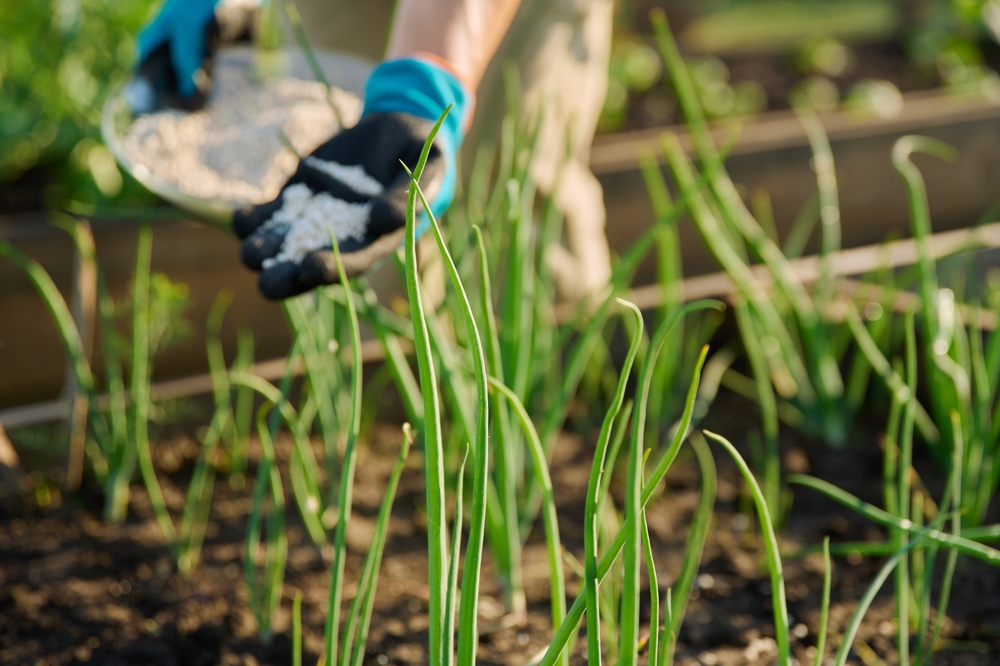
Green onions are criminally underrated as an April crop. They germinate in genuinely cold soil (as low as 35°F / 2°C), grow fast, and you can be pulling them in 60 days. Unlike bulb onions, they don’t need precise day-length conditions or careful timing. Just sow them a quarter inch deep in a wide band, thinning to an inch apart, and eat the thinnings as you go.
The succession sowing principle applies here too. A short row every 2 to 3 weeks from April through early summer means you’re pulling fresh scallions all season rather than having a glut in June and nothing after. Evergreen Hardy White is a clump-forming type that’s perennial in mild climates and divides and multiplies over time, so you end up with more each year. Tokyo Long White produces long, elegant white shanks and has a mild, sweet flavor. Red Beard is striking with its red-tinged stalks and looks beautiful in the garden as well as on the plate.
11. Basil

Basil doesn’t go outside in April. Let me be clear about that. One frost and it’s finished. One cold night and it sulks for weeks. But it’s absolutely the right time to start it indoors, because basil germinates quickly (5 to 7 days at 70°F / 21°C and above) and a 6-week head start means you’ll have productive, bushy plants ready to go outside when the weather is genuinely warm in late May or June.
Sow no more than a quarter inch deep and keep the soil consistently moist. Basil is prone to damping off if you sow it too thickly in poor airflow, so give seedlings space and ventilation as soon as they’re up. It also hates having its roots disturbed, so sow into the containers you plan to grow it in, or transplant with care. Genovese is the gold standard for pesto and general cooking. Lettuce Leaf gives you enormous crinkled leaves that are satisfying to work with. Purple Ruffles is ornamental as well as useful. Lemon Basil is underused and wonderful in Southeast Asian cooking and summer drinks.
12. Cucumbers

Cucumbers want warmth to germinate (70 to 95°F / 21 to 35°C) and won’t go outside until both air and soil are reliably warm, so April is the right time to start them indoors in most zones. Sow in individual pots because they resent root disturbance at transplanting, 2 to 3 weeks before your last frost date. They germinate in 3 to 7 days and grow fast. Don’t start them earlier than that or you’ll have huge plants with nowhere to go.
Train them up a trellis rather than letting them sprawl. It saves space, improves airflow (which cuts down on powdery mildew significantly), and makes harvesting much easier. Marketmore 76 is reliable and disease-resistant. Lemon Cucumber is round, yellow, and mild, and tends to convert people who think they don’t like cucumbers. Boston Pickling is the classic thin-skinned pickling type. Armenian Cucumber is technically a melon but grown exactly like a cucumber: pale green, ribbed, enormously productive in heat, and excellent for slicing. Ready 50 to 70 days from direct sow.
13. Summer squash and zucchini
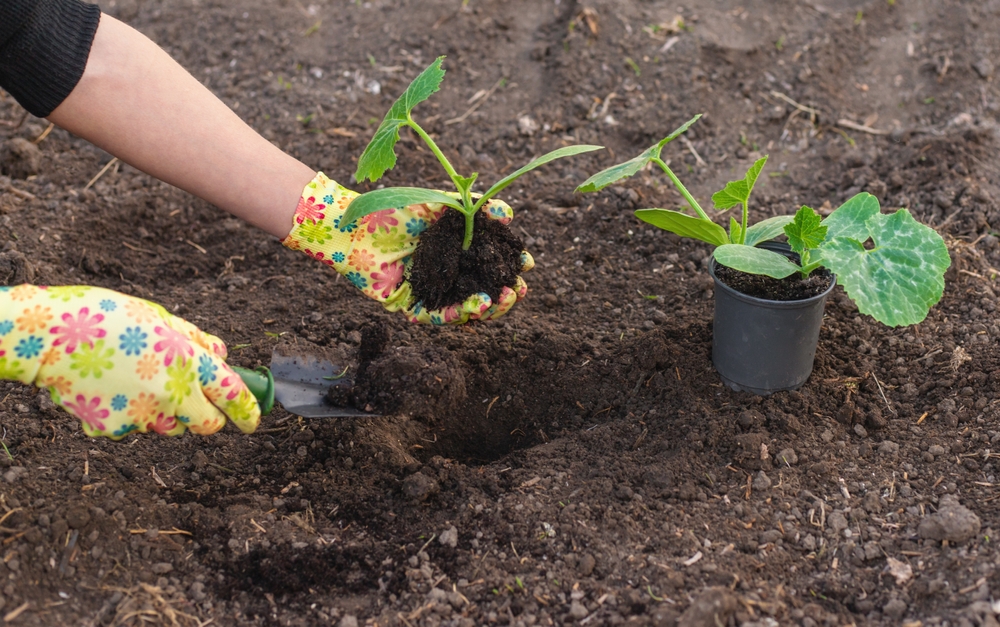
Start summer squash indoors 2 to 4 weeks before your last frost date, in individual pots. Sow seeds on their side or point down, about an inch deep. They germinate in 7 to 10 days at 70 to 95°F (21 to 35°C) and grow fast, so don’t start them more than 4 weeks early or you’ll have enormous plants that can’t go outside yet. In zone 7 and warmer, you can direct sow in late April once soil hits 60°F (15°C).
One plant of a productive variety produces more zucchini than most households can eat. Two is probably sufficient for most families. Plant accordingly. Costata Romanesco is an Italian ribbed variety with a nuttier, more complex flavor than the standard types, and it’s one of my favorites. Black Beauty is the reliable dark green standard. Yellow Crookneck is buttery and tender. Patty Pan is fun to grow, with its flying-saucer shape, and best harvested when it’s under 3 inches across. Check plants daily once they start producing. A zucchini that was marble-sized yesterday is a baseball bat today. Ready 50 to 65 days from direct sow.
14. Winter squash and pumpkins
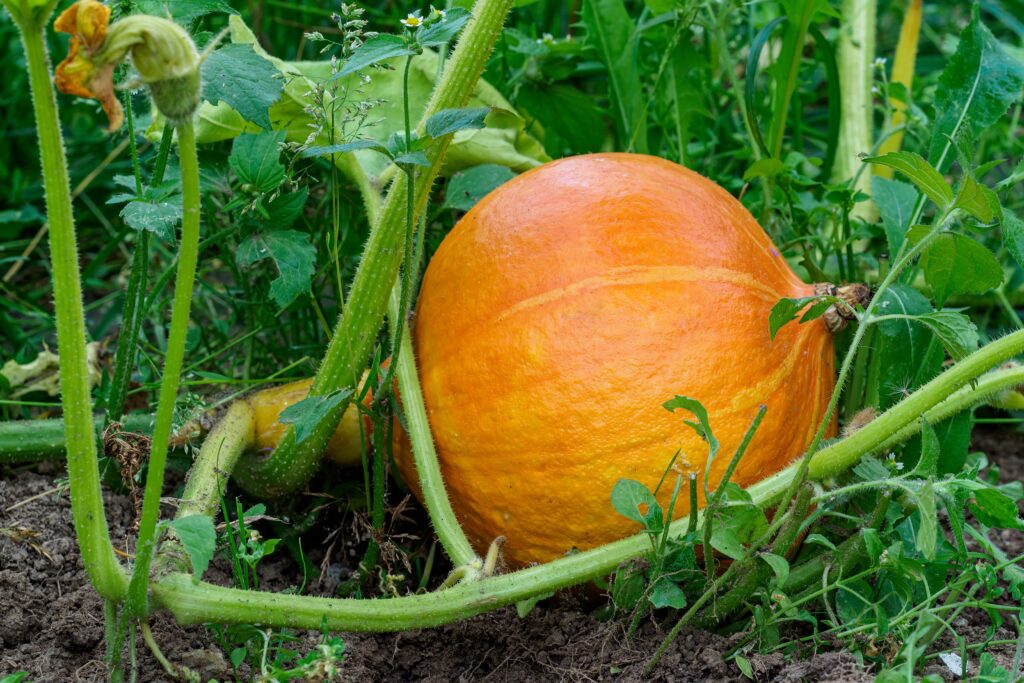
Same timing as summer squash: start indoors 2 to 4 weeks before last frost, or direct sow after it. Same no-root-disturbance rule: individual pots, careful transplanting. The difference is that winter squash needs a much longer season and considerably more space, and the payoff is fruit you can store and eat for months after harvest.
Waltham Butternut is the reliable standard for a reason: productive, stores well for months, good flavor. Red Kuri is one of my favorites, with its bright orange-red skin, dense nutty flesh, and smaller size that makes it easier to handle than a full-sized pumpkin. Delicata has compact vines compared to most winter squash, matures earlier than many varieties, and has a rich, sweet flavor that needs no seasoning. Long Island Cheese Pumpkin is a beautiful flat, ribbed heirloom that looks like a wheel of cheese and makes extraordinary soup. Marina di Chioggia is gnarly and dark blue-green, looks like something from another planet, and has some of the finest flavor and longest storage life of any squash I’ve grown. Ready in 85 to 110 days depending on variety.
15. Melons
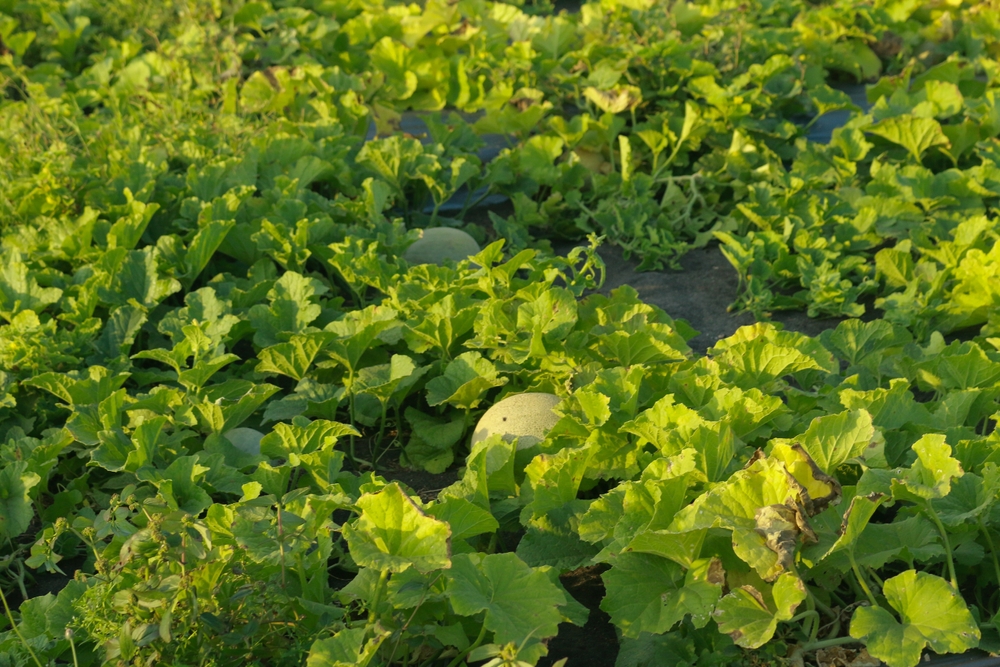
April is the right time to start melons indoors in most temperate zones. They need a long warm season, and transplanting well-established seedlings into genuinely warm soil gives them the best possible start. Sow 3 to 4 weeks before your last frost date, in individual pots (same deal as squash and cucumbers: roots must not be disturbed). Germination takes 5 to 10 days at 75 to 90°F (24 to 32°C), and a heat mat is worth it here.
Don’t even think about transplanting until soil temperature is at 65°F (18°C) or above. Melons planted into cold soil stall out and frequently never fully recover. Mulch well after transplanting to hold warmth in the soil. In zones 5 to 6, choose shorter-season varieties. Collective Farm Woman is a Russian heirloom cantaloupe that ripens in 70 to 80 days and handles cooler conditions better than most. Honey Rock is fragrant and sweet at around 80 days. Hale’s Best Jumbo is a classic cantaloupe with rich orange flesh at about 85 days. For watermelon in a shorter season, Sugar Baby is compact, reliable, and matures in 75 to 80 days.
One thing that makes a genuine difference with melons: reduce watering in the final week or two before harvest. Consistent watering while the fruit develops, then pulling back as it ripens concentrates the sugars and dramatically improves flavor.
16. Sweet corn

Sweet corn won’t germinate in cold soil. The minimum is 50°F (10°C), but 60°F (15°C) and above is when you’ll get reliable, quick germination. In zone 7, late April soil is often warm enough. In zones 5 to 6, you’re probably looking at early to mid-May, so keep an eye on your soil thermometer rather than the calendar.
Corn is wind-pollinated, and this is critical: you must plant it in blocks, not rows. A single long row will give you poorly filled cobs because the pollen can’t reach the silks efficiently. Four rows by four rows is the minimum viable block. Sow seeds 1 inch deep, 9 to 12 inches apart.
Heirloom sweet corn is worth growing for the flavor alone, even though it converts sugars to starch faster after harvest than modern supersweet hybrids. Pick it at peak ripeness and eat it the same day, and you’ll understand why old-timers insisted on getting the water boiling before you walked to the garden. Golden Bantam is the classic, dating to 1902, with rich creamy yellow kernels on 6 to 7-inch cobs at about 78 days. Stowell’s Evergreen is a white corn that holds its sweetness longer on the cob than most varieties, around 95 days. Country Gentleman, also called Shoe Peg, has irregular peg-shaped white kernels with exceptional sweetness at around 93 days.
Plan for raccoons. They know exactly when your corn is ripe, often better than you do, and they will harvest it the night before you planned to. A strand of electric fence around the bed is the most reliable deterrent I’ve found.
17. Strawberries

Bare-root strawberry crowns go in the ground in early April in most zones, and container-grown plants can follow from mid-April. Full sun, well-drained soil, and good organic matter worked in beforehand. Plant so the crown (where roots meet leaves) sits exactly at soil level. Too deep and they rot. Too shallow and they dry out. It’s fiddly but it matters.
If you’re planting June-bearing varieties, remove all the flowers in year one. It feels counterproductive and it is genuinely painful to do, but it diverts energy into root development and results in significantly heavier harvests in years two and three. Ever-bearing and day-neutral types can be allowed to fruit in year one.
Earliglow is my pick for flavor: intensely sweet, early, and one of the best fresh-eating strawberries I’ve grown. Ozark Beauty is an ever-bearing variety that produces reliably over a long season and does well in containers. Jewel is a June-bearer with good yield and solid flavor. For something different, Alexandria is an alpine strawberry, tiny and extraordinarily flavorful, that can be grown from seed, doesn’t produce runners, and is perfect for edging beds and containers.
RELATED ARTICLE: How to Grow Strawberries From Scraps
18. Raspberries
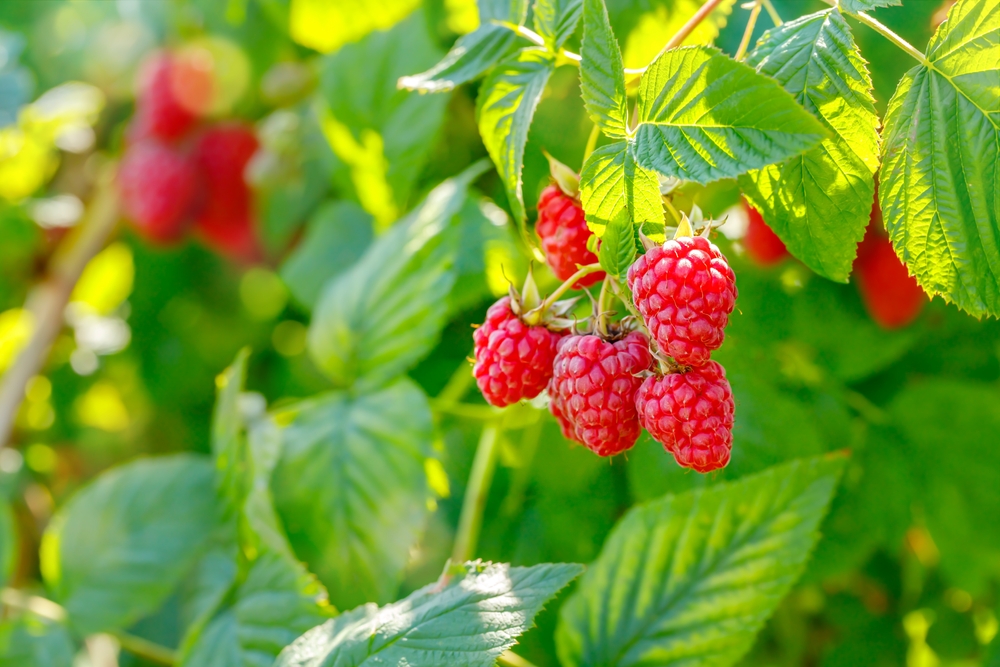
April is a good time to get raspberry canes in the ground, particularly bare-root ones, which establish best before they break dormancy in early spring. Container-grown canes are fine to plant any time the ground isn’t frozen. They need a well-drained site in full sun and good, solid support: posts and wire, or a sturdy trellis. Don’t skimp on the support structure. A loaded raspberry cane in July is heavy.
Before planting, spread compost generously across the bed and work it into the top few inches. Plant canes 18 inches apart. After planting, cut them back to about 12 inches from the ground. This feels wrong. Do it anyway. It forces strong new growth from the base and gives you a far better long-term plant.
The most important thing to understand about raspberries is the difference between summer-bearing and fall-bearing types. Summer-bearing varieties fruit on second-year canes. After harvest, those canes die and you remove them, and the new canes that grew that season will fruit the following year. Fall-bearing varieties fruit on first-year canes, and management is much simpler: after harvest, cut everything to the ground and new canes grow the following spring. If you’re new to growing raspberries, start with a fall-bearing type. Heritage is vigorous and very productive. Latham is a summer-bearing heirloom that’s extremely cold-hardy and reliable in zones 3 to 8. Anne is a sweet, mild yellow variety worth growing for variety. First real harvest: year two for summer-bearing types, late summer of year one for fall-bearing.
A few April planting principles worth knowing
Soil temperature matters more than air temperature and more than the calendar. A cheap soil thermometer is one of the most useful tools in the garden. Most seeds have a minimum soil temperature below which germination either won’t happen or happens so slowly the seeds rot before they can emerge.
Don’t plant into waterlogged soil. If it sticks to your boots and compacts when you squeeze a handful, it’s not ready. Working wet soil compacts it and damages structure in ways that take time to recover. A few days of patience is worth it.
Harden everything off before it goes outside for good. An hour or two in a sheltered spot to start, building over 7 to 14 days to full outdoor exposure. Cold, wind, and direct sun are all genuine shocks to an indoor-raised seedling, and the transition matters.
Keep row covers handy. April will surprise you with a late frost, especiallys in zones 5 and 6. A roll of horticultural fleece draped over a vulnerable bed can save a whole planting.
You might also like…
18 Simple Old School Garden Tips That Work Wonders