
Affiliate disclosure: This post may contain affiliate links. Please see full disclosure.
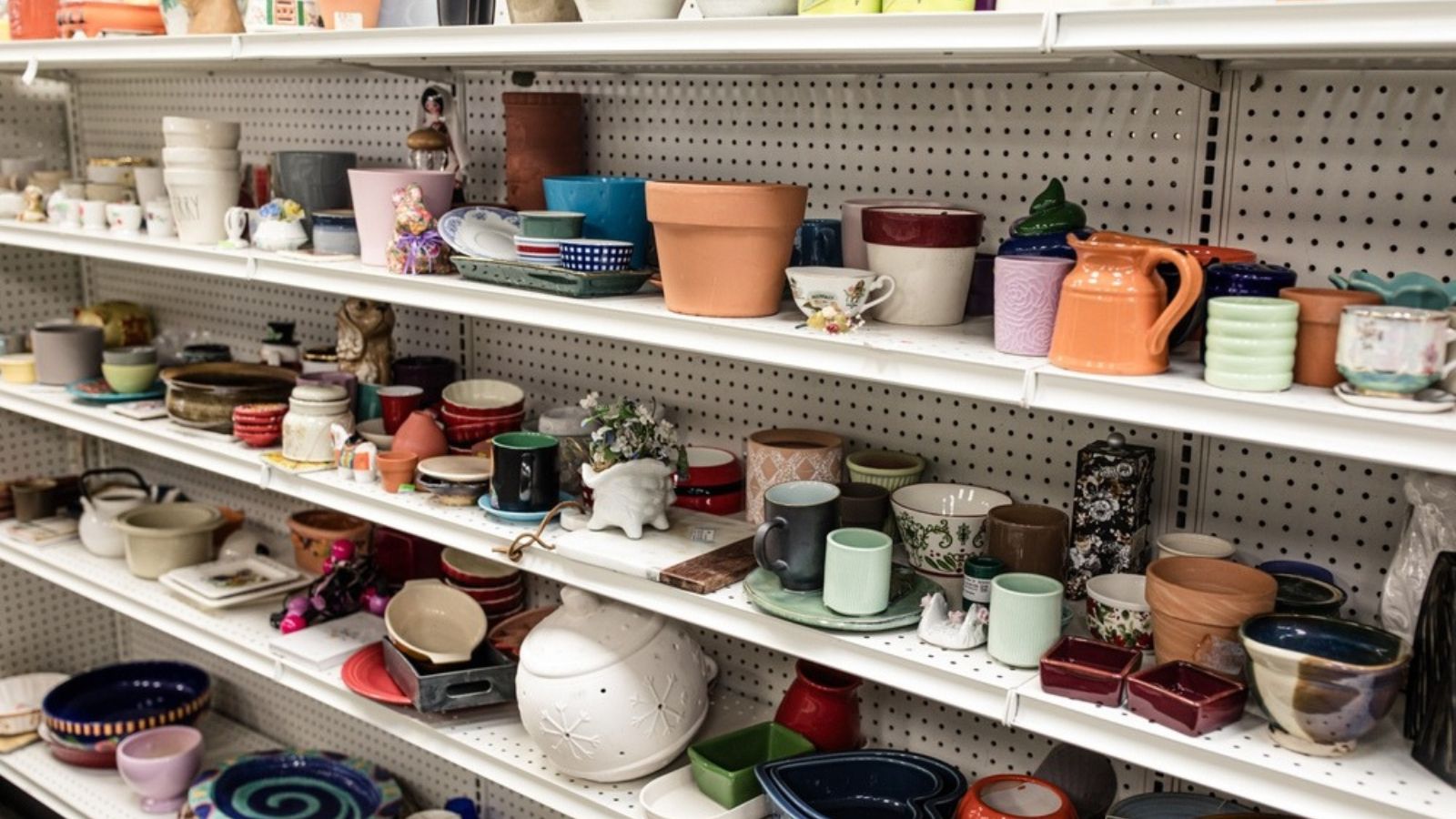
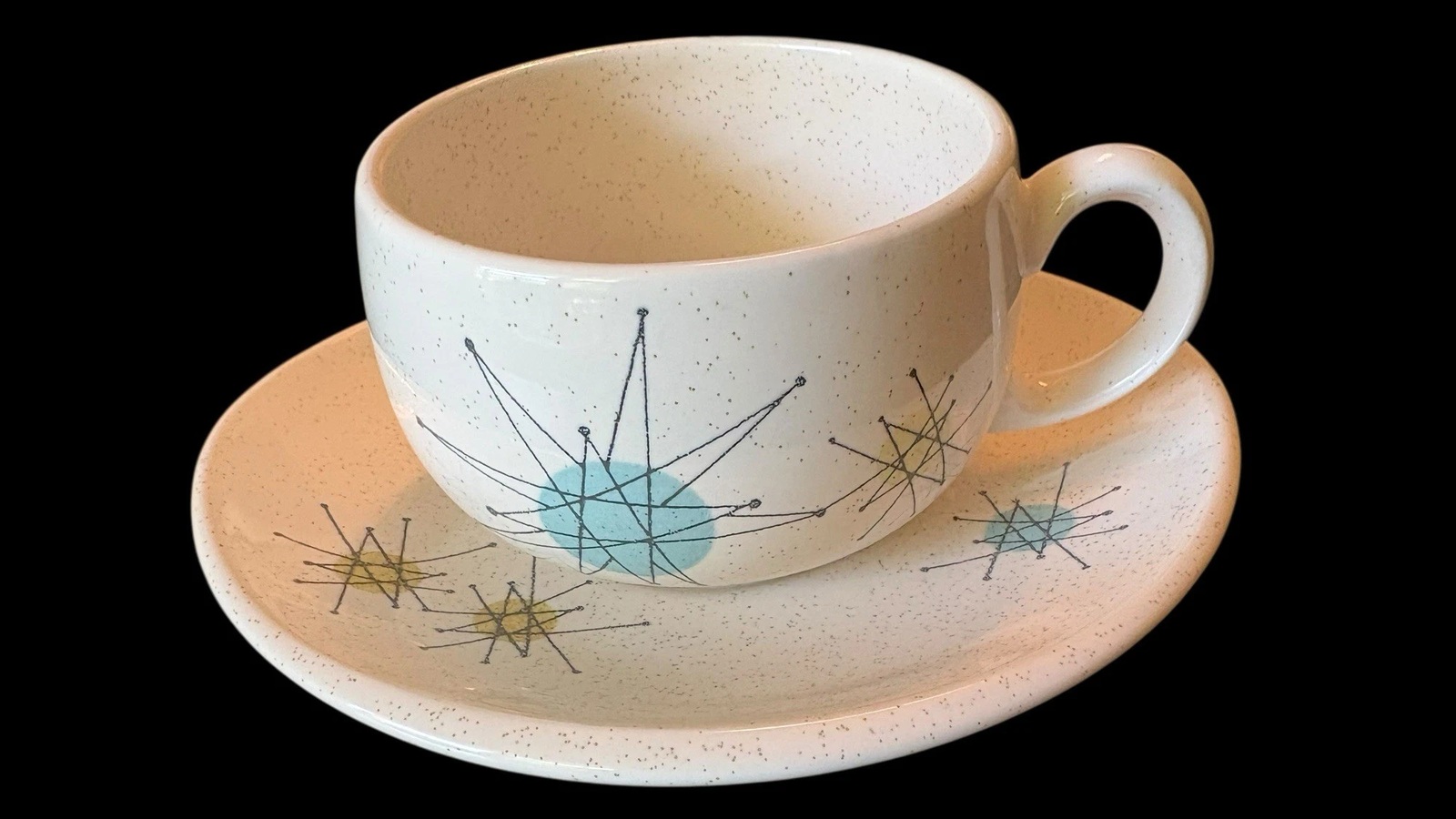
Franciscan Starburst is the vintage dinnerware to recognize by its spiky black stars, soft aqua, and yellow-green accents. Introduced in 1954, it has the sort of cheerful atomic-age design that can look like an odd assortment of old dishes until you know what you’re seeing. A lone cup or an unusually shaped serving dish deserves a second look.
As a collector and long-time thrifter, I’m interested in pieces that reward a little attention. With Starburst, I’d look beyond the dinner plates. The shapes are a large part of its appeal, and an unfamiliar serving piece could be more interesting to me than another perfectly ordinary stack of plates.
The stars and shapes work together
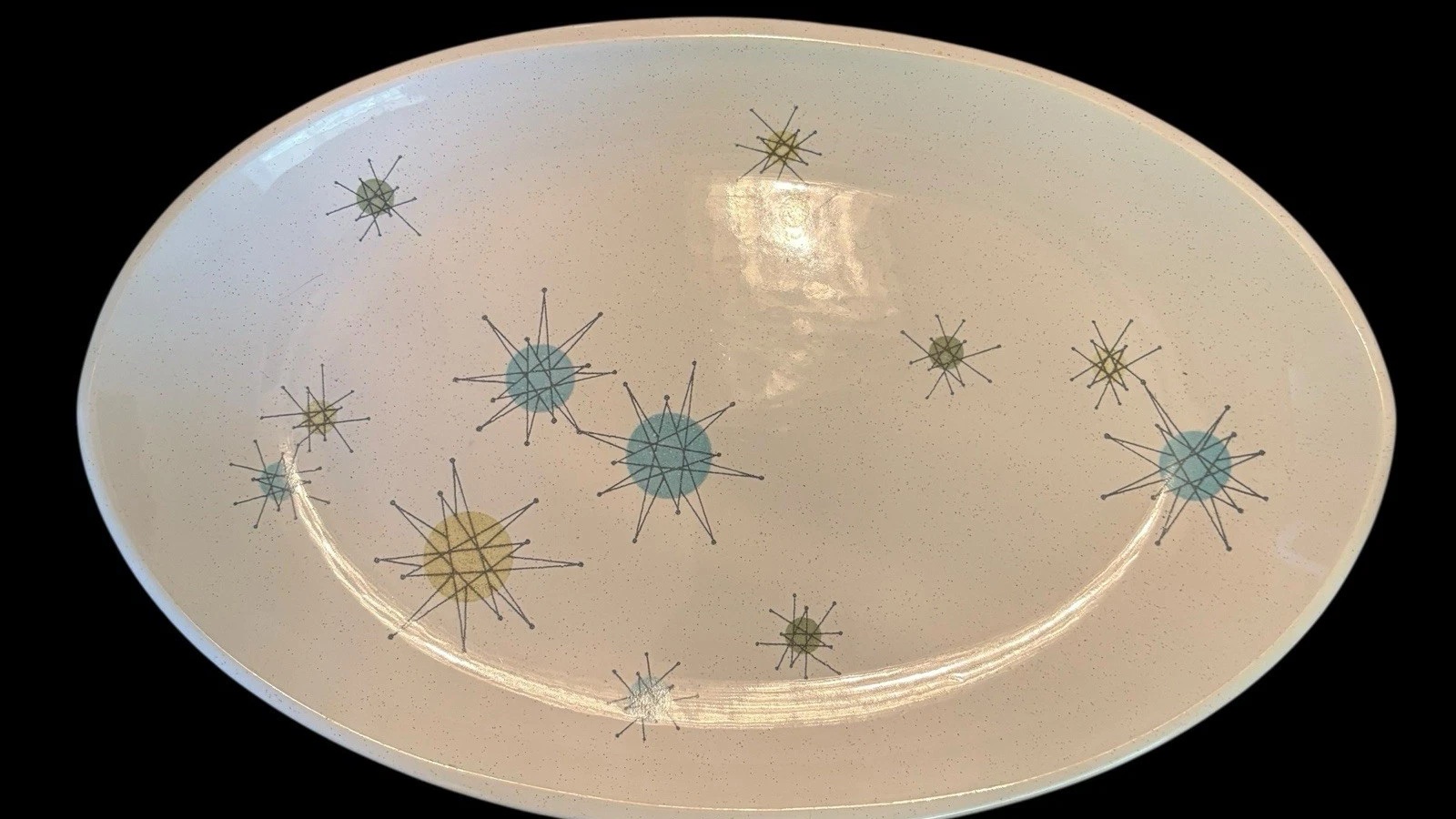
Starburst combines fine, radiating black lines with patches of color on a pale background. It feels loose and lively rather than neatly formal. Look at the whole arrangement, not just one star: plenty of mid-century dinnerware uses star-like motifs, and the word “atomic” in a price label doesn’t identify a manufacturer.
The pattern belongs to the Eclipse shape, introduced as part of Franciscan’s Modern Americana dinnerware. George T. James designed the shape, while Mary Chalmers Brown supplied the Starburst artwork. Those are separate contributions, even though the finished pieces make them feel inseparable.
That distinction is useful when identifying something with an unfamiliar outline. The decoration tells you the pattern; the form helps establish which piece you’re holding. Don’t dismiss a curved, off-center-looking serving dish because it doesn’t resemble the round plates beside it.
I’d save clear reference photographs of a plate, cup, and serving piece on my phone. In a crowded thrift store, being able to compare the line work and colors is more useful than trying to remember a general impression of “those 1950s stars.”
Turn it over before making up your mind
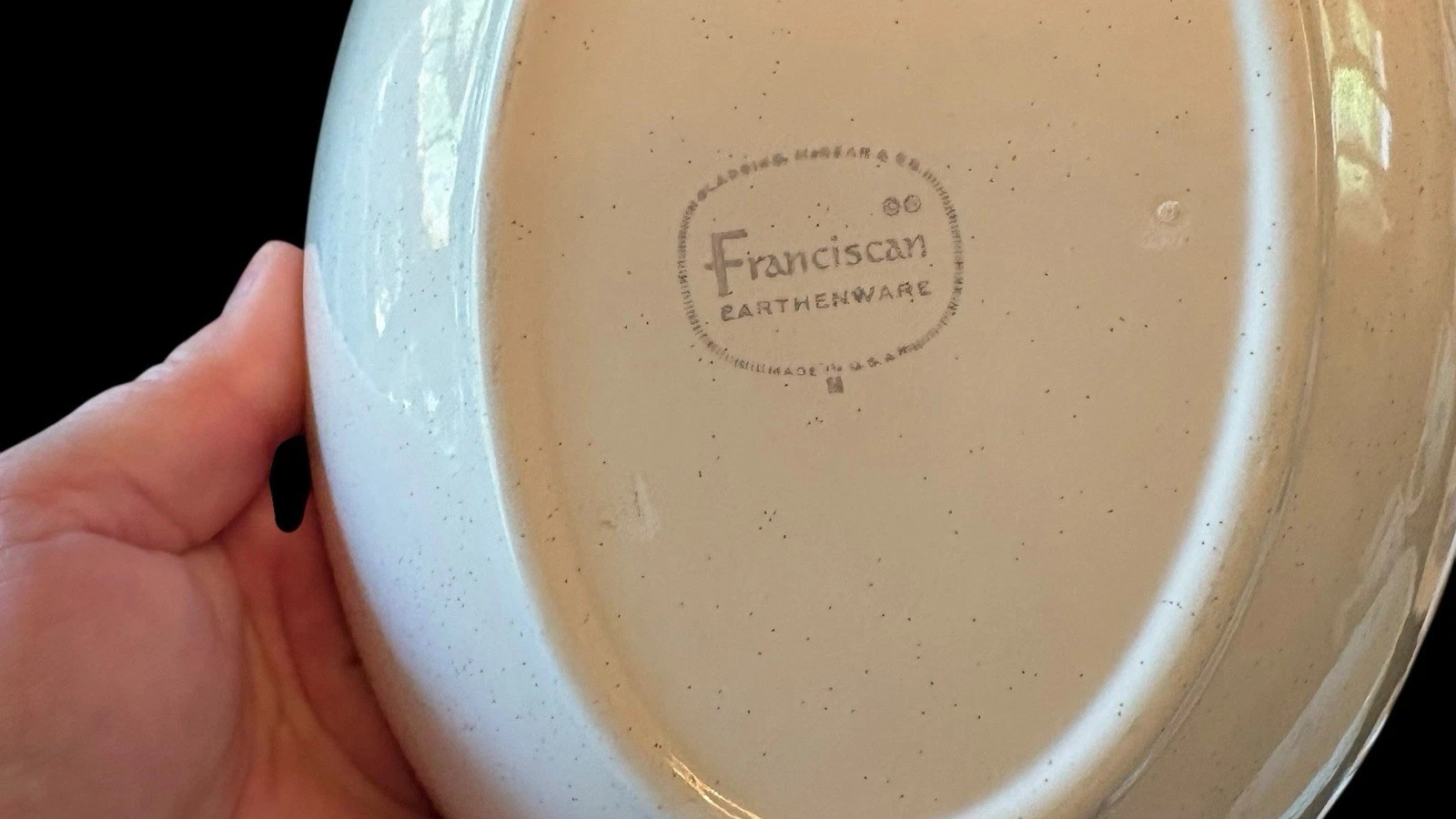
Franciscan used several earthenware backstamps during the mid-century years. The rounded rectangular mark collectors call the TV or TV-screen mark was introduced in 1958. Earlier marks and later variations also exist, so one remembered stamp isn’t a reliable pass-or-fail test.
Look for the Franciscan name and compare the entire mark with a dated example. Wording, layout, and company identification matter together. Gladding, McBean & Co. was removed from the stamp after the 1962 merger; Interpace appeared on a subsequent version. Different company wording can therefore reflect a different manufacturing period.
Small pieces need extra care. Some Franciscan earthenware carries only a small “Made in U.S.A.” stamp, rather than the larger brand mark. A sparse underside doesn’t establish Starburst, but it isn’t a reason to dismiss an otherwise convincing piece without checking further.
I’d photograph the underside as well as the pattern before researching a possible find. It’s frustratingly easy to get home with a lovely picture of the front and none of the information needed to identify it.
The serving pieces are worth learning
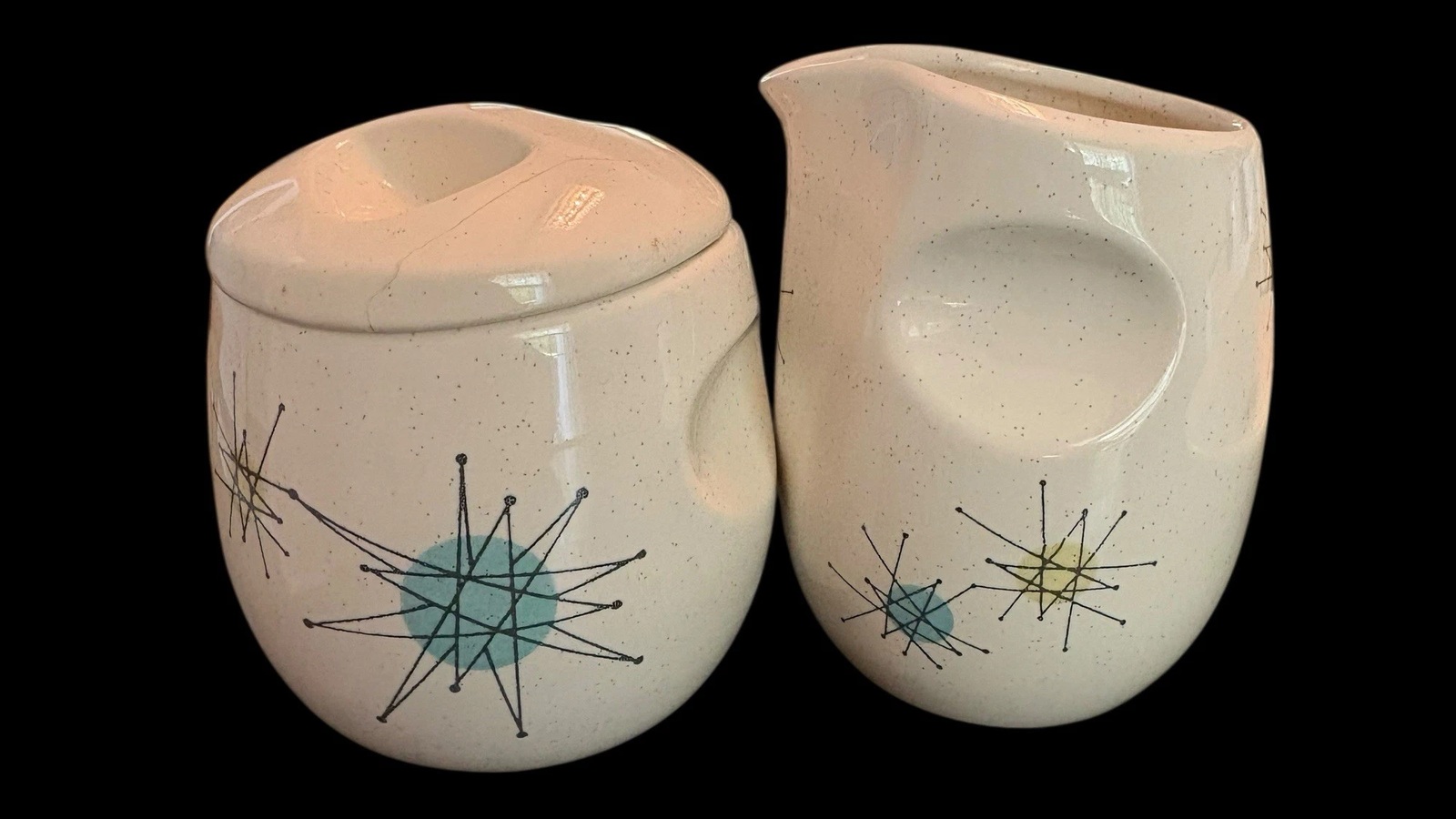
The Starburst range includes crescent salad plates, divided serving dishes, covered casseroles, pitchers, and coffee and teapots, alongside conventional place-setting pieces. A cup isn’t the whole story, and neither is a dinner plate.
For me, the attraction is being able to build a collection around the pieces I enjoy. A small shelf of sculptural serving dishes might be more satisfying than assembling a full dinner service. You can also collect a few place settings without taking on the storage requirements of every casserole and platter.
Check any covered piece as two objects. Does the lid match the documented shape? Is its decoration appropriate? Are both parts sound? I’d be particularly reluctant to pay a complete-piece price for a casserole or teapot that needed an expensive replacement lid.
If several pieces are being sold together, count the actual usable combinations. Six cups and three saucers aren’t six cup-and-saucer sets, however impressive they look piled up.
Check the surface and the awkward little edges
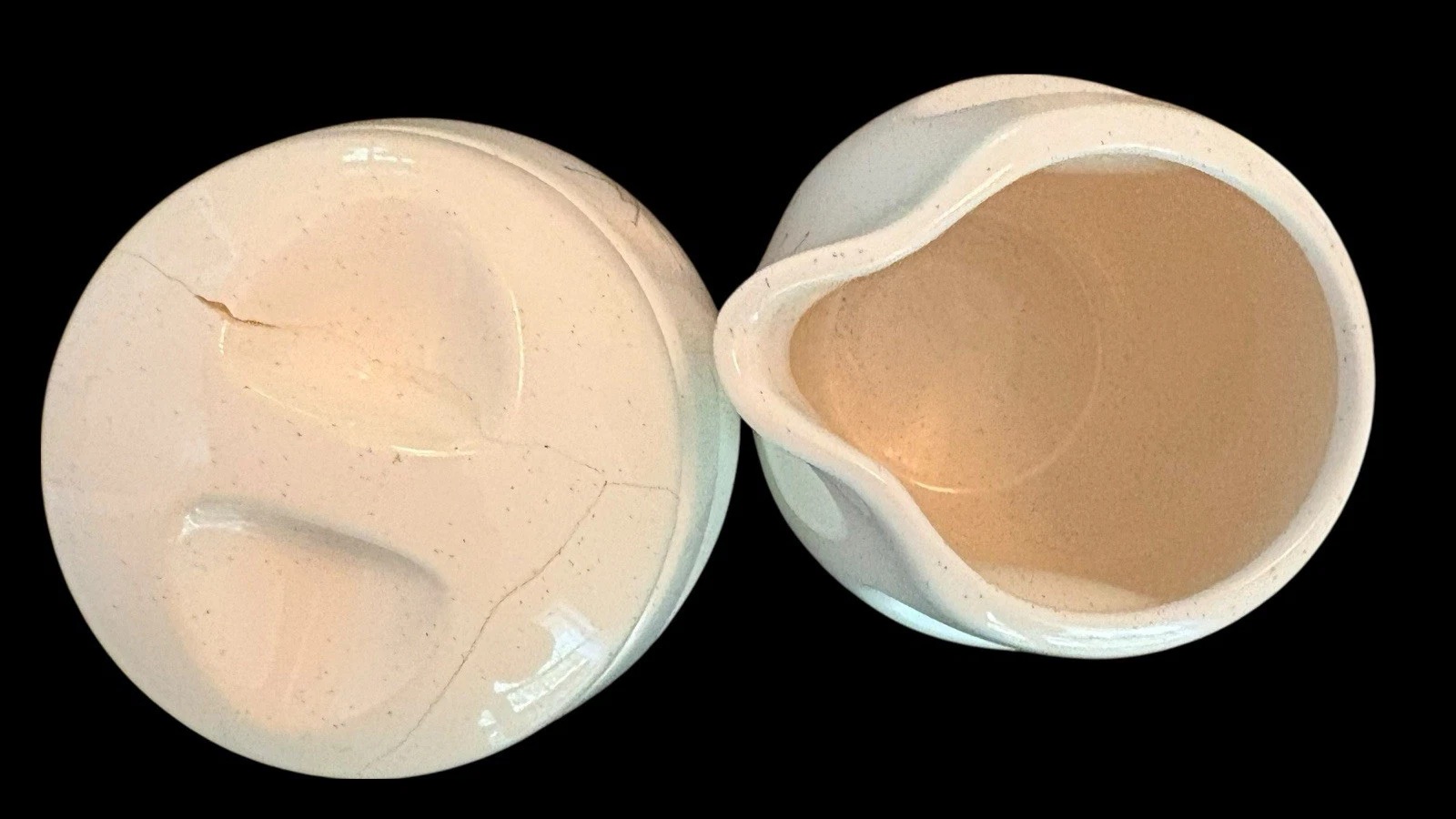
I’d inspect the plate rims, cup handles, spouts, lid edges, and undersides before being won over by the stars. Look for chips, hairline cracks, dark staining, worn decoration, and signs of repair. Tilt the surface toward the light so a glossy glaze doesn’t hide damage.
Crazing, the fine network of lines in a glaze, deserves a closer look rather than an automatic shrug about age. I’d separate a piece I wanted for display from one I intended to eat from. A vintage oven-safe stamp isn’t a present-day assessment of a damaged or repaired dish.
For routine food use, I’d choose dinnerware with a known condition and suitable current use guidance. An attractive old stamp doesn’t answer every question about a thrifted object’s history.
Judge the find by the particular piece
Compare the exact shape, size, condition, and completeness when checking prices. A small plate and a covered serving piece aren’t useful substitutes for one another. Specialist replacement-shop prices also aren’t the same thing as completed secondhand sales.
I’d be happiest finding a recognizable piece with clear decoration and no hidden damage, at a price that left room for enjoyment rather than worry. Learn the stars, remember the Eclipse shapes, and turn the dish over. A slightly peculiar serving bowl could be the piece that makes the whole collection interesting.
You might also like…
The CorningWare Pattern Collectors Dream Of Finding At A Thrift Store
The Blue-And-White Pyrex Pattern Collectors Dream Of Finding At A Thrift Store
The Pink Pyrex Pattern Collectors Dream of Finding at a Thrift Store

