
Affiliate disclosure: This post may contain affiliate links. Please see full disclosure.
Hall Autumn Leaf china began as a Jewel Tea home-delivery exclusive in 1933, which explains why so many surviving pieces have a family history attached to them. The cream-colored dishes, decorated with orange and yellow flowers, brown and tan leaves, and gold trim, were often acquired gradually rather than purchased as complete dinner services.
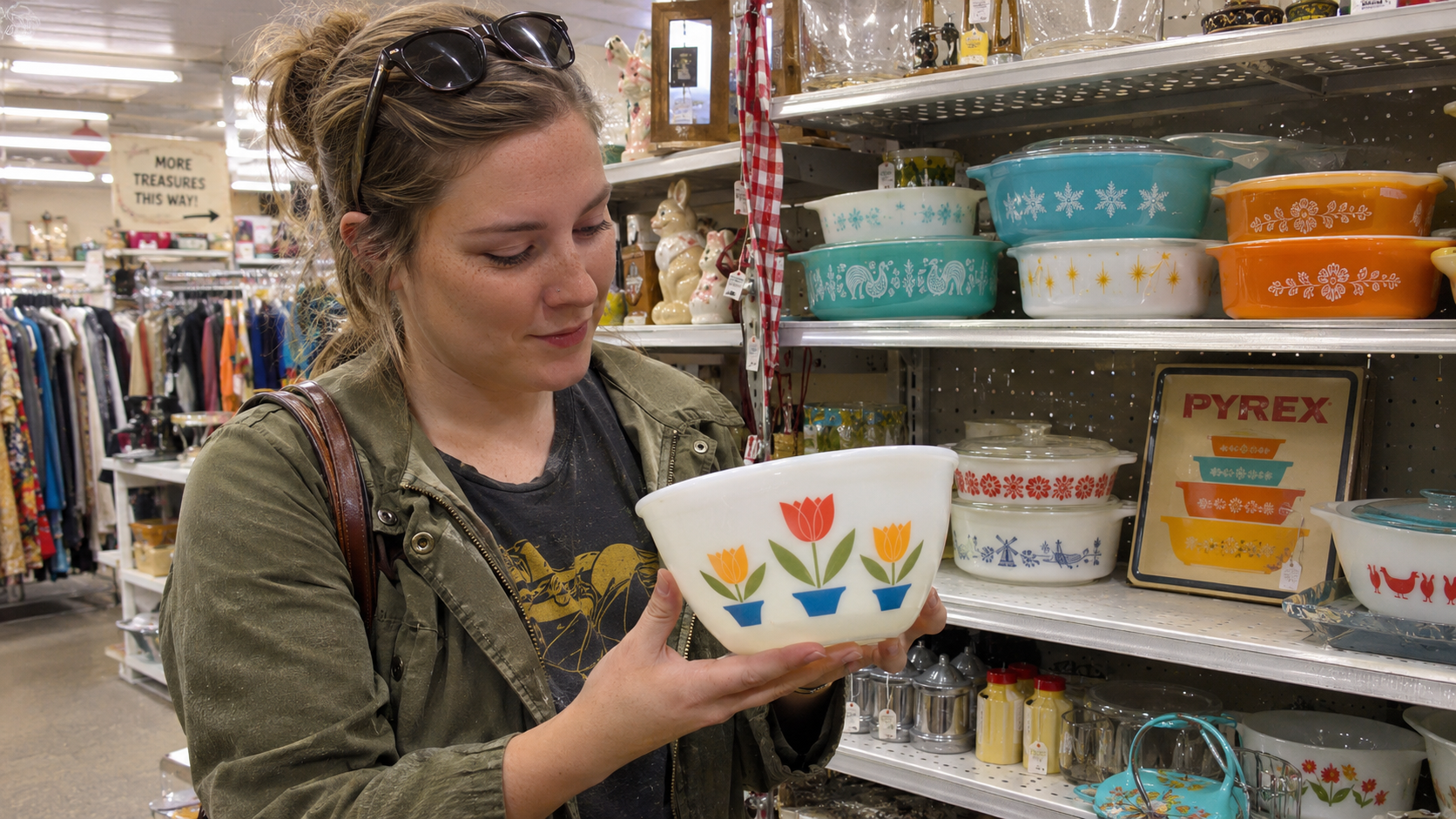
As an avid thrifter and collector, I find that history appealing, but I pay at least as much attention to the shape, backstamp, and condition. Those details tell you what you’re holding, and whether it’s a piece you’ll enjoy living with.
How a grocery delivery route built a dinnerware tradition
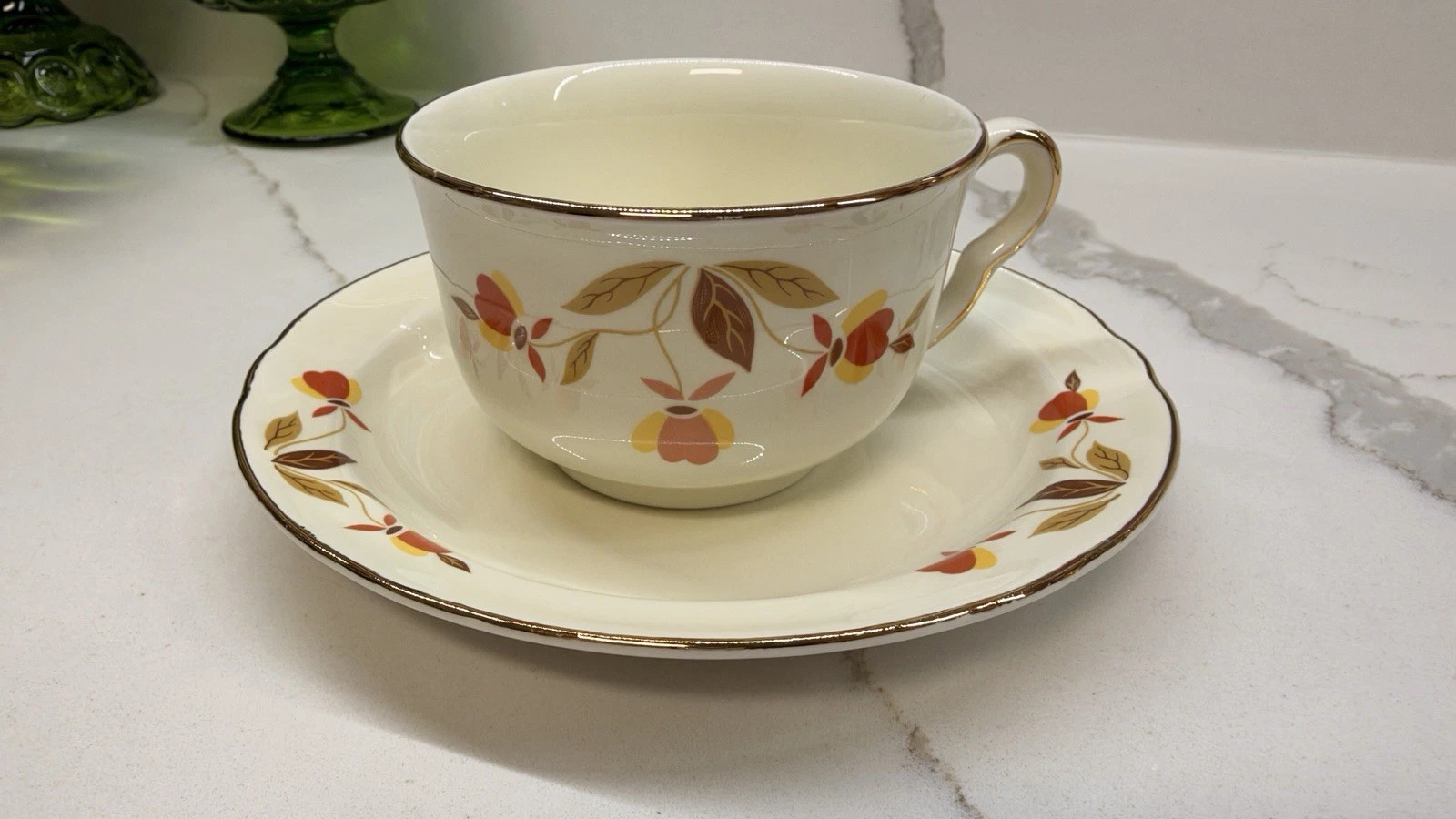
The Hall China Company was established in East Liverpool, Ohio, in 1903. Its first Autumn Leaf bowl appeared in 1933, followed by a breakfast set in 1936. Hall made the dishes for Jewel, whose route salespeople delivered groceries and household goods directly to customers’ homes.
The dishes were sales incentives. Customers could obtain pieces through promotions or buy them at a special price with their grocery purchases. This wasn’t one universal program where every delivery earned a free plate. The arrangements varied, which helps explain why families accumulated different combinations of dishes over time.
The Autumn Leaf decoration became exclusive to Jewel in 1933, although the decal had appeared earlier on other manufacturers’ wares. Jewel’s home-delivery service continued until 1981, while the original Hall Jewel-era pieces date broadly from the 1930s through the 1970s. Don’t assume an old-looking bowl was made in the pattern’s first year.
Read the full backstamp, not just its shape
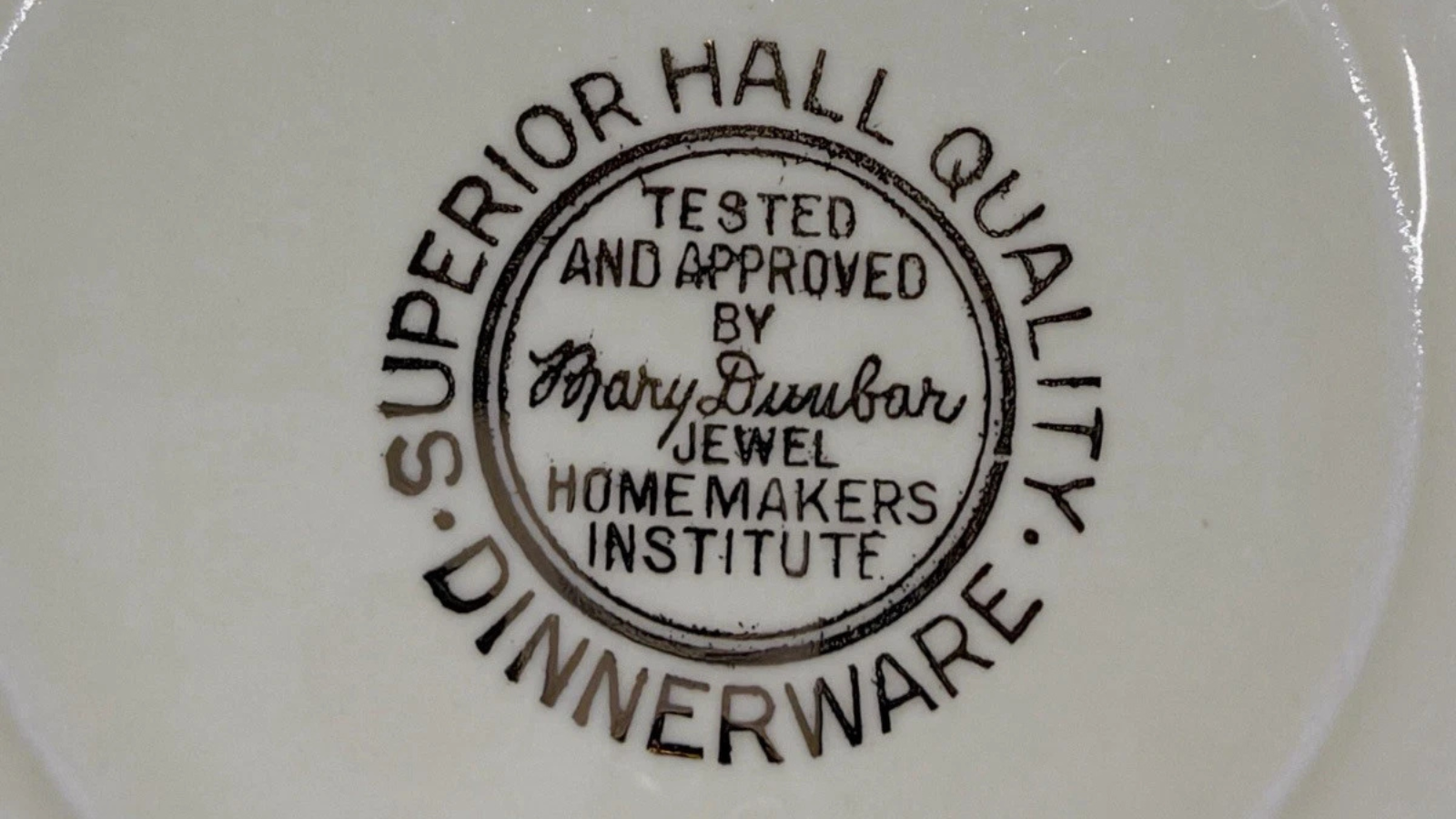
Turn a dish over and look carefully at the wording. One Hall kitchenware mark reads “HALL’S SUPERIOR QUALITY KITCHENWARE” around a circular approval seal naming Mary Dunbar and the Jewel Homemakers Institute. Dinnerware can instead carry “SUPERIOR HALL QUALITY DINNERWARE” in a ring, with approval wording inside.
Those aren’t the only Hall marks. Another later-style mark places HALL inside a rounded rectangular outline, with USA below it. That arrangement alone doesn’t establish an original Jewel-era piece, and it shouldn’t be treated as proof that a dish is a fake, either. Compare its full mark, shape, and decoration with documented examples before deciding when it was made.
Mary Dunbar wasn’t a potter signing her work. The name was used by directors of the Jewel Homemakers Institute, founded in 1924, which tested and approved products. The wording belongs to Jewel’s promotional history, not a particular craftsperson or production date.
I photograph the entire underside of anything I’m uncertain about, including lettering that’s faint or partly obscured. Don’t rely on the color of a circle or the presence of a rectangular border. The stamp may not name Autumn Leaf or provide a year at all. An unmarked piece needs more verification; the familiar decal alone cannot prove it’s Hall or date it to the 1930s.
Choose useful shapes and check for missing parts

There is plenty to collect without hunting down every shape ever made. Hall’s range included nesting mixing bowls, cups and saucers, plates, ball pitchers, covered casseroles, cookie jars, teapots, and drip coffee pots. Some shapes were offered for years, while others appeared for shorter periods. That doesn’t make every unfamiliar example exceptionally rare.
For a manageable collection, I’d choose a goal such as the three nesting bowls or a matching breakfast setting. A single everyday plate or cup can be equally satisfying if you like the decoration and condition. I’d much rather have a few sound pieces than a shelf full of damaged ones bought simply because the pattern matches.
On covered pieces, check that the lid belongs and sits correctly. Look for missing knobs, chipped spouts, cracked handles, or absent parts from a drip coffee setup. Run your eyes around the rim and base foot, then inspect the glaze for hairlines, discoloration, and old repairs. Pay special attention to places where a lid or handle places stress on the body.
Gold wear is common on handled and stacked pieces. Slightly worn trim on a sound, complete teapot may not bother me, particularly if I plan to display it. A mismatched lid, repaired handle, or crack is a more serious compromise. Decorations photograph beautifully; structural problems are what you’ll notice when you actually handle the china.
Separate later editions from originals and protect the finish
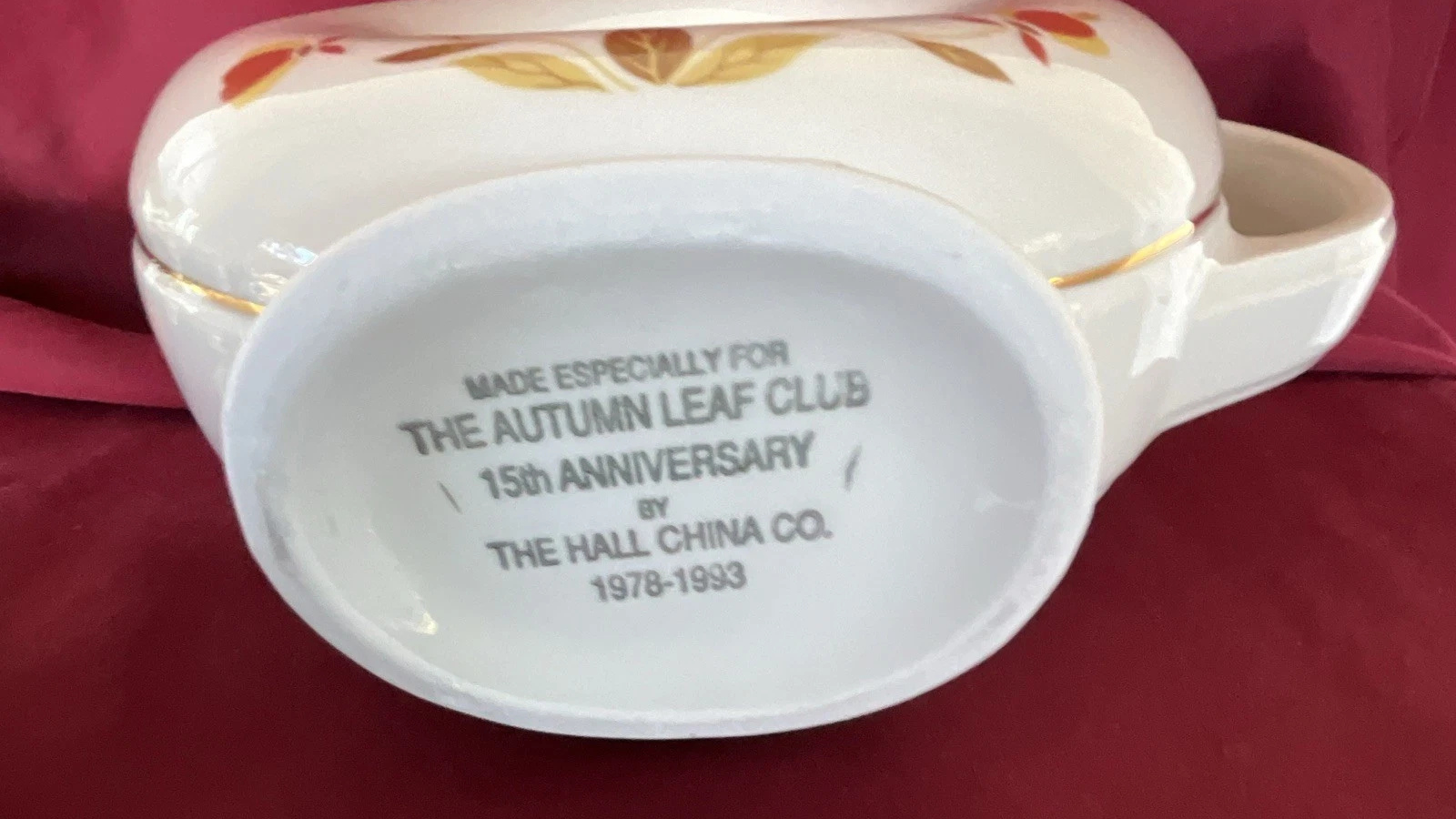
Not every genuine Hall Autumn Leaf piece came from a Jewel delivery route. Hall also made later collectors’ pieces and retail offerings. A documented example is the 1984 New York teapot, the first piece Hall made especially for the National Autumn Leaf Collectors Club. A 1987 club backstamp explicitly identifies a Hall commission for the club and gives that year.
These pieces are genuine Hall, but they were made after the original Jewel delivery years. Club, anniversary, limited-edition, or dated wording can help distinguish later commissions. Some later editions used newly decorated shapes rather than simply bringing back the original forms. Check the complete mark and cataloged shape together. A year on a club edition isn’t the date Autumn Leaf was introduced.
Care matters especially with the gold detailing. Dishwashers can remove the trim, so gently hand-wash with liquid dish soap and dry each piece. Place a soft barrier between stacked plates and between lids and rims to prevent rubbing. No cleaning method will replace gold that’s already worn away.
If you’re drawn to other vintage dishware patterns too, it’s worth being selective rather than bringing home every attractive dish. With Autumn Leaf, I’d choose a complete piece with sound handles, an undamaged rim, and the best surviving decoration I could find. A little worn gold wouldn’t put me off, but an unnoticed crack certainly would.
You might also like…
The CorningWare Pattern Collectors Dream Of Finding At A Thrift Store
The Blue-And-White Pyrex Pattern Collectors Dream Of Finding At A Thrift Store
The Pink Pyrex Pattern Collectors Dream of Finding at a Thrift Store

