Affiliate disclosure: This post may contain affiliate links. Please see full disclosure.
I spend a fair amount of time trying to make my garden produce the things the garden itself needs. Compost replaces bagged soil improvers, saved seed replaces at least some bought seed, and trees and hedges can provide an astonishing amount of useful material if you manage them with that in mind. Coppicing is one of the oldest and simplest examples.
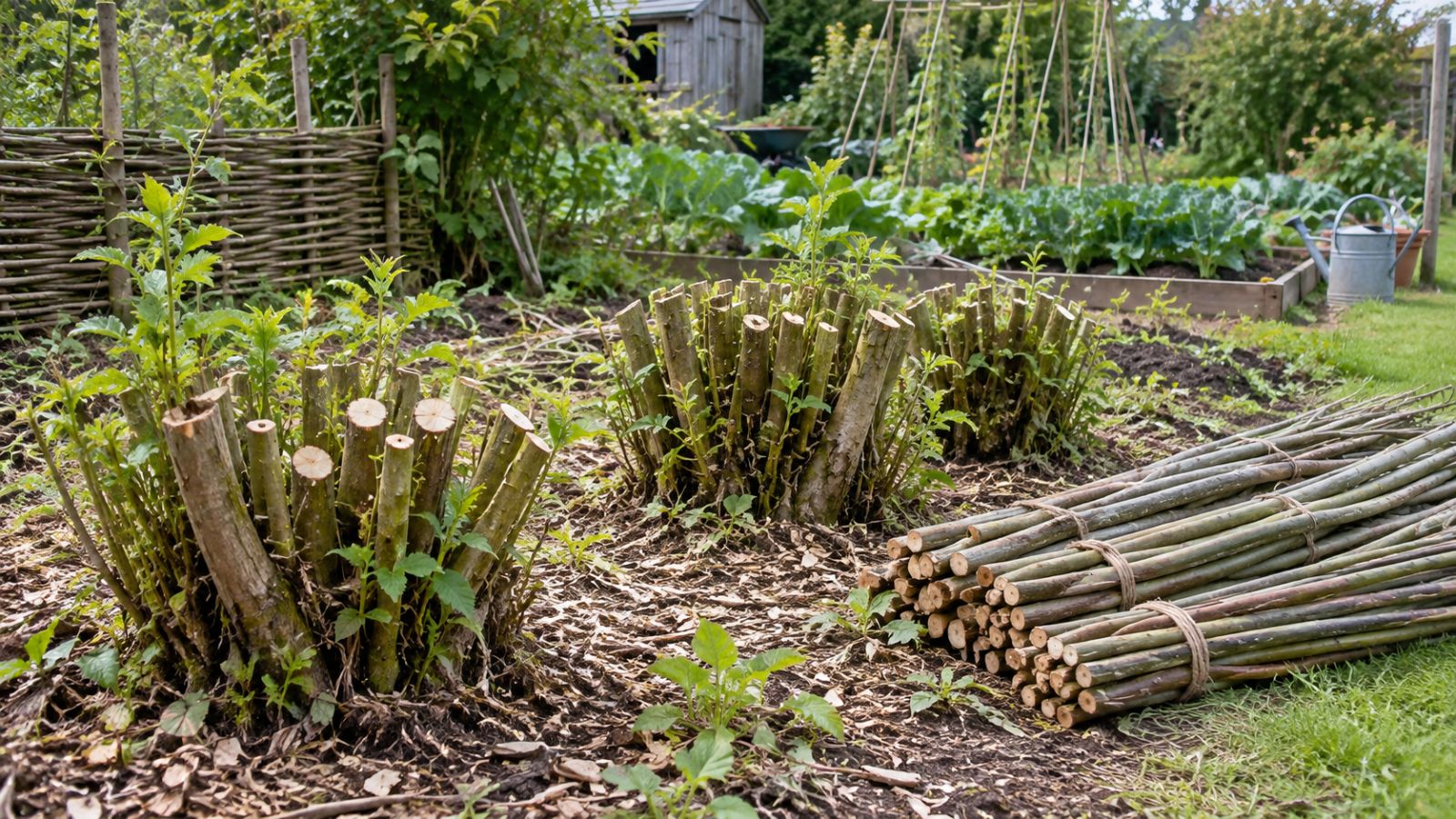
Instead of allowing a suitable tree or shrub to grow into one large trunk, you cut it back hard near the ground. The established root system remains alive and responds by throwing up a cluster of vigorous new stems. Those stems are allowed to grow, harvested, and then the cycle begins again. Hazel and willow are among the trees and shrubs that tolerate this treatment particularly well. Traditionally, coppiced woodland supplied everything from firewood and fencing material to hurdles, tool handles, and building materials. It is a genuinely old system, not a modern gardening trick dressed up with a new name.
For a gardener or homesteader, the useful bit is much simpler. Coppicing gives you repeated crops of fairly straight, narrow stems from the same plant. Instead of buying bamboo canes, wooden stakes, pea sticks, or poles every spring, you can grow them.
Once the plant is established, you are effectively harvesting wood rather than killing the tree. Cut it, let it regrow, and come back for another crop a few years later.
Hazel is probably the best all-round choice
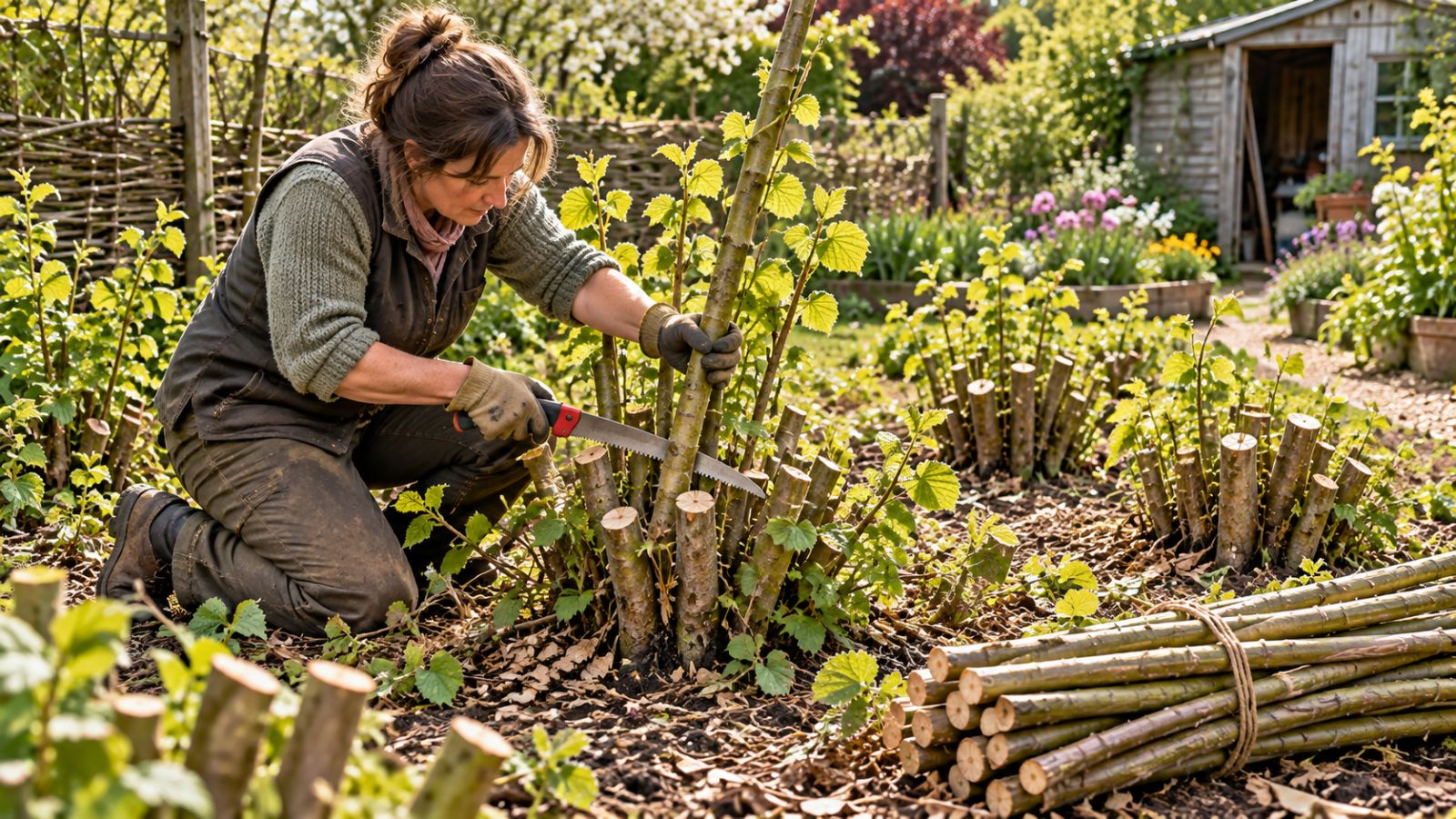
If I had room for only one plant specifically to produce garden poles, I would choose hazel. It naturally responds to coppicing by producing lots of straight upright shoots, and those stems are useful at several different thicknesses.
The long, reasonably stout ones make excellent bean poles and supports for climbing crops. Smaller branching pieces are perfect as pea sticks, because the side twigs give tendrils something to grab onto without any string or netting. Thicker sections can become stakes, edging, rustic trellis work, or the framework for plant supports. Hazel has been used this way for centuries, with traditional coppice products including bean poles, pea sticks, stakes, hurdles, and fencing material.
You also do not need a woodland to make this worthwhile. One or two well-established hazels can produce a surprising amount of material. For proper bean poles, the RHS recommends harvesting coppiced hazel stems at around three years old, when they are roughly 1¼ to 2 inches thick. The twiggy tops do not need to go on the burn pile either. Save those for peas and other light climbers.
I particularly like hazel because nothing about it feels single-purpose. You can have nuts, wildlife habitat, poles, sticks, stakes, and kindling from the same patch of ground.
Willow grows faster, but it has one annoying habit
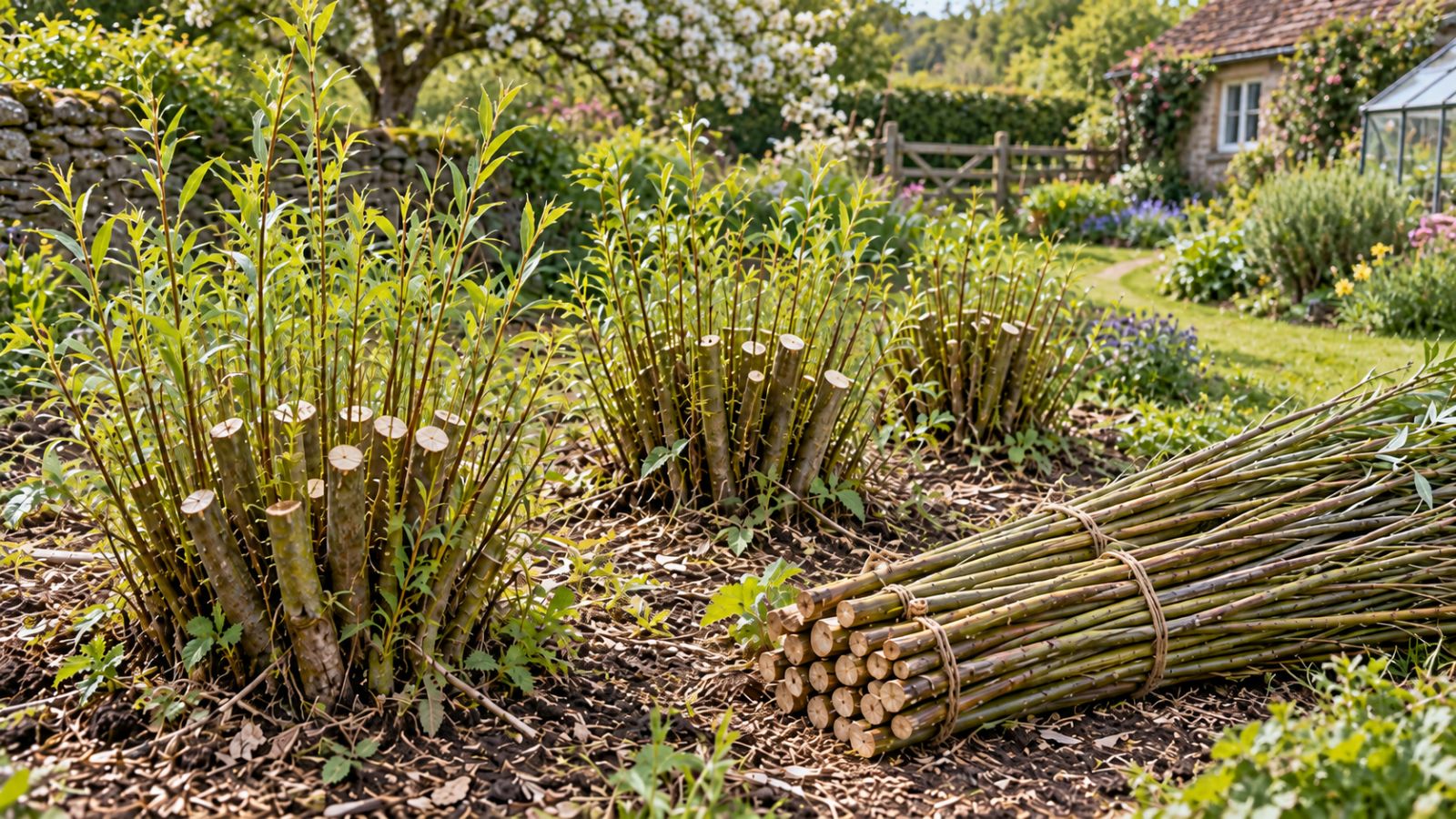
Willow is the other obvious choice, particularly if you want a lot of long, straight material quickly. It grows hard after cutting and some forms can put on several feet of new stem in a single growing season. Regular coppicing encourages multiple shoots rather than one large trunk, which is exactly what you want if the objective is rods rather than timber. Willow is routinely managed on cutting cycles because the stools repeatedly send up fresh stems after harvest.
There is, however, one very willow-like complication. Fresh willow is extraordinarily willing to become a tree.
Stick a freshly cut willow pole into damp soil and there is a reasonable chance it will root. Willow is so easy to propagate that hardwood cuttings taken from healthy young growth root readily. That is wonderful when you want another willow. It is considerably less wonderful when the “stake” supporting your beans decides it would prefer to establish a permanent root system in the vegetable bed.
For that reason, I prefer hazel for stakes that are going directly into the ground. If I harvest willow for structural garden use, I let the rods dry thoroughly first or use them for jobs where rooting is not an issue. Willow is particularly useful where you want long, flexible rods for weaving and lightweight structures.
It is fast, productive, and almost ridiculously easy to grow, but never underestimate its determination to carry on being alive.
Start small and harvest while the plants are dormant
You do not need to turn half your property into coppice. A small patch tucked along a boundary or worked into a mixed hedge can provide plenty of material for an ordinary garden. Hazel likes reasonably fertile, well-drained soil and will grow in sun or partial shade, while willow is happier where the ground holds more moisture. Neither needs pampering once established in a suitable spot.
Give young plants time to establish before repeatedly cutting them to the ground. When they are strong enough to coppice, the usual method is very straightforward: remove the stems close to the base, leaving a short stool from which the new shoots emerge. General coppicing is normally carried out in late winter or early spring, before active growth begins, although exact timing varies a little by species and what you are trying to produce.
You also do not have to harvest every plant at once. In a larger patch, divide your hazels into groups and cut a different group each year. That gives you stems at several ages and thicknesses rather than one enormous pile of poles every few years and nothing in between. Traditional hazel coppices were managed on exactly this kind of rotation, with established stools repeatedly producing new shoots after each cut.
That is the part of the system I appreciate most as a permaculture practitioner. You are not repeatedly buying a consumable garden product. You establish the source once, manage it sensibly, and keep taking useful material without having to start again from scratch.
You might also like…
12 plants you should prune in winter (and 6 you shouldn’t)
18 winter gardening tips you should know for healthier plants in spring