

Affiliate disclosure: This post may contain affiliate links. Please see full disclosure.
A garden riddle is a simple mesh sieve that takes the sticks, stubborn chunks, and stray bits of debris out of finished homemade compost. What falls through is a finer, more even material that’s easier to spread around young plants, work across a seedbed, or use as a light top dressing. What stays in the sieve can usually go back into the compost heap for another round of decomposition. It’s an old-fashioned tool, but a remarkably useful one.
I’m a master gardener and permaculture specialist, and I grow a substantial amount of my own food. Making compost is part of looking after the soil rather than constantly buying something to feed it. Still, even a well-managed heap can contain woody stems and lumps that take longer to break down. I don’t want to waste them, but I don’t necessarily want them scattered over a row of newly established lettuce, either.
A garden riddle is just a sturdy sieve for soil and compost

A traditional riddle is a round, shallow metal sieve, usually with a rigid rim and a base of wire mesh. You shake or rub material gently across it, allowing the smaller particles to drop through while the larger pieces remain on top. A wooden-framed screen that sits across a wheelbarrow does exactly the same job. Both are useful; you don’t need a motorized compost screener or another expensive garden gadget.
I like the round type for a bucketful of compost and a framed screen when I’m processing more. The important features are a comfortable working height, a mesh that won’t sag, and somewhere sensible for the finished compost to land. Holding a heavy sieve out in front of you while trying to shake several buckets through it gets old rather quickly.
Screening doesn’t improve the chemical quality of the compost or add nutrients. It separates material by size. That simple physical change makes the finished fraction more convenient for certain jobs, while leaving the bigger woody pieces for tasks where texture is useful or for more time in the heap.
Make sure the compost is actually finished first
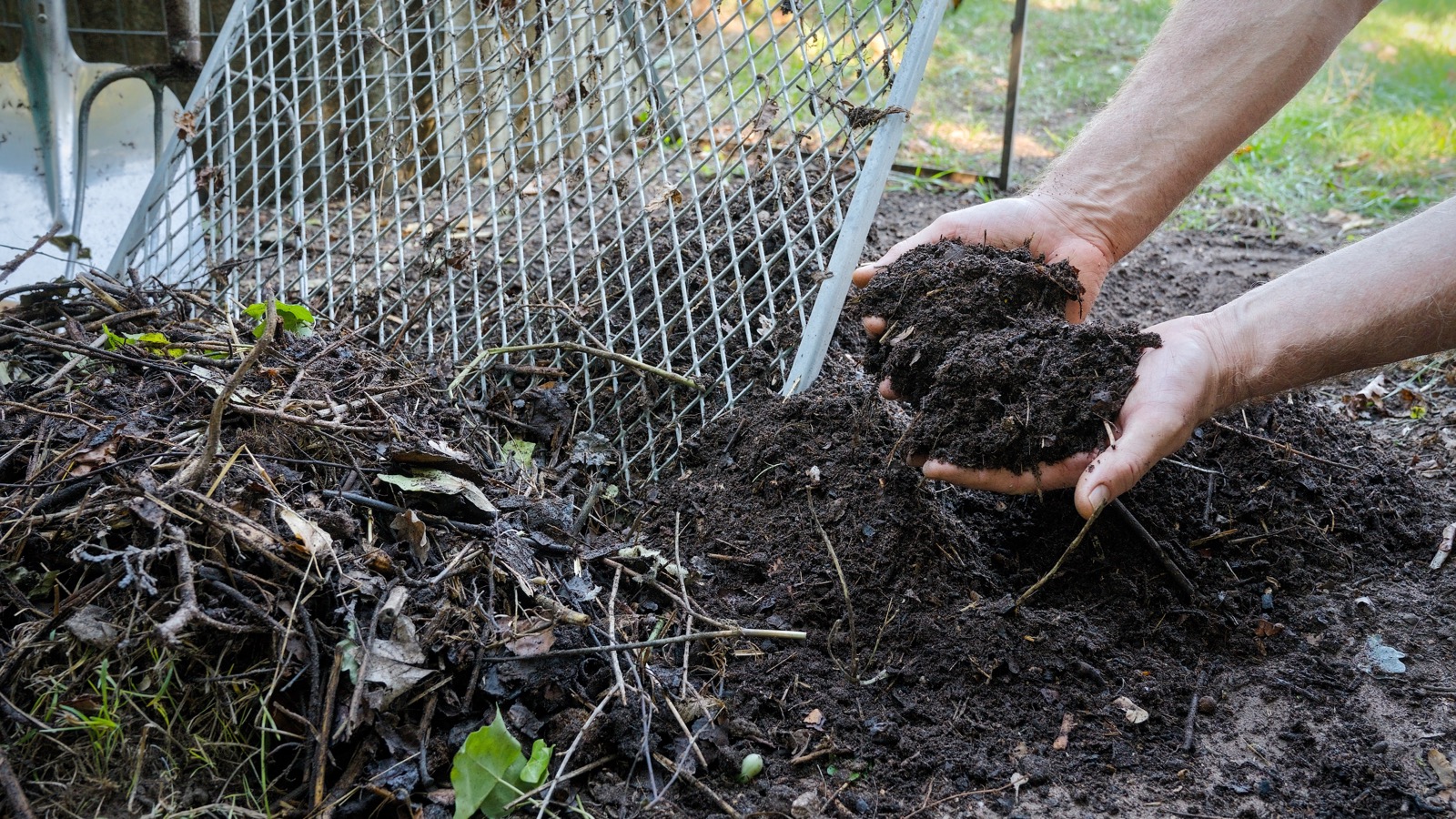
Before I reach for a sieve, I check the compost itself. Mature compost should be dark, crumbly, and earthy-smelling, with most of the original plant material no longer recognizable. It shouldn’t smell sour, putrid, or strongly of ammonia. A heap that’s still heating vigorously after being turned needs more time.
The bottom of a continually filled bin may be ready while the layers above are still full of fresh peelings and recognizable leaves. Separate out the mature portion rather than stirring the whole lot together and calling it finished. If necessary, leave a batch to cure after the active composting stage. A few twigs in otherwise mature compost are perfectly normal; a wet mass of recognizable scraps is not.
And don’t assume that fine material is mature merely because it fits through a quarter-inch screen. Tiny pieces of fresh grass, half-rotted leaf fragments, and weed seeds can pass through just as easily as finished compost. A riddle can’t do the decomposing for you. If a sifted batch smells wrong or starts heating again, give it more time before putting it near actively growing roots.
Choose the mesh size for the job you have

For an all-purpose garden riddle, I’d start with 1/4-inch mesh (about 6 mm). It’s fine enough to catch most recognizable sticks and coarse clumps, but open enough to let reasonably dry, mature compost pass without endless rubbing. Quarter-inch and half-inch screens are both established choices; neither is automatically better.
A 1/2-inch mesh (about 13 mm) is quicker for larger quantities intended for vegetable beds, around established perennials, or beneath a coarser mulch. More small wood fragments will pass through, which is perfectly acceptable for many soil-improvement jobs. If I’m preparing a wheelbarrowful for a big border, I’d rather use that size than spend the afternoon trying to produce something resembling powdered chocolate.
The finer 1/4-inch screen earns its keep when I want a tidy surface around small transplants, a smooth top dressing on a lawn, or compost that mixes more evenly into a homemade growing medium for established plants. A much finer sieve is possible, but it clogs more readily, especially with damp compost. Save ultra-fine screening for a specific use instead of treating it as a standard of quality.
Buy by the opening size, not a vague label such as ‘fine mesh.’ The tool’s overall diameter matters too. A shallow riddle that fits comfortably over a bucket is more manageable than a huge sieve with nowhere to set it down.
You can make a useful compost screen from scrap timber

A homemade screen can be as simple as a wooden rectangle with galvanized hardware cloth fastened firmly underneath. The basic construction is easy to adapt to the width of your wheelbarrow, so start by measuring where the frame will rest. A screen around 16 by 20 inches suits many small jobs, but the right size is the one that sits securely over your own barrow or collecting tub.
Use straight, sound timber, assemble a rigid rectangular frame, and stretch the mesh tightly across it. Staple or screw it into place with washers or narrow wooden retaining strips so the wire can’t pull free. Cover or fold away sharp cut edges, then check that there are no protruding staples or exposed wire points where your hands will go. Wear gloves when cutting hardware cloth; the cut ends are sharp.
Support the screen on both sides so it can’t tip when loaded. If you’re working over a wide wheelbarrow, a crosspiece or resting rails can help keep it stable. You only need enough room to move a shallow layer of compost from side to side. A deep box full of wet material will be heavy and hard to shake, even if the frame is impressively well made.
A basic round metal riddle from a secondhand tool stall is just as good. I wouldn’t replace a perfectly serviceable old one merely because it has some surface rust, provided the mesh is still strong and there aren’t any sharp, broken wires.
Screen in small batches and put the coarse pieces back to work
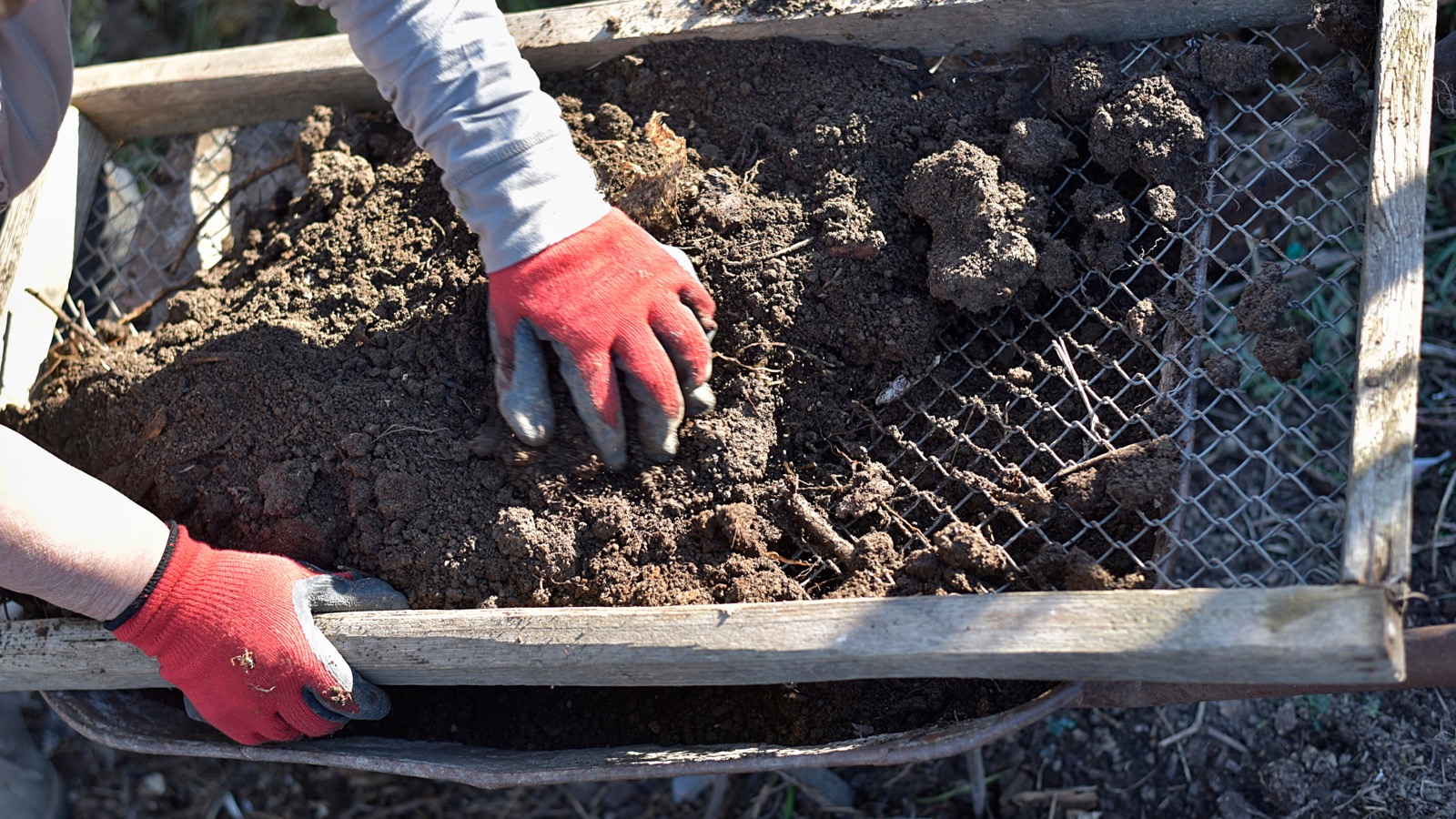
Choose compost that’s crumbly and only slightly damp. If it clumps into sticky balls or smears across the mesh, let it dry a little under cover and try again. Bone-dry compost makes unnecessary dust, so I’m not looking for something desiccated, either.
Set the riddle over a clean wheelbarrow, sturdy tub, or tarp. Add a few scoops rather than heaping it high, then move the screen gently from side to side. The finished fraction drops through. When the larger pieces stop passing, tip them into a separate container and load the next batch. There’s no point grinding every last twig through the holes.
The coarse material left on top can go back to the compost heap, where woody pieces continue breaking down and introduce decomposer organisms to the new material. Return any worms you find as well. Pick out plastic labels, plant ties, stones, and other rubbish instead of returning those. I’d also remove persistent weed roots or diseased material rather than knowingly putting them through another cool heap.
Work at a height that doesn’t leave you hunched over, and brush the mesh clear between batches if it starts clogging. I prefer a short session processing the compost I actually need over screening the entire heap for the satisfaction of seeing a big mound of fine material.
Use the fine fraction where a smooth surface helps
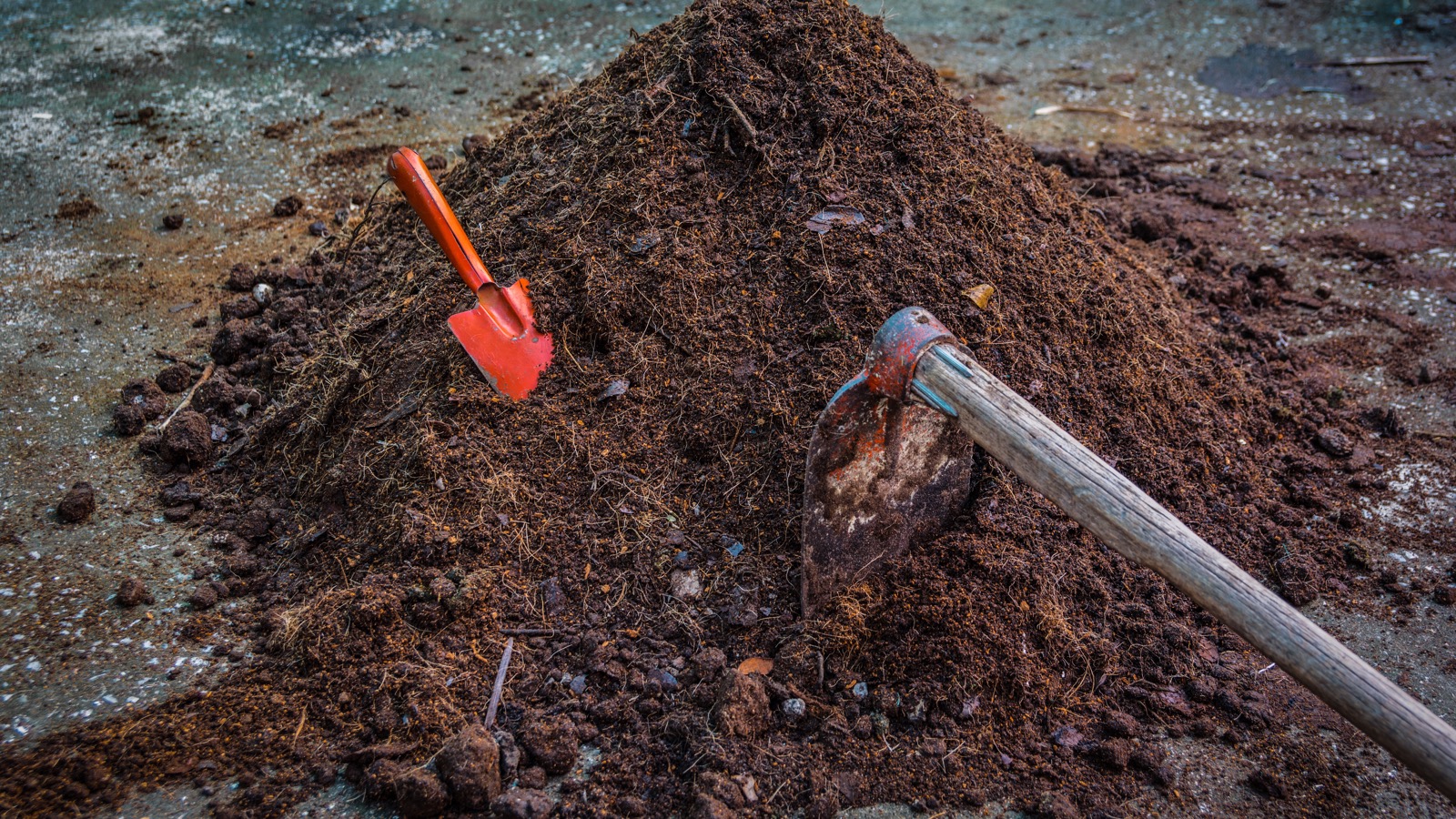
A light dressing of screened mature compost is particularly useful on established vegetable beds. It falls between stems and leaves more easily than chunky material, making it simpler to distribute across the soil without dragging large twigs over tender growth. For small transplants that have rooted in, I can spread a thin layer around them while keeping the stems and crowns clear.
It’s also useful before sowing directly into a prepared outdoor bed. If the soil is already reasonably fine and level, a little screened compost can help even up the surface and fill small gaps between clods. But I wouldn’t create a thick, rich layer and bury tiny seeds beneath it. Follow the sowing depth for the crop, and keep the seed row from being buried or crusted over.
On a lawn, screened compost is easier to scatter thinly without leaving sticks on the grass. Around ornamental plants, it gives a neater finish to the soil surface. And for potting on established plants, screened garden compost may be one ingredient in a suitable mix, rather than the whole mix. A general-purpose homemade potting blend needs appropriate structure and drainage as well as organic matter.
I wouldn’t sieve everything. For broad mulching around shrubs, a coarse fraction of mature compost often works very well, and the rougher texture can help keep the soil covered. Screening takes time and effort, so use it when the job genuinely calls for finer material.
A fine sieve does not make compost safe for seed trays

This is the mistake I most want gardeners to avoid. A smooth handful of sifted compost looks rather like a bagged seed-starting medium, but appearance tells you nothing about whether it contains organisms capable of attacking germinating seeds. The screen has removed sticks, not disease spores, weed seeds, soluble salts, or anything else small enough to slip through the openings.
Damping-off can kill seedlings before or just after they emerge. The organisms responsible are often present in soil, and cool, wet, poorly aerated conditions make matters worse. Home compost is a living soil amendment, and most backyard heaps are not managed or tested in a way that proves every portion has been effectively sanitized. Even compost that is beautifully mature and suitable for an outdoor bed isn’t automatically a clean growing medium for a tray of vulnerable seedlings.
For starting seeds indoors, I recommend a fresh, lightweight, well-draining seed-starting mix intended for that purpose, along with clean trays and careful watering. If home-produced compost is used in propagation, pathogen reduction requires a separate treatment such as suitable steam treatment; shaking it through a riddle doesn’t count. I wouldn’t risk a tray of slow-growing seedlings just to avoid buying a small amount of proper propagation mix.
There is a useful place for fine homemade compost near young plants, but it’s generally in the garden after seedlings are established, as a light soil dressing, not packed around germinating seeds in an indoor tray. Keep those two uses separate and the riddle becomes much more helpful.
Let the garden decide whether screening is worth the effort

You don’t have to turn every batch of compost into a uniformly fine product. When I’m improving a productive bed, the important things are maturity, the condition of the soil, and how much compost that bed needs. When I’m dressing around small plants or neatening a seedbed, texture matters more, and that’s when a riddle earns its place.
If you’re still building up your compost supply, ordinary composting with garden and kitchen material is the foundation. Get that right, let the heap finish, then sieve only the portion you need. You’ll have useful fine compost for delicate jobs and plenty of coarser organic matter still working its way through the cycle. Nothing needs to be wasted, and you don’t need a complicated machine to get the benefit.
You might also like…
The 2,000-Year-Old Roman Trick Your Compost Bin Is Missing
30 Best Cheap & Easy DIY Compost Bins. Reduce Waste and Save Money!
Start an Autumn Compost Heap With What Your Garden Already Gives You