
Affiliate disclosure: This post may contain affiliate links. Please see full disclosure.

Fixing leggy tomato seedlings involves light, air flow, and planting depth. But also knowing when to try and save them and when to cut your losses and start over. Every spring, someone posts a photo in a gardening group, on one of my social channels, or emails me, asking why their tomato seedlings look like pale, wobbly noodles, and if they can be saved.
I’ve grown leggy seedlings more times than I care to admit. The worst batch was a tray of Black Krim I started too early on a south-facing windowsill that didn’t get nearly as much winter light as I thought it did. By the time I noticed what was happening, those seedlings were three inches tall and flopped over like they’d given up. I saved most of them. Lost a few. Learned a lot.
The good news is that tomatoes are genuinely more forgiving than most other seedlings when it comes to legginess. There’s a biological reason for that, and it’s actually your biggest rescue tool. But there’s also a point past which fussing with a weak seedling is just wishful thinking, and it helps to know the difference.
Will leggy tomato seedlings recover?
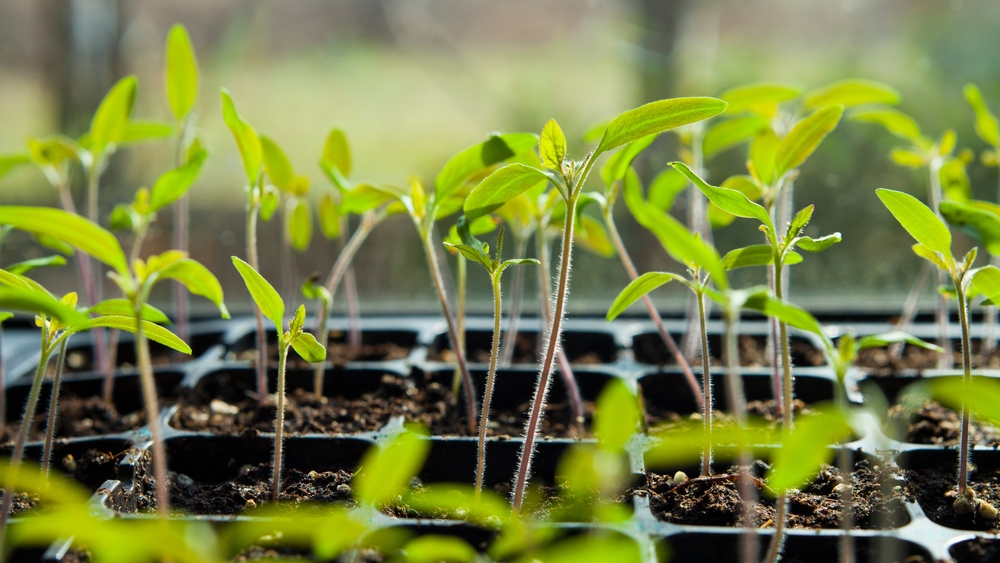
Yes. Many leggy tomato seedlings recover completely, as long as they’re still healthy, green, and not collapsing at the soil line.
Stretched, floppy growth doesn’t automatically mean a seedling is doomed. What it means is that the seedling has been putting its energy into reaching for light instead of building a sturdy stem. That’s a growing-condition problem, not a death sentence. Fix the conditions, pot them up correctly, and most mildly to moderately leggy tomatoes will grow out of it and produce just fine.
The catch is that you do need to act quickly. A leggy seedling left in the same bad conditions will keep stretching, get weaker, and become genuinely hard to save. The window for easy recovery closes faster than you’d think.
What causes tomato seedlings to get leggy?
Legginess is almost always a light problem. That’s the short answer. But there are a few specific ways it plays out, and knowing which one you’re dealing with helps you fix it properly.
Not enough light. A windowsill in late winter or early spring is rarely bright enough to grow stocky tomato seedlings, even a south-facing one. The light is too low-angle, too diffuse, and often too inconsistent. Seedlings stretch upward trying to find more.
Grow lights positioned too far away. This is the most common mistake I see from people who do have grow lights. If the light is more than 2–4 inches above the tops of your seedlings, it’s not intense enough. They’ll still stretch, just more slowly. Most people have their lights way too high.
Warmth without enough light. Heat speeds up growth. If your seedlings are in a warm room or on a heat mat but the light isn’t keeping up, they’ll shoot upward fast. The warmth is telling them to grow; the low light is telling them to reach.
Crowded cells. When seedlings are packed in together, they compete for light and lean toward whatever source is closest. The ones in the middle of the tray often get it worst.
Poor airflow. This one surprises people. Gentle air movement actually stimulates tomato stems to grow thicker and sturdier. A still, sheltered environment produces weaker stems.
Waiting too long to pot up. A seedling that’s been sitting in a small cell for weeks without being moved on will often start stretching simply because it’s root-bound and stressed.
How to fix leggy tomato seedlings
While you can’t save every leggy tomato seedling, you can save a surprising number with some super-simple changes.
Give them much stronger light
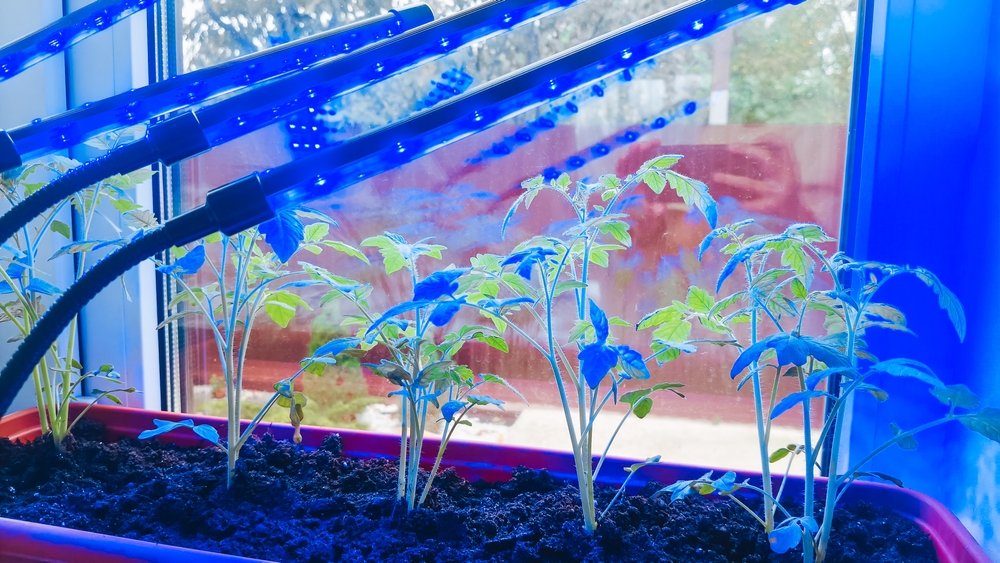
If they’re on a windowsill, move them to your best window immediately, but honestly, a windowsill is probably not going to cut it for the rest of the season. Grow lights are a much more reliable fix.
If you already have grow lights and your seedlings are still leggy, the lights are almost certainly too far away. Move them to 2–3 inches above the seedling tops and raise the fixture as the seedlings grow. Run them for 14–16 hours a day. This single change makes a bigger difference than most people expect.
RELATED: How to harden off tomato seedlings in 7 days
Pot them up deeper
Tomato stems are covered in tiny hair-like structures called adventitious root initials. When you bury part of the stem underground, those hairs develop into actual roots. That means a leggy seedling with four inches of bare stem can effectively become a much sturdier, better-anchored plant just by being potted deeper.
When potting up, bury the stem right up to the lowest set of true leaves. You can bury up to two thirds of the total stem length if needed. Fill in with good quality potting mix, water gently, and the buried portion will start developing roots within a week or two.
I’ll cover this in more detail in its own section below, because it really deserves it.
Add gentle airflow
Set a small fan nearby on its lowest setting, pointed past the seedlings rather than directly at them. Even 30 minutes of gentle air movement a day starts to build sturdier stems. You’re mimicking the outdoor breeze that naturally helps plants thicken up.
The science behind it is a process called thigmomorphogenesis, which is a fancy way of saying that physical stimulation from movement signals the plant to invest in structural strength. Outdoors, wind does this automatically. Indoors, you have to replicate it.
Thin crowded seedlings

If you have multiple seedlings per cell, get it down to one. Crowded seedlings compete for light, lean into each other, and produce the worst legginess. Use scissors rather than pulling to avoid disturbing the roots of the seedling you’re keeping.
Water properly
This sounds obvious, but waterlogged seedlings don’t toughen up, full stop. Keep the mix evenly moist, not soggy. If it’s staying wet for more than a couple of days after watering, your drainage is the problem, or you’re watering too often. Let the surface dry out slightly before watering again.
Can you plant leggy tomato seedlings deeper?
Yes, and you absolutely should. This is one of the few genuine advantages tomatoes have over almost every other vegetable seedling.
When you pot up a leggy tomato deeper, the buried stem doesn’t rot like it would in most plants. Instead, those stem hairs I mentioned develop into real roots, and the plant ends up with a much more extensive root system than it would have had otherwise. More roots means better uptake of water and nutrients, a more stable plant, and faster recovery from the stretched, weak start.
How deep can you go? You can safely bury up to two thirds of the stem. If you have a seedling that’s 6 inches tall with mostly bare stem, pot it into a deeper container and bury 3–4 inches of that stem. By the time it goes outside, it’ll have a robust root system and no one will ever know it started out looking like a piece of overcooked spaghetti.
You can also add more soil around the stem if you’re not ready to pot up yet. Just mound it up gently around the base so the stem is partly covered. It’s not as effective as a proper deep potting, but it helps.
One thing to keep in mind: deeper potting works best at the seedling stage, while the stem is still young and tender. Once plants are older and more woody, the buried stem is less likely to throw out vigorous new roots.
RELATED: How Cold is Too Cold for Tomato Plants?
How do you make tomato seedlings less leggy?
Here’s the honest answer: you don’t reverse the stretch that’s already happened. What you do is fix the conditions so that all new growth comes in shorter, sturdier, and more upright.
That means strong light, starting now. Better spacing between plants. A gentle fan running daily. Deeper potting to stabilize what’s already stretched. And patience, because it takes a week or two before you’ll start to see new growth that looks noticeably different from the old.
There’s no foliar spray, no fertilizer, no trick that will thicken up the stretched part of the stem. That section will always be what it is. But above the buried section, once conditions improve, the plant can put out healthy new growth that looks nothing like its wobbly start.
Should you fertilize leggy tomato seedlings?
Usually, no. Not at first.
Legginess is a light and environment problem. Feeding a stretched seedling before you’ve fixed those underlying issues is a bit like giving someone caffeine when what they actually need is sleep. You’re adding more fuel to a plant that’s already growing in the wrong direction.
Once you’ve addressed the light situation and potted them up deeper, a light feed with a balanced liquid fertilizer is fine, particularly if you’re seeing pale or yellowish leaves that suggest the plant is hungry. But that’s a secondary step, not the first one.
Seedlings in fresh potting mix are usually fine for nutrients for the first few weeks anyway. Focus on light and airflow first, and only add fertilizer if you’re seeing signs that it’s actually needed.
How leggy is too leggy for tomato seedlings?
This is where you have to make a judgment call. Not all leggy seedlings are worth the same level of effort.
RELATED: What Are Volunteer Tomatoes?
Tomato seedlings that are usually worth saving
A seedling with green, healthy-looking leaves, no pinching or discoloration at the soil line, enough stem to bury deeper when you pot up, and signs of active new growth at the top is almost always worth saving. Even if it looks embarrassingly floppy right now, if the plant itself is healthy and vigorous, the deep-potting rescue works remarkably well.
Mildly to moderately leggy seedlings, maybe 3–5 inches of mostly bare stem, are very good candidates for recovery.
Tomato seedlings that are better restarted
Thread-thin stems that bend rather than just leaning. Pale, yellowish, or stalled growth. Any pinching or darkening at the soil line, which suggests the early stages of damping off. Seedlings so stretched and weak that they collapse when you remove any support.
These are seedlings that are unlikely to catch up to a healthy plant started at the same time, even with ideal conditions from here on. You can try, but don’t be surprised if they underperform all season.
Also worth considering: if the season is early enough to resow without losing significant time, and the seedlings are genuinely bad, starting fresh is often the smarter choice. A healthy seedling started a week or two later will usually outperform a struggling rescued one within the first few weeks of the season.
You Might Also Like …
How to Harden Off Pepper Plants
What Temperature Is Too Cold for Peppers?
The Three Sisters Garden: Companion Planting Corn, Beans, and Squash