
Affiliate disclosure: This post may contain affiliate links. Please see full disclosure.
If your Christmas cactus is growing plenty of healthy green segments but no flowers, don’t reach for the fertilizer. The first thing I’d change is what happens after dark. Give it long, uninterrupted nights and cooler temperatures for several weeks in fall, and you stand a much better chance of seeing flower buds instead of yet more green growth.
I’ve spent decades growing plants, and one thing that never changes is this: a healthy plant isn’t necessarily a flowering plant. It responds to the conditions you give it, not the date you’ve circled on your calendar. A Christmas cactus sitting in a warm, brightly lit living room might be perfectly happy growing, but it isn’t getting much of a hint that autumn has arrived.
Your evening lights might be the problem
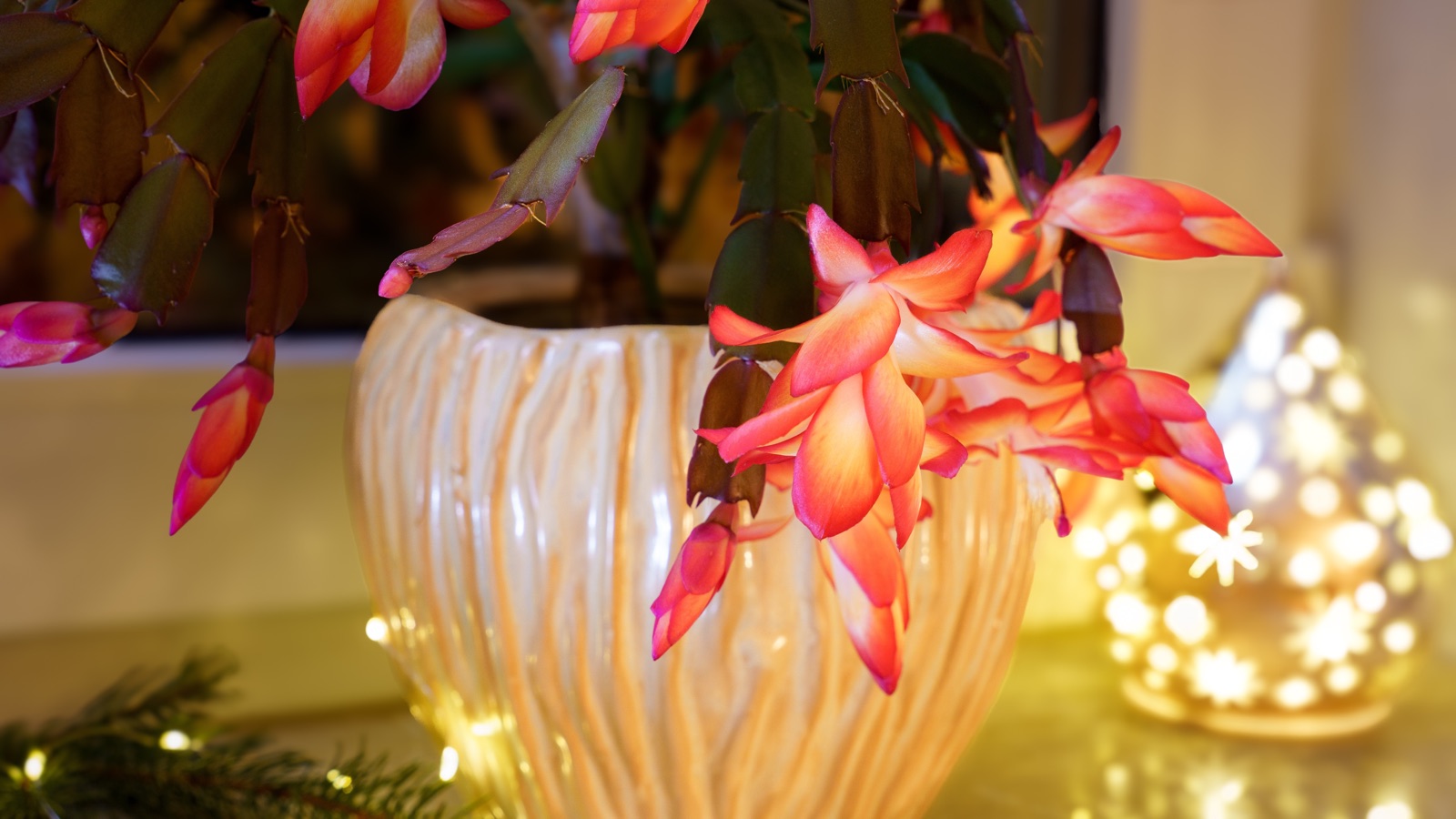
Christmas and Thanksgiving cacti are what gardeners call short-day plants. More accurately, they’re long-night plants. As the nights lengthen naturally in fall, the plant gets the signal to stop putting all its energy into fresh stem growth and start forming flower buds. Interrupt that darkness with artificial light every evening, and you can interfere with the process.
This is why the same cactus can flower reliably in a cool, little-used bedroom but sit stubbornly green on a living-room shelf. It’s not necessarily getting better care in the bedroom. It’s just getting the right seasonal signals.
For a dependable routine, aim for roughly 14 hours of uninterrupted darkness each night for about six weeks, beginning in early fall. Some varieties manage with shorter nights, especially when temperatures are low enough, but 14 hours is a practical target if you don’t know exactly which type you have. Give it plenty of bright, indirect daylight during the remaining hours.
Uninterrupted is the crucial word. Think about what actually happens in the room after sunset. Is a ceiling light switched on at 9 p.m.? Does a lamp shine across the windowsill? Is there a security light just outside? If the cactus sees artificial light through the evening, don’t assume that a few hours of darkness after everyone goes to bed will make up for it.
You don’t have to put it in a wardrobe or keep it in permanent darkness. A guest bedroom that stays unlit overnight is usually easier than covering and uncovering a plant every day. If you have to use a light-blocking cover, put it on at a consistent time in the evening and remove it in the morning. Don’t squash the growing tips or leave the plant covered through the day. It still needs daylight to support flowering.
Give it a cooler room, not a freezing one
Darkness isn’t the whole story. Temperature matters just as much. A good target during bud initiation is around 55–65°F (13–18°C) at night, with bright but indirect light by day. Cool nights around 55°F (13°C) can sometimes trigger flowering without such a strict darkness schedule, while consistently warm nights, particularly above 70°F (21°C), can prevent buds forming.
That makes an unheated but frost-free spare room a better bet than the warmest spot in the house. I wouldn’t go to the trouble of buying a grow light or special fertilizer before checking what the thermostat is doing overnight. A lot of the time, the plant needs a change in conditions rather than another product.
But please don’t confuse cool with cold. These are tropical forest cacti, not plants that need a spell of frost. Keep them above about 50°F (10°C), and watch the temperature right next to the glass, where it can be colder than the room itself. A windowsill directly over a radiator isn’t ideal either. The pot is warming up, the stems are next to cold glass, and neither extreme is particularly helpful.
I’m always cautious about advice that involves repeatedly moving a plant between a chilly porch and a heated room. Choose a suitable spot once, if you can, and let it settle. Steady conditions beat dramatic daily changes.
Make the routine fit a real household
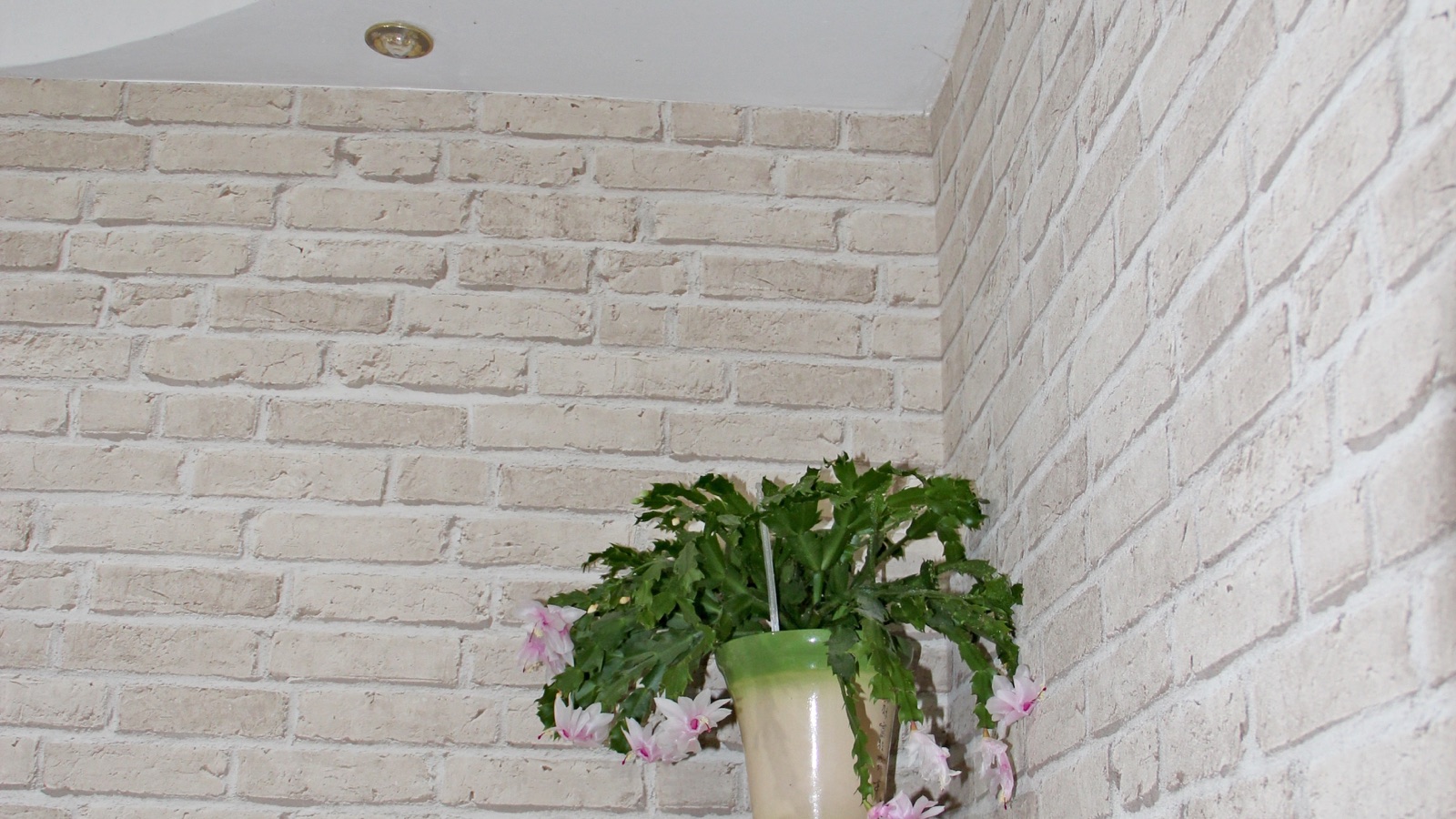
You don’t need a complicated setup. I’d look for three things in the same place: good indirect light during the day, a genuinely dark night, and temperatures that drop a little after sunset. An east-facing bedroom window often works well. An unused room with a bright window can be even better, provided it doesn’t get too cold.
If your only suitable window is in a room used every evening, consider whether you can move the plant somewhere else for the bud-setting period. Once it’s in place, leave it there for those several weeks rather than shifting it around the house every night. It doesn’t need perfect laboratory conditions, but it does need a routine you can actually maintain.
The mistake is to focus so hard on darkness that you deprive the plant of light altogether. Bud initiation depends on the contrast between day and night. A permanently dim corner is no substitute for decent daytime light followed by a proper night.
You might have a Thanksgiving cactus instead
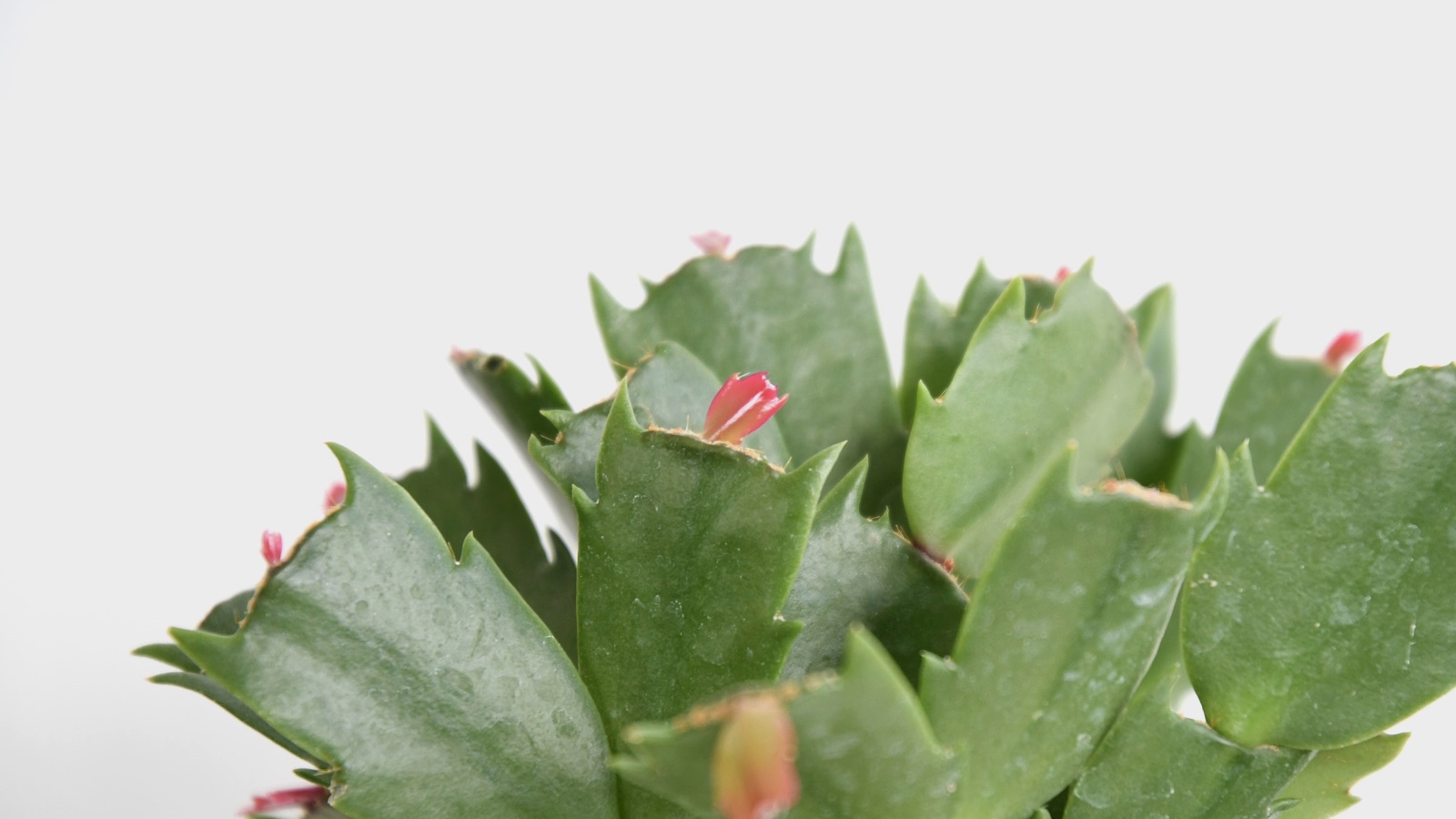
Before getting frustrated that your Christmas cactus has bloomed in November, take a look at its stem segments. Many plants sold as Christmas cacti are actually Thanksgiving cacti, and the two generally flower at slightly different times.
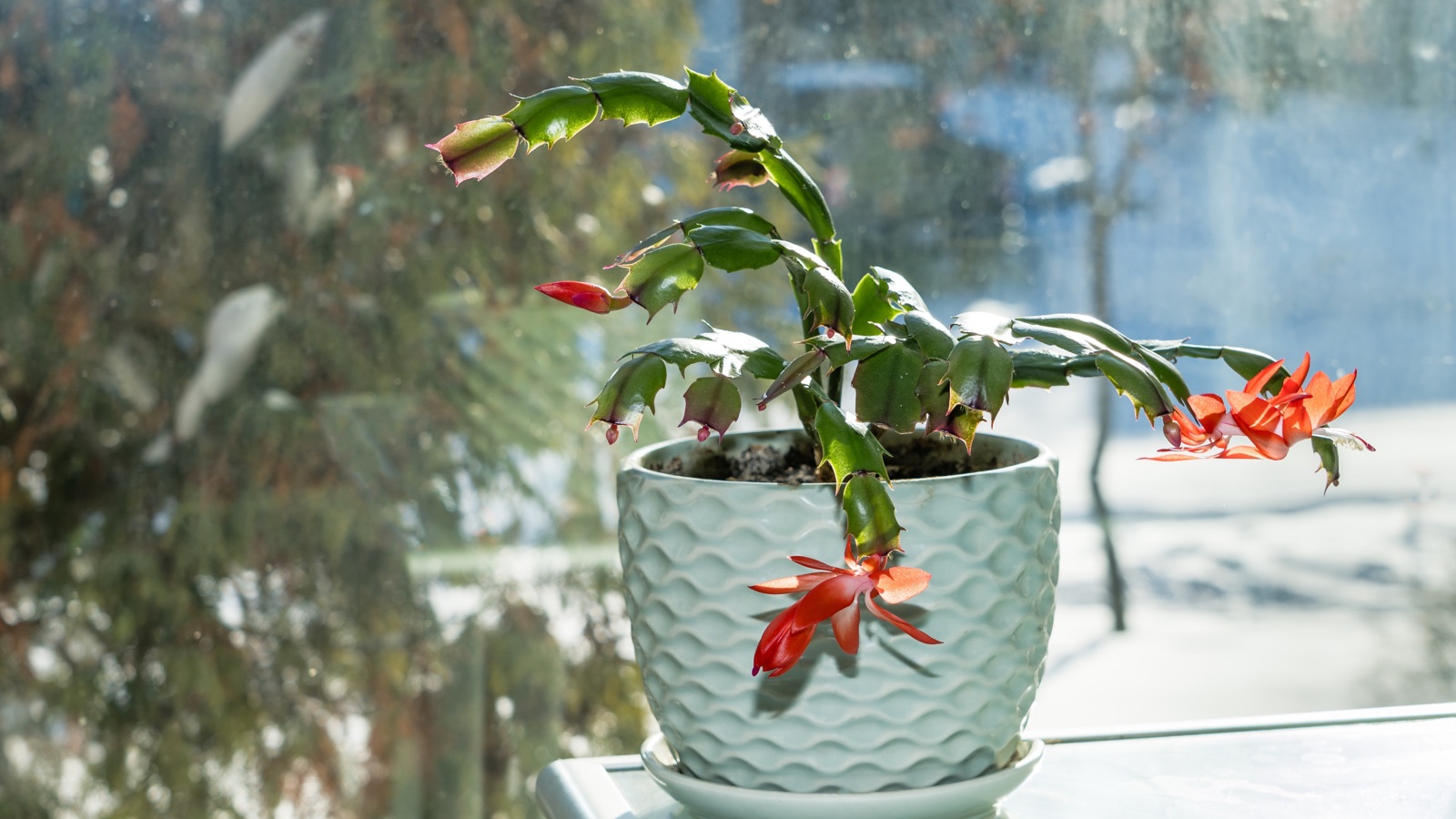
Thanksgiving cactus (Schlumbergera truncata) has flattened segments with obvious pointed teeth along their edges. They’re sometimes described as little crab claws, which is a useful way to remember them. True Christmas cactus (Schlumbergera × buckleyi) tends to have more rounded, scalloped edges and a looser, trailing habit. Those flat green parts are stems, incidentally, not true leaves.
Thanksgiving types commonly flower earlier, while true Christmas cacti tend to bloom later. Modern hybrids muddy the waters, and growing conditions can move the flowering window either way. So don’t trust the shop label or the calendar over the actual plant.
If yours covers itself in flowers before Thanksgiving, I’d enjoy them. Trying to force it to hold off until Christmas misses the point. The plant isn’t failing because it hasn’t read the label.
Once the buds arrive, don’t undo the good work
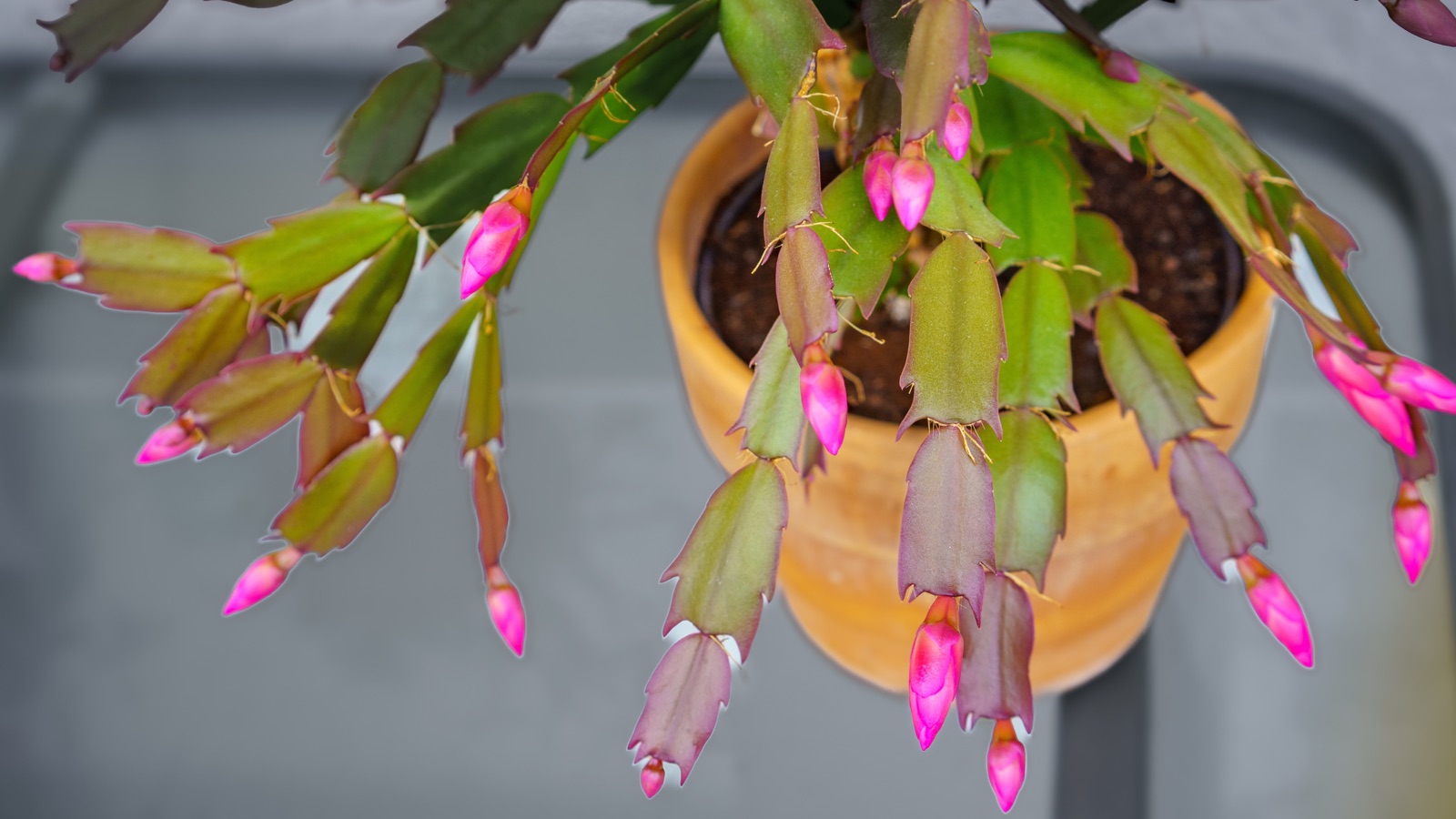
The first buds look like tiny little points at the ends of the stem segments. When you see them, stop trying to persuade the plant to flower. It’s already doing it. Your job now is to protect the buds until they open.
One of the easiest mistakes is moving a budding cactus straight from a cool spare bedroom into a hot living room, perhaps next to a radiator or a fire. Abrupt changes in temperature, light, humidity and watering can cause buds to drop. If possible, leave it in the conditions where the buds formed until the first flowers open. Then make any move for display gently, choosing somewhere with reasonable light and no heat blasting at it.
That doesn’t mean the pot can never be touched. It means you shouldn’t subject a plant covered in developing buds to a sudden change just because you want it on the mantel for the weekend. A well-lit, stable spot is far better than a dramatic display position where it will struggle.
I’d also leave the pruning shears alone in fall. Flowers form at the tips of the segmented stems, so removing those tips just as the plant is preparing to bud is counterproductive. If it needs shaping, do that after flowering, when it’s back in its growing phase.
Water for the conditions, not the calendar
The ‘cactus’ part of the name catches people out. Christmas and Thanksgiving cacti naturally grow among trees in humid Brazilian forests, rooted in pockets of organic matter where excess water can drain away. They’re very different from desert cacti that tolerate long spells of drought.
As someone who’s grown plants organically for years, I pay far more attention to the condition of the roots and growing medium than to a rigid watering timetable. A plant in a cool room uses water more slowly than one in a warm, bright kitchen. If you water both every Sunday because that’s what a care chart says, you’re ignoring the conditions that actually matter.
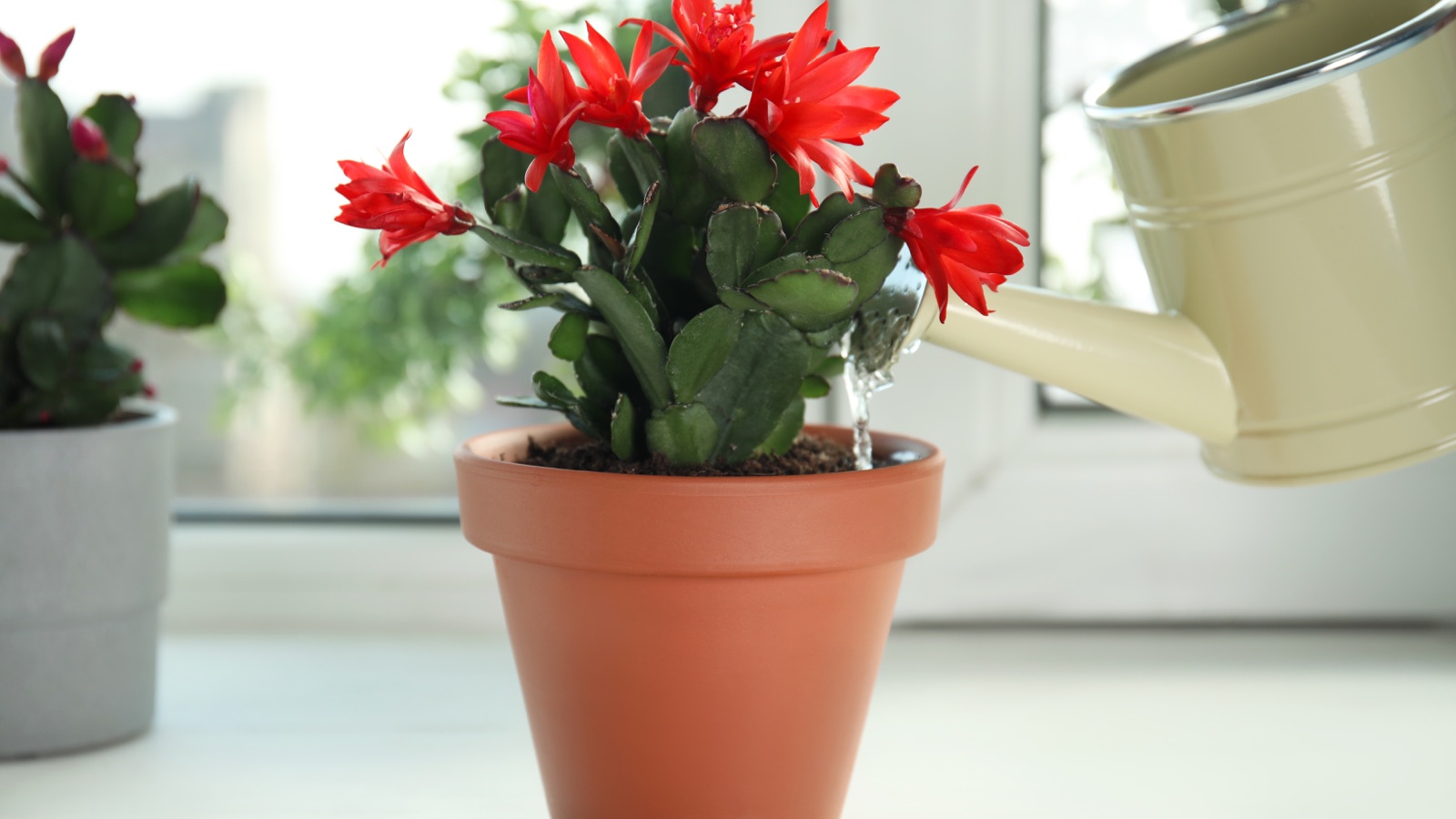
During the cooler bud-setting period, let the upper inch or so of potting mix become dry before watering, but don’t leave the whole root ball bone-dry. Once buds are developing, aim for lightly, evenly moist mix without keeping it saturated. Use a pot with drainage holes, water thoroughly when needed, and empty any saucer or decorative cover pot afterward. A puddle hidden inside a pretty Christmas pot is still a puddle.
Too much water fills the air spaces in the mix, which stresses the roots and can lead to rot. Letting the plant dry out excessively can also cause buds to fall. If the stem segments look limp, check the mix before watering: the same wilted appearance can come from dry roots or damaged roots sitting in wet soil.
Skip the last-minute bloom boosters
If a cactus won’t flower, I’m much more interested in its light and temperature than in what fertilizer it has been given. Feeding during active spring and summer growth can help build a healthy plant, but extra fertilizer in November isn’t a substitute for the autumn conditions that initiate buds.
I wouldn’t repot a healthy plant at this stage either. These cacti can cope with being slightly snug in their pots, and disturbing the roots just before flowering adds stress without fixing the actual problem. If drainage is poor or the roots are damaged, that’s a separate issue to address carefully. Otherwise, save routine repotting for spring.
There are enough products marketed as quick fixes for reluctant houseplants. This is one problem where I’d try the free, sensible option first: get the plant’s surroundings right and leave it alone long enough to respond.
What if Christmas is only a few weeks away?
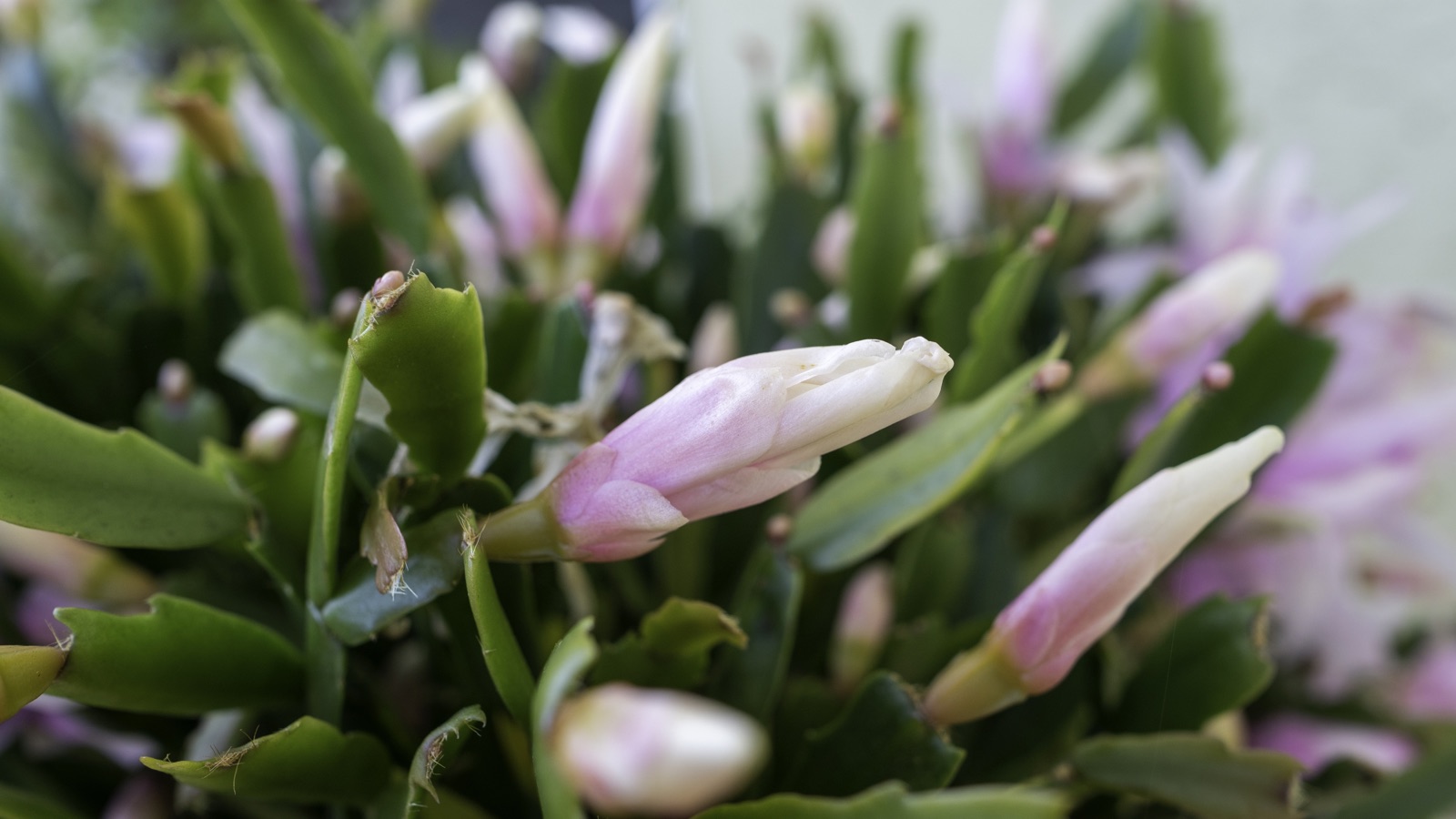
The honest answer is that you can’t book a Christmas cactus to flower on December 25. Bud formation commonly takes several weeks of the right night length and temperature, and the time from bud to open flower varies. The species, variety, room temperature and the plant’s own condition all make a difference.
If it’s already November and there are no buds, it’s still worth giving the plant cooler, darker nights. You may get flowers later in winter, even if the Christmas deadline passes. If buds are already present, don’t start an aggressive new dark treatment; concentrate on keeping temperatures and moisture steady instead.
And if it doesn’t flower this year? Keep it healthy, let it grow through spring and summer, and start the autumn routine earlier next time. I’d rather have a long-lived plant that flowers when its conditions are right than a miserable one that’s been overfed, overwatered and shuffled around the house in the hope of a picture-perfect Christmas.
If you’d like other living color for the holidays while you wait, there are plenty of festive alternatives to poinsettias. But don’t make the cactus pay for the calendar. Get the nights right, and give it a chance to do the rest.
You might also like…
15 Winter Houseplants Toxic to Pets