
Affiliate disclosure: This post may contain affiliate links. Please see full disclosure.
The Pyrex Flameware utility tea kettle is exactly the sort of old kitchen find I’d stop to examine. With its rounded, faintly blue glass body, clear lid, and detachable glass handle, it looks wonderfully unusual. And although it might look too delicate for a stove, that’s precisely what Corning designed it for.
The 2½-quart model 7125 was made from 1938 to 1948. It’s the markings and original fittings that make it particularly satisfying to identify, especially when one turns up among ordinary glass teapots.
Flameware was made for the stovetop
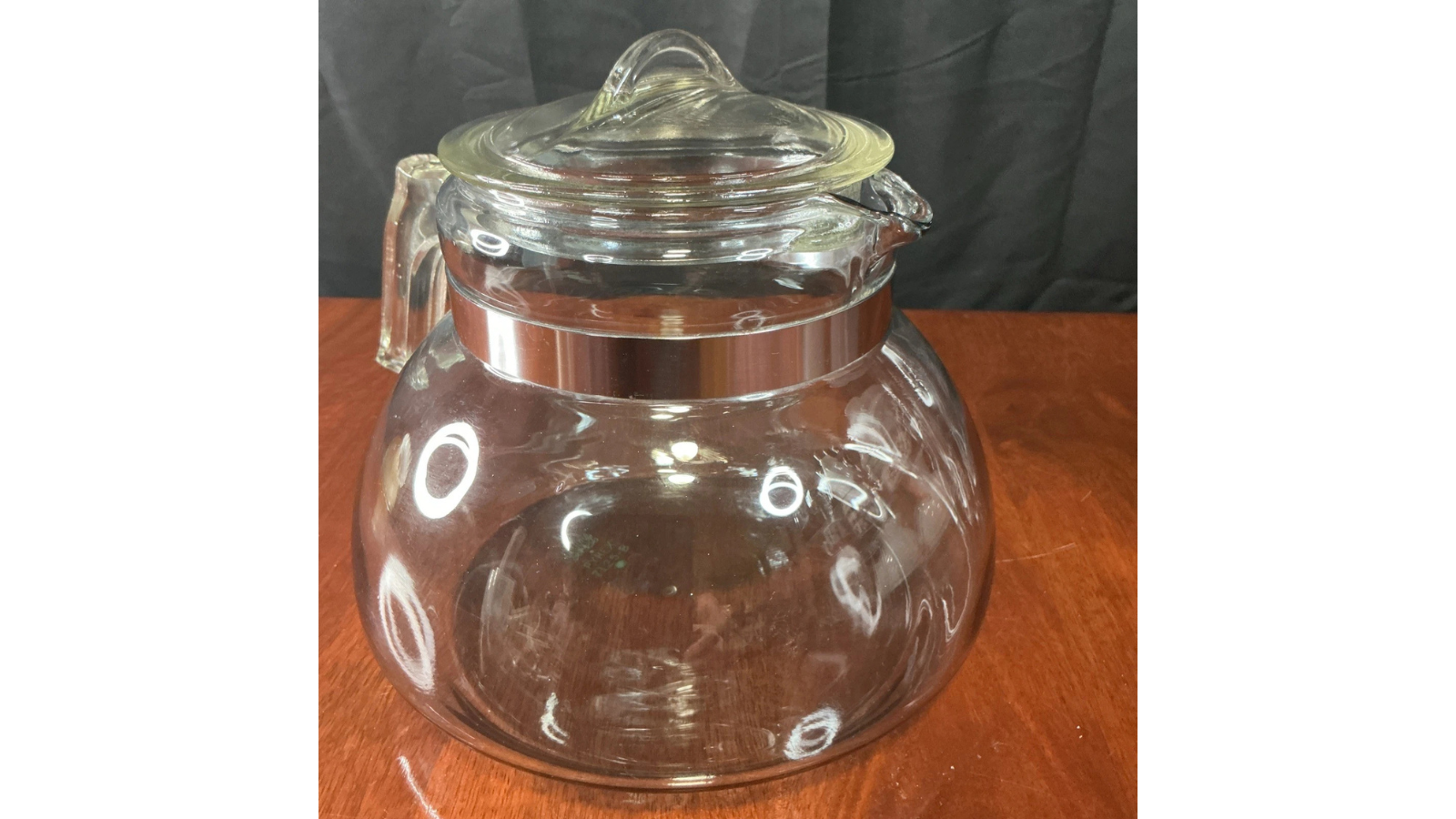
Most collectors know Pyrex for its oven dishes and colorful mixing bowls. Flameware was different. Corning developed a specialized aluminosilicate glass designed for direct stovetop heating and introduced it in 1936, first as saucepans and skillets. The kettle followed later.
It allowed people to see the water heating, which was a rather clever selling point for a product without a shiny metal body. But don’t assume any old Pyrex casserole can do the same job. Corning’s own 1941 instructions distinguished ovenware, which was not for stovetop use, from Flameware. They were made for different jobs.
The shape is your first clue
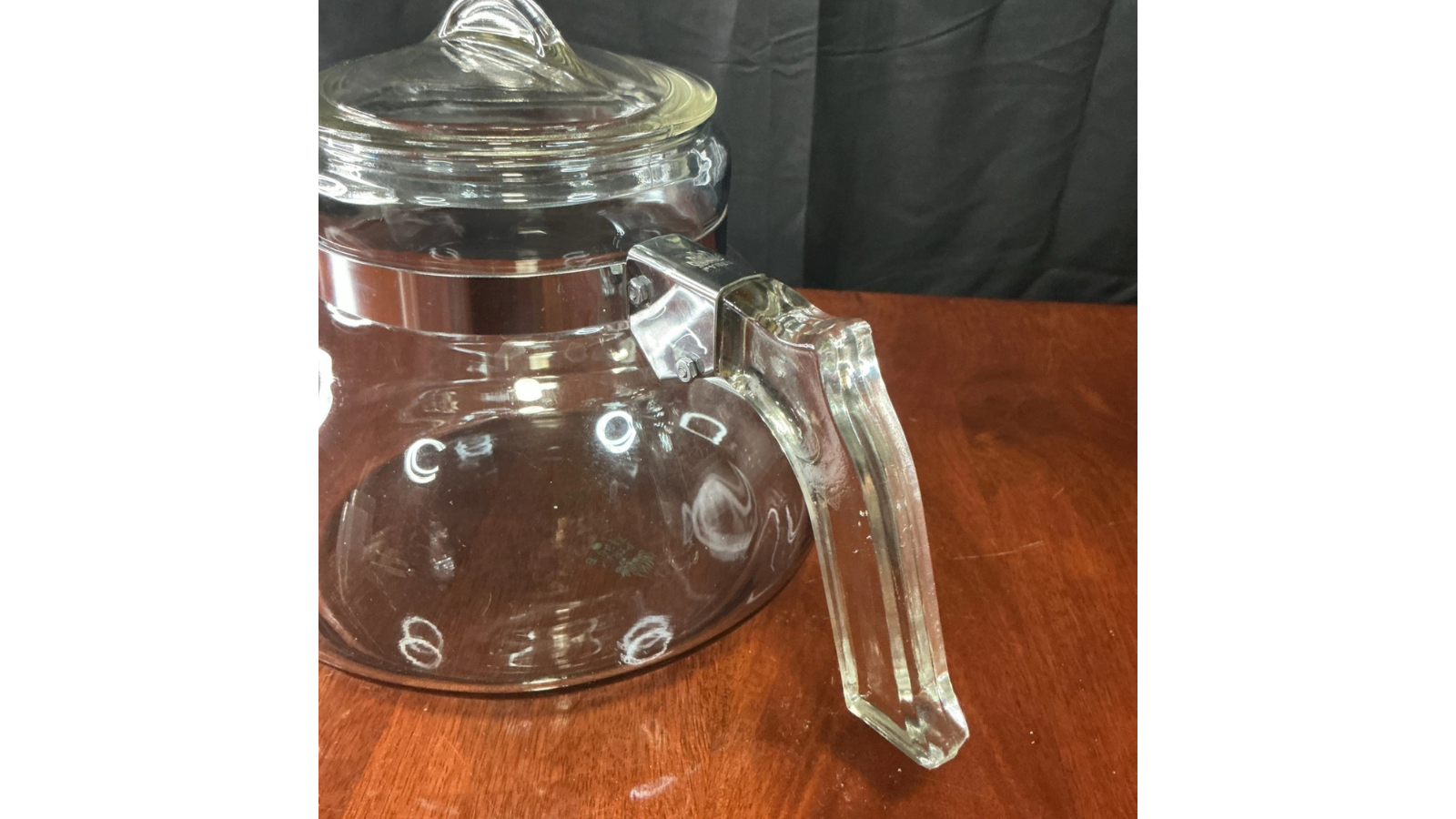
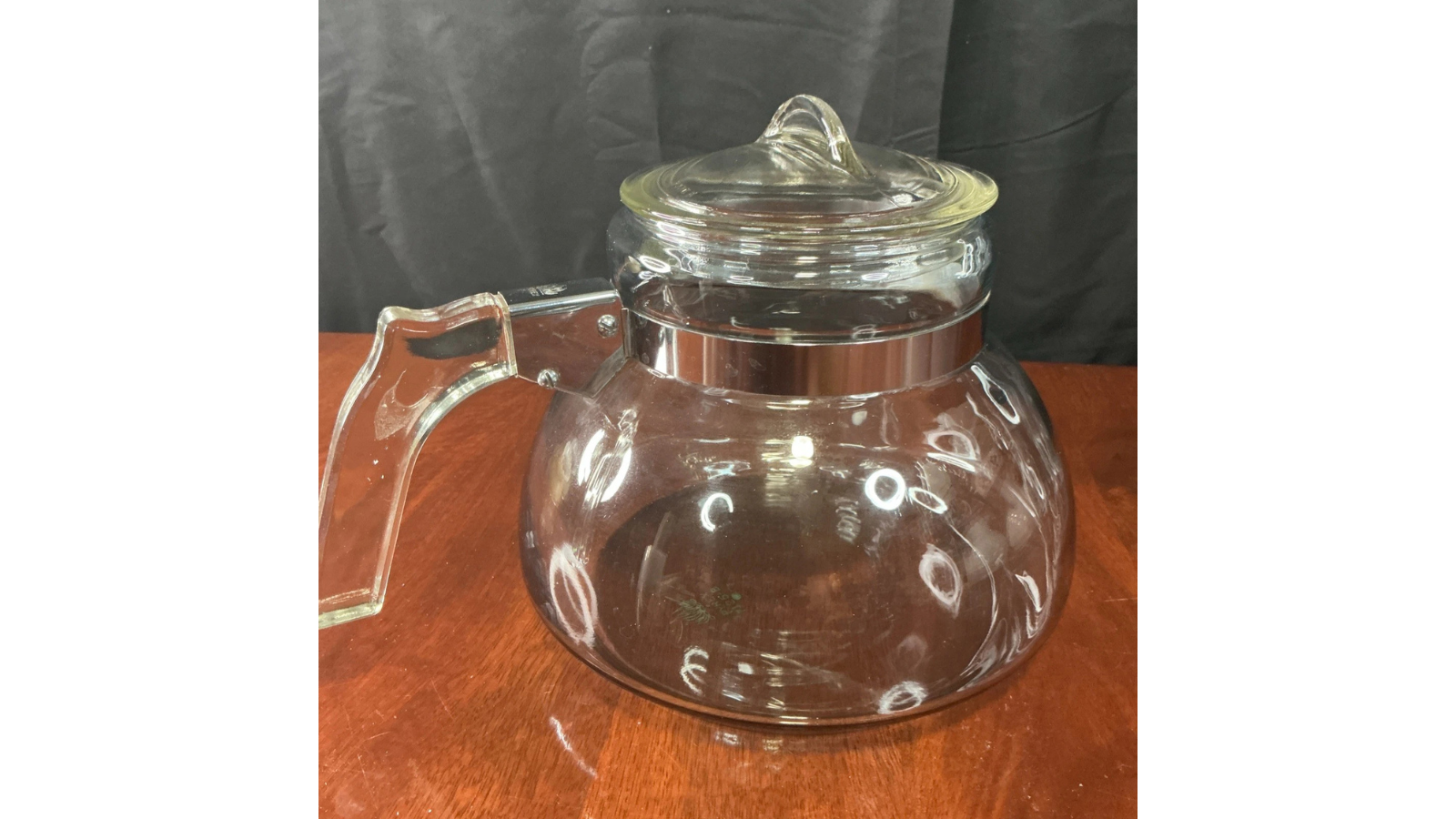
Look for a plump, bulbous glass body that tapers to a flat base. There’s a short neck, a pouring lip, and a domed glass lid with a chunky knob. Just below the neck sits a metal band connecting to a separate transparent handle. The overall effect is almost like an old-fashioned glass jug with rather sophisticated fittings.
The body has a subtle blue-gray tint, sometimes difficult to see until you hold it against a white background. It’s quite different from brightly colored Depression glass. The restrained design has its own appeal: a 1939 example was selected for MoMA’s 1942–43 Useful Objects in Wartime exhibition.
Check the base and the handle fittings
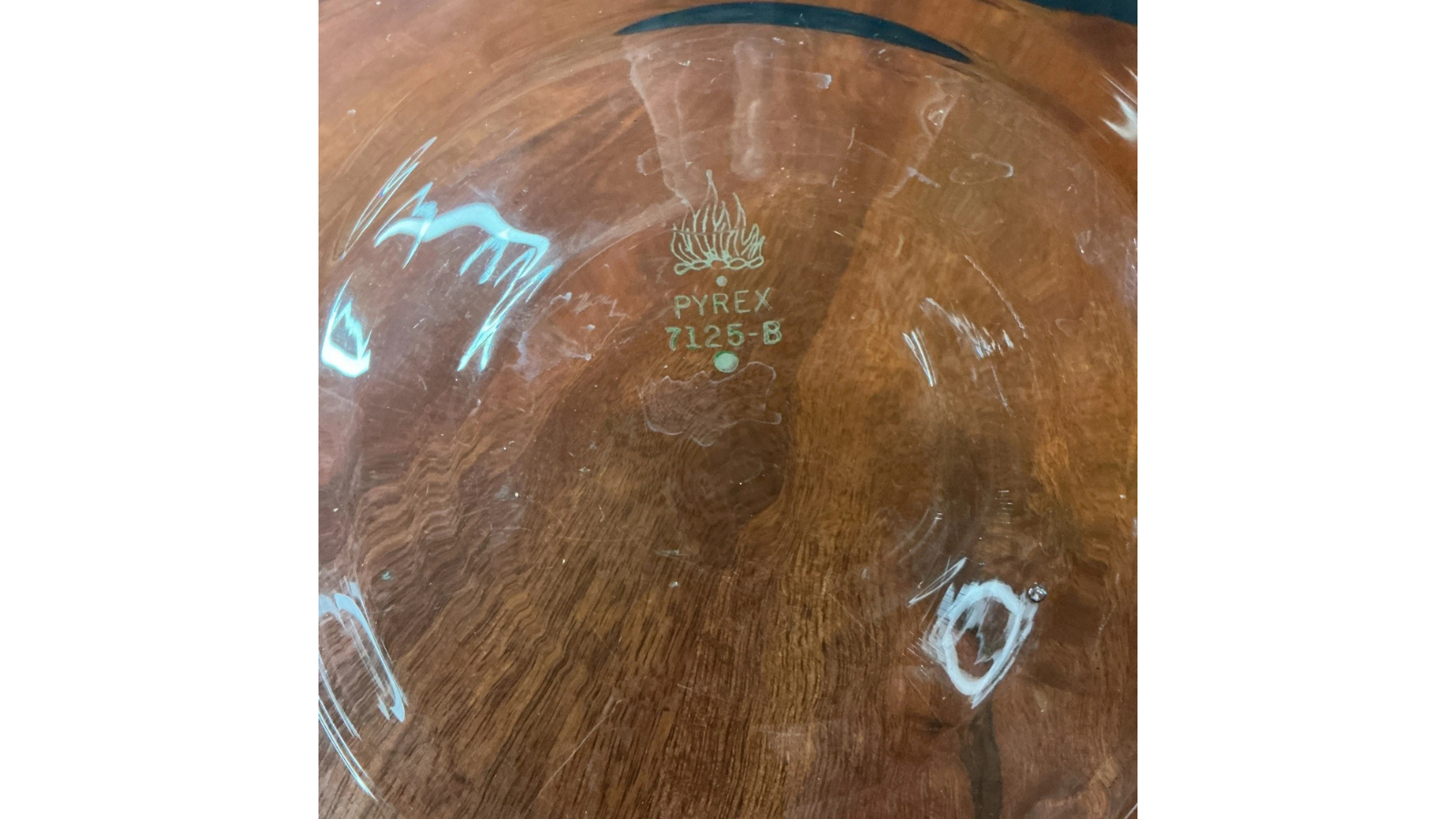
Carefully turn the pot over and look for the PYREX FLAMEWARE trademark and the model number 7125. One museum example has this marking on its base, but it’s barely legible. Angle the glass toward a light and take your time. Don’t mistake a faint stamp for a missing one.
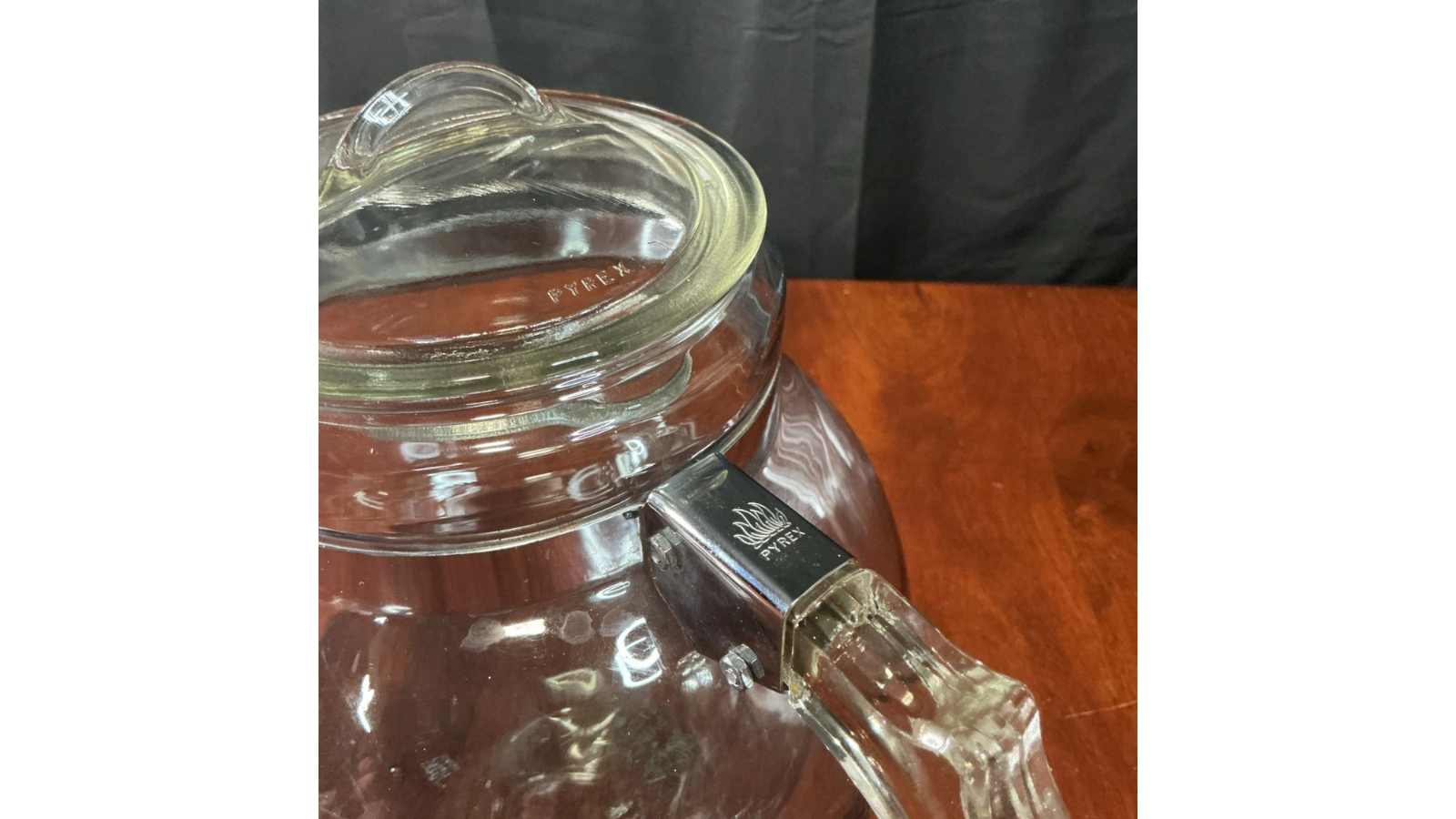
Look at the metal attachment above the handle, too. Surviving kettles can carry the Flameware trademark there, and some have little molded codes on the glass grip. These are useful clues, but I’d judge the construction and markings together rather than treating one small code as proof of an exact manufacturing year.
The detachable handle and lid are important
The handle isn’t molded into the kettle. A metal band and attachment, held with screws, secure the separate glass grip. That means a thrifted example can look reasonably complete while hiding a damaged fitting or a replacement handle. I look for glass without cracks where it joins the metal and a band that sits properly, without gaps or obvious distortion.
The original components weren’t an afterthought. Corning’s January 1941 dealer catalog identified the kettle body as 7125B, cover as 7125C, handle as 7125H, and metal band and sleeve as 7125MB. Those are parts for the same kettle, not separate models. It’s a useful little reference if you encounter an incomplete one.
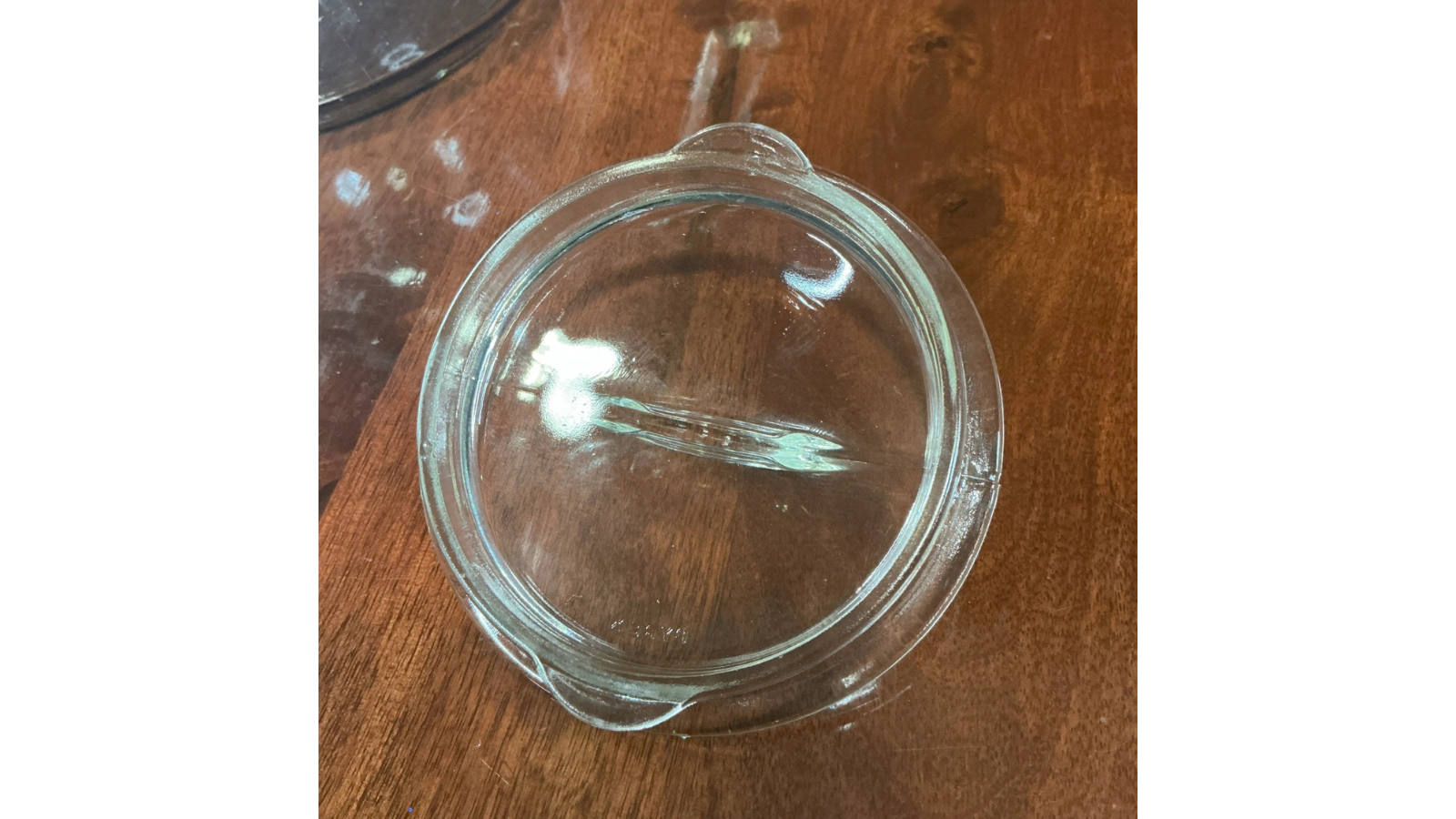
The original-style lid has a domed top and two small tabs beneath its insert. Check that it rests naturally in the opening and doesn’t need forcing. A random glass lid that happens to cover the hole isn’t necessarily the right lid. Molded lid codes can differ from catalog part numbers, though, so fit and construction matter as much as the numerals.
Not every clear Pyrex teapot is this kettle
There were other Flameware tea vessels, including the American Hostess teapot of the 1940s and smaller spherical designs made much later. All that glass and metal makes them look related, but their shapes and stamped numbers differ. A seller calling something ‘1930s Pyrex’ doesn’t establish the date.
Also distinguish the utility kettle from a Flameware coffee percolator. A percolator needs internal brewing pieces, whereas this kettle was a multipurpose water-heating vessel. Corning even advertised it for serving cold drinks and preparing simple foods, which helps explain its generous size.
What I’d check before taking one home
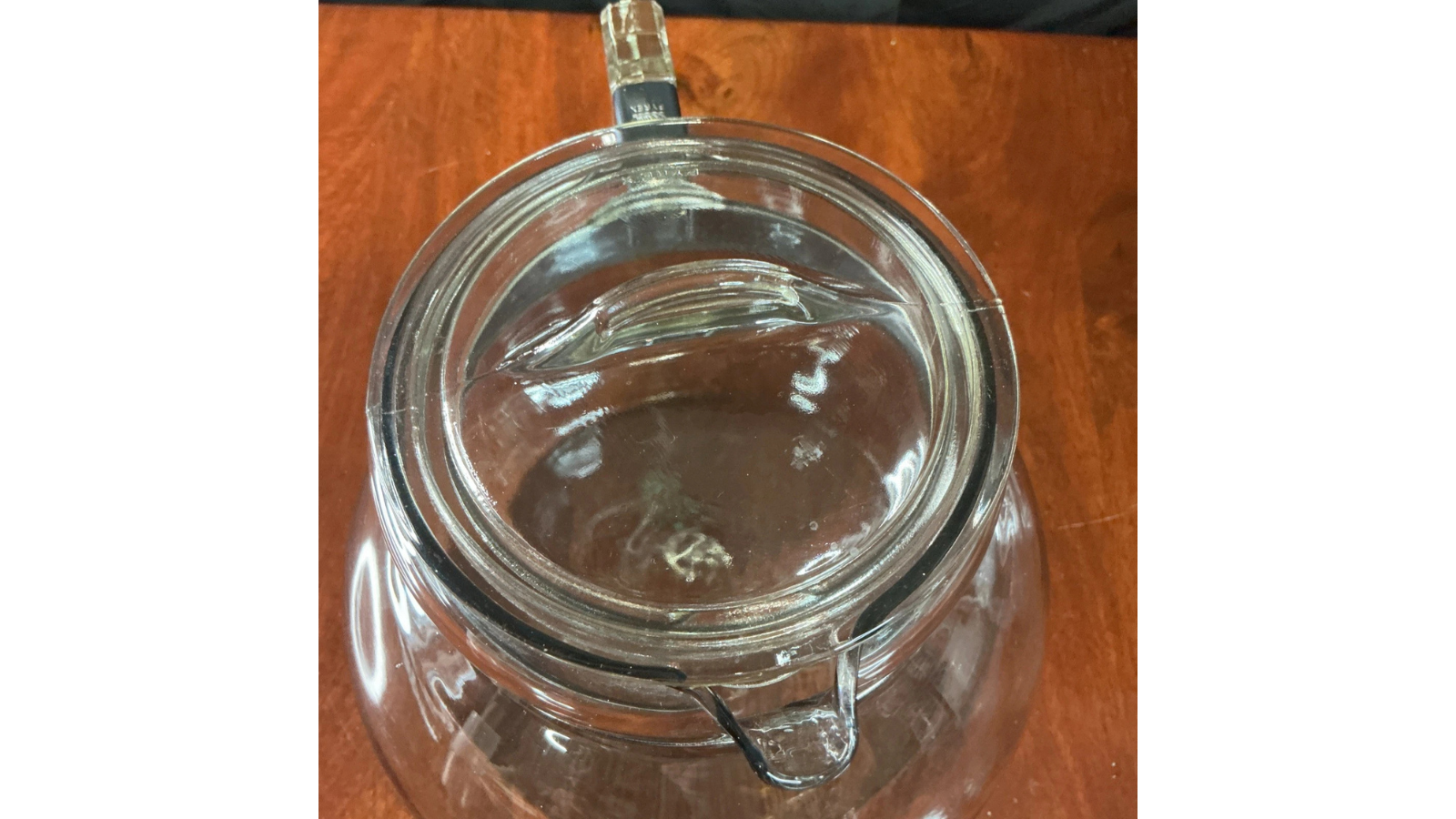
Start at the rim and spout, where tiny chips can be easy to miss. Hold the body toward a bright light to examine the bottom and sides for fine cracks. Check the glass handle especially carefully around the fixing screws, then inspect the metal band for looseness or corrosion. Don’t try to dismantle the mechanism in a thrift store.
A bit of removable mineral residue wouldn’t worry me nearly as much as damaged glass or an ill-fitting handle. I’d avoid aggressive scrubbing, which risks scratching the surface or losing surviving marks. For a collector, the best find is a kettle with its original pieces present and sound. There’s something rather lovely about seeing the whole eighty-year-old design still together.
Would I still boil water in it?
Although Flameware was designed for the stove, an old kettle’s history is usually unknown. It may have been overheated, knocked, or repaired. The original instructions called for moderate heat, water in the pot before heating, and never boiling it dry. They also warned against putting hot glass on wet surfaces.
Those historic directions don’t guarantee a surviving kettle is safe for modern cooking. I’d enjoy an uncertain secondhand example on display rather than put it over a burner. The pale glass, clever detachable handle, and original fittings are more than enough reason to appreciate it.
You might also like…
The CorningWare Pattern Collectors Dream Of Finding At A Thrift Store
The Blue-And-White Pyrex Pattern Collectors Dream Of Finding At A Thrift Store
The Pink Pyrex Pattern Collectors Dream of Finding at a Thrift Store

