
Affiliate disclosure: This post may contain affiliate links. Please see full disclosure. AI-assisted.
If you spot a glossy bowl with bold stripes running down the sides, turn it over before you put it back. It could be Cathrineholm Stripes, the earlier Norwegian enamelware design by Grete Prytz Kittelsen. The bowls have the clean shape and strong colors that make midcentury kitchenware so much fun to collect, and they’re light enough to pull down from the cupboard every time you want to toss a salad.
I love a thrift find that makes an ordinary job a little nicer. A striped bowl that holds enough fruit for the week is the sort of thing I’d make room for, even if I never found a second one. And if you already collect Cathrineholm Lotus, the stripes look right at home alongside those pointed leaves.
Look for stripes that run down the bowl
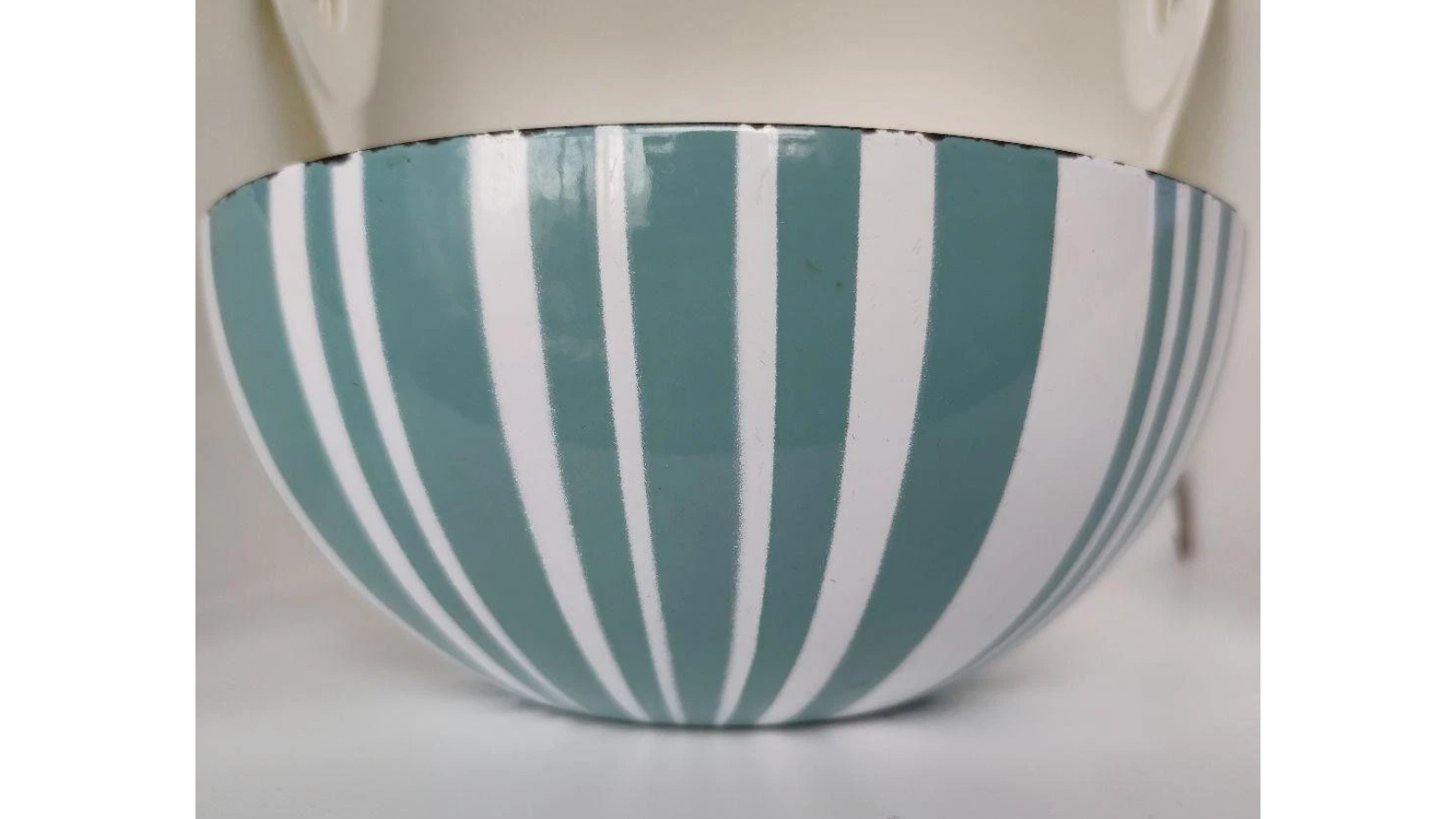
Start with the outside. The lines run from near the rim down the curved sides, repeating all the way around. They give the bowl a strong rhythm even in black and white, and the dark lines on a white bowl are easy to miss if it’s sitting inside a stack. Pull it out far enough to see the sides. One black-and-white example dated 1959 has a plain white interior, so from above you’d have very little to go on. The color arrangement varies. A documented black bowl with white stripes reverses that look. When you’re searching online, try “Cathrineholm striped enamel bowl” as well as “Cathrineholm Stripes.” The seller may know the maker’s name from the base and have no idea what the pattern is called.
Kittelsen was an enamel artist who started working with Cathrineholm near Halden, Norway, in the mid-1950s. She designed colorful things for ordinary kitchens. You can see the appeal in the Stripes bowls. They’re rounded enough to scoop your hand beneath when you carry them, and the decoration is on the outside where you can see it even when the bowl is full. The blue-and-white bowl nearly 12 inches across would look as good full of garden tomatoes as it would empty on the shelf.
Read the base before you decide it’s vintage

image credit: aiken.japan via eBay
Flip the bowl over and look for a Cathrineholm stamp. If there’s country wording, read the whole thing. A legible mark can help put a name to the bowl, and a documented blue-and-white example is stamped underneath, and the bottom is also where you’ll see much of the wear from years of sliding it across a countertop. Tilt the base toward the light if the lettering is faint. If you’re buying online, ask for a clear photo of the entire underside as well as one of the rim and interior.
The striped bowls went back into production in Thailand, so a familiar pattern and the Cathrineholm name can also turn up on newer enamelware. Some reproductions were made in original colors and sizes. If a listing says “of Norway,” check whether that’s branding or a stated place of manufacture. I’d use the mark alongside the bowl’s shape, size, and decoration. If the stamp is unreadable and the seller has no other details, I’d buy it only if I liked it enough to be happy with a newer bowl.
Pick a bowl you’ll actually use
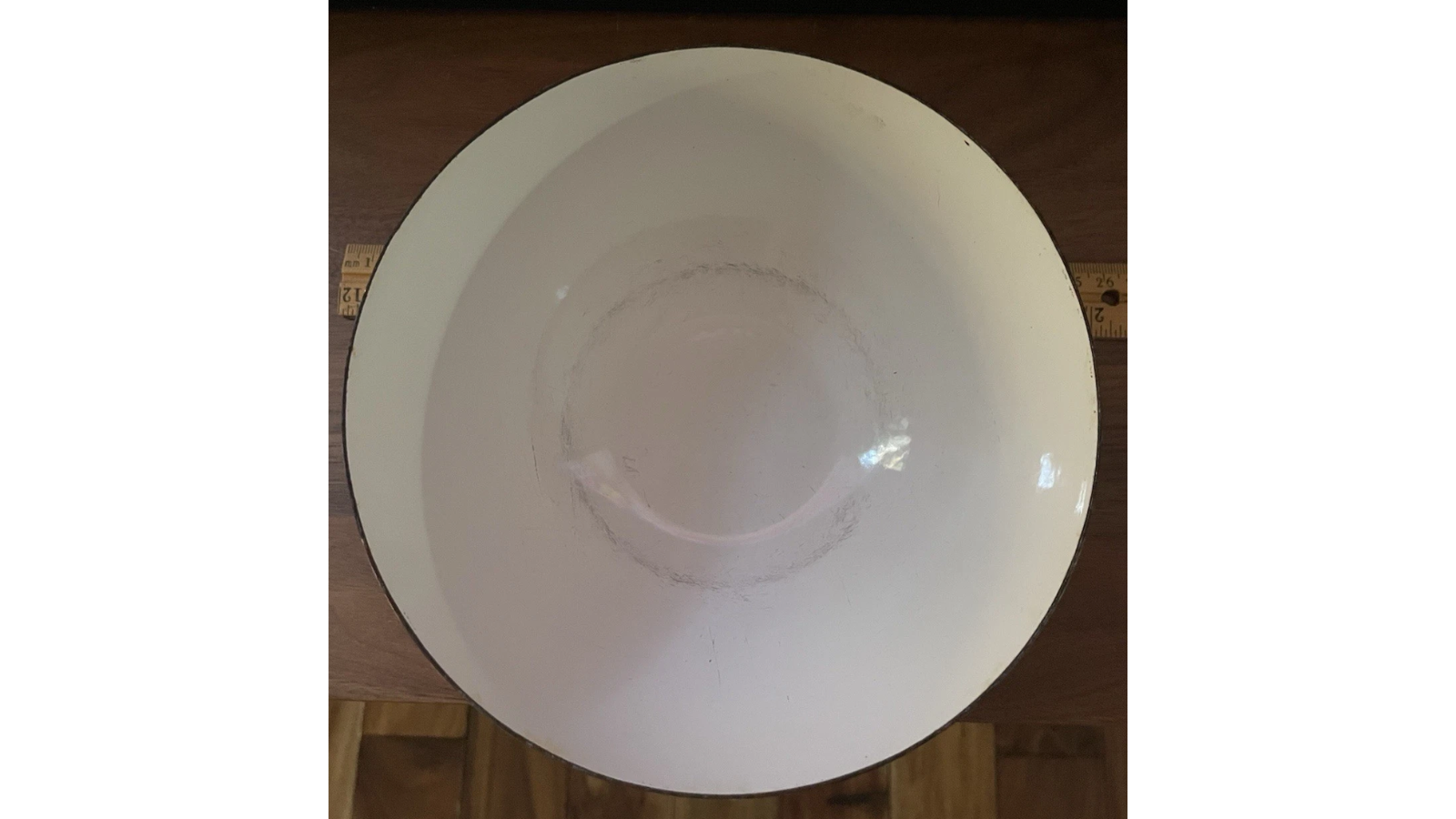
I check the inside and the rim before I worry about scuffs on the bottom. Look across the enamel in good light and turn the bowl so you can see the entire lip. A dull patch of rubbing and a spot where the coating has broken away are two different things. Look for a sharp edge, exposed metal, or flakes lifting around a chip. I leave bowls with damaged enamel on the food-contact surface for display, and I pass on a bowl that rocks when I set it down. A wobbly bowl is a nuisance the first time you try to stir anything in it. On a dark bowl, check the lip from the inside as well as from above.
A small one earns its space holding radishes, seeds, or nuts. A big one makes sense if you bring in garden produce by the armful or want enough room to toss greens without chasing them over the rim. Enamel is a glassy coating over metal, so the bowl stays relatively light for its size. I’d use it for mixing, serving, or holding fruit and keep it out of the microwave. For an old Stripes bowl, I’d also stick to warm soapy water, a soft cloth, and a quick dry around the rim. If you’re stacking it with other bowls, slip a clean dish towel between them. That keeps the foot of the bowl above from rubbing against the enamel inside the one below.
If you find just one, pick the size that fills a gap in your kitchen. I’d take a single striped bowl that goes from rinsing berries to serving them over a stack of lovely bowls I’d have to move every time I wanted the one at the bottom.
You might also like…
The CorningWare Pattern Collectors Dream Of Finding At A Thrift Store
The Blue-And-White Pyrex Pattern Collectors Dream Of Finding At A Thrift Store
The Pink Pyrex Pattern Collectors Dream of Finding at a Thrift Store

