Affiliate disclosure: This post may contain affiliate links. Please see full disclosure.
If you grew up on nature documentaries, you probably have “snake = scary predator” wired into your brain.
But out in the real world, snakes are very much on the menu.
Birds stomp them. Mammals chew them. Other reptiles and even other snakes hunt them on purpose. Some of these hunters are even resistant to venom, which feels like nature turning on cheat mode.
Here are 18 animals that actually eat snakes, and how they pull it off.
Secretary bird
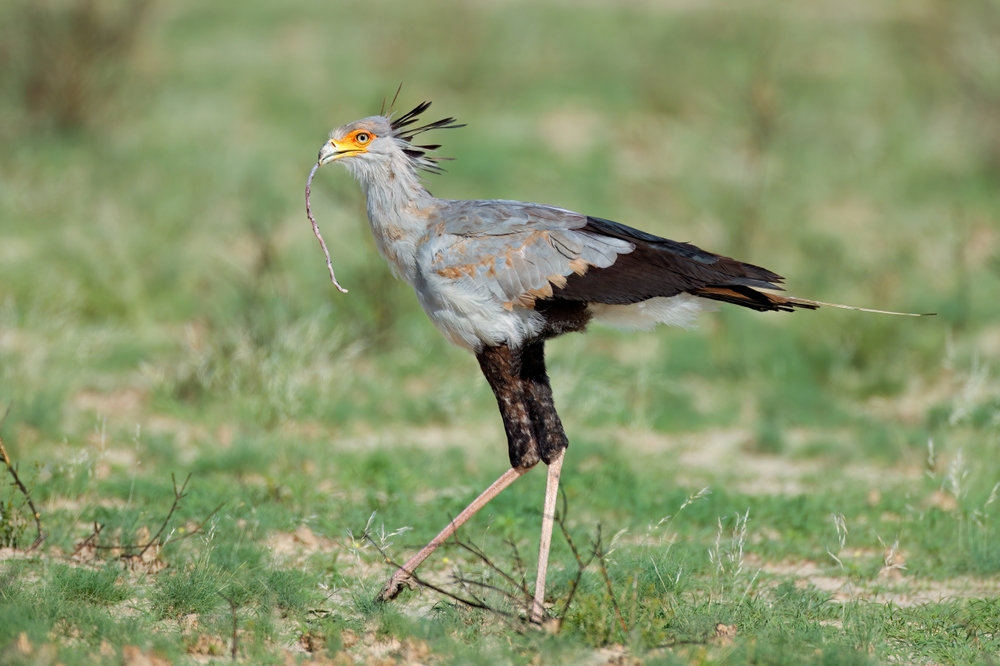
Picture a four-foot-tall bird striding across the African savanna on stilt legs, with a head like an eagle and a punk crest of feathers. That’s the secretary bird.
Instead of swooping like a hawk, secretary birds hunt on foot. They walk through grasslands looking for movement, then use those long legs as weapons. When they spot a snake, they hammer it with a rapid series of kicks aimed at the head and neck.(Wikipedia)
Measurements on captive birds show a single strike can land with a force roughly five times the bird’s own body weight, delivered in a few thousandths of a second.(ScienceDirect) That’s more than enough to stun or kill a venomous snake before it can land a proper bite.
Once the snake is dazed, the bird pins it and either keeps stomping or swallows it head-first. Tough scales on the lower legs help protect against last-minute bites. Snakes are a big part of their natural diet, alongside lizards and small mammals.(Wikipedia)
Brown snake eagle
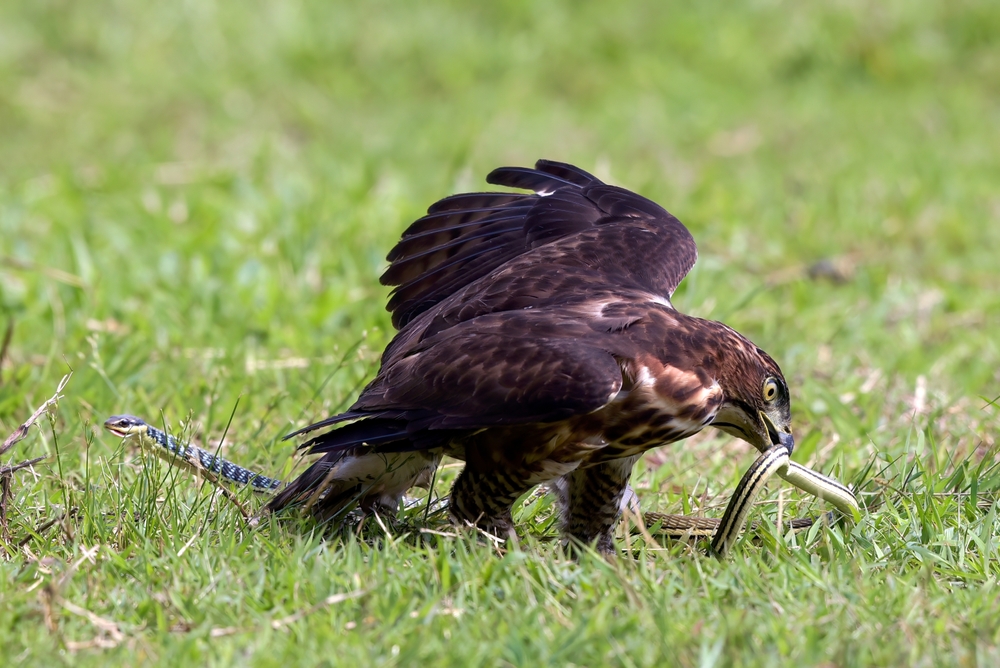
As names go, “brown snake eagle” doesn’t leave much mystery.
This African raptor specializes in hunting snakes, and snakes make up most of its diet.(peregrinefund.org) It perches high in a tree, watches the ground, and drops like a stone when it spots a snake moving below.
Those thick, scaly legs are basically built-in snake armor. At nests, researchers have found mostly venomous species being delivered: boomslang, puff adder, spitting cobras, and even large black mambas over eight feet long.(Wikipedia)
A brown snake eagle will often decapitate a large snake before carrying it off, which is a pretty solid way to avoid unpleasant surprises.
Greater roadrunner
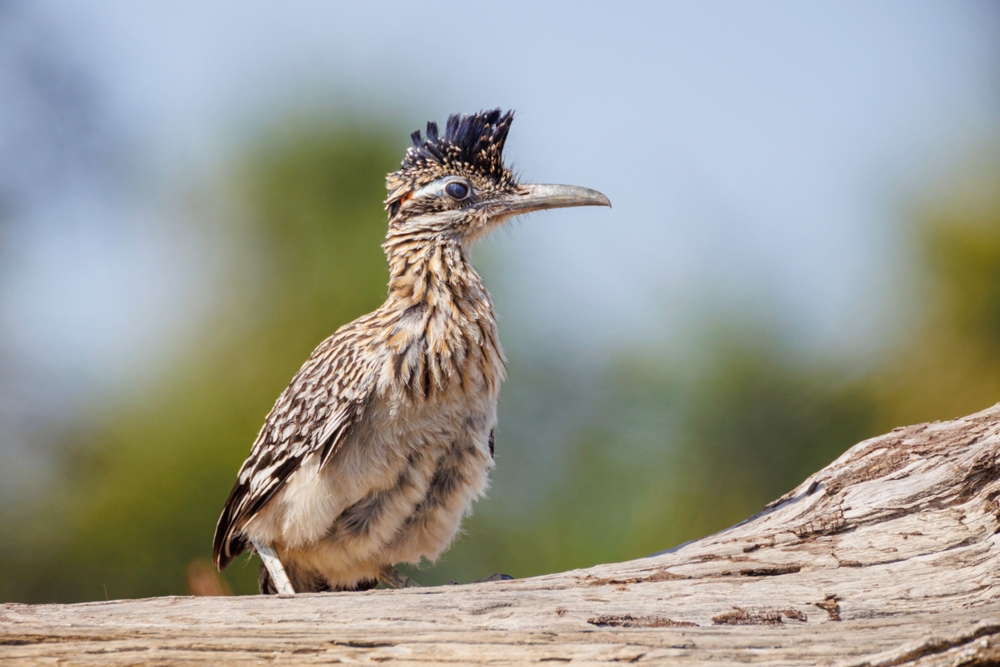
The real roadrunner doesn’t say “meep meep,” but it absolutely does beat up rattlesnakes.
Greater roadrunners live in the deserts and scrub of the American Southwest and Mexico. They eat pretty much anything they can catch: insects, lizards, small birds, rodents, and rattlesnakes.
They’ll sometimes hunt snakes in pairs. One bird distracts the rattlesnake by hopping and wing-flapping, drawing strikes. The other darts in from the side, pins the snake’s head, and the two of them bash it repeatedly against a rock or hard ground until the spine gives way.(allaboutbirds.org)
After that, the snake gets swallowed in big, determined gulps. For a desert snake, a roadrunner might be the worst neighbor to have.
Red-tailed hawk

If you see a big hawk circling a highway in North America, odds are good it’s a red-tail.
Red-tailed hawks eat mostly small mammals, but snakes are very much on the list, especially in areas where reptiles are common. Field studies and summaries of their diet show reptiles, mostly snakes, regularly turning up in their prey, and in some regions reptiles make up more than 10% of what they eat.
The basic tactic is simple: spot a snake from the air or a perch, drop down, and pin it with powerful talons behind the head so it can’t twist around to bite. If the snake is small, the hawk may swallow it whole. Bigger ones get torn into manageable chunks.
In some island populations, where there aren’t many rodents, red-tails lean even more heavily on lizards and snakes.(Wikipedia)
Great horned owl

Great horned owls are the “tiger” of the owl world: big, strong, and not very picky.
They mostly eat mammals and birds, but they’ll take reptiles, including snakes, whenever it makes sense. Diet summaries list snakes alongside lizards, frogs, and other small animals as normal prey.(Audubon)
An owl’s big advantage is silence. Specialized feathers muffle the sound of the wings, so a snake basking or moving through grass has almost no warning. The owl drops out of the dark, clamps down with talons that act like meat hooks, and the fight is usually over fast.
Great horned owls are strong enough to kill and eat rattlesnakes, and they sometimes do.(Big Bear Zoo)
Great blue heron

Great blue herons look calm and delicate, standing in the shallows like bird statues.
Under that peaceful look is a predator armed with a spear.
These big wading birds hunt mainly fish, but they’ll also strike at frogs, small mammals, and snakes. Observations and wildlife notes have recorded great blue and grey herons catching and swallowing snakes whole after long wrestling matches.
The heron stands still, watching. When a snake moves within range, the bird’s long neck snaps forward and the dagger-sharp bill grabs or stabs the prey. The heron then flips the snake around so it goes down head-first, which keeps coils and flailing to a minimum on the way in.
Indian grey mongoose
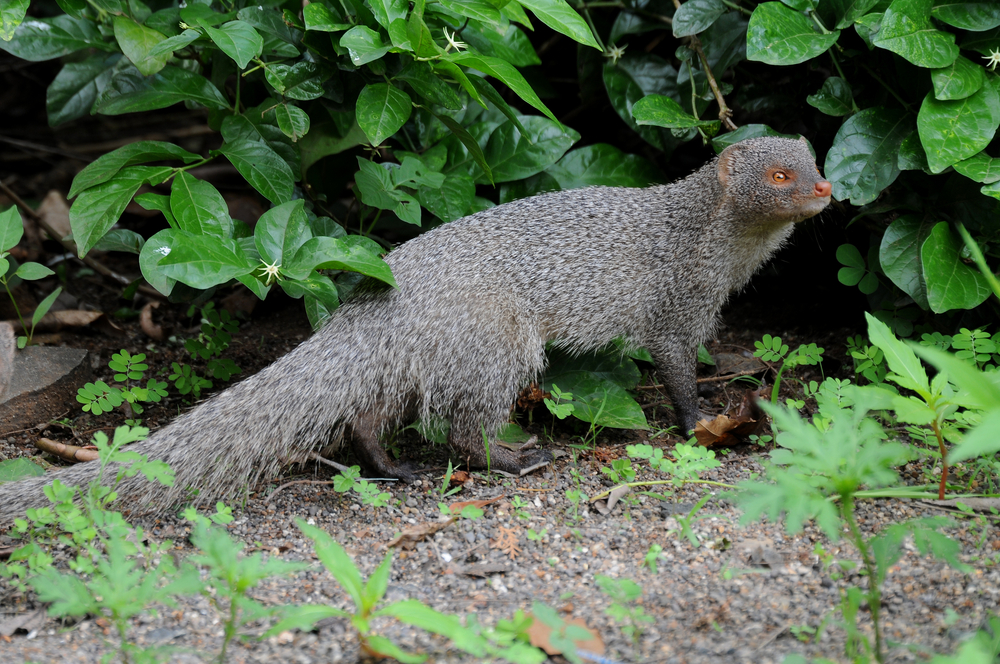
If there’s a poster child for “animal that eats snakes,” it’s the Indian grey mongoose.
This small carnivore is famous for fighting venomous cobras. Its everyday diet is a mix of rats, mice, lizards, and other small animals, but snakes are a regular item.
A mongoose doesn’t just charge in. It dances around a snake, provoking strike after strike and dodging out of the way until the snake tires. Then it rushes in, bites the head or neck, and shakes or chews until the spine breaks.
On top of speed and agility, mongooses have a biochemical trick: changes in certain nerve receptors make some snake neurotoxins bind less effectively, giving them partial resistance to venom.
Honey badger
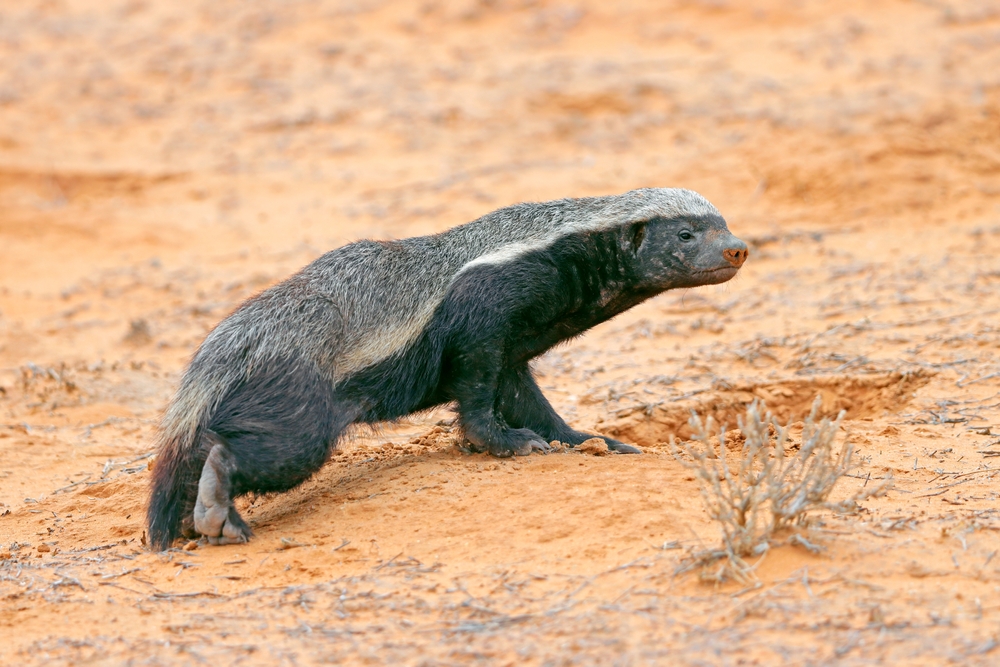
Honey badgers have a bit of an internet legend going, but in this case the hype is pretty close to reality.
These stocky carnivores eat insects, small mammals, birds, and reptiles. Venomous snakes can make up around a quarter of their diet in some regions, and they’re unusually resistant to neurotoxic snake venoms.
When a honey badger goes after a snake, it just…commits. It charges in, grabs the snake behind the head, and starts biting through bone and muscle. Even if it does get bitten, it often survives, sometimes passing out for a while and then getting back up once the venom wears off.
It’s not that they’re totally immune, but compared to most mammals, they’re ridiculously hard to kill with a snakebite.
Meerkat

Meerkats look cute, standing on tiptoe like little furry periscopes. They’re also gutsy, snake-eating predators.
They’re technically omnivores, but most of their diet is animal: insects, small rodents, eggs, and reptiles, including snakes.
Like mongooses, meerkats have some resistance to certain venoms, and they’re smart about how they handle dangerous prey. They’ll mob a snake as a group, darting in and out, biting and harassing it until it leaves or collapses.
For a small desert snake, a meerkat colony is basically a bad neighborhood.
Virginia opossum
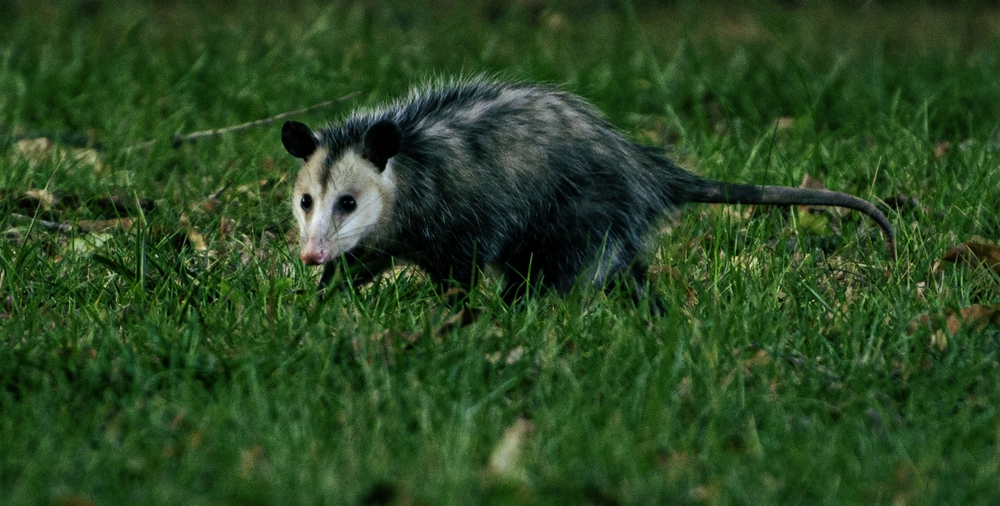
North America’s only native marsupial looks like a scruffy, wide-eyed goblin. Under all that fur, it’s a surprisingly hardcore snake-eater.
Virginia opossums are omnivores that eat fruit, insects, carrion, small animals, and snakes. The wild twist is in their blood: they produce a protein that can neutralize key components of pit viper venom, giving them strong resistance to bites from rattlesnakes and copperheads.
That resistance doesn’t just help them survive attacks; it lets them actively prey on venomous snakes most predators avoid. They’re like slow, shambling little anti-snake tanks.
Red fox

Red foxes are classic generalists. They’ll eat rabbits, rodents, birds, berries, insects, and whatever else they can scavenge.
Snakes are part of that “whatever else.” Diet studies and wildlife summaries list small snakes among the reptiles red foxes sometimes take, and in some habitats reptiles and amphibians can make up a noticeable slice of what they eat.
A fox doesn’t need special tools here. If it can pounce on a snake, pin it with its paws, and land a solid bite to the head or neck, that’s enough. Most of the snakes they eat are small species or juveniles and nothing that’s going to coil around and win a wrestling match with a fox.
American alligator
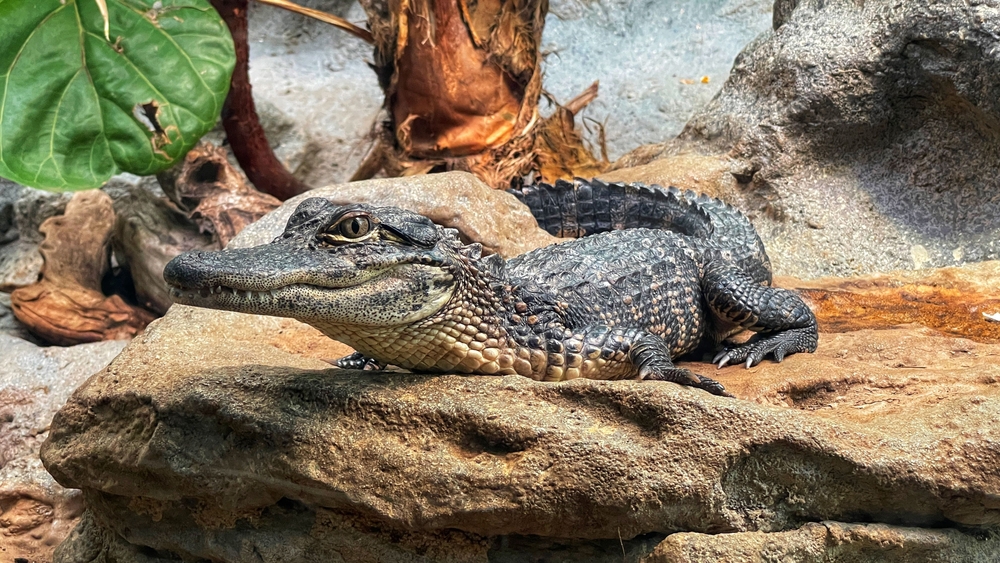
In the southeastern United States, if you’re a snake and you get too close to the water, the alligator might be your biggest problem.
American alligators are opportunistic apex predators. Adults eat fish, turtles, birds, mammals, and snakes. State wildlife agencies and references list snakes among their normal prey, especially for larger gators that can tackle almost anything at the water’s edge.
The hunting strategy is simple. The gator waits, half-submerged. A snake swims past or basks too close. There’s a sudden lunge, a sideways snap of the jaws, and the snake disappears under the surface. If it’s large, the alligator may shake it or perform a “death roll” to tear it up.
In places like the Florida Everglades, alligators have even been seen killing invasive Burmese pythons, a snake eating a snake-eater eating a snake.
Nile monitor
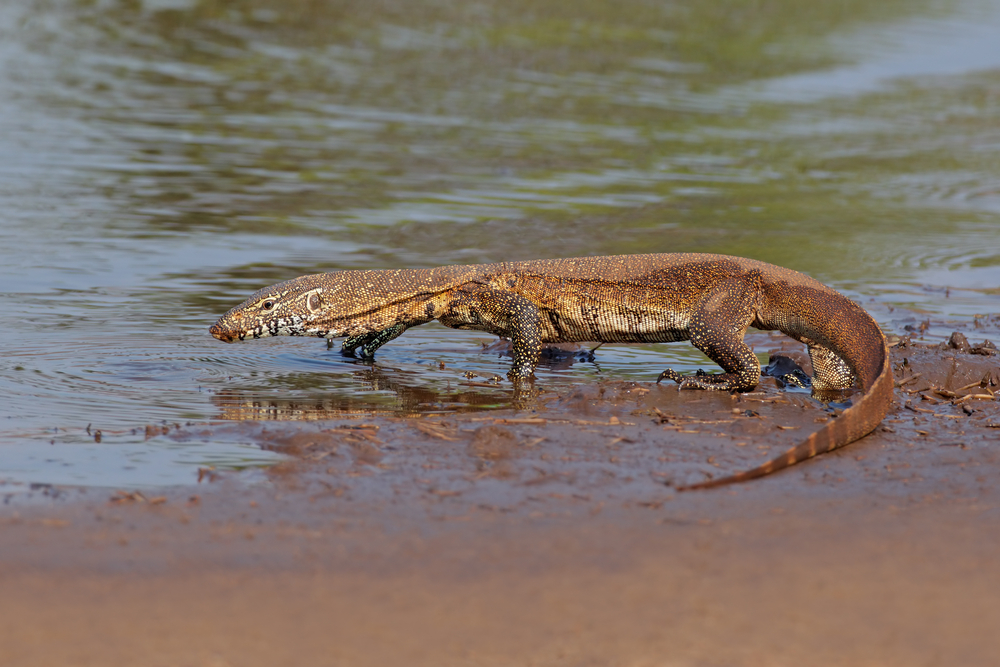
The Nile monitor is a big African lizard with serious dinosaur energy. It’s long, muscular, and not shy about eating other reptiles.
These monitors are carnivores and scavengers with a broad diet: fish, frogs, turtle hatchlings, small mammals, birds, eggs, and lots of other reptiles, including snakes and even young crocodiles.
They hunt on land, in trees, and in water. When they grab a snake, they rely on size and jaw strength. The monitor bites down, thrashes the prey around, and swallows it whole or in big chunks.
If you’re a snake sharing a riverbank with a Nile monitor, you’re very much on the menu.
American bullfrog
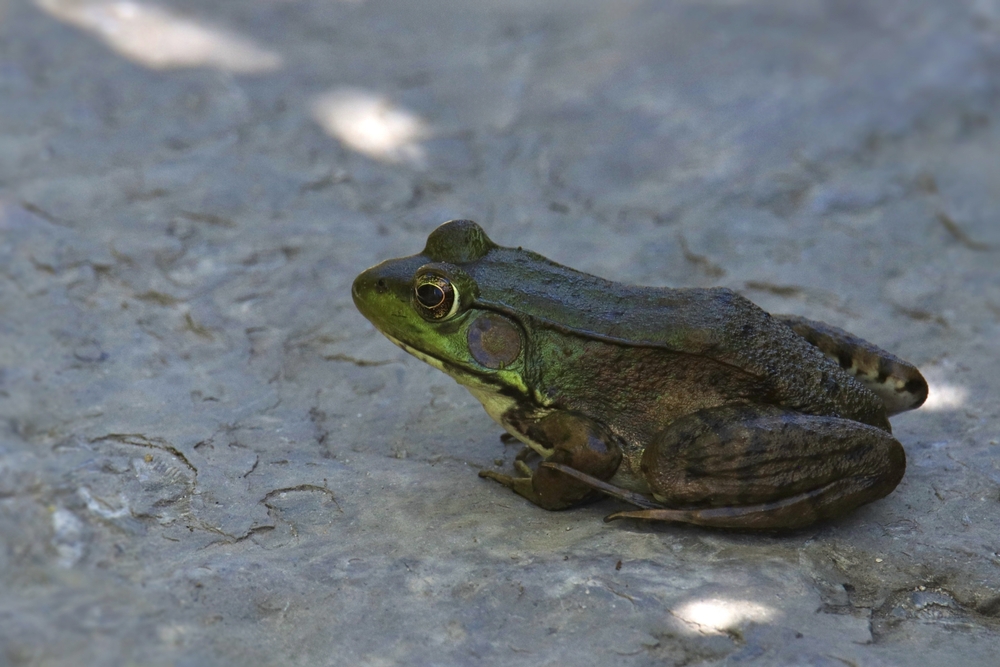
Frogs usually show up as snake food, not the other way around.
American bullfrogs refuse to stick to that script. Adult bullfrogs are big, heavy-mouthed ambush predators that have been found with all kinds of animals in their stomachs: rodents, lizards, birds, other frogs, and snakes.
They sit at the edge of the water and wait. When something moves within range, they lunge and gulp. If a small snake swims past, it can vanish in one bite. In places where bullfrogs are invasive, their habit of eating basically anything that fits in their mouth, snakes included, can be a real problem for native wildlife.
King cobra
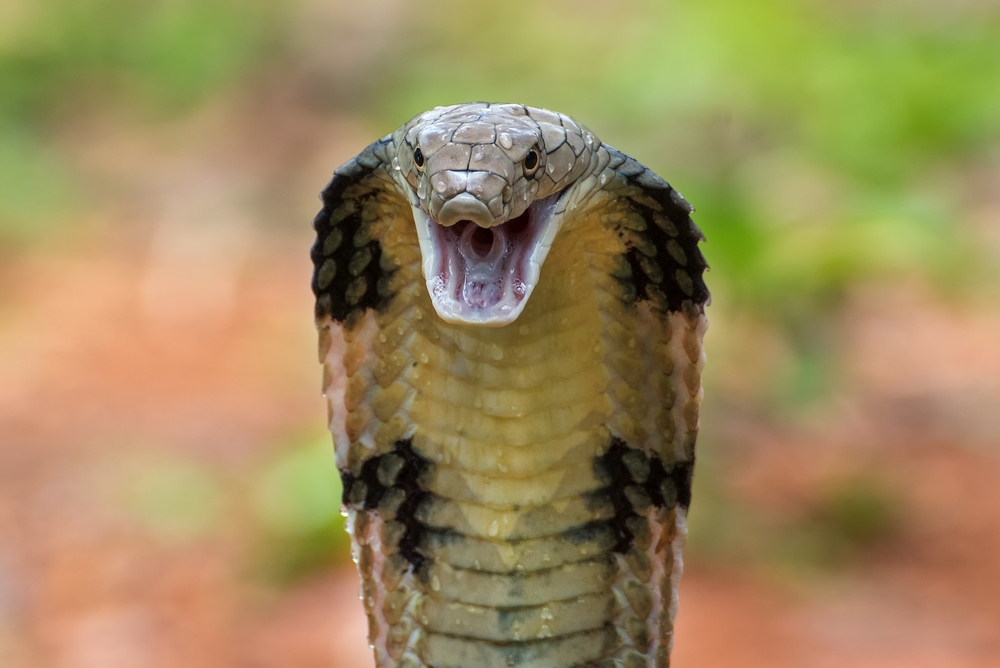
Some snakes don’t just eat snakes occasionally. They pretty much specialize in it.
The king cobra’s scientific genus name, Ophiophagus, literally means “snake-eater.” Its diet is made up mostly of other snakes, both venomous and non-venomous, plus the occasional lizard.
They eat rat snakes, other cobras, kraits, pit vipers, and even big pythons. A king cobra follows scent trails through forests, tracks down another snake, overpowers it with size and venom, and then swallows it whole.
Eastern kingsnake
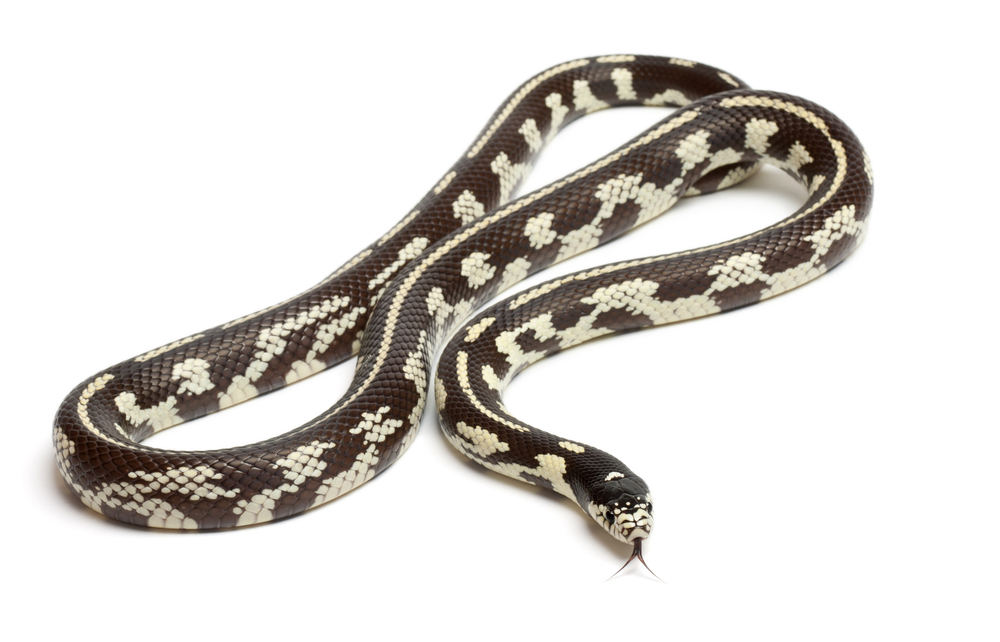
The eastern kingsnake is a sleek black snake with white or yellow chain-like bands. It’s non-venomous, but other snakes should not relax around it.
Kingsnakes are constrictors that eat rodents, lizards, bird eggs, and lots of other snakes. Eastern kingsnakes are known to tackle venomous species like copperheads and rattlesnakes.
They bite and hang on, then loop coils around the prey and squeeze until it can’t breathe. On top of that, kingsnakes have some resistance to pit viper venom, which lets them survive bites that would kill many other animals.
So even though they’re “only” constrictors, they play a big role in keeping other snake numbers in check.
Eastern indigo snake

The eastern indigo snake is a long, glossy, blue-black snake native to the southeastern United States. It’s non-venomous, but it might be one of the most confident snakes around other snakes.
Indigos eat a huge variety of prey: mammals, birds, frogs, turtles, and other reptiles. Snakes, including venomous species like rattlesnakes, copperheads, and cottonmouths, are a regular part of that diet.
They aren’t classic constrictors. Instead, an indigo snake uses its strong jaws to grab and overpower prey, sometimes pinning it against the walls of a burrow as it swallows. They’re resistant or immune to the venom of native pit vipers, which lets them handle dangerous snakes other predators avoid.
In their home range, having indigos around generally means fewer venomous snakes.
Mussurana

In parts of Central and South America, mussuranas are the snake-eaters that farmers quietly love.
The common mussurana is a long, slim constrictor that feeds mainly on other snakes. It especially targets venomous pit vipers like the fer-de-lance, a snake that’s responsible for many bites in the region.
A mussurana seizes a snake by the head, uses rear fangs to get a good grip, then coils around it and squeezes until it stops moving. After that, it swallows the whole thing. These snakes are immune to the venom of many pit vipers they hunt, which makes this lifestyle possible.
In some areas, people have even tried raising mussuranas as a natural way to reduce dangerous viper numbers.
The bigger picture

Snakes are skilled predators. Some are venomous, some are powerful constrictors, and many are perfectly capable of turning a mouse or frog into a quick meal.
But they’re also prey.
Birds like secretary birds and snake eagles stomp and grab them. Mammals from opossums to honey badgers shrug off venom and bite back. Reptiles such as alligators and monitor lizards will happily crunch any snake that looks edible. Other snakes make a full-time job of hunting their own kind.
It’s not a simple ladder with snakes at the top. It’s a tangled web where today’s hunter can easily be tomorrow’s lunch, especially if there’s a mongoose, a badger, or a very tall bird watching from the grass.