
Affiliate disclosure: This post may contain affiliate links. Please see full disclosure.
Low-growing ground covers can replace the less-used parts of your lawn with flowers, fragrance, and something more interesting than another patch of grass. The trick is choosing plants that suit both the growing conditions and the amount of walking they’ll actually get.
I’m no great fan of lawns. Much of my growing space is given over to edible and medicinal plants, but I still have a fairly large lawned area where the family and pets can do their thing. Grass earns its place there. Elsewhere, I’d rather grow something that gives a little more back for the work it takes.
As a permaculturist, my priority is matching the planting to the job. A fragrant carpet beside a bench has a very different job from the route between the back door and the shed. Treat them alike and you’ll spend your time replacing flattened plants.
Most walkable ground covers tolerate occasional steps, rather than constant trampling. Some work better mixed with grass than grown alone. For busy paths, stepping stones let you keep the greenery without asking it to survive every footfall. And if the dogs have established a daily racetrack, a delicate flowering carpet is going to lose.
Choose for the conditions and the traffic
Before buying plants, watch where people actually walk. The worn strip across the lawn tells you more than the path you’d like everyone to use.
- Occasional stepping: A few steps while tending a bed, reaching a chair, or crossing between paving stones. Most of the smaller, more delicate ground covers belong here.
- Regular walking: Repeated use of an area, with enough space that every step doesn’t land on the same plants. More resilient ground covers or mixed lawns may cope once established.
- Heavy wear: Running games, repeated dog traffic, or a narrow route used throughout the day. Use suitable turf, a surfaced path, or stepping stones.
Then check sunlight, drainage, summer heat, and winter cold. A plant can be perfectly winter-hardy and still collapse in hot, dry weather. Equally, drought tolerance doesn’t mean it will survive sitting in wet soil all winter.
Flowering ground covers also bring bees closer to your feet. That’s useful for pollinators, but worth considering beside a barefoot play area.
1. White clover and microclover for a mixed lawn

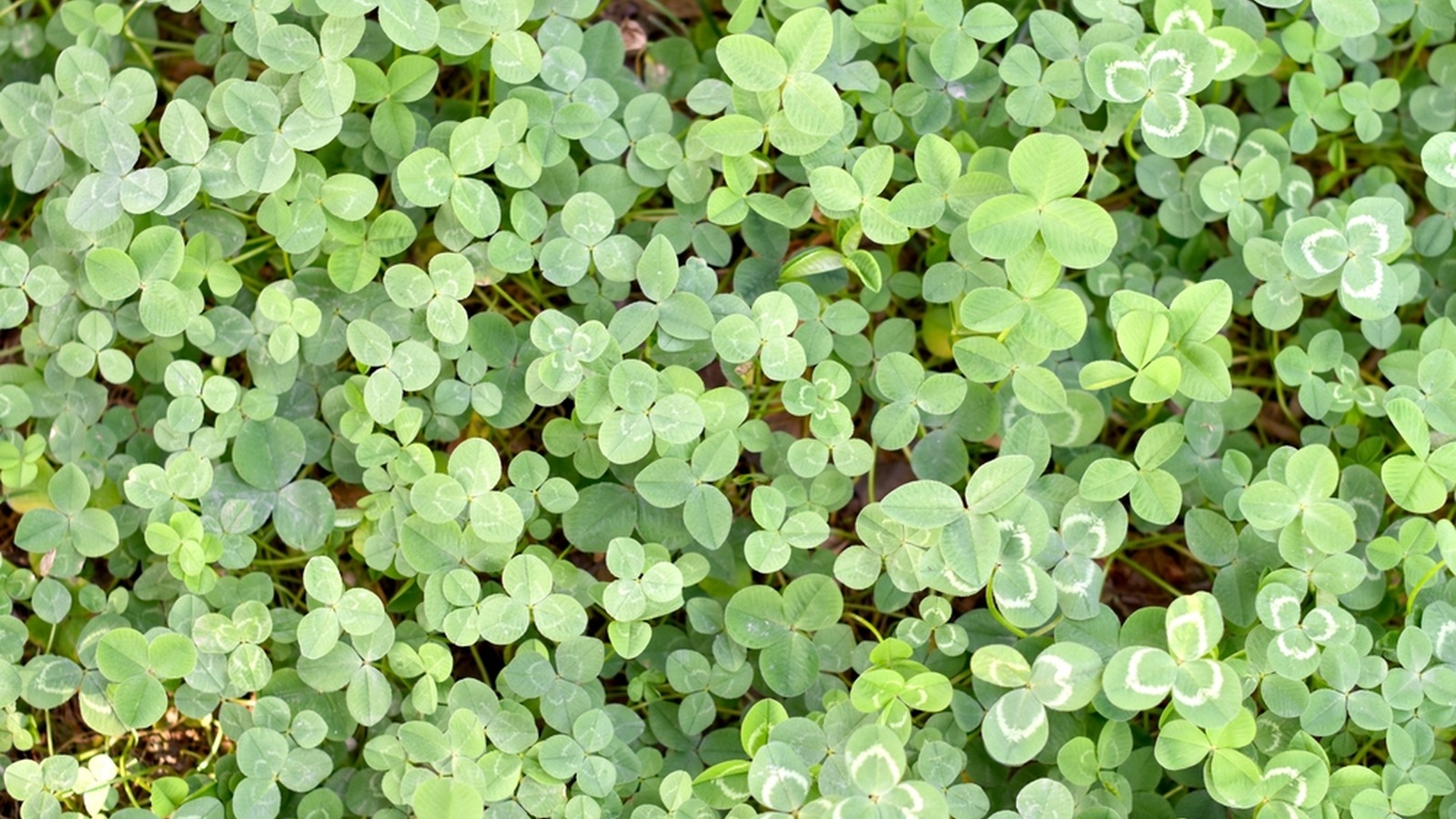
White clover makes sense when you want a more useful lawn without giving up the lawn altogether. Its white flowers feed bees, and it can grow among grass that helps carry the wear from everyday use.
Clover fixes atmospheric nitrogen through a partnership with bacteria in its roots. Some of that nitrogen becomes available to surrounding plants as roots and clippings break down. It can reduce fertilizer needs, but it isn’t a guarantee that your lawn will never need feeding.
Microclover is a smaller-leaved form of white clover, rather than a different species. It blends more neatly with turf and generally produces fewer flowers. That’s useful if you prefer a tidier appearance, although ordinary white clover has more to offer if flowers are your priority.
I’d choose a grass-and-clover mix for an area that still gets regular family use. Use a seed blend and sowing rate suited to your region instead of guessing a percentage. In Maryland conditions, microclover can struggle with high heat and drought, and may need reseeding. Small leaves don’t make it indestructible.
2. Creeping thyme for sunny, well-drained ground
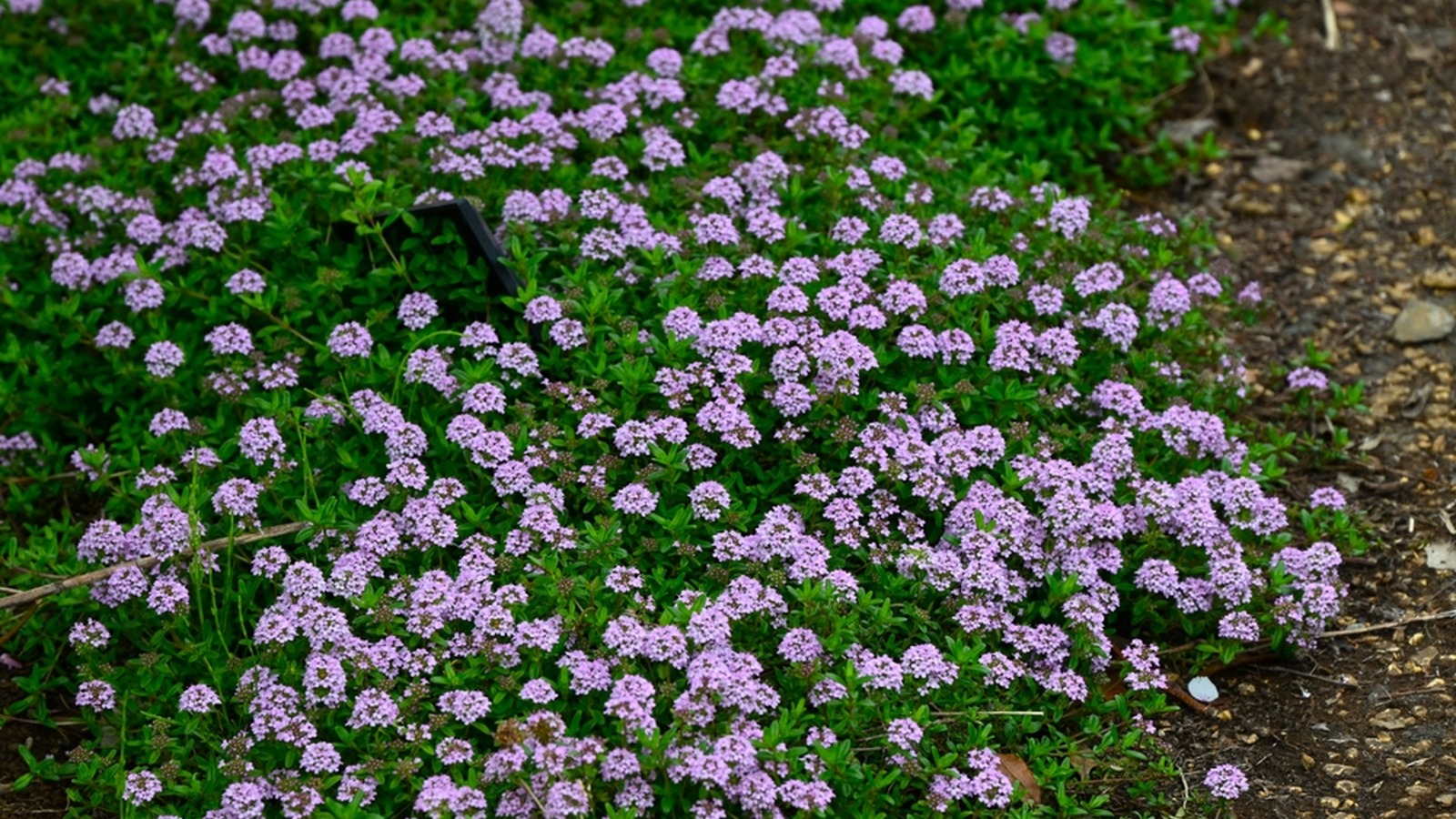
Creeping thyme is my favorite ground cover. It gives you a low carpet of aromatic foliage, pink or purple flowers, and bees busily working their way across it. That’s a much better use of a sunny patch than grass you’re constantly trying to coax into looking respectable.
Choose a genuinely low-growing thyme, such as Thymus serpyllum or an appropriate creeping cultivar. Creeping thyme forms a low, woody mat, so check the plant label rather than assuming every thyme will make the same neat carpet.
Give it sun and free-draining soil. Wet winter ground is a much bigger problem than modest soil fertility. If the site stays soggy, choose a different plant rather than trying to persuade thyme to enjoy it.
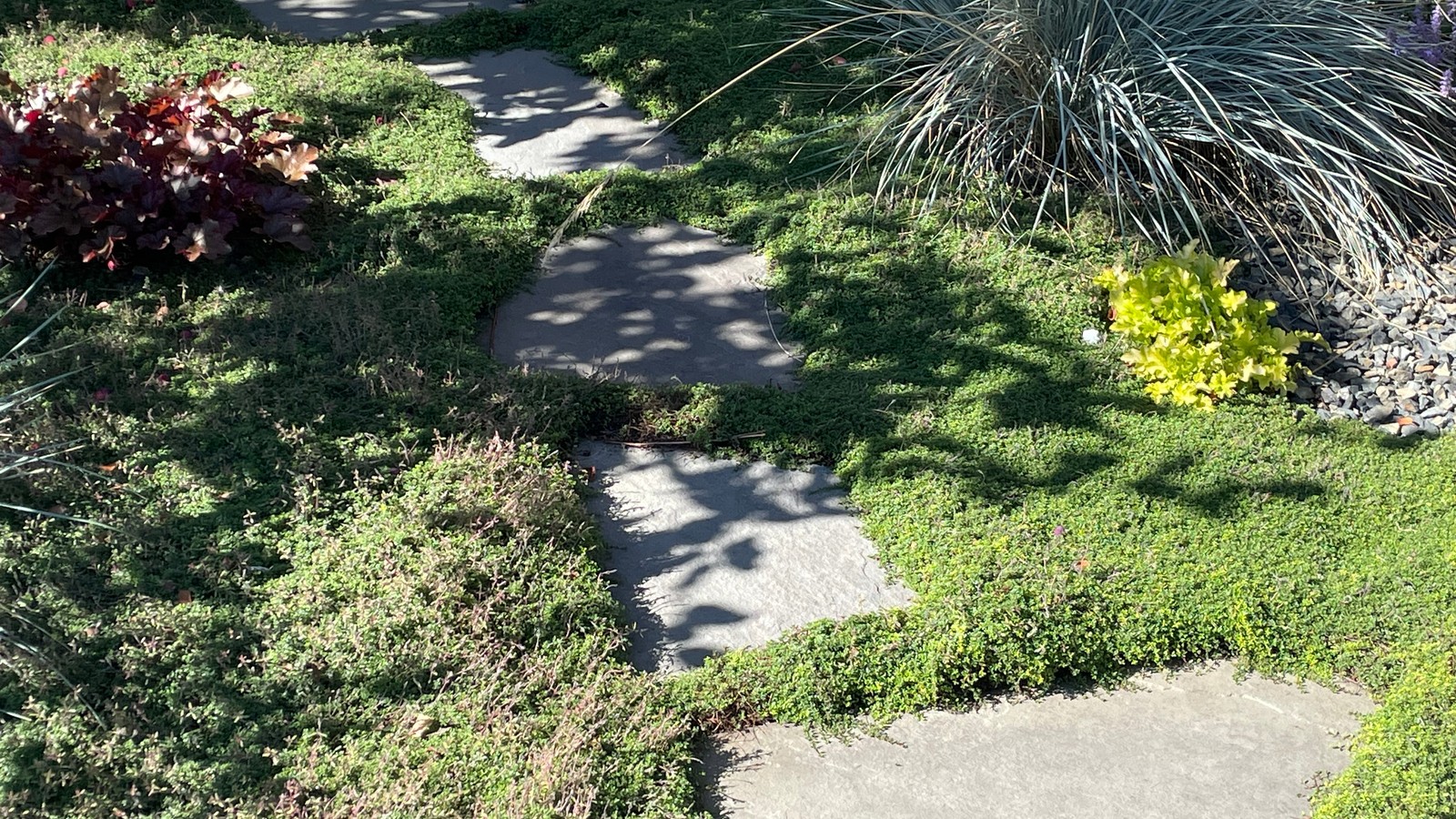
It suits occasional walking, sunny paving gaps, and small areas where you want to reduce mowing. I’d put stepping stones through any route used daily. Water new plants while they root, keep weeds out of the gaps, and let the planting fill in before using it regularly.
3. Blue star creeper for moist paving gaps
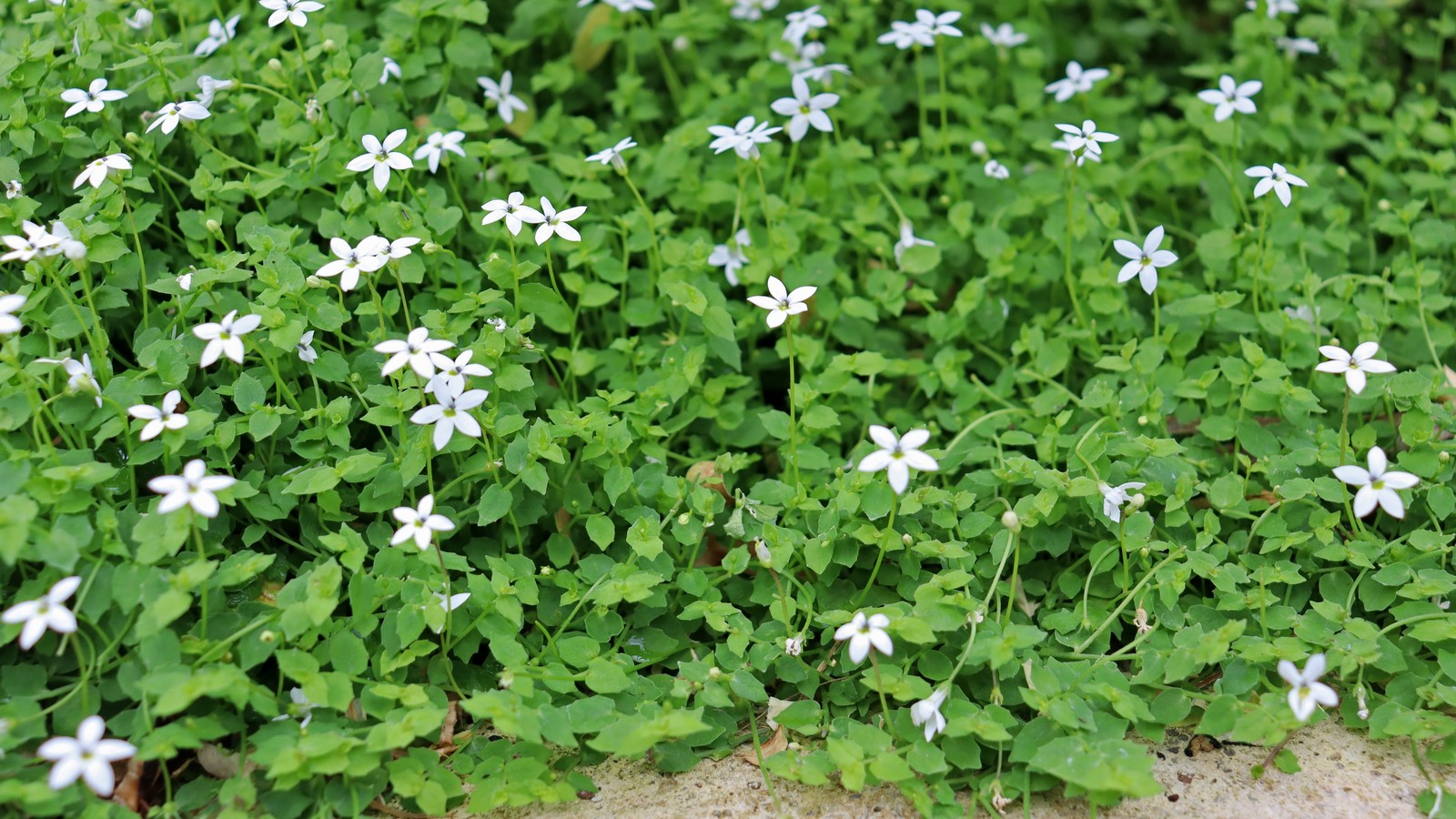
Blue star creeper gives you a close green mat scattered with tiny pale blue flowers. It’s particularly attractive between paving stones, where the stones take most of the pressure and the plants soften the gaps.
Plants sold under this common name can carry different botanical names, so check exactly what you’re buying. Isotoma fluviatilis is a spreading ground cover that roots as it grows and tolerates foot traffic.
It suits moister conditions than thyme. I’d use it around a small patio or stepping-stone path, rather than promise it will stand up to heavy play across an entire yard.
Its spreading habit needs attention, too. Check the edges and remove runners that wander into neighboring planting. Start with a small patch so you can see how it behaves in your soil before giving it a much larger area.
4. Irish moss for cool, lightly used spaces
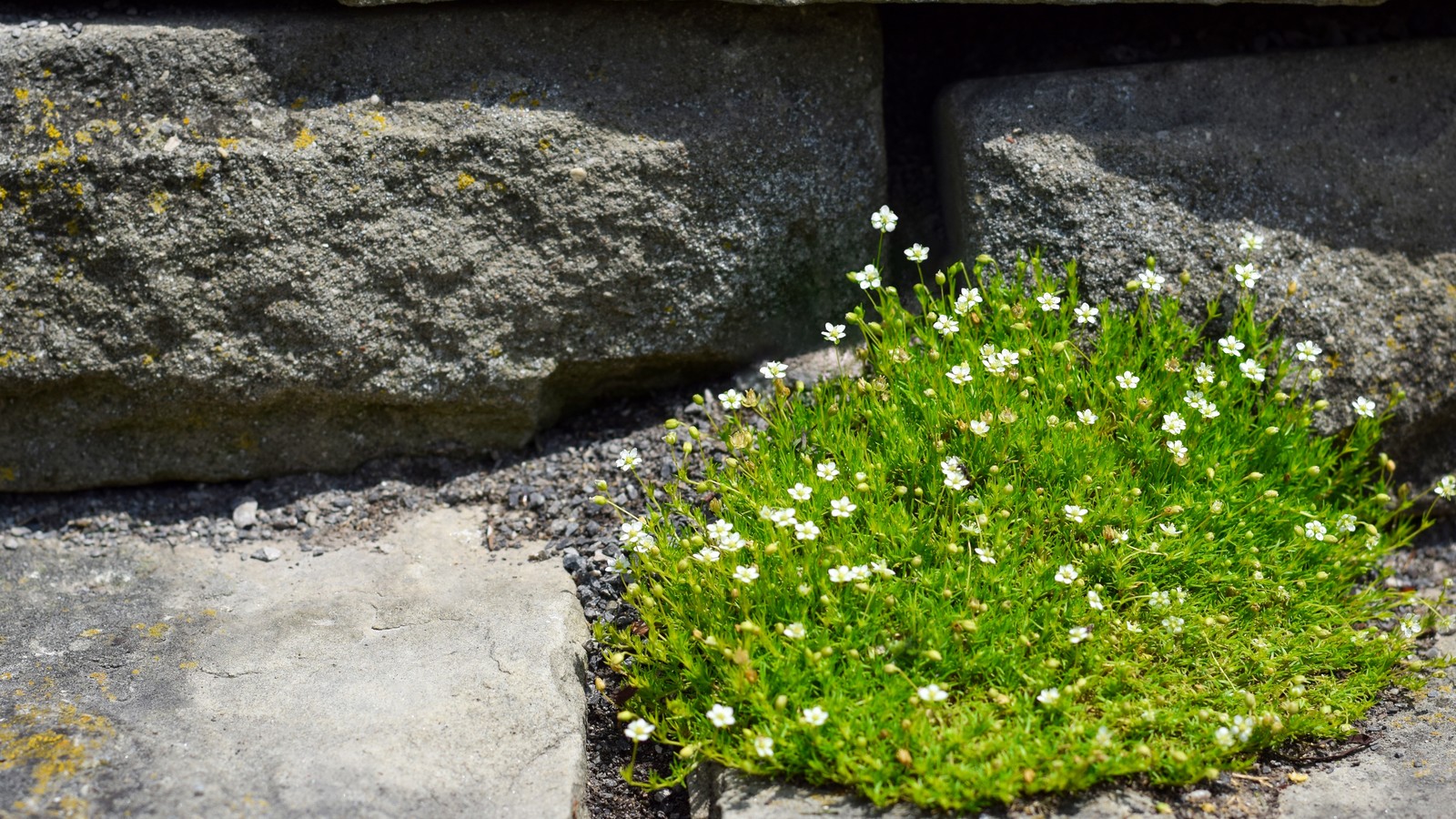
Irish moss, Sagina subulata, makes a soft-looking green cushion dotted with tiny white flowers. Despite the name, it’s a flowering plant, not a true moss.
It’s a good choice for small paving gaps and sheltered spaces where you want that fine, mossy texture. It prefers cool, moist conditions and struggles with intense heat and drought. Moist doesn’t mean waterlogged, though. Overwatering can cause problems as well.
I’d treat it as a light-traffic plant. An occasional misplaced step is one thing; using the same patch as your daily shortcut is another. In hotter locations, some midday shade can help, but a site that needs constant watering to keep Irish moss alive defeats much of the point of replacing the grass.
5. Corsican mint for fragrance beside a shaded path

Corsican mint, Mentha requienii, is tiny, but its peppermint scent certainly isn’t. The small rounded leaves make a close carpet that releases fragrance when brushed or lightly stepped on.
It’s useful between stepping stones in a sheltered spot with moist, well-drained soil and partial shade. I’d plant it where you can enjoy the scent without having to walk directly across it every time you go outside.
Don’t assume it will behave politely just because it’s small. It’s still a mint, and its creeping stems can spread beyond the space you intended. Keep it away from delicate neighboring plants and check the edges as it grows.
This is a small-space choice for fragrance and texture. It wouldn’t be my answer to a large, heavily used lawn.
6. Frogfruit for a flowering lawn alternative in warm climates
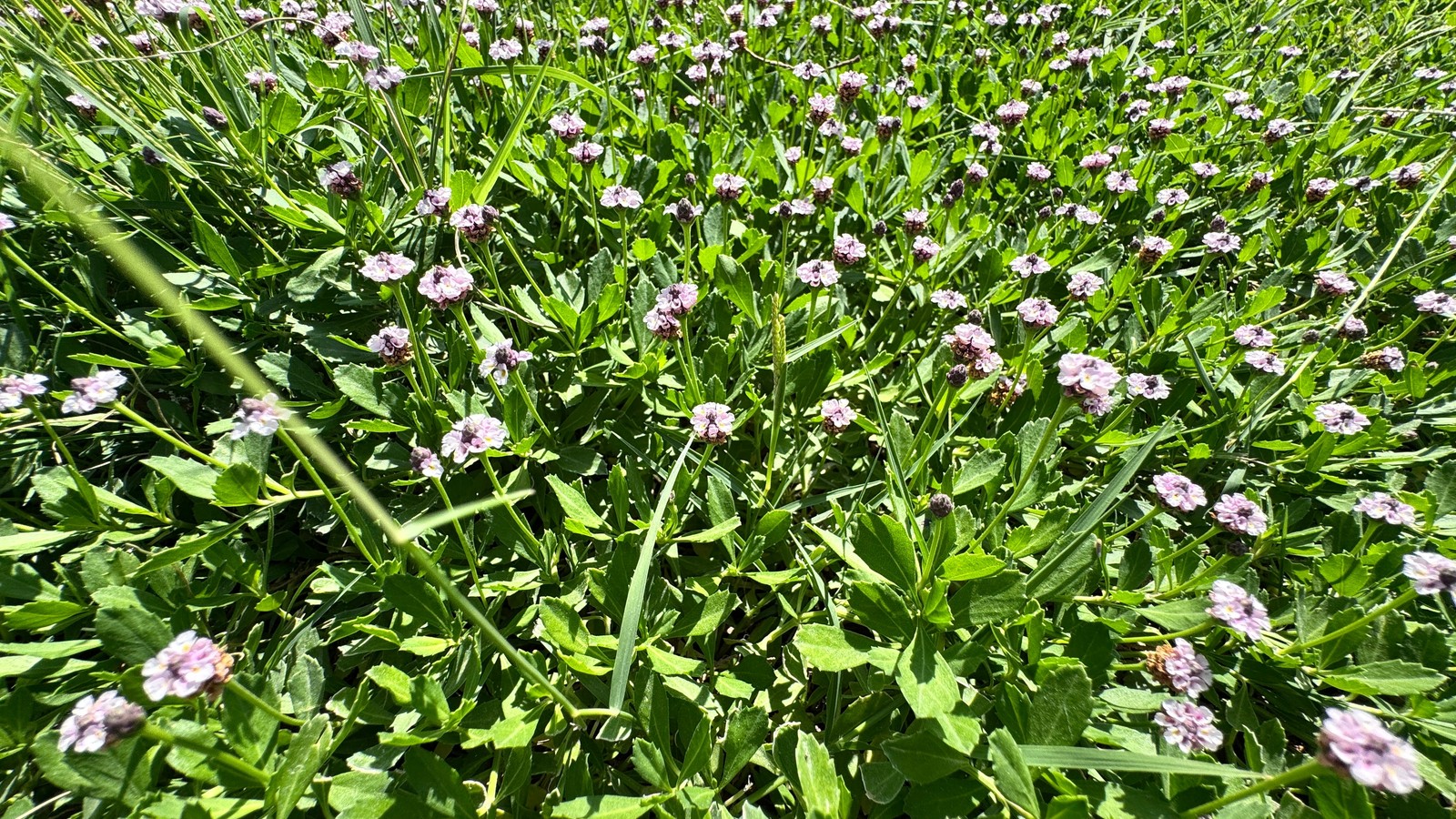
Frogfruit, Phyla nodiflora, is a useful option for warm-climate gardens where you want spreading greenery and small white-and-purple flowers. It can grow as a lawn alternative or mingle with existing turf.
It’s native to Florida, where it grows in sun or partial shade, handles a range of soil conditions, and persists under frequent traffic. Its flowers provide nectar, and the foliage supports several butterfly species.
Even so, I’d start in a less-used area rather than put it straight onto the busiest route through the yard. It can reach about 6 to 12 inches tall, so it doesn’t always give the close, ankle-high appearance people expect from a lawn replacement. Occasional mowing at 4 inches or higher can improve its appearance.
Frogfruit can spread quickly and may look dormant during drought or winter. Check its suitability locally, especially outside Florida. It’s a regional option, not a plant to recommend indiscriminately from one end of the country to the other.
7. Creeping mazus for a moist, walkable patch
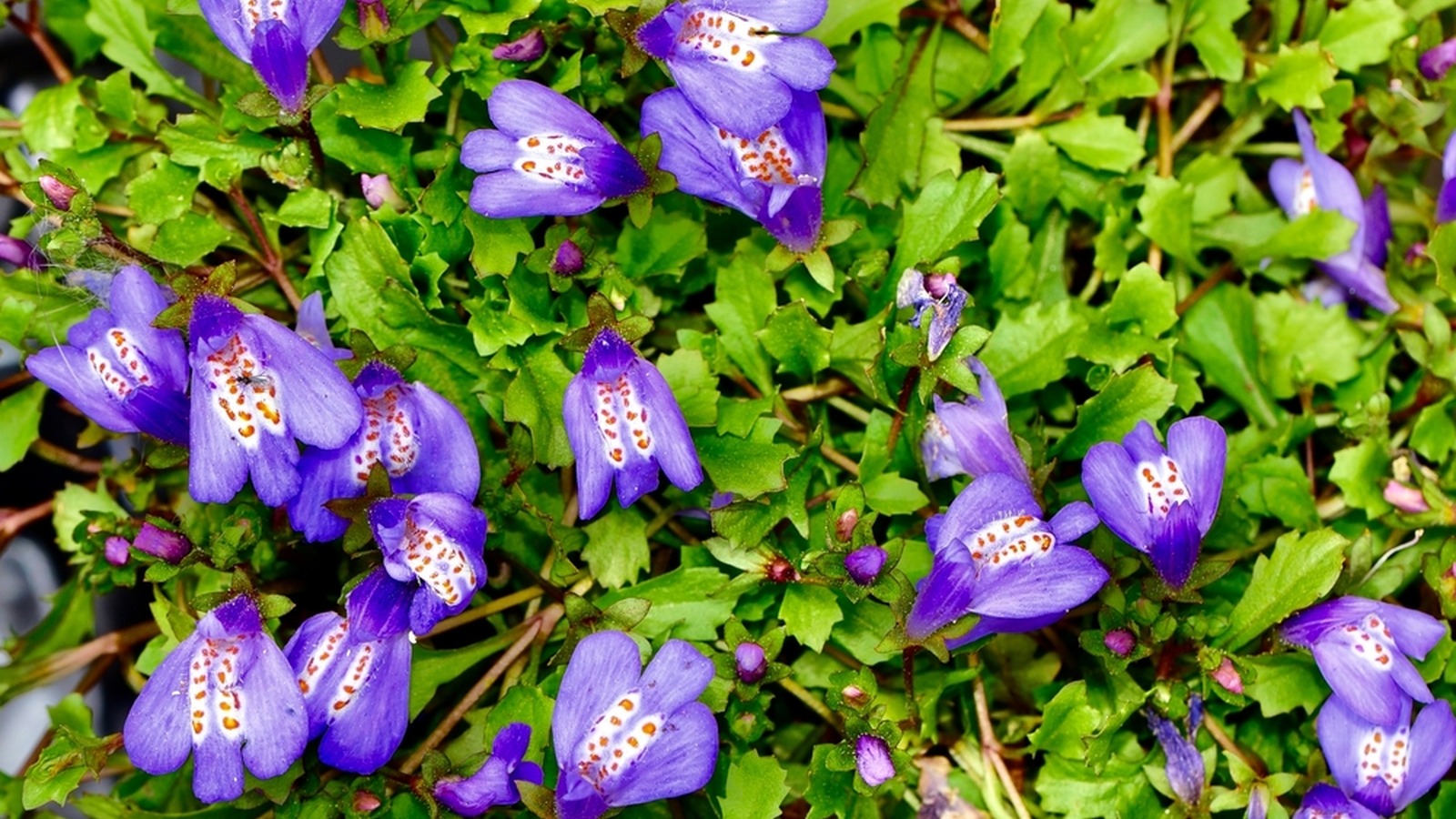
Creeping mazus, usually sold as Mazus reptans, gives you a low green mat with small lilac or white flowers. It’s worth considering for a modest lawn-replacement patch or the spaces around paving.
Choose a site with sun or partial shade and soil that retains some moisture without staying waterlogged. A dry strip full of competing tree roots wouldn’t be my first choice.
Mazus can tolerate moderate foot traffic and spread into thinning turf. That makes it more promising for regular walking than some of the delicate aromatic plants, although it still needs time to establish.
Keep the young planting watered and weeded, and watch where its stems root. Its willingness to fill gaps is useful until those gaps belong to a neighboring bed. I’d trial a small area first and extend it if it copes well with your actual use.
8. Low-growing stonecrops for dry gaps and edges
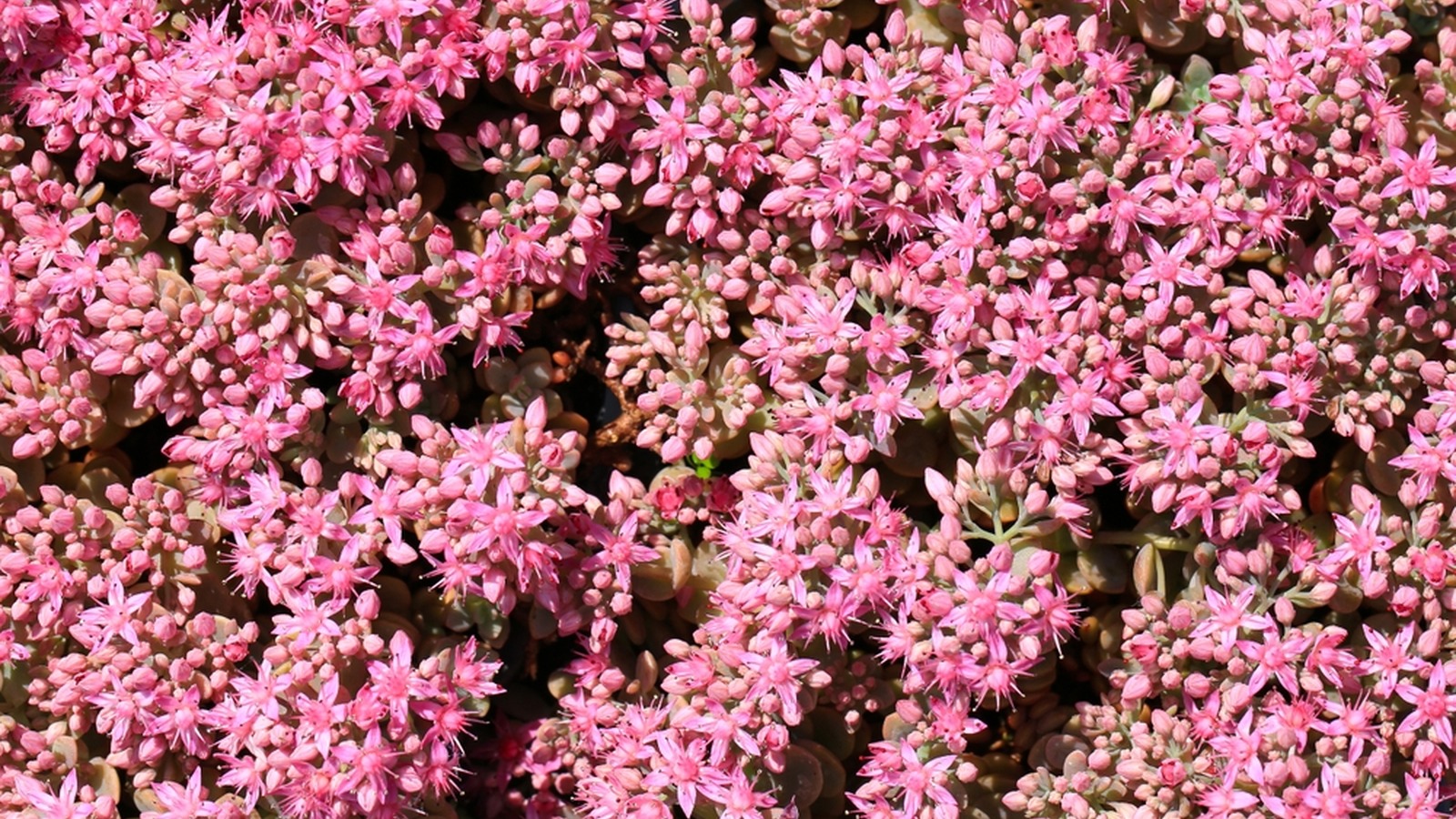
Low-growing stonecrops give you succulent foliage and seasonal flowers in places where a moisture-loving ground cover would struggle. They’re useful for sunny, rocky spaces and dry edges around paving.
Choose a creeping species or cultivar, rather than a tall border sedum. Low-growing sedums can tolerate light foot traffic, but that doesn’t make their fleshy stems a good surface for constant walking.
I’d use them where a foot occasionally strays off a stone, or where you need to cover dry ground beside a path. The paving should do the hard work.
Drainage matters more than rich soil. A plant chosen for a dry rock garden won’t thank you for planting it in a puddle. Check the individual species for local suitability and spreading behavior, too, rather than treating every stonecrop as interchangeable.
9. Rupturewort for a plain green carpet
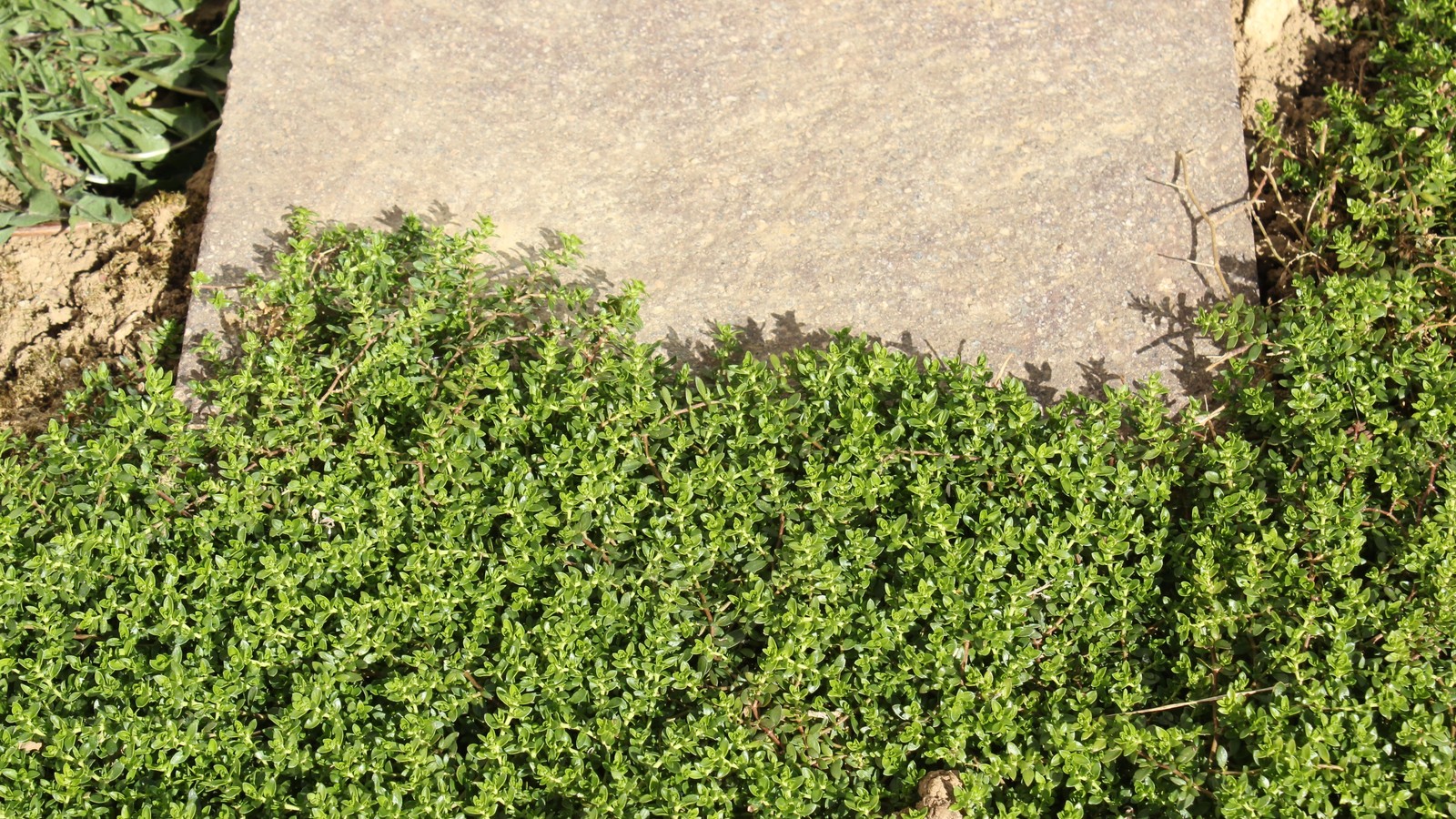
Rupturewort, Herniaria glabra, is a good candidate when you want low green cover without masses of conspicuous flowers. Its tiny leaves form a spreading mat, and the small green flowers are easy to miss.
It suits well-drained soil in sun or partial shade and is drought-resistant. That gives it a useful role in drier spaces where Irish moss or Corsican mint would need more attention.
It has also been trialed as a foot-traffic-tolerant lawn alternative. I’d still test it on a small patch before replacing a whole lawn. There’s a considerable difference between surviving footsteps and staying attractive on a narrow route that gets used all day.
Allow the plants to spread and root before testing their durability. If a worn track develops, add stones along that route instead of repeatedly replanting it.
10. Self-heal for a flowering, low-mow lawn
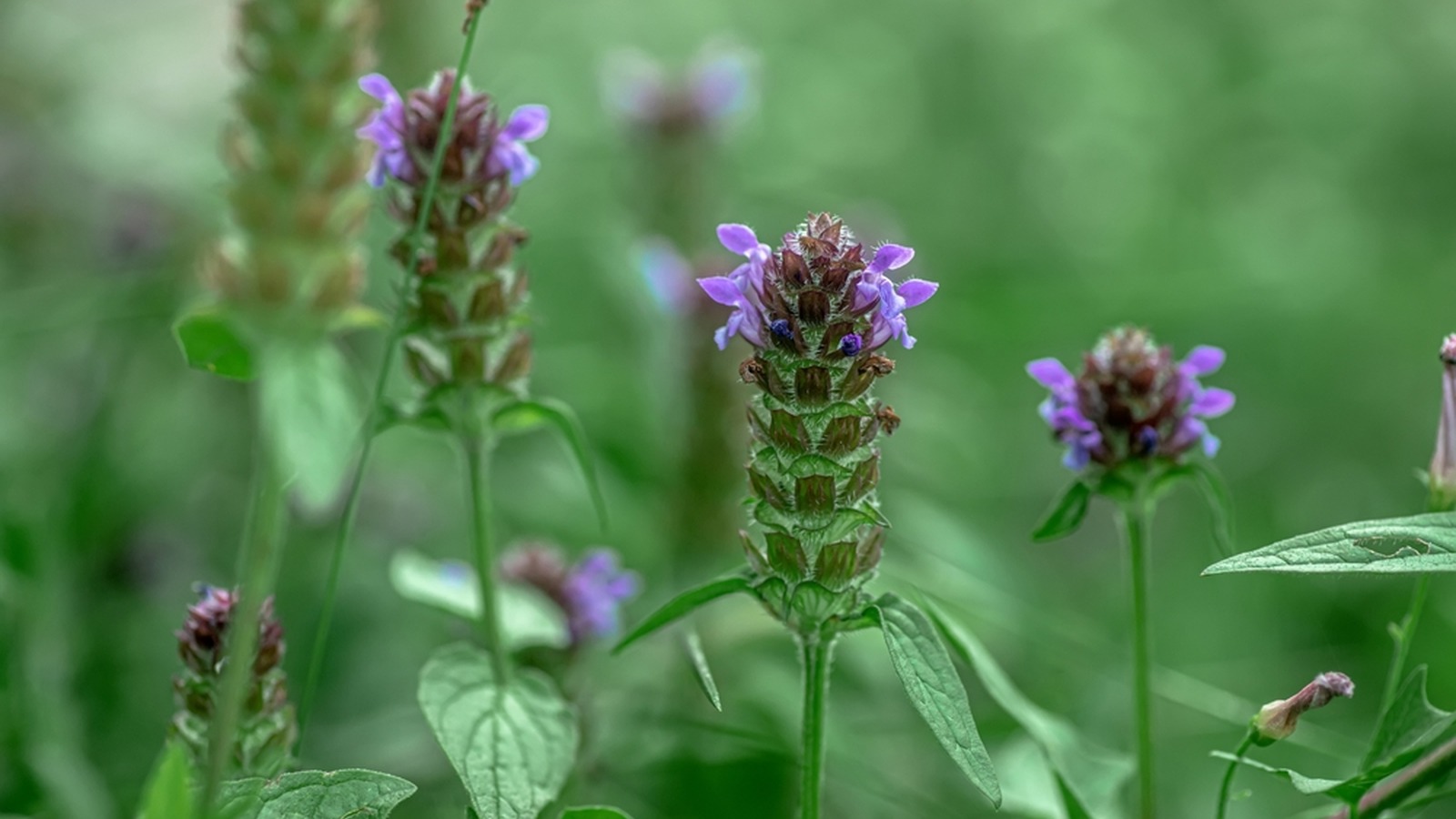
Self-heal is useful when you want flowers in a lawn that still functions as a lawn. Its purple blooms bring color to a mixed planting without needing a separate flower bed.
For a US native planting, look for locally appropriate native material, including Prunella vulgaris subsp. lanceolata where suitable. This form works well in bee lawns and supports native bees.
I’d grow it with suitable turfgrass rather than expect self-heal alone to provide the same surface. It can grow in sun or partial shade, but very sandy soil is a poor fit for the bee-lawn planting described here.
Leave enough time between cuts for it to flower. Mowing every bloom off as soon as it appears rather defeats the point. A mixed lawn gives you room for both use and flowers, provided you accept that it won’t look like a bowling green.
11. Yarrow for a mixed lawn with less irrigation
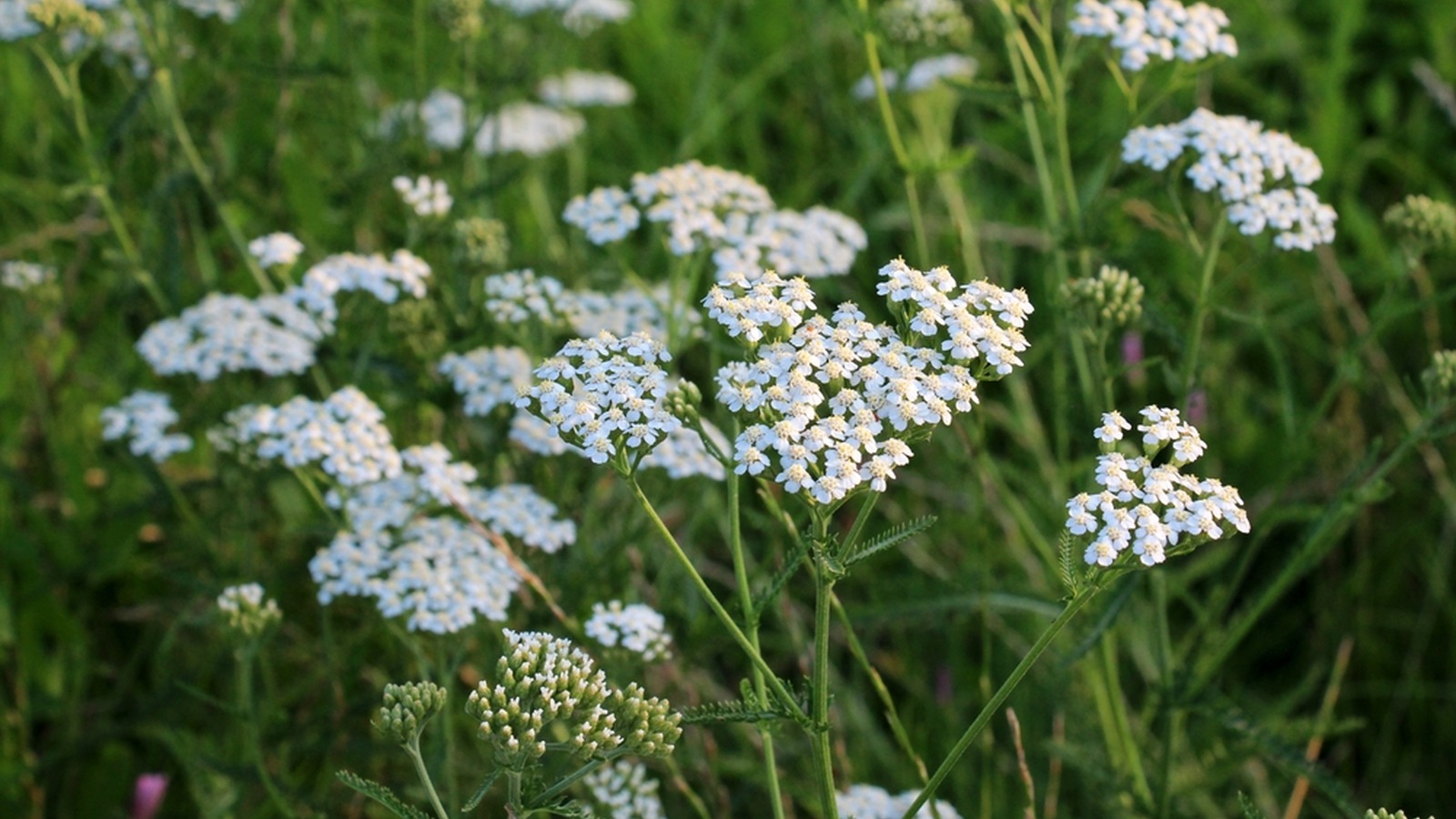
Common yarrow, Achillea millefolium, contributes fine, fernlike foliage to a mixed lawn. It’s particularly interesting if you want a softer-looking planting without maintaining a uniformly lush grass surface.
Yarrow is included in low-input lawn mixtures used in western Oregon. That’s a useful example of a planting suited to its region, rather than proof that the same mixture will perform equally well everywhere.
I’d choose common yarrow or a locally appropriate lawn form, not a tall ornamental cultivar selected for showy border flowers. Give it a sunny site and check how the proposed mix fits your rainfall and summer conditions.
There’s a tradeoff between flowers and a short lawn. Yarrow doesn’t flower well when mowed short. Leave a less-used patch taller if you want blooms, and keep the walking area at a manageable height.
12. Roman chamomile for a small, fragrant lawn
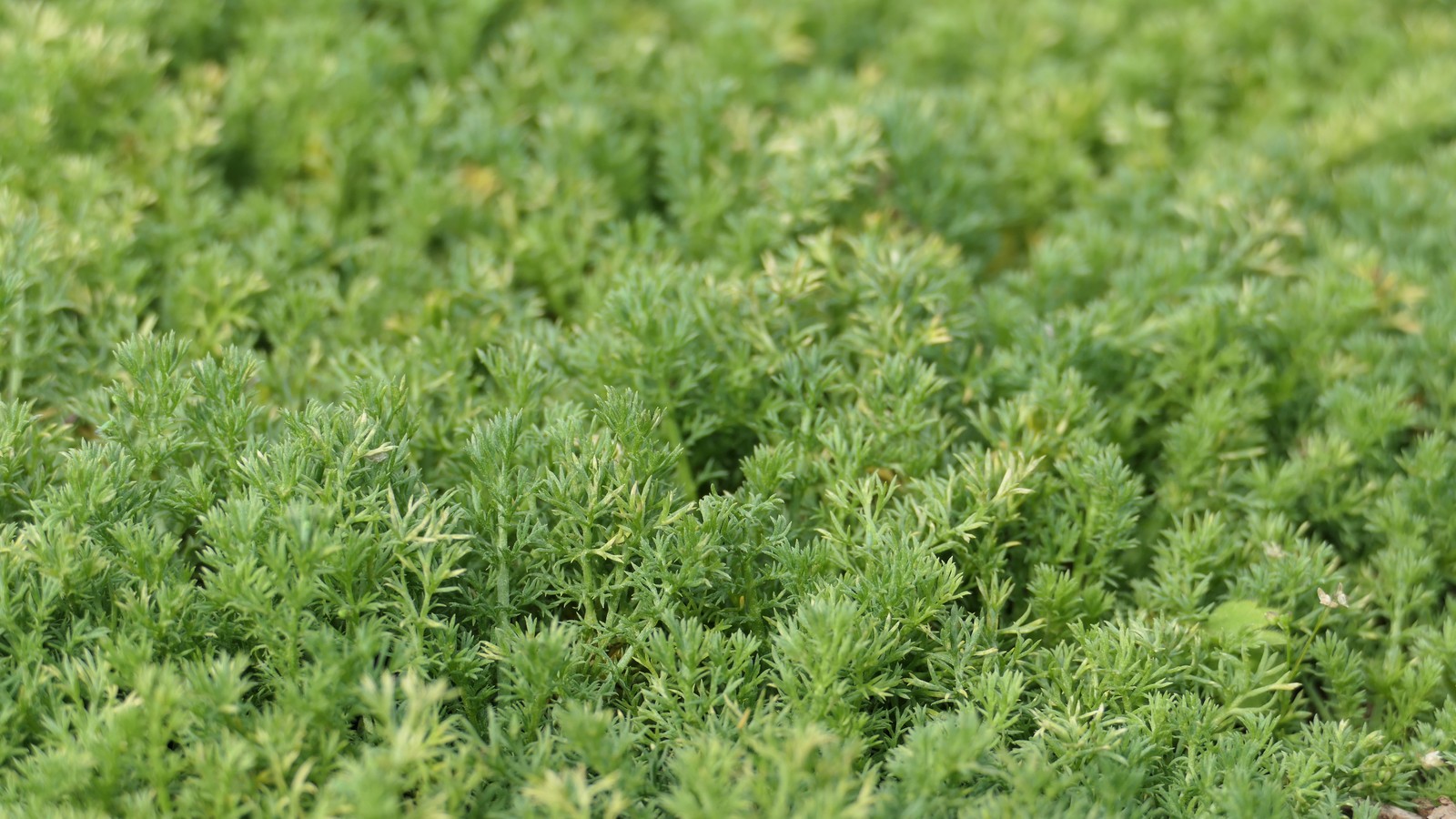
Roman chamomile makes a lovely small lawn where the main activities are sitting, enjoying the fragrance, and occasionally stepping across it. It isn’t a substitute for a busy family play surface.
For a low-growing lawn, choose Chamaemelum nobile ‘Treneague’. This nonflowering cultivar needs less maintenance than flowering Roman chamomile. You get the aromatic foliage, but you don’t get daisies or flowers for pollinators. If flowers are your priority, choose flowering plants and accept the extra trimming.
Give chamomile sun or light dappled shade and free-draining soil that doesn’t dry out completely. Heavy clay and prolonged dry conditions are poor matches.
Keep off a newly planted chamomile lawn for at least 12 weeks, with traffic kept to a minimum during the first year. Even established plants tolerate only occasional light walking. I’d put it beside a bench, with stones providing access, rather than across the route to the compost heap.
Give the planting time to earn its keep

Replacing grass with ground cover is a planting project, not an instant escape from maintenance. Young plants need water, weeds need removing, and bare gaps take time to close.
Start with one manageable patch. Choose a plant that suits the conditions already there, rather than one that needs you to change the soil, supply constant water, or fight the shade.
Remove existing turf and persistent weeds before planting plugs. For a mixed clover or self-heal lawn, use an overseeding method suited to the existing grass and your region. Plant during a suitable local establishment window, allowing time for roots to develop before severe heat, drought, or freezing weather.
Follow the spacing for the species and cultivar you buy. Closer planting costs more but closes the gaps sooner; wider spacing leaves you with more bare soil to weed. Water the root balls as they establish, and don’t assume a drought-tolerant mature plant is drought-tolerant the day it leaves its nursery pot.
If the same strip keeps wearing bare, change the route or add stepping stones. I’d much rather fit a few well-placed stones than spend every spring replacing plants that never had a fair chance.