

Affiliate disclosure: This post may contain affiliate links. Please see full disclosure.
A molded name underneath a ceramic Christmas tree can identify its design, but it won’t, by itself, prove you’re holding a 1960s or 1970s original. The useful clues are the marks, the ceramic body, the base and whatever history has stayed with it.
I’m an avid thrifter and collector, and I put much more weight on details that agree with each other than on one impressive-looking stamp. With these trees, that means turning them over before getting distracted by the glowing plastic lights. Charming, yes. Proof of age, no.
The appeal is in the person who finished it

Many of the familiar trees were decorated in ceramics workshops during the 1960s and 1970s. Commercial molds supplied the shape; the person doing the project supplied the finishing choices. That’s why two trees with the same branches can have quite different personalities.
Atlantic Mold was one of the names behind those designs. Holland Mold and Arnel’s also belong in the picture, so an unfamiliar name isn’t a reason to dismiss a lovely tree.
For me, the attraction is that combination of a recognizable design and someone’s individual handiwork. Green glaze, snowy branch tips, a slightly enthusiastic application of decoration: these are objects people made to bring out year after year. Collecting them lets you enjoy that domestic craft history on your own sideboard, without needing room for another full-size Christmas tree.
Read the underside in three separate parts
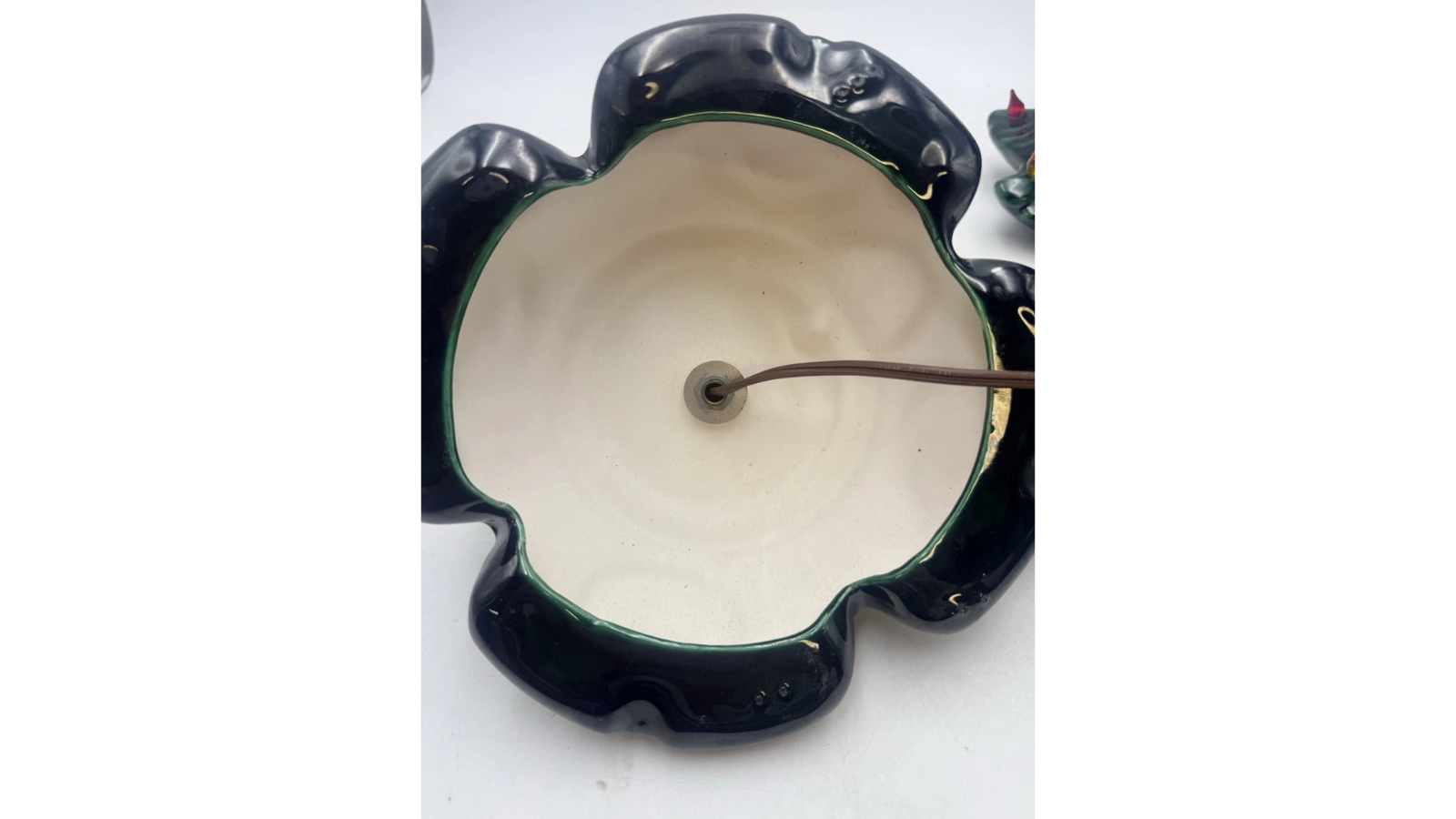
Support the tree and its separate base individually before inspecting them. Don’t flip the whole assembly over and assume the stand will stay attached. Photograph every mark, including faint lettering near the rim.
First, look for the mold company’s name. Atlantic Mold identifies the source of the mold design, rather than necessarily identifying the person or studio that finished your particular tree. A number beside it may identify the model.
Next, separate molded dates from handwritten ones. Atlantic’s A-64 design was copyrighted in 1958, but an embossed copyright year isn’t a production date. An old design could keep producing new trees. A studio’s 2024 catalog still lists Atlantic 64 trees in greenware and bisque, the unfinished stages of ceramic production.
Finally, check for a hobbyist’s initials, signature or hand-incised year. These are separate clues about the person who made or decorated the piece. A handwritten date is more useful when supported by family history or documentation. Initials alone don’t establish a decade, and a date added to the base doesn’t automatically date the removable tree above it.
Treat the lights and star as replaceable parts

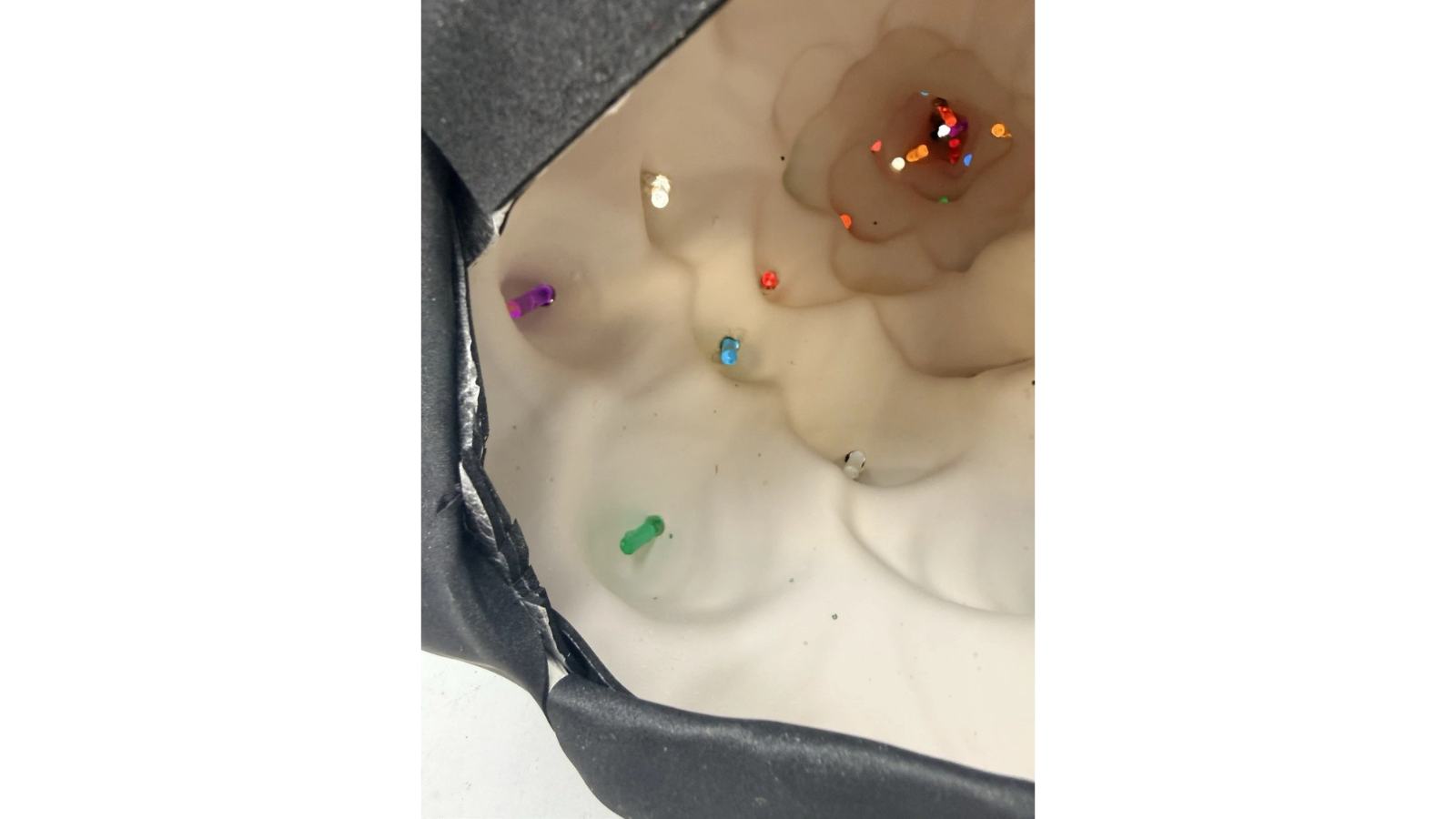
On the familiar single-bulb version, the little colored “bulbs” are plastic ornaments illuminated from inside the hollow tree. They’re often called pegs or lights. They aren’t individually wired.
You’ll encounter rounded globes, pointed or twisted flame shapes, little pin lights and birds or doves. Star toppers vary in shape, size and color too. I like a consistent arrangement because it lets the tree’s shape show, but a mixed set can be perfectly enjoyable.
What it can’t do is settle the age. Twist lights, doves, pin lights and replacement stars are still available. New-looking pegs may simply mean an older tree has been refreshed. Equally, familiar-looking pegs don’t make a recently cast tree vintage.
A few missing lights wouldn’t put me off a sound tree. Before buying replacements, measure the stem of a loose peg that fits, including its diameter and length, and check the star opening separately. Don’t force an oversized stem into the ceramic. I’d rather leave a gap temporarily than chip a branch trying to fill it.
Look for evidence of age, not an old-fashioned appearance
Hand-applied glaze, green branches and white snow effects tell you about the finish. They aren’t reliable dividing lines between old and new. Someone can still finish a traditional tree by hand today.
If age matters to your collection, ask for something that connects this particular object to an earlier date: a family photograph showing it, a dated studio receipt, or a clear ownership history. A matching catalog can help identify the design; it can’t prove when your example was cast.
Check the base as carefully as the branches. Does it sit securely? Do the finishes look compatible? Are there cracks around the opening, glued branch tips or obvious touch-ups? A mismatch deserves investigation, although matching glaze alone doesn’t prove the two pieces started life together.
I recommend prioritizing an intact ceramic body and a properly fitting base over a complete set of colored pegs. Replacement decorations are one problem; a broken supporting rim is quite another.
Keep the tree unplugged while inspecting it. Frayed or visibly damaged electrical cords need replacement; have a qualified repairer assess questionable wiring or a loose socket before use. Working lights don’t establish electrical safety.
When you’re hunting for vintage Christmas decorations, photograph the underside, check the separate pieces and ask about their history. If the age remains uncertain, enjoy it as an Atlantic Mold design rather than assigning it a birthday the evidence can’t support.
You might also like..
The CorningWare Pattern Collectors Dream Of Finding At A Thrift Store
The Blue-And-White Pyrex Pattern Collectors Dream Of Finding At A Thrift Store
The Pink Pyrex Pattern Collectors Dream of Finding at a Thrift Store

