
Affiliate disclosure: This post may contain affiliate links. Please see full disclosure.
The vintage Pyrex casserole collectors call Tree of Life is officially named Saxony, and it’s easy to see why people remember it. The turquoise-blue dish is decorated with dark blue flowers, branches, and two little birds. It’s quite different from the brighter Pyrex patterns of the 1970s, and I’d certainly stop for a closer look if I spotted one in a thrift store.
As a longtime collector and thrifter, I enjoy finding pieces with a bit of history behind them. Saxony has that, but it’s also an attractive, practical casserole. It was made for serving dinner, not just looking pretty on a shelf, although I’d be quite happy to display it in my kitchen.
Look for the little birds among the branches
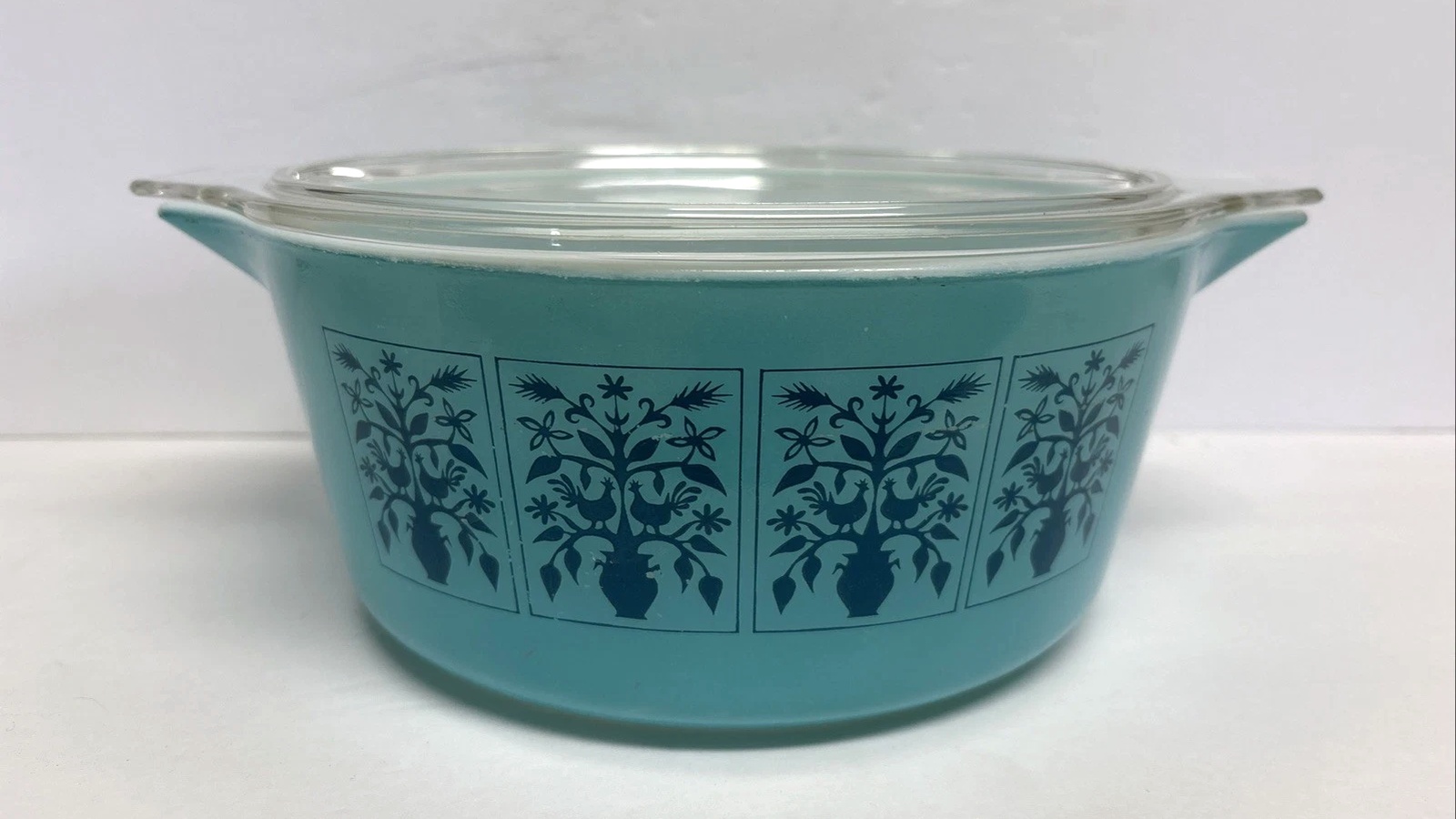
Saxony was released in 1967 and manufactured into 1968. Its dark blue decoration sits against a soft turquoise background, with the design repeated inside outlined square panels. Look closely and you’ll see a pot or vase, branching stems, leaves, flowers, and two birds perched on either side.
Those birds are what I’d remember. From a distance, the print can look like a busy collection of blue flowers. Up close, it’s much more interesting. The symmetrical arrangement has the feel of an old folk-art design without being fussy, and the contrast between the dark print and lighter glass is lovely.
The birds can make it easy to confuse Saxony with other patterned Pyrex if you’re looking at a blurry photo. The framed panels and central floral pot are useful identifying features. I’d check those rather than rely on the color or a seller’s description.
Unlike most Pyrex patterns, Saxony came in just one dish
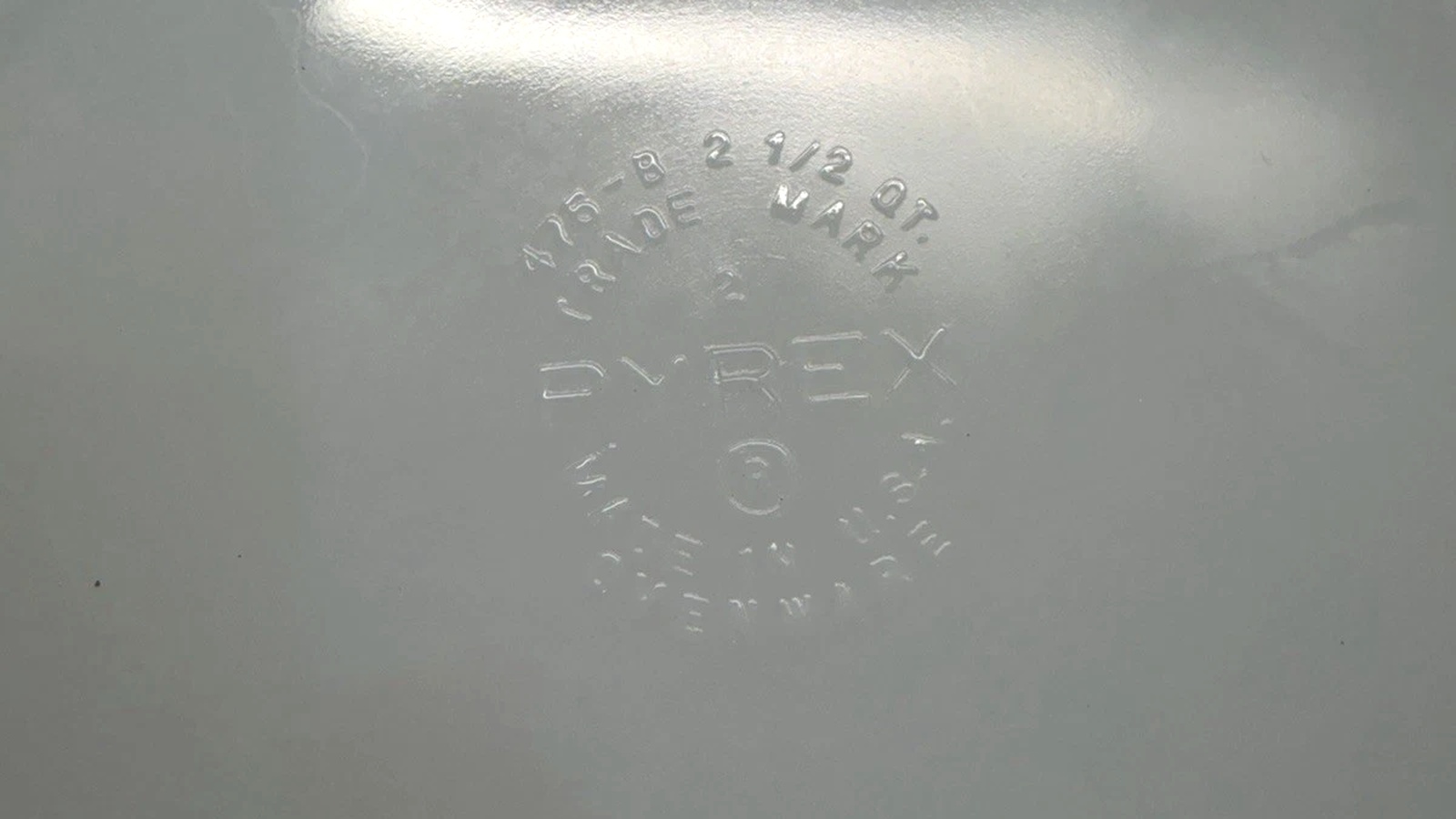
Saxony was a promotional release on the 2½-quart model 475 Cinderella casserole. The dish is round, with projecting handles, and it originally came with a clear glass lid. There aren’t matching Saxony nesting bowls, refrigerator dishes, and butter dishes to hunt down. This was a special serving set, rather than a whole kitchenware range.
That’s part of what makes it interesting. A lot of Pyrex collecting involves chasing different sizes or finding the missing bowl from a set. With Saxony, the focus is on one casserole and its accessories. The Pyrex marking and 475 model number on the underside help identify the shape, but it’s the decoration that tells you the pattern.
The 1968 dealer catalog listed Saxony in its gifts section. Promotional Pyrex gave shoppers fresh designs on familiar shapes, often with an accessory that made the dish especially suitable for gifting. These releases weren’t intended to stay in the regular range indefinitely.
The original serving cradle is part of the appeal

The casserole originally came with a brass-colored cradle, wooden handles, and a candle warmer. It was a thoughtful idea for entertaining. The dish could sit on the table in its stand, with a small flame underneath to help keep dinner warm.
I like that sort of practical design. The cradle wasn’t just decoration, and the wooden handles make an attractive contrast with the blue glass. It’s easy to see why the whole arrangement would have made a nice gift.
Of course, things that were sold together nearly 60 years ago don’t always stay together. If I came across the casserole on its own, I’d check the surrounding shelves before leaving. Loose glass lids often end up in one place and odd metal stands somewhere else.
There’s nothing wrong with owning the casserole without its cradle. Just don’t assume a metal holder is original simply because it fits. If you do find the stand, check the joints, wooden handles, and candle holder. I wouldn’t use a decades-old warmer with a lit candle without inspecting it carefully.
Check the blue finish and the glass
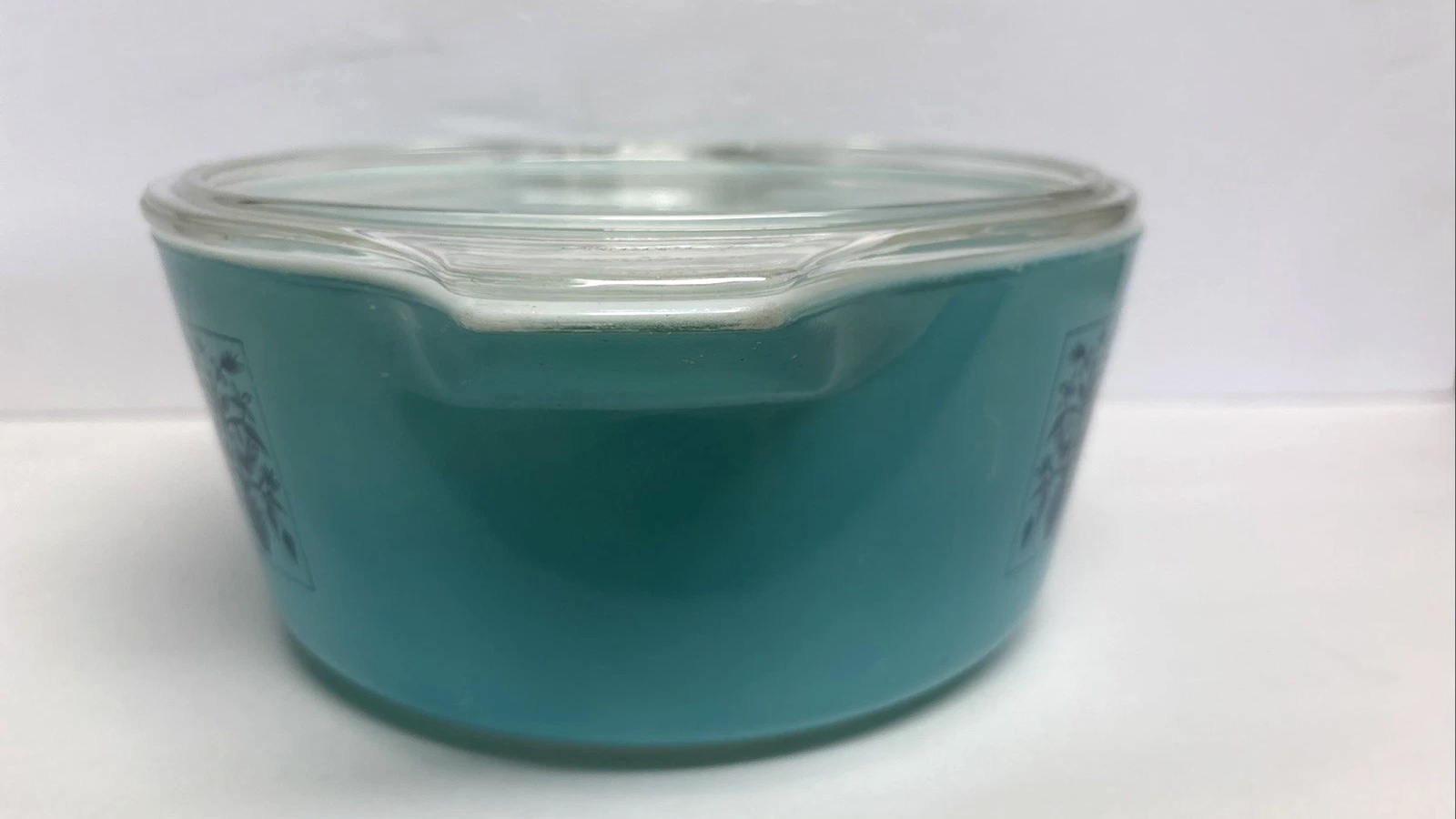
The first thing I’d inspect is the finish. A well-kept Saxony should have a smooth, glossy surface and a clear dark-blue design. Tilt it towards the light to reveal scratches or faded patches, particularly around the handles and base. A chalky or cloudy appearance can mean permanent dishwasher damage, not stubborn dirt.
Next, check the glass. Look carefully at the rim, handles, and underside for chips. The clear lid needs the same attention, especially around its edges. A few small marks from ordinary use wouldn’t put me off, but damaged glass would, particularly if I hoped to use the casserole.
Check that the lid actually sits properly, too. Finding a clear Pyrex lid next to a patterned dish doesn’t automatically mean it’s the right one.
Care for the pattern gently
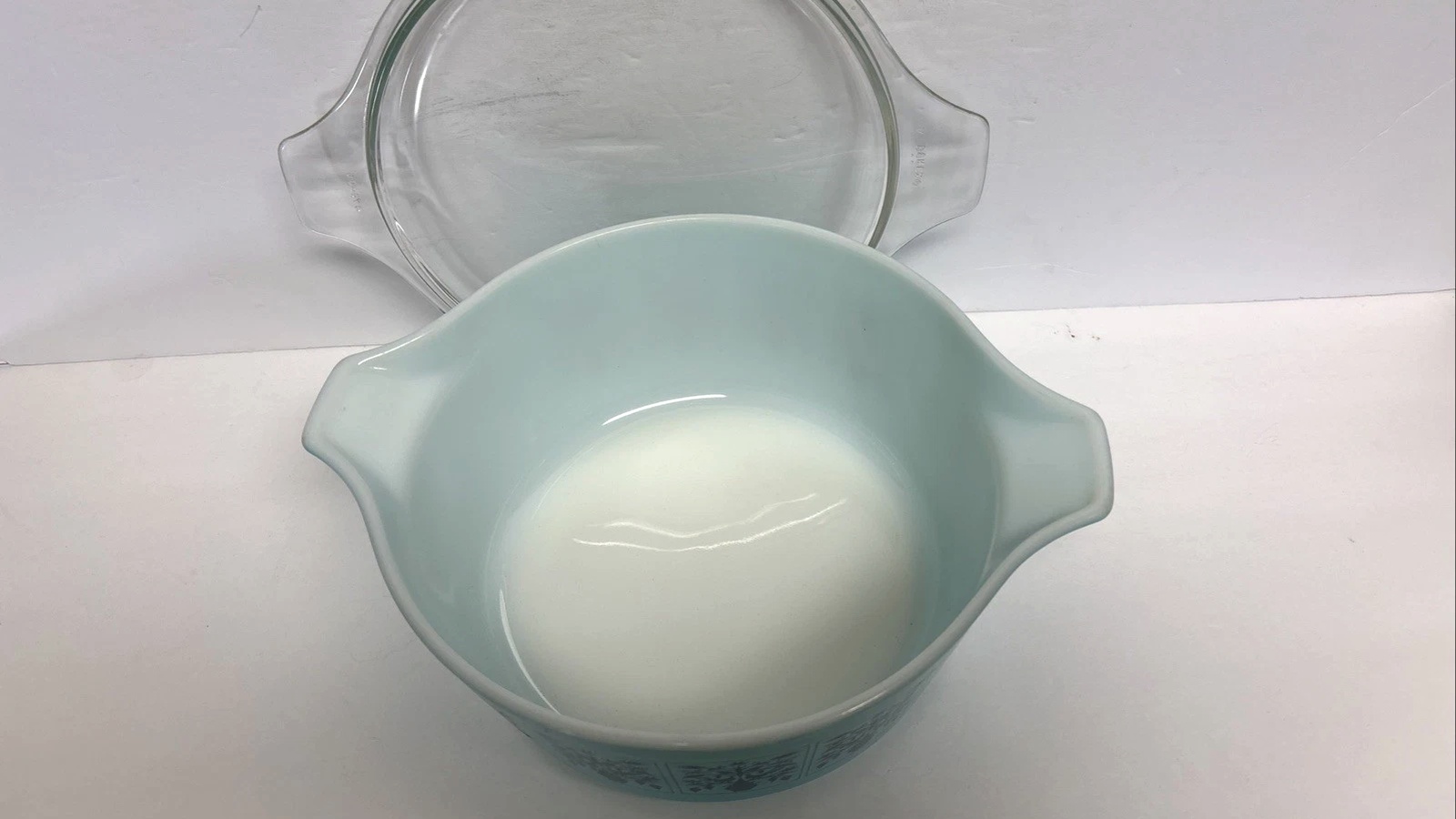
Vintage decorated Pyrex needs gentle cleaning. Warm water, mild dish soap, and a soft cloth or sponge are a sensible starting point. Avoid abrasive pads and the dishwasher. Once the painted surface has been damaged, cleaning won’t restore its original gloss.
And while Saxony was originally ovenware, age and unknown treatment are good reasons to be cautious. I wouldn’t put a damaged or questionable vintage casserole in the oven, and I’d avoid direct heat and sudden temperature changes. Mixing, serving cool food, and display are perfectly good ways to enjoy an older piece.
For me, the appeal is that unusual blue design on a genuinely useful piece of kitchen history. It’s easy to understand why somebody might have chosen Saxony as a gift in 1967. If I found a sound example with its little birds still crisp and bright, I’d be pleased to bring it home, cradle or no cradle.

