
Affiliate disclosure: This post may contain affiliate links. Please see full disclosure.

Disclosure: This post contains affiliate links. Click here to read my affiliate policy.
Keeping ticks at bay is important for disease control and overall well-being when raising chickens. Thankfully, there are several natural remedies for minimizing fowl tick populations, so you don’t need to turn to dangerous chemicals that might harm your flock or your family.
Carefully review the tips below, and then spring into the action. The sooner you make your poultry and their living areas uninviting to “blue bugs,” the healthier and happier your backyard chickens will be.

Use Diatomaceous Earth
Diatomaceous earth(DE), like this one that we use, is a versatile, organic material that’s highly effective at controlling all sorts of external parasites, from lice and mites to dangerous ticks. It’s a bit of a wonder product because it’s so effective at killing bugs, all while being safe for animals and humans alike.
(Protip: When shopping for DE, buy a large bag. You can also use this miracle substance to get rid of ants, control slugs, and more!)
There are several ways you can use DE to help chickens keep ticks off their bodies and out of their coops. To start, add DE to all of the dust baths on your property. Dust baths on their own are already helpful for eliminating ticks and other pests, but adding 1/2 part of DE for every 1 part of sand will make the baths even more effective.
You can also sprinkle DE in and around the chicken coops to kill any bugs that may be lurking. Apply it generously around the perimeter of the coop, as well as in nesting boxes and on and below the roosts.
Because DE is so safe, you can even apply it directly to your birds. Gently lift a hen’s feathers and sprinkle the powder onto its skin. The DE will help take care nymphal stage ticks that remain attached to birds for several days after hatching and any adult ticks that hitch a ride while free-range hens are foraging.
RELATED ARTICLE: How to Identify Poultry Ticks
Feed Garlic to Your Chickens
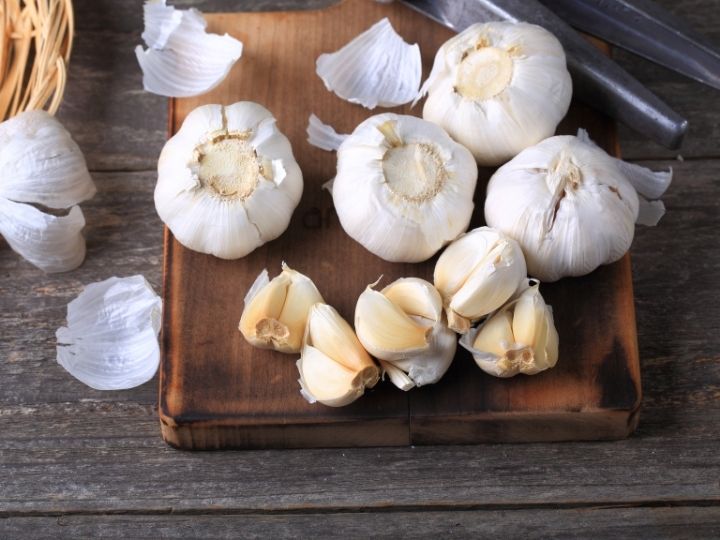
Garlic is a natural pest repellent — bugs hate its smell and taste. (It’s also a natural antibiotic, antiseptic, antifungal, and antibacterial!) Use this to your advantage by feeding this cheap but healthy ingredient to your chickens whenever you can. Over time, the garlic will permeate your hens’ skin, keeping bugs away.
Add garlic powder to your chicken feed at a rate of 1.5 pounds for every 50 pounds of feed. Be sure to use pure garlic, not garlic salt or another seasoning that contains garlic.
You can also drop a few crushed garlic cloves into your chicken waterers. Remove the old cloves and replace them with new ones each day.
Because ticks can transmit disease, including Lyme disease and Rocky Mountain spotted fever, to poultry, humans, and other living creatures on your farm, it’s extremely important that you take steps to keep these bugs from biting your fowl. Garlic is an easy and effective way to do this.
Sprinkle Dried Herbs
Like garlic, some herbs work as natural deterrents against chicken ticks and other insects. Calendula, chamomile, eucalyptus, lavender, and peppermint are the most effective herbs for keeping pests away.
While you can purchase prepackaged herb mixtures for the coop and nesting boxes, it’s easy and more affordable to make your own. You can either buy herbs that have already been dried or dry your own. From there, follow this recipe:
- Add an equal amount of each dry herb into a bowl. Try to use as many of those listed above.
- Crush the herbs using your fingers or a pestle.
- Store the mixture in a zip-top bag or lidded container until ready for use.
Once per week, sprinkle the herb mix around your coop, concentrating on the area below the roosts and the perimeter of the building.

Spray a Natural Repellent
It’s easy to make a safe, homemade bug repellent by mixing water with some essential oils. To get started, you’ll need a spray bottle, distilled water, citronella oil, and lavender oil.
Add 1 cup of distilled water, 10 drops of citronella oil, and 5 drops of lavender oil to your bottle, and shake well to combine. Before releasing your free-range chickens from the poultry houses to forage, spray them with this mixture. Concentrate on those areas that make contact with the vegetation where ticks like to hide: the feet, the legs, and the belly.
Keep Vegetation Short
Speaking of vegetation, it’s where ticks live and hide as they wait for animal on which to hitch a ride. You can make it more difficult for these bugs to latch onto your chickens by keeping the grass on your property short.
Limit Contact with Other Animals
Chickens commonly pick up ticks while foraging, but other animals can also bring these bugs to your flock. Wild birds, deer, rodent populations, and even family pets like dogs and cats can be infested with ticks, which may fall off, only to crawl onto your birds.
The best way to keep wild animals off your property is to make the area inhospitable to them — make sure you’re not leaving out food or water that may attract them, and put up a fence to keep out larger mammals.
FAQs
Even though chickens eat ticks, these nasty bugs bite back: They generally crawl onto poultry when the birds are out foraging. The tick population is especially active in the summer months, and they’re always looking for their next blood meal. They hide in tall grasses and the crevices of trees, waiting for an animal to pass by.
Using diatomaceous earth, spraying a natural bug repellent, and feeding garlic are the best tick control measures to naturally keep fowl ticks off your chickens.
It’s important that you work hard to keep the poultry tick off your birds and out of the hen house. Fowl ticks thrive under the protection of the coop: When adult females get in, they can lay over 500 eggs after feeding off your chicken. This can quickly lead to a severe tick infestation and health issues for your fowl.
If you’ve confirmed a fowl tick infestation, it’s much more effective to treat the chicken coop than to treat the birds. Here’s what to do:
- Thoroughly clean the coop with a pressure washer to flush chicken ticks from their hiding spots in cracks and crevices.
- Seal all the nooks and crannies using caulk, and then apply a coat of paint to further seal the coop’s surfaces.
- Spray a homemade insecticide made with orange peel oil to kill remaining ticks.
Because adult-stage ticks don’t live on your chickens full time, you have to keep an eye out for other signs that these pests are bothering your poultry. Red spots under the wings, reduced egg production, weight loss, and a hesitance to enter the hen house at night are signs that ticks or other parasites are stressing your hens.
