
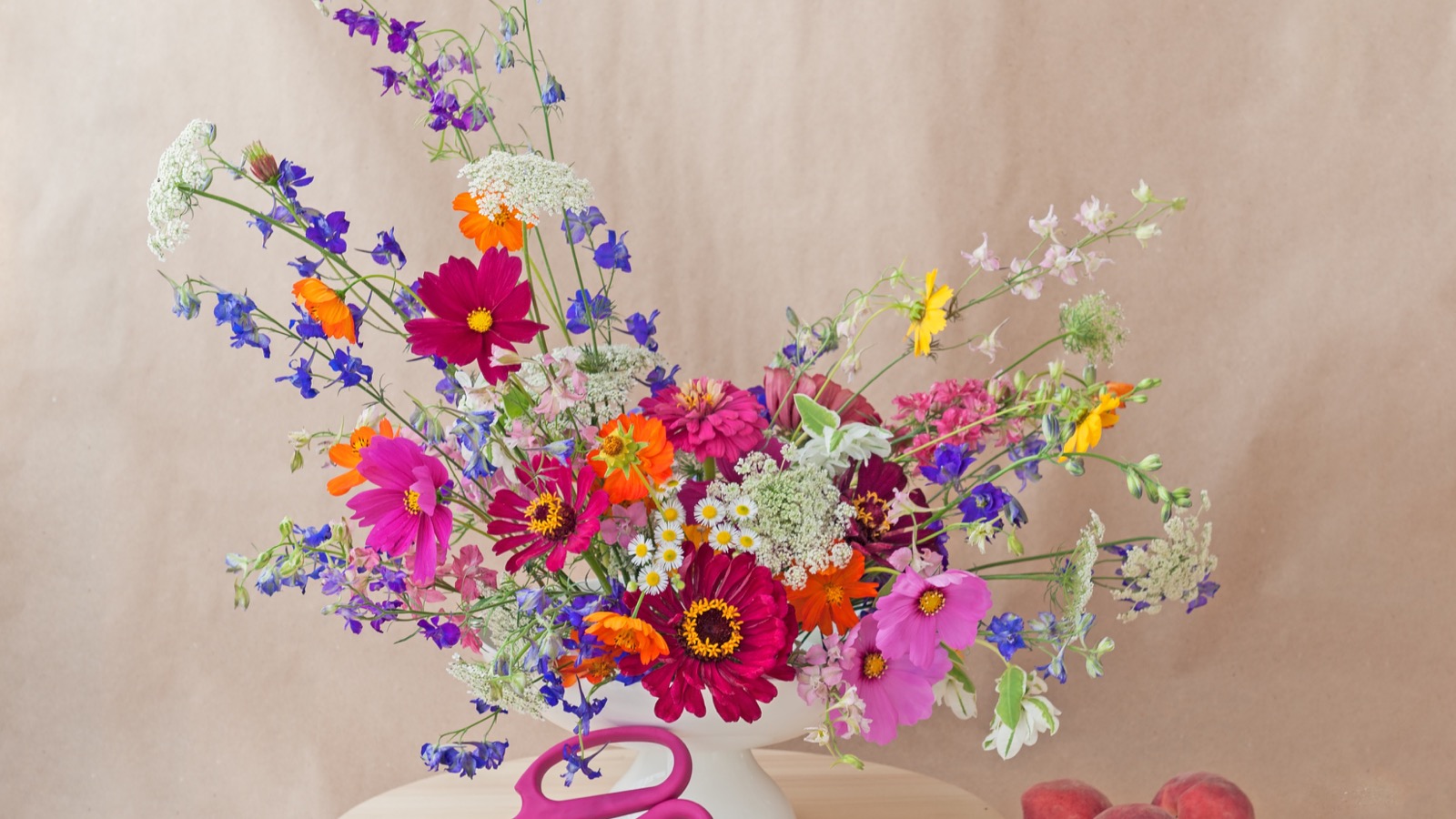
Affiliate disclosure: This post may contain affiliate links. Please see full disclosure.
The strange little glass disks and spiky metal holders you sometimes see in thrift stores are called flower frogs. They hold cut stems in place in a shallow bowl, so you can make a proper arrangement without wedging the flowers into disposable floral foam. Some are almost invisible beneath the blooms. Others, particularly the old molded-glass examples, are lovely objects in their own right.
I’m a master gardener and permaculture specialist, and I grow a substantial amount of my own food and plants. I also enjoy collecting vintage household pieces. Flower frogs bring those interests together rather nicely. When you’ve grown and cut the flowers yourself, it’s satisfying to arrange them using something that can be washed and used again for years.
These little holders were designed for shallow flower bowls

Before floral foam became widely used in the mid-twentieth century, people relied on various supports to keep cut flowers where they wanted them. Flower frogs became especially popular in the early twentieth century. Instead of filling a tall vase and hoping the stems would stay put, you could arrange a few blooms across a low dish, with the support largely hidden beneath the flowers.
There were plain working tools and quite elaborate decorative pieces. The Cambridge Glass Company made figural flower frogs, including its Draped Lady designs, while other makers produced practical clear-glass blocks and metal pin holders. The unusual shapes, colors, patent markings, and different construction methods explain why these pieces appeal to collectors today.
The renewed interest in old flower frogs has a practical side. Conventional green floral foam is generally a single-use petrochemical plastic that crumbles into small particles. A sturdy frog can be reused, and the flowers stand in water rather than in a block that is thrown away afterward. A frog cannot replace every specialized foam arrangement, but for ordinary bowls of garden flowers, I think it’s often a better choice.
Metal pin frogs are the most adaptable

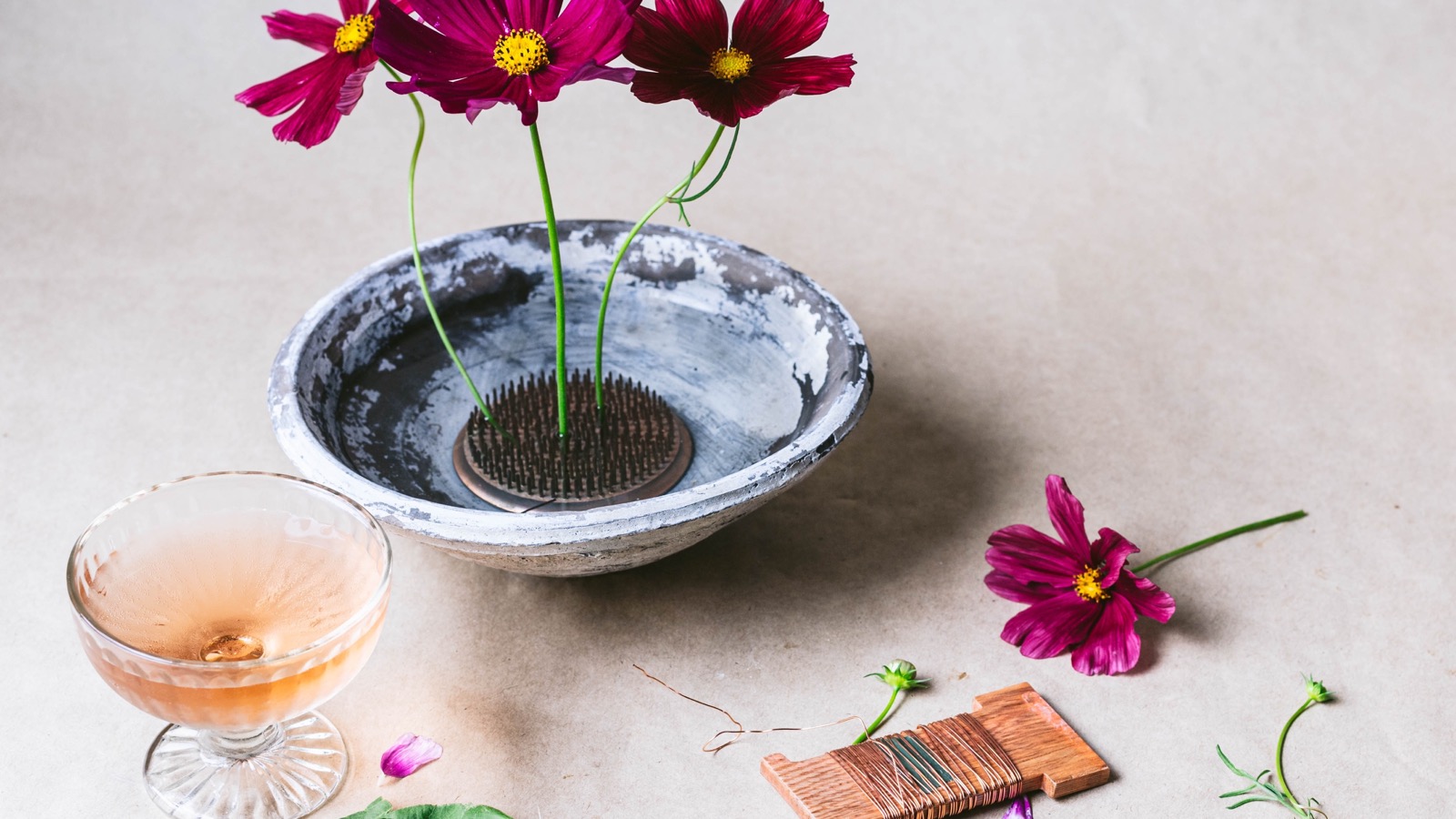
A pin frog is usually a heavy metal disk covered in short, upright needles. In Japanese flower arranging, the pin holder is known as a kenzan. The pins grip stems between them or hold a stem pressed onto them, allowing you to arrange flowers at different heights and angles. It’s easy to see why florists still use them.
I’d choose a pin frog for a mixed bunch of garden zinnias, cosmos, dahlias, or roses. Start with a few stems that establish the shape, then fill the spaces with smaller blooms and foliage. You can keep the arrangement airy rather than making every flower lean against its neighbor.
When buying a vintage example, look for a firm, flat base and tightly fixed pins. A few bent pins may be repairable, but I’d pass on one with loose or broken points, a separating base, or flaking corrosion. Pick it up by the sides because the pins can be surprisingly sharp. The best everyday tool is a sound one, not necessarily the oldest.
Perforated disks and molded-glass frogs have their own appeal
Another common type is a perforated metal disk or dome, sometimes designed to sit over the mouth of a small bowl. Each hole guides a stem into position. Unlike pins, the holes don’t grip a stem tightly, so the size of the opening and the depth of the water matter. Some old holders have attractive pierced patterns and can be displayed even without flowers.
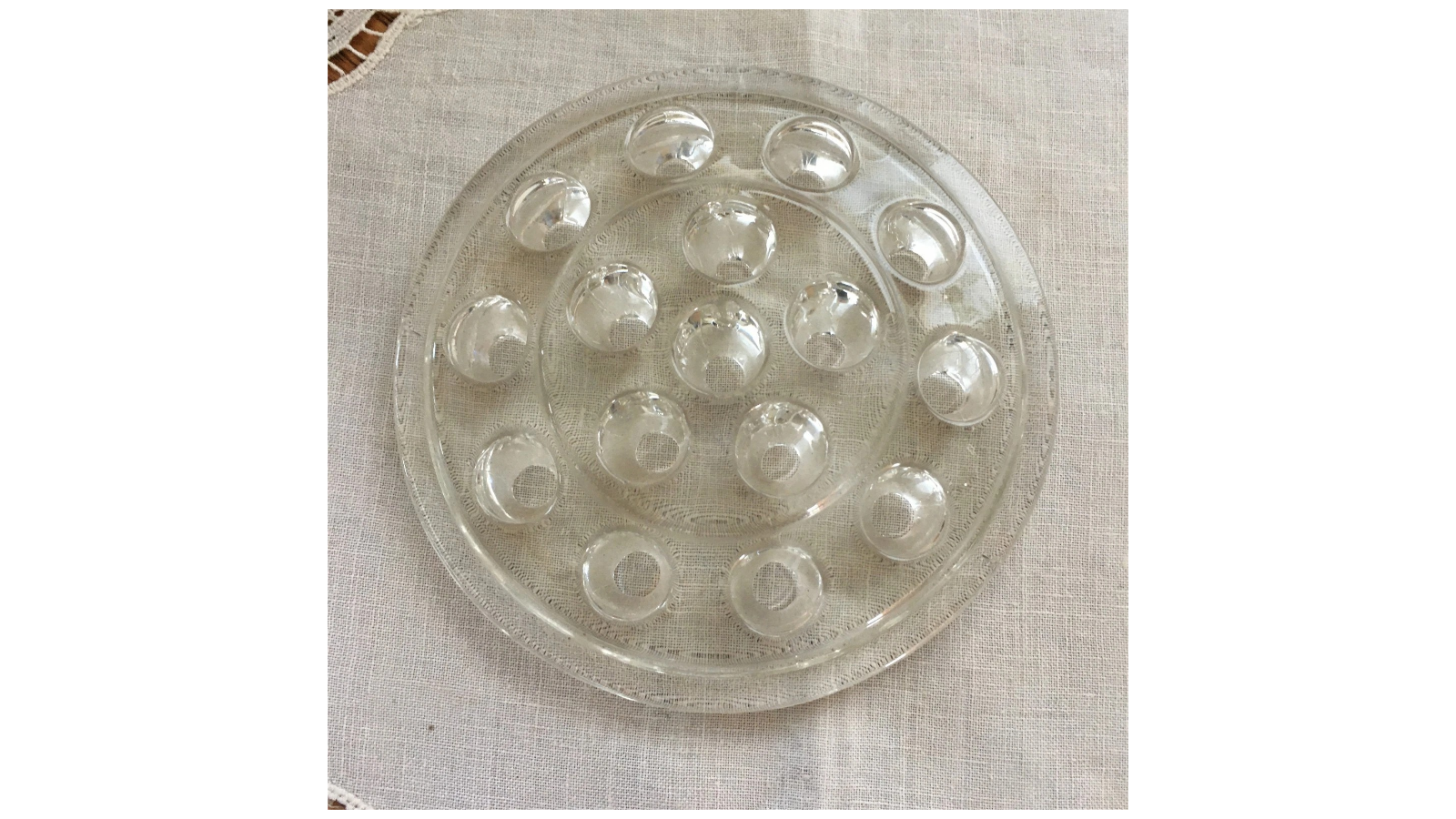
The glass versions often look like thick clear pucks, low domes, or shallow molded blocks. Their holes run down through the glass, and some have feet or a raised edge that fits a particular vase. Specialist glass-frog collections show how the feet, hole patterns, and rims help identify makers. Colored examples can be particularly pretty, although I wouldn’t assume every unmarked pink or green frog came from a famous factory.
Glass frogs are useful with stems that fit through the holes comfortably, including tulips, daffodils, and many small garden flowers. A thick stem may need a wider opening; a very thin stem can wobble in an oversized one. The fixed holes give you less control over the angle than a pin frog, so I prefer them for relaxed, fairly low arrangements.
Some collectors concentrate on decorative glass figures instead. Cambridge’s Draped Lady is a good example, and there were other figural designs. If you find one, examine it as collectible glass first. A decorative frog with fragile projections or damage isn’t automatically a sensible tool for regular flower arranging.
Inspect the parts that actually touch the stems

With a glass frog, check every hole for chips and rough lips. A chipped opening can scrape a tender stem. Hold the glass against the light to look for cracks, particularly around the holes, feet, and rim. Put it on a flat surface and make sure it doesn’t rock. A heavy glass holder that sits unevenly can be awkward in a shallow dish.
With metal, look closely at the pins or perforated edges, paying attention to sharp damage, a loose center, or missing pieces. Test that a disk intended to sit on the rim actually fits the bowl. A holder sold beside a vintage vase doesn’t necessarily belong to that vase, even if the colors are a good match.
For attribution, use physical details rather than an enthusiastic seller’s label. Some Anchor Hocking glass frogs have a distinctive raised area around the six central holes, while Cambridge made different types and sizes over the years. Markings and patent numbers can be useful, but the absence of one isn’t proof that the piece is modern or uninteresting.
Start with a wide, stable bowl and a little water
I recommend a low ceramic bowl with a reasonably flat bottom when you’re getting started. It’s stable, easy to clean, and less vulnerable to scratches than delicate antique glass. Lower the frog gently into the empty bowl. If it slides around, don’t begin piling in tall stems and hope it settles down.
A small amount of removable waterproof florist clay under the base can help anchor it. Press the frog into a clean, dry bowl before adding water. I wouldn’t permanently glue a valuable old frog into an antique vessel. You want to be able to remove everything and wash it between arrangements.
Add enough clean water for the cut ends to stay submerged, then place stems one at a time. With pins, settle the stem between the points or onto them carefully without splitting a delicate base. With a perforated holder, feed the stem through a hole and check that its cut end really reaches water. The holder supports the flowers; it doesn’t store or supply water itself.
Because the bowl is shallow, check the water level frequently. A display can look perfectly fresh while some stems have already lost contact with the water. Keep the arrangement away from strong heat and direct sunshine to avoid unnecessarily shortening the life of the blooms.
Heavy flowers need more than a tiny frog

A big dahlia head or a long branch can pull a small frog sideways. That’s a balance problem, not necessarily a failure of the pins. Use a wider, heavier base for large flowers, along with a bowl that won’t tip when the arrangement becomes top-heavy. I’d also shorten particularly long stems where that still suits the design.
Set the larger stems closer to the center and distribute their weight around the bowl. Build the shape gradually rather than adding five enormous stems on one side. If a holder shifts when you touch the arrangement gently, stop and anchor it more securely. I’d rather use fewer flowers than risk a heavy glass or ceramic bowl being knocked over.
For especially ambitious arrangements, florists sometimes combine a pin frog with a reusable wire support or a grid across the top of a vessel. That additional support controls the upper sections of stems while the frog anchors their bases. Don’t force a thick woody branch into a small hole in an antique glass frog simply because you want the stem to stand upright.
Wash the frog every time you change the flowers

Clean containers and fresh water help cut flowers last longer, and the frog needs cleaning just as much as the bowl. Little pieces of stem, leaves, and cloudy residue collect between metal pins and inside glass openings. Putting new flowers on top of those remains defeats the point of starting with a clean arrangement.
When the display is finished, remove the stems and lift the frog out carefully. Wash the bowl and holder with warm water and a little mild dish soap. A soft brush is useful between pins and through holes; keep your fingers clear of the points. Rinse well, checking that no plant material remains trapped underneath or in the corners.
For a visibly dirty holder, clean thoroughly and use a compatible disinfecting product only where appropriate, following its label. Don’t mix chemicals or soak an unknown antique finish in strong bleach or acids. Allow metal frogs to dry completely before storing them, particularly where the pins join the base. If you use removable floral clay, take it off so residue and moisture aren’t left underneath.
While flowers are in the bowl, top up the water as needed and replace it regularly. Remove fallen leaves, and recut tired stems when appropriate. A clean frog is no substitute for clean water, and a clean bowl won’t compensate for decomposing plant material trapped between the pins.
Rust can spoil the arrangement and damage a good find

Metal pin frogs aren’t all equally resistant to water. Some uncoated examples rust, and rust-colored water can discolor pale flowers. A little dark patina on a dry vintage object doesn’t worry me. Flaking orange corrosion, staining around the base, or water turning brown are different matters.
I wouldn’t keep a badly rusty frog submerged in a favorite glass bowl, nor try to make it usable with a quick coat of unidentified spray paint. That can alter the finish, conceal damage, and leave you with another coating that might peel. If the original metal is seriously corroded, keep the piece as a dry collectible and choose a sound, corrosion-resistant holder for fresh flowers.
Glass frogs have the obvious advantage of not rusting, although they still need gentle handling and proper cleaning. I wouldn’t put a cherished old glass frog through the dishwasher or bang it against the faucet. A few minutes with a soft brush is better than risking a chip in a piece that has lasted for decades.
They’re made for gardeners who enjoy cutting their own flowers
You don’t need an enormous cutting garden to enjoy a flower frog. Cosmos, sweet peas, zinnias, dahlias, and shrub foliage can all supply attractive stems at different times of year. A small bunch picked from the garden often looks better when each stem has room to show itself off rather than being crushed into a narrow vase.
I’d cut flowers in the cool of the morning, place them in water promptly, and remove leaves that would sit beneath the waterline. Then I’d choose the holder to suit the stems. A glass dome might be ideal for a few spring tulips, while a weighted pin frog can help make a pleasing low arrangement of summer flowers with different stem lengths.
There is also something appealing about the routine: cut what you want to enjoy indoors, leave plenty outside for insects and future seed where appropriate, compost the finished plant material, and wash the frog ready for the next bunch. No disposable block to throw away, no need for a special vase for every season.
I’d start with one solid, practical frog that fits a bowl I already own. If you later find a beautiful colored glass holder or a decorative figural piece at a thrift store, so much the better. A little bit of old-fashioned design can be both useful and lovely, and that’s exactly the sort of thing I enjoy bringing home.
You might also like…
The CorningWare Pattern Collectors Dream Of Finding At A Thrift Store
The Blue-And-White Pyrex Pattern Collectors Dream Of Finding At A Thrift Store
The Pink Pyrex Pattern Collectors Dream of Finding at a Thrift Store

