Affiliate disclosure: This post may contain affiliate links. Please see full disclosure.
I’ve opened some pretty questionable compost bins over the years. There’s a particular smell that tells you immediately something has gone wrong, and there’s no mistaking it for the pleasant earthy smell of finished compost. If opening the lid makes you recoil, your compost isn’t simply “doing what compost does.” A healthy pile really shouldn’t stink.
As a master gardener and permaculture practitioner, the first thing I’d look at is what you’ve been feeding it. Most smelly backyard compost isn’t suffering from some mysterious problem. It’s usually overloaded with wet, nitrogen-rich “greens,” such as kitchen scraps and grass clippings, without enough dry, carbon-rich “browns” to balance them. That wet mass compacts, loses its air spaces, and starts producing some thoroughly unpleasant odors.
Thankfully, the fix is often ridiculously simple. You need more browns.
A smelly compost bin is usually out of balance
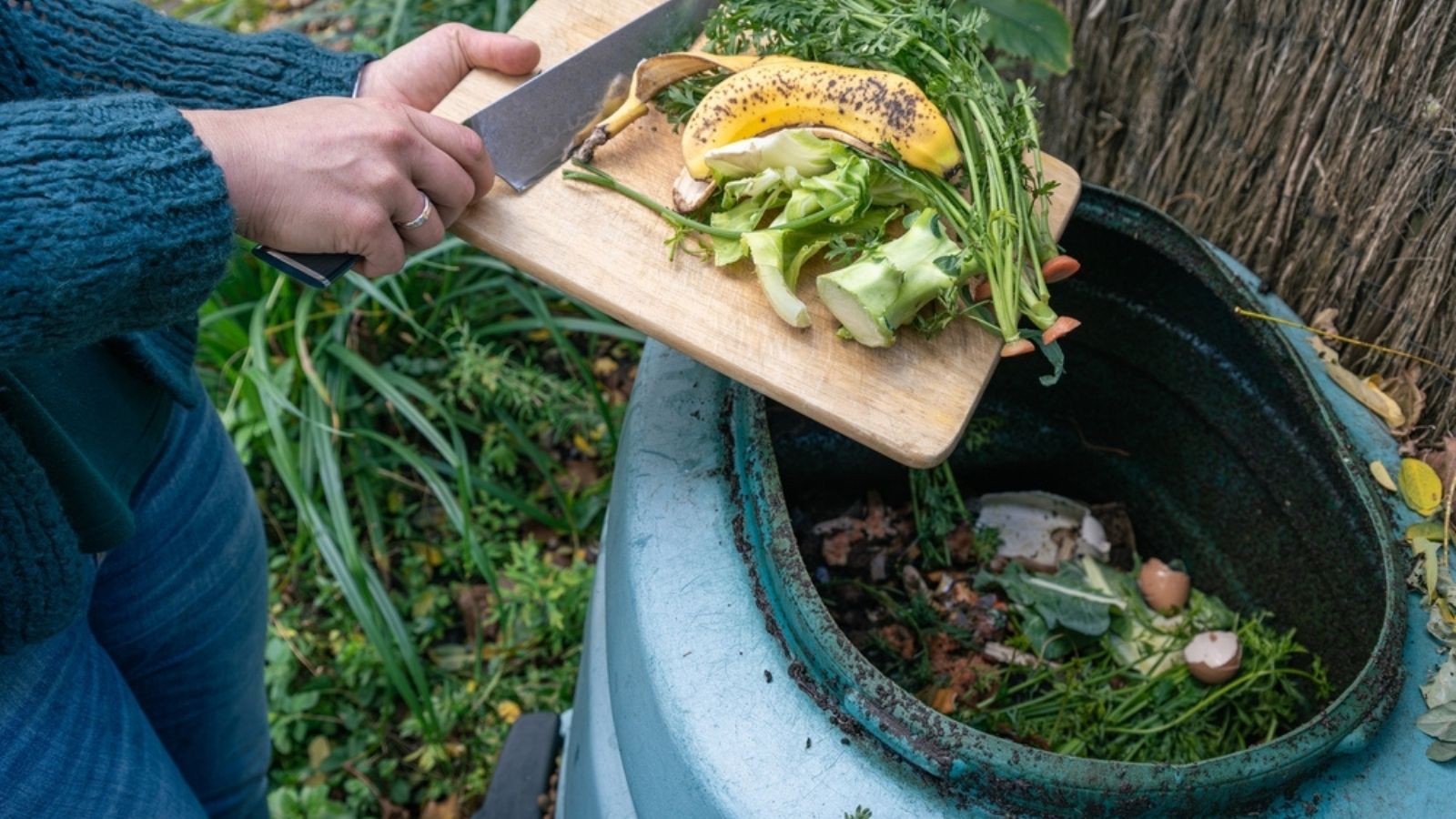
Compost microbes need carbon and nitrogen, and they need them in the right sort of proportions. Your nitrogen-rich ingredients are usually referred to as greens. These include vegetable scraps, fresh plant trimmings, coffee grounds, and fresh grass clippings. Browns are the more carbon-heavy materials, such as dry autumn leaves, straw, shredded cardboard, paper, dried stems, and small woody material.
Incidentally, don’t take the color names too literally. Coffee grounds are dark brown but count as a green because they’re relatively nitrogen-rich. Fresh green leaves are greens, but those same leaves become a brown once they’re dead and dry. Compost terminology likes to keep beginners on their toes.
For efficient decomposition, the actual target is somewhere around a 25:1 to 30:1 carbon-to-nitrogen ratio. Nobody with a backyard bin needs to stand outside calculating the carbon content of a banana peel, though. A much more practical starting point is roughly two or three volumes of browns for every one volume of greens. House Digest has previously covered why the exact brown-to-green compost ratio can vary, with roughly 2:1 to 4:1 being a sensible working range for home composters. Extension guidance similarly recommends around two to three parts brown material for each part green.
When that balance tips too far toward greens, you’ve got lots of nitrogen, lots of moisture, and usually not enough structure. That’s when your nose gets involved.
The smell can tell you what’s gone wrong
Not all bad compost smells mean exactly the same thing. If you get a sharp ammonia smell, there’s a good chance you’ve simply put in far too much nitrogen-rich material. Excess nitrogen can escape as ammonia when the carbon-to-nitrogen ratio is too low.
This happens incredibly easily with grass clippings. People mow a lawn, empty several bags of wet grass into the compost bin in one go, and create what is essentially a heavy green mat. Grass clippings are excellent compost material, but a thick wad of them can become slimy and compacted very quickly.
A sour, rancid, sewage-like, or rotten-egg smell points more toward an oxygen problem. Usually, the pile has become too wet and compacted. Once the air spaces fill with water or everything collapses into a dense mass, the oxygen-loving organisms responsible for good aerobic composting can’t function properly. Anaerobic decomposition starts taking over, and the resulting smells can be impressively vile.
The two problems often occur together because greens tend to be wet as well as nitrogen-rich. Kitchen scraps, fresh weeds, melon rinds, coffee grounds, and grass all bring moisture into the pile. Keep adding these without enough dry structural material and you’ve created ideal conditions for stink.
RELATED POST: The 2,000-Year-Old Roman Trick Your Compost Bin Is Missing
Add dry browns, but mix them through rather than hiding the problem
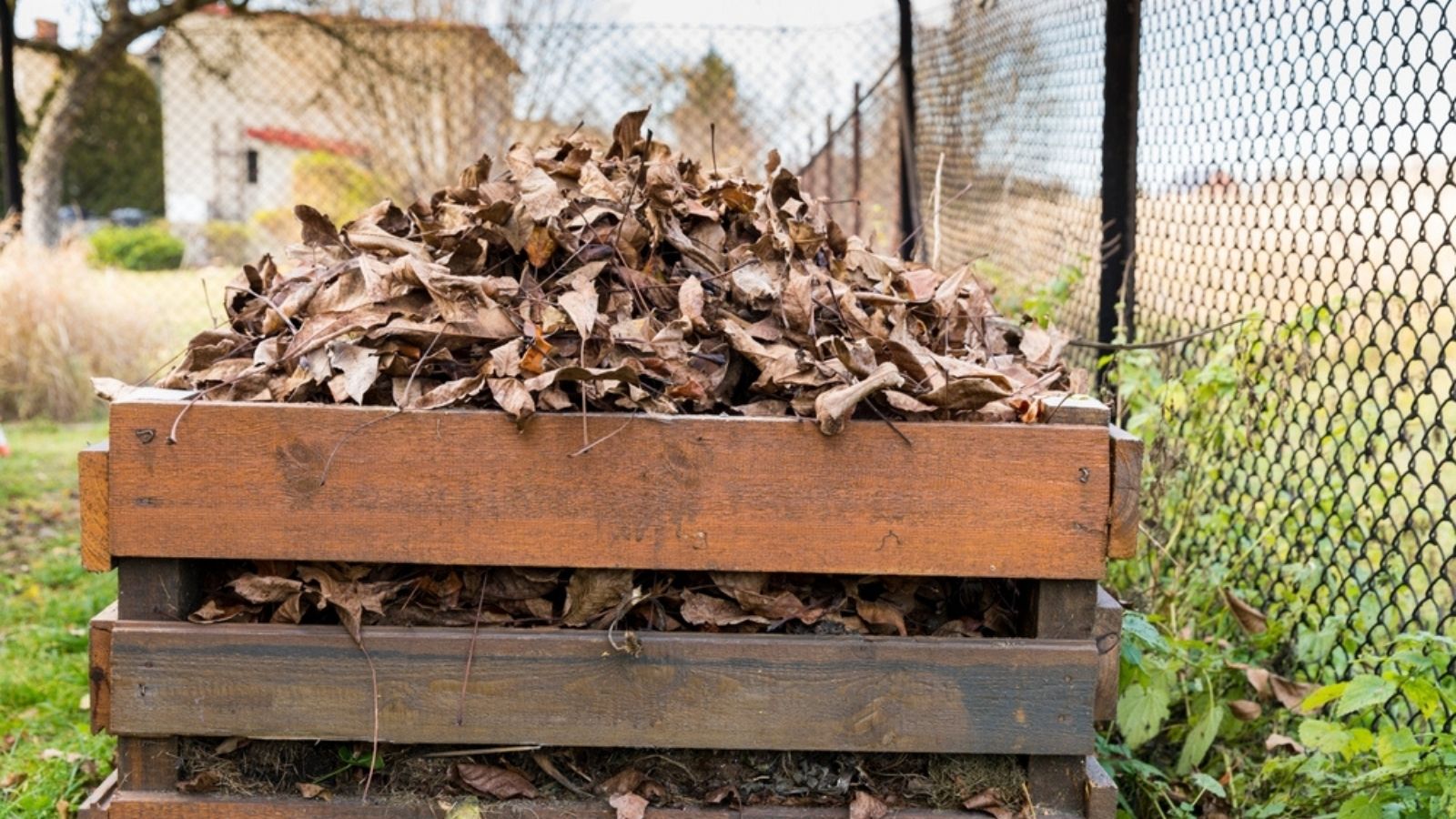
If I’ve got a wet, smelly pile, my first move is to add a generous amount of dry brown material. Autumn leaves are my favorite because they’re free, absorbent, and easy to keep in bags for exactly this purpose. Shredded cardboard works extremely well, too, as does torn-up plain paper, straw, untreated wood shavings, and small dry stems.
Add enough that you can actually see and feel the texture of the pile changing. If you’ve recently added a bucket of soggy kitchen scraps, adding one symbolic handful of leaves isn’t going to rescue anything. Use that rough two or three parts brown to one part green rule as your starting point and adjust from there. Penn State’s Master Gardener guidance specifically recommends keeping a supply of dry leaves or shredded paper handy so you can add browns whenever fresh greens go into the compost.
And mix the browns into the wet material. Don’t just throw six inches of cardboard on top and congratulate yourself. You need those dry ingredients distributed through the soggy areas so they can absorb excess moisture and create little pockets where air can move.
This is one of those areas where composting is much easier if you stop worrying about perfect formulas and use your senses. Grab a handful from the middle of the pile. It should feel damp, a bit like a wrung-out sponge. It shouldn’t be dripping wet, and it shouldn’t squash into a slimy lump.
If it does, add more browns.
A wet compost pile needs air as well as carbon
Adding dry material solves two problems at once. It balances some of that excess nitrogen, but coarse browns also open up the structure of the pile.
This matters because composting is an aerobic process. The microbes doing the work need oxygen. If you’ve got a barrel full of wet grass, vegetable peelings, and coffee grounds packed tightly together, simply getting more air into the mix can make a dramatic difference.
Turn the compost with a garden fork, compost aerator, or whatever you’ve got that lets you lift and loosen it. I’m not particularly precious about special composting equipment. A fork works. The aim is to break apart soggy clumps, pull drier material into wet areas, and restore some air space.
If you’ve got a tumbler, rotate it. If you’re dealing with a large pile, pull apart the compacted middle and rebuild it loosely with dry browns mixed throughout. You may notice the smell gets temporarily worse when you first disturb a badly anaerobic pile. That’s unpleasant, but not surprising. You’re releasing gases that were trapped inside. Turning and adding absorbent carbon-rich material are both recommended fixes for compost that’s too wet and oxygen-starved.
Don’t go too far in the opposite direction, though. A bone-dry pile composed almost entirely of cardboard and dead leaves won’t stink, but it also won’t accomplish much. If your compost is dry, cool, and sitting unchanged for months, it may need more greens and a little moisture.
Composting is a balancing act, not a competition to see who can add the most cardboard.
RELATED POST: Maggots in Compost: Are They Good or Bad, and What Should You Do?
Keep a stash of browns next to the compost bin
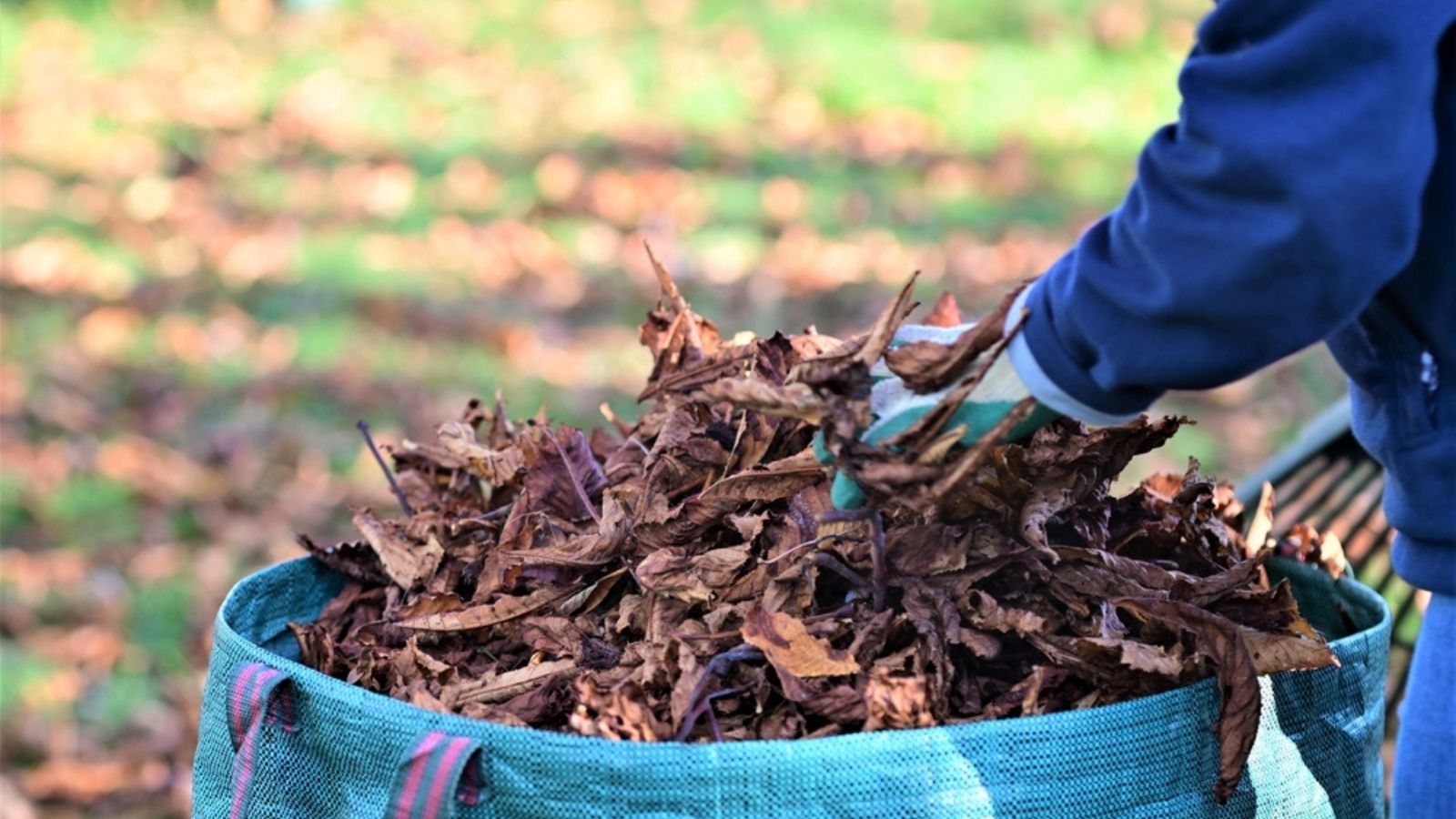
The easiest way I’ve found to avoid smelly compost is to make browns just as convenient as greens.
Kitchen scraps are easy. They’re generated every day and you naturally carry them outside to the compost bin. Browns tend to arrive seasonally. You get mountains of dead leaves in fall, then somehow discover in July that all you’ve got is a lawn full of fresh green material and a steady stream of vegetable peelings.
So save the leaves.
I keep dry brown material close to the composting area rather than clearing it all away. Bags or a simple covered container of dry leaves are ideal. You can also keep a box of plain corrugated cardboard and shred some whenever you need it. In permaculture, I like systems that make the desirable action the easy action. Having browns within arm’s reach means I’m far more likely to balance a bucket of kitchen waste immediately instead of promising myself I’ll deal with it later.
Each time you empty a container of food scraps into the pile, cover and mix it with dry browns. If you’re adding fresh grass clippings, be particularly generous and mix them rather than dumping them into a solid layer. Matted grass is one of the quickest routes to a wet, airless compost heap. Cornell’s compost troubleshooting guidance specifically identifies thick, compacted layers of leaves or grass as an aeration problem and recommends breaking them apart.
This little habit is much easier than trying to rescue a bin once it already smells like something died in it.
RELATED POST: 30 Best Cheap & Easy DIY Compost Bins. Reduce Waste and Save Money!
Don’t try to cover a composting problem with another product
I wouldn’t waste money on a compost deodorizer, scented product, or special additive to fix a smelly pile. The smell is useful information. It’s telling you the conditions inside the bin are wrong, and masking the odor doesn’t correct those conditions.
I also wouldn’t start randomly adding lime. A high pH can actually increase the loss of nitrogen as ammonia, making an ammonia odor worse rather than better.
There are also some things I simply don’t put in a normal backyard compost pile. Meat, fats, grease, dairy products, and bones can create odor and pest problems, while dog and cat feces don’t belong in ordinary compost intended for use around the garden. If the smell started shortly after somebody enthusiastically emptied leftovers containing meat, cheese, or cooking fat into the bin, I’d remove what I reasonably could before rebalancing everything.
For the usual pile of vegetable scraps, coffee grounds, grass, weeds, leaves, and garden trimmings, though, the solution is rarely complicated. Add plenty of dry browns, mix them through, and get some air back into the pile.
I actually find a smelly compost heap quite reassuring in one respect. You haven’t “ruined” it. The system is just telling you what it’s short of. Give it carbon, give it air, and stop drowning it in grass clippings. A properly balanced pile should eventually get back to smelling pleasantly earthy, which is exactly what compost should smell like.