
Affiliate disclosure: This post may contain affiliate links. Please see full disclosure.
Pyrex Spices wasn’t a set of little jars for the spice rack. It was a 1978 oval casserole decorated with a bouquet of herbs and spices, and it originally came with a wooden trivet. I’d be delighted to find one among the ordinary brown baking dishes at a thrift store, particularly if the trivet had stayed with it.
The trivet is what draws me to it. The dish is small enough to be useful, with an intricate print that’s easy to overlook until you’re close. It’s cookware designed to leave the oven and arrive at the dinner table looking rather smart.
Spices was part of the 1978 Designer Collection
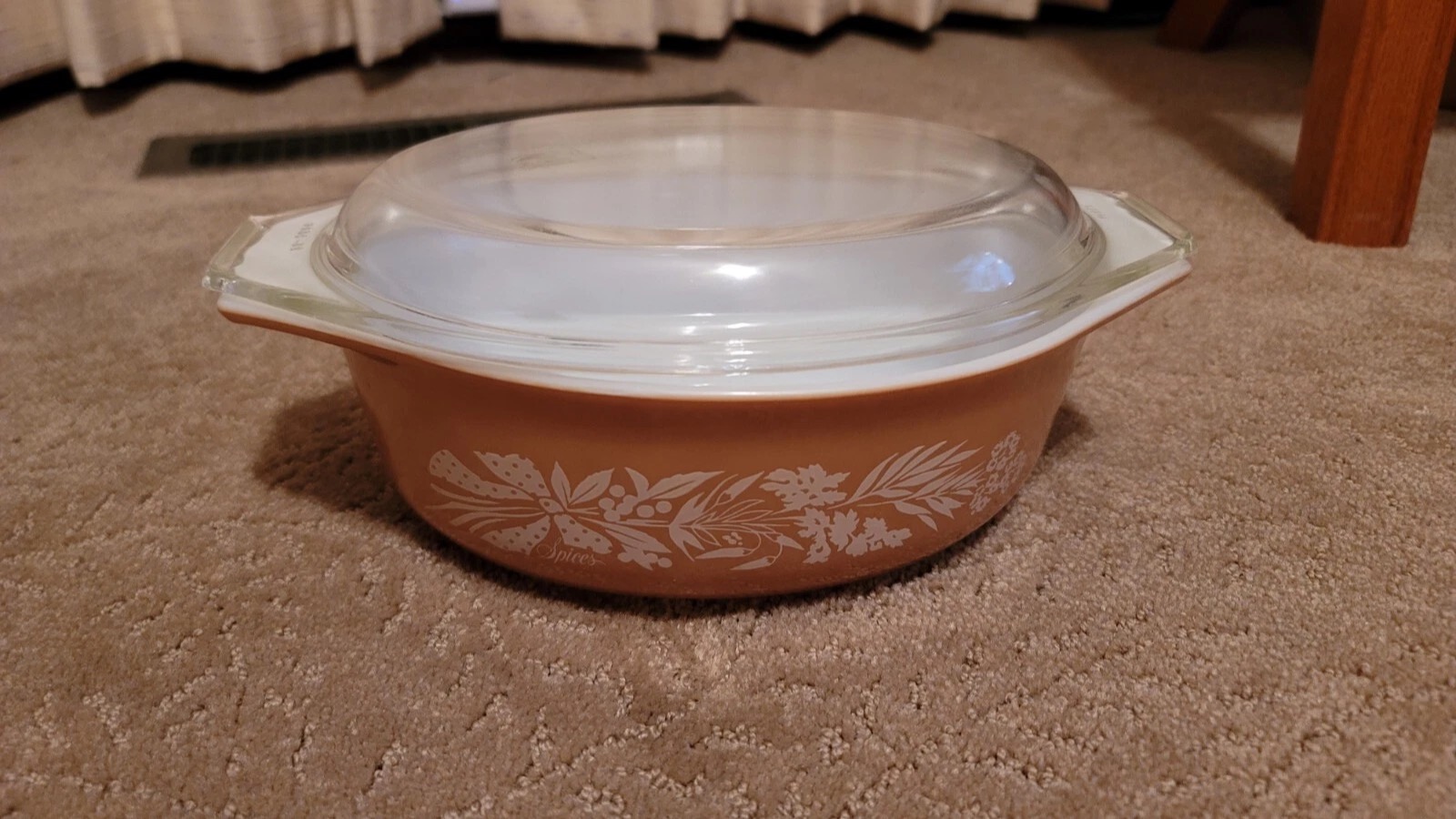
The Spices design appeared in 1978 as one of five promotional patterns in Corning’s Designer Collection. Its companions were Daisy, Terra Cotta Rose, Dynasty, and Wheat. These weren’t five patterns rolled out across enormous matching ranges. Each was a particular decorated piece, paired with a serving accessory suited to its shape.
Pyrex had been selling special gift casseroles for years, often with elaborate metal cradles or candle warmers. By the late 1970s, the emphasis had shifted toward coordinated-looking, practical serving pieces. The Wheat casserole from the same collection, for instance, also came with a wooden trivet, but it was a larger dish with an entirely different design.
The decoration looks like a little kitchen herb bouquet
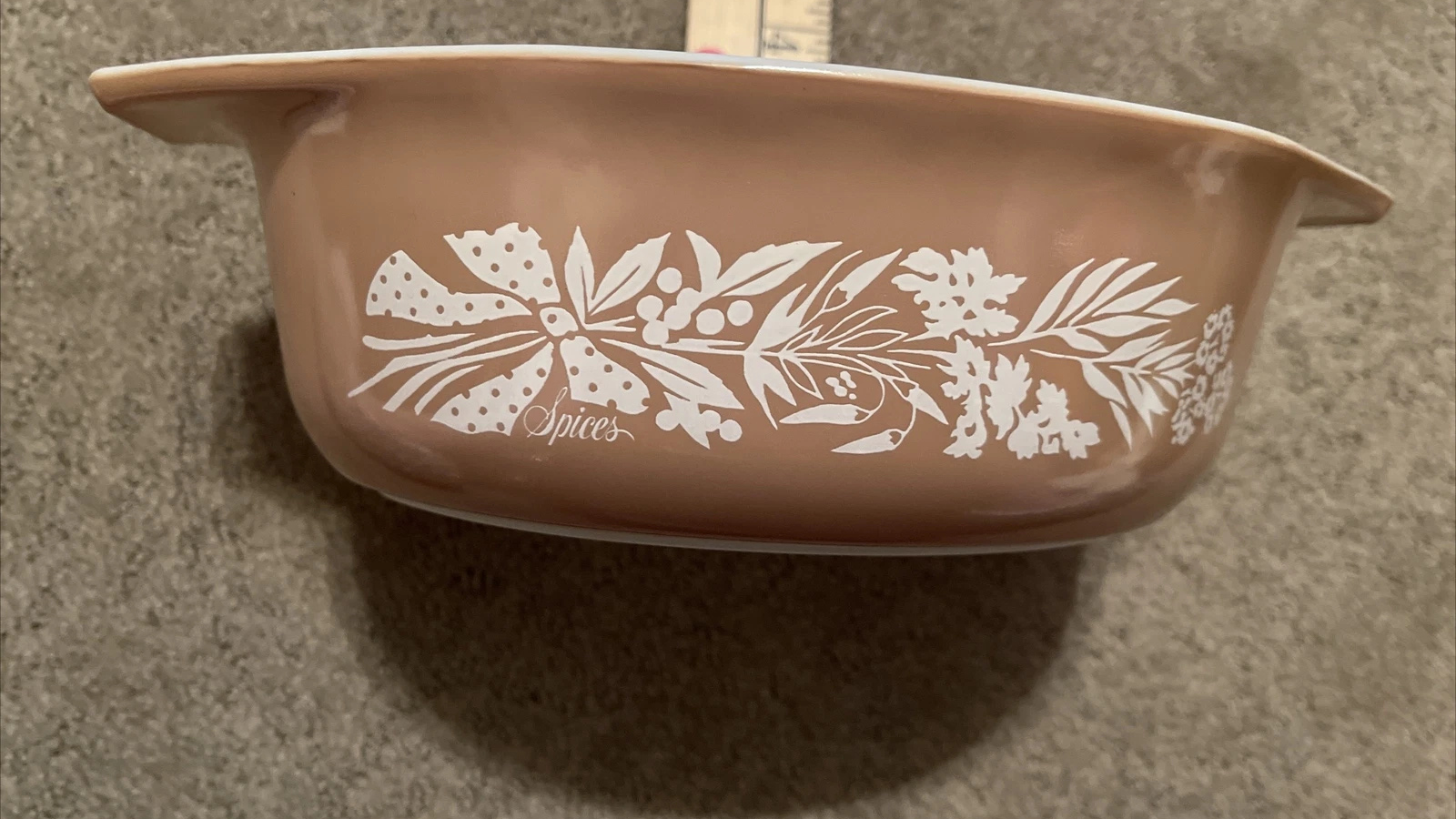
The glass underneath the printed exterior is white opalware. Its outside is tan-beige, with a white spray of leafy stems, berries, flowers, and shapes that resemble little peppers. The bundle is tied with a dotted ribbon, and the word “Spices” appears in script beside the bouquet. The motif is repeated on both sides of the casserole.
It’s a surprisingly delicate pattern for a cooking dish. The branches and sprigs have much more character than a row of printed herb names on a canister, and I wouldn’t pretend every little leaf can be identified as a particular kitchen spice. The point is the feeling of a freshly gathered bunch from the herb garden, ready for whatever’s going in the pot.
The creamy brown coloring can make Spices easy to miss among other earth-toned Pyrex. Some similar-looking dishes belong to Sandalwood or the older Berries promotion, but the tied bouquet and script lettering are the details I’d look for before making an identification.
Look for the 043 oval casserole and a 943 lid
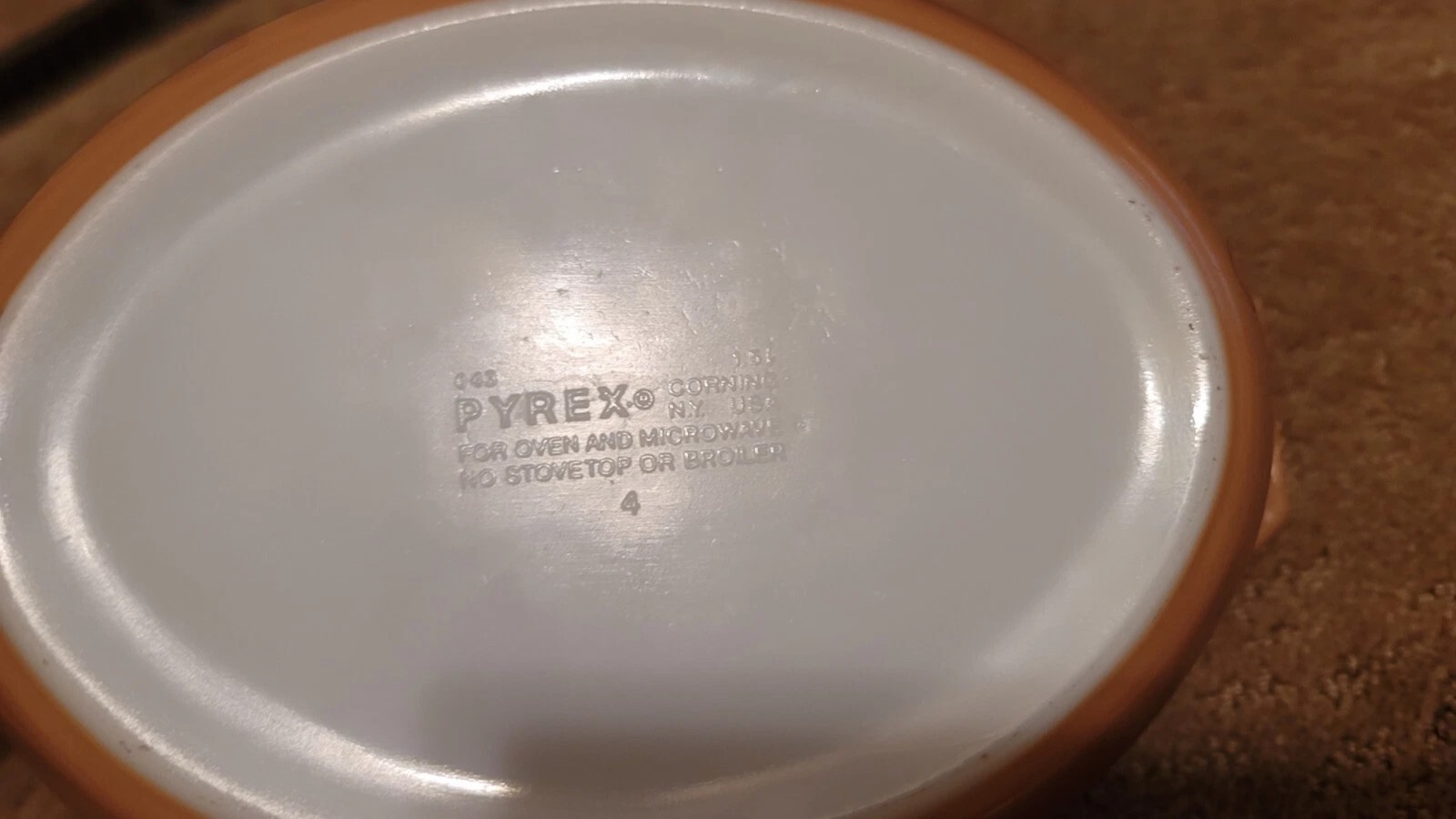
The original Spices design was produced on the 043 oval casserole, a 1½-quart dish with a handle at either end. That’s useful when you’re hunting through mismatched secondhand Pyrex. Turn it over and look for the molded 043 number on the underside.
Remember that 043 identifies the casserole shape, not the Spices pattern. Corning used the same mold for other decorations. The color and that specific ribbon-tied bouquet are what establish the pattern.
A clear glass 943 lid is the usual matching cover for this shape, sometimes marked 943-C. One documented Spices example was found with that lid, although you can’t tell whether a loose lid has always belonged to the dish. Check its number, sit it gently on the rim, and look for chips around the edges and handles. A lid that rests on top isn’t necessarily the right one.
The original wooden trivet is worth looking for

The 1978 set came with an oval wooden trivet, shaped to sit beneath the casserole when you brought it to the table. It’s a particularly nice pairing with the earthy colors and herb-garden decoration. That wooden base is part of the original presentation.
A word of caution about the name: the trivet wasn’t intended to go into the oven with the casserole. A surviving label appears to include warnings not to immerse it in water or put it in the oven. The photograph of the marking is difficult to read, so I wouldn’t assign a precise trivet part number from it. The sensible rule is simple: keep wood out of the oven.
If you find a Spices trivet on its own, look for old maker labeling and the 043 size reference before assuming it’s the original match. Check for splits, water damage, wobbling, or a tacky finish. I wouldn’t put a hot glass dish on a damaged wooden base just because it looks the right age.
Check the finish before you get carried away
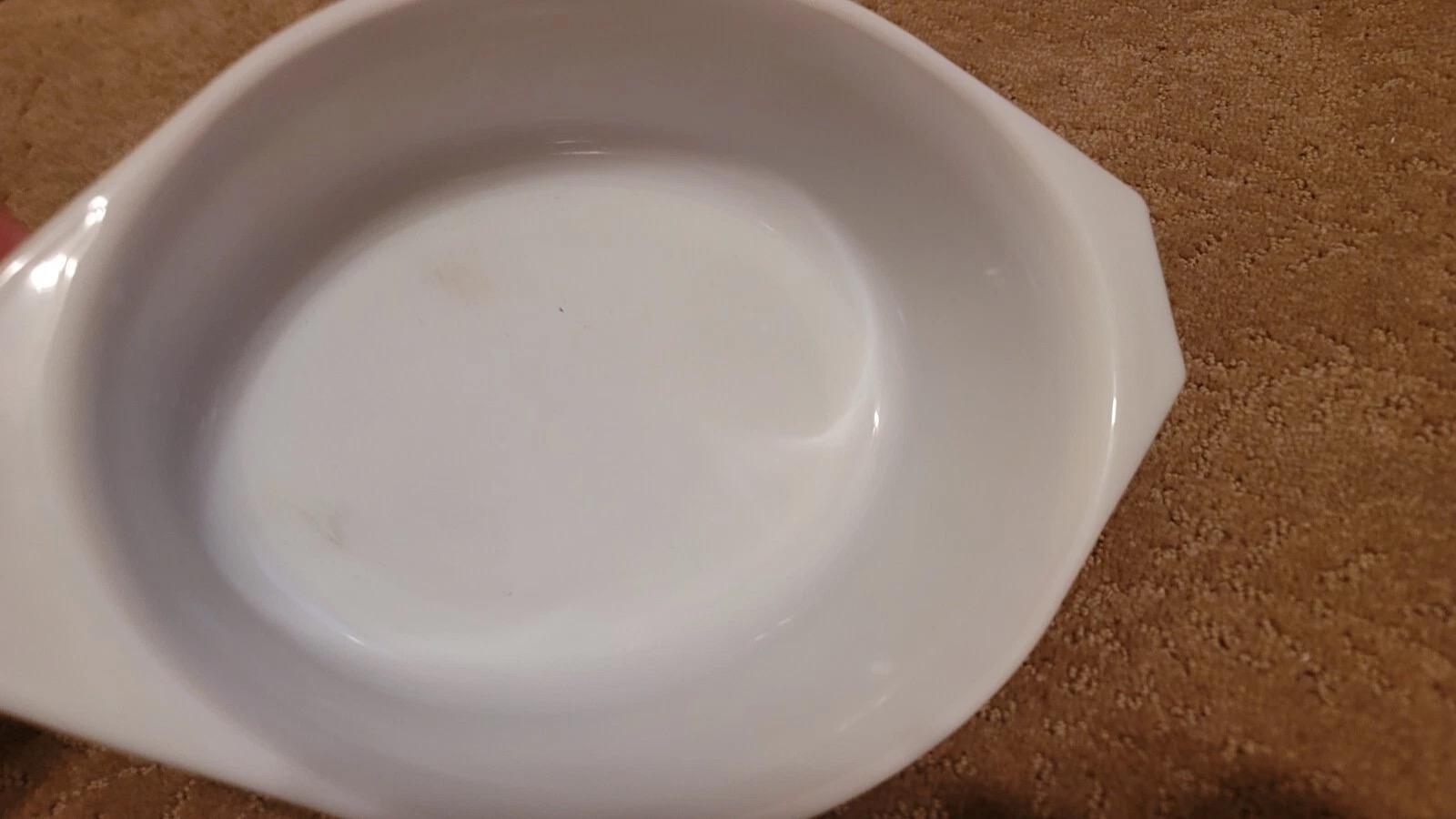
With any decorated Pyrex, I examine the outside first. Hold it at an angle under a strong light. Are the white leaves and ribbon still crisp, or has the print worn thin where hands picked it up? Look for dishwasher dullness, scratches through the tan coating, and little missing patches around the handles.
Then check the glass. Feel carefully along the rim and handles for tiny chips, and inspect the base and inside for hairline cracks. A few ordinary utensil marks inside a sound casserole wouldn’t put me off. Cracks are another matter, and I wouldn’t use damaged vintage glass for food.
The gentlest way to care for decorated vintage Pyrex is to wash it by hand with mild dish soap, warm water, and a soft sponge. Skip abrasive pads and the dishwasher. Allow hot glass to cool naturally rather than placing it on a cold or wet surface, and never put this ovenware directly on a stovetop burner.
If I found one in good condition, I’d bring it out for serving or display it with the wooden trivet. I like that the decoration celebrates herbs and cooking on the actual cooking dish. It’s exactly the sort of small, slightly forgotten design that makes vintage kitchenware so enjoyable to collect.
You might also like…
The CorningWare Pattern Collectors Dream Of Finding At A Thrift Store
The Blue-And-White Pyrex Pattern Collectors Dream Of Finding At A Thrift Store
The Pink Pyrex Pattern Collectors Dream of Finding at a Thrift Store

