
Affiliate disclosure: This post may contain affiliate links. Please see full disclosure.
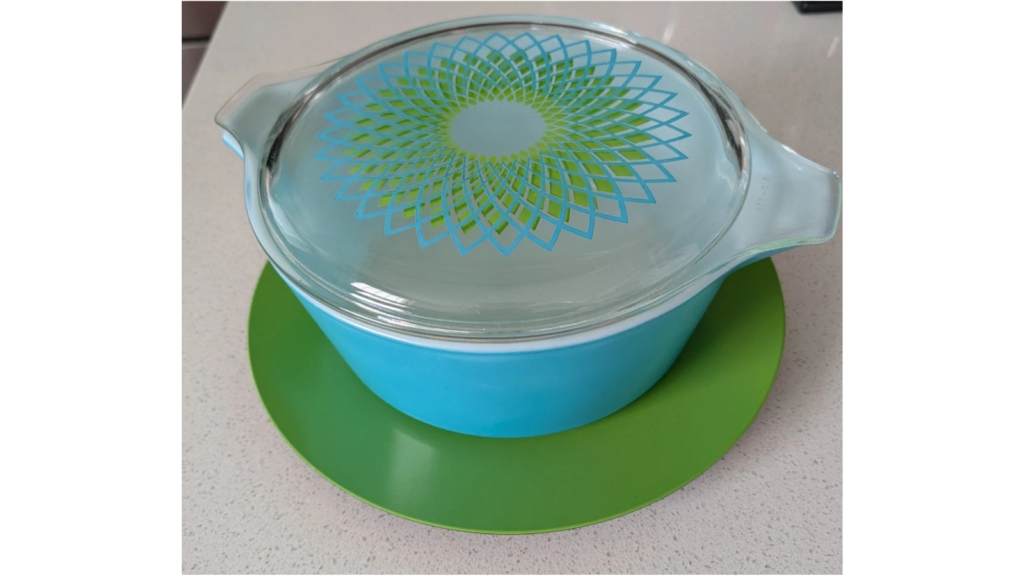
A blue Pyrex casserole with a clear lid covered in intricate green and blue loops might be something rather more interesting than ordinary vintage bakeware. The design is known to collectors as Spirograph, a short-lived 1969–70 promotional casserole that came with a bright-green under-plate instead of the metal serving cradle familiar from earlier Pyrex gift sets. That little change in accessories is a large part of its appeal.
As an avid thrifter and collector, I always pay attention to the lids and the odds and ends sitting beside old casserole dishes. A blue bowl by itself can be difficult to identify. A correctly decorated lid and the proper serving plate tell a much more specific story.
Spirograph was part of Corning’s new gift line
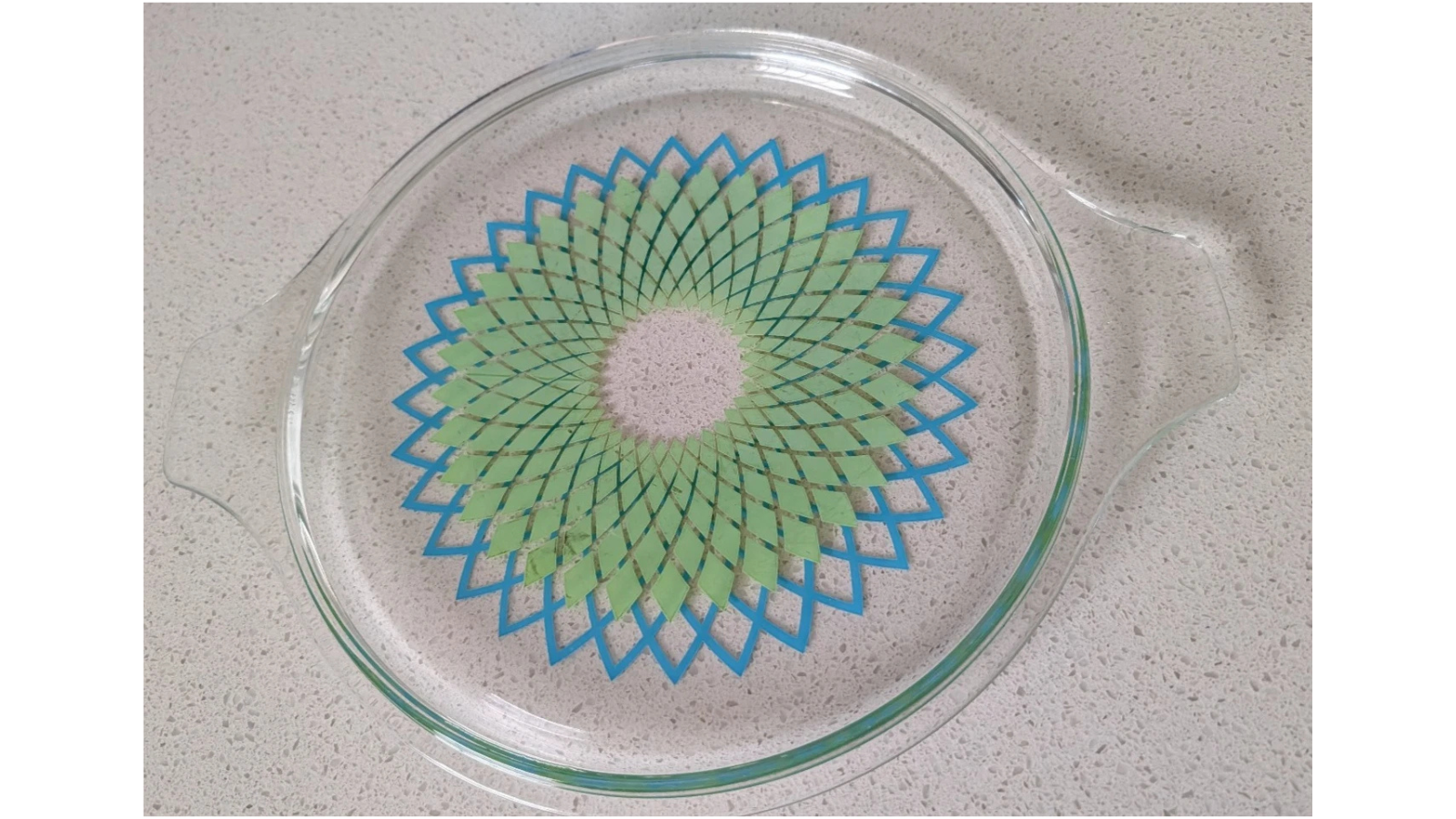
Spirograph arrived in 1969 as Corning Glass Works was introducing new patterns and accessories for kitchens heading into the 1970s. It remained in production through 1970. The name wasn’t Corning’s official name for the design. Collectors adopted Spirograph because the overlapping circular lines resemble drawings made with the geometric drawing toy.
The original 1969 promotional listing called it a 2½-quart round casserole with trivet, model 475, and gave the retail price as $5.95. It was part of a gift assortment, not a broad range of matching mixing bowls and refrigerator dishes that shoppers could gradually collect.
These seasonal gift sets were clever marketing. Corning took familiar, useful Pyrex shapes and dressed them up with unusual colors, decorated lids, and serving accessories. A casserole could go from oven to table, and the additional holder or trivet made it feel more like a finished present. Earlier promotions were often aimed at Mother’s Day, wedding gifts, or holiday shopping.
The decorated lid makes Spirograph easy to recognize
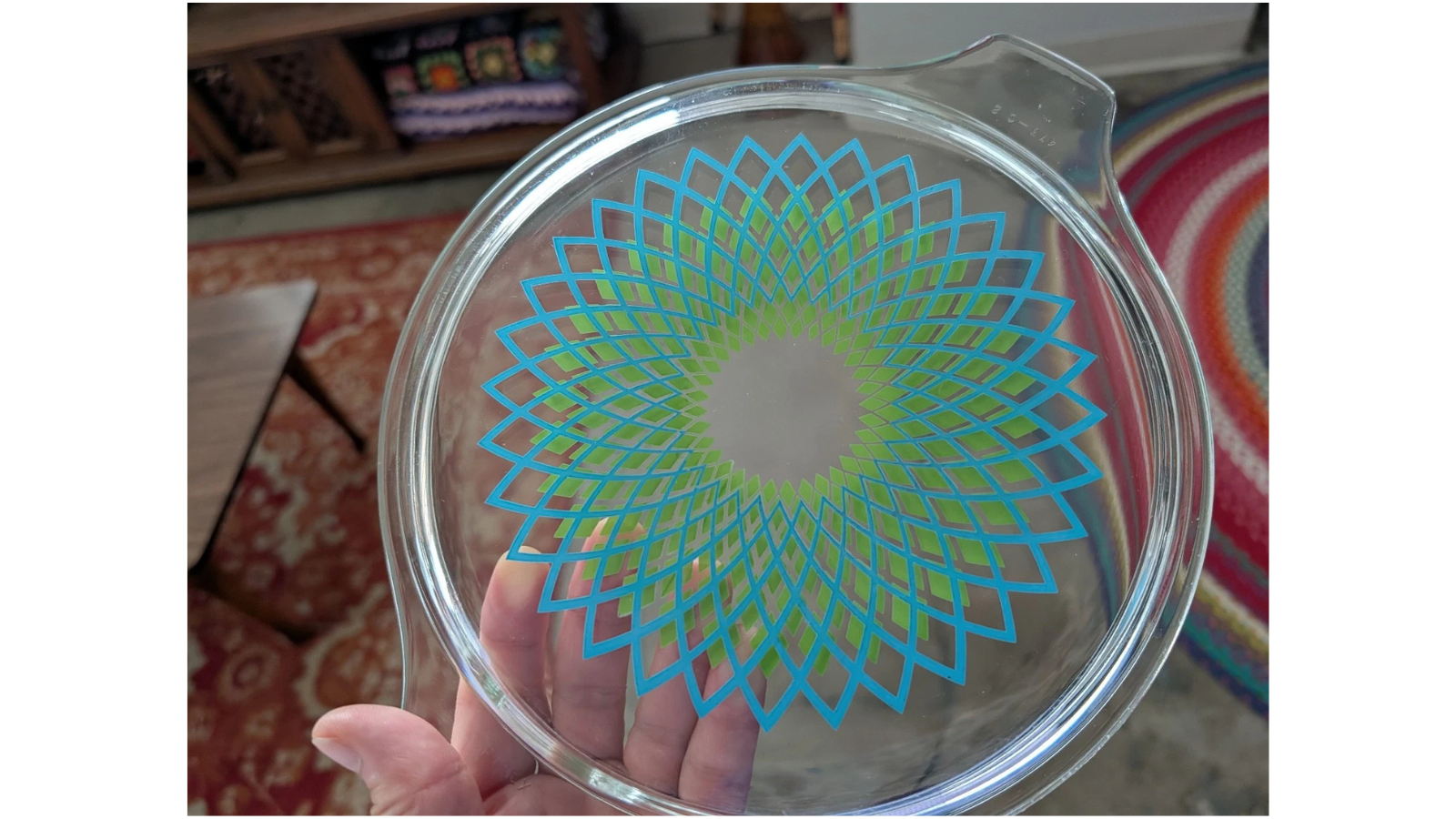
The base is a round 2½-quart Cinderella casserole, model 475, in an appealing sky-blue shade, with a white interior and the characteristic pouring handles. It’s the lid that really distinguishes this promotion. Unlike plain clear Pyrex covers, this one carries a geometric design in blue and green.
Look closely and you’ll notice something especially clever: the two colors aren’t simply printed side by side. The blue decoration is on the upper surface of the clear lid, while the green decoration is on its underside. Seen together through the glass, the overlapping lines have a layered appearance. Detailed photographs of an original example show the difference when the lid is turned over.
The green under-plate marked a change in Pyrex gift accessories
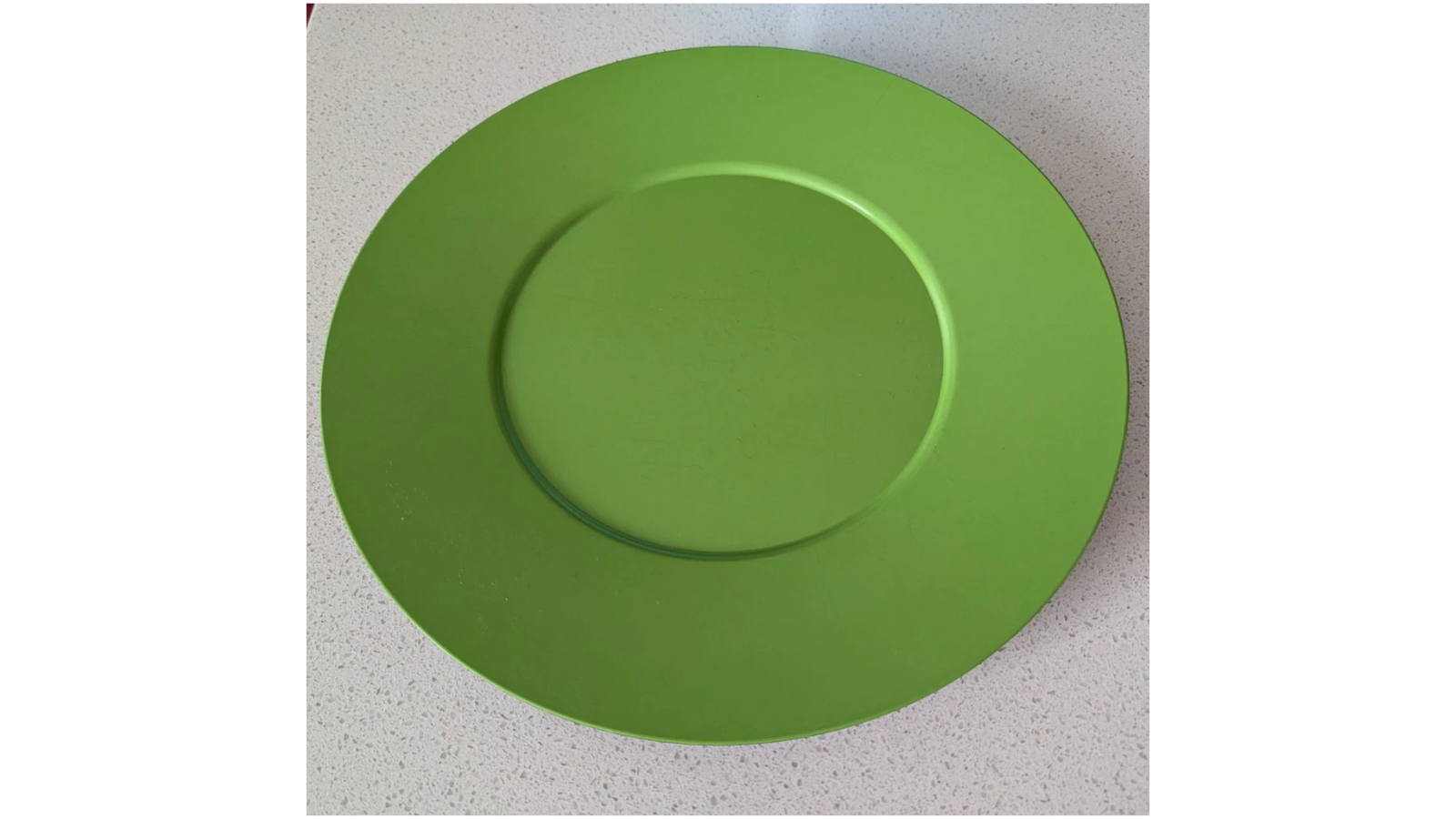
For much of the previous decade, promotional Pyrex casseroles were presented in metal cradles, sometimes fitted with handles or candle warmers. Those raised stands made sense for a buffet or dining table, but they were also bulky, and their separate components could be misplaced.
Spirograph, alongside the Nouveau Floral promotion, was among the first to use an under-plate style trivet instead. Its original accessory was a bright-green melamine serving plate that sat beneath the casserole, rather than surrounding it in a metal frame. The color picked up the green decoration on the lid and made the three pieces look deliberately coordinated.
Corning hadn’t stopped using traditional stands overnight. Other designs from the same period, including Golden Garland, still came with metal cradles and candle warmers. But the direction was changing. Into the 1970s, the promotional accessories increasingly included under-plates, small three-legged trivets, baskets, and close-fitting plastic cradles.
This is why I wouldn’t treat the green plate as an optional oddity. It’s part of what made the original gift set distinctive, even if many surviving casserole-and-lid combinations have long since lost theirs. The under-plate is a serving accessory, not another piece of glass bakeware, so don’t put it into the oven with the casserole.
How to check whether a thrift-store set is complete
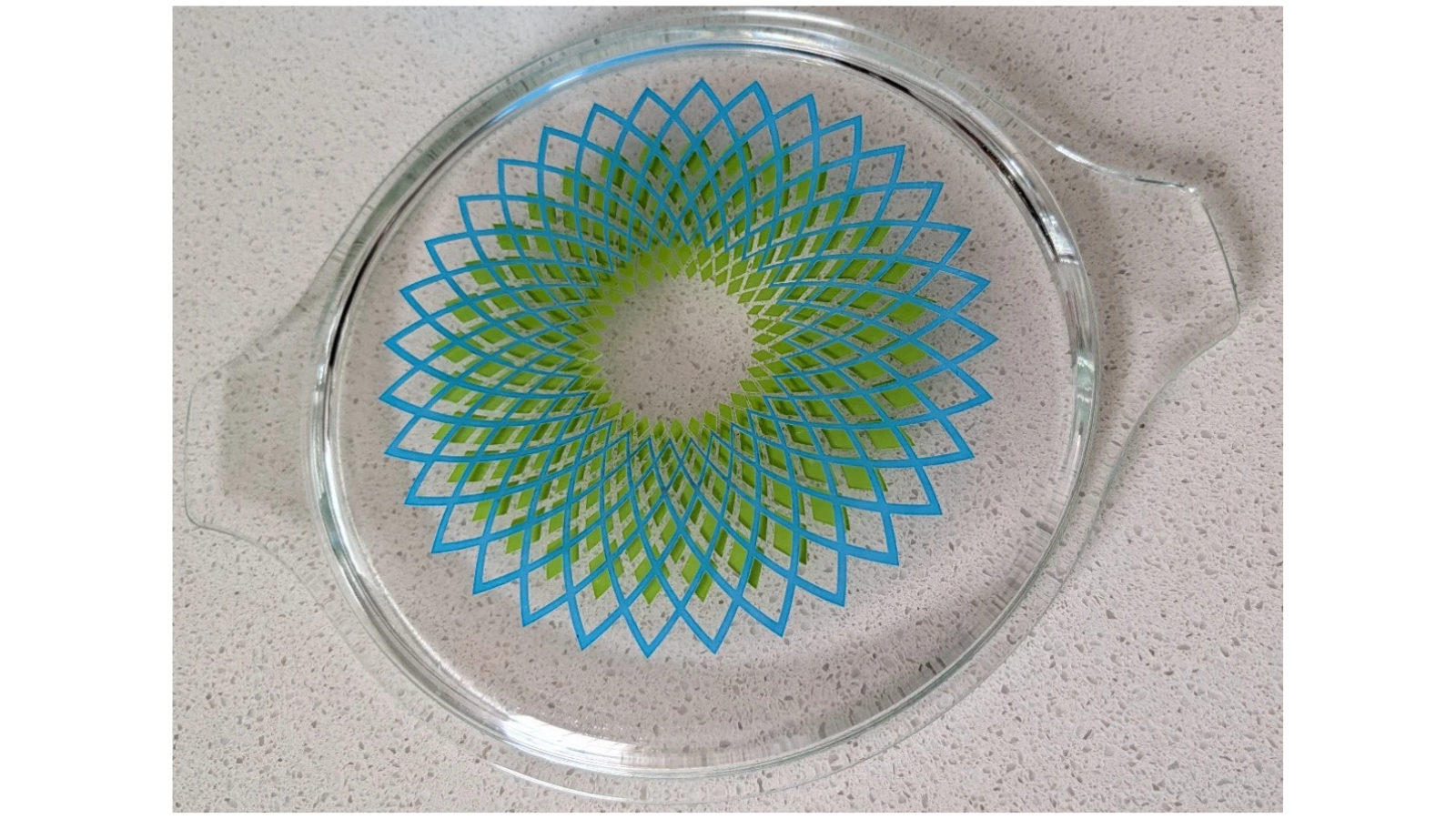
Start with the three pieces: blue 475 casserole, original two-color decorated clear lid, and correct green under-plate. If any are missing, you may still have a beautiful collectible. Just don’t mistake an incomplete set for the complete 1969 presentation.
The plate is particularly easy to overlook. In a thrift store it might be separated from the casserole, mixed in with plastic serving ware, or priced as an unrelated kitchen item. Check the underside for molded maker identification and compare its shape and color with documented examples. I wouldn’t assume a green plate is original merely because the casserole sits on it. Standard Pyrex dish shapes were reused across many promotions, so a good physical fit is not proof of a matching accessory.
Then inspect the lid for chips along its rim and scratches or fading in the printed design. Because both surfaces are decorated, it needs a careful look from several angles. On the casserole, check the handles and base for chips or cracks, as well as dull patches and scratches in the blue exterior. A bit of honest use doesn’t worry me, but a crack is an immediate reason to leave a piece behind if you want dependable bakeware.
Wash vintage decorated glass by hand using mild dish soap and a soft cloth. Avoid abrasive pads and repeated dishwasher cycles, which can damage old finishes. Clean the plastic under-plate separately and gently. If you want to use the casserole for cooking, make sure the glass is sound and follow appropriate ovenware precautions; vintage pieces with uncertain condition are better enjoyed on display.
A complete Spirograph set is an especially pleasing find because the smallest piece explains an important design change. Without its green under-plate, it looks like an attractive blue Pyrex casserole with a clever lid. With all three original pieces, you can see exactly how Corning was rethinking its gift sets as the 1960s gave way to the 1970s.
You might also like…
The CorningWare Pattern Collectors Dream Of Finding At A Thrift Store
The Blue-And-White Pyrex Pattern Collectors Dream Of Finding At A Thrift Store
The Pink Pyrex Pattern Collectors Dream of Finding at a Thrift Store

