
Affiliate disclosure: This post may contain affiliate links. Please see full disclosure. AI-assisted.
The Jewel Tea salesman who brought coffee to your door could also help you build a matching kitchen service. The pattern was Hall China’s Autumn Leaf, and the Jewel Tea home-shopping route was how it got into people’s cupboards. A family might start with a mixing bowl and end up with dishes for breakfast, a platter for Sunday dinner, and a teapot with the same warm-colored leaves and gold edging. All those pieces could come through the same door.
The grocery delivery came with a chance to add to your china
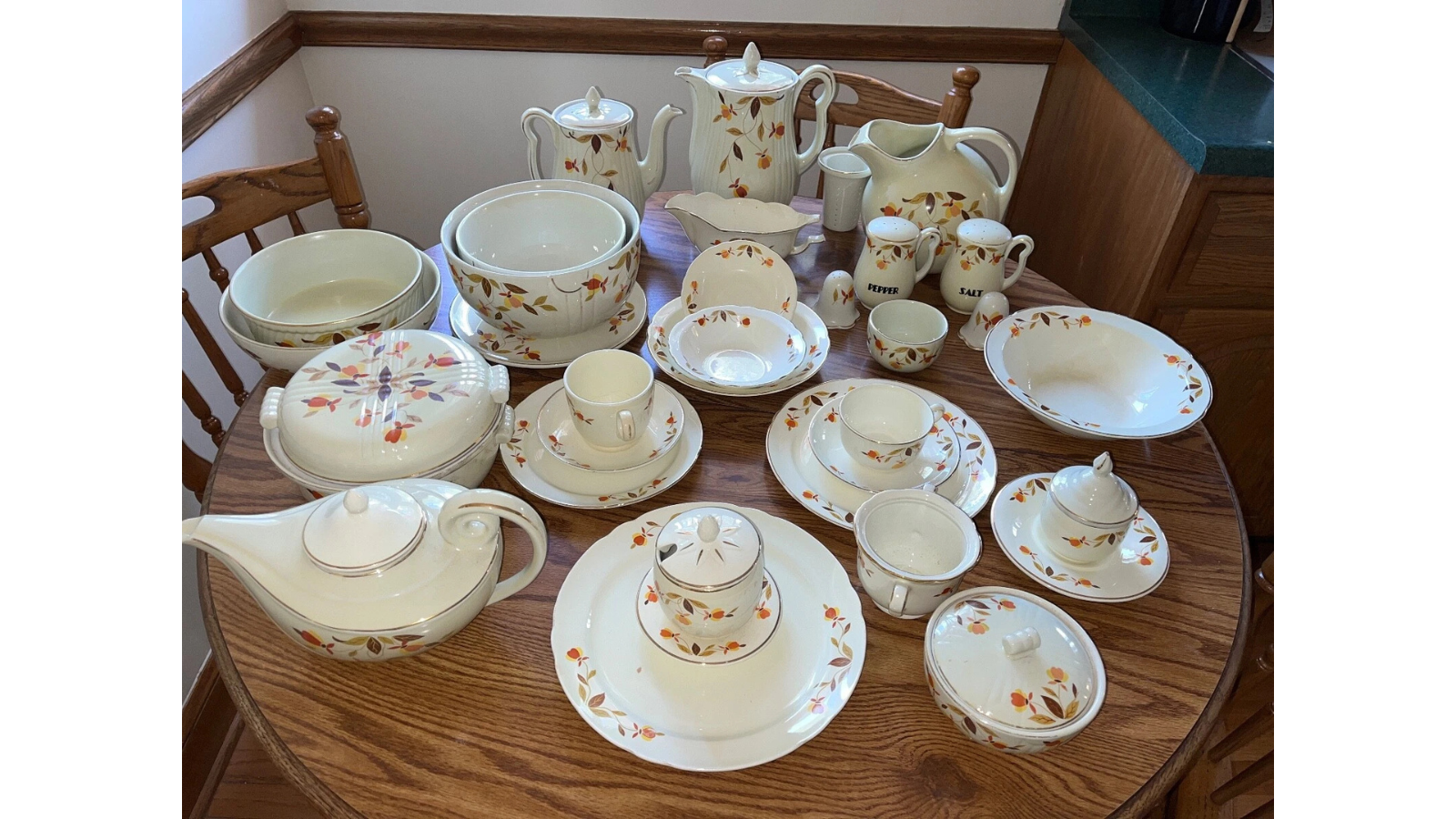
Jewel Tea started with door-to-door coffee and tea sales in Chicago in 1899. Its traveling salespeople eventually brought a much broader range of groceries and household goods, down to baking powder, cleaning supplies, and linens. A visit from the Jewel Tea man was an opportunity to stock the pantry and see what the company had on offer for the kitchen.
A premium was a reward tied to shopping with Jewel. Customers could save coupons from grocery purchases and trade them for items on offer. Hall made its first Autumn Leaf bowl for Jewel as a premium in 1933, and pieces could also be bought through the route salesperson. Some offers put a whole group of dishes within reach at once. Others gave you a reason to add one piece to the cupboard and see what turned up on a later visit.
The name can be confusing when you’re looking for it now. The dishes often turn up under “Jewel Tea,” the name customers knew from their deliveries. Hall China made the wares, and Jewel was the company that got them into people’s kitchens. The early line was also known as Hall, Jewel, or Autumnal before the Autumn Leaf name took hold in the 1940s.
One mixing bowl grew into a working kitchen service
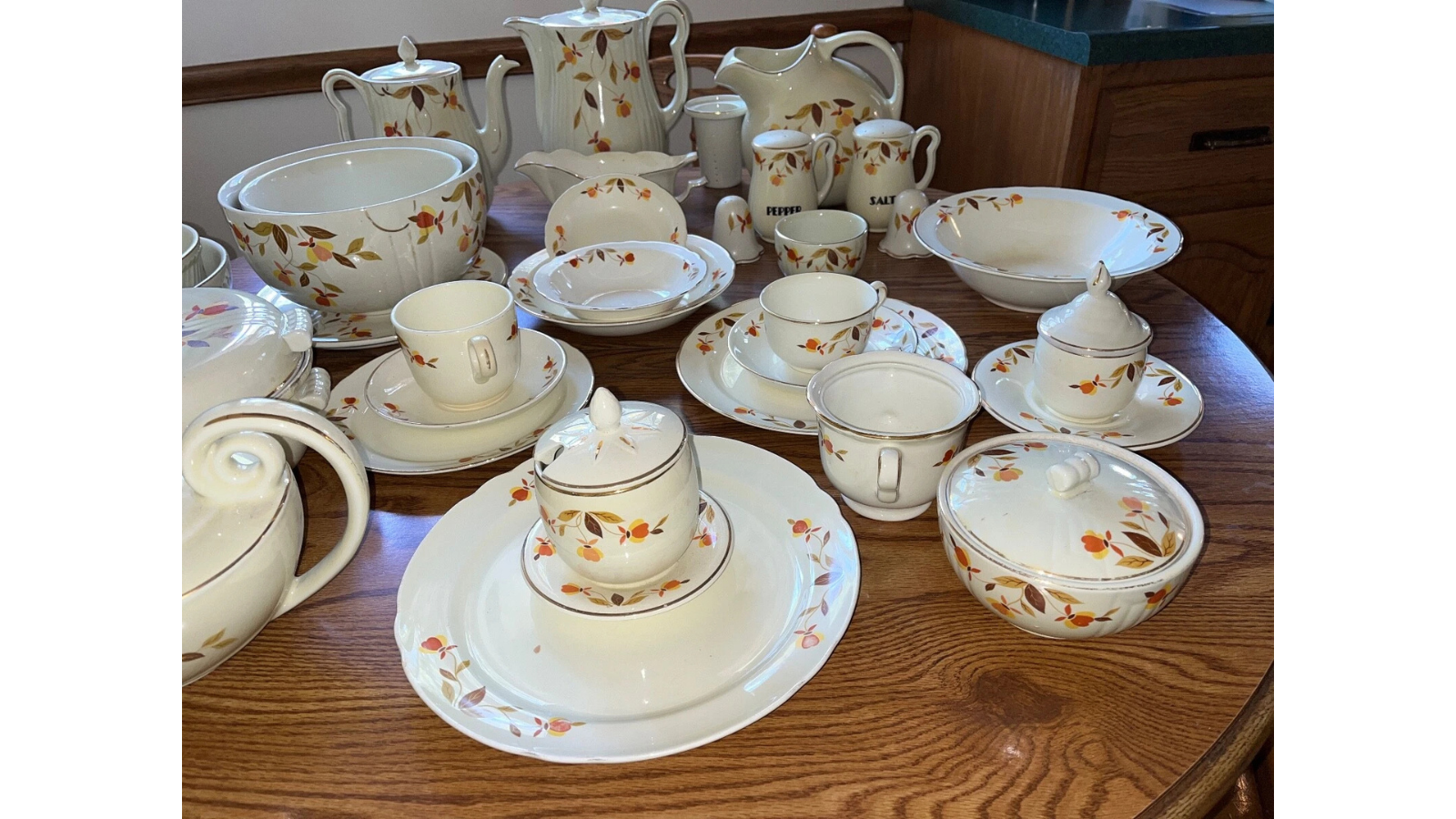
Hall started with a 9-inch mixing bowl in 1933. Two smaller bowls followed, giving shoppers a nesting set that took up the cupboard space of the largest bowl. By 1936, Hall had made a Jewel breakfast set, with plates, fruit bowls, cups, and saucers. The set sold for $4.95. An 11-inch oval platter joined the line in 1938 and sold for 65 cents, so there was something a household could add without buying another bundle of place settings.
A larger, 13-inch platter sold for a dollar. The two platter sizes show how a service could grow around the way a family actually ate. The smaller one could go with an everyday supper for a few people, and the larger one made sense if there were more chairs around the table on Sundays.
What I like about Autumn Leaf is how far it went beyond the table. Hall made fluted bakers, covered casseroles, and bean pots, along with things you’d reach for between meals, such as cookie jars and beverage jugs. Even the wide-bodied, seven-cup Aladdin teapot came in the pattern. Jewel’s own cookbook advertised Hall dinnerware and ovenware together. It makes sense that the bowl you mixed in and the dish you brought to the table could share the same decoration.
By the time Autumn Leaf appeared in a Hall advertising brochure in 1950, the same design had been available to Jewel customers for well over a decade. Someone who had picked up the early bowls could still be finding ways to extend the collection.
Jewel added pieces and dropped others as the line changed. A household could have bought a breakfast set all at once, filled in the serving pieces when the right offer came up, and still have been adding to the cupboard years later. The regular range ended in 1976, with a brief return for some items in 1978. Jewel’s home-shopping service itself was phased out in 1981.
Build the kind of collection you’d have wanted then
When I’m thrifting vintage dishware, I like choosing pieces that make sense together. For Autumn Leaf, I’d start with a job. If the breakfast pieces appeal to you, pick a plate size and look for matching cups and saucers. Autumn Leaf has several plate sizes, and a 10⅛-inch dinner plate can look a lot like a breakfast plate in a listing with no scale. If the nesting bowls are what caught your eye, jot down the rim diameters of the ones you have before going back for another. Buying a second middle bowl is easily done if you’re going by memory.
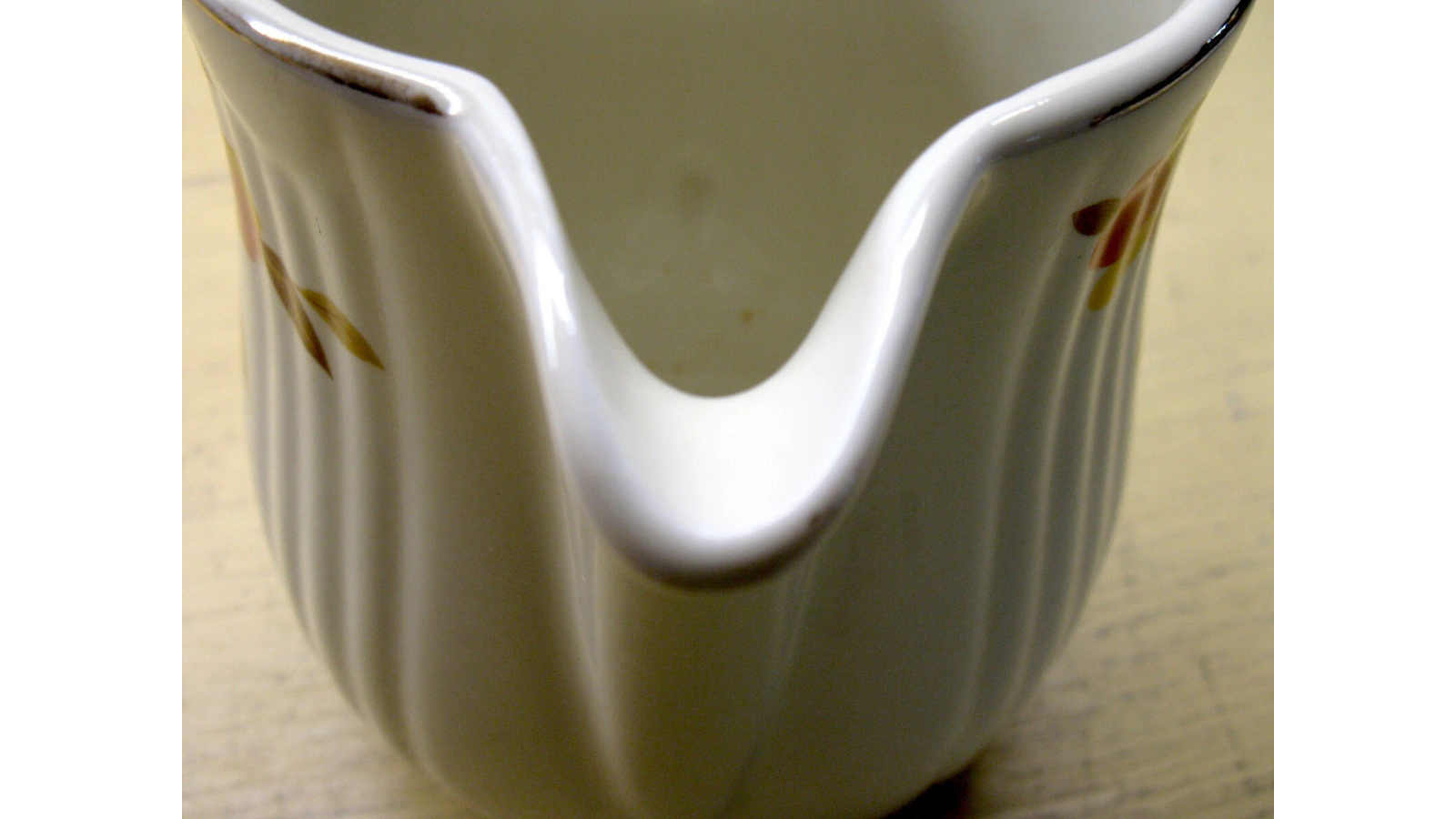
I’d look for an intact rim and a sound handle before worrying about a slightly rubbed line of gold. If it’s a covered casserole you’re after, lift the lid and check the edge that sits inside the dish. Look at how it seats, too. A matching spray of leaves can make a lid seem right even when it rocks on the rim. I’d rather wait for the lid that actually belongs with the base.
There’s a pleasure in finding a plate that fills a gap or the small bowl that finally nests inside the other two. It’s much the same way a Jewel customer could have put together an Autumn Leaf cupboard in the first place, one useful choice at a time.

