
Affiliate disclosure: This post may contain affiliate links. Please see full disclosure. AI-assisted.
Plant mâche, claytonia, spinach, and compact winter kale if you want the best chance of picking greens from an unheated cold frame in winter. Claytonia, spinach, and kale can put on a little new growth during bright, mild spells. Mâche is especially good at holding edible leaves in the cold. Hardy lettuce is worth growing for the milder stretches, and scallions are best planted early enough that you can pull them at the size you want.
A cold frame traps some daytime warmth, but it can’t give you longer days. Once daylight drops below about 10 hours, growth usually slows right down. Treat that as a planning cue and watch what the plants do. A week of gray skies or frozen soil can stall them even when the days are longer. In decades of growing food for my own kitchen, I’ve learned to aim for leaves I can already pick by the time the weather turns. A frame full of tiny seedlings may give you an early spring crop, but it’s a slim prospect for January salads. If it’s already midwinter and the frame is empty, wait until the soil is workable and the days are getting brighter, then sow a small test patch of spinach. Save the bulk of your seed for better growing conditions.
Which crops keep growing and which hold for harvest
Mâche holds well through the darkest weeks
Mâche, also called corn salad or lamb’s lettuce, forms small, cold-hardy rosettes that sit low under the lid. Sow it in fall in more than one patch if you want several meals from it. Cut whole rosettes at soil level once the leaves have thawed, and leave the rest standing. A row can stay in good picking condition even when it’s barely adding any new leaves. I’d plant more mâche than I think I’ll want, because a few rosettes disappear into a salad surprisingly quickly.
Claytonia can give you repeat pickings in mild spells
Claytonia, or miner’s lettuce, is one of the tougher winter salad greens. Snip a few stems from each clump and leave the center and plenty of foliage. In a bright, mild stretch you may see fresh growth. In the coldest, darkest weeks, pick lightly or leave it alone until you can see that it’s replacing what you take. Along with mâche, it’s what I’d give most of the room in a small frame devoted to salad.
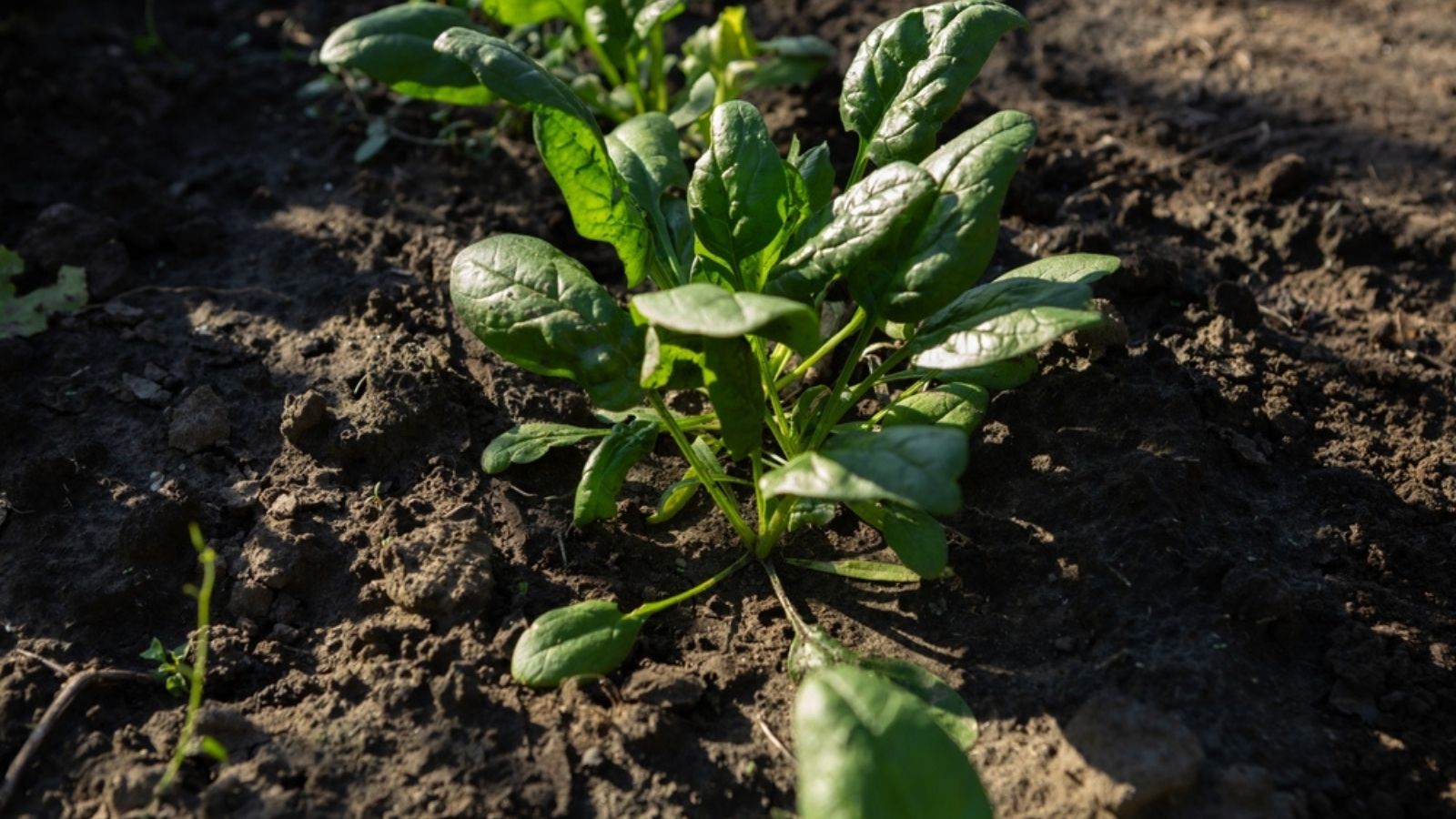
Spinach holds in deep winter and picks up as days lengthen
Give a winter-hardy spinach variety enough time in fall to make a sturdy rosette. Pick the larger outer leaves and keep the center intact. Established plants can add leaves in mild weather, but in deep winter the frame is mostly protecting growth you already have. Small, established plants left alone during that lull can give you an early flush when light and warmth return. I’d leave a row specifically for that, especially if I had a second row to pick from now.
Compact kale is dependable, but regrowth slows
Choose a low-growing variety such as ‘Dwarf Blue Curled Vates’ for a shallow frame. Pick the oldest sound outer leaves first and leave the growing tip. A winter-hardy kale plant can carry usable leaves through cold spells, with fresh growth on milder stretches. If the center has stopped unfolding, expect to be picking from what’s already there. Keep the leaves clear of the lid so they aren’t pressed against wet glazing.
Harvest hardy lettuces ahead of a prolonged freeze
A winter variety such as ‘Winter Density’ can put on leaves in a mild frame. Where hard freezes are common, I’d grow it for baby leaves and pick before the worst weather. Young leaves and loose, open heads generally tolerate freezing better than tight, mature heads. If both mâche and lettuce look ready ahead of a hard freeze, pick the lettuce first. The mâche is the better bet to leave standing.
Scallions mostly hold at the size they reached in fall
Choose a cold-hardy bunching onion such as ‘Evergreen Hardy White’ and sow it early enough to make usable stems before winter. Pull a few on a thawed day, leaving the rest for another meal. If your scallions go into winter barely thicker than grass, leave them to size up as conditions improve. A cover can keep the plants alive while growth is slow, but it won’t turn tiny seedlings into a bunch of scallions by midwinter.
What to expect in your USDA hardiness zone
Your USDA zone describes the average of your coldest temperatures each year. Use it to gauge the risk of a hard freeze, then look at winter sunshine, local forecasts, and how cold your own frame gets overnight. These are starting points for an unheated frame with established crops.
Zones 4 and colder. Plan for fall and early-winter picking, a possible midwinter gap, and a better shot at early spring greens. Start with mâche, spinach, or compact kale and expect to need a second layer on the coldest nights. If the soil stays frozen or snow blocks the lid for days, wait for a thaw to harvest. In the coldest sites, treat winter survival itself as a good result.
Zones 5 and 6. Established mâche, claytonia, spinach, and kale can give you pickings on thaw days in a well-sited frame. Expect stretches with little regrowth. Use the lettuce first if a long freeze is coming, and leave some spinach untouched for late winter. Keep an inner cover handy for exposed sites or tougher freezes.
Zones 7 and 8. In a mild, bright winter you may get repeated pickings from spinach and claytonia, some fresh kale leaves, and usable lettuce for longer. In a cloudy or exposed garden, growth may still stall for weeks. Keep enough plants in reserve that a slow patch doesn’t leave the frame bare.
Zone 9 and warmer. Where winters stay cool and mostly frost-free, you may be able to grow lettuce, spinach, and scallions in an open bed and use the frame for occasional cold nights. Winter growing conditions vary even in a mild region. If the frame gets warm most afternoons, leave the lid open on suitable days and close it when the forecast calls for protection.
Vent on sunny days and add insulation when nights turn colder

On a bright winter day, check the temperature inside the frame before deciding whether to open it. Put a thermometer at crop height out of direct sun. If the temperature climbs into the low 60s °F (around 16°C), I’d crack the lid and see how quickly it comes down. Open farther if it keeps climbing, and shut the lid in the afternoon before the temperature drops. On a raw, overcast day you may only need to open it to pick. If the glass is dripping and leaves stay wet, vent briefly when the air is mild enough for the foliage to dry.
For a hard freeze, put lightweight frost cloth on short supports inside the frame so it sits above the leaves. Seal obvious gaps around the sides and bank straw against the outside walls if the frame leaks heat there. For a particularly cold night, lay a dry blanket over a sturdy closed lid and secure it against the wind. Remove the blanket in the morning to let daylight in, and brush snow off the lid so the plants get what light there is.
If the glazing has a film of algae or mud, clean the cold frame lid and check the hinges before the darkest stretch. If one frame won’t hold enough for your household, a low hoop tunnel over a second bed gives you room for another sowing. I’d use that extra space to stagger harvests, keeping one planting for present picking and giving the other time to fill out for late winter.
You might also like…
12 plants you should prune in winter (and 6 you shouldn’t)
17 tiny winter home maintenance projects we neglect until it’s too late