
Affiliate disclosure: This post may contain affiliate links. Please see full disclosure.

Broccoli turning purple is more common than you might think. Like many veggies, a broccoli plant can turn purple because of insufficient sunlight, nutrient deficiencies, temperature changes, and more. Or, maybe you chose a purple broccoli variety that naturally turns purple as it matures.
I love broccoli – it’s one of my favorite vegetables to eat and grow. And purple sprouting broccoli is the absolute best. So every year I deliberately grow at least some purple broccoli, because it’s so tender and tasty and absolutely packed with amazing nutritional components.
Let’s take a look at why broccoli leaves turn purple and how you can prevent it happening, fix it if it already is, and find out if purple leaves on broccoli leaves are safe to eat.

Let’s Talk About Anthocyanin: The Thing That Makes Broccoli Plants Turn Purple
Anthocyanins are flavonoid pigments found in purple, red, or black fruits and vegetables. These pigments are also responsible for the purple discoloration you find on normal green broccoli when you’ve got a problem like phosphorus deficiency, lack of sunlight, or broccoli that’s struggling with cold temperatures.
Anthocyanins are highly prized because of their healthful properties. These compounds have all kinds of potential health benefits, ranging from anti-microbial and anti-cancer properties to neuroprotective actions.
The amount of anthocyanin present in broccoli varies depending on the variety, but it is typically found in small amounts. When exposed to sunlight or cold temperatures, however, the amount of anthocyanin increases significantly, resulting in a purplish hue on the leaves.
Not only does this pigment provide health benefits, but it also adds an interesting visual element to dishes featuring broccoli. Whether you’re roasting it with other vegetables or adding it raw to salads, you can be sure that your dish will look as good as it tastes.
Reasons for Broccoli Leaves Turning Purple
Your broccoli plant can start sporting purple leaves for a whole number of reasons. But, as a general rule, it’s usually an environmental factor of some kind, whether it’s light or temperature, soil condition, or fertilization issues.
1. Lack of Sunlight:
When broccoli doesn’t get enough sunlight, its leaves may start to develop a purplish hue. Plant your broccoli in an area that gets at least 6 to 8 hours of direct sunlight per day. It might also be worth investing in a grow light if sufficient natural sunlight isn’t available.
Broccoli is a vegetable that needs plenty of sunlight to thrive and grow. Generally, broccoli needs at least 6 hours of direct sunlight each day during its growth cycle to produce full, healthy heads of broccoli. If it doesn’t get enough sun, the plant produces smaller, less flavorsome heads and may be at increased risk of disease and pest infestation.
2. Temperature Drop:
It’s true that broccoli is a cool-weather crop, but it doesn’t like sudden temperature drops or perpetually cold soil.
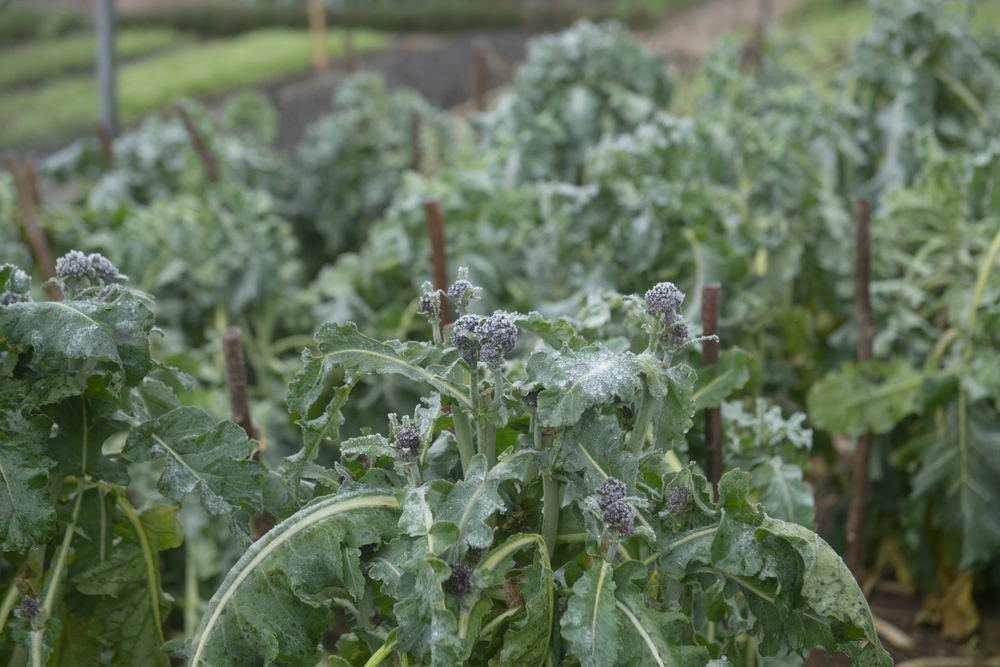
Soil that’s too cold inhibits nutrient uptake which causes the plant to release more anthocyanin, resulting in purple leaves. Now, there’s nothing wrong with anthocyanin. In fact, it’s highly desirable, hence there’s a growing interest in purple broccoli varieties. Anthocyanins are responsible for red, blue, and purple coloring in fruits and veggies and have remarkable, healthful antioxidant properties.
But still, if you’re trying to grow a green broccoli plant and it turns purple, you know you’ve got a problem. Planting broccoli in a sunny, warmish location where the soil doesn’t get too cold is a good plan. You can also apply a deep layer of mulch (close to but not touching the broccoli plants) to keep the soil warmer year-round.
You can also apply row covers or use horticultural fleece during cold spells.
RELATED: How to protect your plants from frost.
3. Soil Nutrient Deficiency
Soil nutrient deficiency is a common problem for gardeners and farmers alike. When the soil lacks essential nutrients, like phosphorus, the plants may start to show signs of distress. Leaves may become discolored or start to turn purple, and growth may be stunted. In extreme cases, the plant may die if the deficiency is not addressed.
Fortunately, there are ways to identify and fix nutrient deficiencies in soil. Symptoms can vary depending on which nutrient is lacking, so it’s important to pay attention to the specific signs that your plants are exhibiting. For example, nitrogen deficiency can cause yellowing of leaves while calcium deficiency can lead to blossom-end rot in tomatoes. Once you’ve identified which nutrient is missing from your soil, you can take steps to replenish it with organic matter or fertilizer.
In the leaves on your broccoli turns purple, it’s likely that you’re dealing with a phosphorous or boron deficiency. If you have a boron deficiency, your plants will also lack phosphorus, even if the soil has plenty of phosphorus in it. But, a boron deficiency inhibits phosphorous uptake. And, interestingly, so does the presence of too much nitrogen and potassium, so just chucking on a balanced general fertilizer won’t solve the problem.
If you’re worried about soil quality and nutrient availability, get yourself a soil test kit to check the soil composition and nutrient level. Then, when you’ve identified what’s lacking or what you have too much of in your soil, you can take remedial action to correct it. Remember, healthy soil is the foundation of a healthy garden, whatever you’re growing.
Like other plants, a broccoli plant needs plenty of available phosphorus to remain healthy and retain its normal green color. A phosphorus deficiency results in sickly, unhealthy plants and can lead to stunted growth and reduced yield.
4. Over-Fertilizing
As noted above, too much nitrogen and potassium can stop your plants taking up phosphorus, so it’s important that you fertilize with precision and care. The current makeup of your soil and the growth stage of your broccoli determine what fertilizers you should use and when.
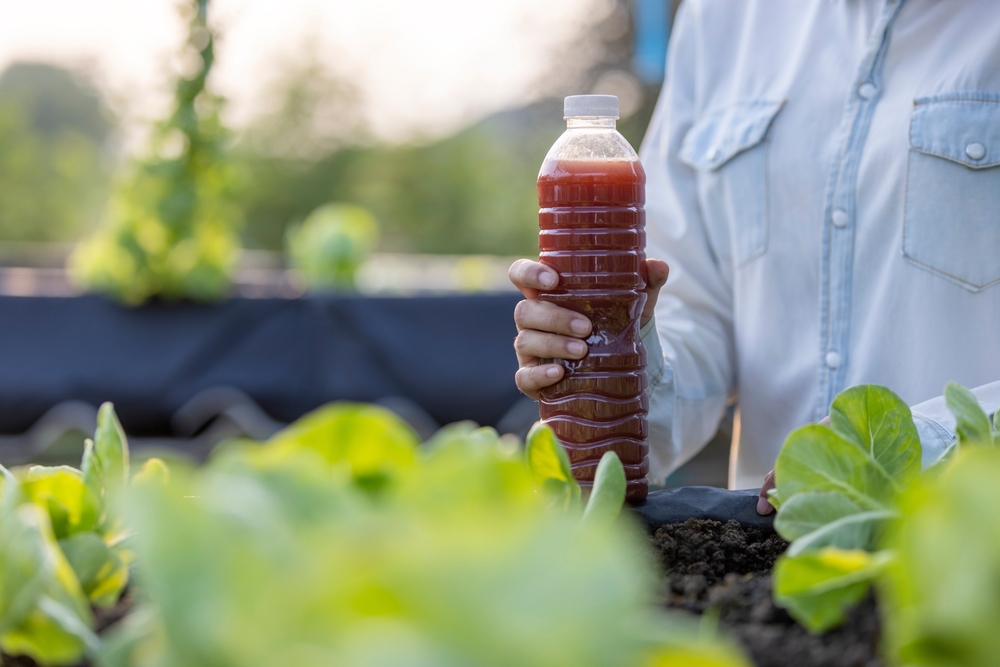
And, obviously, we always recommend natural, organic fertilizers only. Why bother nurturing a broccoli plant from seed to maturity if you’re going to dowse it in chemicals? Might as well just go shopping, instead.
Check out our 23 natural fertilizers to make at home for some budget-friendly ideas.
For example, in ideal conditions, you can apply a high-nitrogen fertilizer to young plants around a month after planting out to encourage strong root and foliage growth, but you don’t want to continue with all that nitrogen as your broccoli grows, because you want the plant to produce a lovely, tasty full-size head of broccoli. And, if your soil is healthy and well-maintained, you really shouldn’t need to add any more fertilizer. However, a neat little trick is to add another feed of high-nitrogen fertilizer after you harvest the main broccoli head. This encourages lovely, tasty side shoots to form, giving you an extra harvest from your broccoli plants.
5 . You Chose a Purple Broccoli Variety
Yep, purple broccoli is a great choice. It’s loaded with anthocyanins and it’s beautiful. There are quite a few varieties of purple broccoli out there, but they’re mostly sprouting broccoli types, so they produce lots of long, delicious sprouts rather than a large, single head. That’s fine by me. I adore purple sprouting broccoli – there’s just something extra special about it.

My favorite varieties are Red Admiral, Rudoolph, Summer Purple, and Santee. With this particular combination, you’ll be harvesting from June right through to March, even right through the “hungry season”.
Just bear in mind that even though the heads and sprouts are purple, the leaves of a healthy plant will still be green.
Preventing Broccoli Leaves from Turning Purple
There are a few things you can do to stop this cool season crop from developing purple leaves to begin with. Your best option is to make sure that you work to build optimum soil health, feeding your soil with lots of organic matter, rotating your crops, and working on building biodiversity above and below the ground.

Take a look at the other things you can do to stop your broccoli plant leaves turning purple.
1. Provide the Right Growing Conditions
Remember, broccoli needs 6 to 8 hours of sunlight per day throughout the growing season, even during cooler weather.
Make sure you grow them in a sheltered spot away from strong winds, and apply a deep layer of mulch to keep the soil moist and warm.
Choose a location with rich, well-draining soil where your broccoli has the best chance of thriving.
RELATED: Broccoli life cycle: The 8 stages of broccoli growth
2. Monitor Temperature
It’s important to monitor temperature fluctuations in your area when growing broccoli, as extreme temperatures can put your plants at risk. If the temperature drops below 40 degrees Fahrenheit (4°C) and stays there for more than a few days, it’s a good idea to cover your plants with a floating row cover or horticultural fleece.
On hotter days, you may need to provide additional shade for your broccoli. They love sunshine, but too much heat can cause significant damage.
3. Test Soil Nutrients
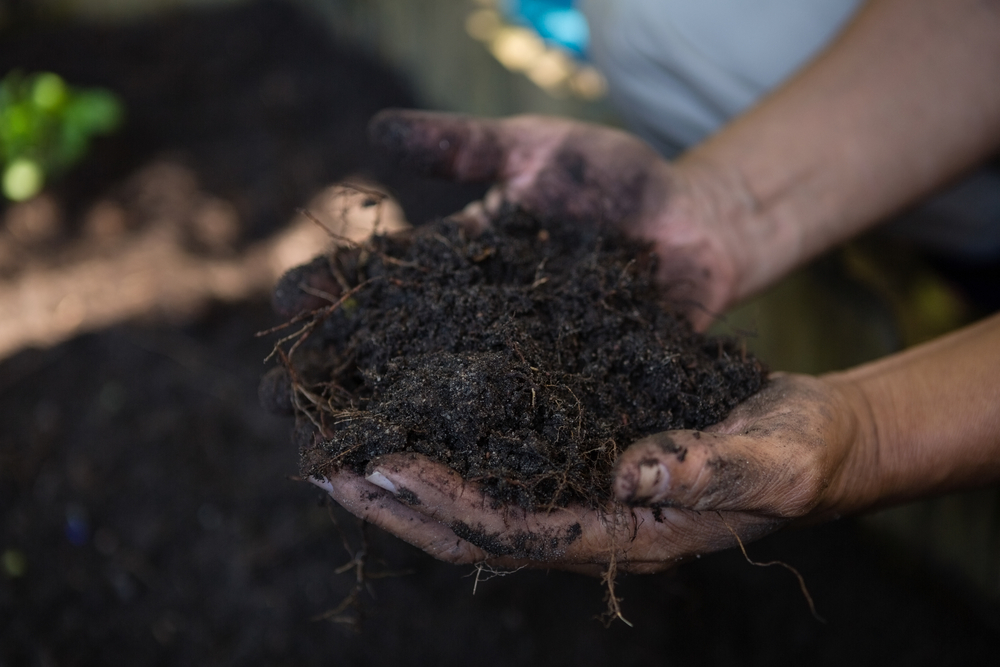
Testing your soil for essential nutrients is an important part of growing broccoli and any other plant. Ideally, do a comprehensive test that checks for the basics – phosphorous, nitrogen, and potassium, as well as a more complete nutrient and mineral analysis that profiles things like calcium, boron, iron, magnesium, and so on.
Once you know whether you have any deficiencies, you can add the appropriate soil amendments to correct the issue.
4. Avoid Over-Fertilizing
Over-fertilizing your broccoli plants can lead to nutrient imbalance, which can stunt growth, cause excessive foliage growth, and reduce yields.
Instead of blindly fertilizing, make sure you only give the appropriate fertilizer at the right growth stage. And, work on soil health. If your soil is rich and healthy, you won’t need additional fertilizers, other than perhaps a top dressing of compost or well-rotted manure.
FAQs
Why are my broccoli leaves turning purple?
The most common causes of broccoli leaves turning purple are a phosphorus deficiency, lack of sunlight, temperature drop, soil nutrient deficiency, over-fertilizing and anthocyanin pigment.
How can I stop broccoli leaves turning purple?
You can prevent your broccoli leaves from turning purple by providing the right growing conditions, monitoring temperature, testing soil nutrients, and avoiding over-fertilizing.
Is it safe to eat purple broccoli leaves?
Yes, it is perfectly safe to eat purple broccoli and purple broccoli leaves. The purple color is caused by anthocyanin, a harmless, healthful, water-soluble pigment that is exacerbated by sun exposure.
Does purple broccoli taste different than green?
No, purple broccoli does not taste different than regular broccoli. Although I think the flavor is perhaps a little more earthy and intense. The color change is due to a pigment in the plant called anthocyanin which is safe and healthy to consume and doesn’t affect the flavor of the broccoli.