
Affiliate disclosure: This post may contain affiliate links. Please see full disclosure.

The broccoli life cycle is fascinating. And, of course, broccoli is tasty and highly nutritious. I grow regular broccoli and sprouting broccoli every year, and I can’t get enough of it. And it’s not just broccoli growth stages that are amazing – did you know know that broccoli is a man-made plant? It’s a very early example of plant husbandry, selective breeding, and cultivar selection.
But I digress. Let’s take a look at the life cycle of one of my favorite vegetables.

The Botanical Background of Broccoli
Broccoli, with its familiar green florets and sturdy stalk, is a staple in kitchens around the world. But have you ever wondered about its origins and botanical background? Let’s take a closer look.
Scientifically known as Brassica oleracea (Italica group), broccoli is a member of the Brassicaceae family, also known as the cabbage family. This diverse family includes many other well-known vegetables such as cauliflower, cabbage, Brussels sprouts, and kohlrabi. These plants are all closely related, and if you’ve ever grown them in your garden, you might have noticed similarities in their growth habits and appearances.
Broccoli’s story begins in Italy, where it was cultivated from wild cabbage thousands of years ago. The name “broccoli” comes from the Italian word “broccolo”, which means “cabbage sprout”. It was highly valued in the Roman Empire for its taste and health benefits, and it has been a part of the Italian diet ever since.
From Italy, broccoli spread to the rest of Europe and eventually to the Americas, where it has become a popular vegetable in many cuisines. Despite its European origins, the largest producer of broccoli today is China, followed by India.
One of the reasons for broccoli’s global popularity is its nutritional content. It’s packed with vitamins, minerals, and fiber, making it a healthy addition to any meal. It’s particularly rich in vitamin C, vitamin K, and folate, and it also contains compounds called glucosinolates, which have been studied for their potential health benefits.
And, I’ll say it again: It tastes great if you don’t boil it to death!
The Life Cycle Stages of Broccoli
Broccoli is an annual plant that completes its entire life cycle in one year. There are seven distinct stages in the broccoli life cycle, beginning with germination and ending with senescence (dying back).
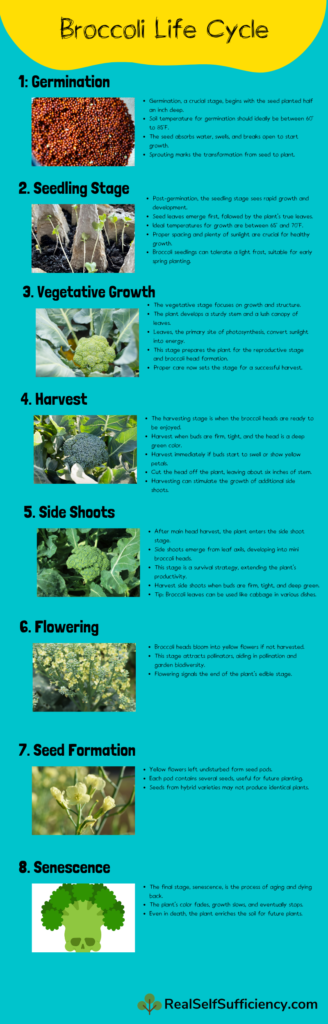
1. Seed Germination

Every great journey starts with a single step, and in the case of broccoli, it starts with a tiny seed. Yes, you can buy starts or plug plants, but I prefer to grow broccoli from seeds. In fact, I grow pretty much everything from seed because it’s more satisfying and I know that everything I use is natural and organic.
Anyway, back to broccoli’s germination stage. It’s the most exciting of the stages of broccoli growth for me. I love watching the tiny seeds I plant and nurture emerge!
This seed, no larger than a grain of rice, holds the potential to grow into a lush, green plant that produces nutritious broccoli heads.
The process of turning this potential into reality begins with germination – the process by which a plant grows from a seed. It’s the first stage in the broccoli life cycle, and it requires the right conditions for success.
First, you need to plant the seed about a half-inch deep in high-quality, nutrient-rich soil. This depth provides the seed with enough soil to keep it moist and dark, but it’s not so deep that the emerging seedling will struggle to reach the surface.
Next, broccoli seeds need a soil temperature of around 40°F (4°C) to germinate. However, they will germinate faster and more reliably in warmer soil, with an ideal temperature range of 60° to 85°F (15° to 29°C). This is why many gardeners like me choose to start their broccoli seeds indoors in a seed tray where temperatures are more easily controlled.
You want to keep the soil moist but not soaking wet. With the right depth and temperature, the seed will absorb water from the soil, causing it to swell and break open. The embryonic plant inside the seed will then begin to grow, sending out a root to anchor itself in the soil and a shoot to reach towards the light. This is the moment of sprouting, the exciting moment when the seed’s potential becomes a reality.
2. Seedling Stage

After the seed germinates, it enters the seedling stage. This is a time of rapid growth and development, as the young plant begins to take shape. The sprouted seed, now anchored in the soil by its root, pushes its shoot upwards towards the light. This shoot will soon develop into the stem of the plant, while the root will grow deeper and wider, providing the plant with water and nutrients from the soil.
The first sign of this growth above the soil is the emergence of the seed leaves, or cotyledons. These are not the true leaves of the plant, but they play a crucial role in photosynthesis, the process by which plants convert sunlight into energy. Broccoli cotyledons are cute little heart-shaped leaflets and I always get excited when I see them emerge, as I love watching Mother Nature in action. They are followed by the development of the plant’s first set of true leaves, which are more complex and characteristic of the species.
At this stage, broccoli plants prefer temperatures between 65° and 70°F (18° and 21°C). These temperatures provide the right balance for growth, not too hot to cause stress, but warm enough to promote development. It’s also important to note that broccoli seedlings can tolerate a light frost, which makes them suitable for early spring planting in many climates.
Proper spacing is another crucial factor for healthy growth during the seedling stage. Broccoli plants need room to grow and spread out, and overcrowding can lead to competition for resources and increased susceptibility to diseases. If you’ve sown them directly outside, now is the time to thin them out. Or, once they’ve got three true leaves and you’ve planted them in trays indoors, it’s time to plant them outside. A general rule of thumb is to space broccoli plants about 18 to 24 inches apart.
Direct sunlight is also essential for broccoli seedlings. They need plenty of it for photosynthesis, ideally six to eight hours a day. If you’re starting your seedlings indoors, be sure to place them in a sunny window or under grow lights to provide them with the light they need.
3. Vegetative Growth

Following the seedling stage, the broccoli plant enters the vegetative stage. This is a period of intense growth and development, where the plant focuses on building its structure and increasing its size. It’s during this stage that the broccoli plant truly starts to take shape and resemble the mature plant we’re familiar with.
The first noticeable change is the development of a strong, sturdy stem. This stem serves as the backbone of the plant, developing into the central stalk, supporting its weight, and providing a pathway for water and nutrients to travel from the roots to the rest of the plant. As the stem grows taller, it also helps to elevate the plant’s leaves, positioning them to receive maximum sunlight for photosynthesis.
The vegetative stage is also when this cool season vegetable develops its lush canopy of adult leaves. These leaves are the primary site of photosynthesis, so it’s important to keep them healthy, providing regular watering for the well-drained soil. Through this process, the leaves convert sunlight, carbon dioxide, and water into glucose, which is used as energy for growth, and oxygen, which is released into the atmosphere.
The leaves of broccoli plants are large and broad, with a blue-green color and a waxy texture. They form a rosette around the stem, creating a dense canopy that can shade the soil and help to conserve moisture.
While the vegetative stage is all about growth, it’s also a time of preparation. The plant is not just growing for the sake of growing—it’s growing with a purpose. That purpose is to reach a size and maturity level that allows it to enter the next stage of its life cycle: the reproductive stage. This is when the plant will produce the familiar broccoli head, which is actually a flower bud.
To reach this stage, the broccoli plant needs to accumulate enough resources and energy during the vegetative stage. This is why proper care during this stage is so important. With enough sunlight, water, and nutrients, the broccoli plant can grow strong and healthy, setting the stage for a successful harvest.
4. Harvesting Stage

The harvesting stage is a highly anticipated time in the life cycle of broccoli. This is when the fruits of your labor (or in this case, vegetables) are finally ready to be enjoyed. But knowing exactly when to harvest your broccoli can be a bit tricky.
The key is to look at the buds of the broccoli head. These buds should be firm and tight, and the head itself should be a deep green color. If the buds start to swell or show yellow petals, it means they’re beginning to flower, and you should harvest immediately. The goal is to harvest the broccoli head before the buds open, as the quality and taste can decline after flowering begins.
To harvest, simply cut the head off the plant with a sharp knife, leaving about six inches of stem. This not only makes it easier to handle and cook the broccoli, but it also can help stimulate the growth of side shoots.
5. Side Shoot Stage

Once the central head of the broccoli has been harvested, the plant enters the side shoot stage. This is a unique characteristic of broccoli and some other members of the Brassica family. Instead of ending its productive life after you harvest the central head, the broccoli plant continues to produce, extending its bounty and providing gardeners with a prolonged harvest period.
The side shoots emerge from the points where the leaves join the main stem, known as the leaf axils. Initially, they may be small, but given time and the right conditions, these side shoots will develop into mini broccoli heads. They may not be as large as the main head, but they are just as tasty and nutrient-rich.
The development of side shoots, or secondary heads, is a survival strategy for the plant. In nature, the main head would flower and go to seed if left unharvested. By producing side shoots after the main head is harvested, the plant is trying to fulfill its biological purpose, which is to reproduce and ensure the survival of the next generation.
When it comes to harvesting these side shoots, the same rules apply as for the main head. Wait until the buds of the side shoots are firm and tight, and the head is a deep green color. If the buds start to swell or show yellow petals, it’s time to harvest. Simply cut the side shoot off the plant with a sharp knife, leaving a small portion of stem.
The side shoot stage can continue for many weeks, especially in cool, favorable conditions. This means you can enjoy fresh, homegrown heads of broccoli over an extended period, making the most of your plant’s productivity. So, after the main head is harvested, keep an eye on your broccoli plants for the emergence of side shoots, and get ready for a second round of delicious harvest.
TIP
You can also eat the leaves. I use them just like cabbage in stir-fries, as part of a roast dinner, and anywhere else I’d normally use cabbage or kale.
6. Flowering Stage

The flowering stage of broccoli is a sight to behold. If you’ve ever left a broccoli plant unharvested, you may have witnessed this transformation. The familiar broccoli head, which is actually a cluster of flower buds, will eventually bloom into a vibrant display of yellow broccoli flowers if not harvested in time.
This stage is a testament to the cycle of life and the plant’s instinct for survival. After spending energy on producing the broccoli head, the plant shifts its focus toward reproduction. The yellow flowers that emerge are not just beautiful to look at, but they also serve a critical function. Each flower has the potential to produce a seed, ensuring the continuation of the plant’s lineage.
The flowering stage also attracts a variety of pollinators to the garden. Bees, butterflies, and other beneficial insects are drawn to the bright yellow flowers for their nectar. This not only aids in the plant’s pollination but also contributes to the overall health and biodiversity of your garden.
However, it’s important to note that once the broccoli plant enters the flowering stage, the quality of the broccoli heads declines. The heads become tough, and the flavor turns bitter. So, while the flowering stage is fascinating and beautiful, it signals the end of the plant’s edible stage.
In a way, the flowering stage of broccoli is a reminder of the dual purpose of many plants in our gardens. They provide us with nutritious food, but they also play a role in the larger ecosystem, providing food for pollinators and contributing to biodiversity. So, whether you’re growing broccoli for your dinner plate or letting it flower for the bees, you’re participating in the wonderful cycle of life.
RELATED: Why are my broccoli leaves turning purple
7. Seed Formation

The final stage in the life cycle of a broccoli plant is seed formation. If the yellow flowers that bloom during the flowering stage are left undisturbed, they will eventually form seed pods. This is the plant’s way of ensuring its own survival, by producing the next generation of broccoli plants.
Each flower on the broccoli plant has the potential to form a seed pod. These pods, which look a bit like tiny green beans, will start to form shortly after the flowers have been pollinated. Over time, the pods will grow and mature, turning from green to a straw or brown color.
Inside each of these pods are the broccoli seeds. Each pod can contain several seeds, so even a single plant can produce a large number of seeds. These seeds are small, round, and dark brown or black in color.
If you’re interested in saving seeds, you’ll need to let the pods dry on the plant. Once the pods are dry and brittle, you can harvest them. Be careful when opening the pods, as the seeds can easily scatter. Once harvested, store the seeds in a cool, dry place until you’re ready to plant them. Just remember that if you or your neighbors are growing other brassicas, they may cross-pollinate and the seeds you then harvest and grow may not be true to type and may not produce any edible heads at all. Although you can still eat the leaves.
8. Senescence

The final stage in the life cycle of a broccoli plant is known as senescence, or the process of aging and dying back. This stage comes after this cool weather crop has flowered and produced seeds, effectively completing its biological mission of reproduction.
During senescence, the broccoli plant’s vital processes start to slow down. The vibrant green color of the leaves begins to fade, turning yellow and then brown. This change in color is due to the breakdown of chlorophyll, the pigment that gives plants their green color and plays a crucial role in photosynthesis.
As the plant’s energy reserves are depleted, the stems become weak and begin to droop. The plant’s growth slows, and eventually stops. Over time, the plant will wither and die, marking the end of its life cycle.
But even in death, the broccoli plant contributes to the cycle of life. As the plant decays, it returns nutrients to the soil, enriching it for the next generation of plants. If the seeds produced by the plant are viable, they may germinate and grow when conditions are right, starting the life cycle anew.
Senescence, while it may seem like a sad end, is a natural and essential part of a plant’s life cycle. It’s a reminder of the transient nature of life and the constant cycle of growth, reproduction, death, and rebirth that characterizes all living organisms. As gardeners, we get to witness and participate in this cycle, gaining a deeper appreciation for the wonders of nature.
RELATED: Life cycle of a potato plant
Tips for Successful Broccoli Cultivation
From soil and fertilizer requirements to watering and light needs, these tips will help you grow a bountiful harvest.
Soil and Fertilizer Requirements
Broccoli thrives in well-draining, fertile soil. Enrich your soil with compost or manure before planting, and maintain a slightly acidic pH between 6.0 and 7.0. Take a look at my favorite homemade natural fertilizers to explore your options. A low-nitrogen fertilizer can be applied three weeks after transplanting seedlings into the garden.
Unfavorable conditions can cause your broccoli to turn purple, develop disease, and show other signs of ill health. To get a healthy head of broccoli, it’s also a good idea to add plenty of organic matter before you plant or as a top dressing throughout the growing season.
It can survive a light spring frost and can tolerate cool weather well. But unless you go with bolt-hardy broccoli varieties, there’s a risk of them bolting in late summer heat if they don’t get enough water and shade.
Watering and Light Requirements
Consistent soil moisture is key for broccoli. Aim for at least 1 to 1 1/2 inches of water per week, and avoid getting the developing broccoli heads wet. As for light, broccoli needs full sun, which means six to eight hours of sunlight per day.
Pest and Disease Management
Common pests like cabbage loopers, cabbage worms, and aphids can be a nuisance. Use organic methods like handpicking, insecticidal soap, or natural predators to control these pests. Diseases like downy mildew and clubroot can be prevented by good gardening practices, such as crop rotation and proper sanitation.
FAQs
Should I start broccoli indoors or outdoors?
Broccoli can be started both indoors and outdoors. Starting seeds indoors allows you to control the environment and gives the plants a head start. This is particularly useful in regions with short growing seasons. However, broccoli can also be directly sown outdoors when soil temperatures are consistently above 40°F (4°C).
When should you transplant broccoli seedlings?
Broccoli seedlings can be transplanted outdoors once they are 4 to 6 weeks old and have developed at least two sets of true leaves. Be sure to harden off the seedlings before transplanting to reduce shock.
Do I need to fertilize broccoli?
Yes, broccoli benefits from regular fertilization. A balanced vegetable garden fertilizer can be applied at planting time and again when the plants are halfway grown. Avoid high-nitrogen fertilizers, which can promote leafy growth at the expense of the broccoli heads.
How far apart should I plant broccoli?
Proper spacing is important for broccoli growth. Plants should be spaced 18 to 24 inches apart in rows that are 36 inches apart. This allows for good air circulation and room for the plants to grow.
How do I save broccoli seeds?
If you want to save your own seeds, allow some of your broccoli plants to flower and form seed pods. Once the pods dry out, you can harvest them and extract the seeds. Be aware that hybrid varieties may not produce true-to-type plants from saved seeds.
How do I know when broccoli is ready to harvest?
Broccoli is ready to harvest when the buds of the head are firm and tight, just before the buds start to yellow. If you see yellow flowers, harvest immediately, as the quality will decrease rapidly after the buds open.
How long does broccoli take to grow?
From seed to harvest, broccoli typically takes 100 to 150 days to grow, depending on the variety and growing conditions. Transplants can reduce this time by about a month.