
Affiliate disclosure: This post may contain affiliate links. Please see full disclosure.
A pale-blue Pyrex casserole with a white, delicately patterned lid is worth a closer look, especially if there’s a wicker basket tucked underneath it. The combination belongs to the Blue Doily promotional gift set, made in 1968–69, and that original serving basket is an important part of the find. Plenty of vintage casserole dishes survive without all the accessories they were sold with. Finding the right dish, lid, and basket together is much more interesting.
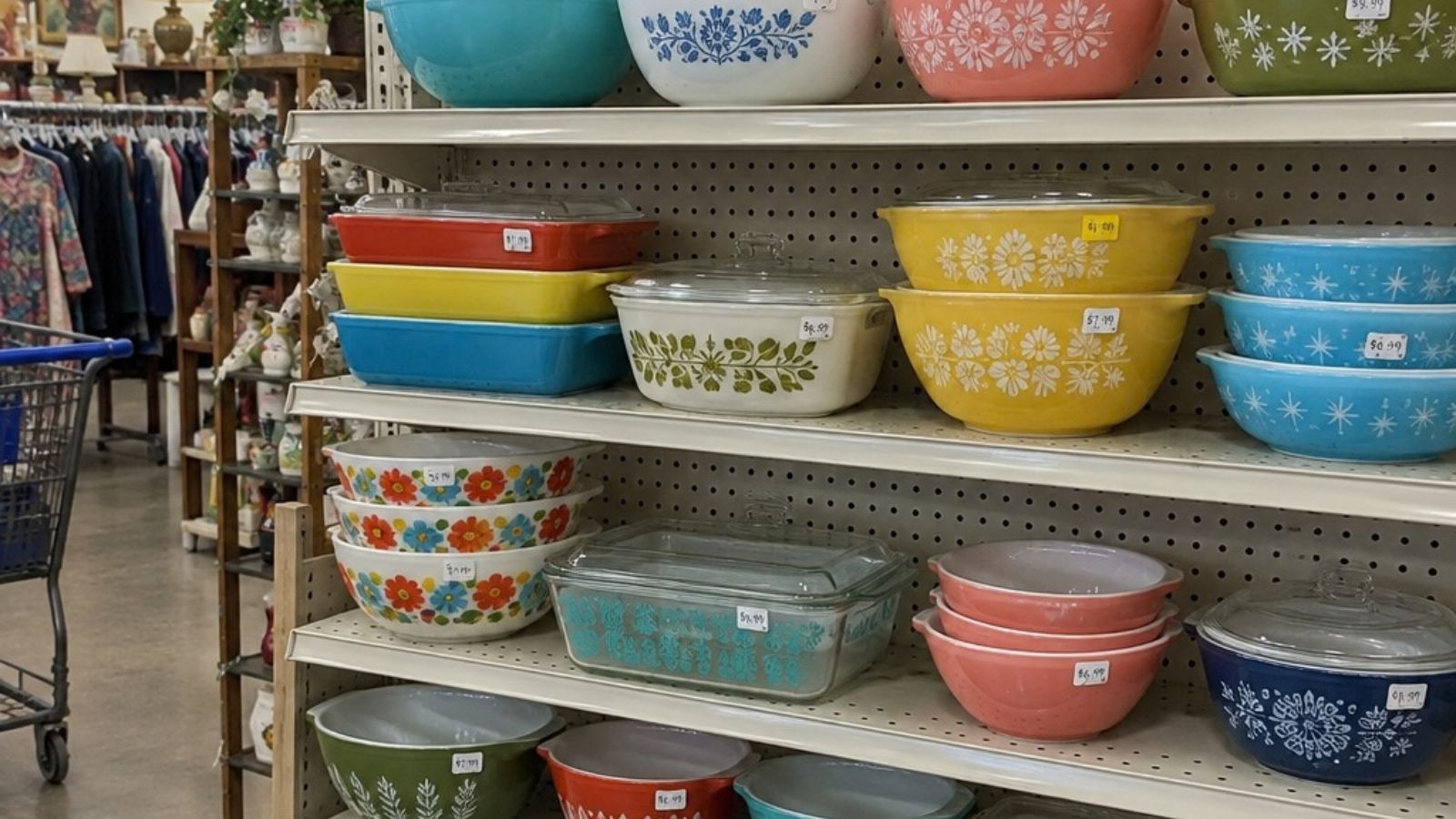
I’ve spent years thrifting and collecting, and I always look beyond the glass itself when I come across an old serving set. A forgotten basket on the bottom shelf, or a decorated lid separated from its casserole, can make the difference between an attractive odd piece and something you can identify properly.
Blue Doily was designed as a ready-made gift
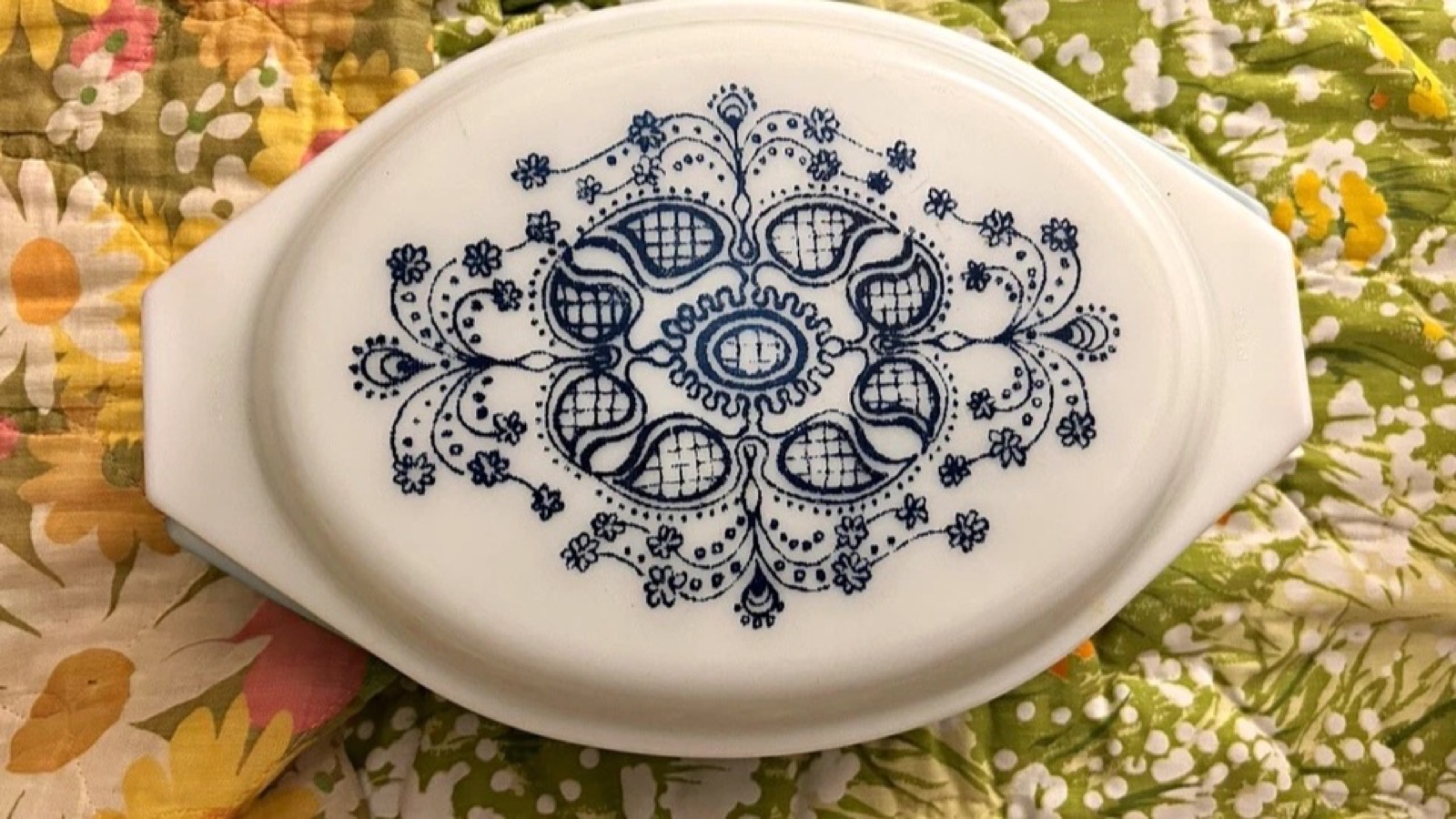
Corning Glass Works introduced the set in 1968 and sold it through 1969. Blue Doily is a collector’s nickname, not the name printed on its original packaging. It was marketed simply as an oval casserole with serving basket, part of Pyrex’s limited-run promotional gift line. These were special combinations of familiar casserole shapes, unusual finishes, decorated lids, and serving accessories, rather than entire matching kitchenware ranges.
The promotion had a decidedly gift-friendly look. The pale-blue dish was topped with a white lid decorated in blue, and the woven basket softened the appearance of the glass casserole when it reached the dining table. Corning’s 1969 gift catalog described Pyrex as an appropriate present for almost any occasion. Promotions like this were marketed around Mother’s Day, summer weddings, and the holiday shopping season.
The smaller set originally retailed for $4.95, while the larger one cost $5.95. The price included the serving basket. It wasn’t an aftermarket decoration added by a collector to make a plain casserole look prettier; that woven accessory was part of the original product.
Check the size and the exact lid pattern
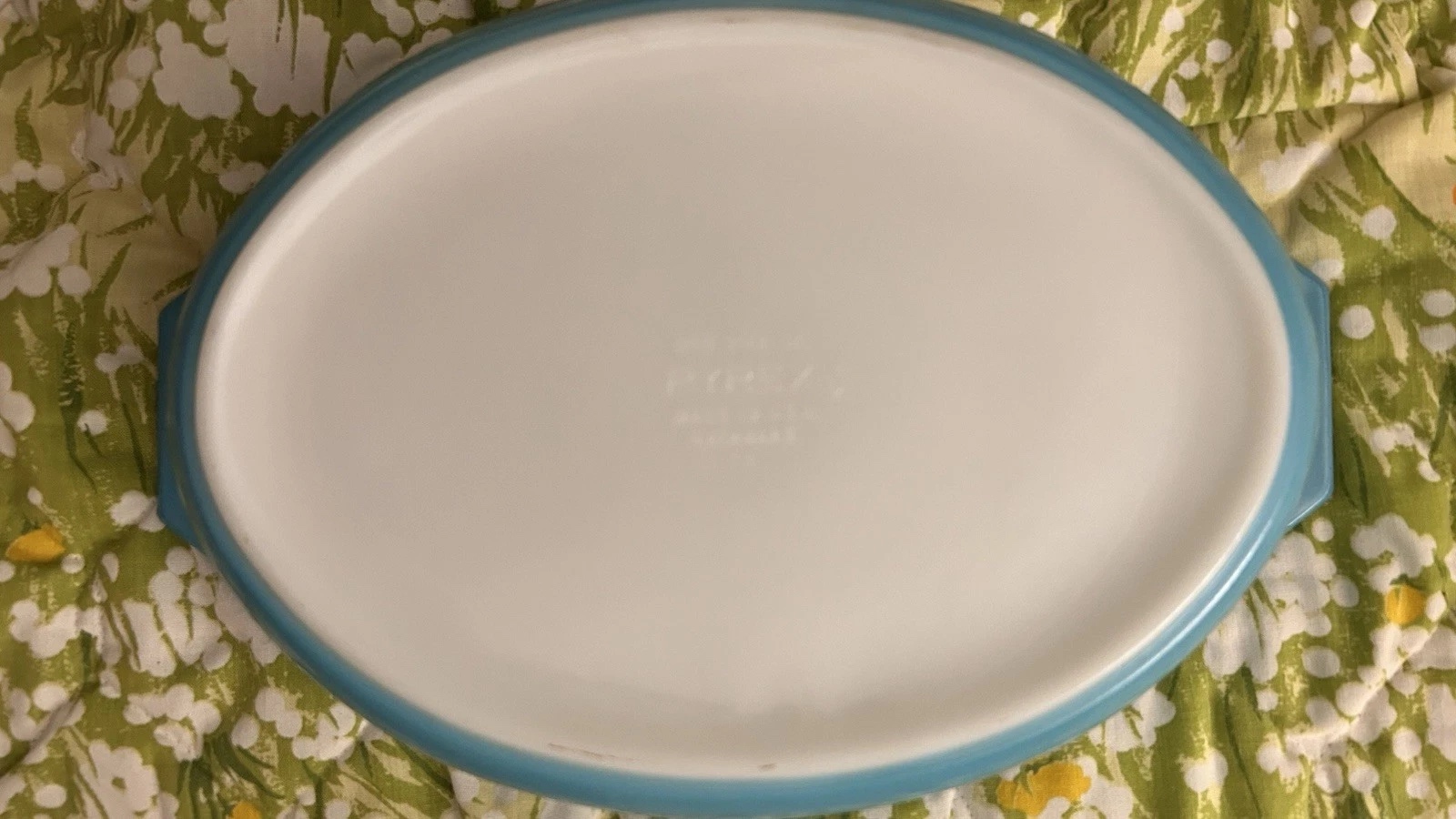
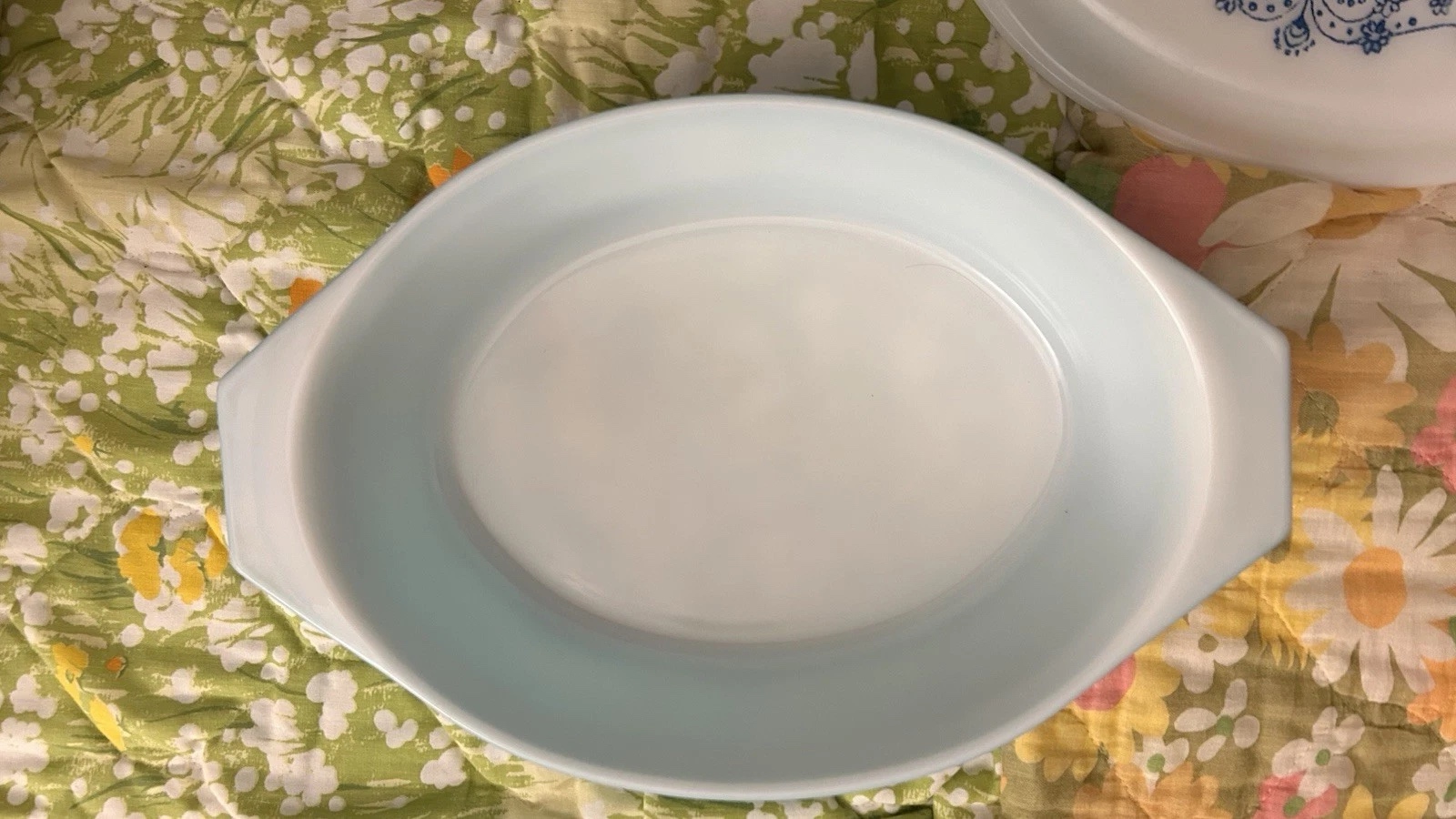
Blue Doily was available in two oval sizes, so don’t dismiss one simply because it looks bigger than a photograph you’ve seen. The 1½-quart casserole is model 043, while the 2½-quart version is model 045. Both are pale blue with white interiors. Turn the dish over and look for the molded number, which can be easier to read when you angle it toward the light.
The corresponding oval lid numbers are 943 for the 043 casserole and 945 for the 045. The size matters because Pyrex reused its basic shapes across numerous colors and promotions. A lid can sit convincingly on a similar dish without being the one that originally belonged to it.
A close comparison with the preserved museum example is useful, particularly when a secondhand listing describes almost any light-blue Pyrex casserole as Blue Doily. I would trust the shape, model number, and lid decoration together rather than relying on the color in somebody’s photographs. Shop lighting and camera settings can make pale blues surprisingly difficult to judge.
The wicker basket is the piece most likely to be missing
The glass casserole and lid are fairly easy to recognize as a pair. The basket is another matter. It isn’t marked and decorated like the Pyrex itself, and a woven accessory can easily become separated during decades of kitchen use, house moves, cupboard clear-outs, and donations. It’s also more vulnerable to broken strands, crushing, staining, and moisture damage than a sound glass dish.
Blue Doily was among the early Pyrex promotions that came with wicker serving baskets, rather than the metal cradles or candle-warming stands associated with many older gift sets. That made the basket an important part of the design, not just something to put underneath the glass. Original accessories frequently go missing from promotional Pyrex sets, which is why I pay attention when all the components have stayed together.
A replacement basket may be perfectly nice for displaying the dish, but it isn’t the same thing as an intact promotional set. When provenance is uncertain, compare its proportions and construction with documented original examples before calling it complete.
Condition matters, but so does keeping the set together
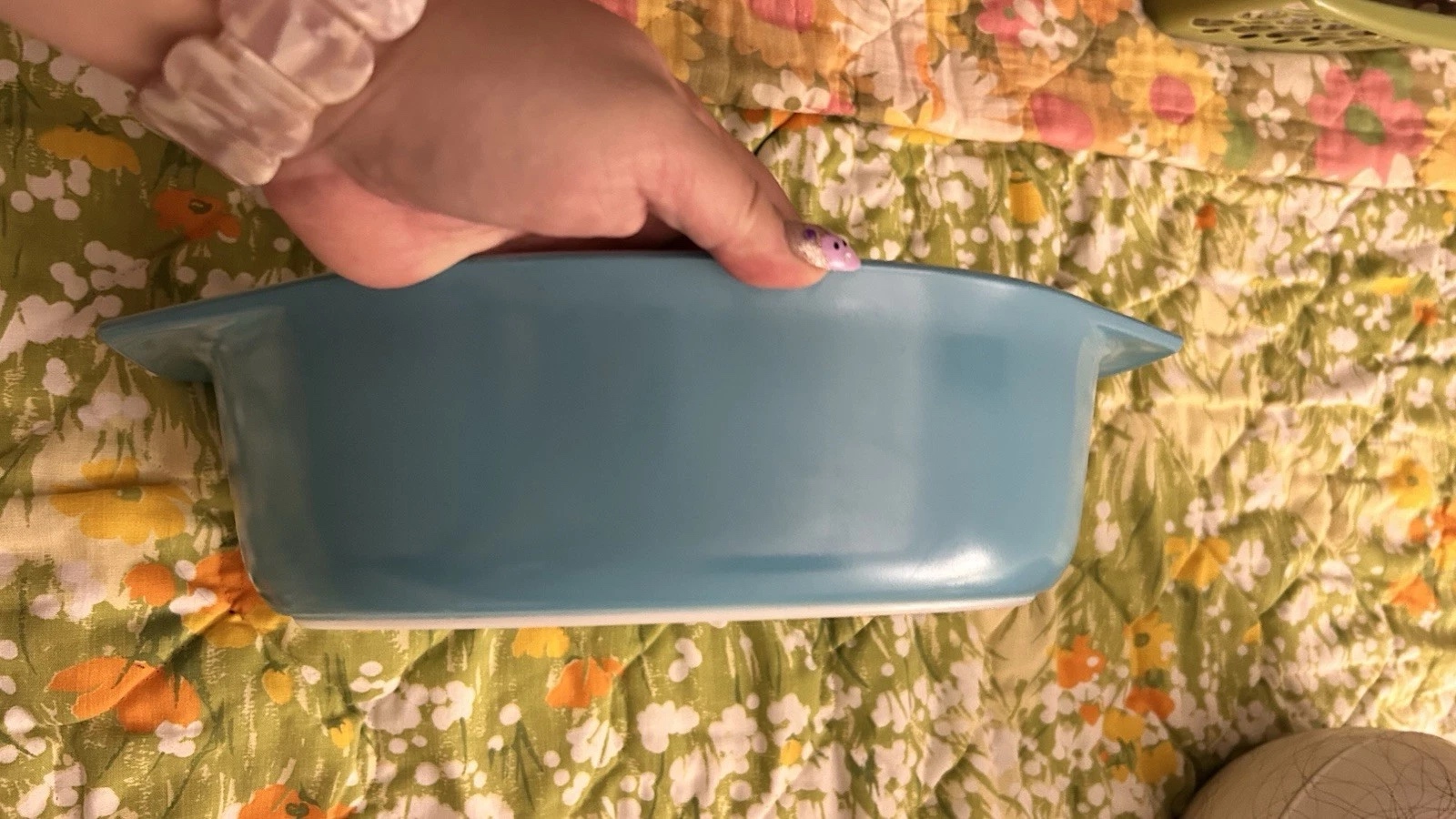
Start with the lid rim and the casserole handles. Chips are easy to overlook, especially when the glass is sitting inside a basket, and cracks are an immediate reason for caution. I would also examine the blue exterior for scratches, faded areas, and dull patches. Some wear is understandable in a dish that was intended for dinner tables, not glass cabinets, but a heavily damaged surface changes how enjoyable it is to collect.
Check the printed lid carefully before cleaning it. Harsh scouring pads, abrasive powders, and repeated dishwasher washing can spoil older decoration. Mild dish soap, warm water, and a soft cloth are sensible choices for the glass. Keep the wicker dry, brush loose dust out gently, and avoid soaking or putting it in the dishwasher. Never put the serving basket in the oven.
For a particularly nice original set, I’d be inclined to enjoy it on display and use modern bakeware for regular cooking. A decorated lid is particularly easy to chip in a busy kitchen, and it would be a shame to lose a matching piece that has survived since the late 1960s. If you do use vintage Pyrex for serving, keep it away from direct heat and sudden temperature changes.
What makes Blue Doily such a satisfying thrift-store find isn’t simply that it’s pretty, although it certainly is. It’s being able to recognize the right pale-blue casserole, its patterned white lid, and the woven basket that turned an everyday baking dish into a thoughtful 1960s gift. All three pieces tell the story better together.
You might also like…
The CorningWare Pattern Collectors Dream Of Finding At A Thrift Store
The Blue-And-White Pyrex Pattern Collectors Dream Of Finding At A Thrift Store
The Pink Pyrex Pattern Collectors Dream of Finding at a Thrift Store

