
Affiliate disclosure: This post may contain affiliate links. Please see full disclosure.
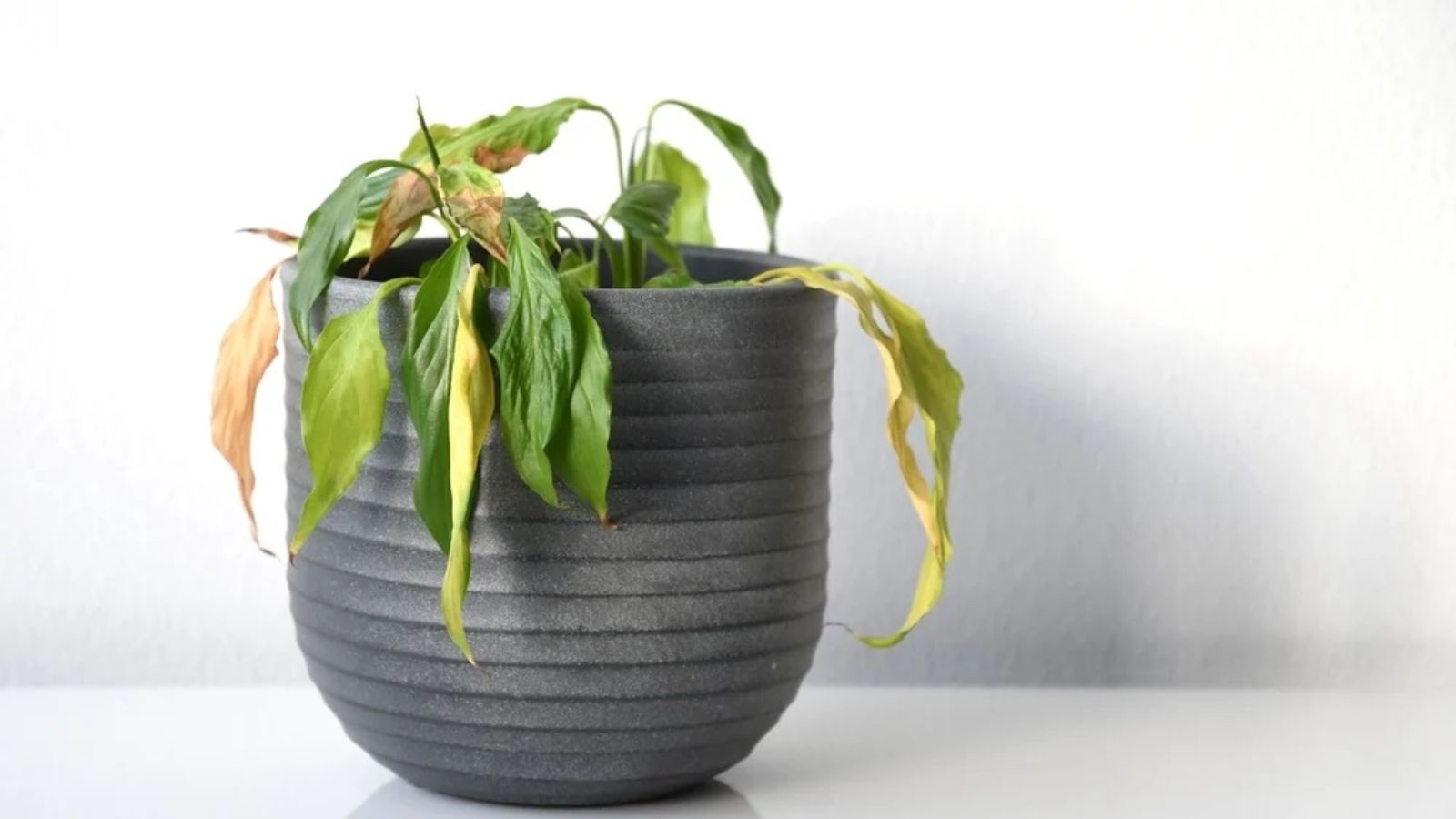
If your peace lily is still drooping after you’ve watered it, don’t automatically give it another drink. The root ball might still be dry because the water ran around it, or the potting mix could be so wet that the roots are struggling to function. Those two problems look remarkably similar above ground, but they need opposite treatments.
As a master gardener, I never rely on drooping leaves alone to tell me whether a potted plant needs water. The soil, the pot, and the condition of the roots give you a much more useful answer. And you can check most of that without buying a moisture meter or pulling the plant apart.
First, find out whether the root ball is actually wet
Push a finger an inch or two into the potting mix. If you have a large or deep pot, slide a clean wooden chopstick or skewer farther down, close to the side of the pot so you don’t jab into the crown. Leave it briefly, then pull it out. Damp particles clinging to the wood suggest moisture below the surface. Checking deeper with a wooden stick and judging the weight of the pot can tell you much more than looking at the soil on top.
Lift the container if you can. A very light pot and dry mix suggest the plant may still be thirsty. A heavy pot with cold, wet soil suggests it has plenty of water already. Remember that the top inch can feel dry while the lower half stays saturated, especially in a large decorative planter.
Also take the nursery pot out of its decorative outer pot. You may find water collecting underneath where you couldn’t see it. Check that the inner pot has drainage holes and that they’re not blocked. Water sitting inside a cover pot is a surprisingly easy thing to miss.
What matters now is whether the soil around the roots is dry, evenly damp, or waterlogged. Don’t pour in more water just because the leaves haven’t stood back up yet.
If the soil is dry, the first watering may have missed the roots
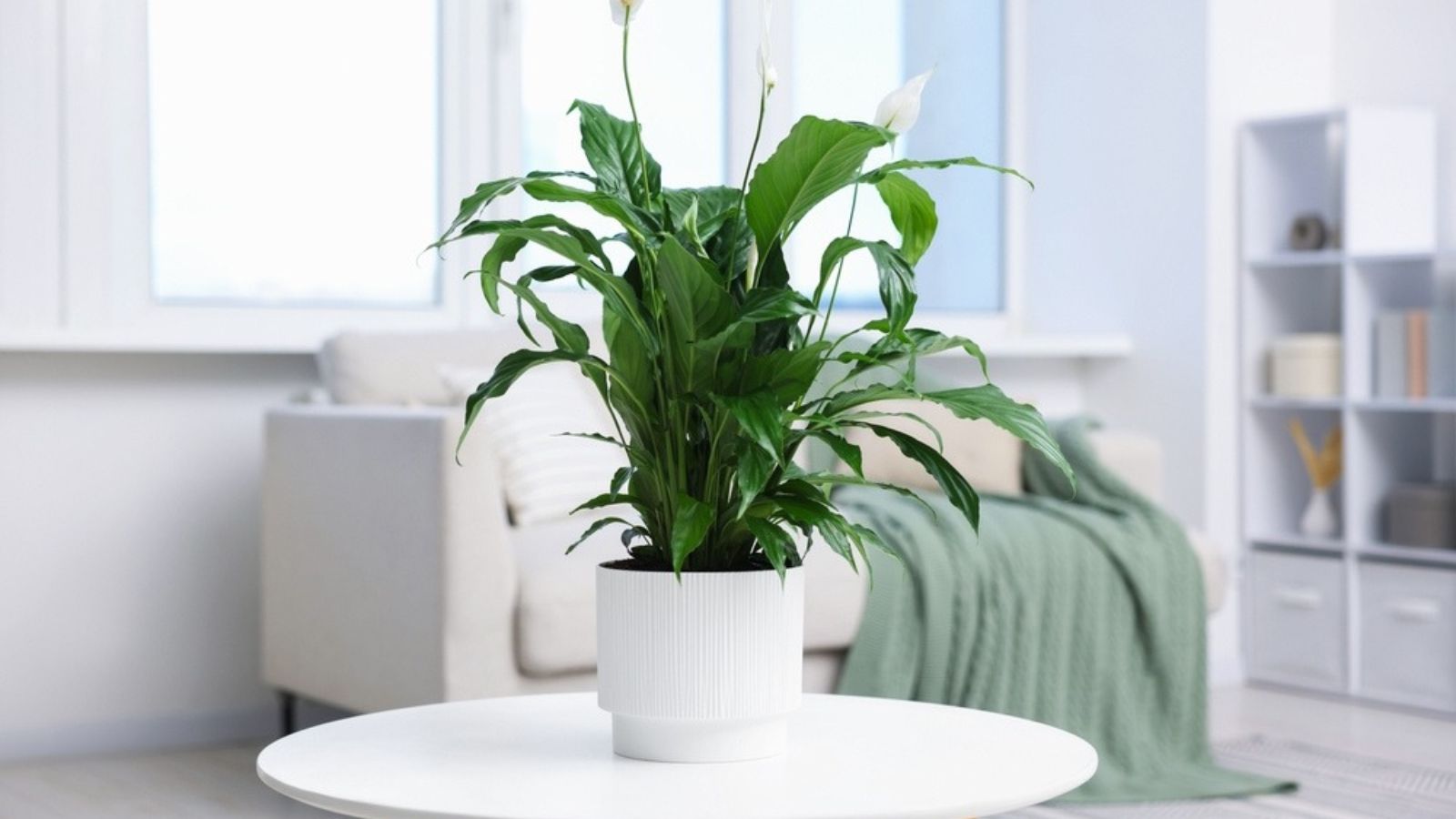
Very dry potting mix can shrink away from the sides of a container. When you water it, the liquid finds those gaps, rushes down the edges, and comes straight out of the drainage holes. You think you’ve given the plant a good soak, but the middle of the root ball has barely been touched. A shrunken, dry root ball may need repeated applications of water to rehydrate properly.
Look for a gap between the mix and the pot wall, soil that still feels dusty an inch or two down, or a surprisingly light container even after watering. Those are stronger clues than how much water came out of the bottom.
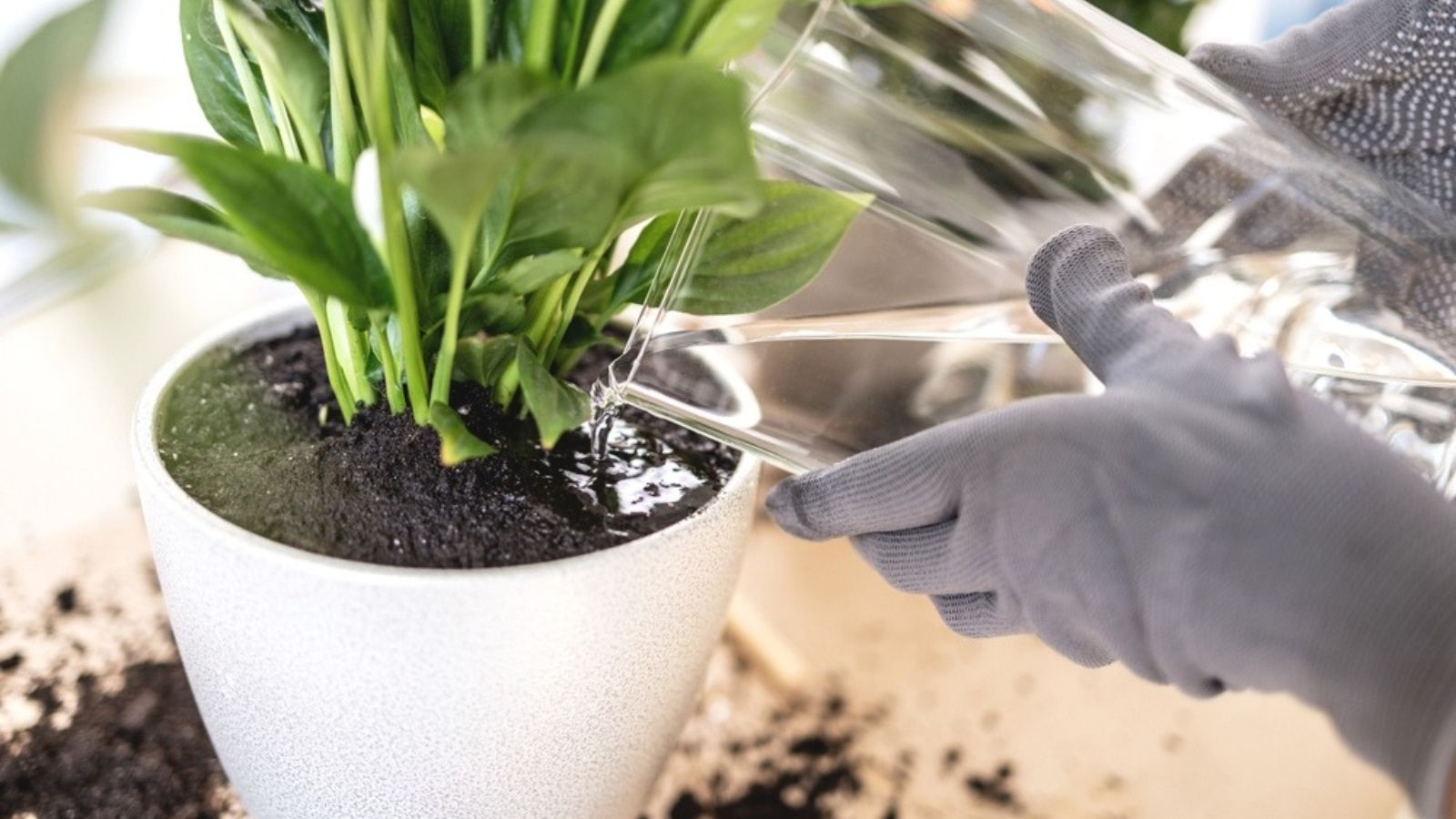
If the mix really is dry, set the pot in a sink and water slowly, a little at a time, giving each application a chance to soak in. For stubbornly dry mix, stand the nursery pot in a shallow bowl of room-temperature water for a short soak. Check the middle of the potting mix again rather than leaving it in water indefinitely. Once the root ball is evenly moist, let the pot drain thoroughly and empty the saucer.
A healthy peace lily that’s wilted from thirst will often begin lifting its leaves within a few hours, though severe drying can take longer and damaged leaves may never fully recover. Don’t use that expected recovery time as an excuse to keep watering an already damp pot.
If the soil is soaked, stop watering and check the drainage
A peace lily can wilt in wet soil because excess water pushes air out of the potting mix and damages the fine roots. Those roots are responsible for taking up water. Once they’re struggling, the leaves can droop even though the plant is sitting in moisture.
Start with the simplest fix. Take the inner pot out of its cover pot, pour away any standing water, and make sure water can escape freely. Keep the plant somewhere warm with bright, indirect light, then leave it alone long enough for the upper layer of mix to begin drying. You don’t need to let a peace lily become bone-dry, but it shouldn’t remain soggy.
Wet soil does not automatically mean root rot. A plant that’s just been watered will naturally have damp soil. I’m more concerned when the pot has stayed heavy and wet for days, the leaves remain limp, or fresh yellowing develops while the mix still hasn’t begun to dry.
If the pot has no drainage holes, change that arrangement rather than trying to guess exactly how many tablespoons of water it can hold. A nursery pot with holes inside a decorative cover gives you the appearance you want without trapping the roots in a sealed container.
Check the roots if the plant keeps declining in wet soil
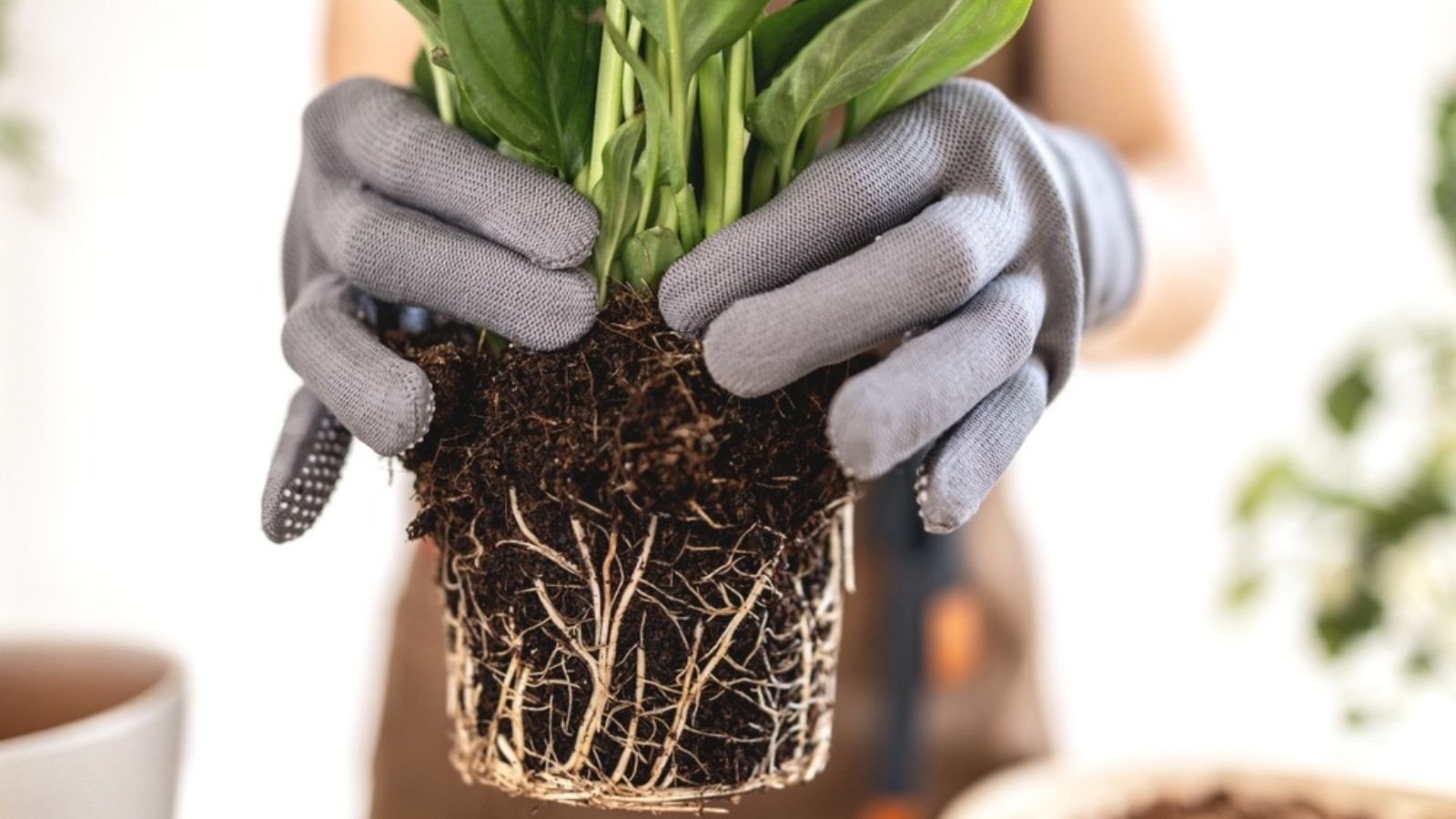
Persistent drooping in saturated mix, yellowing leaves, a sour smell from the pot, or softness around the base of the stems are reasons to investigate. Gently ease the root ball from its container and look at the roots before deciding that the whole plant is rotten.
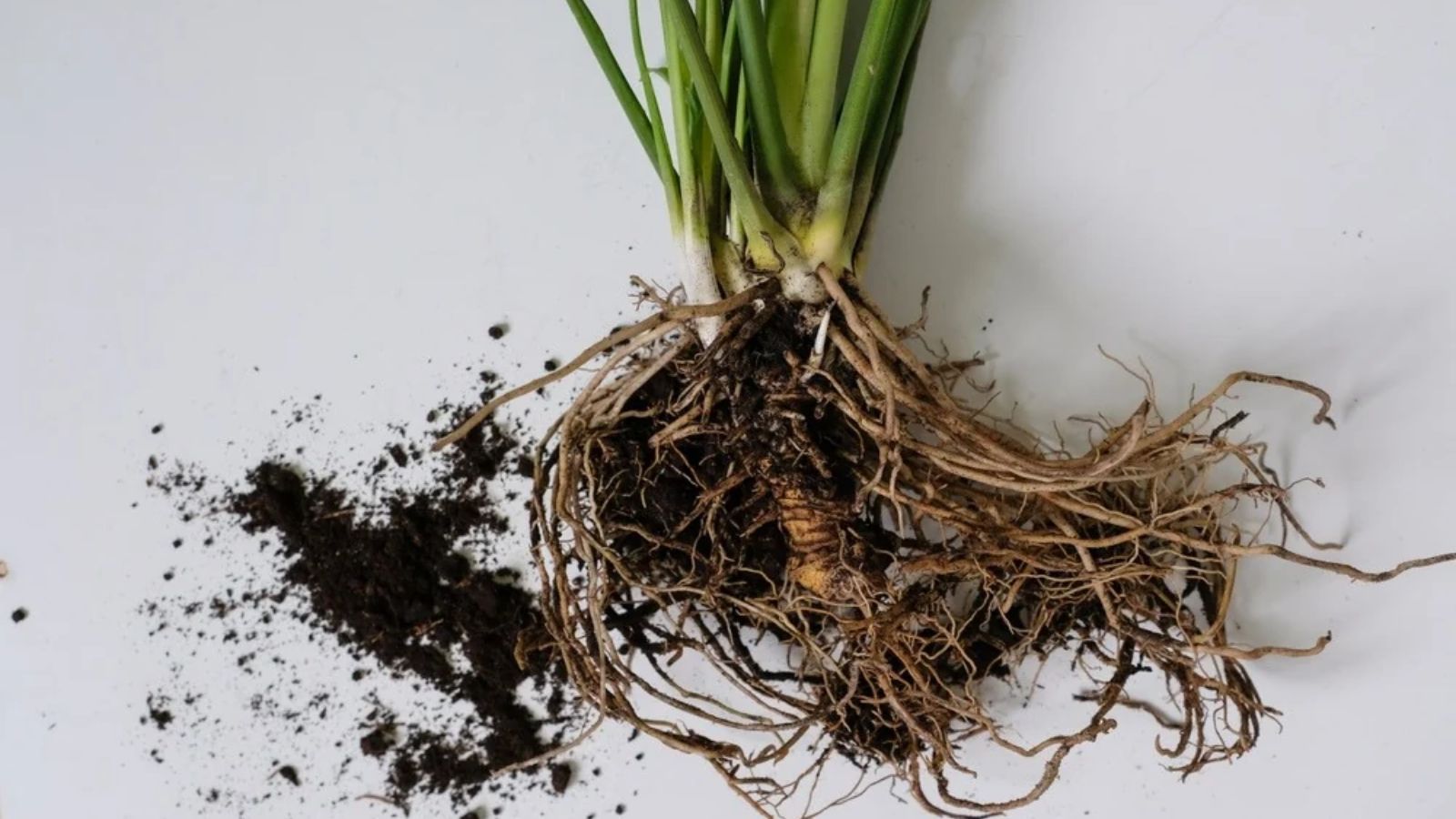
Healthy roots tend to be light-colored and firm, while rotting roots are dark and soft. Some perfectly healthy roots can be tan or stained by the potting mix, so color alone isn’t enough. Texture matters. Rotten roots may feel mushy or have an outer layer that slips away when handled.
If most roots are firm, don’t start hacking them back. Correct the watering and drainage problem, return the plant to a suitable pot, and monitor it. If you find obvious rotten sections, trim away only the dead, soft roots with clean scissors. Repot the remaining healthy plant in fresh, well-draining houseplant mix, using a container that fits the surviving root system rather than a much larger one.
You don’t need stones in the bottom of the pot. They won’t solve a poorly draining mix and can make the wet-root problem worse. If decay has reached the crown or very few healthy roots remain, recovery is uncertain. Otherwise, expect new growth and improved firmness to take longer than the quick recovery you’d see after simple thirst.
Don’t overlook cold drafts or a recent move
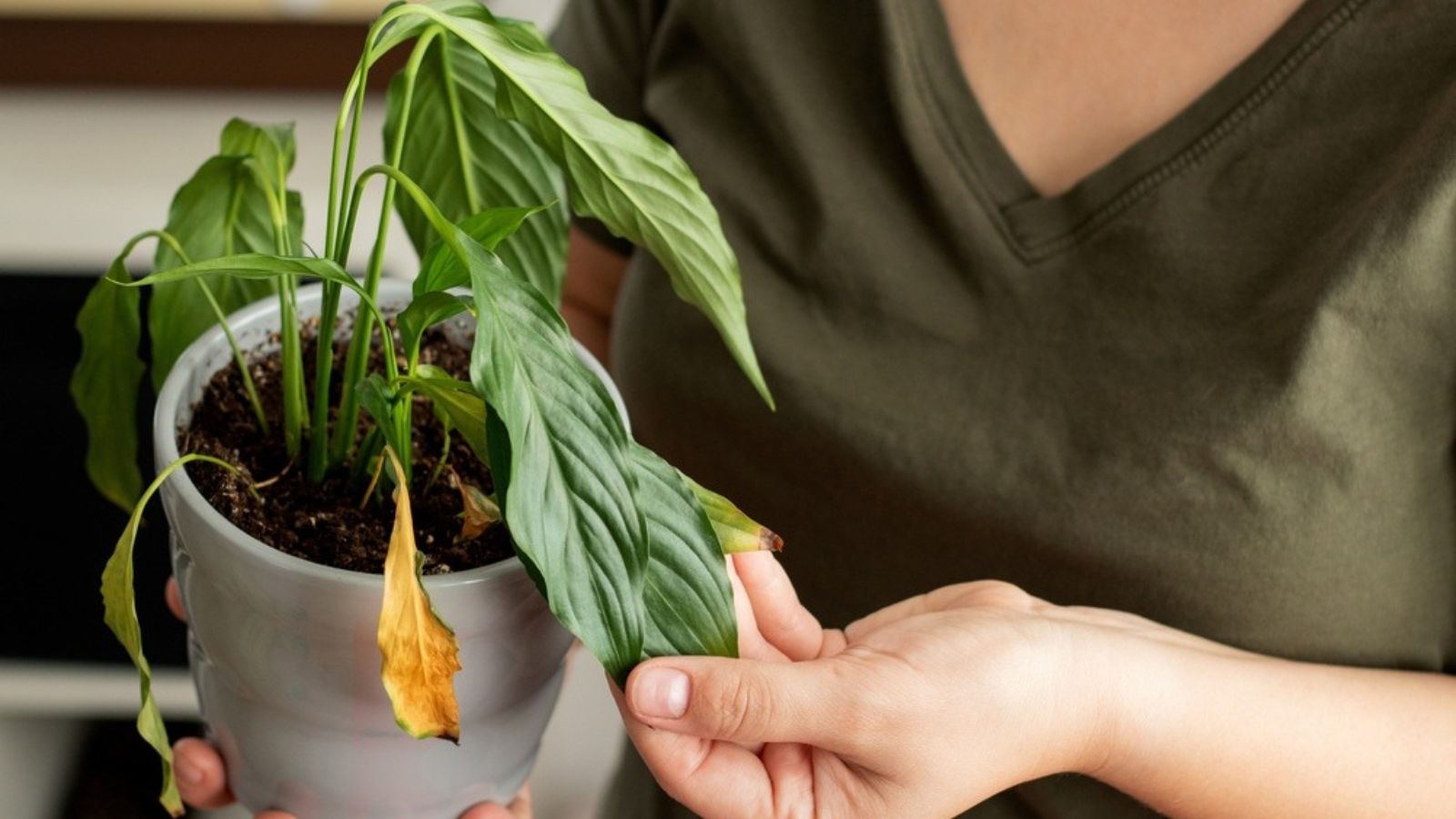
If the moisture seems reasonable and the roots look sound, think about what changed before the drooping started. Did you move the peace lily beside a frequently opened exterior door, put it on a chilly windowsill, bring it home through cold weather, or place it near a heating vent? Peace lilies like fairly steady warmth. A normal indoor range of roughly 55–75°F (12–24°C) is suitable, with cold drafts and hot radiators best avoided.
Cold stress can leave leaves sagging or developing dark patches even when watering is perfectly reasonable. A plant that has just been shifted into stronger direct sunlight may also wilt as it loses water faster than its roots can replace it. Bright, indirect light is the better place to start.
Recently repotted or divided plants are a little different. Their fine roots may have been disturbed, leaving them temporarily less able to keep the leaves firm. Transplant shock can cause peace lilies to wilt after repotting, without meaning they need another soaking. Check moisture as usual, protect the plant from extremes, and give it a stable place to recover.
I wouldn’t repot a plant again just because it drooped after being moved. Unless there’s evidence of root decay or a serious drainage problem, repeated disturbances can make recovery harder.
Give it time, then change your watering routine
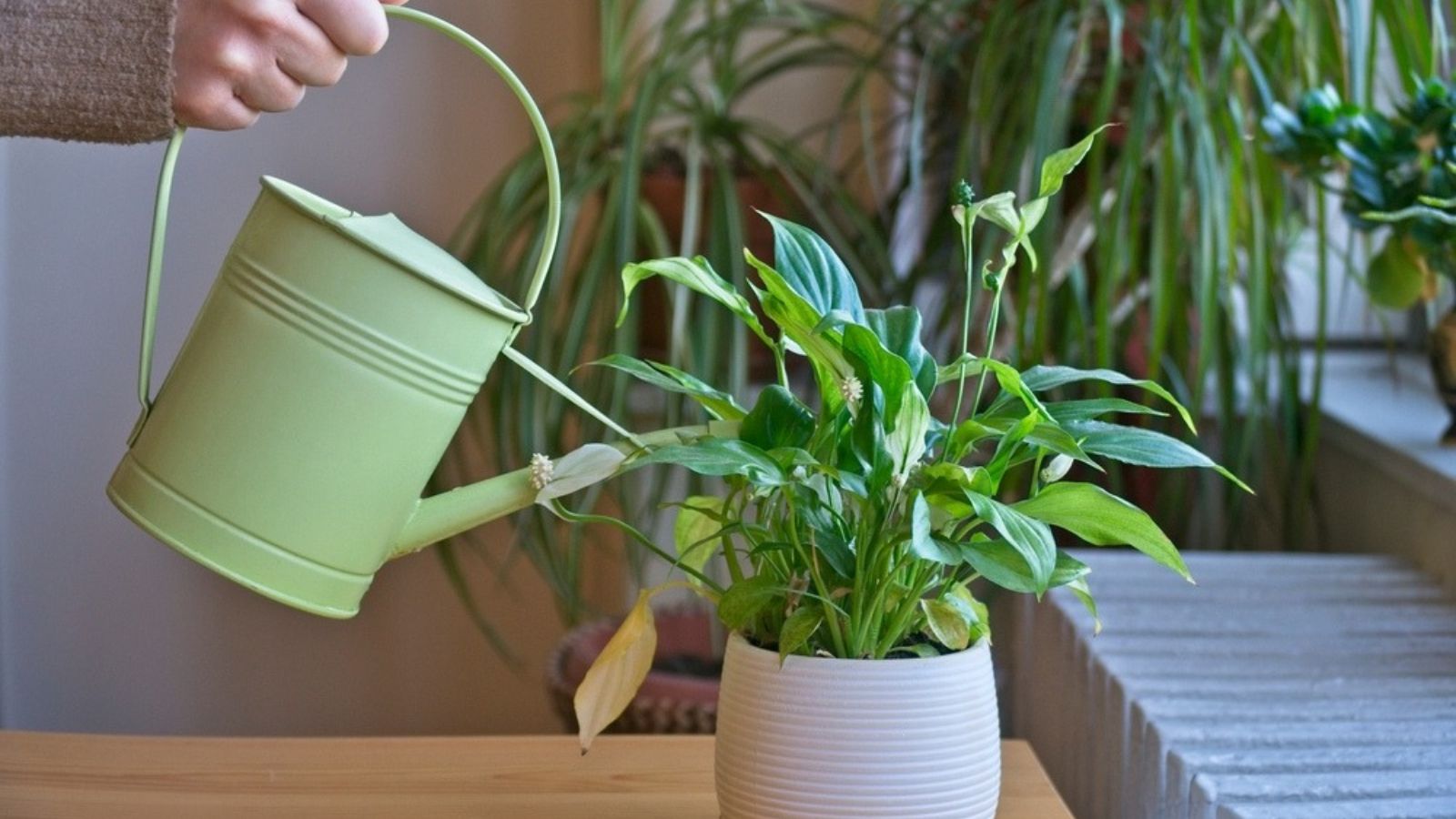
Once you’ve corrected the actual problem, resist the urge to do five other things to help. Don’t fertilize a struggling peace lily in the hope of perking it up. Keep it away from cold glass and direct heat, and watch for firmer leaves and healthy new growth rather than expecting every old leaf to look perfect again.
For routine care, check the upper inch or so of the mix and the pot’s weight before watering, then water thoroughly and let the excess drain. Peace lilies need less frequent watering during slower winter growth, and a large pot in a dim room may stay damp much longer than one in bright indirect light.
A peace lily can look thirsty when its roots are dry, but it can look just as thirsty when its roots are drowning. Check which is happening before you reach for the watering can again.
You might also like…
15 Winter Houseplants Toxic to Pets
The Little Change That Could Get Your Christmas Cactus Blooming for the Holidays