
Affiliate disclosure: This post may contain affiliate links. Please see full disclosure.
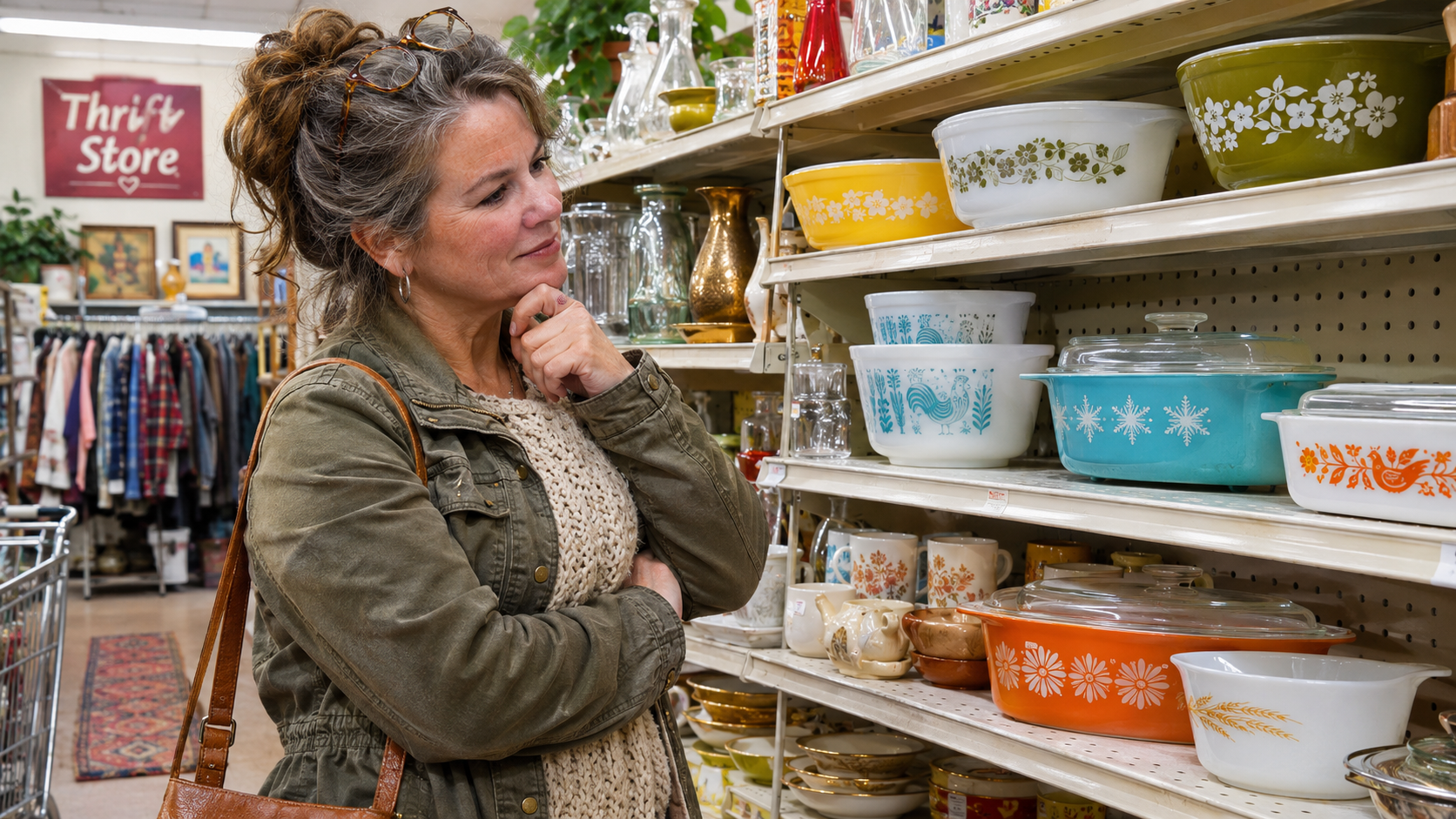
A vintage Pyrex coffee carafe with its original candle warmer is the sort of thing that would make me stop rummaging through a thrift-store shelf and take a proper look. The clear glass, delicate decoration, and little metal stand have all the charm of a mid-century coffee party. When the pieces are still together, you can see exactly how the set was meant to work.
These carafes were made to serve coffee at the table, with a candle below the glass providing gentle warmth. They weren’t percolators or stovetop coffee makers. That’s a useful distinction if you’ve also come across an older Pyrex Flameware percolator while thrifting.
A coffee server designed for entertaining
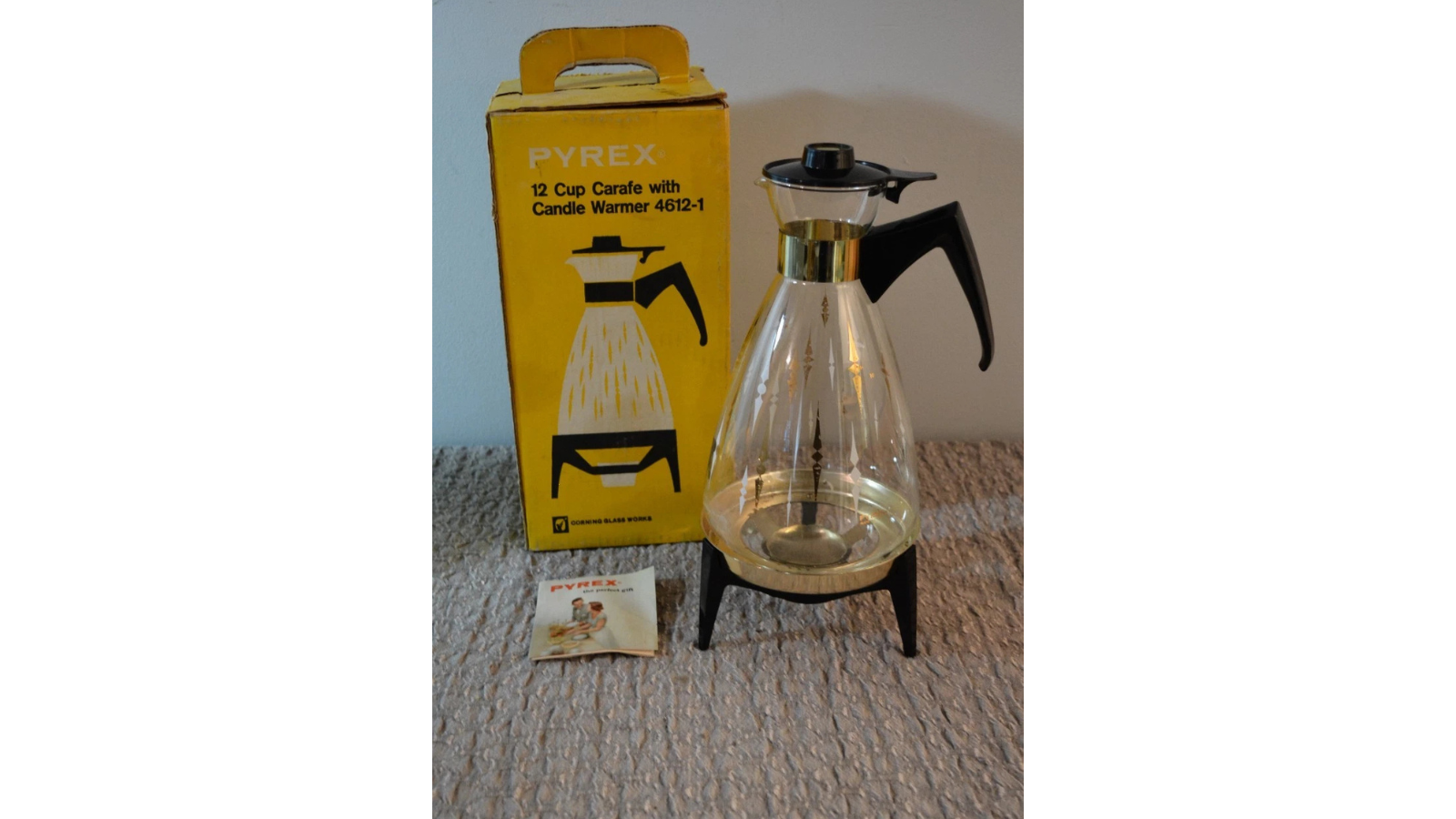
Corning Glass Works sold these carafe-and-warmer sets around the turn of the 1960s, although designs and dates varied. One well-documented example is the 12-cup Pyrex carafe with candle warmer, dated 1958 to 1963. Its orange packaging identifies it as No. 4612. The carafe has a clear glass body, black plastic handle, matching lid, and fine gold-and-black decoration.
Picture one on the dining table after Sunday lunch or at the end of a dinner party. Instead of leaving the coffee in the kitchen, you could pour another cup while everyone sat talking. The stand gave the server height, and the candle holder beneath supplied the warming function.
The gift appeal was deliberate. Corning’s decorative Pyrex gift sets were promoted for Mother’s Day, weddings, and holiday giving, often with special stands or warmers. This was everyday serving equipment dressed up to look rather smart.
How to recognize a vintage Pyrex carafe
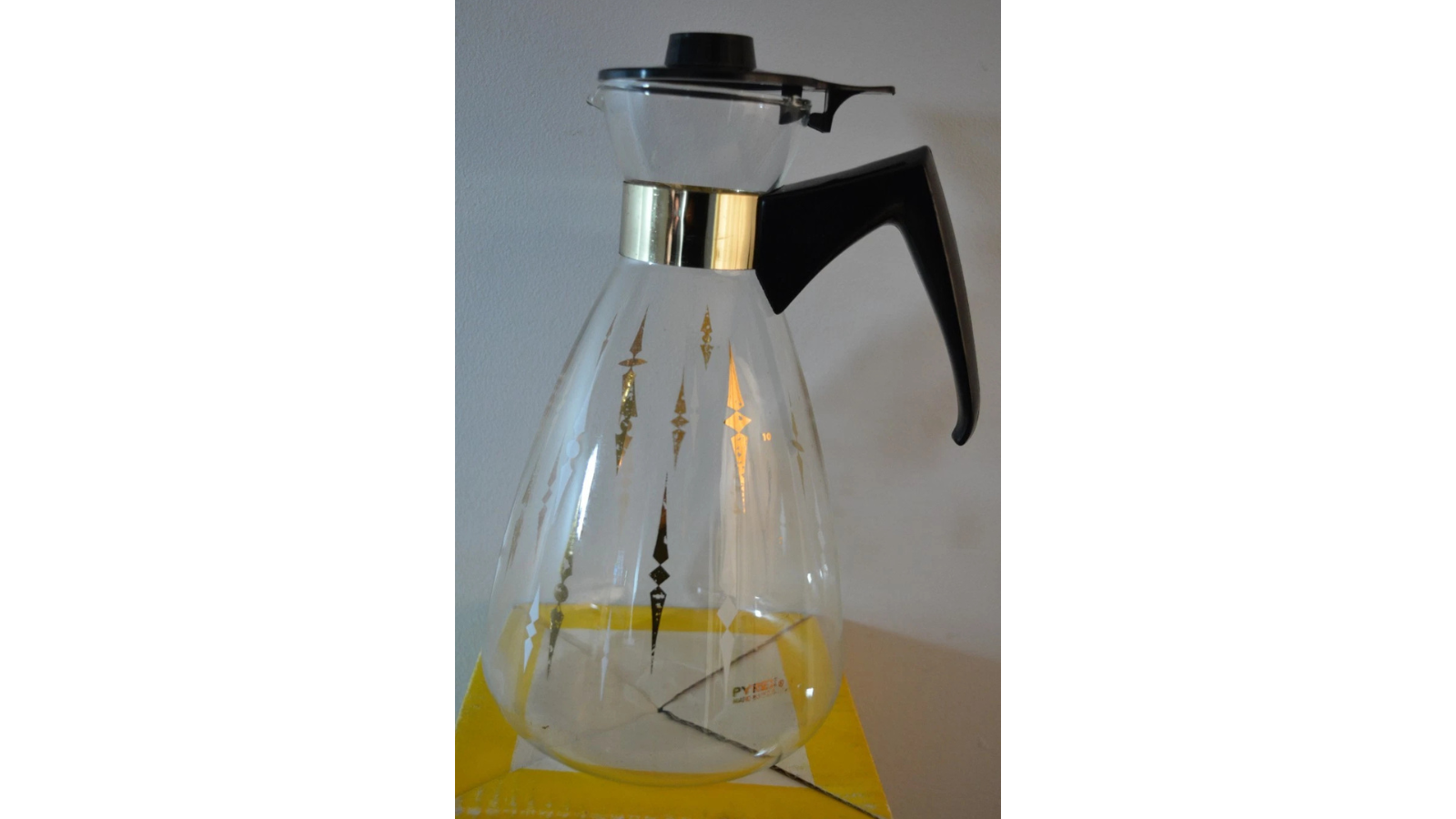
Start with the shape. Many coffee carafes have a wide glass body narrowing toward the neck, a pouring lip, and an angled dark handle attached by a metal collar. Look for the maker’s mark. The museum’s No. 4612 example carries “PYREX / MADE IN U.S.A.” on the glass. Its 4612 number appears on the box, so don’t expect every identifying detail to appear on the vessel.
There isn’t one decoration to memorize. A 12-cup example has sweeping gold wave motifs and a gold-tone stand, while another 1960s carafe has a silver fleur-de-lis design and a black warmer. Different versions have different lids, shapes, and metallic details. I wouldn’t dismiss an unfamiliar carafe simply because its pattern differs from the first one I’ve seen.
And don’t confuse the serving carafe with a glass pot that actually brews coffee. The carafe-and-warmer set has no internal percolator stem or basket. Its job began after the coffee was made.
The original candle stand is the real bonus
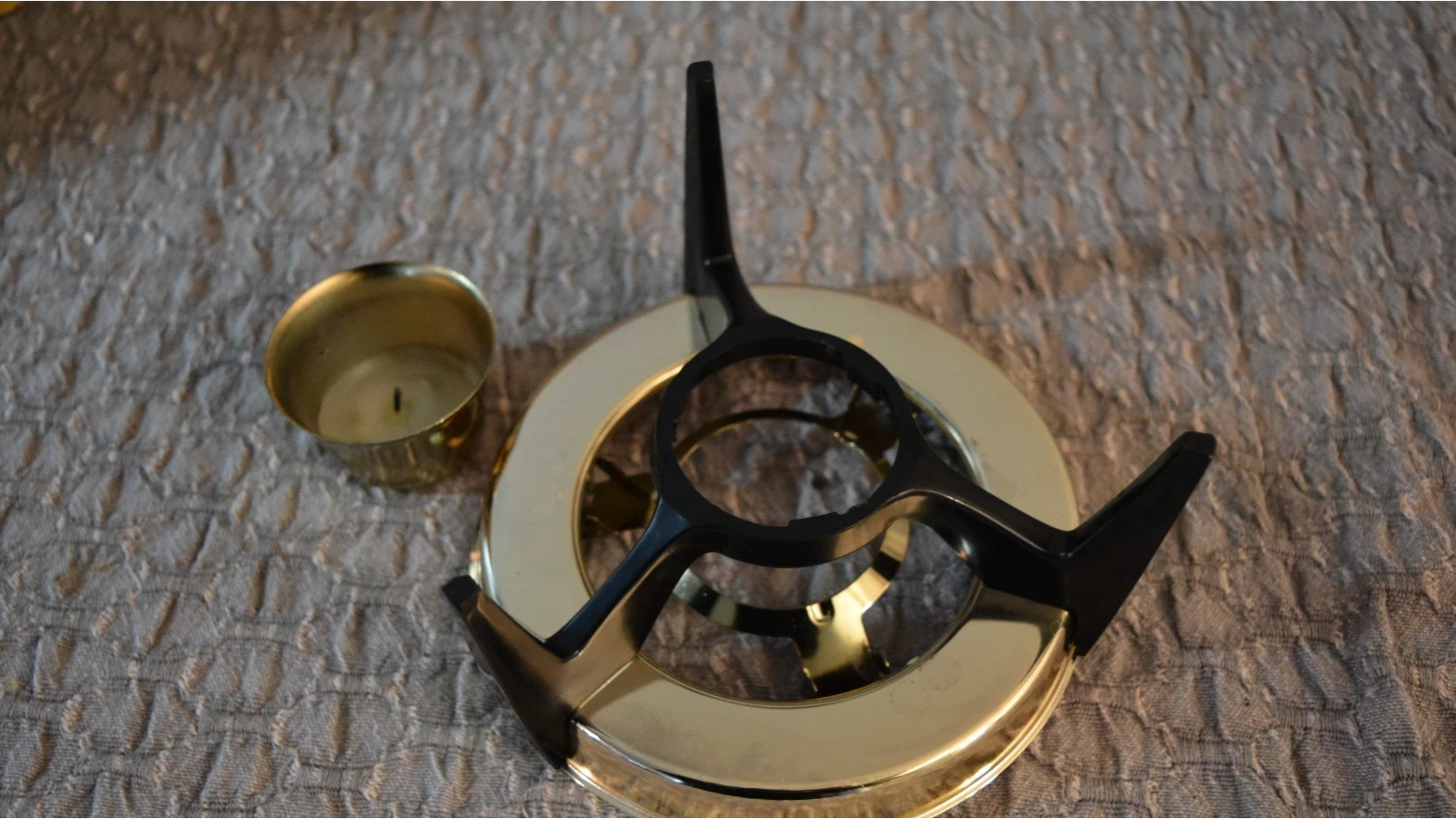
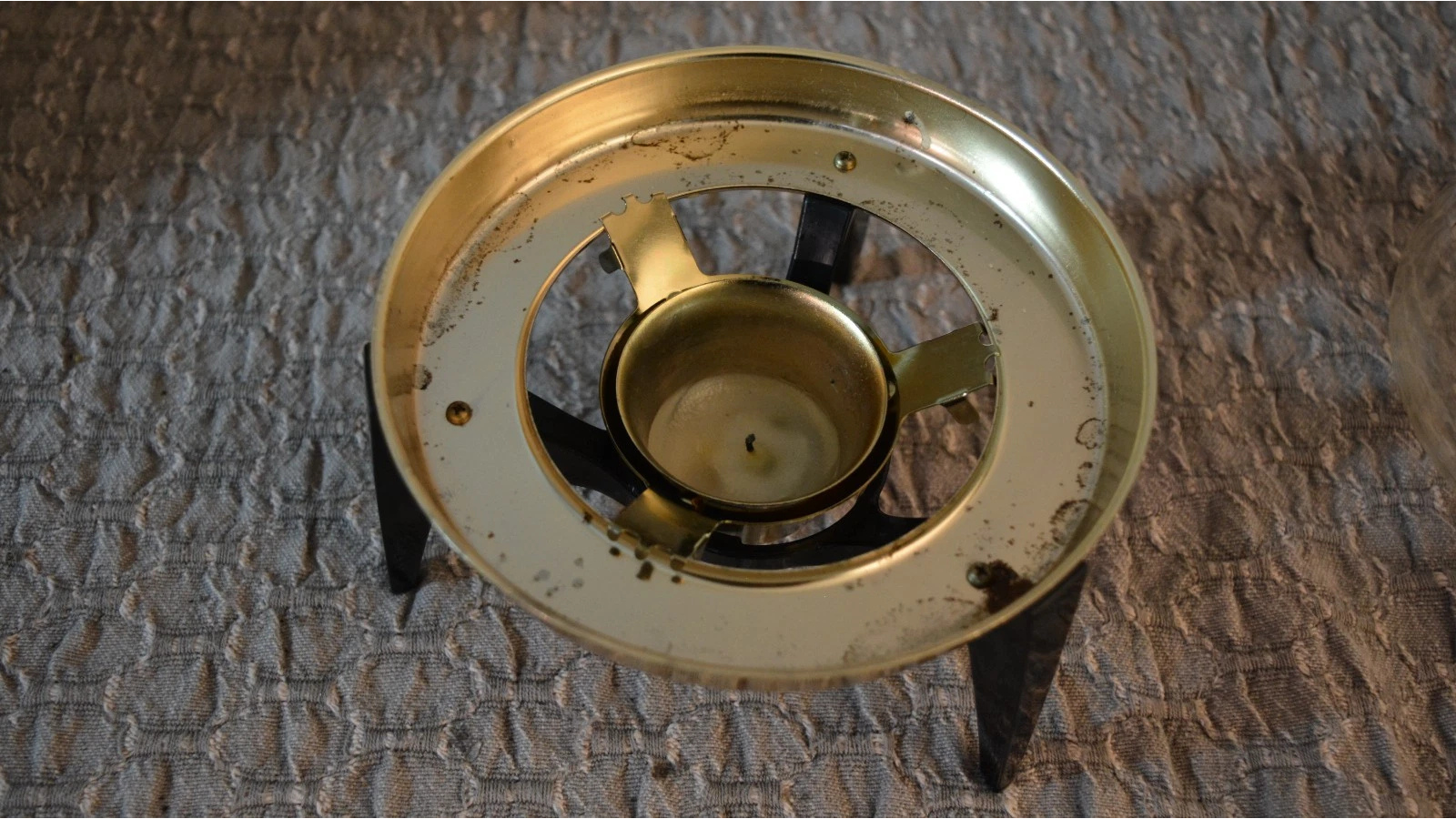
The carafe alone is lovely, but the correct stand completes the set. Some warmers have a circular support with slender legs and a small candle cup underneath; others use a different purpose-made base. The gold-wave museum example includes a separate black candle cup, while another design uses a black plastic warmer stand.
Here’s where I’d be fussy. A random wire trivet isn’t proof you’ve found the original assembly, even if the glass balances on it. Compare the shape, finish, height, and candle position with a documented example of that carafe. Vintage Pyrex accessories became separated from their glassware, and similar-looking stands were made by other suppliers.
Look underneath, too. Is the candle cup present? Is the support ring secure? Does the whole thing rock? The missing little holder is easy to overlook when a thrift store displays everything already assembled.
What to inspect before taking one home
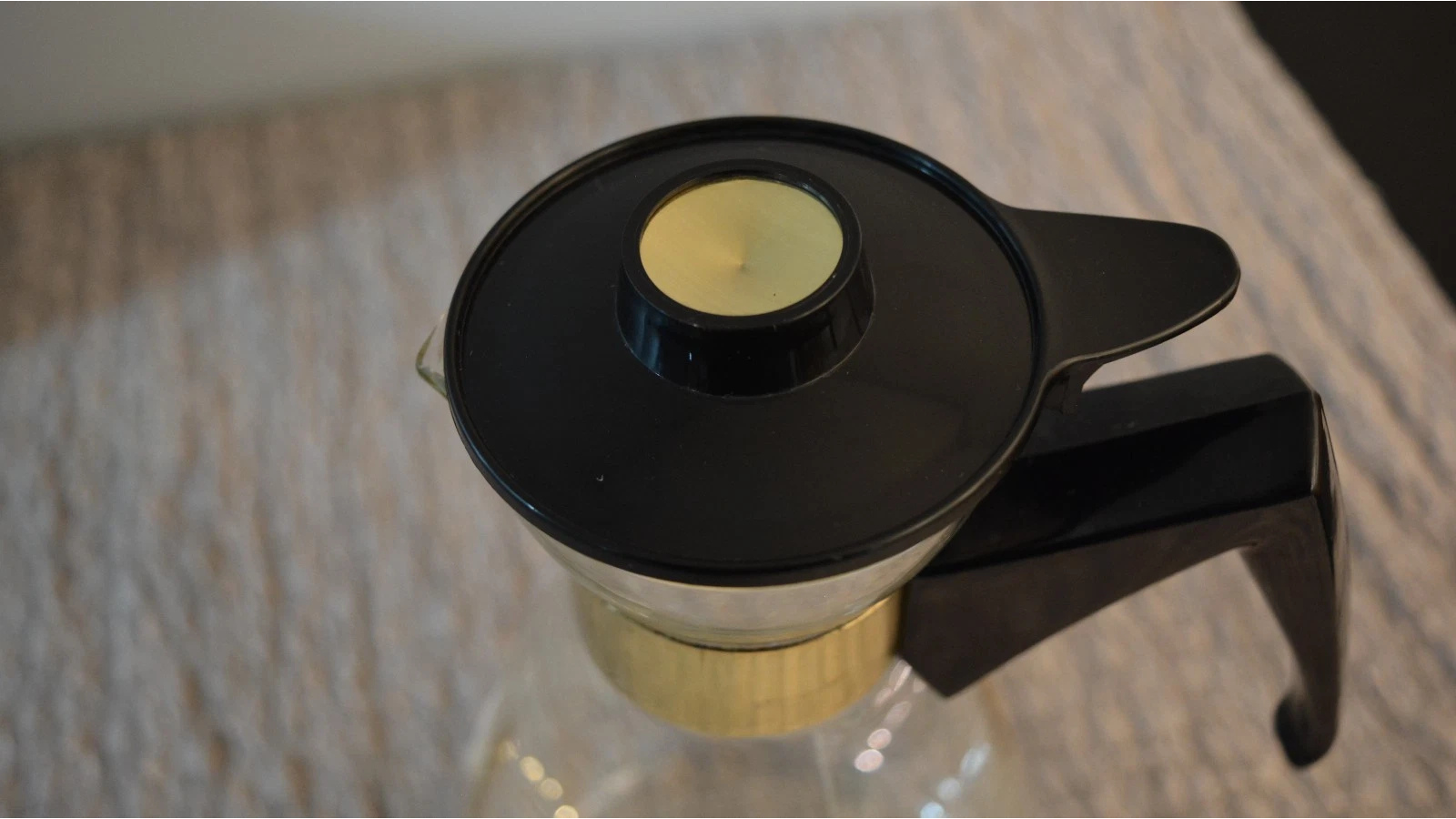
I check vintage glass in good light, particularly around the pouring lip, rim, base, and the place where the handle’s collar meets the neck. Small chips can hide against a busy gold decoration. Turn the empty carafe slowly and look for fine cracks, cloudy patches, and obvious scratches. A cracked example is one I’d keep for display only, if at all.
Next, make sure the handle doesn’t shift against the glass. The lid should sit properly without being forced. Look for corrosion, weak joints, damaged plating, or a repaired leg on the stand. And check the printed decoration. A little age is understandable, but aggressive cleaning can leave metallic patterns scratched or patchy.
If the carafe is sitting on its own, I’d still take a look. Search the nearby shelves for a loose lid or stand before deciding it’s incomplete. Just don’t pair it with an unrelated warmer and assume you’ve reconstructed an original set.
Care for the glass, and be cautious with the flame
For cleaning, I’d use mild dish soap, lukewarm water, and a soft cloth, keeping abrasives and strong polishes away from the metallic decoration. Old decorated Pyrex needs gentle handling, particularly around gold finishes. I’d skip the dishwasher and avoid sudden temperature changes.
Please don’t put the carafe directly on a stovetop burner. The candle warmer was made for serving, not boiling or brewing. And an original mark or box can’t tell you what damage the glass, joints, or handle may have suffered over six decades.
I’d be happiest displaying a beautiful complete set rather than relying on its original warmer. If you consider lighting the candle, inspect everything first, use a stable, heat-safe surface clear of anything flammable, and never leave a burning candle unattended. Extinguish it whenever you leave the room. A modern insulated carafe is a more sensible way to keep coffee warm for hours.
For me, the appeal is seeing that little mid-century serving system intact: decorated glass, proper lid, stand, and tiny warmer cup. Finding all those pieces together in a thrift store would be a genuinely satisfying bit of luck.
You might also like…
The CorningWare Pattern Collectors Dream Of Finding At A Thrift Store
The Blue-And-White Pyrex Pattern Collectors Dream Of Finding At A Thrift Store
The Pink Pyrex Pattern Collectors Dream of Finding at a Thrift Store

