
Affiliate disclosure: This post may contain affiliate links. Please see full disclosure.
Butterfly Gold is the sort of vintage Pyrex I’d happily stop for in a thrift store, even a single bowl. Introduced in 1972, this cheerful gold-and-white pattern has flowers, leaves, and little butterflies curling across the glass. It’s unmistakably 1970s, but there’s something rather lovely about it, even in a modern kitchen.
After years of thrifting and collecting, I still love finding things that were once perfectly ordinary. Butterfly Gold wasn’t made to sit behind glass. These were hardworking kitchen dishes, used for mixing cake batter, baking casseroles, and serving dinner. Finding a piece that’s survived decades of family life with its glossy finish and decoration intact is part of the appeal.
Butterfly Gold was made to match the dinner table
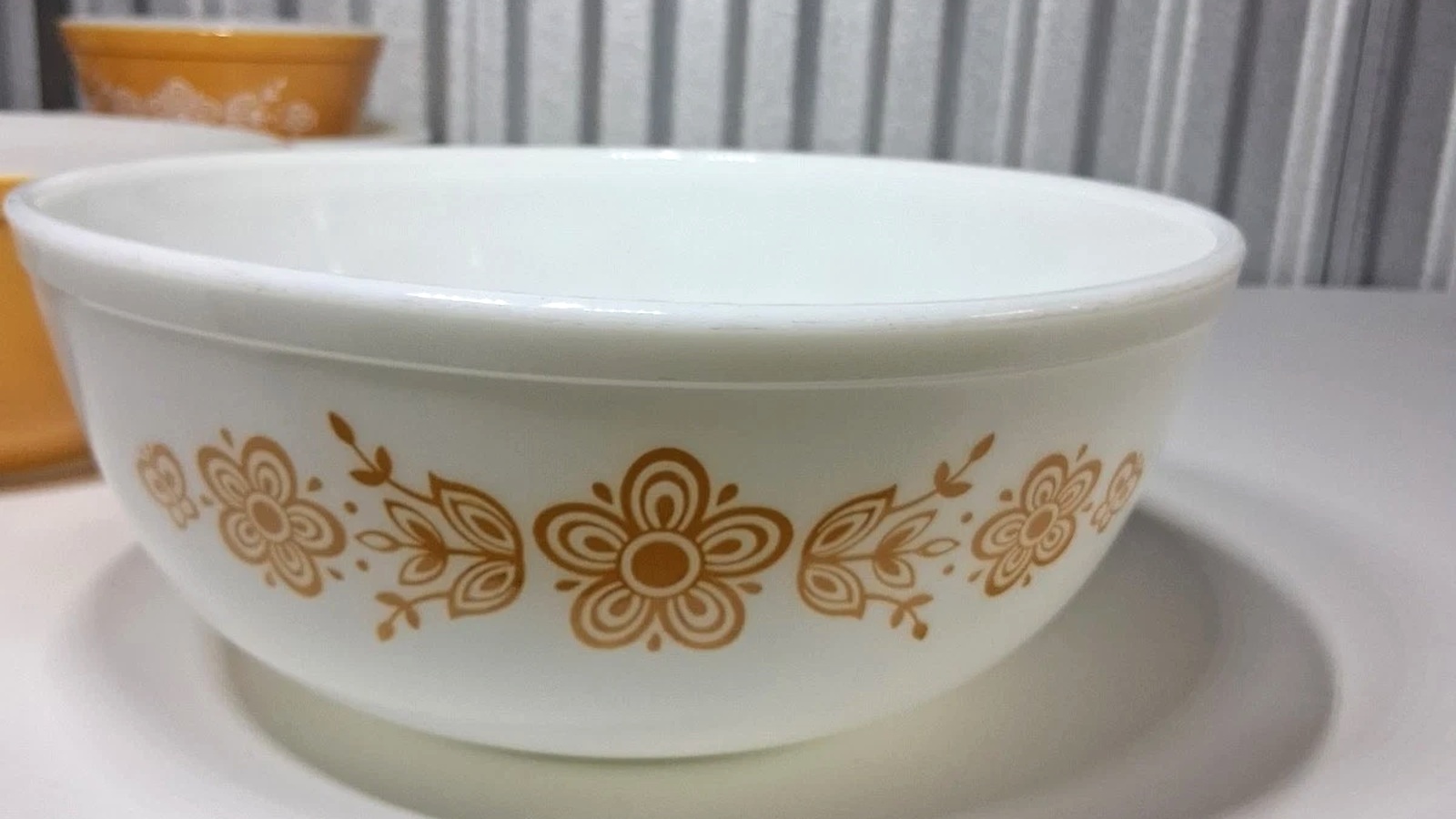
Designed by Gregory Mirow, Butterfly Gold arrived as part of the Pyrex Compatibles range. Corelle had introduced dinnerware with the same design in 1970, and the Pyrex bowls and bakeware followed in 1972. The idea was simple: you could prepare food, bake it, and bring it to the table without your dishes looking like a random assortment.
The range was much bigger than the mixing bowls most people recognize. There were casseroles, lidded refrigerator dishes, and smaller tabletop pieces, including butter dishes, creamers, and sugar bowls. Those little extras appeal to me just as much as the large bowls. They’re a reminder that matching kitchenware was once something people used every day, rather than arranged purely for display.
And if the gold flowers look familiar but you don’t remember owning Pyrex, you might be thinking of the Corelle plates. They belong to the same design family, but Corelle dinnerware and Pyrex ovenware were different product lines.
There are actually two Butterfly Gold designs
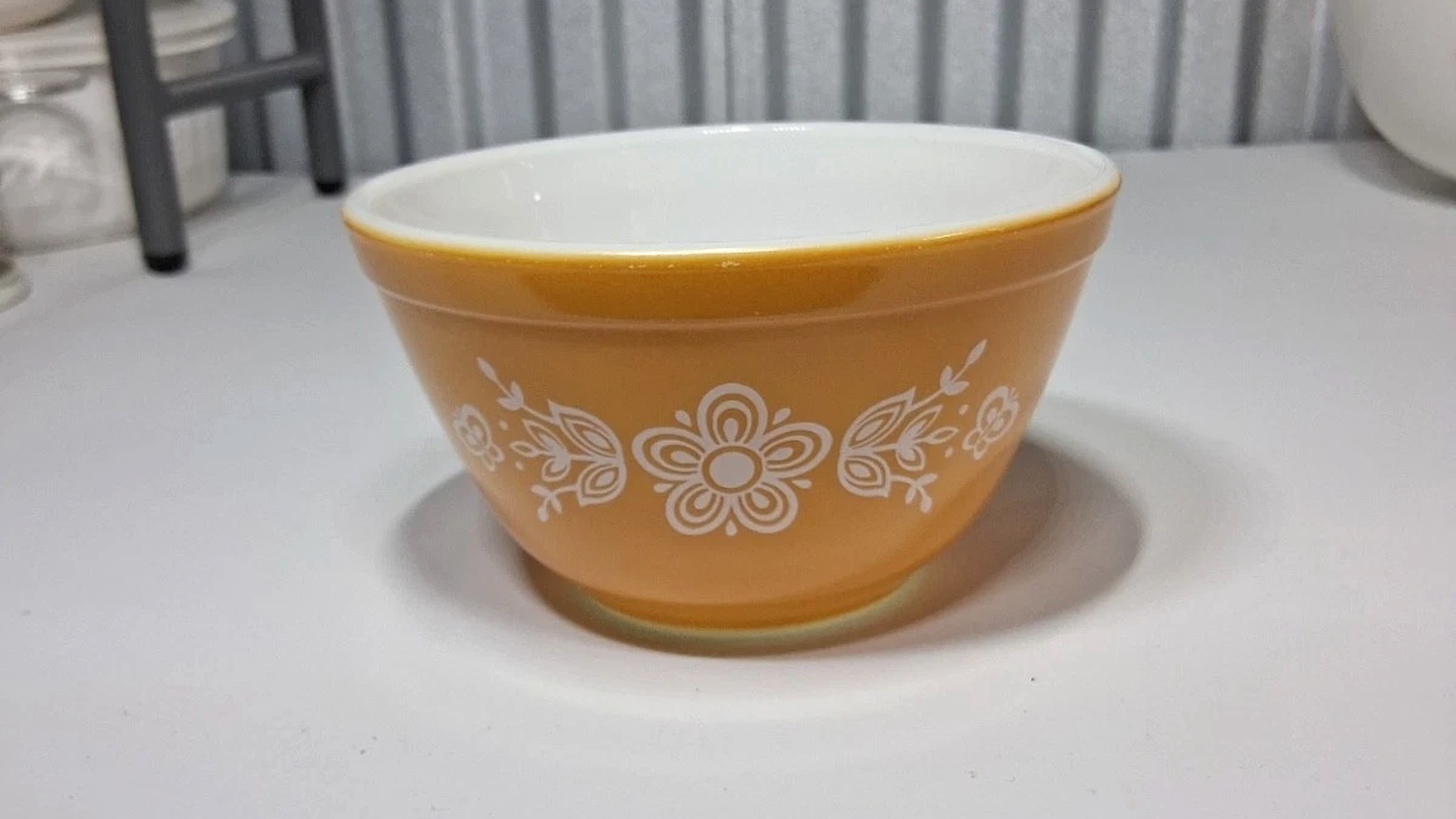
The original design, produced from 1972 to 1979, features one large central flower with smaller flowers, leaves, and butterflies on either side. The arrangement is fairly symmetrical. Some bowls have golden decoration on white glass; others have the colors reversed, with white flowers standing out against a warm butterscotch background. The original four-piece round mixing-bowl sets alternate between the two colors.
In 1979, the pattern was redesigned. The big central flower disappeared, replaced by a looser spray of small flowers on stems. The later bowls have white decoration against goldish-orange or yellowish-gold backgrounds, and the pattern looks a little less formal. This version was made until 1981.
If you find a stack, check the sizes. The original round nesting-bowl set had four, numbered 401 through 404. The redesigned round set had only three, numbered 401, 402, and 403. There was no matching 404 in that later set. It’s worth knowing, but I wouldn’t dismiss a nice individual bowl just because its companions are missing.
Don’t overlook the casseroles and refrigerator dishes
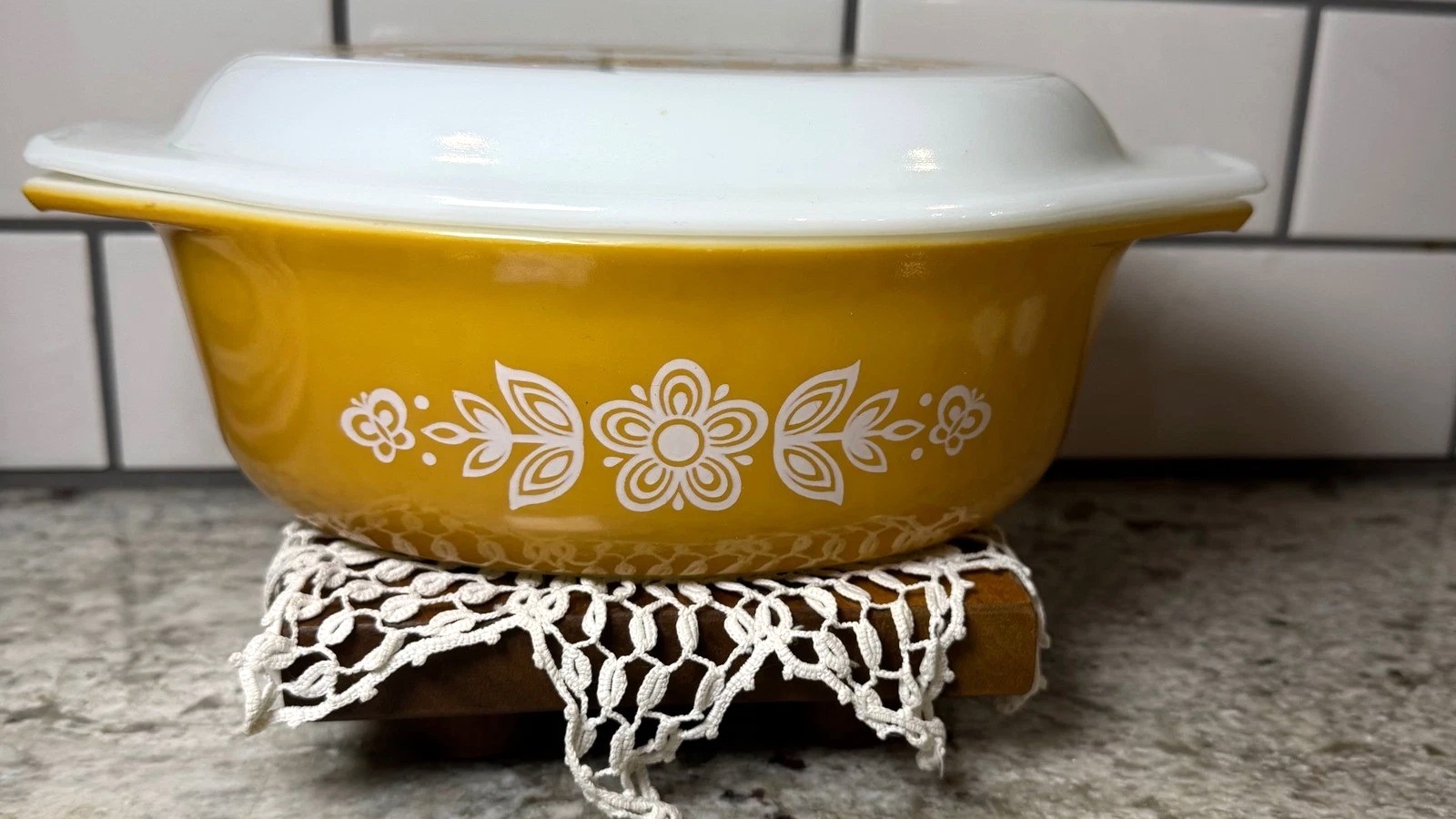
I love a good nesting-bowl set, but Butterfly Gold has plenty of other pieces worth spotting. The earlier range included oval casseroles and small rectangular refrigerator dishes, as well as Cinderella bowls with handles and pouring spouts. A good casserole is appealing in its own right, and those little covered dishes are charming, whether you use them or display them.
One detail that can be confusing is the lids. Some early Butterfly Gold oval casseroles came with decorated white glass lids. Later production used plain clear glass lids, so a clear lid doesn’t necessarily mean somebody has paired the wrong pieces together. The shape and fit matter more than whether the lid has flowers on it.
The 1979 redesign had a smaller range of shapes and didn’t include a refrigerator-dish set. A seller might group both versions together, but that doesn’t mean they originally came as one matching set. For me, that isn’t a problem. I like vintage kitchenware for what it is, not because every piece has to match perfectly.
What I’d check before taking a piece home

The first thing I look for is the finish. Healthy colored Pyrex should have a lovely gloss, and the flowers should be crisp. Tilt a bowl towards the light and you’ll soon notice faded areas, scratches, or a dull, chalky surface. That hazy look can be permanent dishwasher damage, rather than dirt you can simply scrub away.
Next, check the rim, handles, corners, and lid for chips or cracks. Look closely around the base, too. A few utensil marks inside a mixing bowl wouldn’t bother me, but damaged glass is another matter, especially if you plan to use it for food. No amount of pretty decoration makes a cracked casserole a sensible baking dish.
Turn the piece over and check the markings. The Pyrex name and molded numbers can help identify its shape and size, but a model number alone doesn’t tell you which pattern you’ve found. Compare the actual flowers and butterflies, particularly if you’re trying to tell the two versions apart.
Keep the gold finish looking good
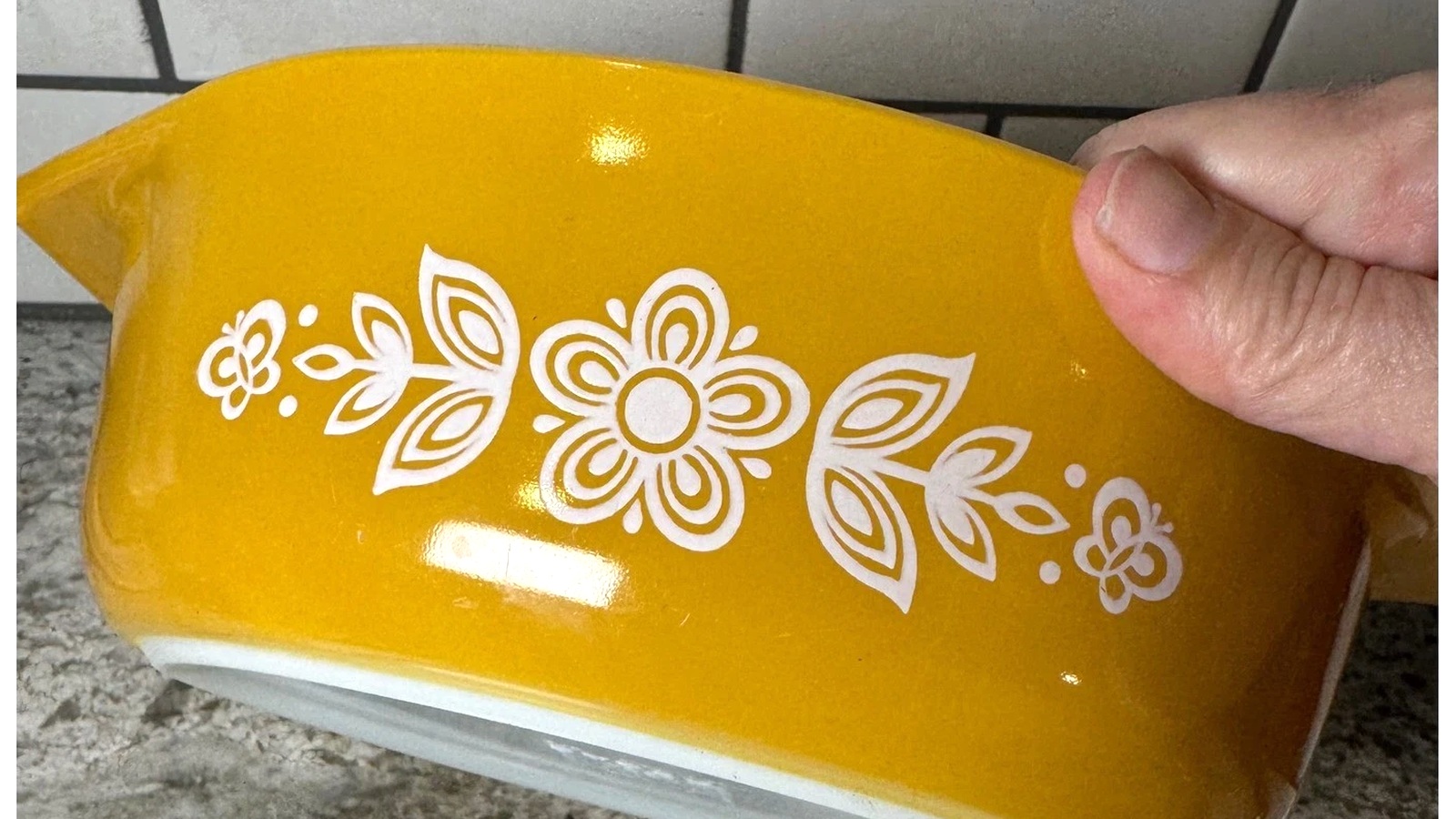
If you find a beautiful, glossy piece, please don’t put it in the dishwasher. Harsh detergents and repeated machine washing can damage the colored finish, and once that original gloss has gone, you can’t really bring it back. Gentle hand-washing with mild dish soap and a soft cloth is the way I’d care for vintage decorated Pyrex. Avoid abrasive scourers on the pattern.
And remember that old ovenware is still glass. Don’t put it directly on a burner or expose it to abrupt changes in temperature. If I had any doubts about an older dish’s condition, I’d use it for mixing, serving cool food, or display rather than risk putting it in the oven.
Butterfly Gold isn’t appealing because it’s impossibly rare. Quite the opposite. It reminds me why I enjoy thrifting in the first place: finding something sturdy, useful, and a little bit beautiful that has already had a life in somebody else’s kitchen. A single good bowl is enough to make me look twice.
You might also like…
The CorningWare Pattern Collectors Dream Of Finding At A Thrift Store
The Blue-And-White Pyrex Pattern Collectors Dream Of Finding At A Thrift Store
The Pink Pyrex Pattern Collectors Dream of Finding at a Thrift Store

