
Affiliate disclosure: This post may contain affiliate links. Please see full disclosure.
There are plenty of pieces of old colored glass sitting anonymously on thrift store shelves, but cobalt blue Royal Lace is one worth learning by sight. The color catches your attention first. Then you notice the pattern running through it, with flowers, curved bands, and delicate details pressed straight into the glass. It is elaborate without looking overly fussy, which probably explains why collectors have been chasing it for decades.
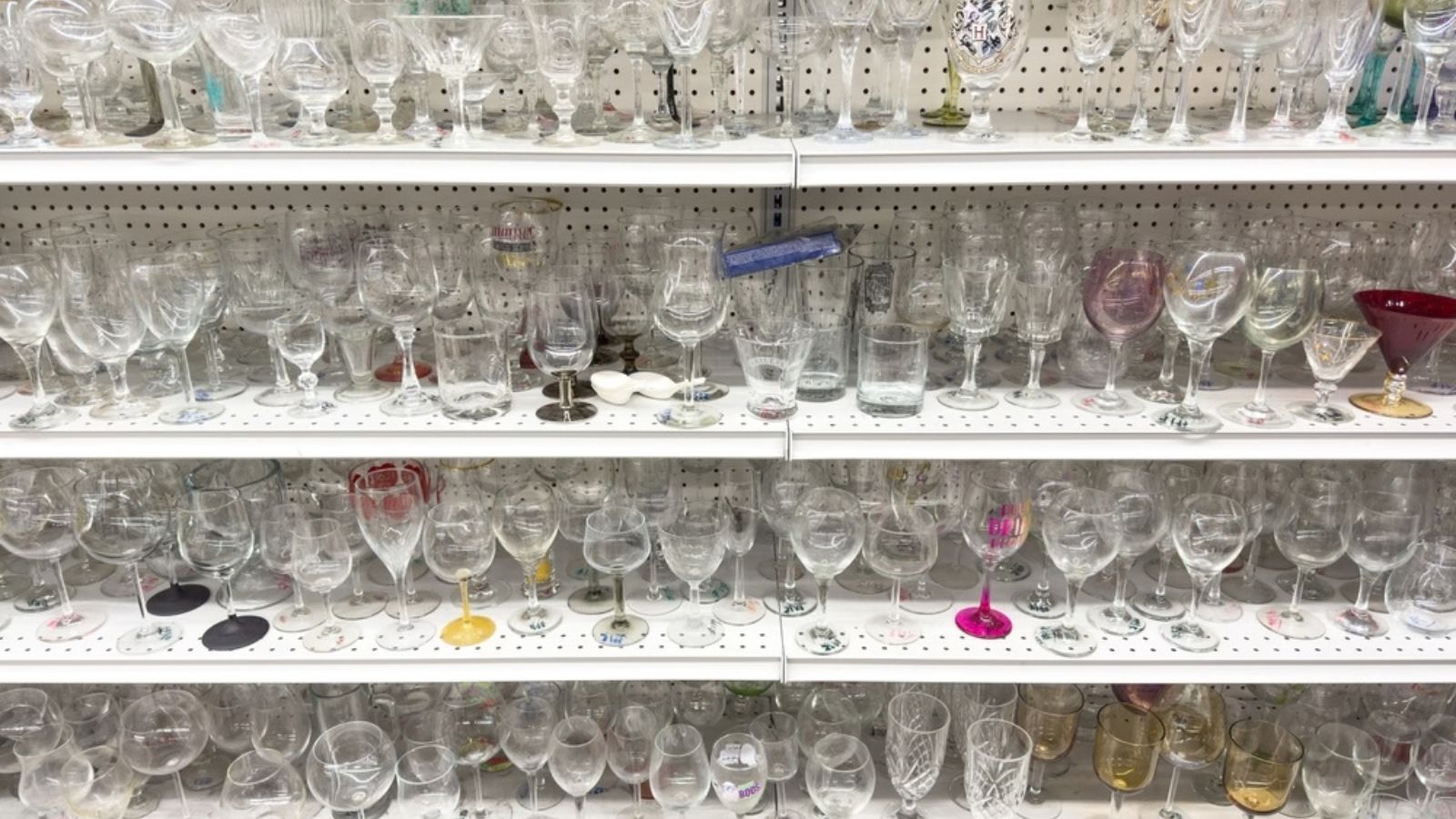
Royal Lace was made by Hazel-Atlas Glass Company from 1934 through 1941. The earliest pieces came in green, pink, and clear glass, with clear being the only color produced for the pattern’s entire run. Cobalt blue followed in 1936 and became one of its defining colors. House Digest has previously included Royal Lace among the Depression glass patterns worth watching for at thrift stores, and it’s easy to understand why once you’ve seen the rich blue version in person.
Unlike a pattern confined to a couple of bowls or drinking glasses, Royal Lace covered a fairly large tableware range. That means a thrift store find might be a dinner plate, tumbler, serving bowl, candlestick, pitcher, or something much less obvious. Knowing the pattern rather than memorizing one particular piece gives you a much better chance of spotting it.
Royal Lace has an unusually good origin story
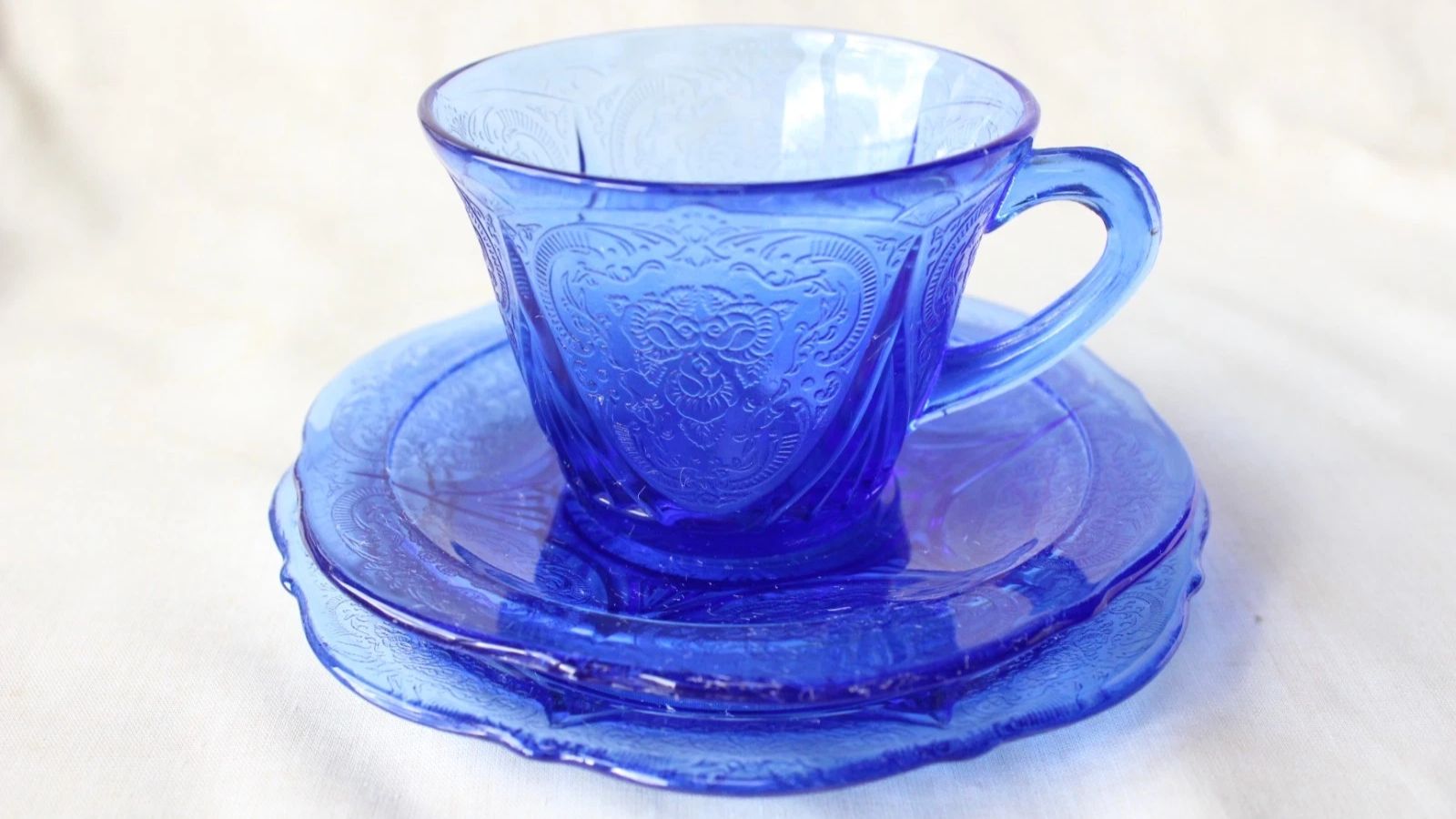
Royal Lace was already in production before its now-famous cobalt version appeared. Green, pink, and clear came first in 1934, while Ritz Blue, Hazel-Atlas’ name for its cobalt glass, joined Royal Lace in 1936. The story behind that color is wonderfully practical. Hazel-Atlas had been making blue glass for Shirley Temple promotional pieces when the promotion ended, leaving the company with blue glass it still needed to use. The molten glass went into existing Royal Lace molds, and the combination proved successful enough that production of the earlier pink and green versions dwindled in favor of Ritz Blue.
The design certainly suits the darker glass. Royal Lace has a repeating floral pattern broken up by curved, draped sections that give it the lace-like appearance behind the name. In cobalt, all those molded details catch the light particularly well.
Hazel-Atlas also made far more than basic place settings in the pattern. The Royal Lace range included vegetable bowls, platters, salt and pepper shakers, creamers, covered sugar bowls, sherbets, cookie jars, console bowls, and candlesticks. There were even five different Royal Lace pitcher forms, some with hand-worked ice lips. Because those lips and spouts were shaped while the glass was hot, small differences between two apparently identical pitchers aren’t necessarily a problem. They’re part of how the pieces were made.
Look closely before deciding you’ve found the real thing
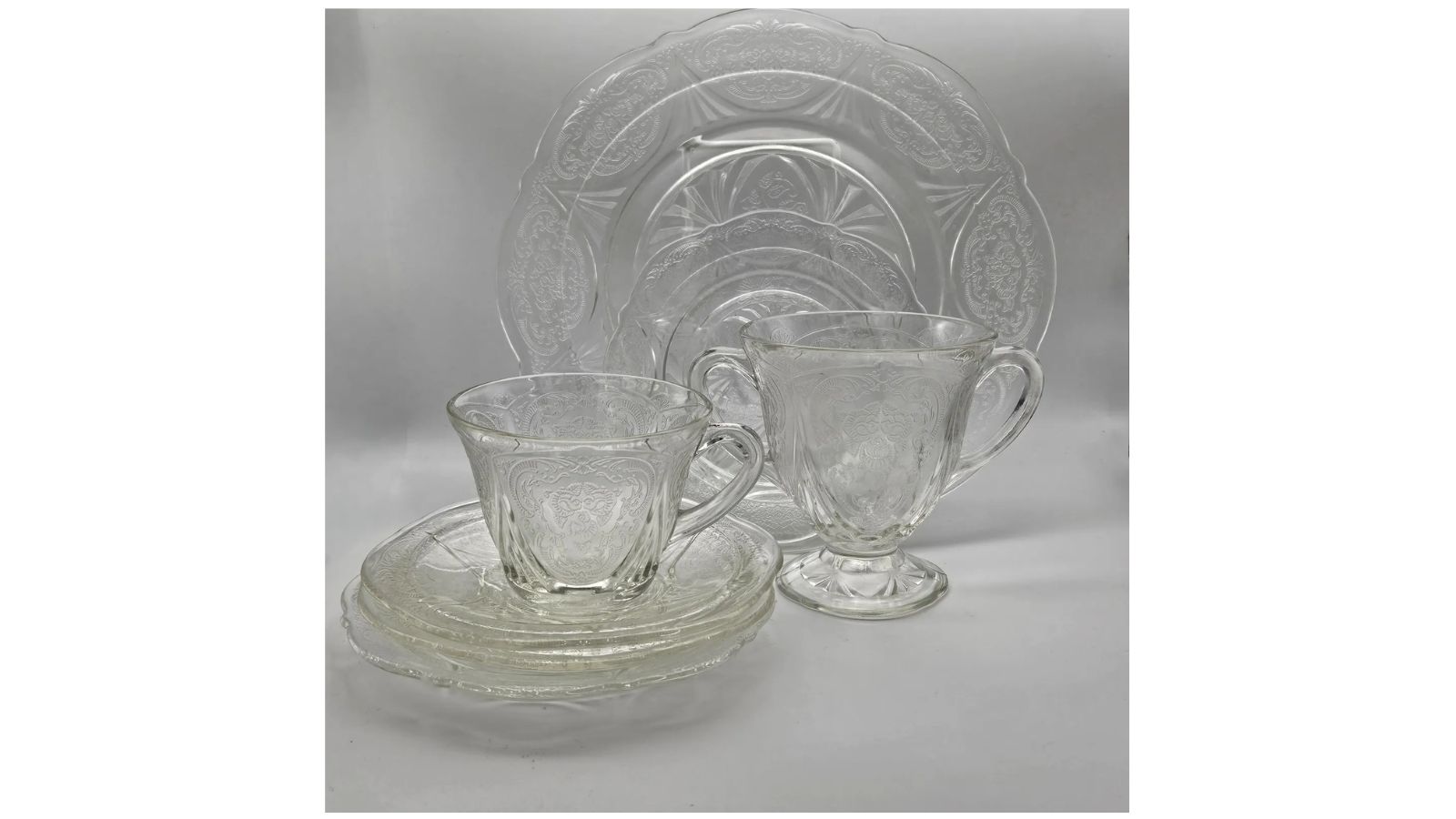
Royal Lace becomes much easier to spot once you know the basic design. Look for molded flowers sitting within those draped, almost swag-like sections. Cobalt blue is the obvious eye-catcher, but don’t walk past the clear version just because it looks less exciting on a crowded shelf. Clear Royal Lace was made throughout the full 1934 to 1941 production period, so the pattern itself is a better identifier than color alone.
And check condition rather than assuming every rough spot is simply evidence of age. Run your eyes carefully around rims, handles, and feet for chips and cracks, particularly on pieces that may have spent decades being stacked in a cupboard. Small manufacturing differences are one thing. A chunk missing from the rim is another.
There are reproductions to watch for as well, although thankfully you don’t have to memorize dozens of them. The principal Royal Lace reproductions are 5-ounce and 9-ounce tumblers and the cookie jar. Original tumblers have the Royal Lace design molded into their bottoms, while the reproduced versions have plain bottoms. On an original cookie jar base, look underneath for a circular mold mark; reproduction bases are smooth. Original glass cookie jar lids are particularly difficult to find, and an old lid should be smooth underneath, while reproductions have a small central dimple.
Those are useful details because the best thrift-store finds rarely announce themselves. Royal Lace may be sitting among a dozen anonymous glasses, perhaps separated from the rest of its original set decades ago. Learn those flowers, swags, and that deep cobalt color, and it becomes much harder to walk straight past one.
You might also like…
The 1969 Pyrex Pattern Collectors Dream Of Finding At A Thrift Store
The Pyrex Pattern Made With Real 22-Karat Gold Collectors Dream Of Finding At A Thrift Store
The Blue-And-White Pyrex Pattern Collectors Dream Of Finding At A Thrift Store

