
Affiliate disclosure: This post may contain affiliate links. Please see full disclosure.
You spend enough time outside, you’re going to get stung.
Maybe it’s while you’re weeding, or moving lumber, or trying to deal with the trash cans in sandals when you should’ve put shoes on. Sometimes it’s a quick burn and some cussing and you’re fine. Sometimes it hits so hard you have to stop what you’re doing and just breathe for a second.
Most stings are in the “annoying but manageable” category. But there are a handful of insects with stings that people remember for years. Some of them live in North America. Some live in tropical forests you’ll probably never visit. All of them sit at the top end of how much pain a little animal can inflict.
There’s even a formal pain scale for this. An entomologist named Justin Schmidt let different insects sting him, on purpose, and ranked the pain from 1 to 4 on what’s now called the Schmidt Sting Pain Index. A regular honey bee sting is right in the middle at 2. The worst on this list hit 3 or 4.
I’m not a doctor. If you ever get stung and then start feeling really off, trouble breathing, tight chest, swelling of your face or tongue, feeling faint, or a sting area that keeps getting worse instead of better, treat that as a medical issue, not a “walk it off” moment.
With that said, here are 15 insects known for delivering the most painful stings, what the pain is like, and how worried you actually need to be.
1. Bullet ant (Paraponera clavata)

Bullet ants live in Central and South American rainforests, mostly in low, hot, humid jungle. They’re big, dark ants that nest at the bases of trees and forage up and down the trunks.
On the Schmidt scale, they sit right at the very top. People who’ve taken a sting describe deep, burning, throbbing pain that can make it hard to use the limb, sometimes for most of a day. The name “24-hour ant” comes from that long, miserable burn.
The venom contains a peptide called poneratoxin that scrambles how nerves fire, which is part of why it hurts so much.
Despite all that, a single sting is usually not life-threatening for a healthy adult, just unbelievably painful. Bullet ants aren’t aggressive if you leave them alone. Most stings happen when people lean on trees, grab vegetation, or disturb nests without realizing it.
2. Warrior wasp (Synoeca septentrionalis and relatives)
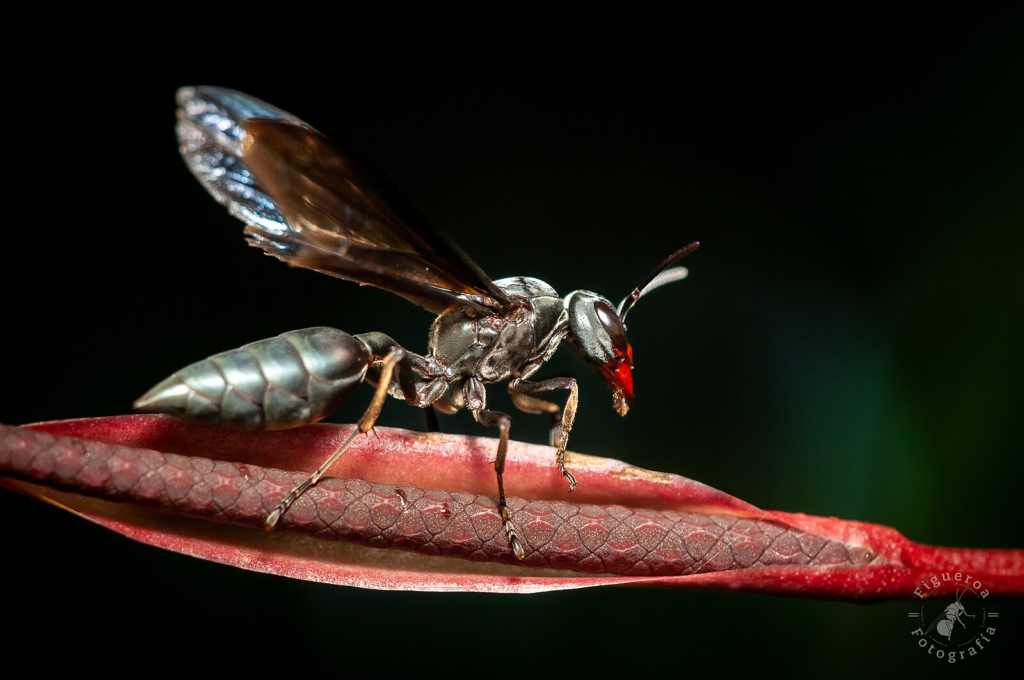
Warrior wasps are large paper wasps from Central and South American forests. Their nests look like gray armored shells stuck to tree trunks. If you get too close, the whole colony can start drumming their wings on the nest in unison, which is as creepy as it sounds.
These wasps also rate at the top of the pain charts. Their sting sits at 4 on the Schmidt scale. People report intense, burning, throbbing pain that can keep flaring for an hour or more.
The venom has components that act on the nervous system and smooth muscle. Researchers are actually picking apart those chemicals for possible medical use, which tells you something about how potent they are.
They’re not patrolling the forest hunting people. They’re defensive. If you respect the warning buzz and give their tree plenty of room, you’ll probably never find out what the sting feels like.
3. Tarantula hawk wasp (Pepsis species)
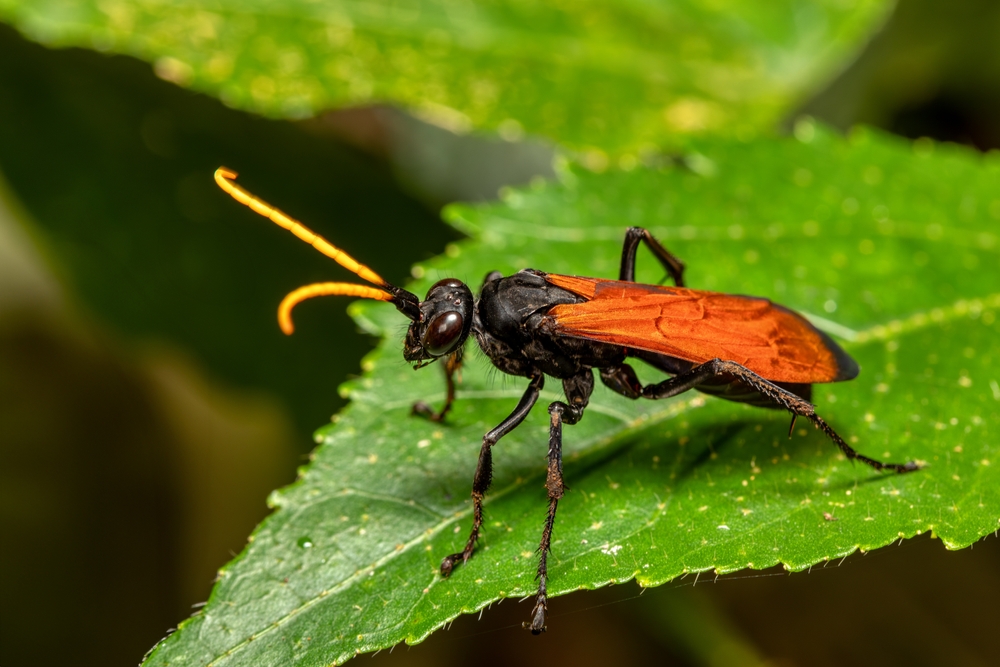
This one a lot of Americans can run into. Tarantula hawks live in desert and scrubby habitats in the Southwest and parts of Mexico. They’re big metallic blue wasps with bright orange wings, and they hunt tarantulas to feed their larvae.
On the pain scale, they’re right up there with bullet ants and warrior wasps at 4. The sting is described as an overwhelming electric shock of pain that makes it very hard to focus on anything else for a few minutes. The upside is that it usually fades quickly, often within five minutes, rather than dragging on all day.
Natural history sources point out that tarantula hawk stings feel terrible but rarely cause serious medical issues in healthy people. The advice is basically: don’t panic, don’t swat, and don’t grab them.
They spend their time chasing spiders and feeding on nectar. If you see one, it’s better to just watch it go about its business and step out of its way.
4. Velvet ant / “cow killer” (Dasymutilla species)

Velvet ants are those fuzzy, brightly colored “ants” you sometimes see trucking across sandy ground in the southern and central U.S. The females are actually wingless wasps. Many species are bright red, orange, or yellow with black, like walking warning labels.
Their sting sits around level 3 on the Schmidt scale. People describe it as a deep, sharp pain that can keep pulsing for up to half an hour. The “cow killer” nickname is an exaggeration, but it gives you a sense of how locals feel about getting nailed by one.
Extension and pest control writeups agree: the sting is extremely painful, but it doesn’t usually cause lasting harm to people or livestock unless there’s an allergy or a lot of stings.
They don’t form nests or swarms. You usually only see one at a time. Stings mostly happen when someone picks one up, tries to squash it with bare skin, or steps directly on it. Best approach is to let that weird fuzzy “ant” go on its way.
5. Maricopa harvester ant (Pogonomyrmex maricopa)
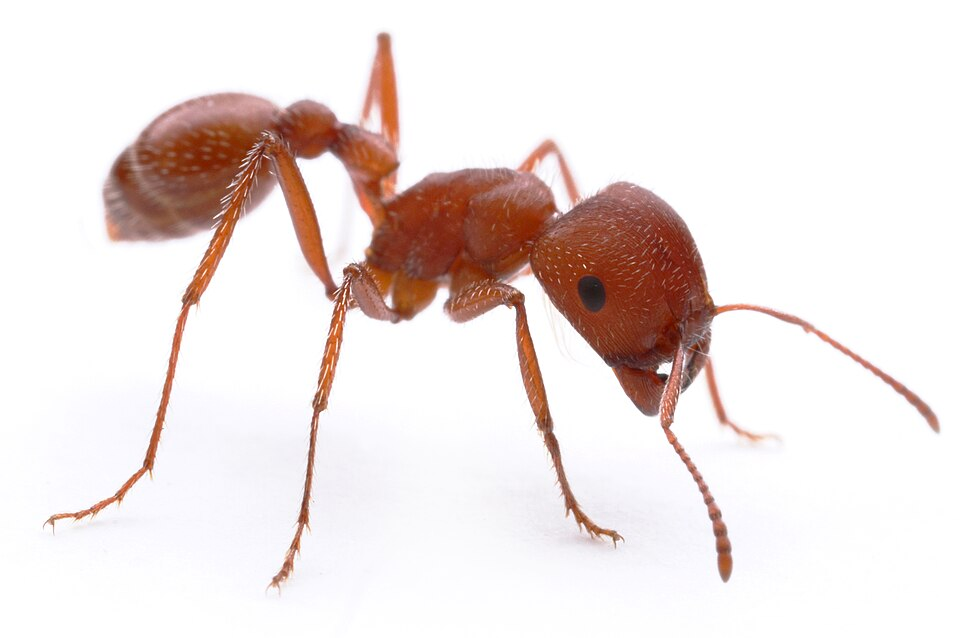
This isn’t a flashy insect, but drop for drop it has some of the most toxic venom ever measured in an insect. Maricopa harvester ants live in the deserts of the southwestern U.S. and northern Mexico. They build low, bare soil mounds with small pebbles and seed husks scattered around.
The venom has been measured as more than twenty times as toxic as honey bee venom in lab tests on mice. Schmidt rated the sting around a 3 for pain, and people report deep, burning, pulsing pain that can last several hours.
On top of that, the venom contains an alarm chemical that tells other ants to attack the same spot. Step on a mound and you might get dozens of stings in a very short time.
The ants are busy collecting seeds and minding their own business most of the time. The real problems start when kids or pets play on mounds, or when you stand still on one while talking and don’t notice until your ankles are covered.
6. Florida harvester ant (Pogonomyrmex badius)
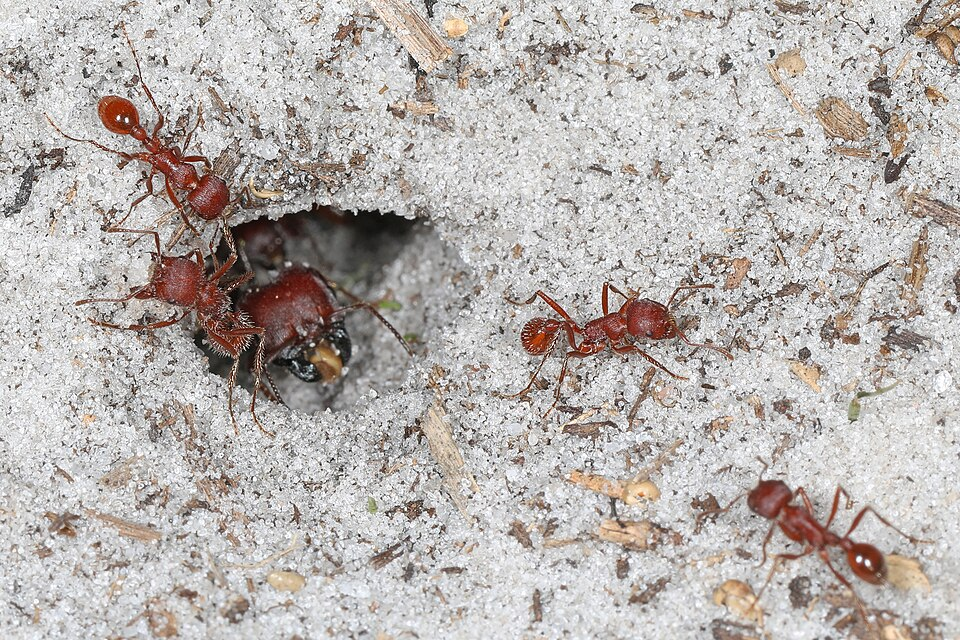
Florida harvester ants live in hot, sandy habitats along the Atlantic coastal plain, especially in Florida scrub, pine flatwoods, and open sandy yards. Their mounds are often decorated with bits of charcoal, shells, or plant debris.
Their venom is right up there with the Maricopa’s in terms of potency. Toxicology work has shown that this group of harvester ants produces venom comparable in strength to some dangerous snakes, at least in lab models.
On the pain front, they land around a 3. People report a strong, throbbing sting that can keep aching for many hours, sometimes into the next day.
They don’t go out of their way to sting, but they are very defensive around nests. Good shoes, watching where you stand in sandy, open areas, and teaching kids not to dig in ant mounds are the big prevention steps here.
7. Bull ants / bulldog ants (Myrmecia species)

Bull ants are large, long-legged ants native to Australia. They’ve got big eyes, visible jaws, and long stingers, and they move with a kind of deliberate, purposeful stride that makes people nervous for good reason.
Some species in this group rate around 2–3 on pain scales. The sting isn’t usually a long, burning agony like bullet ants, but it’s a very sharp, intense jab that commands your attention.
Australian researchers note that bull ant venom is among the most potent insect venom out there, and they’re responsible for a fair share of serious allergic reactions and a small number of deaths in their range.
Unlike many ants, bull ants will turn and fight rather than just run for cover, especially near the nest. If you’re in bull ant country, it’s worth watching where you put your hands and knees, and wearing shoes instead of sandals when you’re messing around in scrub or bushland.
8. Paper wasps (Polistes species)
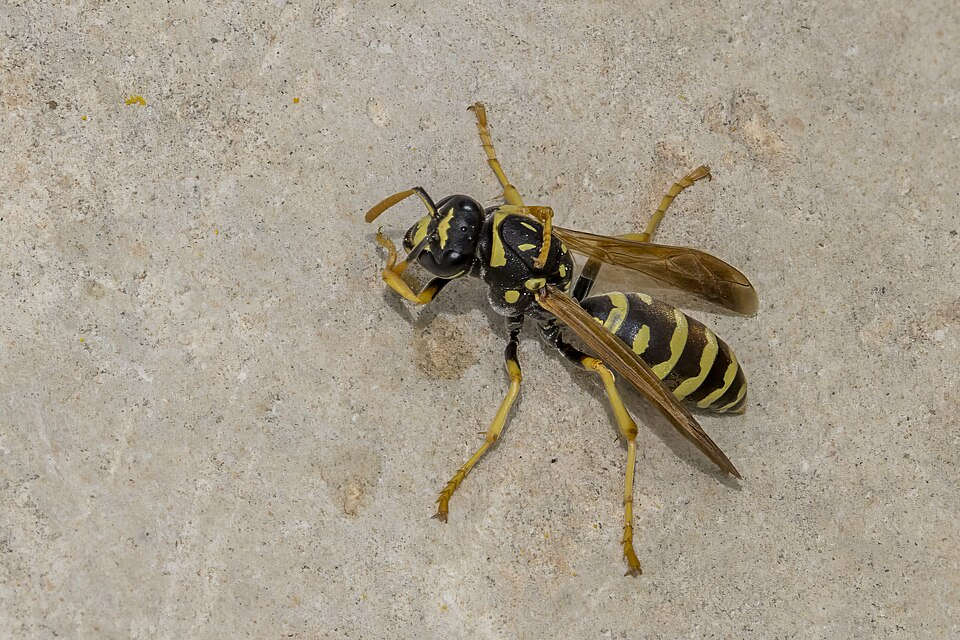
Paper wasps are common just about everywhere. They’re the slender wasps that build open, umbrella-shaped nests under eaves, porch ceilings, railings, and tree branches. There are a lot of species, including familiar ones like the European paper wasp and various North American Polistes.
On the pain index, they sit around a 3. The sting is hot, sharp, and chemically burning, and it can keep aching for a while afterward. Most of the time, that pain eases up within maybe 10–20 minutes, leaving swelling and tenderness.
They’re actually useful predators in the garden, hunting caterpillars and other soft-bodied pests. The downside is that they’re very defensive about their nests and can sting more than once.
If a nest is high and out of the way, a lot of people just leave it and let them work on pests. If it’s right by a busy door or where kids play, that’s where you either carefully relocate it or get someone experienced to do it.
9. Asian giant hornet / related giant hornets (Vespa mandarinia group)

These are the big orange-headed hornets from East Asia that the media dubbed “murder hornets.” They’re the largest hornets in the world, with queens that can get close to two inches long. They’re native to parts of Japan, China, Korea, and nearby countries, where they hunt other insects and can wipe out honey bee colonies.
On pure “sting pain,” they’re in the same general ballpark as a wasp or smaller hornet, roughly around 2 on the Schmidt scale. What makes them dangerous is the amount of venom they inject, the fact that they can sting repeatedly, and that they sometimes attack in groups when their nest is disturbed.
In their native range, they’re linked with dozens of deaths a year, mostly from allergic reactions or from people being stung many times at once, not from single stings in healthy adults.
In North America, there have been a few localized detections in the Pacific Northwest, and authorities have been quick to track and destroy nests. For most people, this is more of a “good to know it exists” insect than a realistic daily risk.
10. Bald-faced hornet (Dolichovespula maculata)
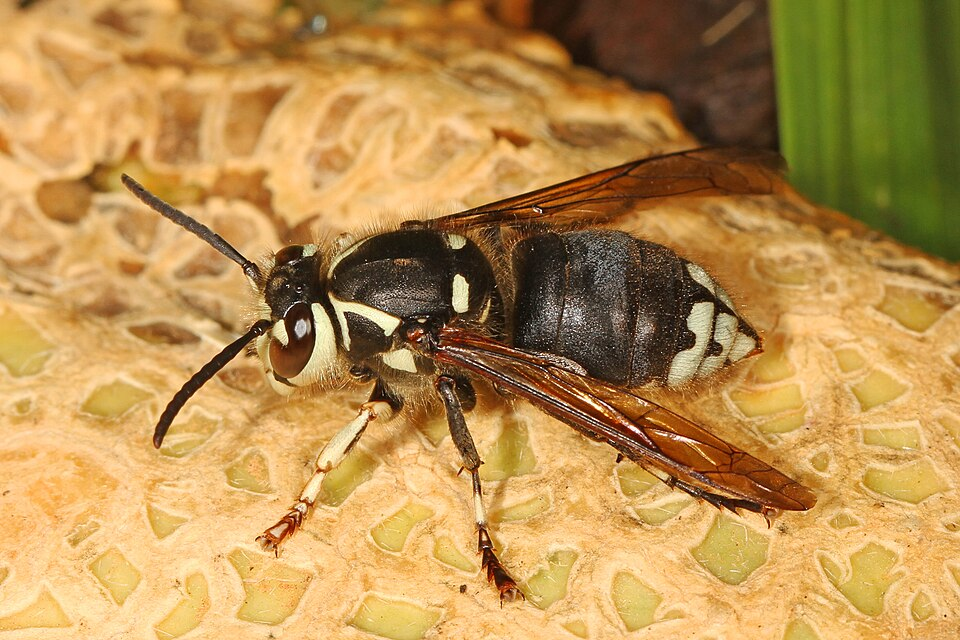
Bald-faced hornets are those big black-and-white wasps that build gray, football-shaped paper nests in trees, shrubs, and on buildings across much of North America. Despite the name, they’re technically a type of yellowjacket.
Their sting is around a level 2 on pain scales, but it’s a solid, throbbing hit that most people don’t forget quickly. There’s usually strong local pain and swelling at first, then tenderness for a while.
They strongly defend their nests and can sting multiple times. Because nests can house hundreds of workers, accidentally hitting one with a mower or trimming tool can turn into a flurry of stings very fast.
If a nest is high and away from human traffic, it’s often fine to leave it until cold weather kills the colony. If it’s near a doorway, path, or play area, that’s where removal makes sense, and it’s one of the few things I’d say is worth paying a pro for if you’re at all unsure.
11. Yellowjackets (especially Western yellowjacket, Vespula pensylvanica)
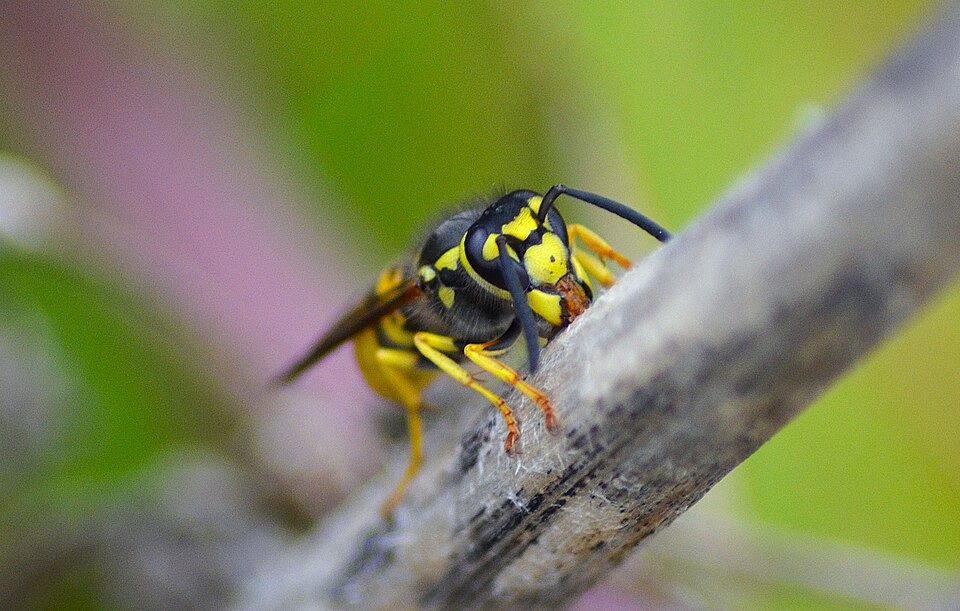
Yellowjackets are the stocky, bright yellow-and-black wasps that show up at picnics, hover around trash cans, and try to climb into soda cans. Different species live across North America and elsewhere. The Western yellowjacket is one of the most aggressive in the U.S.
Each sting is in the honey bee range for pain, roughly level 2. What makes yellowjackets such a problem is the behavior. They can sting repeatedly, they recruit nest-mates to attack the same target, and late in the season they’re extra cranky and focused on sugary foods.
If you swat at them around food, they’re more likely to sting. Keeping food covered, moving trash away from seating, and calmly brushing them away instead of smashing them all reduce your odds of getting nailed.
Nest location matters a lot. Ground nests in lawns and fields cause trouble with kids, pets, and lawn equipment. Structural nests in walls or under steps can turn doorways and decks into sting zones.
12. Honey bee (Apis mellifera)

The basic honey bee sting is the yardstick here. On Schmidt’s scale, it’s a level 2. That’s the sharp, burning jab most of us are familiar with: strong at first, then fading into soreness over a few hours or a day.
Honey bee stingers are barbed. When a worker bee stings a mammal, the stinger often stays in the skin and keeps pumping venom for a short time. Scraping it out quickly with a fingernail, credit card, or dull knife blade can reduce the dose.
For most non-allergic adults, a single bee sting is local pain, redness, and some swelling. It’s not fun, but it’s not medically dramatic. For people with venom allergies, it’s a whole different story. Bee venom can trigger anaphylaxis in a small portion of the population, which is why anyone with a known serious allergy needs to treat even one sting as serious until they’re sure they’re okay.
Africanized honey bees (the so-called “killer bees”) have venom that’s similar per sting, but they defend hives much more aggressively and can chase threats for long distances, which is why you see reports of people and animals being overwhelmed by hundreds of stings in a short time.
13. Red imported fire ant (Solenopsis invicta)

If you live in the southern U.S., this is probably the one you deal with most. Red imported fire ants are an invasive species now established across much of the Southeast and beyond. They build loose, crumbly soil mounds and swarm aggressively when disturbed.
A single sting only scores around 1 or so on the pain index, less than a honey bee, but they don’t sting once. They grab on with their jaws and pivot in circles, stinging again and again. The venom is mostly oily alkaloids that cause burning pain followed by classic white-topped blisters.
Tens of millions of people are stung every year in the U.S., and a noticeable slice of them develop systemic allergic reactions. There have been dozens of documented deaths, usually in people who were stung many times and had underlying health issues or allergies.
Closed shoes, watching for fresh mounds after rain, and keeping kids and pets off obvious nests will spare you a lot of misery.
14. Africanized honey bee (hybrid Apis mellifera)
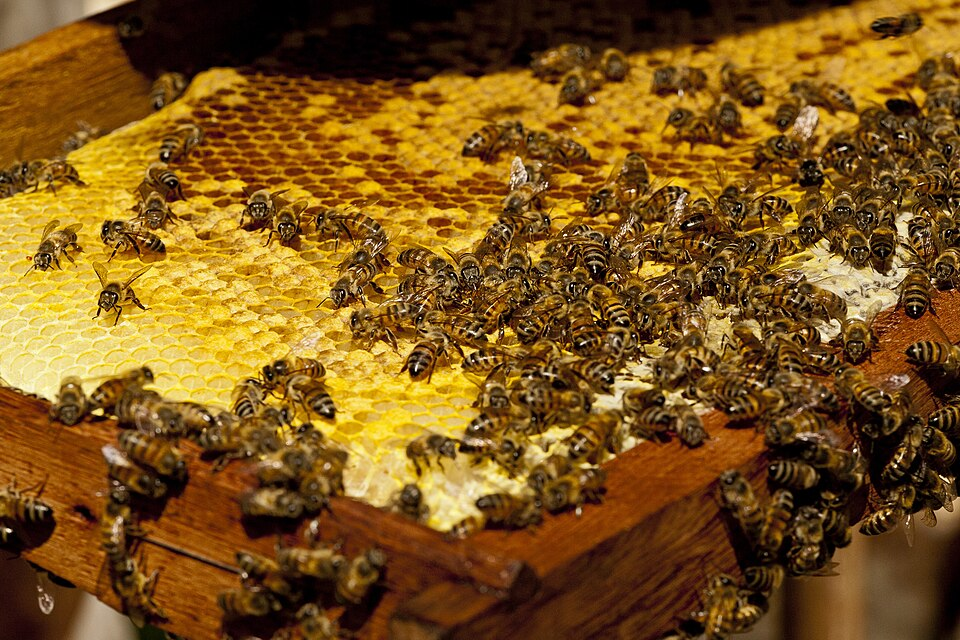
Africanized bees are hybrids between African and European honey bees that were introduced to the Americas and have spread through parts of South and Central America and into the southern U.S.
On a per-sting basis, the pain is the same as a regular honey bee. The danger is the way they respond to threats. Africanized colonies tend to attack in larger numbers, react to smaller disturbances, and chase for longer distances than European honey bees.
Serious incidents usually involve people or animals being stung hundreds of times, not just once. The total venom load plus any allergic response can be life-threatening.
If you hit a cloud of very agitated bees, no matter what type they are, the best move is to cover your face and head with whatever you’ve got, move quickly to shelter like a building or car, and then brush remaining bees off once you’re inside. After that, anyone with more than a handful of stings, or any sign of trouble breathing, chest tightness, or confusion, needs medical help.
15. Cicada killer wasp (Sphecius species)
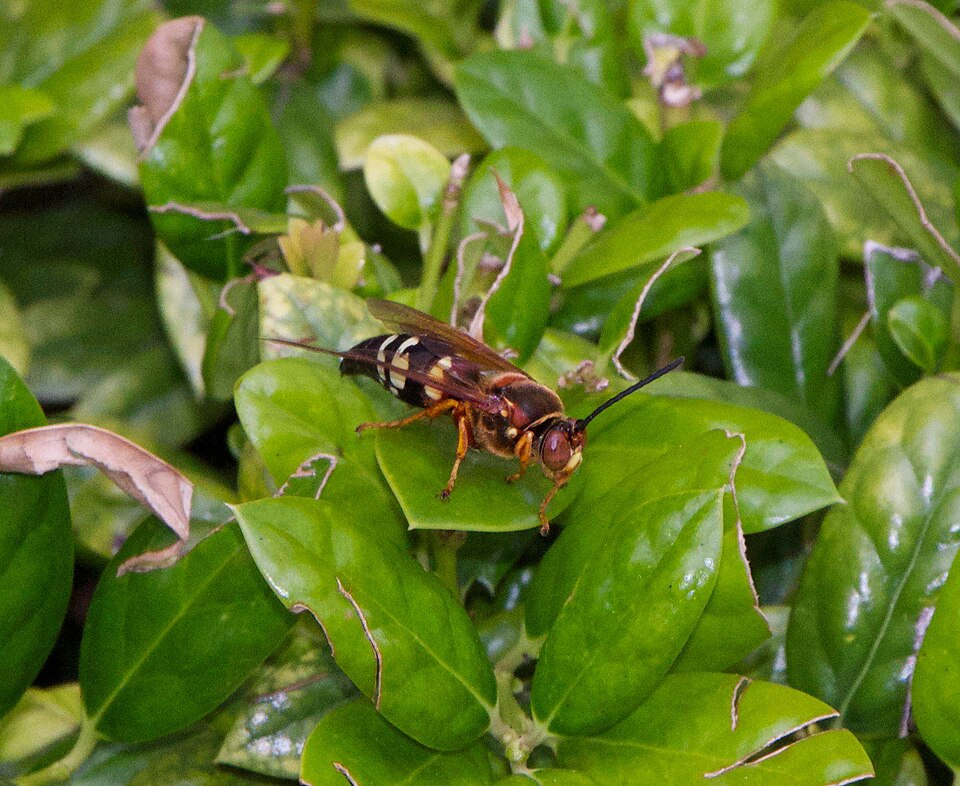
Cicada killers look like something that should be on a movie poster. They’re huge wasps, often over an inch long, with yellow and black markings and reddish wings. They live in North America and dig burrows in sandy or loose soil, stocking them with paralyzed cicadas for their larvae.
On pain scales, their sting is surprisingly low, roughly around 1.5, less than a honey bee. It’s still a solid sting, but nowhere near the worst on this list.
They look terrifying, but sources consistently say they’re not very aggressive toward people. The females save their venom for cicadas unless they’re grabbed or really cornered.
Most of the time, they’re just out there doing pest control for your trees by thinning out cicadas. If the burrows are in a spot where kids or pets might mess with them, filling or raking the area after the season is usually enough to discourage repeat nesting.
Dealing with a really painful sting
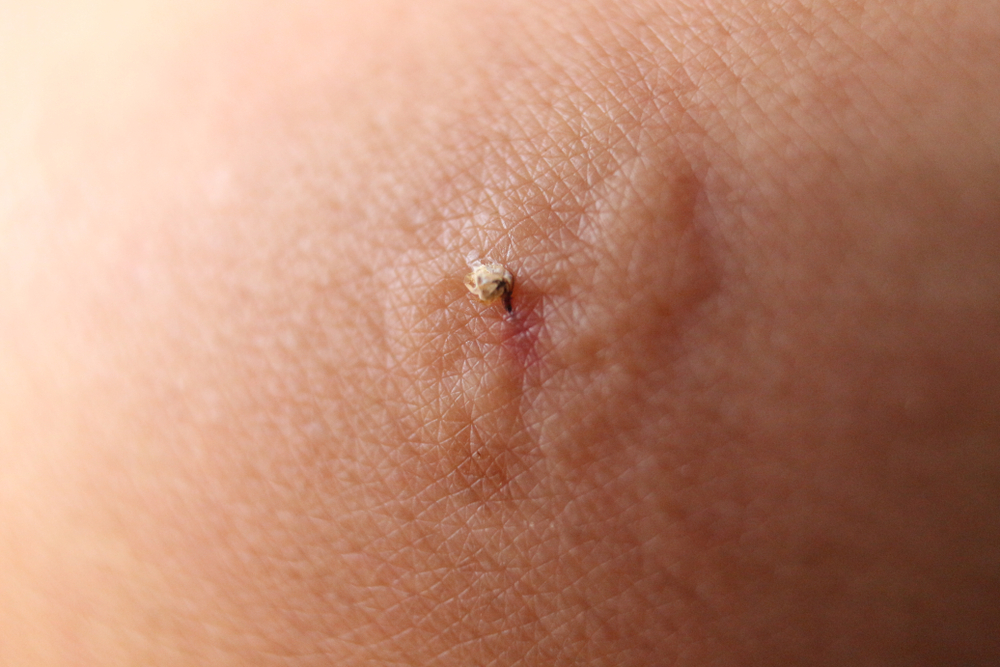
If you’re stung by any of these, or by a plain old bee or wasp that just happens to hit a sensitive spot, the basic first aid looks the same:
Get away from the insect or nest first. Then deal with the sting.
If there’s a stinger left in your skin, scrape it out with a fingernail or card instead of pinching it. Wash the area when you can. A cold pack for 10–20 minutes will usually help with both pain and swelling. Over-the-counter pain relief and antihistamines are enough for most mild reactions in adults who can safely take them.
The line where you stop DIY and call a professional is pretty simple: lots of stings at once, stings on the face or neck, or any signs of your whole body getting involved, wheezing, swelling away from the sting, dizziness, feeling like you might pass out, or just a strong “something is really wrong” feeling.
Pain is one thing. A serious reaction is another.
Most of us will never meet a bullet ant or warrior wasp. But knowing which insects can deliver serious pain, and which painful stings are more about misery than mortality, makes it easier to decide when you just need an ice pack and some muttered swearing… and when you need to take it seriously and get help.