
Affiliate disclosure: This post may contain affiliate links. Please see full disclosure.
Companion planting is a time-tested method of gardening that involves placing certain plants near one another because they have similar needs in terms of sun and water or because they help each other grow.

When it comes to basil companion plants, you want to look for other herbs, vegetables, or flowers that repel bugs and attract pollinators. A good example is borage, a lovely purple herb that naturally wards off insects that may wish to snack on a basil plant’s sweet leaves.
Keep reading to learn more about what to plant with basil for bigger, tastier leaves that will elevate your meals. You’ll also learn about some plants that don’t play well with basil at all (we’re looking at you, mint!)
Important Info For Companion Planting Basil
If you’re new to gardening, you’ll soon learn that each plant that you add to your garden has its own unique needs. Some love full sun, while others wilt if it gets too hot. Some need watering every day, while others will die if you don’t let them dry out.
Basil is a fragrant herb that can’t get enough sun. It likes its water, too, but not nearly as much as the warmth and brightness of daytime. When grown outdoors, basil is relatively easy to manage. Plant it where it’ll receive full sun and keep its soil wet but not soaking, and you’ll enjoy lots of yummy leaves for making pesto, pizza, bruschetta, and more.
As you consider companion plants for basil, at the very least, you’ll want to look for plants that grow similarly. As an added bonus, look for plants that also offer some extra benefit, such as keeping insects away. At the same time, you don’t want to plant herbs and vegetables that will crowd out your basil by sucking up all the nutrients in the soil, blocking out the sun, or literally suffocating your basil with excessive root growth.
The Best Basil Companion Plants
The list of plants below offers the answer to what grows well with basil. The best basil companion plants protect your tasty herbs from harm, all while being tasty themselves!
Asparagus
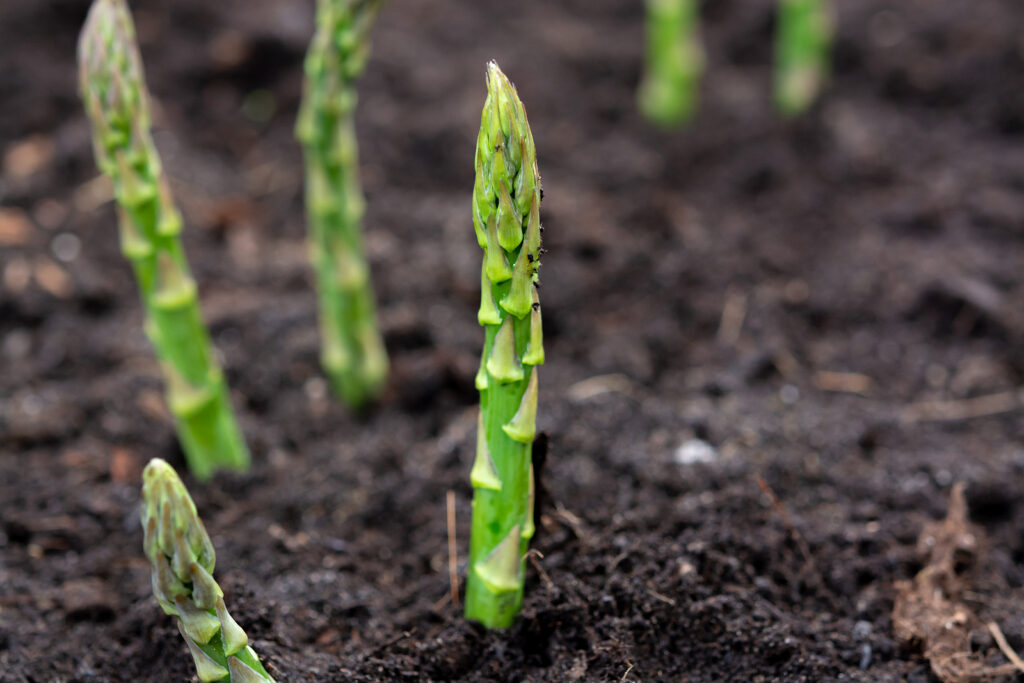
Asparagus and basil make a great team. Asparagus helps basil by attracting ladybugs, a beneficial insect that feasts upon aphids, a destructive bug that loves to make a meal out of tender basil leaves. In return, basil’s fragrant scent warns off the asparagus beetle that likes to munch on the tender tips of this veggie.
Borage
Borage is somewhat of a superhero in the gardening world. It’s easy to grow, yummy to eat, and a friend to all kinds of herbs and veggies, including basil. When you choose borage as a companion plant for basil (or strawberries!), you’ll see more pollinators in your garden and may even notice that your basil tastes just a bit sweeter.
Chamomile
You know chamomile for its soothing tea, but you may be surprised to learn that when you use it as a basil companion plant, it will give your herb a more potent taste and fragrance. This is because chamomile increases the production of essential oils in nearby plants. An added benefit of more fragrant basil? It will keep away bugs that might try to nibble on it and other plants in the area.
Marigold
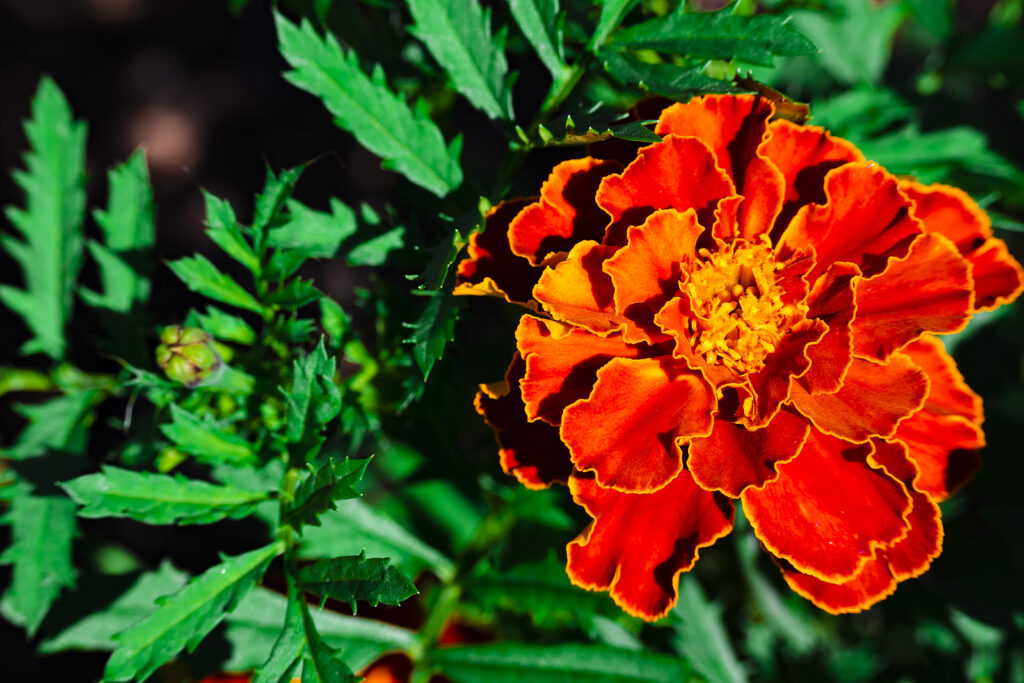
If you’ve ever been around marigolds, you know that they pack quite a bunch in the scent department. But what you might not know is that there are lots of destructive bugs that don’t care for its smell at all. The same actually goes for basil too. This means that when you plant marigold and basil together, they essentially create a force field that keeps bugs out of the garden. (Okay, maybe not actually a force field, but they do offer a one-two punch.)
Marjoram
Marjoram is a good basil companion plant because it likes the same things basil does: lots of sun and not too much water. This makes it easy to grow both of them close to one another because you don’t have to keep straight what each one likes. As an added benefit, marjoram helps basil grow big and strong by attracting pollinators like butterflies, as well as bugs that like to pick off aphids.
Oregano

Oregano and basil are good friends in the kitchen, and it turns out they’re just the same in the garden. This herb is great for companion planting with basil because its strong scent deters destructive pests from coming too close. It also has similar sun and watering requirements as basil, so you can grow them side by side, harvest them side by side, and then use them in the same recipes when cooking.
Tomato
You’ve probably heard that planting basil and tomatoes together is the bees knees. This often comes from the belief that each plant boosts the flavor of the other. Unfortunately, there’s no scientific evidence of this — but there are plenty of gardeners who will swear to it. Either way, tomatoes and basil won’t harm each other, and basil may actually repel hornworms that often eat tomatoes.
What Not to Plant With Basil
Even in nature, there are some plants that simply don’t get along. Review the list below to make sure you keep basil and these offenders far away from one another.
Cucumber
Basil and cucumber don’t actually have any beef — they can grow side by side with no issues. However, a cucumber is mostly made of water, which means that it tends to take on the flavor of whatever is near. When you plant this impressionable veggie next to this confident herb, you may end up with cucumbers that don’t taste quite right.
Fennel
If plants were kids on a playground, fennel would be the one who always wants to play alone. It’s a beautiful plant, and just about every part of it can be used in the kitchen, from its crunchy bulb to its wispy leaves. But when you plant fennel with nearly any other kind of vegetation, including basil, you’ll find that the fennel competes with the plant, often winning the fight by stunting the plant’s growth and eventually killing it.
Mint
Mint is incredibly easy to grow, and it can grow just about anywhere. And it’s for this reason that it’s not a good companion plant for basil. When you plant these herbs close together, you’ll find that mint will quickly overtake the area, absorbing nutrients from the soil and creating a tangled, matted root system that can kill off basil and other plants.
Rue
We’re not sure what went down between basil and rue, but we do know that the pair are engaged in a long-lasting feud that has no end in sight. When you plant rue, it actually releases chemicals into the ground that inhibit the growth of particular plants — including basil. These are two herbs that are better left apart.
Companion Planting Basil for the Healthiest Plants
Basil is favorite among gardeners everywhere. In addition to being easy to grow, it’s wonderful in the kitchen. But if you want a healthier herb with bigger leaves, consider finding companion plants that help basil thrive. Borage and chamomile are two good options because they keep pests away (and they aren’t so bad in the kitchen themselves). Want even better basil? Learn about organic fertilizers for basil and basil diseases you need to watch out for.