

Affiliate disclosure: This post may contain affiliate links. Please see full disclosure.

Disclosure: This post contains affiliate links. Click here to read my affiliate policy.
Common basil diseases and pests are always of concern to growers. These fungi, pathogens, and pests can attack at any time during the growing year. And most are not exclusive to basil – they’ll attack many of your other plants, too.

Fusarium wilt, for example, will infect beans, peas, tomatoes, and peppers, as well as your basil. While flea beetles chow down on squashes, beans, corn, lettuce, potatoes, and more.
We’ve put together a guide to the most common basil pests and diseases to help you learn how to prevent, spot, and treat them. You might’ve noticed wilting leaves, chunks missing, the plant seeming stunted, or perhaps you’ve seen yellow, brown or black spots on basil leaves.
Whatever the problem, you’ll find the most likely culprits here. We’ll not only show you basil pest and disease pictures, we’ll show you how to reduce the likelihood of an infection or invasion, and what to do if your basil does start to suffer.
Remember, a couple of the best ways to keep your basil free of pests and diseases is to keep the plants as healthy as possible by providing the right growing conditions and by using the right companion planting combinations.

Common Basil Diseases and How to Treat Them
You might be practicing proper soil management, it’s possible you could have a pathogen lurking in the ground. Or maybe you’ve got overwintering pests in fallen leaves you haven’t swept up. Or perhaps it’s just a really good year for a specific pest, or there’s a prolonged period of the perfect climatic conditions for a fungus or bacteria to thrive.
Even if you take every possible precaution, you’re still at the mercy of Mother Nature. Let’s take a look at some of the most common basil diseases
Fusarium Wilt (Fusarium oxysporum)
Fusarium wilt is unfortunately common. It also affects other plants including asparagus, French beans, peas, and tomatoes.
Caused by the Fusarium oxysporum fungus, this common basil problem affects field-, greenhouse-, and hydroponic-grown plants right across the world. And it’s easy to unwittingly carry spores on your clothes, gloves, tools, and boots to infect a previously unaffected area.
Fusarium wilt is prolific during the summer, particularly in hot weather. This is a soil-borne fungus and can remain dormant in the soil if no suitable hosts are available for many years, so once your plants show symptoms, it’s important that you don’t grow any susceptible plants in the same spot for around 5 years, unless you successfully solarize/sterilize the soil there first.
Fusarium wilt blocks the plant’s water vessels, causing wilt, dehydration, and death. The disease commonly occurs later in the growing season.
Symptoms of Fusarium Wilt in Basil
The first symptoms of fusarium wilt are first noticed on the older leaves, before progressing to the younger leaves and eventually the death of the plant.
- Yellowing of the leaves
- Stunted growth
- Discoloration of the xylem vessels
- Fungal growth on the outside of the stems – white, orange, or pink.
- Stem decay
- Asymmetric growth – the fungus often attacks one side of the plant first, rapidly spreading to the other
- Root rot
- Leaves brown, shrivel, and fall
- The stem tops dry out and curl over in a tell-tale “shepherd’s crook”
How to Prevent or Control Fusarium Wilt in Basil
There’s no cure for Fusarium wilt and it spreads like wildfire. So the best method of control is prevention. One key method of prevention is to purchase a resistant variety of basil. There are a few good options:
- Nufar
- Aroma
- Plenty
- Elidia
Lots of growers report that they have success with disinfecting seeds with hot water, although the seeds do become sticky and difficult to work with once you expose them to hot water, so this isn’t practical if you want to grow large numbers of basil plants.
Proper greenhouse, tool, glove, boot, and equipment sanitation and cleanliness is one of the best preventatives for this and all other plant diseases. (You can find out more about caring for your garden tools here.)
If you’ve had any Fusarium wilt in the greenhouse, you need to properly sanitize all surfaces inside, including frames, glass, trays, and plant stands. The spores can attach themselves to any surface and even be airborne.
Keep on top of weeds as much as possible, because they can harbor spores. Additionally, weeds around your plants inhibit airflow, creating warm, damp conditions in which Fusarium wilt thrives.
Avoid ammonium-nitrogen fertilizers because it encourages the fungus spores to reproduce. (I recommend using homemade organic fertilizers anyway).
There is no cure, chemical or natural, so there’s very little you can do to treat Fusarium wilt in basil.
As soon as you spot that your basil plant is suffering from Fusarium wilt, remove it. Don’t compost it.
In fact, I’d recommend burning it to limit the risk of spreading the spores.
If you grow your basil in pots, throw away the pot that housed the infected plant. And, if you don’t want to throw away the soil, sterilize it.
Bacterial Leaf Spot/Basil Shoot Blight

Caused by a pathogen known as Pseudomonas cichorii, this unfortunately common basil disease thrives in wet soil and humid conditions. It shows itself as brown or black spots on the leaves, as well as streaking on the stems. It occurs when infected water in the soil is splashed onto the leaves of the plant. There’s also some evidence that it may be seed-borne, too.
Bacterial leaf spot, or basil shoot blight, isn’t confined to basil. It attacks a wide variety of other plants including lettuce, celery, and chrysanthemums.
Symptoms of Bacterial Leaf Spot
- Irregular, angular brown or black spots with water on the leaves
- Black to brown streaks on the stems
- Older lesions stay black and become papery
- Wet stem rot may set in
How to Control Bacterial Leaf Spot
There is no way to cure bacterial leaf spot, but there are measures you can take to prevent it and minimize the damage. Many of these prevention and mitigation methods are the same for other common basil diseases.
Remove infected plants as soon as possible. Gently water the basil plants close to the soil so potential pathogens don’t splash up onto the leaves.
Use drip irrigation if you can. Lower relative humidity by improving airflow. Space plants appropriately and keep them free of weeds. This allows air to circulate and reduces humidity in the microclimate around the plants.
Try to avoid handling the plants when the leaves are wet, as this can spread the disease.
Downy Mildew

First reported in Florida in 2007, this relatively new fungal disease is highly destructive and contagious. Caused by the pathogen Peronospora belbahrii, it’s not always instantly recognized as downy mildew because the first sign is yellowing leaves, similar to a nutrient deficiency.
Symptoms Include:
- Chlorotic yellowing on the upper leaf surface
- As the disease progresses, you’ll see brown blotches on the leaf surface
- Mold-like growth on underside of leaf (these are the spores)
- Severely affected leaves turn brown and shrivel
- Basil plants may become stunted
- You’ll often see streaks on the stems
Only specific sections of the leaves are affected as downy mildew cannot pass across the major veins in the leaves. As the disease progresses, a fuzzy mold grows on the lower leaves of the plant. This can either be white, gray, or purple.
Interestingly, younger plants are more susceptible to this disease than mature plants.
How to Control Downy Mildew on Basil Leaves
It’s transmitted by infected seeds, by human error (if you move from infected plants to healthy plants with hands, gloves, or tools), and by wind-borne spores.
Downy mildew is another common basil disease that likes wet soil and high humidity.
The spores thrive in wet weather. If the plants are indoors or in a greenhouse, then try not to get the leaves too wet, as this encourages the disease.
Avoid watering the plants in the evening as the leaf wetness can persist throughout the night, leading to downy mildew.
Instead, water early in the morning and, if you’re growing basil in a greenhouse, leave the door open to allow air to circulate and let the leaves dry out.
Space basil plants appropriately to stimulate proper air flow.
Remove infected leaves as soon as possible. Severely affected plants should be pulled up and destroyed. Once an area has been affected, avoid replanting the same area with basil for at least a year.
If downy mildew is a persistent problem for you, then grow a more resistant basil variety. And, because young plants are a greater risk, isolate them from any other plants and garden areas that have been affected by this fungal plant pathogen in recent years.
Sweet basils are far more susceptible than spicy basil varieties. Resistant types include:
- Red Basil
- Thai Basil
- Lemon Basil
- Lime Basil
Basil Root Rot
Basil root rot, Rhizoctonia solani is also known as damping off. It’s a fungal basil disease that occurs in wet and cool conditions. It enters the plant via the small roots and over the following week it spreads through the entire root system. This prevents the nutrients and water from reaching the plant and eventually kills the basil.
Symptoms of Basil Root Rot
- Seeds fail to germinate
- Recently germinated seedlings collapse and die
- Seedlings have a shrivelled brown area at the bottom of the stem
- The first signs of root rot in your plant are the leaves wilting and changing color to yellow and then brown.
- The leaves then fall off the plant.
- If you look at the roots, you’ll see they turn brown and feel soft. Once the roots feel mushy, then the plant will quickly die off.
How to Treat Basil Root Rot
The most common cause of root rot is constantly wet soil, which provides the ideal conditions for the fungus to grow in. It also spreads in high humidity, like many other common basil diseases.
Plant basil in high-quality seed starting compost and make sure the containers drain well. And don’t be afraid to let the soil dry out between waterings. Don’t soak them and make sure you maintain good airflow around the plants.
Unlike many other basil problems, root rot is potentially easily treatable. But you have to be vigilant.
As soon as you notice the first signs of root rot it is imperative to treat the plants. The first thing to do is remove the plant from the soil and wash the roots.
Trim any of the roots that show signs of root rot and repot the plant in fresh soil and a different pot.
If you use rainwater to water your plants, make sure the water container is covered to prevent any organic debris from entering the water that may have root rot pathogens on them.
Impatiens Necrotic Spot Virus (INSV)
Impatiens Necrotic Spot Virus, or INSV, is a devastating plant disease and can quickly ruin whole crops of basil and many other plants. It mainly attacks greenhouse crops. Other susceptible crops include, but are not limited to, tomatoes, peas, peppers, endive, eggplant, cauliflower, and more. Unlike many other problems on this list, INSV is a virus and it’s spread by Western flower thrips.
Symptoms of Impatiens Necrotic Spot Virus on Basil
INSV causes a wide variety of symptoms and can mimic other diseases. Symptoms include:
- Leaf wilting
- Stem Death
- Stunted Growth
- Chlorotic yellowing
- Ring spots on leaves
- Sunken leaf spots
- Blotchy stems
- A patchwork-like area of browned necrotic spots
How to Control INSV on Basil Plants
It’s difficult to control INSV on basil or any other plant because the symptoms are so wide-ranging and non-specific. Plus, symptoms vary based on how old the plant was when in contracted the virus, when humidity and growing conditions, the particular strain of virus, and many other variables, so you’ve really got your work cut out for you when it comes to spotting this disease. Some plants even have the virus yet exhibit no symptoms.
The best method of prevention is to eliminate the Western Flower Thrip. This tiny pest carries the virus that infects your plants. It also lays its eggs inside the flesh of the basil plants where you can’t see them until they hatch, by which time the damage is often done.
Inspect every plant that you bring into your greenhouse and if you suspect any are harboring thrips, don’t take the risk.
There’s no treatment for the virus itself, so if you suspect any plants are infected, they need to be destroyed/burned, not composted.
You can control the thrips with natural pesticides, but do be careful, as even natural ones so often kill off beneficial insects and pollinators as well as the pests. However, because these bugs pose such a huge problem, if you do have an infection, it’s necessary.
They are also susceptible to soap or mild dish detergent mixtures used to combat aphids, so this is another possibility that will remove thrips without harding helpful insects.
Basil Sunburn
Basil sunburn isn’t strictly a disease or infection, but it’s definitely a common basil problem. It occurs when basil plants that aren’t properly hardened off are exposed to too much direct sunlight and simultaneously don’t receive enough water.
Basil Sunburn Symptoms
- Yellowing
- White papery leaf burns
- Scorching
- Crispy shrivelled leaf edges
How to Control Basil Sunburn
Make sure you harden off young plants before transplanting them to their final position, increasing their exposure to, and tolerance of, sunlight. Provide adequate water and don’t plant them where they get full sunlight all day.
Provide some shade in hot climates and, in a heat wave, you’ll likely have to create shade for overly exposed plants.
If your basil still gets sunburned, pinch off the affected leaves so the plant can channel its energy into the remaining healthy leaves.
Gray Mold

Another fungal pathogen that preys on basil, gray mold or Botrytis cinerea likes wet, humid conditions and it attacks wounded leaves and stems. This nasty little fungus most commonly infects basil plants when leaves are harvested in wet or rainy conditions.
It takes around 48 hours for basil plants to effectively heal their wounds, and it’s during this window that gray mold strikes.
Gray Mold Symptoms on Basil
- Brown or gray growths on stems that progress to leaves
- Leaves dying
- Leaves are overcome with mold and drop to the floor as they die
- Soft, mushy spots on leaves that then turn gray and they’re covered in mold
- Shrivelling plants
- Black, stoney sclerotia (a compacted mass of the fungi’s filaments) under the rotting areas.
How to Control Gray Mold on Basil
There is no effective treatment for gray mold, commercial or natural. So, if you are faced with a gray mold infection, your only choice is to remove and destroy the plants. If you catch it in the earliest stages of infection, you can just nip out affected stems. However, if the infection has already reached the main plant stem, it’s just a matter of time until the plant dies. Most growers pull the whole plant even if the infection appears fairly minor, just to be safe because this fungal disease spreads fast.
Prevention is the best method of control. Keep plants spaced and staked so that air can circulate freely and prevent leaves staying excessively wet for long periods. Don’t water overhead or in the evening. Instead, water in the mornings and use drip irrigation or water gently at ground level to prevent infected soil splashing up onto the leaves. Keep soil free of debris and consider using high-quality mulch.
One of the most important methods of controlling gray mold on basil is to make sure you don’t work with, prune, or harvest the plants in wet weather. Only harvest basil when it’s dry and is forecast to remain dry for around 48 hours. This gives the plants enough time to heal the wounds from harvesting before the rain sets in and risks spores splashing up from the soil and infecting open wounds.
Bacterial Wilt
Known to infect more than 200 plants aside from basil, bacterial wilt, or Ralstonia solanacearum can quickly devastate large swathes of crops. The danger lies in this bacteria being so hard to spot early during an infection, because it attacks below ground, infecting the roots.
Bacterial wilt basically infects the roots. Once inside, the bacteria multiply and invade the stem’s water-conducting tissues, filling them with slime as the disease takes hold. By the time symptoms present above ground, it’s too late – the plant will die and has to be destroyed.
Symptoms of Bacterial Wilt in Basil
- Wilting of some leaves in hot weather which recovers overnight
- Yellowing leaves that wilt and stay wilted
- The leaf areas between veins darken, turn brown, and die as the disease progresses
- Main stem remains outwardly green and stays upright even as the leaves die and fall
How to Control Bacterial Wilt in Basil
There’s no cure for bacterial wilt and it spreads in the soil and with contact, so it’s important that you exercise good tool, glove, and boot hygiene. If you see an infected plant, lift it and destroy it. If possible, also remove the soil around the roots, as this is where the bacteria live. And they’ll remain in the soil for several years unless you can effectively sterilize your soil.
Make sure you remove any fallen leaves from the soil, just in case. And practice crop rotation, companion planting, and good soil management. Healthy, nitrogen-rich soil and a diverse microbiome is essential for reducing the risk of all plant diseases.
Common Basil Pests and How to Get Rid of Them
It’s not just pathogens that can harm basil. This popular herb is also a favorite of many different pests. I haven’t listed every single bug that likes to chow down on tasty basil, but I’ve tried to cover the ones you’re most likely to see and how to control them.
Slugs and Snails

Slugs and snails particularly love fragrant basil. If your plants are under attack from these pesky molluscs, you’ll see irregular holes in leaves and stems. And if you’ve got a serious infestation on your hands, leaves will be shredded or missing.
How to Stop Slugs and Snails Eating Basil Plants
These basil pests like damp, shady locations and are most active at night. So, firstly, make the conditions as inhospitable as possible. Keep weeds to a minimum and only water in the morning. Also make use of companion planting, using trap crops. You can find out more about controlling slugs and snails naturally here.
Cutworms

Cutworms are frustrating, voracious pests that cut through the stems of basil and other plants close to ground level, immediately killing the plant. They are the larvae of night-flying moths and come in a huge variety of different colors and markings based on the species of moth.
These variations make them difficult to identify, as does their habit of hiding in the soil during the day and only venturing out to feast on your plants at night. However, if you do spot one and pick it up, it’ll curl into a tell-tale “c” shape.
How to Get Rid of Cutworms on Basil
Because we try to avoid all chemicals, we try to be proactive and prevent pests rather than just reacting to their presence. One of the best ways to prevent cutworms is to till the soil before you plant. This kills the larvae overwintering in the soil. And make sure you remove all organic debris at the end of the growing season so you don’t leave warm patches for the larvae to thrive in.
You can also make collars from aluminum foil or toilet paper rolls to protect young plants. Just make sure you push the collars into the ground an inch or two to stop the caterpillars burrowing underneath.
Bacillus thuringiensis, or Bt, is a natural form of pest control that’s gaining in popularity. It’s a bacterium that specifically targets many different caterpillar species
Flea Beetles
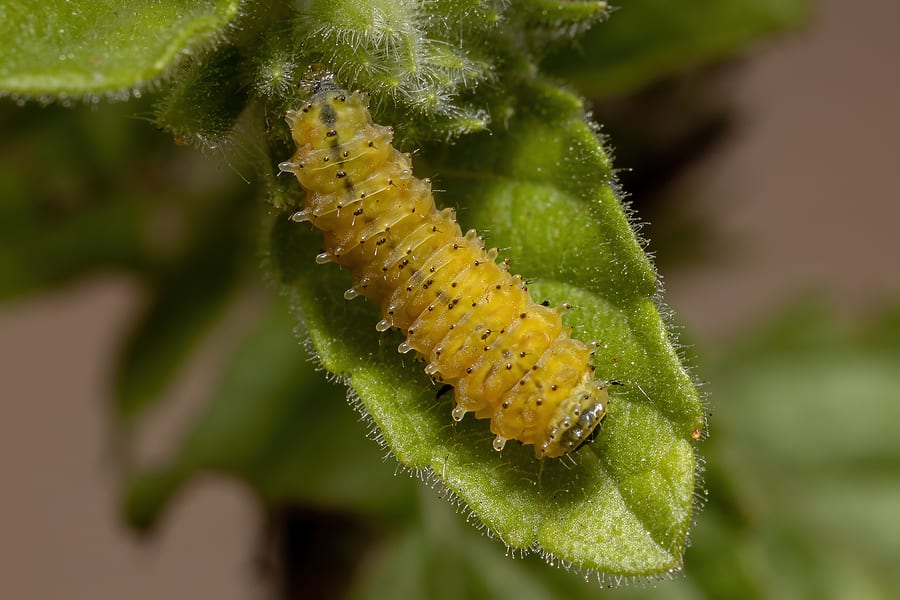
Flea beetles put small round holes, commonly referred to as “shotholes” in basil leaves. These tiny beetles only grow up to 3 mm but they can cause enough damage to young plants to significantly inhibit growth and, if the infestation is severe, can kill young plants.
Immature basil plants are far more susceptible than mature ones and can tolerate a flea beetle infestation. They tend to be shiny and jump when you disturb them, hence the term “flea” beetle.
How to Get Rid of Flea Beetles on Basil
Planting early so that plants can reach greater levels of maturity before the flea beetles emerge is a great method of prevention. You can also use floating row covers if you install them early in the season, before the beetles arrive.
Keep weeds to a minimum and make sure your soil is free of debris, as flea beetles overwinter in weeds and organic debris.
You can try adding a thick mulch layer around your basil plants which helps stop the beetles reaching the surface.
Neem oil and diatomaceous earth are both very effective against flea beetles, too.
Grasshoppers
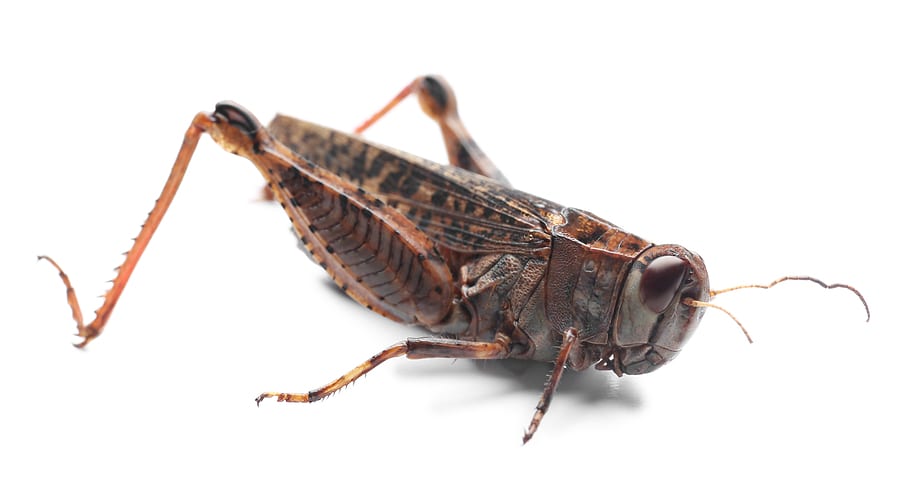
Grasshoppers are problematic at all stages of their lifecycle. Nymphs and mature grasshoppers feast on basil leaves and stems. They are voracious feeders and a small number can do a lot of damage. The nymphs leave round holes in the leaves as they feed, but the adults devour the whole leaf.
How to Get Rid of Grasshoppers on Basil
The best way to control grasshoppers on basil and in the garden generally is to minimize weed growth and encourage birds and predatory insects.
You can also make use of companion planting to include plants in your landscape that grasshoppers find repellant. Plants that deter grasshoppers include:
- Sage
- Lilac
- Verbena
- Jasmine
- Juniper
- Dianthus
There are also a couple of microbes you can introduce that specifically infect and kill grasshoppers. These are Nosema locustae and Beauveria bassiana.
Japanese Beetles
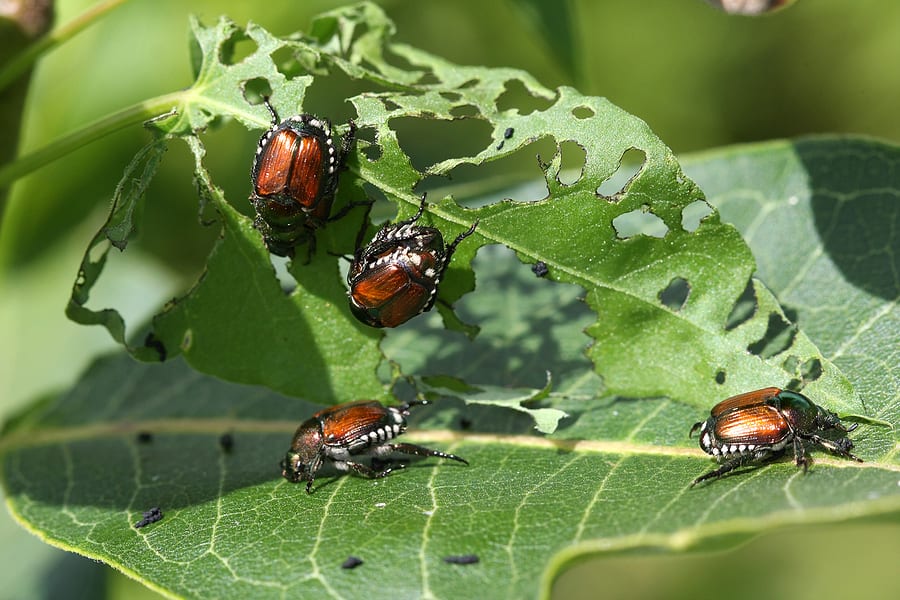
The Japanese beetle, Popillia japonica, skeletonizes basil leaves, with only the veins being left behind. With an infestation of these common basil pests, plant damage is likely to be extensive, and, as well as significantly stunting growth and reducing plant yield, the plant may die.
The adults are up to 13mm long with a metallic appearance, colored green-bronze. They also have white hairs sticking out from under their wing cases on the sides of the body. The larvae grow in the soil and are cream-colored grubs very similar to many other beetle larvae. These immature grubs feed on the roots of plants, so are just as problematic as the mature leaf-eaters.
How to Get Rid of a Japanese Beetle Infestation
Getting rid of Japanese beetles is a bit of a challenge, but there are a few natural options at your disposal. Firstly, use floating row covers from early spring. You can also spray kaolin clay in the area. Be vigilant and pick the bugs off the plants and drown them in soapy water. Parasitic nematodes are another good option here, as is neem oil. If you opt for nematodes or natural bacteria such as Bacillus thuringiensis (Bt) or milky spore.
A great strategy is companion planting to deter the pests before they become a problem. Planting garlic, chives, onion, tansy, catnip, and valerian all help to ward off Japanese beetles.
Root Knot Nematodes

You don’t hear much about root knot nematodes, but an infestation can destroy many plants in a single season. Root knot nematodes are several species of microscopic parasitic worms that prey on plant roots.
If you’ve got a root knot nematode problem, it’s difficult to diagnose early on as they are microscopic and beneath the ground, and the above-ground symptoms are similar to many other problems that impact basil. You’ll notice your basil plants turning yellow, stunted growth, and significant and unexplained wilting in warm weather.
Beneath the ground, you can see tell-tale signs. On the roots, you’ll notice bumps and “knots”. These galls range from tiny bumps to large 1-inch knots. Roots may also exhibit other deformities and be hairy. These galls and deformities inhibit the roots taking up water and nutrients, therefore starving and dehydrating the plant.
How to Get Rid of Root Knot Nematodes on Basil
It’s difficult to get rid of root knot nematodes. Keeping them out of your soil by only bringing in plants from clean, trusted sources is the best course of action. However, if you do inadvertently introduce them, solarizing your soil is perhaps the best method to get rid of root knot nematodes.
However, it’s not always 100% effective, so it’s advisable to let the area lay fallow for a year too, preventing the remaining nematodes laying their eggs so that they die out naturally without reproducing.
If you can’t leave the area to fallow, plant crops that root knot nematodes don’t attack, including clover, corn, wheat, and rye.
And make sure you keep weeds to an absolute minimum, because these parasitic garden pests aggressively parasitize many weeds such as dandelion.
Leaf Miners

Leaf miners are a number of species of nondescript black flies. The mature flies make a tiny hole in the leaf tips and lays her eggs inside this hole. The larvae hatch and burrow their way through the leaves, eating the flesh and nutrients inside. It’s this action that causes such extensive damage.
If your basil has leaf miners, you’ll see yellow or white wiggly lines all over the leaves.
How to Get Rid of Leaf Miners on Basil
Getting rid of leaf miners on basil is essential. These pests can go through up to 10 generations in a single year – that’s a lot of bugs to eat their way through all of your crops, not just your basil. You can see how quickly you can have a serious infestation problem.
Neem oil is a great option as it inhibits the growth cycle, significantly reducing the number of larvae that mature, therefore reducing the number of new eggs that are laid.
One very effective method of killing leaf miners naturally is to purchase and release natural predators. In this case, the predatory wasps, Diglyphus isaea are incredibly useful. These beneficial insects will quickly get on top of your leaf miner population.
And make sure you rake up leaves fallen leaves and till the soil at the end of the season, as the mature larvae pupate in the soil and can overwinter there.
Basil Pest and Disease Prevention: How to Minimize the Risk of Basil Diseases and Pest Infestation
Basil is a beautiful, fragrant herb that enhances your food but also benefits many of your other plants, too. It’s well-known, for example, that growing basil near tomatoes enhances the flavor of the tomatoes, stimulates growth and increases yield, and keeps the tomato plants healthy. Plus it deters the tomato hornworm.
But it’s a target for a wide variety of pests and pathogens.
However, there are plenty of natural steps you can take to minimize the risk of basil diseases and pests becoming a problem for you.
Your aim should be to maintain healthy basil plants by ensuring the right growing conditions. Utilize companion planting to create a rich, biodiverse ecosystem and practice proper soil management.
FAQs
While downy mildew isn’t thought to be poisonous to humans, it’s not advisable to eat basil or any other plants infected with it. Instead, if you spot any signs of downy mildew, remove and destroy the affected leaves. If the damage is extensive, remove and destroy the whole plant.
Basil can wilt for all kinds of reasons – some as simple as the plant is too hot or hasn’t been given enough water. Common causes of wilting basil include fusarium wilt, root knot nematodes, bacterial wilt, impatiens necrotic spot virus (INSV), and basil root rot.
Lots of diseases cause brown spots on basil leaves. The most common are:
- Bacterial wilt
- Gray mold
- Impatiens necrotic spot virus (INSV)
- Basil root rot
- Downy mildew
- Bacterial leaf spot
- Fusarium Wilt
There are many pests and diseases that can cause your basil plant to die. But most basil plants are made susceptible to these pests and pathogens by either overwatering or underwatering. If your basil plant is dying, first look at the growing conditions.
Is your basil getting enough sun? Is it experiencing temperature stress? Is the soil very wet or dry? Can you see any specific symptoms like brown leaves, gray specks, round holes, or yellow patches? The key to find out why your basil plant is dying, and how to save it, is to identify the condition, pest, or disease that’s afflicting it.
The most common pests that cause holes in basil leaves are:
- Slugs and snails
- Flea beetles
- Grasshoppers
Many bugs like to feast on basil. Some of the most common pests that eat basil are:
- Slugs and snails
- Flea beetles
- Grasshoppers
- Cutworms
- Japanese beetles
- Leaf miners
Your basil may be light green because you’re overwatering it, causing the roots to decay. Your basil may also be infected by basil root rot which destroys the roots, stopping the plant absorbing sufficient water and nutrients.
Root knot nematodes may also be the cause of your basil turning light green. These parasitic microscopic worms cause galls and deformities on the basil’s roots, preventing them from taking up sufficient water and nutrients.
Introduce or encourage predatory insects and birds. Use floating row covers. Companion plant to deter specific bugs. Use parasitic or fungal nematodes that target specific pest species. Spray neem oil if absolutely necessary.
To stop bugs eating basil naturally, you may have to use more than one approach. But your primary goal should be to keep your basil healthy to minimize the risk of attack.

First things first, I like the layout of your website. It is very clean. Secondly, coming to the basil plant, we have some of these plants in our house. Their leaves have medicinal properties and we use them sometimes, in our tea. But thanks so much for your information packed post.
So that explains why I cant even grow my basil. I have tried a number of times to grow our own herbs but then I am just not to lucky to have them grow. I water them too frequently. Ive also experienced that Fusarium Wilt.
Yes, herbs don’t like being over-watered. If you’re growing them outside directly in the ground, take a 1 or 2 liter juice bottle, take the lid off, cut the bottom off the bottle, then bury it 1/3 of the way into the soil with the neck downwards, a few inches from your plant. Fill it with water, then the water will slowly leak out of the bottle into the soil. It keeps your plant moist but not too wet and helps prevent these kinds of diseases.